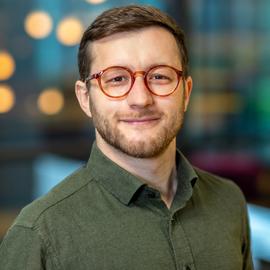
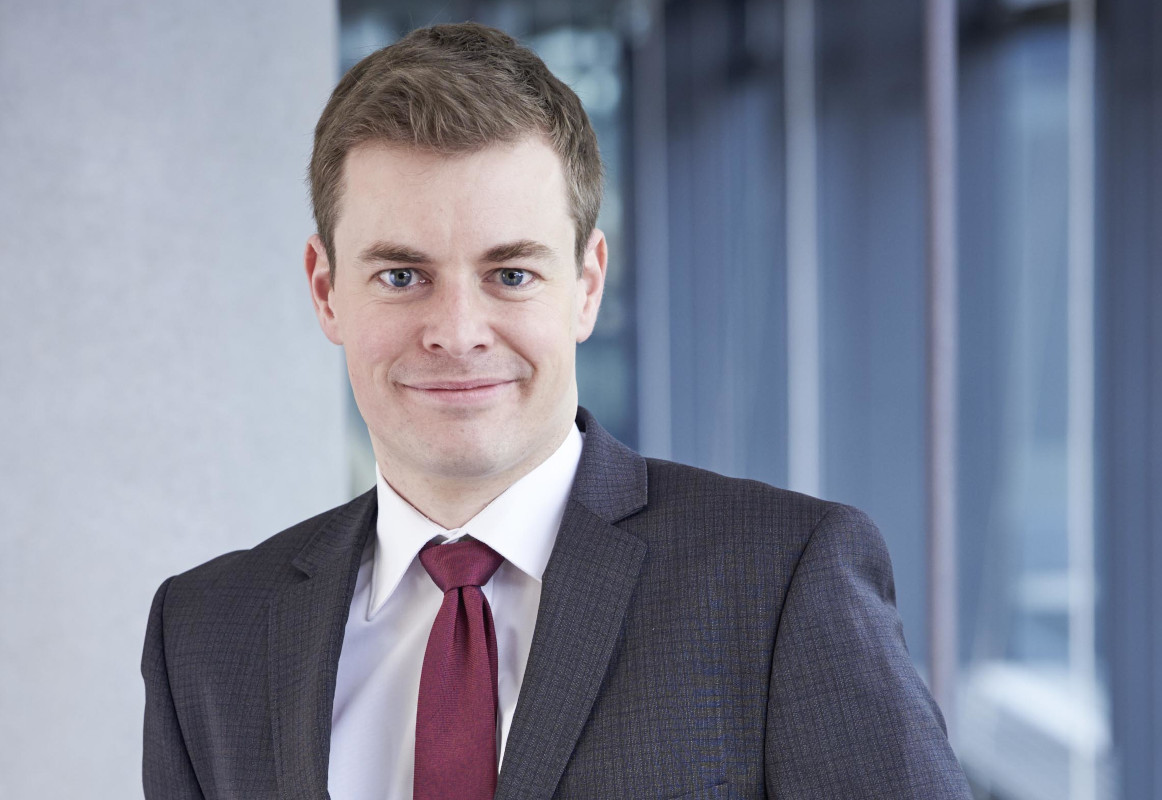
Patrik Hummel is an Assistant Professor at Eindhoven University of Technology, focusing on the intersection of Artificial Intelligence Ethics , Health Data Governance , and Digital Sovereignty . His work bridges technical and normative challenges in medical AI applications.
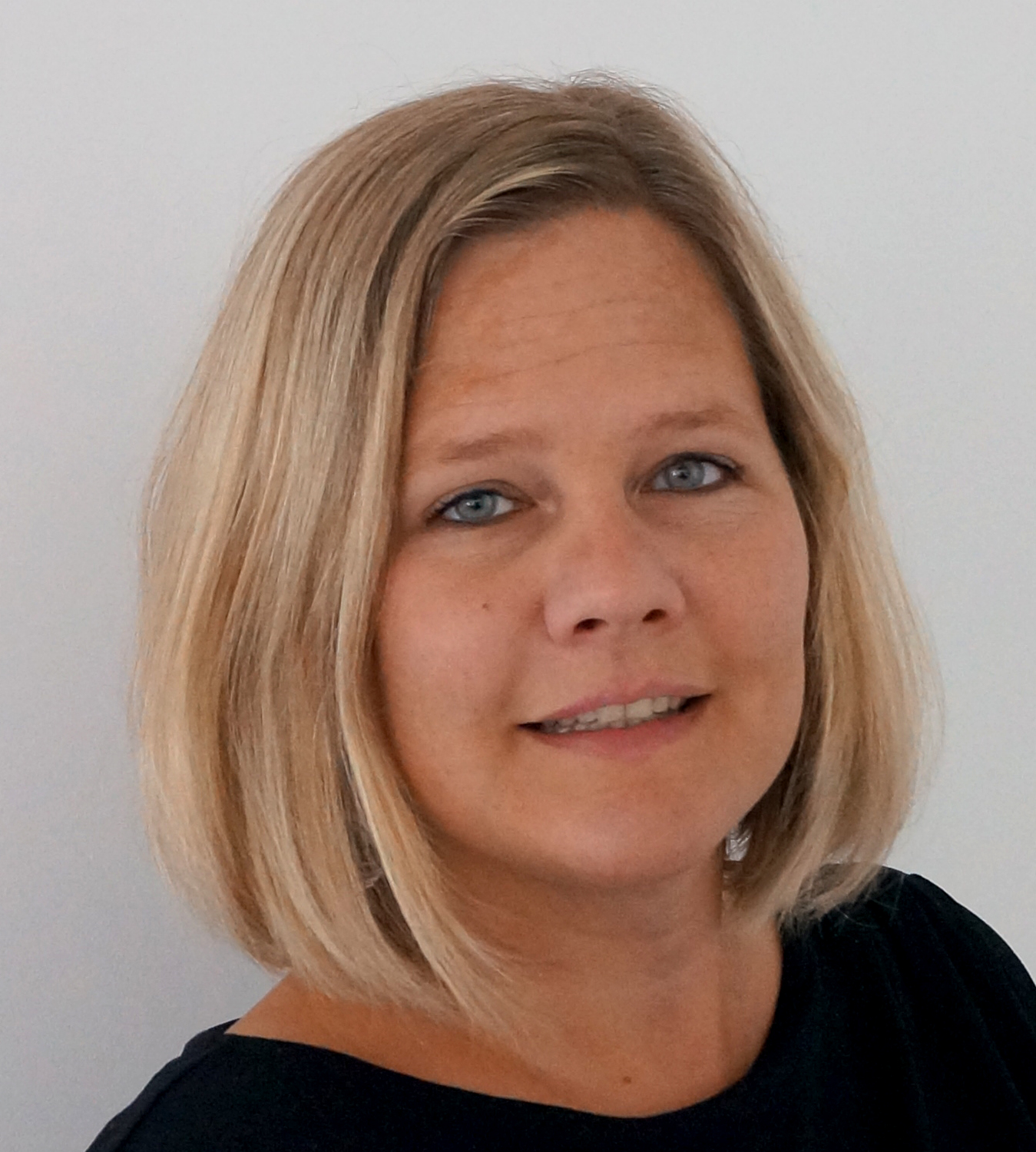
Prof. Dr. Katharina Kohls serves as a Professor at Ruhr University Bochum specializing in system security, with research spanning mobile network vulnerabilities (4G/5G), privacy/anonymity systems, and internet censorship detection. Her work addresses critical security flaws in cellular infrastructure and anonymity networks through empirical attack simulations and defensive techniques. Her primary research domains include: Mobile Network Security : Investigating protocol vulnerabilities in 4G/5G including fake base stations, bidding-down attacks, and voice call eavesdropping (ReVoLTE/IMP4GT) Privacy & Anonymity : Analyzing traffic on Tor, location leaks in messaging apps, and information leakage in mobile VPNs Internet Measurement : Leading censorship monitoring initiatives like Censored Planet for longitudinal internet freedom analysis Analysis of her 2019-2024 publications reveals escalating focus on 5G security challenges and machine learning applications for intrusion detection, with consistent contributions to identifying practical attack vectors against real-world communication systems. Her methodology combines large-scale simulations with field measurements to expose systemic vulnerabilities. No scientific awards or student advising information was documented in the provided materials. Her contact details (room MC 4.137, tel +49 (0)234 32-27814) confirm active faculty status without indication of specialized labs or research teams in the source data.
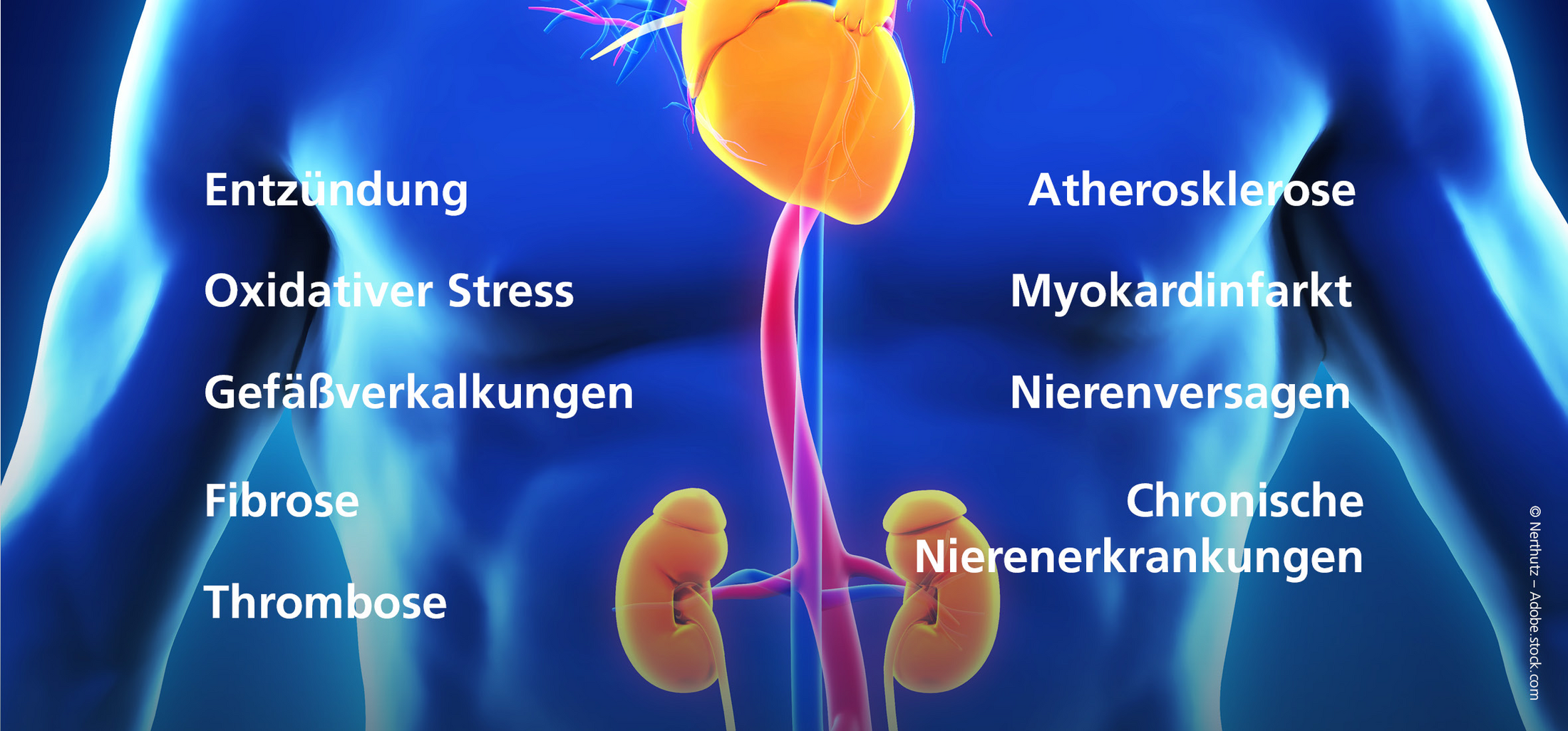
Dr. Emiel van der Vorst is a cardiovascular researcher focusing on atherosclerosis, immunometabolism, and translational medicine . His work spans molecular mechanisms, therapeutic targeting, and omics-based approaches. Affiliation: Institute for Molecular Cardiovascular Research (IMCAR) Research Focus: Chemokine signaling, microRNA therapeutics, immune-metabolic interactions Research Trends: Recent publications highlight his exploration of microRNA-26b in metabolic liver disease GPR55 receptor in cardiomyocyte adaptation calcium-sensing receptor in sex-specific atherosclerosis aryl hydrocarbon receptor in gut-liver-cardiovascular axis His work integrates nanomedicine, genetic models, and clinical biomarker development .
Stefan Luther is a Professor and Max Planck Research Group Leader at the Max Planck Institute for Dynamics and Self-Organization's Biomedical Physics group (Göttingen, Germany). His work spans cardiac dynamics, optogenetics, and biomedical data infrastructure. Current Affiliation: Max Planck Institute for Dynamics and Self-Organization, Biomedical Physics Research Themes: Cardiac arrhythmia control, excitable media dynamics, optogenetic interventions, and semantic data management systems Research Interests : Luther's research focuses on controlling cardiac arrhythmias through advanced pacing techniques (optogenetic, resonant feedback), modeling spatiotemporal chaos in cardiac tissue, and developing data management systems like CaosDB for scientific workflows. His work bridges computational modeling, experimental validation, and clinical translation. Article Trends : Recent publications emphasize low-energy defibrillation (2023), optogenetic pacing (2024), and hierarchical data integration (2024). The 2025 papers highlight high-throughput imaging systems and electromechanical wave analysis for transmural activation patterns. Labs & Teams : He leads the Biomedical Physics group at the Max Planck Institute, working on interdisciplinary projects combining cardiology, physics, and data science. His team develops tools like the CaosDB system for managing complex research data workflows.
David Zwicker serves as a Max Planck Research Group Leader at the Max Planck Institute for Dynamics and Self-Organization in Göttingen, Germany, where he heads the Theory of Biological Fluids group. His research investigates how soft and fluid-like biological materials achieve precise spatial and temporal organization through physical principles. Dr. Zwicker's work centers on biomolecular condensates, pattern formation, and smart materials design. His group employs statistical physics, dynamical systems theory, and fluid dynamics to model biological processes including phase separation in cells, active matter systems, and nasal airflow mechanics. Current projects explore how phase transitions might enable cellular information processing and how chemical activity drives droplet self-propulsion. Recent publications (2024-2025) reveal strong focus on phase separation dynamics in biological contexts, with emerging themes in active condensates, multicomponent mixtures, and computational modeling tools. His group develops open-source software like flory for phase diagram analysis and py-pde for partial differential equations. Scientific recognition includes: ERC Starting Grant for biomolecular condensates research Dr. Zwicker leads an active research team currently comprising postdoctoral researchers Guido Kusters and Filipe Thewes (joined October 2024), with ongoing recruitment for ERC-funded projects. His group maintains strong computational focus while collaborating across physics and biology disciplines. The Theory of Biological Fluids group operates within the Max Planck Institute's Department of Fluid Dynamics, utilizing advanced modeling to bridge theoretical physics and cellular biology.
Damien Garreau is Professor for the Theory of Machine Learning at Julius-Maximilians-Universität Würzburg , Germany. Until March 2024 he served as Associate Professor in the Probability and Statistics team of the J. A. Dieudonné laboratory at Université Côte d'Azur and was a member of the Inria Maasai team in Sophia-Antipolis. Earlier positions include post-doctoral research at the Max Planck Institute for Intelligent Systems in Tübingen and PhD studies in the Inria Sierra team in Paris. Education & Career Path PhD, Inria Sierra team, Paris – advisors Sylvain Arlot & Gérard Biau Post-doc, Max Planck Institute for Intelligent Systems, Tübingen – mentor Ulrike von Luxburg Associate Professor, Université Côte d’Azur / Inria Maasai (until March 2024) Professor for Theory of Machine Learning, Julius-Maximilians-Universität Würzburg (since 2024) Research Focus Garreau’s research centers on trustworthy machine learning . He investigates how to explain, audit, and robustify modern AI systems, with particular emphasis on post-hoc interpretability , statistical guarantees of explanation methods, fairness , and causality . Representative contributions include theoretical analyses of LIME and Anchors, novel explanation methods such as SMACE and GLEAMS, and practical tools for vision and NLP that remain faithful under adversarial or out-of-distribution settings. Across computer vision, natural-language processing, and healthcare applications, his work bridges rigorous theory with impactful algorithms, advancing the societal goal of deploying AI systems whose decisions can be trusted and understood by humans. Scientific Awards & Recognition Best Paper Award , ECML 2024 Area Chair , ICML 2025 ANR JCJC Grant NIM-ML (2021–2025) Université franco-allemande support for Winter School on Causality and Explainable AI Advising, Grants & Collaborative Projects Garreau has successfully supervised or co-supervised a growing cohort of doctoral and master’s students, including Gianluigi Lopardo, Kensuke Mitsuzawa, Martin Charachon, Jonas Wacker, Samuel, Antonio, Magamed, Arthur Assad, Charbel Yahchouchi, and Mariana Chaves. He is the PI of the ANR JCJC project NIM-ML , whose goal is to develop next-generation interpretability methods endowed with statistical guarantees. He co-organizes the annual Winter School on Causality and Explainable AI , fostering Franco-German academic exchange. Labs & Teams Since 2024 he leads the Professorship for the Theory of Machine Learning at Julius-Maximilians-Universität Würzburg. Previously he was a core member of the Maasai Inria team on the Sophia-Antipolis campus, and an active collaborator of the J. A. Dieudonné mathematics laboratory. He maintains strong ties with the TML group at the Max Planck Institute for Intelligent Systems and regularly hosts joint visitors and workshops.
Prof. Dr. Bianca Schrul leads the Group for Medical Biochemistry & Molecular Biology at Saarland University's Center for Molecular Signaling (PZMS) in Homburg, Germany. Her research focuses on lipid droplet biogenesis, protein targeting to lipid droplets, and cross-organelle communication in lipid metabolism. Principal Investigator at Saarland University PhD/MSc/MD students under her supervision Lipid droplet research via biochemical and cell biological methods Research Interests: • Molecular mechanisms of lipid droplet protein targeting • Physicochemical membrane properties in organelle biogenesis • ER-to-lipid droplet communication • Pathological lipid metabolism in metabolic diseases Methodologies: • In vitro reconstitution experiments • CRISPR/Cas9 and RNAi • Quantitative proteomics/lipidomics • Advanced fluorescence microscopy Publications Trends: Her 15 most recent articles (2010–2024) cover lipid droplet biogenesis, peroxisome-lipid droplet crosstalk, protein targeting dynamics, and implications in Alzheimer's disease and metabolic disorders like obesity/diabetes. Collaborations: Integrates with molecular dynamics simulations, microfluidics, and EPR spectroscopy experts for interdisciplinary research.
Prof. Dr. Hans-Martin Zademach serves as Professor of Economic Geography at the Catholic University of Eichstätt-Ingolstadt 's Faculty of Mathematics and Geography. He also holds leadership roles in the Academy for Territorial Development (ARL) and contributes to the KU Sustainability Research Lab . Education: M.Sc. in Local Economic Development (LSE), Doctorate in Economics (LMU Munich) Affiliations: Leibniz Association ARL, DFG Research Training Group 2589 'Practicing Place' His research focuses on sustainable regional development , financial geography , and transformation processes . Key areas include: Financial aspects of sustainability transitions Corporate responsibility and alternative business models Technological change in regional contexts Diverse economies and spatial justice Recent publications analyze electricity storage governance, refugee financial journeys, and SME climate finance. His work appears in Energy Policy , Journal of Economic Geography , and ZFW – Advances in Economic Geography . He leads DFG-funded research projects on: Complex concept implementation in municipal practice Technological innovations in energy markets Financial inclusion for displaced populations
Prof. Dr. Martin Matzner is a Professor at Friedrich-Alexander University Erlangen-Nürnberg, holding the Chair of Digital Industrial Service Systems. He studied Business Informatics at the University of Münster and Turku School of Economics, earned his doctorate in 2012 for work on service networks, and received a teaching license in Business Informatics in 2016. His research focuses on IT-supported services, business process management, and design-oriented business informatics research, with significant contributions to digital transformation and smart service systems. Current affiliation: Friedrich-Alexander University Erlangen-Nürnberg Previous roles: University of Münster (2007-2017) Key research areas: Business Process Management, Process Mining, Smart Service Systems, Predictive Analytics His recent publications emphasize predictive process monitoring using machine learning, transfer learning for cross-domain applications, explainable AI in business processes, and platform ecosystem governance . He has pioneered methods for adaptive AI control in manufacturing and context-aware process analytics , with applications spanning logistics, healthcare (ICU admission prediction), and human resources. His work bridges technical process mining with sociotechnical perspectives , particularly in algorithm adoption and ethical implications. Prof. Matzner's research has produced 15+ recent publications (2025-2024) in journals like International Journal of Production Research , Computers in Industry , and conferences including ECIS and ICIS. Topics demonstrate a progression from process efficiency optimization to human-AI collaboration and regulated AI risk assessment . His methodological toolkit spans LSTM networks , graph-based neural models , and LRP explanation techniques .
Dr. Mateo González Vázquez is a Research Fellow in the Department of Ancient History at the Faculty of History and Cultural Studies, University of Trier, Germany. He holds a PhD from Universitat de Barcelona and contributes to European research projects under Prof. Christoph Schäfer, specializing in the socioeconomic transformation of Iberia during Roman conquest. His academic credentials include: PhD in History (2019) from Universitat de Barcelona on "Food Storage among the Iberians of the Iron Age North-West Mediterranean" Master of Philosophy in Greek and Roman History (2012-2014) from University of Oxford Bachelor's in History (2008-2012) from Universitat de Barcelona, earning Spain’s National Award for Excellence in Academic Performance (1st Prize in Arts and Humanities) His research centers on Ancient Economic History, Roman Colonialism, and Iron Age Iberian Peninsula studies, with emphasis on rural landscapes, food storage systems, and socioeconomic dynamics in colonial contact zones. He integrates archaeological fieldwork with textual analysis to examine provincial integration in the Roman Empire, particularly examining how indigenous communities adapted to Roman administration through material culture and settlement patterns. Recent publications reveal a methodological focus on ceramic analysis (especially dolia) and rural landscape transformation, demonstrating how food production/storage systems reflect broader socioeconomic shifts during Roman provincialization. His work increasingly employs network analysis to map trade routes and consumption patterns across the Mediterranean. Key recognitions include: Spain’s National Award for Excellence in Academic Performance Obra Social “la Caixa” Foundation Graduate Fellowship Dr. González Vázquez leads fieldwork at Empúries and Turó de Vilanera as Co-PI of "Paisajes de contacto y comunidades rurales" (2022-present), while contributing to maritime trade simulations under Prof. Schäfer's "Maritime Verbindungen" project. His collaborative work with CEIPAC and UBICS centers on interprovincial relations in the Roman Empire, particularly food production networks between Baetica and Tarraconensis. Though not currently supervising students, his course "From Iberia to Hispania" trains next-generation scholars in Roman provincial formation. He directs excavations at key Iberian sites including Muntanya Rodona and Les Corts, working with multidisciplinary teams to reconstruct settlement hierarchies and resource management systems in Greek-Iberian contact zones through stratigraphic analysis and material culture studies.
Theocharis Grigoriadis is a Professor of Economics at the Free University of Berlin, affiliated with the Institute for East European Studies. His research spans comparative economic systems, political economy, economic history, and the economics of religion, with a regional focus on Russia, Eastern Europe, Central Asia, and comparative studies in the Eastern Mediterranean, Middle East, and North Africa. PhD in Political Science, University of California, Berkeley (2012) PhD in Economics, Saint Petersburg State University (2012) MA in East European Studies, Yale University (2005) LLM and LLB in Law, University of Athens (2007, 2002) His research examines the interplay of imperial rule and contemporary economic development, forced migration's impact on social capital, and the role of cultural legacies in shaping political and economic outcomes. He also investigates conflict economics, climate change, and monetary policy transmission mechanisms. Scholarly trends in his work include analyzing historical economic systems (e.g., Shades of Empire , 2025; Financing Late Industrialization , 2025), post-imperial regional persistence ( East Prussia 2.0 , 2024), and the intersection of culture and development ( Chinese Dialects , 2022; Persistence of Confucian Values , 2019).
Niels Petersen (*1979) is a research associate at the Institute for Historical Regional Research, University of Göttingen, since 2008. His work focuses on late medieval and early modern social history of coastal regions, economic history, and spatial analysis. He serves as a project coordinator for viabundus.eu and leads the "Map of Premodern European Transport and Mobility" initiative. Awards include the Lüneburger Geschichte Research Prize (2013) and recognition at the 48th German Historians' Day.
Prof. Jürgen Knies serves as Professor and Vice Dean of Faculty 2 (Faculty of Architecture, Civil Engineering and Geomatics) at Bremen City University of Applied Sciences. Based in the Department of Infrastructure Planning of Environmental and Energy Systems (building UB, room 107), his work integrates ecological principles, Geographic Information Systems (GIS), Building Information Modeling (BIM), and environmental law to address complex infrastructure challenges. His leadership extends to municipal heat planning initiatives and跨-institutional research networks across Northwest Germany. His research focuses on urban energy transitions , with particular emphasis on heat system transformation, spatial planning integration, and socio-technical implementation barriers. Key methodologies include GIS-based spatial analysis, BIM integration, and multi-stakeholder governance frameworks. Current investigations target cold district heating networks, wastewater heat recovery, solar cadastre validation, and equity considerations in energy transitions—always contextualized within Bremen's municipal challenges and North German regional cooperation frameworks. Analysis of his 15 most recent publications (2017-2025) reveals a consistent trajectory: evolving from foundational spatial energy modeling toward integrated socio-technical solutions for urban heat transitions. The body of work demonstrates increasing sophistication in Digital integration (E-Government/BIM fusion) Multi-scale spatial analysis (neighborhood to regional) Equity-focused implementation strategies Legal-regulatory-compliance frameworks with Bremen serving as both living laboratory and model for municipal energy planning. No scientific awards are documented in the provided materials. His advising activities center on thesis supervision in infrastructure planning, while grant leadership includes major projects: hyBit (Hydrogen for Bremen's industrial transformation; 2021-2022) Heat Transition Northwest (digitalization for heat implementation; 2021-2025) North German Research Associations coordination Bremen Heat Transition Network initiatives These involve partnerships with municipal authorities, industry, and regional research consortia. His operational ecosystem includes the GIS Laboratory for spatial analysis, active participation in Networking AG Wärme (Heat Working Group), and leadership in the Bremen Heat Transition Network . Current engagements extend through 2026, including coordination of the 3rd North German Conference on Thermal Research—demonstrating sustained commitment to advancing urban energy infrastructure through academic-practice integration.
Dr. Viktoriia Muliavka is a Postdoctoral Researcher at the University of Bamberg's Faculty of Social Sciences, Economics, and Business Administration. She holds a Ph.D. in Sociology from the Graduate School for Social Research at the Institute of Philosophy and Sociology of the Polish Academy of Sciences (2023), an M.A. in Economy and Society from Lancaster University (2018), and a B.A. in Sociology from the National University of Kyiv-Mohyla Academy (2015). Her academic work bridges Eastern and Western European political contexts with particular expertise in Ukrainian and Polish political systems. Her research spans social inequality, political participation, labor protection, post-socialist transformations, and comparative research methodologies. Muliavka's work demonstrates particular strength in analyzing protest participation across class lines in Central Eastern and Western Europe, with a focus on working-class mobilization. Her recent publications reveal a growing specialization in Universal Basic Income policy, where she examines both theoretical frameworks and empirical implementations across European contexts. The analysis of her recent publications shows a clear trajectory from studying protest participation and social movements in post-socialist contexts toward more comprehensive policy analysis, particularly regarding social welfare systems. Her work on UBI represents a significant contribution to understanding how basic income models might function within the European social model, with attention to both political feasibility and social justice implications. Her comparative approach consistently links theoretical frameworks with empirical evidence from multiple European contexts. Dr. Muliavka maintains active research collaborations with scholars across Europe, particularly with Dominic Afscharian, Marius Ostrowski, and Lukáš Siegel on UBI-related research. Her work appears in prominent journals including Democratization , Basic Income Studies , and Social Movement Studies , as well as through policy reports with organizations like Transparency International Ukraine and the Foundation of European Progressive Studies.
Dr. Ji-Guang Zhang is a Laboratory Fellow at the Pacific Northwest National Laboratory (PNNL) in the Energy Processes & Materials Division. He holds a PhD in experimental condensed matter physics from the University of Kentucky, an MS in theoretical physics from Dalian University of Technology, and a BS in applied physics from the same institution. As a principal investigator for the Department of Energy's Vehicle Technologies Office, he leads research on advanced energy storage systems. His research focuses on developing next-generation battery technologies, including lithium-metal batteries, lithium-ion batteries, solid-state electrolytes, and thin-film batteries. Key areas involve electrolyte design (e.g., localized high-concentration electrolytes), interface engineering, and materials optimization for enhanced stability and performance under extreme conditions. His work bridges electrochemistry, materials science, and solid-state physics to address fundamental and applied challenges in energy storage. Analysis of his recent publications reveals a strong emphasis on electrolyte innovation, lithium metal anode stabilization, and high-voltage battery systems. Trends include novel electrolyte formulations (e.g., fluorinated ethers), advanced characterization techniques (cryo-TEM), and 3D electrode architectures to suppress dendrite growth and extend battery lifespan. Scientific Awards: National Innovator of the Year Award (DOE/NAI, 2024) Fellow, National Academy of Inventors (2024) Distinguished Achievement Award (Vehicle Technologies Office, 2022) R&D 100 Awards (2010, 2012) Top 1% Highly Cited Researcher (Clarivate, multiple years) Dr. Zhang holds 41 U.S. patents and has secured DOE grants for lithium battery research. He advises postdoctoral researchers and collaborators at PNNL’s battery laboratories, focusing on projects such as anode-free configurations and high-energy-density systems. His team specializes in materials synthesis, in situ diagnostics, and battery prototyping.