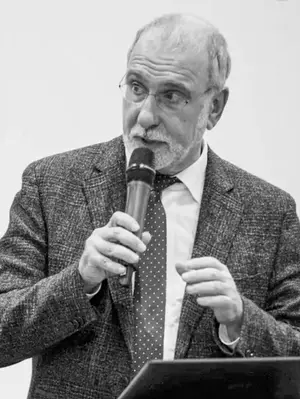
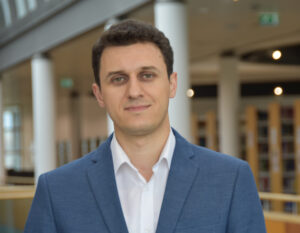
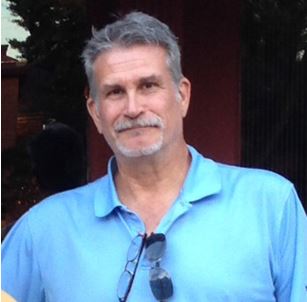
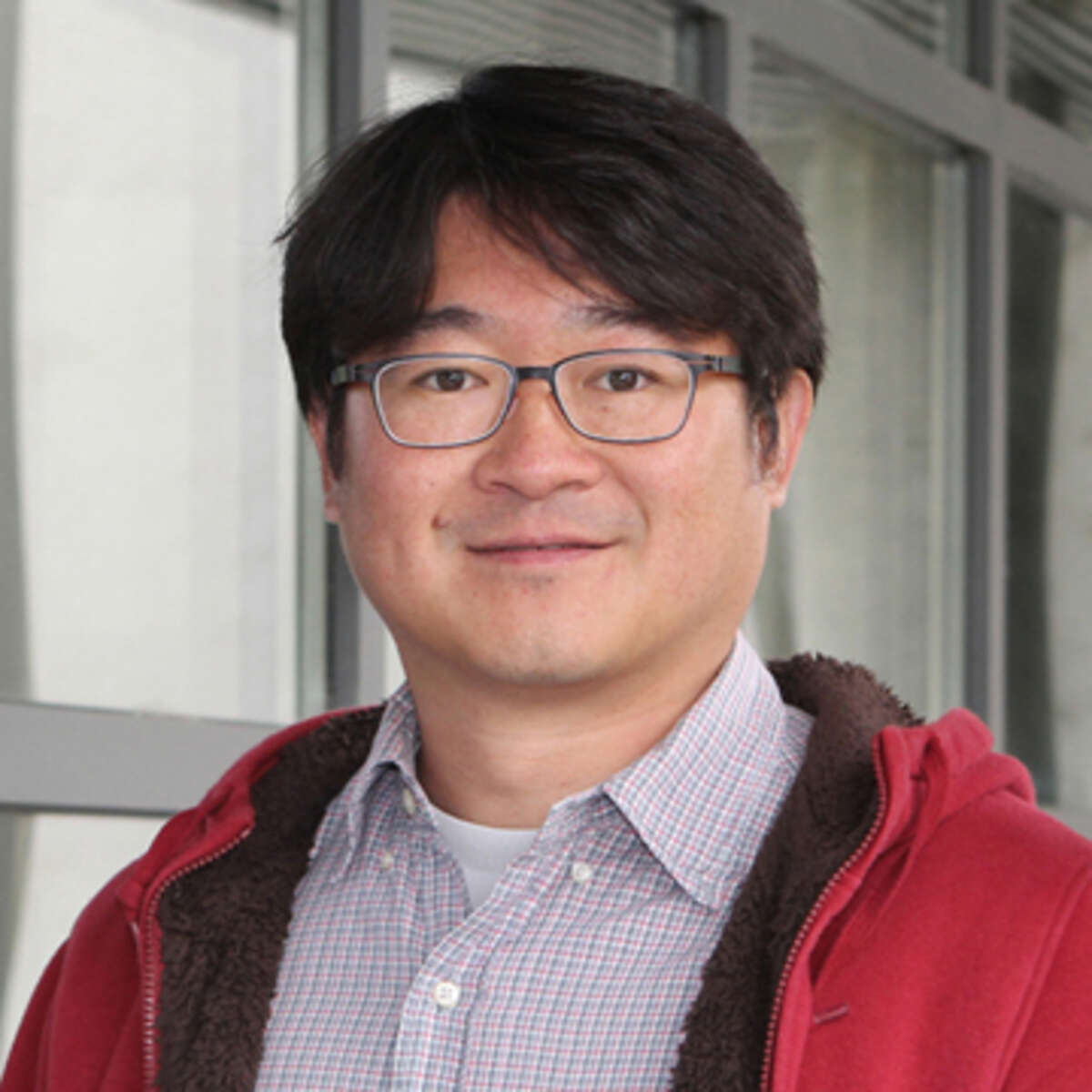
Dr. Andrew Newsham is a researcher at the Department of Development Studies (DEV), SOAS University of London. His work sits at the intersection of human geography , anthropology , and climate change policy . Key research areas: climate change adaptation , conservation and development , livelihoods , political ecology , and science and technology studies . Regional focus: Southern Africa and Latin America . Recent publications examine: Climate resilience in agricultural commercialization pathways (Tanzania/Zimbabwe) Reformulating sustainable livelihoods frameworks for the 21st century Critiques of ecosystems-based adaptation in Mexico Political economy of carbon forestry in Mozambique Linkages between social protection and climate risk management He convenes the MSc Environment, Politics and Development program at SOAS.
Griseldis Kirsch is a researcher at the School of Languages, Cultures and Linguistics (LAC) at SOAS University of London. Her work focuses on Japanese media and popular culture, with particular emphasis on gender, transnationalism, and identity politics. She has edited and contributed to key publications such as the Handbook of Japanese Media and Popular Culture in Transition (2022) and Assembling Japan: Modernity, Technology and Global Culture (2015). Her research spans visual culture, historical memory, and media's role in constructing national identities. Recent articles examine topics ranging from imperial nostalgia in Japanese television to the representation of cultural otherness and gender dynamics in propaganda films. She has supervised or collaborated on theses exploring single motherhood, anime music, and Korean-Japanese media remakes. Notable trends in her publications include critiques of Japanese nationalism, analysis of transpacific cultural flows, and investigations into minority representations. Her work bridges film studies, anthropology, and cross-cultural communication, often addressing tensions between local and global influences in media. Current affiliations include contributions to the JAPAN DOCUMENTS publication series and ongoing scholarly engagement with Japanese television dramas, anime, and their socio-political implications.
Prof. Dr. Thomas Gunzelmann serves as Honorary Professor for Spatial Heritage Conservation at the University of Bamberg's Chair of Heritage Conservation within the School of Archaeology, Heritage Conservation Studies and Art History. Born in Bamberg in 1958, he has built a distinguished career spanning both academic scholarship and practical heritage conservation, with particular expertise in cultural landscape research and urban heritage preservation. His professional journey uniquely combines long-term government service at the Bavarian State Office for Historic Preservation (1988-2024) with academic contributions since 1996, creating a valuable bridge between theoretical understanding and on-the-ground conservation practice. University of Bamberg - Honorary Professor (2022-present) Bavarian State Office for Historic Preservation - Department Head (1988-2024) Master's Program in Heritage Conservation - Lecturer (1996-present) University of Coburg - Lecturer (1996-present) Gunzelmann studied geography, history and administration at universities in Bamberg, Braunschweig and Bayreuth, completing his doctoral thesis in 1987 on 'The preservation of the historical cultural landscape.' This foundational work established his lifelong research trajectory at the intersection of historical geography and practical conservation. His academic credentials are complemented by deep practical experience, particularly through his leadership of the 'Großinventar Bamberg' project documenting Bamberg's urban heritage. His research focuses on the theory and practice of cultural landscape research, with particular emphasis on urban heritage conservation, settlement patterns (especially rural settlements), historical cultural landscapes for leisure and recovery, and the spatial impact of monuments. Gunzelmann's work consistently explores the relationship between cultural landscape preservation and contemporary challenges including urban development, energy infrastructure, and community engagement. His publications reveal a methodological evolution from traditional historical-geographical approaches to incorporating digital tools like GIS for heritage site analysis, demonstrating his adaptability to emerging technologies in conservation practice. Gunzelmann's scholarly output shows remarkable thematic consistency while adapting to contemporary challenges in heritage conservation. His publications demonstrate expertise across multiple dimensions - from theoretical frameworks for understanding cultural landscapes to practical guides for municipal heritage management. Particularly notable is his work on the 'Kommunales Denkmalkonzept' (Municipal Heritage Concept), which represents a significant contribution to practical heritage management frameworks. His research also shows increasing attention to interdisciplinary approaches connecting geography, history, architecture, and urban planning to create holistic understandings of cultural landscapes. Co-developer of the 'Kommunales Denkmalkonzept' framework for municipal heritage management Significant contributor to the 'Großinventar Bamberg' documentation project Author of influential publications on cultural landscape methodology Creator of practical tools for GIS-based heritage site analysis Through his long-standing role in the Master's program in Heritage Conservation at the University of Bamberg and Coburg University, Gunzelmann has mentored generations of heritage professionals. His practical impact extends through frameworks adopted by municipalities and conservation authorities, particularly in Bavaria. His work demonstrates how academic research can directly inform and improve conservation practice, creating a valuable feedback loop between theory and application. Gunzelmann has been actively involved with various research teams and projects related to cultural landscape documentation and analysis. His collaborations with colleagues like Armin Röhrer on the historical cultural landscapes of Bamberg showcase his team-based research approach. The 'Kulturlandschaftsstationen' project in the Fladung Rhön region exemplifies his commitment to creating practical tools for cultural landscape interpretation. His recent website updates indicate ongoing engagement with digital methodologies for heritage site analysis, particularly through QGIS applications.
Dr Gëzim Visoka serves as Associate Professor of Peace and Conflict Studies at Dublin City University (DCU), where he also completed his PhD in Politics and International Relations. A prolific scholar, he has authored or co-edited 10 books, published 25 journal articles, and contributed 20 book chapters, establishing himself as a leading voice in critical peace studies and state recognition theory. Education: PhD in Politics and International Relations, Dublin City University Visoka's research interrogates the intersections of peacebuilding, state formation, and global governance, with particular emphasis on diplomatic recognition practices, the foreign policy of small states, and Kosovo's contested statehood. His critical approach challenges liberal peacebuilding paradigms while exploring emancipatory alternatives through concepts like 'normal peace' and 'peace multitudes,' grounded in extensive fieldwork across the Western Balkans. Analysis of his recent publications reveals three dominant trajectories: 1) Theoretical innovations in state recognition/derecognition dynamics, 2) Critical examinations of 'counter-peace' as systemic obstruction to conflict resolution, and 3) Investigations into micro-level normalization practices in post-conflict settings. His work consistently bridges high theory with empirical studies of Kosovo, demonstrating how everyday state-making practices intersect with international governance structures. Dr Visoka holds influential editorial positions including Associate Editor of Peacebuilding journal, editor of Routledge Studies in Statehood book series, co-editor of Rethinking Peace and Conflict Studies , and editor-in-chief of the Palgrave Encyclopaedia of Peace and Conflict Studies . Complementing his academic work, he maintains 15+ years of practical engagement with civil society organizations and policy institutions in post-conflict environments, providing critical insights into transitional justice implementation and peacebuilding effectiveness.
Juan Alcacer is the James J. Hill Professor of Business Administration at Harvard Business School. He holds a PhD in International Business and Strategy from the University of Michigan, an M.A. in Economics, an MBA in Finance, and a Computer Engineering degree. His research focuses on international strategies, location decisions, and agglomeration economies. PhD - University of Michigan (Ross School of Business) MA - Economics, University of Michigan MBA - IESA Computer Engineering - Universidad Simon Bolivar Alcacer’s work examines how firms build competitive advantage through geographic choices, supply chain dynamics, and knowledge transfer. Recent projects analyze Brexit’s impact on investment and the role of internal/external agglomeration economies. His publications span top journals like Strategic Management Journal , Management Science , and Journal of International Business . Awards include the 2024 HBS Student Association Faculty Teaching Award and the 2016 Michigan Ross Distinguished PhD Alumni Award. 2024 HBS Student Association Faculty Teaching Award 2019 Greenhill Award for Field Global Immersion program 2016 Michigan Ross Distinguished PhD Alumni Award 2013 Meritorious Service Award from Management Science At HBS, he teaches required MBA strategy courses, Executive Education programs, and PhD seminars. His consulting spans global corporations on competitive advantage and location strategy.
James R. Farr is the Germaine Seelye Oesterle Professor of History at Purdue University, specializing in European History with emphasis on the Early Modern period, Renaissance, and Reformation. He teaches core courses including European Society and Culture (1450-1800), History of Globalization, and History Theory and Methods. Education: Ph.D. in History from Northwestern University (1983) Research Focus: Professor Farr's scholarship centers on labor systems, cultural practices, and social structures in Early Modern France and Burgundy. His work uniquely bridges artisanal communities, gender dynamics, and authority frameworks through meticulous archival analysis of urban life between 1550-1800. Publication Trends: His seven major works (1988-2008) reveal consistent exploration of work-culture intersections in pre-industrial Europe, with evolving emphasis from localized artisan studies to broader transnational labor patterns. Recurring methodological strengths include microhistorical approaches to legal documents and socioeconomic networks. Scientific Recognition: His research excellence is evidenced by: John Simon Guggenheim Fellowship (1998-99) Shelby Cullom Davis Center Fellowship, Princeton University (1994-95) American Council of Learned Societies Fellowship (1994-95) Academic Contributions: Beyond publications, Professor Farr shapes historical methodology through advanced graduate seminars while maintaining active engagement with European historical societies. His pedagogical approach integrates primary source analysis with theoretical frameworks across undergraduate and graduate curricula.
Prof. Dr. Roderick Lim is an Associate Professor at the Biozentrum, University of Basel , where he leads a research group since 2014. His work bridges biophysics, nanotechnology, and molecular biology , focusing on the nuclear pore complex (NPC) and mechanobiology of cells . He develops biomimetic systems for selective molecular transport and ARTIDIS , a nanomechanical tissue diagnostic platform commercialized for breast cancer prognosis . Education : BSc (UNC Chapel Hill), PhD (NUS/IMRE Singapore), Postdoc (Swiss Nanoscience Institute) Positions : Argovia Professor (2014–present), Tenure Track Asst. Prof. (2009–2013), Postdoc (2004–2008) His research on NPC transport selectivity reveals how karyopherins modulate the FG Nup barrier via multivalent interactions, with implications for viral entry and Alzheimer’s disease . His ARTIDIS platform uses atomic force microscopy to detect cancer via tissue softness, linking hypoxia to metastasis . Recent 2025 publications explore bacterial nanoharpoon defense mechanisms and DNA origami-based NPC mimics . Scientific Awards : Pierre-Gilles de Gennes Prize (2008), A*STAR Fellowship (2004) Collaborations : NCCR Molecular Systems Engineering, NanoTera, KTI He mentors PhD students in institutions across Switzerland, Singapore, Sweden, and the UK , with alumni working on polymersome delivery, mechanotransduction, and pathogen transport . His lab pioneered high-speed atomic force microscopy for real-time NPC dynamics and plasmonic nanopores for synthetic biology applications.
Mostafa Ammar is a Regents' Professor and Interim Chair at the School of Computer Science , Georgia Institute of Technology. He holds a Ph.D. from the University of Waterloo and degrees (S.B., S.M.) from MIT. His career spans academia, industry collaboration, and leadership in networking research. Research Interests : Network architectures, protocols, and services; multicast communication; multimedia streaming; content distribution networks; disruption-tolerant networks; mobile cloud computing; network virtualization; HTTP adaptive streaming; video quality of experience (QoE); encrypted traffic analysis; vehicular networks; peer-to-peer systems; overlay networks. Funding : Supported by NSF, DARPA, AFOSR, CISCO, IBM, Intel, BellSouth, Sprint, and others. His research focuses on video QoE estimation using network measurements, mobile cloud computing , and network agility through virtualization. Recent work includes machine learning approaches for encrypted traffic analysis and scalable techniques for network performance. Key scientific awards include: IBM Faculty Partnership Award (1996), Best Paper at WWW '98, IEEE Fellow (2002), ACM Fellow (2003), GT Outstanding Doctoral Thesis Advisor (2006), IEEE TCCC Service Award (2010), ACM Mobihoc Best Paper (2012), College of Computing Awards (2015, 2018), IFIP Best Paper (2018), and multiple teaching excellence awards (2013-2017, 2022 CIOS Award). Dr. Ammar has advised 39 PhD students , many of whom hold prominent positions at institutions like UC Santa Barbara, Emory University, and companies including Google, Microsoft, and Facebook. His editorial leadership includes Editor-in-Chief of IEEE/ACM Transactions on Networking (1999-2003) and roles in conference committees.
Nora MAREÏ, CNRS Researcher at PRODIG (UMR 8586), specializes in transport geography, territorial development, and urban dynamics across European, Mediterranean, and West African contexts. Her work bridges macroregional geoeconomic analysis with local territorial realities, focusing on infrastructure, logistics, and regional integration processes. Doctorate from University of Nantes (2012 thesis: Le détroit de Gibraltar, Porte du Monde, Frontière de l’Europe ) 2022-2026: Coordinator of ANR Trans-Log project on logistics cities 2021-2025: Member of LMI Movida II international lab Research interests include: Comparative analysis of institutional vs. private territorial production Metropolitanization and circulation patterns in Global South cities Eurafrican connectivity through ports like Tanger-Med Maritime chokepoints (Gibraltar, Suez) as development catalysts Recent publications examine: 2024: Morocco's role in Mediterranean-African transport hubs 2022: Tanger-Med's networked territorial challenges 2021: Dualization in Global South city logistics 2020: Regional integration models Scientific recognition: 2013 CNU Mappemonde thesis prize finalist 2023 'The Waters of Discord' award Teaching contributions: Master's courses on fieldwork methodology (since 2019) International transport geopolitics instruction (since 2013)
Professor Masashi Okubo at Waseda University's School of Advanced Science and Engineering specializes in electrochemistry and energy materials development. With cross-appointments at Kyoto University and the Advanced Collaborative Research Organization for SmartSociety, his work focuses on sustainable battery systems including aqueous proton batteries, MXene-based electrodes, and oxygen-redox chemistry. His research bridges fundamental materials science with practical energy storage applications through combined experimental-theoretical approaches. Education : Ph.D. in Basic Science (2005) and M.Sc./B.Sc. in Basic Science from The University of Tokyo Research Strengths : Solid-state ionics and intercalation chemistry MXene electrode engineering Oxygen-redox reaction mechanisms High-rate energy storage systems Hydrate-melt electrolyte optimization Scientific Contributions include: Discovering near-zero-volume-phase battery materials Developing distortion-relieving voids in host structures Elucidating multiorbital bond formation in oxygen-redox reactions Advancing aqueous redox-flow battery catholyte design Prominent Awards : Waseda Research Award (2021) ACS Reviewer Excellence Award (2018) Ministry of Education Young Scientist Award (2017) Multiple Young Investigator Awards (2016)
HUANG Fei is a Professor of Chinese History and Society in the Department of Chinese Studies at the Faculty of Humanities, University of Tübingen, Germany. She has held this position since 2020, following a Junior Professorship at the same institution from 2014 to 2020. Her academic journey began with a BA in History from Sun Yat-sen University (Guangzhou, 2005) and culminated in a PhD in Chinese Studies from Leiden University (2012). University: University of Tübingen School: Faculty of Humanities Department: Department of Chinese Studies Academic Rank: Professor Email: fei.huang@uni-tuebingen.de Her research spans an interdisciplinary terrain, combining landscape studies, environmental history, history of the body, cultural geography, historical anthropology, art history, and material culture studies . Her work primarily investigates China’s historical development from the 16th to the 20th century, with a regional focus on Southwest China, especially Yunnan, and thematic attention to frontier dynamics, urban environments, and the interplay between natural resources and cultural memory. Professor Huang’s recent publications reveal a consistent and evolving scholarly trajectory centered on the transformation of natural and urban landscapes. Her research on hot springs —such as Huaqing Hot Springs—explores their roles in public health, urban planning, and ideological representation in modern China. Her earlier work on Dongchuan examines how imperial and local actors reshaped frontier landscapes through cultural representation, religious practice, and economic interests. Articles on sulfur manufacturing, bathing culture, and Tusi succession highlight her ability to connect local practices with broader global and environmental networks. Scientific Awards and Recognition: No specific awards or fellowships are mentioned in the provided texts. Advising and Grants: She supervises PhD and Master’s theses in Chinese history and culture, though specific student names are not listed. No explicit mention of grants or funded research projects is made in the texts, but her extensive publication record in top-tier journals suggests active research engagement. Labs and Research Teams: She is affiliated with the Department of Chinese Studies at the University of Tübingen and participates in interdisciplinary research within the Faculty of Humanities. Her work often involves collaboration with scholars in anthropology, geography, and environmental history, as evidenced by her co-taught courses and international academic engagement.
Henrik Haller is an Associate Professor at Mid Sweden University, affiliated with the Department of Natural Sciences, Design and Sustainable Development (NDH). His work integrates environmental science with practical applications in tropical regions, particularly focusing on land use, soil remediation, and sustainable food systems. Academic Title: Doctor of Philosophy Location: Östersund, Sweden Key Research Areas: Multifunctional land use, bioremediation, agroforestry, and sustainable development in the Global South Haller's research emphasizes transforming environmental challenges into opportunities. His work includes: Bioremediation of heavy-metal-contaminated soils using amaranth plants Urban agriculture potential in Swedish cities Life cycle assessments of cold-weather aquaponic systems Waste valorization strategies for contaminated lignocellulose sediments Universal design approaches to zero-waste communities Industrial symbiosis for local food systems He has ongoing projects in urban farming, wastewater resource recovery, and sustainable behavior transformation. His publications span topics from fungal metal tolerance to policy challenges in environmental governance.
A/Pr Steven Goh is an Associate Professor in Mechanical and Mechatronic Engineering at the University of Southern Queensland (USQ), affiliated with the School of Engineering. He holds advanced degrees including a DEng from USQ and is a Fellow of Engineers Australia. His research focuses on engineering education, practice, management, and biomedical engineering. He has received notable awards such as the 2015 Australian Government OLT Citation for Outstanding Contribution to Student Learning and multiple USQ accolades. Education: BEng(Hons) in Manufacturing & Materials (UQ), MBA (Deakin), MProfAcc (USQ), DEng (USQ), and a Diploma in Company Directorship (AICD). Research Interests: Engineering education innovation, sustainable energy systems, and biomedical applications. He actively contributes to professional bodies like the Australasian Association of Engineering Education and serves as Editor (Strategic) for the Australian Journal of Mechanical Engineering. Awards: Multiple teaching excellence awards from USQ (2008-2010) and the 2015 national OLT Citation. Advising/Grants: Not explicitly detailed in text; his roles include supervising students and leading research projects on engineering education and asset management. Labs/Teams: Associated with the Centre for Future Materials and Centre for Health Research at USQ.
Luciano Lavagno is a Full Professor at the Department of Electronics and Telecommunications, Polytechnic University of Turin, with over two decades of academic and research contributions. His work bridges hardware acceleration, low-power electronics, and intelligent system design. Research Focus: Hardware-accelerated machine learning, high-level synthesis (HLS) for FPGA/ASIC, heterogeneous CPU/GPU/FPGA platforms Key Projects: SPACE (predictable acceleration), REBECCA (secure AI acceleration), HPC-National Center (quantum computing), and oral history preservation via "Ti racconto una storia" initiative His recent publications analyze CNN inference optimization, subgraph isomorphism, and superword-level parallelism exploitation. Lavagno supervises multiple PhD students working on FPGA acceleration, neural network hardware, and embedded systems. As Principal Investigator for national and EU-funded projects (PRIN, JTI-ECSEL, PNRR), he drives advancements in sustainable computing infrastructure. His patented technologies include MIx&Latch timing methodology, capacitive sensing innovations, and 5G acceleration frameworks.
Erin Bell is a Professor in the Department of Civil and Environmental Engineering at the University of New Hampshire . She holds a Ph.D. in Structural Engineering from Tufts University and has extensive experience in structural health monitoring, finite element modeling, and infrastructure sustainability. B.C.E., Georgia Institute of Technology M.S., Civil Engineering, Tufts University Ph.D., Structural Engineering, Tufts University Her research focuses on structural health monitoring, bridge condition assessment, and integrating AI techniques like artificial neural networks and deep reinforcement learning for infrastructure asset management. Recent work includes equitable maintenance strategies for aging bridges in flood-prone zones and tidal energy conversion for sustainable bridge monitoring systems. Key trends in her publications include the application of machine learning to structural analysis, finite element model calibration, and climate change adaptation in transportation infrastructure. She has led projects on deep reinforcement learning for bridge scour maintenance, modal-based uncertainty quantification, and multi-scale modeling of steel bridges. Grants and Collaborations : Erin Bell has secured funding from the National Science Foundation (NSF) , US Department of Energy (DOE) , and New Hampshire Department of Transportation . Notable projects include the Living Bridge initiative for tidal energy-powered smart infrastructure and statewide data exchange systems for bridge condition assessment.