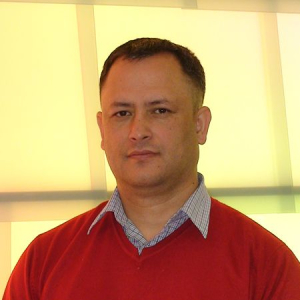
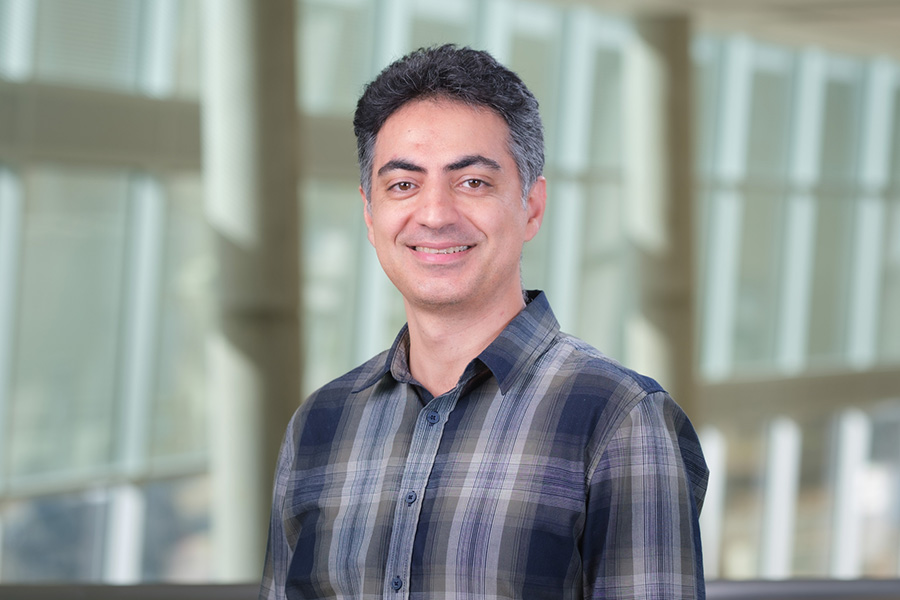
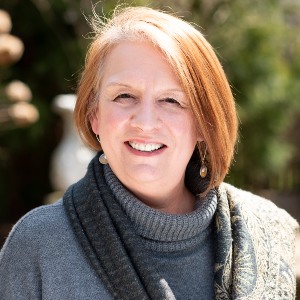
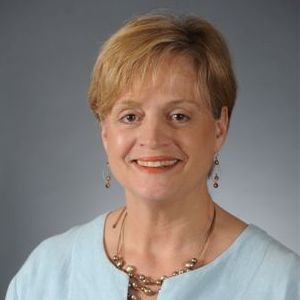
Afsaneh Moradi is a Lecturer at the Department of Organization, Strategy, and Entrepreneurship (OSE) within the School of Business and Economics (SBE) at Maastricht University. She holds a Ph.D. in Business Economics and Management, focusing on public sector management. Her professional background includes roles as a project manager, business consultant, and management consultant in industrial engineering projects. Her research interests span Entrepreneurship, Public Sector Consultancy, Innovation, Sustainability Studies, and Climate Coaching. She is an approved assessor for Entrepreneurship projects in the EU certified professional system and a member of Climate-KIC's Network of Coaches and Trainers, part of the EIT-European Institute of Innovation & Technology. Her recent publications explore themes such as service innovation in SMEs, ridesharing adoption in Iran, low-carbon mobility transitions, and sustainable urban planning. These works reflect her interdisciplinary focus on bridging theory and practice in business management and sustainability. Moradi contributes to academic and policy discussions through her expertise in innovation systems, climate policy, and organizational strategies. She actively engages with industry and governmental stakeholders to advance sustainable development goals.
Komal Aryal is a Research Fellow in Disaster Risk Governance at the University of Salford's THINKlab. With over 17 years of experience, his work focuses on participatory disaster risk management, humanitarian response coordination, and community resilience. Aryal investigates the integration of Earth Observation, AI, and social intelligence for improving local disaster governance. His research portfolio includes projects in Sri Lanka, Pakistan, and Malaysia funded by GCRF/EPSRC. Aryal has field experience in major crises including the 2014 Ebola outbreak and 2015 Nepal earthquakes. He collaborates with Tyne and Wear Fire and Rescue Service on community safety knowledge exchange. He holds a PhD from Northumbria University on disaster vulnerability in Nepal and an MSc in Disaster Management. Aryal's publications analyze governance challenges and vulnerability assessment methodologies in disaster contexts.
Professor Daniel P. Hawes is a faculty member in the Department of Political Science at Kent State University's College of Arts & Sciences. His research focuses on public policy and administration, with substantive emphases on education policy, immigration policy, and the role of public management in addressing inequities for disadvantaged groups. He holds a PhD from Texas A&M University (2008) and a BA from the University of Texas Pan-American (2003). His work examines how organizational structures, political representation, and social environments shape policy outcomes. Notable themes include the impact of immigration enforcement on academic performance of undocumented students, the role of nonprofits in immigrant advocacy, and the intersection of social capital with public health and policy. He has published in journals like Public Administration Review , Administration & Society , and Journal of Public Policy . Dr. Hawes has received the 2021 Best Paper Award from the American Political Science Association's Public Administration Section. He serves as Associate Editor for the International Journal of Public Administration and has held leadership roles in professional organizations including NASPAA and MPSA. His research has been funded by grants such as the Russell Sage Foundation award for studying detained immigrants' parole decisions. He mentors students through programs like the McNair Scholars Program and actively participates in academic governance as a committee member for prestigious awards like the Leonard D. White Dissertation Prize.
Thomas Conzelmann is a Full Professor of International Relations at Maastricht University's Faculty of Arts and Social Sciences (FASoS), serving as Director of the FASoS Graduate School since 2020. Previously, he held roles as Associate Dean of Research (2009-2013, 2018-2020) and Associate Professor (2007-2013). He earned his PhD from the University of Mannheim (2002) and holds an MA in Political Science from Heidelberg University. His research focuses on global governance mechanisms, particularly peer reviews among states and the authority of non-binding instruments. Education highlights include studies at FU Berlin, Victoria University of Manchester, and Heidelberg University, culminating in an MA with highest distinctions. His career also includes visiting research fellowships at the LSE and University of Birmingham. Research interests include global governance authority, EU external policy, and transnational private regulation. Major projects include the LIMES doctoral network (2020-2025) on border dynamics and the Legal Mobilization Platform addressing accountability challenges. He has secured €1.4M+ in grants, including a European Commission COFUND award. Publications emphasize peer review mechanisms, EU governance, and sustainable development. Supervision includes over 10 PhD candidates focusing on cybersecurity, sustainable development, and international organizations. Active in academic leadership, he coordinates courses on European diplomacy and global governance.
Eline Poelmans is an Associate Professor at KU Leuven's Faculty of Economics and Business (FEB), specializing in Economic History, International Economics, and Food Economics with a focus on beer and chocolate economies. She holds appointments at the Brussels Campus and maintains active research projects analyzing historical economic policies and contemporary consumer behavior. PhD in Economic History (2009) from KU Leuven Additional bachelor and master degrees in History and International Relations Her research explores: Economic history of beer and chocolate industries Impact of historical alcohol policies International trade dynamics Regional food economy development Recent publications include: 2025: Analysis of post-Prohibition beer legalization 2024: Consumer rating impacts on beer pricing 2022: Comparative prohibition policy studies She serves as promotor for research projects on: Ukrainian refugee labor markets 1933 beer legalization heterogeneity Contemporary consumer choice models
Babak J. Fard, PhD, is a Research Assistant Professor in the Department of Environmental, Agricultural & Occupational Health at the University of Nebraska Medical Center (UNMC) College of Public Health. He holds a PhD in Interdisciplinary Engineering and an M.Sc. in Civil & Environmental Engineering from Northeastern University. His research focuses on environmental data science techniques, including geospatial analysis, machine learning, and AI models, to study climate variables and their health impacts across geographical and temporal scales. He has conducted extensive work on drought-related health risks, heat vulnerability mapping, and satellite-derived environmental data applications. Dr. Fard is affiliated with the American Geophysical Union (AGU) and the American Meteorological Society (AMS). His recent research emphasizes climate change adaptation strategies, public health risk assessment, and community resilience in the face of extreme weather events. Notable projects include mapping heat vulnerability in Nebraska, evaluating drought's impact on respiratory/cardiovascular mortality, and developing decision-support tools for drought preparedness. His work integrates interdisciplinary approaches to address pressing environmental health challenges, with a focus on rural and urban disparities. Ongoing projects include analyzing PM2.5 health risks using satellite data and exploring links between severe weather and mental health outcomes.
Jan Andersen is a Professor of Political Science at the University of Inland Norway, affiliated with the Faculty of Social and Health Sciences and the Section for Master in Social Work. His research focuses on the intersection of welfare policy implementation and municipal administration, examining governance dynamics between state authorities and local municipalities, organizational structures of welfare services, and user interactions at both systemic and individual levels. He contributes to research groups like Co-Creation in Research and Service Development and Innovation in the Public Sector. Key research areas include municipal governance of welfare policies, user participation in care services, and disability policy frameworks. Recent work analyzes challenges faced by small municipalities in organizing disability councils and explores user participation's role in fostering democratic care systems. His publications span political science journals and welfare policy analyses, demonstrating expertise in Scandinavian welfare models and public administration challenges. Professional networks include collaborations with institutions like the University of Agder and involvement in interdisciplinary projects addressing social innovation and service development. No specific scientific awards are listed, but his extensive publication record reflects sustained academic contribution to welfare and political studies.
Gordon Mackerron is Professor of Science and Technology Policy at SPRU (Science Policy Research Unit), University of Sussex Business School, where he served as Director from 2008-2013. An economist specializing in energy and environmental policy, he holds degrees from Cambridge and Sussex universities. His research examines electricity systems with particular focus on nuclear power economics, radioactive waste management, and sustainability transitions. He chaired the UK Committee on Radioactive Waste Management (2003-2007) and served on the Royal Commission on Environmental Pollution (2009-2011), providing high-level policy advice on decarbonization pathways and infrastructure planning. Current projects include LANDMARC, investigating land-based climate mitigation strategies, and TRANSrisk, analyzing transition pathways for climate change mitigation. His publications consistently engage with controversies in energy policy, particularly comparing nuclear and renewable approaches to decarbonization across different governance contexts.
Charles R. Hankla is a Professor of Political Science at Georgia State University’s Andrew Young School of Policy Studies. He serves as Director of the International Center for Public Policy (ICePP) and Associate Director of the Public Finance Research Cluster (PFRC). His expertise lies in comparative political economy, fiscal decentralization, and public finance. He holds a Ph.D. from Emory University (2005), an M.A. from the London School of Economics (1999), and a BSFS from Georgetown University (1997). Dr. Hankla leads a World Bank project in Mozambique ($1.2M) focusing on fiscal decentralization reforms and has consulted for the UNDP, U.S. State Department, USAID, and G20. His research examines institutional impacts on fiscal policy, trade, and industrial strategies in developing nations. He has published in top journals like the American Political Science Review and authored/co-authored books on fiscal federalism and industrial policy. Education: Ph.D. Political Science, Emory University (2005) M.A. Political Science, London School of Economics (1999) BSFS, Georgetown University (1997) His research interests emphasize political institutions’ role in fiscal governance, with recent work focusing on gender norms in Indian elections, trade policy in authoritarian regimes, and decentralization dynamics. Notable grants include NSF-funded experiments in India and an IGC grant for survey work in Bihar. He has received awards for mentoring and scholarship, including the Elinor Ostrom Award (2022) and Deil Wright Award (2011). Dr. Hankla co-directs major research initiatives, including the Egyptian Decentralization Initiative (USAID-funded), and provides policy training globally. He is a frequent media commentator on economic politics, with over 650,000 reads on The Conversation and appearances on BBC, CBC, and others. Fluent in French and with Hindi reading skills, he bridges academic and policy communities through ICePP’s global engagements.
Jan E. Leighley is a Professor at American University's School of Public Affairs, Department of Government. Her career spans editorial leadership, institutional governance, and federal program management, including roles as interim Senior Associate Dean (2012–2014) and National Science Foundation Program Manager (2020–2021). She focuses on democratic representation, electoral systems, and political inequality. PhD, Washington University in St. Louis Her research examines how electoral laws, socioeconomic disparities, and racial/ethnic dynamics influence voter turnout and democratic representativeness. Key themes include the intersection of class bias and policy responsiveness, historical evolution of electoral institutions, and the role of mobilization mechanisms in shaping electorates. The 15 most recent articles highlight trends in voter turnout analysis, electoral reform impacts, and racial/ethnic participation disparities. They span sub-fields like early voting accessibility, survey measurement accuracy, off-year election representativeness, and the influence of partisanship and social identity on engagement. Leighley co-authored Who Votes Now? (2014) with Jonathan Nagler, analyzing demographic and issue-based drivers of turnout, and wrote Strength in Numbers? (2001) on minority mobilization. She served as editor for the American Journal of Political Science (2000–2004, 2018–2019) and The Journal of Politics (2009–2014).
Professor Jocelyn Johnston is a distinguished faculty member at American University's School of Public Affairs, Department of Public Administration and Policy. She teaches graduate courses including Public Administration Capstone (PUAD-610), Doctoral Dissertation (PUAD-899), and Topics in Public Management: State and Local Management (PUAD-609). Professor Johnston earned her educational credentials from Syracuse University's Maxwell School of Citizenship and Public Affairs, where she completed both her PhD and Master of Public Administration. Her undergraduate studies were completed at LeMoyne College, where she earned a BA in Psychology, Sociology and Philosophy. Professor Johnston's research program focuses on the complex dynamics of government contracting, public management, intergovernmental programs and policy, with particular emphasis on social welfare policy and administration. Her work explores how government agencies design and manage contracts with private and nonprofit providers, examining issues of accountability, performance measurement, and the effectiveness of different contractual arrangements in delivering public services. She has published extensively in leading journals including Journal of Public Administration Research and Theory, Public Administration Review, and Administration and Society. Her scholarly contributions demonstrate a consistent trajectory examining the evolution of contracting in public administration, particularly in social welfare programs. Over time, her research has expanded from examining specific state-level implementations to developing broader theoretical frameworks about contracting across the federal system. Professor Johnston's work consistently addresses the tension between traditional bureaucratic control and newer networked governance approaches in public service delivery. Professor Johnston's scholarly excellence has been recognized through several prestigious awards: Kaufman Award for the best paper in Public Administration presented at the 2001 American Political Science Association national conference Vice Chancellor's Administrative Fellow, University of Kansas, 2001-2002 John Ben Snow Foundation Doctoral Fellowship, Syracuse University, 1993 Emil and Maud Beck Family Doctoral Scholarship, Syracuse University, 1992 New York State Government Finance Officers Association Scholar, 1989 Professor Johnston has secured significant research funding throughout her career, with particular expertise in social welfare reform and government contracting. Her grant portfolio includes numerous projects funded by the Federalism Research Group, State Capacity Project at the Rockefeller Institute of Government (SUNY Albany), and state governments including Kansas and Pennsylvania. These projects have examined Medicaid managed care, welfare reform implementation, food stamp take-up rates, and state social services contracting. Her practical experience in local government administering federally and state-funded social welfare programs for ten years informs her research approach and provides valuable real-world context to her scholarly work. Professor Johnston maintains active professional engagement through memberships in leading organizations including the Public Management Research Association (Executive Committee), American Political Science Association, Association for Budgeting and Financial Management, Association for Public Policy and Management, and American Society for Public Administration. She has served as Chair of both the National Association for Budgeting and Financial Management and the Public Administration Section of the American Political Science Association, demonstrating leadership in the field.
Jannicke Totland Due is a Research Fellow in Logistics at the Faculty of Logistics, Molde University College (HiMolde). Her work focuses on sustainability in Norway's transport sector, examining how national sustainability goals translate into local planning outcomes. She employs qualitative case studies, interviews, and policy analysis to explore the interplay between governance, knowledge application, and socio-ecological impacts of infrastructure projects. Education: Master's in Social Science Didactics, University of Oslo Bachelor's in Nordic Studies (Rhetoric/Linguistic Communication), University of Oslo One-year programs in Media/Communication and Art/Dissemination, OsloMet Teacher training in Culture/Social Sciences Research Focus: Jannicke investigates ecological compensation mechanisms, municipal sustainability practices, and the consequences of farmland expropriation. Her work bridges theoretical frameworks with practical policy implementation, emphasizing the complexities of balancing urban development, environmental protection, and agricultural land preservation. Methodologically, she combines policy analysis with participatory approaches to capture stakeholder perspectives in decision-making processes. Current Project: The project Dimensions of Sustainability explores governance challenges in Norwegian transport policy, analyzing how planning dynamics shape socio-economic and ecological outcomes at the local level.
Jésica De Armas is an Associate Professor at the Department of Economics and Business, Universitat Pompeu Fabra (UPF) in Barcelona, Spain. She holds a prestigious Ramon y Cajal Fellowship from the Spanish Ministry of Science and Innovation, recognizing her outstanding research contributions. Her academic career spans multiple institutions, with previous postdoctoral positions at the Open University of Catalonia (UOC) and the University of La Laguna (ULL). PhD in Computing (Cum Laude) from University of La Laguna (2012) Computer Engineering degree with special award for best academic record Ramon y Cajal Fellowship recipient (2022) PhD Extraordinary Award from University of La Laguna (2012) PhD Award from Spanish Association of Artificial Intelligence (AEPIA) (2014) Her research focuses on developing and applying optimization techniques to solve complex real-world problems. She specializes in combinatorial optimization, metaheuristics, and machine learning approaches applied to logistics, transportation, and health care systems. Her work bridges theoretical advancements with practical implementations, particularly in vehicle routing, scheduling, and resource allocation problems. She has established herself as a leading researcher in optimization for social good, with significant contributions to humanitarian logistics and health care delivery systems. Dr. De Armas's publications reveal a strong trajectory in operations research with applications spanning multiple domains. Her research shows a clear evolution from theoretical optimization methods toward increasingly complex real-world applications, particularly in health care and social services. Her most recent work demonstrates a sophisticated integration of simulation, machine learning, and optimization techniques to address challenges in refugee resettlement, home care services, and public infrastructure planning. The consistent publication in high-impact journals reflects her growing influence in the field of operations research. Ramon y Cajal Fellowship (2022) Best Paper Award from Energies (2019) Luis Azcárraga Award from ENAIRE Foundation (2017) PhD Award from Spanish Association of Artificial Intelligence (2014) PhD Extraordinary Award from University of La Laguna (2012) HPC-Europa2 Fellowship (2011) Dr. De Armas has successfully secured multiple competitive research grants and has advised numerous students across various academic levels. She has served as Principal Investigator for projects including REASON (2024-2027) on optimizing health care delivery in rural areas, and previously led the EPHoCaS project (2020-2022) focused on sustainable home care services for the elderly. Her advising portfolio includes three PhD students to completion and numerous master's and undergraduate thesis students, demonstrating her commitment to mentoring the next generation of researchers. Her research has led to tangible industry applications, particularly in vehicle routing optimization where her algorithms have been implemented by companies as key business tools. Dr. De Armas maintains an active international research network with collaborations spanning institutions in Edinburgh, Nottingham, Cosenza, Boulder, Hamburg, and Montreal. Her work on the ROAR-NET research network demonstrates her leadership in advancing optimization algorithms research across European institutions. She has also contributed significantly to the academic community through conference organization, including the International Conference on Computational Logistics (ICCL2022) and the Metaheuristics International Conference (MIC 2017).
Maria Teresa Simone-Charteris serves as a Lecturer in Travel & Tourism Management within the Department of Hospitality and Tourism Management at Ulster University Business School, Coleraine campus. Her academic role focuses on undergraduate and postgraduate teaching in tourism, transport, and management disciplines while serving as Placement Tutor for international degree students. BSc Hons Travel and Tourism Management, Ulster University (2005) Level 2 Intermediate Certificate in Wines and Spirits, WSET England (2006) Postgraduate Certificate in Higher Education Practice (PGCHEP), Ulster University (2016) PhD in progress: Interconnections between religious and political tourism in Northern Ireland Her research centers on pilgrimage & religious tourism, dark and political tourism, and peace reconciliation through tourism, with significant focus on Northern Ireland's post-conflict landscape. She examines how tourism can transform political murals, memorial sites, and religious heritage into catalysts for community engagement and economic regeneration while navigating ethical sensitivities. Her work integrates food and wine tourism with broader destination development strategies, particularly examining craft distillery tourism's regional impact. Analysis of her publication record reveals consistent thematic focus on Northern Ireland's tourism evolution, with increasing sophistication in examining generational differences in dark tourism consumption, digital experience enhancement, and policy implications for heritage reinterpretation. Her work bridges theoretical frameworks with practical industry applications across religious, political, and dark tourism domains. Fellow of the Higher Education Academy (HEA) Enhancing Academic Practice in the Disciplines award by SEDA (2016) As Placement Tutor for international travel and tourism management students, she facilitates professional industry experience while maintaining active external roles as journal reviewer for Tourism, Journal of Management Spirituality & Religion, and International Journal of Religious Tourism and Pilgrimage. Her industry engagement spans 14+ years across diverse roles including tour guiding, hospitality management, and wine education. She contributes to academic discourse as visiting lecturer at HTMi Switzerland and subject reviewer for CABI. Her research integrates with Ulster University's Business and Management Research group, focusing on tourism's role in sustainable development goals related to peace, industry innovation, and sustainable communities, particularly examining how tourism can transform conflict legacies into cooperative economic assets.
John Linnell is a Professor at the University of Inland Norway's Faculty of Applied Ecology, Agricultural Sciences and Biotechnology, within the Department of Forestry and Wildlife Management. His research focuses on complex human-wildlife relationships, particularly large carnivores and herbivores, with global applications. He teaches undergraduate and graduate courses including 'Large Predator Ecology', 'Human Dimensions of Wildlife Management', and 'People & Nature' at the PhD level. Key research projects include CoCo (Co-creating coexistence) and involvement in the WILDCOM research group (Wildlife communities in a changing world). His work emphasizes sustainable coexistence strategies, policy implementation, and bridging science with stakeholder needs. Recent publications address stakeholder perceptions in wildlife management, illegal wildlife trade impacts, and carnivore population dynamics across Europe and Asia. Dr. Linnell contributes to international guidelines on human-wildlife conflict mitigation and coexistence, integrating local ecological knowledge with advanced technologies. His interdisciplinary approach spans ecology, sociology, and policy, addressing challenges in human-dominated landscapes.