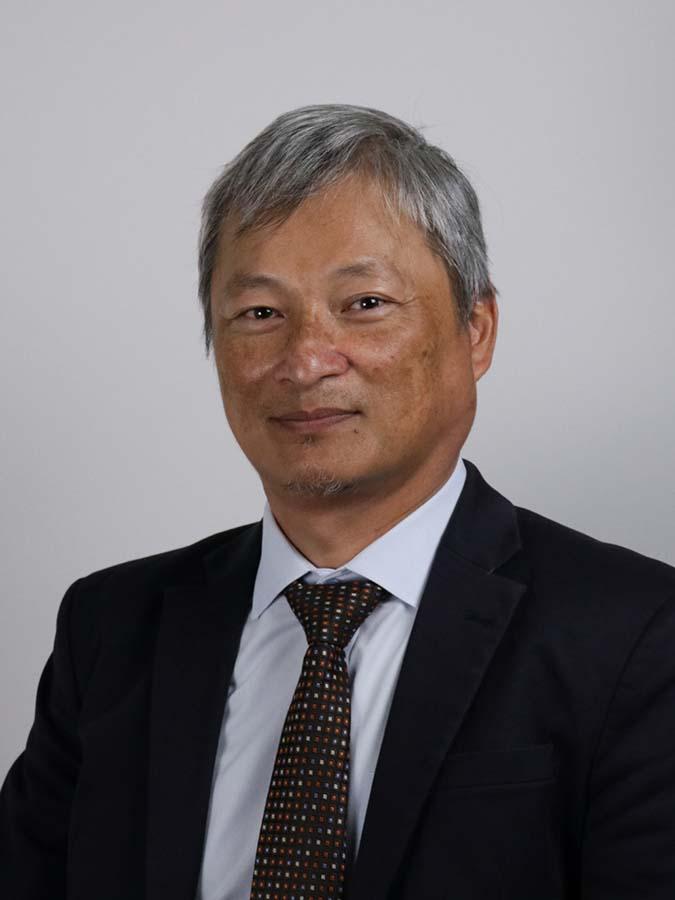
Sotirios Karatzimas is an Assistant Professor of Accounting at the Department of Accounting and Finance, Athens University of Economics and Business (AUEB). He holds a PhD and MSc from AUEB, with postdoctoral research on Greek public sector accounting during austerity. He has also taught at Universitat Autònoma de Barcelona and Neapolis University Cyprus. His research focuses on public sector accounting, management accounting, and financial sustainability in public institutions. Education: PhD in Accounting (AUEB) MSc in Human Resources Management (AUEB) Bachelor's in Accounting and Finance (AUEB) Research emphasizes public sector accountability mechanisms, fiscal transparency, and citizen engagement through innovative reporting methods. He has contributed to EU-funded projects and collaborates with AUEB’s distance learning programs on public sector accounting. His work bridges accounting practices with socio-political contexts, particularly in crisis-affected economies like Greece. Notable contributions include studies on debt management in local governments, smart cities’ climate change reporting, and participatory budgeting frameworks. He is actively involved in European Study Groups on public sector accounting education and advocates for integrating technology (e.g., eLearning platforms) into teaching. His research often examines the intersection of accounting standards, policy reforms, and citizen literacy for fostering participatory governance.
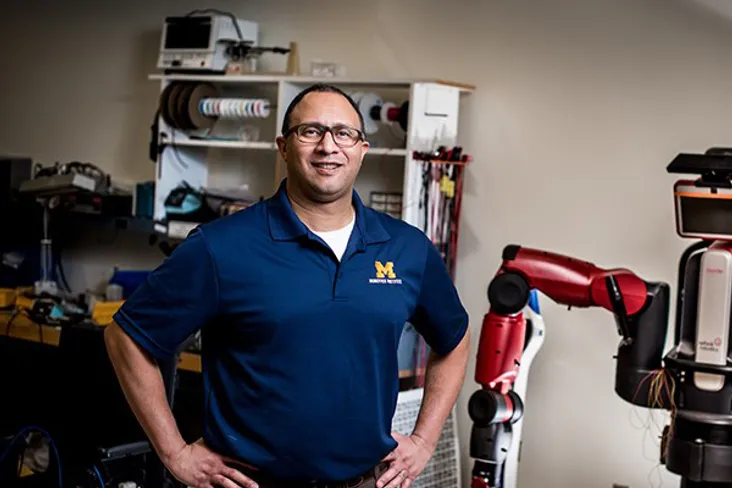
Affiliations & Roles Lionel P. Robert Jr. is a Professor of Information and Robotics at the University of Michigan, holding joint appointments in the School of Information and the College of Engineering's Robotics Department. He directs the Michigan Autonomous Vehicle Research Intergroup Collaboration (MAVRIC) and is an affiliate faculty member at the National Center for Institutional Diversity and Indiana University's Center for Computer-Mediated Communication. His roles include editorial board positions at journals like the Journal of Computer Information Systems and leadership in professional organizations such as ACM and IEEE. Education Ph.D. in Information Systems, Indiana University (BAT Fellow, KPMG Scholar) M.B. from Indiana University, Bloomington M.S. degrees from Clemson University and University of Louisiana, Lafayette B.S. from University of Louisiana, Lafayette Research Focus Robert's research bridges collaboration through technology, with a focus on human-robot interaction, autonomous vehicles, and virtual teams. His work addresses trust in automated systems, human-AV communication, and the sociotechnical implications of robotics in workplaces and public spaces. Recent projects explore explanations for automated vehicles, security robots' societal acceptance, and AI ethics in healthcare and labor. Key Contributions He has published over 100 peer-reviewed articles in journals like MIS Quarterly and conferences such as CHI and HRI. His research has been funded by NSF, Toyota Research Institute, and the Army Research Laboratory. Notable outcomes include frameworks for AV trust repair, models of human-robot team performance, and critiques of AI-driven labor practices. Awards & Recognition ACM Distinguished Member IEEE Senior Member Carnegie Junior Faculty Development Fellowship 3× Teaching Commendation (2006–2008) Grants & Labs Current grants include studies on explainable AI, human-AV trust dynamics, and security robot design. The MAVRIC lab focuses on AV-pedestrian interactions while the CCMC explores digital communication's societal impact.
Stavros Vougioukas is a Professor and Vice Chair in the Department of Biological and Agricultural Engineering at the University of California, Davis, within the College of Engineering. He is actively involved in research and graduate mentorship, focusing on agricultural robotics and automation for specialty crops. His work integrates engineering solutions to improve efficiency and sustainability in farming systems. His research interests include agricultural robotics , automation of harvesting processes , sensors and control systems , precision agriculture , and wireless sensor networks for orchard environments . He develops technologies for robotic and robot-aided harvesting, particularly in strawberries and orchard crops, emphasizing optimal management of inputs and yield monitoring. The recent publications reflect a strong trend in robotics integration , real-time sensing , and data-driven decision-making in agriculture. His work spans mechanical design, signal processing, path planning, and structural durability, indicating a multidisciplinary approach to solving agricultural challenges through engineering innovation. Scientific Awards and Recognition: $1.6M grant (2021) to develop innovative fruit-picking machines CITRIS Seed Award (2023) for engineering solutions in agriculture Professor Vougioukas mentors graduate students and leads funded research projects focused on automation and robotics in agriculture. He has secured significant grants, including a $1.6M award for fruit-picking robotics, demonstrating strong research leadership. His collaborations span institutions and disciplines, particularly in agricultural machinery design and sensor network deployment. He leads research efforts in agricultural automation, particularly through projects involving robot-aided harvesting , orchard navigation systems , and wearable worker tracking devices . His lab contributes to the development of intelligent systems for sustainable farming, integrating mechanical, electronic, and computational components.
Dr. Helen Cai is a Senior Lecturer in International Business and Circular Economy at Middlesex University Business School, where she serves as Programme Leader for the BA International Business Administration and BA Business Management (Top-Up). She also leads the Doctor of Business Administration (DBA) programme delivered in China through a partnership with United Business Institutions (UBI). Additionally, she holds a Full Visiting Professorship at Jiaxing University, China. Her academic leadership extends to editorial roles as Senior Editor of Cogent Business and Management and member of the editorial board of the Journal of World Business . She is Vice President of Marketing for the International Case Study Research Association (ICRA). Dr. Cai’s research focuses on international business, sustainability, green innovation, and corporate environmental governance. She employs advanced methodologies such as fuzzy-set qualitative comparative analysis (fsQCA), econometrics, and scientometric analysis. Her work addresses critical issues including green supply chains, carbon emissions, foreign direct investment, and institutional influences on innovation. The 15 most recent publications highlight a strong trend toward environmental sustainability, circular economy, and data-driven policy analysis. Her recent work spans blockchain in green supply chains, AI in rehabilitation, carbon governance, land use, and migration policy, demonstrating interdisciplinary breadth and policy relevance. Bronze award, The First National Collegiate Olympiad Mathematical Mirror Competition (2022) Honourable Mention, Interdisciplinary Contest in Modelling (2022) First Prize, Asia and Pacific Mathematical Contest in Modelling (2021) Third Prize, THE International Case Competition (2021) Dr. Cai has extensive supervisory experience, currently guiding multiple PhD candidates and having chaired over 30 DBA viva panels. She has supervised over 60 BA, 150 MSc, and 75 MBA dissertations. She has participated in 72 PhD/DBA committees in roles including external examiner, internal examiner, and panel chair. Her grants and funding are not explicitly mentioned, but her research output and editorial roles suggest sustained scholarly engagement. She leads research teams focused on circular economy and international business, and her future work is likely to expand into AI-driven sustainability analytics, cross-border green innovation, and climate governance. Her prior industry experience as a Senior Economist at China’s Central Bank enriches her applied research perspective.
Prof. Dr. Andrea Walter is a Professor of Political Science and Sociology at the Hochschule der Polizei und Verwaltung Nordrhein-Westfalen (HSPV NRW), based at the Dortmund campus. She is affiliated with the Department of General Administration / Pension Insurance and specializes in Social Sciences, particularly civil society, local governance, and civic engagement. University: Hochschule der Polizei und Verwaltung Nordrhein-Westfalen School: Faculty of Public Administration Department: Department of General Administration / Pension Insurance Academic Rank: Professor Email: andrea.walter@hspv.nrw.de Location: Hiltropwall 4-12, 44137 Dortmund, Room A.1.14 She earned her PhD in Political Science from the University of Münster in 2014 with scholarships from the Friedrich-Ebert-Stiftung and FAZIT-Stiftung. Prior to her professorship, she worked as a project manager at Bertelsmann Stiftung and as a research associate at WWU Münster, contributing to third-party funded projects. She has held visiting researcher positions at WU Wien, Stockholm School of Economics, and Georgetown University. Her research centers on civil society, local democracy, civic engagement, volunteerism, gender in nonprofit organizations, and social innovation. She investigates how civil society actors interact with public administration, the governance of local services, and the sustainability of volunteer-based institutions. Her work emphasizes participatory governance, informal decision-making, and gender equity in nonprofit leadership. Her recent publications span topics such as volunteer firefighters, civic engagement during the pandemic, local integration, and the value of civil society. These works reflect a strong focus on empirical social research applied to public administration and policy, often in collaboration with practitioners and policymakers. Her research combines qualitative and policy analysis methods, contributing to both academic discourse and practical governance improvements. Scientific awards and recognitions include the Carl Goerdeler Prize for her municipal science dissertation (2016). She has also been actively involved in academic and public service, including: Co-Editor of Voluntaris - Zeitschrift für Freiwilligendienste und zivilgesellschaftliches Engagement (since 2023) Member of the Research Commission at HSPV NRW (since 2019) Deputy Program Director of the Master of Public Management (MPM) at HSPV NRW (2020–2024) Reviewer for BMBF, BMEL, Stiftung Mercator, and journals such as Voluntas and Bristol University Press She supervises research projects and advises on policy, including serving on the advisory board of the Kompetenzzentrum Bürgerbeteiligung, the jury for Friedrich Ebert Stiftung, and the Forum Zivilgesellschaftsdaten. She is also active in networks such as DVPW, ISTR, and the BBE Berlin working group on civil society research. Prof. Walter leads the BMBF-funded project SROI – Stärkung des Ehrenamts für die Sicherung lokaler Daseinsvorsorge (2021–2024) in collaboration with Kreis Lippe and WWU Münster. She has coordinated and contributed to numerous EU and national research projects on civil society, social innovation, and public administration. Her work bridges academic research and practical policy application, fostering collaboration between municipalities, citizens, and civil society organizations.
Anne E. Winkler is Professor of Economics at the University of Missouri–St. Louis (UMSL), within the Department of Economics in the College of Arts and Sciences. She has been a faculty member since 1989 and served as Department Chair from 2015 to 2021. She is also a Research Fellow at IZA (Institute of Labor Economics). Her research focuses on the economics of gender , the economics of the family , and welfare and poverty . She is widely recognized for co-authoring the 9th edition of The Economics of Women, Men and Work (Oxford University Press, 2022), a leading textbook in gender and labor economics. Her work bridges economic theory with social policy, contributing to broader understanding of labor market disparities and family dynamics. Her recent publications reflect a consistent focus on gender, labor supply, household economics, and policy evaluation. Spanning journals such as Journal of Human Resources , Demography , and Management Science , her research integrates labor economics with demography, public policy, and urban economics, demonstrating interdisciplinary impact. Prof. Winkler has held leadership roles in professional associations, including serving as 2nd Vice President of the Midwest Economics Association, President of the St. Louis Chapter of NABE, and member of the AEA’s Committee on the Status of Women in the Economics Profession (CSWEP). She currently serves on the editorial board of Social Science Quarterly . She regularly teaches courses in labor economics, econometrics, and microeconomics at both undergraduate and graduate levels. While specific advising or grant details are not listed, her long-standing academic engagement and textbook authorship indicate extensive mentorship and curriculum influence. She is affiliated with research teams through IZA and contributes to academic discourse via editorial and professional service. Her sustained scholarship supports ongoing work in gender equity and labor policy.
Stefano Puntoni is a Professor of Marketing and a behavioral scientist at the Rotterdam School of Management, Erasmus University. He serves as Head of the Department of Marketing Management at RSM and as Director of the Psychology of AI Lab at the Erasmus Centre for Data Analytics. His academic journey began with a "Laurea" in Statistics and Economics from the University of Padova in 2000, followed by a Ph.D. in Marketing from London Business School in 2005. His primary research focuses on autonomous technology adoption in consumer markets and production, with particular emphasis on the value of human labor in the age of AI. Additional research areas include advertising language, consumer identity, and numerical cognition. Puntoni's work spans interdisciplinary boundaries, connecting marketing, psychology, and artificial intelligence. An analysis of his recent publications reveals a strong trend toward understanding human-AI interactions in consumer contexts. His research examines how consumers perceive decisions made by algorithms versus humans, preferences for material versus digital products in identity-based consumption, and psychological reactions to human versus robotic job replacement. These studies collectively explore the tension between technological advancement and human elements in decision-making processes. Scientist in Residence, Experiments in Arts and Economics, ZKM Centre for Art and Media (2021) Science Communication Grant, Royal Dutch Academy of Sciences (€10,000) (2021) Case Centre's Marketing Case Award (2021) EFMD Case Writing Award (2020) Case Centre's Outstanding Case Writer Award (2020) C.W. Park Award, Journal of Consumer Psychology (2019) Puntoni has mentored numerous doctoral students, including Phyllis (Jia) Gai, Eugina Leung, and Elisa Maira, many of whom have gone on to prestigious academic positions. He currently serves as Associate Editor for both the Journal of Consumer Research and the Journal of Marketing. His teaching spans marketing strategy, innovation and technology adoption, brand management, and decision making across multiple institutions including RSM, Lancaster University, London Business School, and Bocconi University. As Director of the Psychology of AI Lab at the Erasmus Centre for Data Analytics, Puntoni leads a research team exploring the intersection of human psychology and artificial intelligence in business contexts. His lab focuses on understanding consumer and worker reactions to AI implementation, with practical applications for businesses navigating the digital transformation.
Dorothée Baumann-Pauly is a Full Professor at the Institute of Management, University of Geneva, and serves as Director of the Geneva Center for Business and Human Rights, inaugurated in 2019. Since 2013, she has also been Research Director at the NYU Stern Center for Business and Human Rights. With expertise at the intersection of business ethics and human rights, she has established herself as a leading scholar in corporate responsibility and private governance mechanisms. Ph.D., University of Zurich Baumann-Pauly specializes in Business and Human Rights, with research focusing on corporate social responsibility, global governance, and multi-stakeholder initiatives. Her work examines how businesses can implement human rights standards across global supply chains, particularly in high-risk sectors like cobalt mining in the Democratic Republic of Congo, garment manufacturing, and commodity trading. She has pioneered research on business education models that integrate human rights principles into management curricula. Her recent publications reveal a strong focus on supply chain transparency, with particular attention to minerals critical for the green transition. Her work increasingly addresses the intersection of climate action and human rights, examining 'just transition' frameworks and the social dimensions of sustainable finance. She has produced influential research on greenwashing in the fashion industry and developed practical tools for implementing human rights due diligence. Baumann-Pauly leads the Geneva Center for Business and Human Rights, which conducts research, provides policy recommendations, and develops educational resources on business and human rights issues. The Center collaborates with multinational corporations, civil society organizations, and government bodies to advance implementation of the UN Guiding Principles on Business and Human Rights. Her team has developed innovative approaches to address human rights challenges in complex supply chains, particularly in the cobalt and fashion sectors.
Brian Kovak is an Associate Professor of Economics and Public Policy at Carnegie Mellon University's Heinz College of Information Systems and Public Policy. He holds the Dean's Career Development Professorship at Heinz College and maintains significant affiliations as a Faculty Research Fellow at the National Bureau of Economic Research (NBER) and a Research Fellow of the Institute for the Study of Labor (IZA). His scholarly contributions reach across multiple institutions and academic journals, reflecting his prominence in the field of labor economics and international trade. Ph.D., Economics, University of Michigan Master of Public Affairs, Indiana University B.S., Computer Engineering, Penn State University Brian Kovak's research examines the economic effects of international migration and trade with a focus on local labor markets. His work investigates how worker mobility responds to local labor market conditions, particularly the role of immigrants' geographic mobility in equalizing wage differences for native-born workers across U.S. local labor markets. He also studies the local labor market effects of trade liberalization, developing theoretically motivated empirical approaches based on specific-factors models of local economies. His research spans multiple countries, including extensive work using household survey and matched employer-employee data from Brazil to study the effects of liberalization on wages, employment, informality, and the skill premium. Analysis of Kovak's recent publications reveals a consistent focus on how migration and trade policies affect local labor market dynamics. His work demonstrates sophisticated methodological approaches that bridge theoretical economic models with empirical evidence from diverse contexts. The research shows particular attention to how economic shocks transmit across regions through migration networks and how trade liberalization affects different segments of the workforce. His publications in top economics journals demonstrate the significance of his contributions to understanding the intersection of international economics and labor market outcomes. IZA Young Labor Economist Award (2014) for best peer-reviewed journal publication in labor economics by authors under age 40 Beyond his research, Kovak serves as an Associate Editor of the Journal of Development Economics, contributing to scholarly discourse in his field. His work has attracted significant funding, including NSF grants (award #1851679) for research on wage insurance for displaced workers and another NSF grant (award #1854051) on emerging technologies, labor outcomes, and policy responses. His research has garnered substantial attention from both academic and policy communities, with coverage in major media outlets including the New York Times, Financial Times, Wall Street Journal, and Washington Post. Kovak's scholarly impact extends through his collaborations with numerous researchers across institutions, creating a substantial body of work that informs both academic understanding and policy development in international economics and labor markets.
Mark Carey is a Professor in Environmental Studies and Geography at the University of Oregon , where he leads research at the Glacier Lab ( glacierlab.uoregon.edu ). His work bridges environmental history, glaciology, and climate justice, focusing on the intersections of glaciers, society, and climate change in the Andes and Arctic. Research Interests Environmental History Glaciology and Society Climate Change Adaptation Environmental Justice Latin American Environmental Policy Arctic and Andean Cryospheric Studies Mark Carey’s recent publications emphasize sociocryospheric systems, glacial lake outburst flood (GLOF) risks, and climate litigation. His interdisciplinary work combines historical analysis with contemporary climate science, highlighting vulnerabilities in mountain cryospheres and advocating for community-centered adaptation strategies. He has authored influential works like The Routledge Handbook of Environmental History (2023) and developed frameworks for analyzing climate justice in glacial regions. His Glacier Lab at the University of Oregon fosters collaborative research on global cryospheric changes, with a focus on Andean and Arctic regions. Carey’s career spans decades of CNH-funded research (2010) and leadership in integrating environmental history with climate policy, emphasizing the need for decolonized research methodologies and gender-inclusive adaptation strategies.
Dr. Yousra Rahmouni Elidrissi serves as an Assistant Professor in Organisation Science at Utrecht University's School of Governance within the Faculty of Law, Economics and Governance. Her office is located at Bijlhouwerstraat 6-8 in Utrecht, where she conducts research at the intersection of Social Movements and Organization Studies with a particular focus on embodiment in activist practices. Her research expertise centers on embodiment and social movements , with specialized skills in qualitative research and ethnography . Her work explores the significance of bodies and embodiment in activists' practices, particularly through her PhD research on a French climate movement engaged in non-violent direct action. She investigates collective forms of resistance and dynamics of solidarity within communities, with research areas spanning Institutions for Open Societies, Gender and Diversity and Global Justice, and Migration and Societal Change. Analysis of her recent publications reveals a consistent trajectory examining activist organizing, embodiment in social movements, and the politics of resistance. Her scholarly output demonstrates growing engagement with feminist methodologies, critical praxis in education, and coalition building across social movements. Her work increasingly addresses post-pandemic societal transformation and the creation of alternative futures through activist organizing. Dr. Rahmouni Elidrissi actively contributes to academic discourse through conference presentations including at EGOS colloquia, where her work on 'Bodies on the line: Performing embodied politics in the French climate movement' was short-listed for the 'That's Interesting Paper' Award. She has also participated in scholarly activities such as the 36th EGOS Pre-Colloquium Development Workshop on 'Taking Sides: Activism, Knowledge Production and Education in the Climate Crisis'.
Dr. Mei Nan is an Associate Professor in the Department of Communication at Tongji University's School of Art and Media. With a career spanning since 2004, she previously held positions at Chang'an University before joining Tongji in 2017. Her academic credentials include a Master's from Shaanxi Normal University, postgraduate studies at Communication University of China, and ongoing doctoral research at Xi'an Jiaotong University's School of Economics and Finance. Research Expertise Her research bridges media economics, AI-driven communication paradigms, and film studies, with specific focus areas including: Media economics and corporate governance interactions Artificial intelligence's impact on communication theory Film/audiovisual language analysis Media culture evolution Marketing models in digital ecosystems Teaching Portfolio Dr. Nan teaches both undergraduate courses ( Audiovisual Language, Chinese/Foreign Film History, Media Culture, Chinese Film Appreciation ) and graduate seminars ( Intelligent Communication Theory and Practice ). Her pedagogical approach integrates contemporary media developments with theoretical foundations. Awards and Grants Tongji University Hongda Award (2021) Tongji Cup General Education Course Paper Competition Teaching Teacher Excellent Organization Award (2021) Principal Investigator: Shanghai Philosophy and Social Science Planning Project (2018BGL025) studying media impact on corporate recovery
Zhe Zhang is an Assistant Professor of Innovation, Technology, and Operations at the Rady School of Management, University of California San Diego (UCSD). He holds a Ph.D. in Information Systems and Management from Carnegie Mellon University's Heinz College and dual bachelor's degrees in Economics and Statistics from Stanford University. His research focuses on the societal and spillover impacts of information technology, including fairness in algorithmic decision-making, sharing economy dynamics, and digital transformation effects. Ph.D., Carnegie Mellon University (Heinz College) B.S. in Mathematical and Computational Sciences, Stanford University B.A. in Economics (with honors), Stanford University His work spans disciplines like machine learning, applied microeconomics, and operations management. Current research includes analyzing cashierless retail technology's operational and behavioral impacts, algorithmic bias mitigation strategies, and the economic implications of Amazon Prime adoption. Key findings highlight how digital innovations reshape consumer demand, manufacturer strategies, and algorithmic fairness outcomes. Recent publications address: Bias amplification through data imputation in healthcare Strategic overfitting in data science contests Sharing economy's effect on durable goods markets He has presented at top conferences in information systems (CIST, WISE), economics (NBER), and computer science (KDD, FAccT). Awards include runner-up for the ACM SIGMIS Doctoral Dissertation Award (2019) and a POMS 2017 Supply Chain Management best paper finalist. Prior to his current role, Zhang worked as a part-time Data Creative staff member at DataKind (NYC) and was a 2016 fellow at the Data Science for Social Good Summer Fellowship (Chicago). He has also contributed to fairness methods in AI at Facebook and nonprofit research at NRDC and Union of Concerned Scientists.
Pham Hoang Van serves as Professor and Chair of the Department of Economics at Baylor University. His academic journey uniquely bridges engineering and economics, having earned mechanical engineering degrees from MIT before completing his PhD in Economics at Cornell University. His educational background includes: PhD in Economics, Cornell University (1998) SM in Mechanical Engineering, Massachusetts Institute of Technology (1992) SB in Mechanical Engineering, Massachusetts Institute of Technology (1989) Professor Van's research spans multiple critical areas including economic development, international trade, immigration policy, health economics, and child labor. He is particularly renowned for co-developing the Immigrant Climate Index with Huyen Pham at Texas A&M University School of Law, which systematically measures how state, county, and city legislation creates varying conditions for immigrants. This research revealed the significant "Trump Effect" - a dramatic increase in positive immigration legislation by subfederal entities responding to restrictive federal policies. His work often connects theoretical economics with real-world policy impacts, particularly regarding vulnerable populations and Vietnam's economic development. An analysis of his recent publications shows consistent focus on immigration policy dynamics, international trade effects (especially on Vietnam), and long-term economic development challenges. The Immigrant Climate Index represents a methodological innovation in policy measurement, while his work on the Rwandan Genocide's long-term effects on child labor demonstrates his commitment to understanding how historical traumas impact vulnerable populations across generations. Professor Van has advised more than 25 research theses and teaches advanced courses including Microeconomic Theory and Business Decisions (ECO 5315) and Game Theory (ECO 5318/4319). His research has attracted substantial funding from the U.S. Department of Agriculture, the Russell Sage Foundation, the Carnegie Corporation, and the Walmart Foundation. He has held visiting positions at the University of Rouen in France and the World Bank, and served as a Fulbright Scholar at the University of Economics in Ho Chi Minh City, Vietnam.
Professor Fangzhu Zhang is a leading academic in China planning at The Bartlett School of Planning, University College London (UCL). With a PhD from the University of Southampton and prior roles at Southampton and Cardiff University, she has been at UCL since 2011, progressing from Lecturer to Professor since 2023. Education: BSc (Nanjing University, 1991), MPhil (University of Hong Kong, 1998), PhD (University of Southampton, 2007) Her research focuses on urban governance , financialization , and environmental planning in China. Recent work explores post-pandemic statecraft, eco-city development, and land assetization in municipal finance. She leads the ERC Advanced Grant project "Rethinking China’s Urban Governance" (2020–2026) and contributes to journals like Urban Studies and Land Use Policy . The 15 most recent publications span topics such as: State entrepreneurialism in megaprojects Financial intermediation in local government bonds Land assetization and urban debt risks Post-pandemic governance transitions Participatory micro-regeneration models She has supervised 20 PhD students (10 completed, 10 ongoing) and serves as founding Editor-in-Chief of the journal Transactions in Planning and Urban Research (TPUR). Her teaching integrates equality, diversity, and inclusion, with leadership roles in UCL's dissertation curriculum.