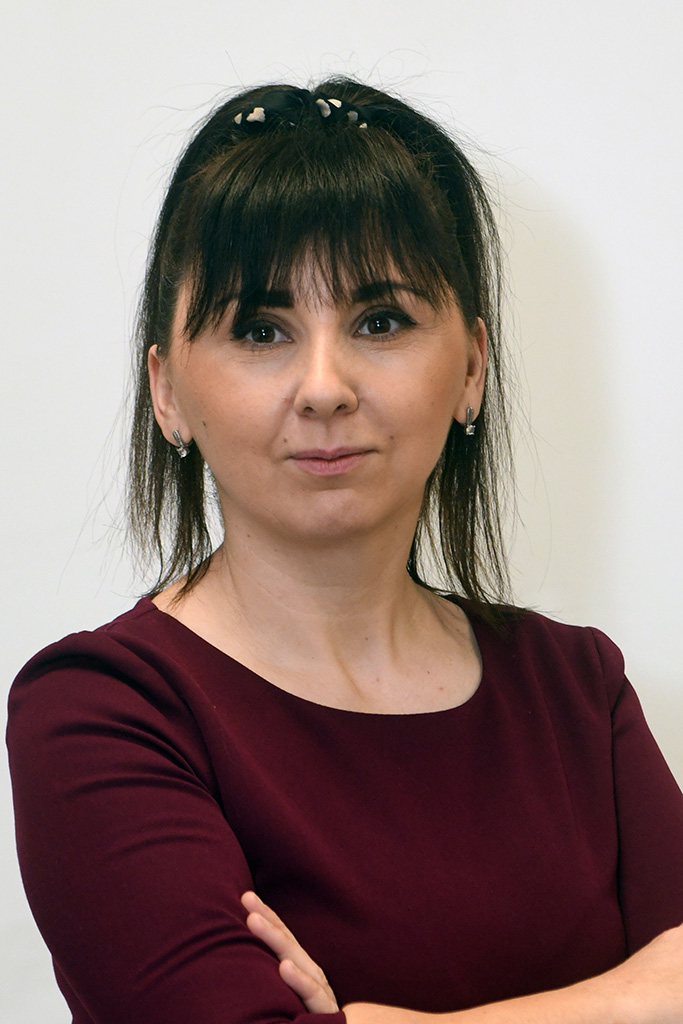
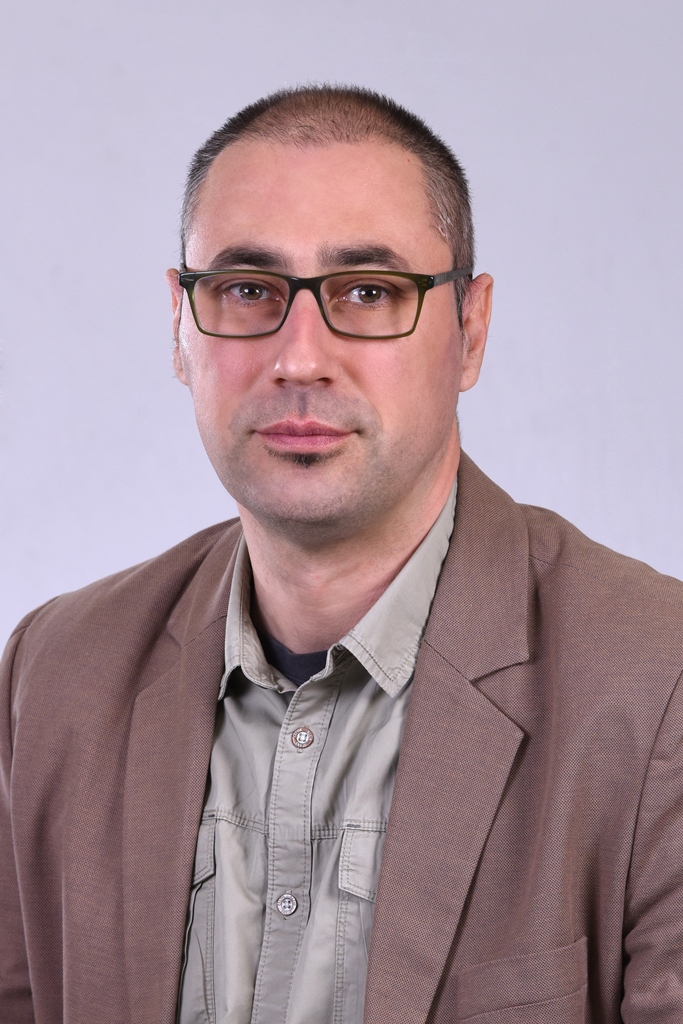
Dalibor Radovanović is a researcher at Singidunum University , affiliated with the Faculty of Business Informatics . His work spans cybersecurity, blockchain technologies, and their applications in business and IoT systems. Education: Doctoral Dissertation (2016, Singidunum University) Master's & Basic Studies (Faculty of Business Informatics) Secondary Education: ETŠ Nikola Tesla Research Interests include: Security frameworks for IoT and blockchain integration Smart card and wireless network vulnerabilities E-governance and corporate IT audit methodologies Machine learning applications in cybersecurity Environmental performance optimization in agribusiness Publication Trends reveal a focus on blockchain (2022), cybersecurity (2009-2022), and IT governance (2010-2017). His work bridges theoretical analysis with practical implementations in Serbia's digital economy. Collaborations with scholars like Marko Šarac and Saša Adamović highlight interdisciplinary approaches to securing financial systems, educational institutions, and industrial IoT applications.
Dr. Nemanja Stanišić is a Full Professor at Singidunum University's Faculty of Business, with a distinguished academic career spanning over 15 years. He holds a Ph.D. in Corporate Finance from Singidunum University (2010), an MBA in Finance from Lincoln University (2007), and a Bachelor's in Accounting from the University of Belgrade (2005). His expertise focuses on Corporate Finance, Banking, Audit, and Applied Statistical Analysis. His research integrates quantitative methods with economic theory, addressing topics such as audit opinion prediction using AI, tourism destination competitiveness, financial distress dynamics, and air pollution health impacts. He co-authored textbooks including Contemporary Exchange and E-business (2010) and Financial Statement Analysis (2024), and served as Editor-in-Chief of The European Journal of Applied Economics . He teaches courses from Financial Accounting to Advanced Financial Engineering at undergraduate, master's, and Ph.D. levels. The 15 most recent publications highlight his interdisciplinary approach: 7 in Finance/Audit, 5 in Tourism/Hospitality, and 3 in Environmental Health. Key trends include applying machine learning to audit quality (2023), multilevel modeling for hospitality satisfaction (2015-2019), and air pollution mortality analysis (2016). His work appears in high-impact journals like Tourism Management (IF 10.125) and Environmental Health (IF 4.986). He held administrative roles including Rector (2020-2021) and Vice President of Singidunum University. He served as Vice Dean for Student Affairs (2010-2011) and participated in TEMPUS projects for educational reform. He mentors graduate students extensively, advising 100+ bachelor's, 57 master's, and 4 doctoral theses, including international candidates. His visiting professorship at Bangkok's ICO NIDA and teaching in Austria-Singidunum joint programs reflect global engagement. Professional development includes advanced training at Utrecht University (Bayesian Modeling, 2019), Stanford (Mentoring, 2010), and NYU (Valuation, 2012). He reviews for top journals like Annals of Tourism Research and Cornell Hospitality Quarterly , with 1017 Google Scholar citations and 349 Scopus citations. Current research involves the Science Fund of Serbia's TOURCOMSERBIA project evaluating tourism competitiveness models.
Zoran Đukanović is a Professor at the Faculty of Architecture, University of Belgrade. His work focuses on urban design, cultural heritage, and sustainable development, with a particular emphasis on participatory methods and community engagement in urban planning. His research explores the intersection of architecture, public spaces, and social dynamics, addressing challenges such as climate change adaptation, heritage conservation, and urban regeneration. Notable projects include studies on Belgrade’s urban policies, waterfront revitalization, and the role of cultural sites in tourism and placemaking. He has contributed to interdisciplinary initiatives linking education, urban planning, and place branding, advocating for inclusive and equitable urban development.
Dr. Sladjana Mijatovic is a faculty member at the Faculty of Sports and Physical Education, University of Belgrade, since 1993. Her research focuses on the history of physical education, sports, and the Olympic movement in Serbia and the Balkans. Education: Doctorate (1992), Master's (1986), and Diploma (1982) from the University of Belgrade. Her publications analyze historical and socio-economic dimensions of physical culture, including textbooks on Serbian sports history and contributions to the Serbian Encyclopedia. She has participated in European and international sports congresses, presenting on topics like early Olympic events and women's roles in gymnastics. She serves as Secretary General of key organizations such as the Balkan Society for the History of Physical Culture and the Serbian Society for the History of Physical Culture, and has contributed to memorial projects and editorial boards.
Milena Podovac serves as an Assistant Professor at the Faculty of Hotel Management and Tourism in Vrnjačka Banja, University of Kragujevac, Serbia. Appointed to this position in June 2020 after progressive promotions since her 2011 appointment, she teaches core courses including Tourism Management, Management of Travel Agencies and Tour Operators, and Business Tourism. Her office is located in room 5 with consultation hours every Tuesday from 10:00-12:00. Her academic credentials include: Basic Academic Studies: Faculty of Economics, University of Kragujevac (2010) Master's Academic Studies: Faculty of Economics, University of Kragujevac (2012) Doctoral Studies: Singidunum University, Department of Postgraduate Studies, Belgrade (2019) Podovac's research centers on urban and rural tourism development , examining how tourism impacts community quality of life and destination competitiveness. Her work investigates travel motivations in Serbian urban centers, rural tourism potential in mountainous regions, and post-pandemic risk perception among travelers. Recent publications analyze health tourism branding, coastal safety perceptions, and technology's role in travel organization, demonstrating her focus on practical tourism management challenges. Her publication trend (2015-2022) reveals increasing emphasis on contemporary issues: pandemic-related travel behavior (2021-2022), urban destination marketing (2021-2022), and technology integration in tourism (2022). While maintaining Serbian case studies (Belgrade, Goč mountain, Vrnjačka Banja), her recent work expands to Croatian destinations (Opatija Riviera, Prolom Banja), showing regional research diversification. Podovac contributes to regional development through project work including: Strategy for Tourism Development of Rača Municipality (2014-2019) Revision of Strategy for Agriculture and Rural Development of Lajkovac Municipality (2016-2025) Her research informs practical tourism policy while addressing theoretical gaps in destination management and tourist behavior.
Marko Šarac is a Professor at Singidunum University in the Faculty of Informatics and Computer Science . He holds a Master's degree in Contemporary Information Technologies (2008) and a PhD in Advanced Protection Systems (2013) from the same institution. His research spans Cybersecurity, Artificial Intelligence, Blockchain, Internet of Things (IoT), Machine Learning, and Data Privacy . Education: Master: Contemporary Information Technologies, Singidunum University, 2008 PhD: Advanced Protection Systems, Singidunum University, 2013 Research Focus: SSL Traffic Security, Virtual Datacenters, Biometric Cryptography, and IoT Healthcare Systems Developed frameworks for Explainable AI in Metaverse Security , Blockchain-based IoT Security Gateways , and Machine Learning for Medical Diagnostics Notable Publications: 2025: CNN-enhanced attack detection for IoT-based Metaverse 2024: Modified Firefly Algorithm for medical dataset classification 2023: Space weather prediction using metaheuristics Projects: Co-author on 9+ books including Internet Marketing (2020) and Computer Network Security (2014) Contributed to 50+ peer-reviewed journals and conference papers on cybersecurity and AI Grants & Collaborations: Active in IEEE , ZINC , and Sinteza conference series Collaborated with researchers across Europe and Asia on IoT, Blockchain, and Cloud Security Contact: msarac@singidunum.ac.rs
Nataša Kilibarda serves as Professor at Singidunum University's Faculty of Tourism and Hospitality Management in Belgrade, Serbia. Her academic career spans over two decades with specialized expertise in food safety, meat technology, and sustainable food systems. She holds doctoral qualifications in Food Hygiene and Technology from the University of Belgrade's Faculty of Veterinary Medicine. Her research focuses on critical food industry challenges including food waste reduction, pandemic-era food safety protocols, sustainable meat production, and hospitality sector food handling practices. Kilibarda's work bridges academic research with practical industry applications, particularly in Serbian and Balkan contexts. Her recent publications demonstrate growing emphasis on sustainable food systems, biogas production from organic waste, and the intersection of tourism with traditional food quality. Her 15 most recent publications reveal consistent contributions to food safety literature with particular expertise in: Meat technology and quality control Microbiological safety of processed foods Food waste management strategies Pandemic impact on food systems Sustainable resource utilization Kilibarda maintains active collaboration with Serbian food industry stakeholders and contributes to national food safety standards development. Her work appears in prominent regional journals including Meat Technology, Journal of Food and Nutrition Research, and Tehnologija mesa.
Vuk Gajić is an Assistant Professor at the Faculty of Applied Ecology, Singidunum University, where he has held academic roles since 2016. His career progression includes positions as a teaching associate (2016), assistant (2019), and current role (2023). He earned a Ph.D. in Environment and Sustainable Development from Singidunum University (2019–2022), following prior studies in environmental protection and risk management at the same institution. Research interests span environmental science, sustainable development, GIS applications, and radiation technology for waste and food treatment. He has contributed to interdisciplinary studies, including soil contamination analysis in Libya, microbial decontamination via ionizing radiation, and machine learning applications for software defect prediction and agricultural weed detection. His work bridges environmental engineering with technological innovation, emphasizing sustainability and ecological conservation. Publications reflect a focus on environmental monitoring, pollution assessment, and eco-technologies. Key themes include GIS-based environmental databases, forest fire prevention through sensor networks, and agricultural waste reuse. His research often integrates quantitative methods with geospatial tools, addressing both local and global environmental challenges. Teaching responsibilities include courses on geodiversity, sustainable development, and natural hazards. He actively participates in academic conferences, contributing to peer-reviewed journals and presenting at events like Sinteza and SETI. Current projects likely explore emerging technologies in environmental management and sustainable practices.
Dr. Darko Dimitrovski serves as a Full Professor at the Faculty of Hotel Management and Tourism, University of Kragujevac, specializing in Tourism and Hotel Management. His academic journey spans over two decades with progressive appointments from assistant (2013) to associate professor (2019) and finally full professor (2023). His educational background includes: Bachelor's in Geography from University of Belgrade (2002) Master's in Tourism and Hotel Management from University of Novi Sad (2009) PhD in Geography from University of Belgrade (2013) Postdoctoral research at University of Tras-os-Montes, Portugal (2016-2017) Dimitrovski's research focuses on tourism management with specialized expertise in wine tourism, food markets, event tourism, and sustainable practices. His work examines tourist behavior in urban food markets (e.g., Barcelona's La Boqueria), wine tourism apps, crisis management in hospitality, and economic impacts of sporting events. Recent publications explore digital transformation in tourism through mobile apps and green leadership frameworks. His publication trends reveal deep engagement with: Wine and food tourism dynamics Digital platforms and mobile technology in tourism Sustainable destination management Methodological approaches in tourism economics Urban tourism experiences Professionally, Dimitrovski contributes as Associate Editor for Tourism Management Perspectives and serves on editorial boards of multiple tourism journals including European Journal of Tourism Research. His project portfolio includes European Union-funded initiatives like INNOVINE & WINE and COST Action OceanGov, focusing on wine tourism innovation and ocean governance. His teaching portfolio spans undergraduate to doctoral levels, covering Management of Travel Agencies, Business Tourism, Crisis Management, and Event Tourism. Early career included teaching positions at various Kragujevac technical schools (2002-2013) before joining the University of Kragujevac faculty in 2013.
Nenad Trunić is a Part-Time Lecturer at the Faculty of Physical Culture and Sports Management , Singidunum University . With a background in physical education and sports science, he specializes in modern training technology in basketball, talent selection, and youth athlete development. His career spans professional basketball as a player, coach, and technical director across global leagues. B.Sc., M.Sc., and Ph.D. in Physical Education and Sports from University of Belgrade and Karic Brothers University His research focuses on: Application of advanced training technology in sports performance Talent identification and selection processes in elite basketball Physical and psychological development of young athletes Comparative studies on basketball formats (3x3 vs 5x5) Post-COVID athlete recovery and physiological assessments Recent publications highlight trends in: Biomechanical analysis using local positioning systems Position-specific physical capacity testing Psychological profiling of basketball players Metabolic characteristics in active individuals Professional roles include: Technical Director and Coordinator for youth categories in Iran Basketball Federation FIBA Europe Coaching Instructor since 2011 Coach for multiple international basketball clubs (Italy, Turkey, Switzerland, etc.) Scouting consultant for Sacramento Kings (2005-2008)
Prof. Dr. Miloš Ž Papić is a Full Professor at the Faculty of Technical Sciences Čačak , University of Kragujevac, Serbia. He serves as a City Councilor in Čačak for Education, Science, and Culture, spearheading initiatives like the Čačak Culture Strategy (2023-2027) and launching the Čačak Culture Portal . Education: BSc, MSc, and PhD in Industrial/Engineering Management from University of Kragujevac institutions Research Interests: Information Systems, Environmental Management, Entrepreneurial Education, and Multi-Criteria Decision Making (MCDM) His research spans interdisciplinary applications of IT in education, tourism, and environmental protection, with recent work on: Digital dialogue systems in classrooms Soil contamination analysis using MCDM Cheating behavior in academic settings Beer tourism market analysis AI in educational outcomes prediction Scientific Contributions include over 90 publications, with 15 recent articles focusing on IT integration in tourism (2023-2024), municipal waste management (2024), and educational technologies (2022). Notable collaborations involve partnerships with Dušan Garabinović on tourism analytics and Marija Blagojević on environmental modeling.
Nemanja Pantic is an Assistant Professor at the Faculty of Hotel Management and Tourism, University of Kragujevac. He joined the faculty in 2011 and teaches courses including Principles of Economics, Business Culture and Ethics, and Basics of Hospitality and Tourism. His academic foundation includes undergraduate (2010) and PhD studies in Economics from the same university. His research explores interdisciplinary themes in Economics, Tourism, and Finance, with specific focus areas such as: Tourism economics and crisis impacts Financial institutions and investment strategies Rural development through gastronomy/adventure tourism Economic development in Balkan contexts Publications (2012-2015) predominantly analyze tourism resilience during economic crises, human development metrics in Serbia, and investment mechanisms. A consistent focus on Balkan economies and sustainable tourism emerges across his work. Project involvements include: TEMPUS project: 'Modernization and Harmonization of Tourism Study Programmes in Serbia – MHTSPS' (EU-funded) Project: 'Stimulating Rural Tourism for the Purpose of Sustai...' (title truncated)
Bojan Đerčan is an Associate Professor at the Department of Geography, Tourism and Hospitality within the Faculty of Science and Mathematics, University of Novi Sad, Serbia. Born on June 23, 1984, in Sremska Mitrovica, he progressed from Researcher Trainee (2007-2010) to his current position since 2020, holding a Doctor of Science in Geoscience awarded in 2015 for his dissertation on Srem settlement systems. Bachelor's in Geography, Tourism and Hotel Management (University of Novi Sad, 2007) Master's in Architecture and Urban Planning (Faculty of Technical Sciences, 2018) PhD in Geoscience: 'Settlement Systems in Srem' (University of Novi Sad, 2015) His research centers on regional and social geography with specialized focus on settlement patterns, border region dynamics, and ethnic group sustainability in Vojvodina, Serbia. He examines demographic transitions, urban-rural linkages, and revitalization strategies for depopulated areas through interdisciplinary lenses combining spatial analysis, demographic modeling, and cultural studies. His work addresses critical challenges like ethnic minority resilience, cross-border cooperation, and sustainable tourism development in post-socialist contexts. Analysis of his 13 publications (2012-2021) reveals consistent thematic evolution toward integrated geographical-demographic frameworks. Early work focused on wood waste energy and traffic noise, while recent research emphasizes ethnic sustainability in Vojvodina, border region revitalization, and historical-demographic heritage. His methodology combines case studies of specific municipalities (e.g., Šid, Sremska Mitrovica) with regional-scale analysis, frequently collaborating with demographers and environmental scientists across international journals. Dr. Đerčan actively contributes to national and provincial research initiatives addressing Serbia's demographic challenges. His grant portfolio demonstrates sustained engagement with critical regional issues: Demographic transitions in Serbia (2006-2010) Revitalization of depopulated border areas in Banat (2008-2009) Migration processes in Kosovo/Metohija (2008-2009) Geospace transformations in Serbia (2011-2017) Depopulation challenges in Vojvodina (2011-2013) Ethnic group sustainability (2013-2019) Agricultural-tourism development in Vojvodina (2017-2018) He serves as Technical Editor for the Department of Geography's scientific journal and collaborates through multidisciplinary networks including the Serbian Geographical Society, Serbian Demographic Society, and international associations PLPR and ISDS. His fieldwork integrates with organizations like NGO Carpe Noctem for border region studies, while conference participation (ICB 2026, CTTH 2024) demonstrates ongoing scholarly engagement.
Dr. Neda Nikolić is an Associate Professor at the Department of Industrial Management within the Faculty of Technical Sciences at the University of Kragujevac, Serbia. With over 15 years of academic service since joining in 2006, she has established herself as a prominent researcher in industrial management, environmental protection, and disaster risk management. Her academic journey began with a degree from the Faculty of Management in Belgrade in 2000, followed by master's studies at the Technical Faculty in Čačak (completed in 2009), and culminating in a doctoral dissertation defended in 2016 at the Faculty of Organizational Sciences in Belgrade. Dr. Nikolić's research interests focus on the intersection of industrial management and environmental sustainability, particularly examining waste management systems, recycling processes, human resources in local government, and disaster risk reduction. Her work demonstrates a consistent thread connecting management principles with environmental protection and sustainable development practices. She has made significant contributions to understanding how local governments can optimize their environmental performance through strategic decision-making and human resource development. Analysis of her 15 most recent publications reveals a clear evolution from traditional industrial management topics toward more complex interdisciplinary research at the intersection of environmental science, public administration, and risk management. Her work increasingly addresses contemporary challenges including pandemic response, nuclear risk perception, and digital transformation in environmental management. The geographic focus remains primarily on Serbia and the broader Central and Southeast European region, with practical applications for local government implementation. Best paper award at ECOS2011 among 330 submissions from 47 countries Member of editorial board for International Journal of Disaster Risk Management President of scientific sector of Serbian Association for Recycling, Decontamination, and Demolition Member of Scientific-Professional Society for Risk Management in Emergency Situations Dr. Nikolić actively contributes to academic governance as a member of the Teaching-Scientific Council at the Faculty of Technical Sciences, Čačak. Her previous service includes roles as secretary of the Department of Industrial Management and membership on both the Self-Evaluation Commission and Library Commission. Her research has practical applications in local government operations, particularly in environmental management and disaster preparedness, with several publications focusing on capacity development for Serbian municipalities.
Dijana Stojić is an Assistant at the Department of Computer and Software Engineering, Faculty of Technical Sciences in Čačak, University of Kragujevac. She has held this position since January 2018 while pursuing her doctoral studies in Electrical and Computer Engineering with a specialization in Computer Engineering, which she began in 2021. Her academic journey began with excellent results at the 'Vuk Karadžić' elementary school in Čačak, followed by the Technical School in Čačak where she majored in computer electrical engineering. She earned her Bachelor's degree in Computer Engineering in 2011 (average grade 9.37) and Master's degree in 2012 (perfect average grade 10.00) from the Faculty of Technology in Čačak. Her Master's thesis, 'Software Support for Active RFID Localization,' was supervised by Prof. Dr. Siniša Ranđić. Dijana's research spans multiple domains within computer engineering, with recent publications focusing on practical applications of technology in diverse fields. Her work demonstrates strong expertise in IoT systems, machine learning applications, blockchain technology, and human-computer interaction. She has published extensively on topics including earthquake detection using mobile phones, predictive models for identifying students with difficulties in online learning, medical applications like ECG monitoring with Arduino, agricultural engineering applications, and infrastructure monitoring systems. Award for best first-year student at Faculty of Technology in Čačak Award for best second-year student at Faculty of Technology in Čačak Her professional activities include serving as Student Vice-Dean at the Technical Faculty in Čačak from December 2010 to September 2012, participating in the TEMPUS SIGMUS project, and completing an internship at D.O.O. DOCUS from June 2013 to June 2014. She was a scholarship holder of the Ministry of Education, Science and Technological Development from April 2013 to March 2017 and has been involved in significant research projects including 'Development and modeling of energy efficient, adaptable, multiprocessor and multisensory electronic low-power systems' (TR 32043) and the 'German-Serbian Collocation Dictionary for German Language and Teaching' (DeSKoll).