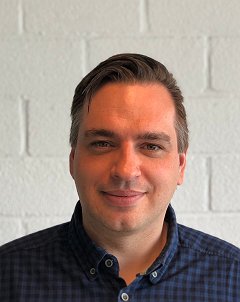
Professor Dr. Tom Hanika is affiliated with the University of Hildesheim , working in the Intelligent Information Systems (IIS) division within the Institute of Computer Science. His research bridges formal concept analysis , machine learning , and knowledge representation , focusing on geometric interpretations of data and explainable AI systems. Research Themes: Intrinsic dimensionality, lattice structures, and hybrid human-AI collaboration Teaching: Offers courses in databases, C++ programming, and semantic technologies Contact: Office (SC.C. 2.03), Phone +49 5121 883-40312, Email via contact form Recent publications highlight his work on geometric data analysis and formal context manipulation , including applications in graph neural networks, ordinal pattern recognition, and conceptual lattice visualization. His Collaborative Hybrid Human AI Learning framework demonstrates practical implementations of these theories. Current projects explore dimensionality resilience in machine learning models and topic flow visualization in academic networks, reflecting his dual focus on theoretical foundations and applied knowledge systems.
Professor Hisao Ishibuchi is Chair Professor of Computer Science and Engineering at Southern University of Science and Technology (SUSTech) in Shenzhen, China, a role he has held since April 2017. Previously, he spent nearly three decades at Osaka Prefecture University, progressing from Research Associate (1987-1993) to Assistant Professor (1993), Associate Professor (1994-1999), and full Professor (1999-2017). He is an IEEE Fellow , served as Vice-President of the IEEE Computational Intelligence Society (2010-2013) , and is currently President of the Japan Society for Evolutionary Computation (2016-2018) . He is Editor-in-Chief of IEEE Computational Intelligence Magazine (2014-2019) and the Journal of the Japan EC Society (2014-2018). Education: Ph.D. in Engineering, Osaka Prefecture University, 1992 M.S. in Engineering, Kyoto University, 1987 B.S. in Engineering, Kyoto University, 1985 Research Focus: Professor Ishibuchi is internationally recognised as a pioneer of computational intelligence , with seminal contributions to evolutionary multi-objective optimisation , evolutionary machine learning , fuzzy systems , neural networks , and hybrid intelligent systems . He introduced the first multi-objective memetic algorithm and early methods for multi-objective fuzzy rule-based classifier design that balance accuracy and interpretability. Publications & Impact: With over 100 journal papers in top-tier venues such as IEEE Transactions on Evolutionary Computation and nearly 500 conference papers, his work has attracted more than 24 000 Google-Scholar citations and an h-index of 68. His recent articles concentrate on many-objective optimisation, fuzzy machine learning, and transfer learning techniques. Honours & Awards: IEEE Computational Intelligence Society Fuzzy Systems Pioneer Award 2019 IEEE Fellow 2014 JSPS Prize 2007 (Japan’s most prestigious mid-career award) Multiple Best Paper Awards from GECCO, FUZZ-IEEE, SCIS & ISIS, WAC, ACIIDS, HIS-NCEI, and others Teaching & Mentoring: At SUSTech he teaches Advanced Algorithms and Advanced Optimization Algorithms , covering greedy algorithms, hyper-heuristics, memetic algorithms, multi-objective optimisation, and performance assessment. His research group actively recruits post-doctoral fellows and research assistants in evolutionary computation, fuzzy systems, and neural networks. Labs & Teams: He leads the Computational Intelligence Research Group at SUSTech, maintaining active collaboration networks across Asia, Europe, and North America, and supervising several post-doctoral researchers and graduate students working on next-generation intelligent systems.
Dr. Erika Pakštienė is a senior researcher at the Institute of Theoretical Physics and Astronomy (ITPA) at Vilnius University, Lithuania. Her research spans astrophysics, asteroseismology, variable stars, and exoplanet detection through photometric methods. She is actively involved in doctoral supervision, international summer schools, and science outreach. Education: While specific degrees are not listed, her senior researcher title and publication record indicate advanced academic training in astronomy and astrophysics. Research Interests: Asteroseismology and stellar oscillations Photometric studies of variable stars and exoplanets Gravitational microlensing events Chemical composition of stars and star-planet connections Trans-Neptunian objects and stellar occultations Scientific Contributions: Her recent work includes high-impact studies using TESS data to analyze solar-type stars and their planets, detailed chemical abundance analyses of northern hemisphere stars, and contributions to international collaborations on microlensing and occultation events. Supervision and Teaching: She supervises PhD student Rūta Urbonavičiūtė on variable stars in eclipsing binaries and has mentored numerous master's and bachelor's students during international summer schools and observational training programs. Outreach and Service: Dr. Pakštienė is active in science popularization through media interviews, public lectures, and authoring encyclopedia articles. She serves on the Academic Ethics Commission of the Faculty of Physics and is a member of the Molėtai Astronomical Observatory inventory commission.
Carme Trull Oliva is a Lecturer at the Department of Pedagogy, University of Girona, specializing in Social Pedagogy and Social Education. Her work focuses on youth empowerment, community development, and socio-educational policy evaluation, with particular emphasis on vulnerable populations and restorative justice approaches. Doctorate in Education (University of Girona, 2021) Postdoctoral researcher at University of Barcelona (2022-present) Member of multiple research groups including Liberis Research Group on Childhood, Youth and Community Her research explores theoretical frameworks for youth empowerment through community-based interventions, leisure activities, and restorative approaches. She has developed evaluation rubrics for empowerment projects and analyzed pandemic impacts on youth services. Recent publications examine digitalization challenges in social pedagogy, community resilience models, and policy implications. Key research directions include: Socio-educational policy implementation Restorative justice in youth work Community-based empowerment strategies Post-pandemic educational adaptation Positive youth development frameworks Methodological innovation in social research Major awards include: Margarita Salas Grant for university requalification (2022) Extraordinary Doctoral Award in Education (2022) 1st International Educational Research Award (2021) Cum Laude doctoral recognition (2021) Extraordinary award for Bachelor's Degree (2016) AGAUR research staff recruitment aid (2018) She has extensive practical experience in youth leisure programs, residential educational centers, and summer camps. Current teaching includes Social Education Degree and Interuniversity Master's in Youth and Society programs at University of Girona, while conducting postdoctoral work at University of Barcelona.
Gözde YOLCU ÖZTEL serves as Assistant Professor in the Department of Software Engineering at Sakarya University's Faculty of Computer and Information Sciences. With a Ph.D. in Computer and Information Engineering completed in 2019, she has established herself as an active researcher in artificial intelligence with significant contributions to computer vision applications. Her educational journey includes: Ph.D. in Computer and Information Engineering (2014-2019) with thesis on deep learning-based interest detection through facial analysis M.Sc. in Computer and Information Engineering (2012-2014) focusing on Kinect-based virtual mirror design B.Sc. in Computer Engineering (2007-2011) from Sakarya University Dr. YOLCU ÖZTEL's research bridges deep learning with practical healthcare and public safety applications. Her work demonstrates exceptional adaptability to emerging challenges, particularly in developing AI systems for pandemic response (masked face detection, social distancing monitoring) and medical diagnostics (monkeypox/skin lesion classification). She specializes in creating efficient mobile-compatible deep learning models that maintain accuracy while operating on resource-constrained devices. Analysis of her 15 most recent publications reveals a clear trajectory toward healthcare-oriented computer vision, with increasing focus on mobile medical applications since 2020. Her research consistently combines novel deep learning architectures with real-world implementation constraints, particularly smartphone deployment. The integration of traditional computer vision techniques (like LBP) with modern deep networks represents a distinctive methodological signature across her work. She actively contributes to research through TÜBİTAK 2209 projects as student advisor and leads institutional research initiatives including SAYZEK-ATP (2024) and MAG Engineering Research Support Group. Her project portfolio spans from mathematical assistant software development to emergency drone-based object detection and MRI-based brain tumor classification. Dr. YOLCU ÖZTEL teaches core software engineering courses including Database Management Systems, Artificial Intelligence Fundamentals, and Data Mining while maintaining active research output. She previously organized the 2017 Facial Expression Recognition workshop, demonstrating ongoing commitment to academic community building.
Dr. Ali Sekmen serves as Professor and Chair of the Department of Computer Science within the College of Engineering at Tennessee State University, where he has held leadership positions since joining in 1998. He additionally contributes to university governance as a member of the Tennessee State University Board of Trustees. His academic credentials include dual Ph.D. degrees from Vanderbilt University in Electrical Engineering (2000) and Mathematics (2012), complemented by an MS in Mathematics (2009) from Vanderbilt and undergraduate/postgraduate engineering degrees from Bilkent University. This unique interdisciplinary background fuels his research at the intersection of theoretical mathematics and practical computing. Dr. Sekmen's research program centers on Approximation Theory, Sampling Theory, High-Dimensional Data Analysis, Machine Learning, and Robotics, with particular emphasis on subspace segmentation algorithms and their real-world implementations. His work demonstrates a consistent pattern of bridging abstract mathematical concepts with tangible engineering applications, especially in robotics systems and data analysis frameworks. The publications spanning 2012-2019 reveal increasing focus on deep learning integration with traditional mathematical approaches for handling complex datasets. As an active Principal Investigator, Dr. Sekmen has secured substantial funding from major agencies including NSF, NASA, USDA, and the Department of Defense. His current projects include USDA-funded water infrastructure robotics and Army-sponsored subspace segmentation research, demonstrating sustained competitiveness in federal grant acquisition. His teaching portfolio spans foundational computer science courses to specialized topics in machine learning and robotics, reflecting his commitment to both theoretical and applied education.
Coen De Roover is a Professor at the Vrije Universiteit Brussel (VUB) since October 2015, affiliated with the Software Languages Lab (SOFT) where he leads the Code Analysis and ManiPulation (CAMP) subgroup. He serves as programme director for the bachelor's program in Computer Science since the 2019-2020 academic year. His research focuses on the design of program analyses and their application to software quality problems , with particular expertise in static and dynamic analysis techniques. Key research areas include: Soft verification of contracts and incremental abstract interpretation Fine-grained change analysis of individual commits Mining for change patterns across multiple commits Vulnerability detection in infrastructure code (particularly Ansible) Concolic testing and resilience analysis Recent publication trends show increasing focus on infrastructure as code security, WebAssembly analysis, and modular abstract interpretation frameworks. His work bridges theoretical program analysis with practical software engineering applications, often validated through empirical studies on open-source projects. As an active contributor to the software engineering community, he has served on program committees for major conferences including ASE, ECOOP, ICSE, and SPLASH. His leadership roles include steering committee positions for GPCE and SANER, and program co-chair roles for International Conference on Program Comprehension. De Roover directs the CAMP research subgroup which has published over 120 peer-reviewed articles. The group develops practical analysis tools while advancing theoretical foundations of program analysis, with recent work focusing on infrastructure code security and WebAssembly analysis.
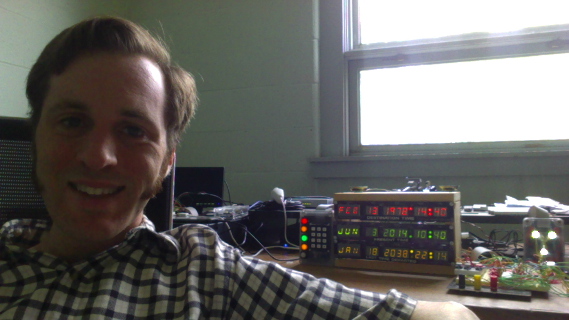
Vincent Weaver is an Associate Professor in the Electrical and Computer Engineering Department at the University of Maine's College of Engineering. He leads the VMW Research Group, focusing on low-level systems research including hardware performance counters, computer architecture, and operating systems. Weaver received his BS in Electrical Engineering from the University of Maryland College Park in December 2000, followed by MS (January 2009) and PhD (May 2010) degrees in Electrical and Computer Engineering from Cornell University. He joined the University of Maine faculty in July 2012 as an Assistant Professor and earned tenure and promotion to Associate Professor in September 2018. His research centers on hardware performance analysis, architectural simulation, and systems programming with emphasis on Linux kernel development and embedded systems. Weaver's work bridges theoretical computer architecture with practical systems implementation, often resulting in open-source tools that advance the field. His publications reveal a consistent focus on performance analysis techniques, code optimization, and security through low-level system understanding. Weaver maintains an active teaching schedule including courses in embedded systems, operating systems, and network engineering. He values students with strong programming skills and encourages open source contributions as part of the learning process. His research group provides hands-on experience with cutting-edge processor architectures and performance analysis tools.
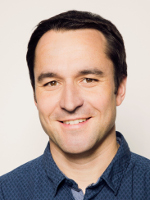
Michael Pradel is a full professor in the Computer Science Department at the University of Stuttgart and faculty member at CISPA Helmholtz Center for Information Security (effective September 2025), where he leads the Software Lab. He is also affiliated with the International Max Planck Research School for Intelligent Systems and the Stuttgart ELLIS Unit, reflecting his interdisciplinary research approach. His research interests focus on software engineering, particularly program analysis, bug detection, and the application of machine learning to developer tools. Pradel's recent work increasingly explores LLM-based approaches for program repair, code analysis, and automated software development, as evidenced by projects like RepairAgent and ExecutionAgent. Pradel's publication record shows a clear trend toward integrating AI techniques with traditional software engineering methods, with recent papers focusing on LLM applications for program repair, change validation, and quantum software analysis. His work bridges theoretical foundations with practical tool development, as seen in frameworks like DyLin for Python analysis and LintQ for quantum programs. Ernst-Denert Software Engineering Award Emmy Noether grant (1.3 million Euro) by the DFG ERC Starting Grant (1.5 million Euro) Multiple ACM SIGSOFT Distinguished Paper Awards ACM Distinguished Member recognition Pradel actively mentors PhD students, with recent graduates including Matteo (specializing in quantum software) and Luca (focusing on software evolution). His group has received significant funding and maintains strong industry connections, including past sabbaticals at Facebook. He serves in leadership roles for major conferences, including PC co-chair for FSE 2027, demonstrating his standing in the software engineering community. The Software Lab maintains active collaborations with institutions worldwide, including CMU, Google, KAIST, and several European universities.
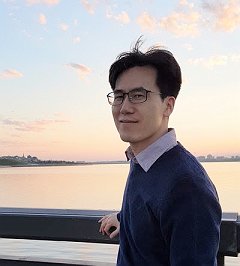
Jooyong Yi is an Associate Professor in the Department of Computer Science and Engineering at UNIST (Ulsan National Institute of Science and Technology). He leads the LOFT (Lab of Software), focusing on autonomous techniques for software reliability in AI-generated code environments. Research Interests: His work spans program analysis, automated repair, testing/debugging, and verification. Core themes include developing scalable methods for bug detection (via static/dynamic analysis), AI-compatible repair systems, and verification frameworks for safety-critical systems. Recent emphasis integrates fuzzing techniques with repair validation. Publication Trends: His 15 most recent works (2015-2025) show progression from foundational program repair techniques (e.g., Angelix, DirectFix) toward AI-era innovations: greybox fuzzing for efficiency, memory-leak repair for web frameworks, and deep-learning library testing. Over 50% of publications focus on optimizing repair validation and scalability. Awards: ACM Distinguished Paper Award at ASE 2023 Students & Grants: Currently advises 5 PhD, 1 MS/PhD, and 2 MSc students. Secured ₩20B+ in funding for projects including: MSIT Binary Micro-Security Patch Technology (2024-2026) Patch Validation for Automated Repair (2023-2026) AI-Powered Low-Code Platform (2023-2025) Memory-Safe Language Integration (2024-2027) Lab: LOFT lab develops verified repair tools (e.g., LeakPair, Verifix) and benchmarks (BUGSC++), prioritizing human oversight in AI-generated software.
Dr. Monique Aller serves as an Associate Professor of Physics & Astronomy at Georgia Southern University, where she is affiliated with the Department of Biochemistry, Chemistry, and Physics within the College of Science and Mathematics. Her office is located in Room 2050 of the Math/Physics Building on the Statesboro Campus, and she teaches courses including Astronomy of the Solar System, Galactic Astronomy, and Principles of Physics I. Dr. Aller earned her B.A. in Physics & Medieval/Renaissance Studies from Wellesley College, followed by M.S. and Ph.D. degrees in Astronomy & Astrophysics from the University of Michigan. She completed postdoctoral research at the Institute of Astronomy, ETH Zurich and served as a Postdoctoral Fellow in the Department of Physics & Astronomy at the University of South Carolina. Her research program focuses on observationally investigating fundamental galaxy components including interstellar dust and gas, galaxy stellar populations, and supermassive black holes. She explores the evolution of connections between these components over the past ~10 billion years using ground- and space-based facilities ranging from ultraviolet to infrared wavelengths, including the Hubble Space Telescope, Spitzer Space Telescope, Gemini-South Telescope, and the James Webb Space Telescope. Her current work examines dust composition in distant galaxies, connections between dust evolution and metal enrichment, and star formation triggers in polar ring galaxies. Analysis of Dr. Aller's recent publications reveals consistent focus on galaxy dust properties, particularly silicate and carbonaceous dust in distant galaxies. Her work frequently examines polar ring galaxies and blazars through multi-wavelength observations to understand dust composition, gas properties, and star formation mechanisms. A significant portion of her recent work involves upcoming James Webb Space Telescope observations, indicating her leadership in planning for next-generation astronomical research. Her research contributions include: Investigating interstellar dust composition in distant vs. local galaxies through spectral absorption features Examining connections between dust grain evolution, interstellar gas properties, and metal enrichment Studying stellar structures and dust distribution in polar ring galaxies Conducting long-term monitoring of blazars like Mrk 421 and Mrk 501 Dr. Aller has secured telescope time through multiple successful proposals to major facilities including Hubble and JWST. She maintains active collaborations with researchers at the University of South Carolina and international teams studying active galactic nuclei, contributing to significant publications in leading astronomy journals through 2025.