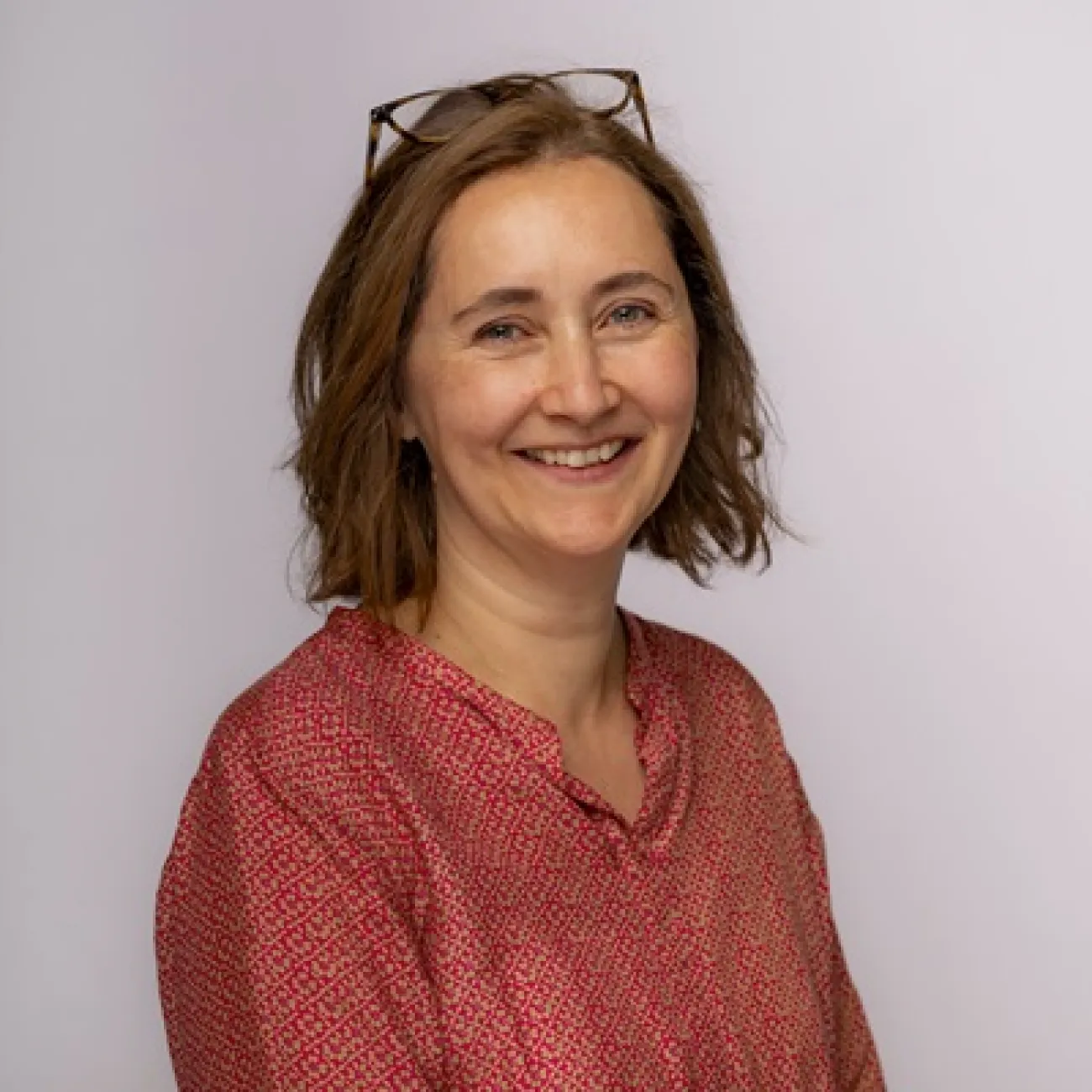
Paola Lorenzon is an Associate Professor of Physiology at the University of Trieste 's Department of Life Sciences since 2002. She coordinates the International Master's Degree in Neuroscience , serves as Coordinator of the OPBA program , and holds key roles in multiple PhD cycles including Neuroscience and Cognitive Science (XXVIII to XXXVIII cycles) and Biology (SM50). Her research focuses on neuromuscular plasticity , aging effects, and microgravity adaptation mechanisms. Education : Bachelor's in Biological Sciences and PhD in Biochemistry from University of Trieste Research Experience : University of Milan, San Raffaele Milan, University of Ljubljana, University of Bonn Her research spans three main areas: neuromuscular junction plasticity , electrostimulation protocols for muscle regeneration, and Piezo1 ion channels in mechanotransduction. Current projects funded by the Italian Space Agency (MIAG, NEMUSY) investigate muscle atrophy in spaceflight and aging. Notable collaborations include working with Annalisa Bernareggi (electrophysiology), Marina Sciancalepore (electrostimulation), and Alessandra Bosutti (project coordination). Her lab employs primary satellite cell cultures , electrophysiology , and mechanotransduction studies to explore muscle regeneration mechanisms.
Ahmed Ahmed, an associate professor in the Department of Computer Science at Prairie View A&M University (PVAMU) , shapes tech leaders through innovative teaching and research. His work spans IoT, AI, and ML applications across agriculture, infrastructure monitoring, and healthcare. Key research areas include: IoT and AI for sustainable agricultural practices LoRa-based location tracking in constrained environments Secure blockchain-federated learning systems Geofencing for community safety With over 50 peer-reviewed publications and a $300k NSF grant (2023), Ahmed develops hands-on learning tools like a Special Interest Group for IoT and live programming demonstrations. His global journey—from Cairo University to a PhD at the University of Saskatchewan—fuels his commitment to empowering underrepresented students. Scientific awards include the PVAMU Faculty Service Award . He advises students like Kritika Singh (2022 graduate) and advocates for continuous refinement of teaching as a craft.
Professor Frank Melzner is a leading marine ecologist and group leader of the Ecophysiology Working Group at GEOMAR Helmholtz Centre for Ocean Research Kiel. His research focuses on understanding how marine invertebrates respond physiologically to changing environmental conditions, particularly ocean acidification, warming, and deoxygenation. He is affiliated with the Department of Marine Ecology, specifically within Department 3, Research Unit 'Experimental Ecology - Benthic Ecology' at GEOMAR. His research interests span multiple dimensions of marine physiological ecology: Marine invertebrate zoology & environmental physiology Acid-base regulation in marine organisms Biomineralization processes in calcifying organisms Physiological adaptations to changing ocean conditions Interactions between abiotic stressors and marine food webs Winter warming impacts on marine ecosystems Professor Melzner's extensive publication record demonstrates a strong focus on understanding how marine organisms, particularly bivalves and echinoderms, respond to multiple stressors in a changing ocean. His work combines laboratory experiments with field observations to assess both short-term physiological responses and potential for long-term adaptation. A significant portion of his research examines how ocean acidification affects calcification processes, with particular attention to the underlying cellular mechanisms. His recent work has increasingly focused on the interactive effects of multiple stressors, including temperature, CO 2 , and salinity, with a special emphasis on Baltic Sea ecosystems where these factors interact in unique ways. Professor Melzner leads a productive research group that includes postdocs, PhD students, and technical staff. His laboratory at GEOMAR's Kiel facility conducts innovative experiments using the Kiel Outdoor Benthocosms (KOBs) and other advanced experimental systems to simulate future ocean conditions. This outdoor mesocosm facility has enabled groundbreaking research on winter warming effects that would be difficult to conduct in traditional laboratory settings. His mentoring record shows strong commitment to student development, with numerous successful M.Sc. and Ph.D. students who have gone on to pursue academic and research careers at institutions worldwide. His collaborative approach is evident in his extensive co-authorship network spanning multiple countries and disciplines.
Dr. Nthemba C. Mutua-Mambo serves as Associate Professor of Communication Studies at Randolph-Macon College, where she is recognized as an African feminist scholar conducting research across local and global contexts. Her work critically examines identity politics, social justice, and cross-cultural dynamics with particular emphasis on African diasporic communities. Her academic credentials include: PhD in Communication (Intercultural Communication) from University of New Mexico (2017) MA in Communication Studies (Organizational Communication) from Kean University (2007) BA in Linguistics from Moi University (2002) Dr. Mutua-Mambo's research program centers on decolonial approaches to African feminism, investigating how refugee and immigrant women navigate cultural identity, the formation of feminist-LGBTQ+ alliances in Kenya, and indigenous restorative justice frameworks. Her work bridges academic theory with community engagement, particularly through collaborations with local partners in Richmond, Virginia. She examines international scholars' adaptation challenges in U.S. academic environments while advocating for intersectional perspectives in communication studies. Her 2020 publication 'Living in a Liminal Space: Feminist and LGBT Alliances in Kenya' represents her signature focus on gender and sexuality in African contexts, analyzing transitional identity spaces within Kenyan social movements. This work exemplifies her broader scholarly trend of centering marginalized voices in communication research while connecting local African experiences to global diaspora communities. Her exceptional scholarship earned dual national recognition in 2021: Best Article Award from National Communication Association's International and Intercultural Communication Division Outstanding Article Award from National Communication Association's Feminist and Gender Studies Division Dr. Mutua-Mambo's teaching philosophy integrates experiential learning through community partnerships and international immersion, notably her J-Term course in Kenya. While her course roster demonstrates extensive curriculum development across communication theory, research methods, organizational communication, and intercultural studies, the available records do not specify graduate student advising relationships or externally funded research grants. She maintains active community engagement through student-led projects connecting classroom learning to real-world applications, particularly in intercultural communication and organizational settings within the Richmond metropolitan area.
Gregory L. Owens is an Assistant Professor in the Department of Biology at the University of Victoria. He leads the Owens Lab, which specializes in evolutionary genomics and conservation biology research focusing on sunflowers, kelp, and rockfish. His work integrates genomic approaches with ecological and evolutionary questions to understand adaptation and speciation processes. Dr. Owens completed his MSc in Biology at the University of Victoria studying opsin gene expression in the four-eyed fish Anableps anableps . He then earned a PhD in Botany from the University of British Columbia, where he used genomics to study hybridization in sunflowers. Following this, he received the prestigious Banting Postdoctoral Fellowship to work on structural variation in sunflowers at the University of California, Berkeley. His research spans several key areas of evolutionary genomics. In sunflower research, he investigates the genomic basis of adaptation and speciation, with particular interest in hybridization, introgression, and the role of chromosomal inversions in adaptation. His lab has demonstrated that introgression is common between multiple sunflower species and that inversions play a crucial role in adaptation. In marine systems, his lab works with the Kelp Rescue Initiative to build genomic resources for kelp conservation, including chromosome-scale genomes for Macrocystis and Nereocystis . Additionally, his lab develops genomic resources for rockfish species to explore population connectivity, adaptation across latitudinal gradients, and the genetic basis of extreme lifespans. Analysis of his recent publications reveals a strong focus on structural genomic variation, particularly inversions, and their role in adaptation across diverse systems. His work demonstrates how chromosomal rearrangements facilitate parallel evolution and adaptation to environmental challenges. His research spans both plant and marine systems, showing remarkable versatility in applying genomic approaches to fundamental evolutionary questions. His scientific accomplishments include the Banting Postdoctoral Fellowship. His publications appear in high-impact journals including Nature , Proceedings of the National Academy of Sciences , Molecular Biology and Evolution , and Current Biology . Dr. Owens actively mentors students at various levels. His current lab includes Martin Liu (MSc student studying population genomics of a rare endemic Lupine species) and Jordan Bemmels (Postdoctoral Researcher studying population genetic structure in British Columbia kelp species). His former students include Kaede Hirabayashi (now Research Associate at UBC), Nathan Sykes (MSc), Koa Planedin (Honours), and Sara Wuitchick (now Assistant Professor at Mount Royal University). He has also supervised numerous directed studies students and undergraduate research associates. The Owens Lab maintains active collaborations with the Rieseberg Lab at UBC and participates in the Kelp Rescue Initiative. His lab combines field work, genomic analyses, and computational approaches to address fundamental questions in evolutionary biology and conservation genomics.
Dr. Chris van der Borgh is an Associate Professor at Utrecht University's Faculty of Humanities within the Department of History and Art History . As coordinator of the MA Conflict Studies and Human Rights program, he contributes to graduate education while maintaining active research in Conflict Studies and International and Political History . Specializes in peacebuilding and security politics Extensive fieldwork in El Salvador Expert on gang-state dynamics Focus on hybrid governance structures His research explores: Security politics in Central America International intervention in Kosovo NGO operations in partial democracies Post-war reconstruction challenges Urban violence and state responses Key research trends include analysis of: Security governance in gang-controlled territories Legal frameworks in conflict zones International-local policy interactions Civil society resilience Democratization in violent contexts Academic contributions span three decades with publications on: El Salvador's gang truces Kosovo's statebuilding NGO operational spaces Hybrid governance Peacebuilding theories
Berta María Guijarro Berdiñas is a Researcher in the Department of Computer Science and Artificial Intelligence at the University of A Coruña , Spain. She is affiliated with the Laboratory for Research and Development in Artificial Intelligence and teaches courses like Machine Learning , Development of Intelligent Systems , and Programming at both undergraduate and postgraduate levels. Research Focus: Her work lies at the intersection of Artificial Intelligence , Machine Learning , and Knowledge-Based Systems . Key contributions include frugal learning (limited data), anomaly explanation , and distributed learning for edge devices. She applies these to areas like health informatics , forest fire management , and human-robot interaction . Recent Publications span explainable AI , anomaly detection , multi-agent systems , and low-power machine learning . Her articles appear in top venues like Expert Systems with Applications and IEEE Transactions on Neural Networks and Learning Systems . Grants & Projects include EU-funded initiatives, Spanish Ministry of Science grants, and regional collaborations. She focuses on AI for healthcare , smart systems , and distributed learning .
Oliver G. Ernst is a Professor of Numerical Analysis at Technische Universität Chemnitz . His research focuses on Numerical Analysis , Uncertainty Quantification , and Inverse Problems , with applications in Thermo-Hydro-Mechanical (THM) processes , Electromagnetics , and Stochastic Partial Differential Equations . He is associated with the Numerical Analysis group at TU Chemnitz. Key Research Areas : Efficient numerical methods for PDEs Krylov subspace techniques Stochastic finite element methods Multi-physics modeling Geoscientific applications Recent Publications (2025-2010): THM simulations under uncertainty Neural network PDE solvers Bayesian inversion frameworks Rational Krylov algorithms Deflated restarting strategies Collaborations : TU Bergakademie Freiberg University of Manchester Technical University of Munich University of Maryland University of Geneva Software Development : Contributor to OpenGeoSys platform Developer of FEMALY MATLAB library Academic Recognition : h-index 32, i10-index 66, with over 4423 citations since 2020.
Jing Wang, Ph.D., is a Professor of Radiation Oncology at UT Southwestern Medical Center, affiliated with the Department of Radiation Oncology’s Division of Medical Physics and Engineering. His research bridges medical imaging, machine learning, and radiation therapy optimization. B.Sc. in Material Physics, University of Science and Technology of China M.A. and Ph.D. in Physics, Stony Brook University Postdoctoral training in Radiology (Stony Brook) and Radiation Physics (Stanford) Dr. Wang’s work focuses on enhancing medical imaging quality for quantitative applications in image-guided radiation therapy (IGRT) and adaptive radiation therapy (ART) . Key areas include CT/MRI/PET reconstruction , deep learning for tumor localization , and radiomics-based survival prediction . His AIRT Lab develops AI algorithms for treatment outcome modeling and real-time imaging. Recent publications highlight advancements in transformer networks for anatomy prediction, uncertainty-aware segmentation , and delta radiomics for surgical margin analysis. Journals span Medical Physics , Physics in Medicine and Biology , and International Journal of Radiation Oncology .
Juan Carlos Linares Calderón is a Full Professor at Pablo de Olavide University in the Department of Physical, Chemical and Natural Systems. His research focuses on Mediterranean relict forests' response to climate change through multidisciplinary approaches combining dendrochronology , ecophysiology , genomics , and epigenetics . PhD in Science (2008) from University of Jaén Principal Investigator in 10+ national/international projects Research Themes Specializing in climate change impacts on forest ecosystems , Linares leads the Forests Ecology and Global Change Lab . His work spans from individual tree responses to large-scale biogeographical patterns, challenging CO 2 -induced growth paradigms and emphasizing forest management as climate modulator. Scientific Contributions Over 162 publications with 82,704 reads and 9,074 citations Highly Cited Author status (Ioannidis et al., 2020) Developed SAPFLUXNET global transpiration database Email: jclincal@upo.es
Çiğdem AKMAN is an Associate Professor in the Department of Political Science and Public Administration at Mehmet Akif Ersoy University's Faculty of Economics and Administrative Sciences. With a doctorate in Finance from Suleyman Demirel University (2015), she maintains active scholarly engagement evidenced by publications extending to 2025 and an H-index of 11 with 430 citations on Google Scholar. Her research focuses on Public Administration, Local Governments, Local Government Finance, and Institutional Trust , with recent work increasingly examining digital transformation in governance. Key thematic areas include smart city applications, AI in public services, and municipal digitalization strategies, reflecting evolving research interests toward technology-driven governance solutions. AKMAN's publication portfolio demonstrates strong output in both Turkish national journals (TR DİZİN indexed) and international venues (SCI-Expanded, Q2 journals). Her collaborative work spans comparative studies of local governments across Middle Eastern and European contexts, with particular attention to Turkey's municipal systems and international affiliations. Recent publications reveal a pronounced shift toward digital governance topics since 2020, aligning with global trends in public administration research. While specific grant information isn't detailed in the provided text, her extensive publication record across books, journal articles, and conference proceedings suggests substantial research activity. Her editorial work includes co-editing "Local Governments and Their Financial Structures in the World" (2021), indicating leadership in scholarly communication within her field.
Professor Katherine Newman-Taylor is a Professorial Fellow in Education at the University of Southampton, serving as lead for the Postgraduate CBT programmes and working across CBT and Clinical Psychology programmes. She also holds an honorary position as a Consultant Clinical Psychologist with the local NHS Trust. Her work bridges academic research and clinical practice in mental health services. Dr Newman-Taylor's research focuses on integrating attachment theory, mindfulness practices, and recovery principles into cognitive behavioral approaches for psychosis. Her work addresses critical issues including auditory verbal hallucinations, paranoia, and other unusual experiences associated with psychosis. She investigates how attachment styles influence emotion regulation, help-seeking behaviors, and recovery trajectories in individuals living with severe mental illness. Her recent publications (2023-2025) demonstrate a cohesive research program centered on attachment-based interventions for psychosis, with particular emphasis on how secure attachment imagery can facilitate help-seeking and treatment acceptance. Her work spans experimental case series, systematic reviews, and clinical trials, primarily published in leading psychology and psychiatry journals including Psychology and Psychotherapy: Theory, Research and Practice, Schizophrenia Bulletin, and BJPsych Open. Dr Newman-Taylor is actively involved in research projects including 'Utilising Attachment-Based Experimental Research to Understand and Reduce Paranoia,' 'Attachment based psychological interventions for people with psychosis,' and 'Measuring recovery from serious mental ill-health.' She is a member of the Institute for Life Sciences and the Centre for Innovation in Mental Health at the University of Southampton. She currently supervises PhD students including Areti Molasioti (DClin) and Wenjin Liu (PhD Psychology), accepting new PhD applicants interested in her research areas. Her work has significant implications for improving primary mental health care services for people experiencing early signs of psychosis and developing more effective, attachment-informed therapeutic approaches.
Dr. Jackie Clarke serves as Senior Lecturer in French within the Department of Modern Languages and Cultures at the University of Glasgow, where she has been faculty since 2013. Her cross-disciplinary research bridges History and French Studies with particular focus on twentieth and twenty-first century France, examining intersections of labor, gender, and consumption. Her research interests center on deindustrialization's sociocultural legacies, gendered workforce experiences, and French socioeconomic history since the 1950s. Key thematic areas include: Memory and nostalgia in post-industrial communities Gender dynamics in economic restructuring Consumer culture and domestic appliance history Technocratic governance in modern France Working-class identity transmission Clarke's recent publications demonstrate an evolving trajectory from case studies of French industrial decline (particularly through the Moulinex brand lens) toward transnational gendered deindustrialization research. Her collaborative work now dominates, reflecting the field's shift toward comparative methodologies and interdisciplinary frameworks, with major contributions to the Routledge International Handbook of Deindustrialization Studies. As an active research supervisor, Clarke leads projects on global deindustrialization through significant grants including SSHRC Partnership Grants and Royal Society of Edinburgh funding. Her current major projects include the transnational DéPOT initiative and advisory role on the CONDE project, emphasizing collaborative international scholarship. Clarke contributes to institutional service as Editorial Collective member for Gender and History and AHRC Peer Review College participant, while maintaining active membership in the Association for the Study of Modern and Contemporary France and Society for the Study of French History.
Associate Professor Susie Khamis serves as Associate Dean (International) at the Faculty of Arts and Social Sciences, University of Technology Sydney. A cultural studies scholar, her research focuses on branding, cultural diversity representation, and consumer culture dynamics. Key contributions include her book Branding Diversity: New Advertising and Cultural Strategies (2020) and interdisciplinary analyses of iconic brands like Bushells Tea and Nespresso. Specializes in media and marketing intersections Founded Locale: The Australasian-Pacific Journal of Regional Food Studies (2011) Active in Small Island Cultures Research Initiative and Popular Culture Association of Australia & New Zealand Her research explores sonic branding (2021), indigenous research methods (2023), and ethical consumption paradoxes (2011). She examines neoliberal individualism through social media influencers (2017) and ‘micro-celebrity’ phenomena. Recent publications analyze industrial-hip-hop collaborations (2022) and de-cluttering trends (2019). Articles frequently engage with media history , postcolonial branding , and digital consumerism . Recipient of Sydney Harbour Foreshore Heritage Prize (2007) Recognized for interdisciplinary methodology development in marketing research Teaching areas include Media Theory, Public Communication, and Advertising. Supervises Masters and PhD students in cultural studies topics.
Jaakko Akola is a Professor in the Department of Physics at the Norwegian University of Science and Technology (NTNU). His research focuses on computational materials science, particularly density functional theory (DFT) and atomistic simulations of materials, nanoparticles, molecules, and interfaces. He leads significant projects such as "SIDI" (inoculation in cast iron), "Infinity-RETIS" (chemical rare events), and "AllDesign" (rational alloy design), alongside coordinating EU-funded initiatives like "CritCat" for catalyst development. The Materials Theory group under Akola employs DFT, molecular mechanics, and Monte Carlo methods to explore atomic-scale structures and functions in technological applications. Key research areas include platinum-free catalysts for hydrogen energy, amorphous semiconductors for memory devices, noble metal nanoparticles in biological environments, and alloy design for cast iron and aluminum. Recent work integrates machine learning to advance theory-driven material design, reducing reliance on experimental trial-and-error. Akola's publications highlight advancements in hydrogen evolution catalysis, phase-change memory materials, and alloy precipitation. His projects often involve interdisciplinary collaborations with experimental teams. He teaches Quantum Physics 1 (FY2045) and Computational Physics (TFY4235) at NTNU, reflecting his commitment to education alongside research.