Max Planck Institute for Evolutionary AnthropologyGermany
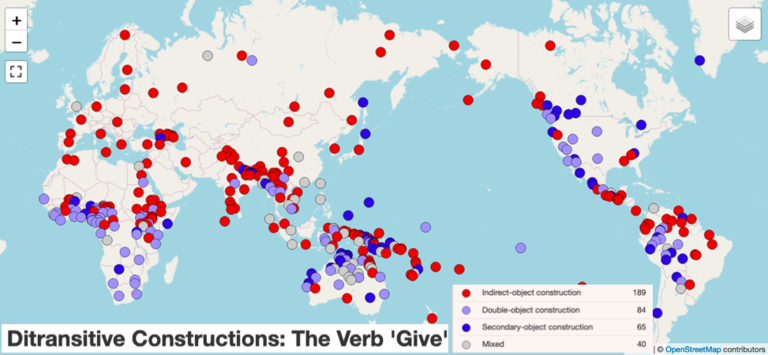
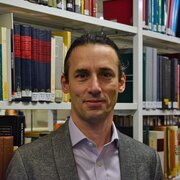
Martin Haspelmath is a Senior Research Scientist at the Department of Linguistic and Cultural Evolution at the Max Planck Institute for Evolutionary Anthropology (MPI-EVA), Leipzig, and an honorary (adjunct) professor at Leipzig University. His research focuses on comparative linguistics, language universals, and typology, particularly in syntactic and morphological systems. He co-edited the World Atlas of Language Structures (2005/2013) and co-founded Language Science Press . Education: PhD in Linguistics, Freie Universität Berlin (1990–1993) MA in Linguistics, University of Cologne and University at Buffalo (1985–1989) Undergraduate studies in Linguistics, University of Vienna (1983–1985) Research Interests: Haspelmath investigates global grammatical diversity, form-function correspondences, and universals in syntax, morphology, and lexical systems. His work emphasizes comparative concepts for cross-linguistic analysis and critiques traditional grammatical categories. Grants & Projects: ERC project leader at Leipzig University (2015–2020) Co-creator of Grambank , an open-access database of grammatical structures Leading initiatives for open-access publication and linguistic data sharing Labs/Teams: Active in the MPI's Department of Linguistic and Cultural Evolution, collaborating on projects like APICS (Atlas of Pidgin and Creole Language Structures) and ValPal (Valency Patterns Leipzig).
Viktor Golinets is a Professor of Hebrew Linguistics at the Heidelberg University of Jewish Studies , where he has held the Chair of Hebrew Linguistics since 2018. Previously, he served as a Junior Professor at the same institution from 2012 to 2018. His academic journey includes a PhD in Ancient Near Eastern Studies from the University of Munich (2010) and a Magister degree in Semitics from Ludwig-Maximilians-Universität München (2004). Education: PhD (Altorientalistik, LMU Munich, 2010), Magister (Semitics, LMU Munich, 1997-2004) Professional Roles: Professor (Heidelberg University of Jewish Studies, since 2018), Junior Professor (Heidelberg University of Jewish Studies, 2012-2018), Scientific Assistant (University of Basel, 2007-2012) Golinets’ research focuses on the linguistic and textual history of the Hebrew Bible , ancient Bible translations , and historical grammar of Hebrew . He specializes in Masoretic studies, Semitic epigraphy, and comparative analysis of Northwest Semitic languages like Amorite, Aramaic, and Ugaritic. His work addresses textual criticism, biblical hermeneutics, and the evolution of Hebrew from Masoretic to modern usage. His publications and articles reveal a strong emphasis on Hebrew onomastics , epigraphic analysis , and the role of language in Jewish cultural identity . He has contributed to international colloquia on textual criticism and Semitic philology. Memberships: German Oriental Society, European Association of Biblical Studies, International Association for Comparative Semitics, Association of Judaists in Germany, and others Golinets serves as Deputy Rector at Heidelberg University of Jewish Studies and has collaborated on projects like the Hebrew-Greek Text-Critical Synopsis of the Book of Jeremiah and the Biblia Hebraica Transkripta. His expertise in Hebrew manuscripts and Semitic languages informs both his teaching and research.
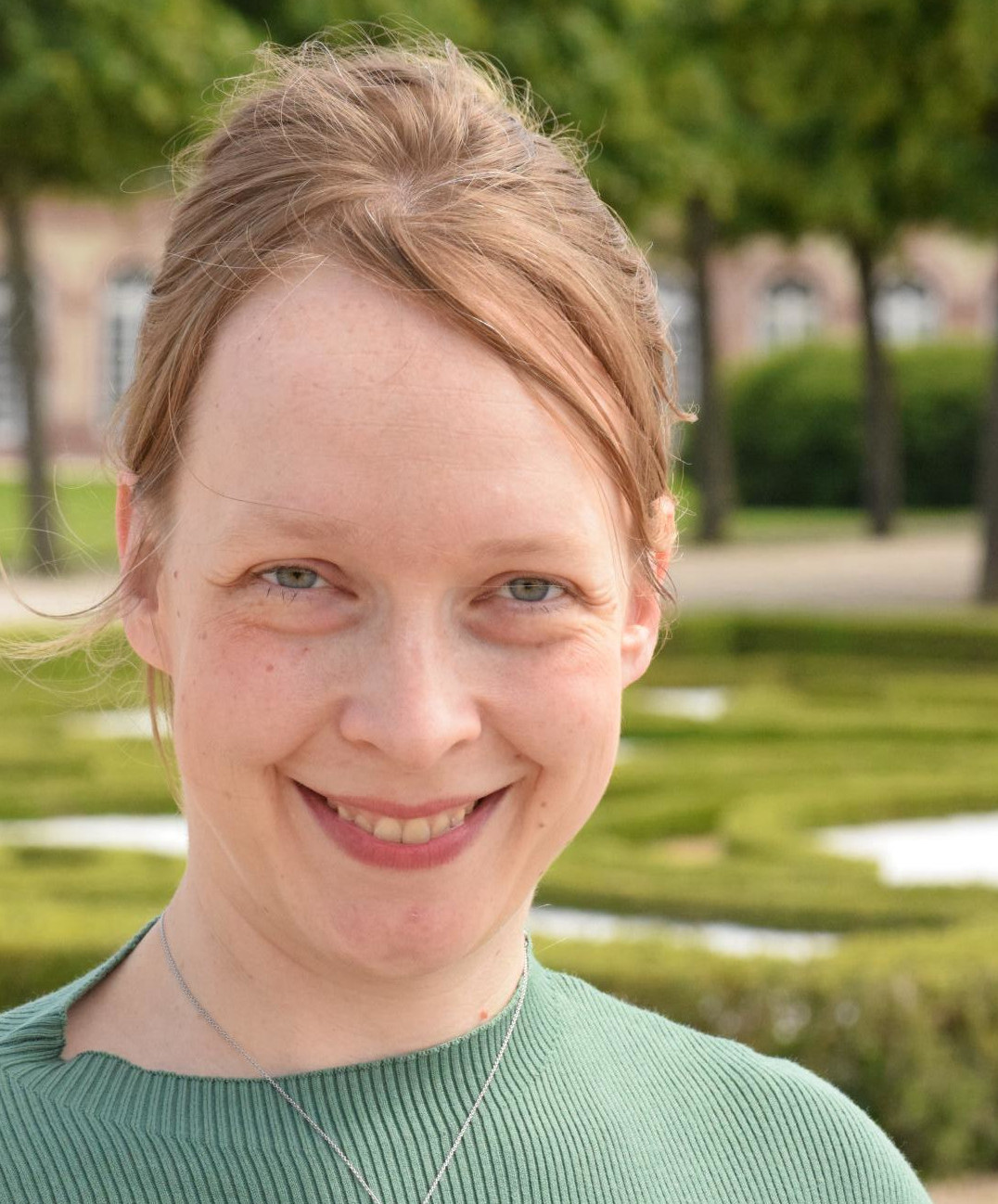
Priv.-Doz. Dr. Julia Landmann is an Acting Professor of English Linguistics at the Institute for Anglistik and Amerikanistik, University of Greifswald since 2025. She previously held positions at Heidelberg University (2021-2022), University of Basel (2022-2025), and research/lecturing roles at Heidelberg (2012-2021) and Mannheim/Stuttgart (2012-2014). Her academic journey includes a Habilitation (2022), Doctorate (2006-2011), and studies at Sorbonne Nouvelle (2002-2003), Aberystwyth (2001-2002), and Heidelberg (1999-2005). Research Focus: Cognitive Contact Linguistics, Language of Love/Hate, Migrant Discourse Analysis Publications: Monographs on socio-cognitive lexicon evolution, articles on loanwords from Yiddish/Turkish/Japanese, and cross-cultural discourse studies Projects: Integrates cognitive science with language contact research, examines emotion concept evolution (love/hate), and analyzes migrant identity construction through linguistic strategies. Her work combines Critical Discourse Analysis with Cognitive Science to study contact-induced linguistic changes.
Prof. Dr. Frank Kammerzell is a Professor at the Department of Archaeology and Cultural History of Northeast Africa within Humboldt University of Berlin since May 2003. His academic career includes habilitation at the University of Göttingen (1999) and extensive research collaborations with Hebrew University of Jerusalem and University of Vienna. His educational background encompasses Medieval and Modern History (major 1980), Egyptology (major), Coptic Studies, General and Indo-European Linguistics, and Assyriology. He earned his Dr. phil. from Göttingen with a dissertation on 'Studies on the Language and History of the Carians in Egypt' (1990) and completed habilitation with 'Language contact and language change in ancient Egypt' (1999). Kammerzell's research spans Egyptian phonology, morphology, syntax, lexis, language history, diachronic typology, language contact, writing systems, and Carian history in Egypt. His work integrates linguistic analysis with archaeological contexts, examining language evolution through contact and typological shifts. Notable projects include studies on Egyptian-Akkadian typological developments and classifiers in ancient Egypt. His publications since 2000 demonstrate sustained focus on Egyptian linguistic structures, writing systems, and cross-linguistic influences. Key themes include verb classifiers, glossing rules for Ancient Egyptian, and lexical semantics-pragmatics interfaces, bridging Egyptology with broader linguistic theory. Graduate Scholarship from the State of Lower Saxony (Doctoral Scholarship) 1987-1989 Kammerzell has led significant research projects funded by the DFG, Fritz Thyssen Foundation, and Volkswagen Foundation. His collaborative work with institutions in Jerusalem and Göttingen highlights international partnerships. While specific advisees aren't listed, his editorial roles suggest mentorship in academic publishing. He co-founded research groups on multilingualism and script systems, contributing to journals like Lingua Aegyptia and Ägypten und Levante , underscoring team-based archaeological-linguistic research.
Christian Zimmer is a Professor of German Linguistics at Technische Universität Dortmund, specializing in variational linguistics with a focus on multilingual contexts. His academic journey includes a Habilitation (2021) and PhD (2016) from Freie Universität Berlin, and a state examination in German Studies, Philosophy, and Sport Science (2012) from Johannes Gutenberg University Mainz. He has held substitute professorships at TU Dortmund (2019-2020) and Freie Universität Berlin (2022-2023) and led DFG projects on German in multilingual Southern Africa (2020-2022) and Namibia (2016-2019). His research explores German within multilingual environments, language change, corpus linguistics, and gender linguistics. Key projects include analyzing Namibian German (Namdeutsch) and the dynamics of German in African contexts. He uses corpus-based methods to study morphosyntactic variation, case systems, and sociolinguistic factors influencing language structure. Zimmer’s publications address topics such as genitive case reduction, loanword integration, and gender correlations in phonology. His work bridges theoretical linguistics and applied sociolinguistics, contributing to understanding language vitality and contact dynamics in minority speech communities.
Tonio Sebastian Richter is a Professor of Egyptology with a focus on Coptology at the Free University of Berlin's Department of History and Cultural Studies, Institute of Egyptology. He holds the position of Academy Professor at the Berlin-Brandenburg Academy of Sciences and Humanities and has served as the head of several major research projects including the DFG long-term project "Database and Dictionary of Greek Loanwords in Coptic" (DDGLC) and the Academy project "Structures and Transformations of the Vocabulary of the Egyptian Language. Text and Knowledge Culture in Ancient Egypt." His educational background includes a Magister Artium in Egyptology and Religious History from the University of Leipzig (1996), followed by a doctorate in 1999 and habilitation in 2005, both based on works concerning Coptic legal documents and their linguistic features. Richter has held academic positions at the Universities of Leipzig, Heidelberg, and Berlin, including serving as a Heisenberg Fellow of the German Research Foundation from 2011-2014. Richter's research interests span the history and cultural history of Egypt during the Roman, Byzantine, and early Islamic periods, with particular focus on Coptic language and texts. His work examines documentary texts including papyri, ostraca, and inscriptions that illuminate economic, legal, and social history. He has made significant contributions to the study of Coptic legal documents, magical and alchemical texts, and language contact phenomena between Egyptian/Coptic and Greek/Arabic. His research has revealed important insights into Coptic alchemical papyri, which represent some of the earliest witnesses to "the divine art" and enrich our knowledge of the development of late antique science and its transmission from Greek to Arabic. Richter has also pioneered work on language change and contact in the Egyptian-Coptic language, particularly regarding Greek and Arabic loanwords. Academy Professor, Berlin-Brandenburg Academy of Sciences and Humanities (2015-present) Professor of Egyptology with focus on Coptology, Free University Berlin (2014-present) Heisenberg Fellow, German Research Foundation (2011-2014) Extraordinary Professor, University of Leipzig (2011) Richter has received numerous scientific awards including the Heisenberg Fellowship from the German Research Foundation (2011) and the Friedrich-Weller Prize from the Saxon Academy of Sciences (2000). He serves on the scientific advisory boards of several prestigious institutions including the International Thesaurus Commission of the Thesaurus Linguae Latinae and the Scientific Advisory Board of the German Archaeological Institute. As an educator, Richter has been a main instructor for multiple International Summer Schools in Coptic Papyrology and has organized numerous academic conferences and workshops on Coptology, papyrology, and Egyptology. His work bridges linguistic, historical, and archaeological approaches to understanding ancient Egyptian civilization through its textual remains.
Dr. Ablet Semet is a researcher at the University of Göttingen specializing in Turkology with expertise in Old Turkic language and cultural contacts among Turkic peoples. His institutional affiliation centers on Central Asian linguistic studies within the university's research framework, focusing on historical interactions between Turkic communities and neighboring civilizations. His research spans General Turkology, Turkish-Chinese and Turkish-Mongolian language contacts, and Islamic Turkic cultural exchanges. Semet's work emphasizes philological analysis of primary sources including the Xuanzang biography, Buddhist texts, and folklore traditions. His methodological approach combines textual criticism with historical linguistics to reconstruct cultural transmission routes across Eurasia. Analysis of Semet's 15 most recent publications reveals consistent focus on Old Turkic manuscripts (particularly Xuanzang-related texts), Buddhist narrative traditions, and comparative studies of measurement systems in Turkic cultures. His research demonstrates interdisciplinary integration of linguistics, religious studies, and historical anthropology with strong emphasis on manuscript evidence from Turfan and Central Asian collections. No scientific awards were documented in the available information. While no student advising or grant information appears in the provided materials, Semet's extensive collaborative work with scholars like Simone-Christiane Raschmann and Jens Wilkens indicates active participation in international research networks focused on Turkic manuscript studies.
Prof. Dr. Tanja Pommerening is a leading scholar at the Institute for the History of Pharmacy and Medicine, Philipps University of Marburg. With a unique interdisciplinary background bridging Egyptology, Pharmaceutical Sciences, and Cultural History, she holds a W3 Professorship since 2020 and has made significant contributions across multiple academic domains. Universitätsprofessorin für Geschichte der Pharmazie und Medizin (2020–Present) Initiatorin des DFG-GRK 1876 (2013–2020) Sprecherin des Marburger Gespräche zur Alten Heilkunde (2020–Present) Her research focuses on the intersection of ancient scientific texts , medical practices , and cultural knowledge systems in Egypt and the ancient Near East. She has pioneered work on: Archaeometry of funerary substances Transdisciplinary analysis of medical metrology Decolonization of academic collections Comparative pharmacology across Egyptian and Chinese traditions Recent publications reveal her expertise in mummification practices , ancient metrology , and knowledge transmission through edited volumes on bodily concepts (2025), cosmos-body connections (2024), and knowledge systems (2019). Her work appears in journals like PLoS ONE and Zeitschrift für Phytotherapie . Scientific recognition includes: Dalberg Prize (2005) Jerry Stannard Memorial Award (2005) Académie internationale d’histoire de la pharmacie (2022) Active in editorial roles as Area Editor for the UCLA Encyclopedia of Egyptology and co-editor of multiple academic series, she continues to shape the field through her leadership in projects like AESOH (2023–2027) and ArchaeoScent (2023–2025).
Yukiyo Kasai is an Associate Professor of Central Asian History of Religions at Ruhr-Universität Bochum (RUB), affiliated with the Center for Religious Studies (CERES). She holds a Ph.D. from Free University Berlin (2005) and a post-doctoral habilitation from RUB (2021). Her research focuses on the history of Uyghur Buddhism, manuscript studies, and religious dynamics in pre-Islamic Central Asia, with particular attention to Turkic and Iranian cultural interactions. She has held fellowships at the Fritz Thyssen Foundation, DFG, and the Berlin-Brandenburg Academy of Sciences. Key roles include coordinating the RELIGUR project and serving as Research Associate for BuddhistRoad. Her work bridges textual analysis, material culture, and socio-political contexts, with expertise in Old Uyghur, Sogdian, and Brāhmī scripts. Awards include the 2011 Preis für Geisteswissenschaften from Göttingen Academy. She contributes to interdisciplinary projects like the Turfan Studies Academy and has edited major volumes on Buddhist transmission and Central Asian religious history. Publications span 20+ years, emphasizing Buddhist colophons, translation practices, and interreligious contacts. Her research highlights the role of Buddhism in Uyghur legitimation, pilgrimage networks, and textual hybridity. Current projects examine Sino-Uyghur religious exchanges and the cultural significance of talismans and sacred sites.
Dr. Carmen Scherer is a Senior Academic Councilor at the German Institute of Johannes Gutenberg University Mainz, specializing in German linguistics with a focus on descriptive and historical linguistics. Her academic journey includes a BA in Business Administration, followed by studies in German, French, philosophy, and German as a foreign language. She has held visiting professorships in Göttingen (Historical Linguistics) and Bonn (German Linguistics). Her research emphasizes word formation processes, language change dynamics, foreign word integration, and punctuation studies. Education highlights include degrees from universities in Marburg and Poitiers, followed by a doctorate on 'Word Formation Change and Productivity' (2004). She has authored/co-edited influential books like Introduction to Corpus Linguistics and The Interface of Morphology and Written Language . Key research interests involve morphological productivity, loanword adaptation, and the interplay between orthography and word structure. Her extensive publications (over 20 essays/reviews since 2003) explore topics such as the history of verb suffixes, apostrophe usage, and compound word spelling. She actively participates in international conferences, delivering lectures on linguistic topics like foreign word gender assignment and temporal prefixation in German. She also serves on academic boards and contributes to research projects focusing on language variation and corpus linguistics. Professional roles include leadership in the Mainz Linguistics Circle and collaborations across European academic networks. Her work bridges theoretical linguistics with practical applications in language teaching and normative standards, addressing contemporary issues in German language evolution and multilingual influences.
Juliane Elter is an Academic Staff Member at the University of Mannheim, affiliated with the Department of English (Anglistik IV) within the School of Humanities. Her research focuses on historical linguistics and language contact phenomena, particularly exploring loan verb accommodation in Middle English and structural changes influenced by multilingual contexts. She holds a PhD and has published in peer-reviewed journals like English Language and Linguistics . Her academic work investigates how Old Norse and French linguistic influences shaped Middle English syntax, with a specific emphasis on the 'to-dative' construction. Her 2020 paper in Mannheim Papers in Multilingualism, Acquisition and Change provides a foundational analysis of structural language change through a contact lens. Consultation hours are by appointment. She maintains an online presence at sites.google.com/view/wiebkejulianeelter .
Reinhard von Bendemann is a Professor of New Testament Studies and Jewish Studies at the Ruhr University Bochum , Faculty of Protestant Theology. His research focuses on early Christian literature, Pauline theology, and the intersection of ancient medicine with early Christian thought. He has authored/co-authored numerous books and articles, including works on Paul’s reception in early Christianity, Markan narrative analysis, and medical metaphors in early Christian texts. Key publications include Christus der Arzt (2022) and Paulus und die Schriften Israels (2023). He serves on editorial boards for journals like Beiträge zur Wissenschaft vom Alten und Neuen Testament and is a member of the CERES Research Department. His work bridges biblical exegesis, religious history, and interdisciplinary approaches to ancient texts. Research Interests: Early Christian gospel literature, Pauline exegesis, New Testament hermeneutics, medical concepts in early Christianity, and the material foundations of religious practice. Publications Trends: A recurring theme is the analysis of medical and healing narratives in biblical texts (e.g., Christ as physician metaphors), Pauline theology in its ancient context, and narrative techniques in the Gospels. His work often engages with Greco-Roman and Jewish intellectual traditions.
Dr. James M. Burgin is a researcher at the University of Würzburg, where he serves as Head of the DFG Emmy Noether Junior Research Group 'The Hittite Annals: Origins, Purpose, and Afterlife' since 2021. He is affiliated with the Chair of Ancient Near Eastern Studies within the Institute of Classical Studies in the Faculty of Philosophy. Previously, he worked as a Research Assistant (leader) from 2017-2021 on the philological processing and analysis of the Hittite palace administration corpus. Born on October 9, 1984, Burgin earned his BA in South Asian Language and Civilization with a focus on Sanskrit from the University of Chicago (2002-2006), followed by an MA in Ancient Near Eastern Studies with a focus on Hittite studies (2008-2010). He completed his doctorate at the University of Chicago in 2016 with a dissertation titled 'Aspects of Religious Administration in the Hittite Late New Kingdom.' Burgin's research spans multiple dimensions of Hittite and Ancient Near Eastern studies, with particular expertise in Hittitology, the history of the Hittites, economic and administrative history, and Hieroglyphic Luwian. His work demonstrates a sophisticated understanding of the interplay between linguistic, historical, and archaeological evidence. He has made significant contributions to understanding Hittite festival texts, economic administration, textile production, and linguistic phenomena such as the 'Initial-A-Final' in Hieroglyphic Luwian. His research often bridges disciplines, connecting linguistic analysis with historical context and material culture. His recent publications reveal a trajectory of increasingly sophisticated analysis of Hittite textual corpora, with a growing emphasis on interdisciplinary approaches that incorporate linguistic, historical, and archaeological perspectives. Burgin's work on the Hittite palace-temple administrative corpus has challenged conventional understandings of royal administration, while his linguistic studies have illuminated previously obscure aspects of Anatolian languages. Röntgen Prize of the University of Würzburg (2022) Burgin has been involved in significant research projects including the Corpus of Hittite Festival Rituals (2016-17) and the DFG-funded project on the Hittite palace administration corpus (2017-21). As leader of his Emmy Noether Research Group, he directs a major investigation into the Hittite Annals, examining their origins, purpose, and historical legacy. His work has been supported by prestigious funding mechanisms including the DFG Emmy Noether Program, which targets exceptional early-career researchers. As head of his research group, Burgin leads a team investigating the complex textual tradition of the Hittite Annals, which document the military campaigns and political activities of Hittite kings. His research environment combines philological expertise with interdisciplinary approaches to understanding Bronze Age Anatolian civilization.
Lena Sowada , a researcher at the Department of Romance Studies of the University of Heidelberg , focuses on historical sociolinguistics, language contact, and writing practices in multilingual contexts. Since 2022, she has been a member of the Junge Akademie of the Heidelberger Akademie der Wissenschaften. PhD (2019) in cotutelle between Heidelberg University and Université Paul-Valéry Montpellier 3 BA in Spanish and French Linguistics Her research explores French language history (19th-20th centuries) Writing practices of less-experienced scribes Language contact in bilingual spaces (e.g., Alsace-Lorraine, Balearic Islands) Recent projects examine multilingualism and WWII correspondence. Her publications analyze Ego-documents from WWI Discursive traditions in private texts Orthographic challenges in historical writing She coordinates Erasmus programs for Spain and serves on the university's research commission.
Prof. Dr. Winfried Rudolf is a leading scholar in Old English Language and Literature, currently serving as Professor at the University of Göttingen since 2011. He has held visiting positions at University College London (2015–2020) and previously taught at institutions including Princeton University and University College London. His research spans medieval manuscripts, homiletic texts, digital humanities, and cultural exchange between Anglo-Saxons and Continental Saxons. Key research interests include: Manuscript transmission and digital corpora (e.g., the ERC-funded ECHOE project) Old English poetry and prose interfaces Medieval childhood studies Devotional practices in late medieval England Anglo-Saxon interactions with continental Europe His recent publications focus on homilies, digital editions, and manuscript studies, with a strong emphasis on interdisciplinary methods combining philology, paleography, and digital tools. Notable projects include the ECHOE corpus and hybrid editions of Anglo-Saxon texts. Scientific recognition includes memberships in the Lower Saxony Academy of Sciences, Early English Text Society, and editorial roles in Cambridge Elements. He has led international collaborations such as the Göttingen-Vercelli teaching partnership and contributed to documentary projects like the RAI 3 video seminar.