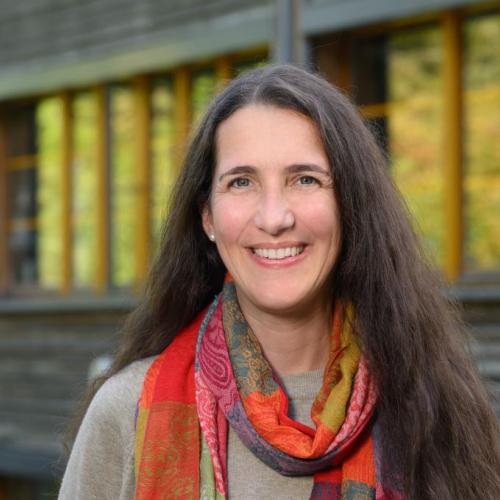
Sabine WollrabView profile
Academic
Sabine Wollrab is a Research Group Leader in the Department of Plankton and Microbial Ecology at the Leibniz Institute of Freshwater Ecology and Inland Fisheries (IGB), Berlin. Her research focuses on theoretical ecology, particularly food web dynamics, structured population models, and the impacts of environmental change on aquatic ecosystems. She leads an active research group and has been instrumental in advancing conceptual frameworks in aquatic ecology. Research Interests: Her expertise spans Theoretical Ecology , Food Web Dynamics , Predator-Prey Interactions , Spatial and Meta-population Ecology , and Climate Change Impacts on Lakes . Her work integrates modeling with empirical data to understand how energy flows through aquatic systems under stressors like eutrophication, skyglow, and climate change. She investigates how parasite-mediated pathways, microbial loops, and habitat connectivity shape ecosystem functioning. The most recent publications highlight trends in long-term limnological monitoring , anthropogenic light pollution (skyglow) , parasite-driven food web dynamics , and modeling ecological networks across scales. Her collaborative work emphasizes interdisciplinary approaches, combining remote sensing, field experiments, and theoretical modeling. Deputy Department Head (interim), Department of Plankton and Microbial Ecology, IGB Berlin (2022–2023) Research Group Leader, IGB Berlin (since 2014) Postdoctoral Fellow, Kellogg Biological Station, Michigan State University (2013–2014) PhD in Theoretical Ecology, Ludwig-Maximilians-Universität München (2013) Scientific Projects: BLIC : Biodiversity and biotic interactions in phytoplankton bloom formation CONNECT : Connectivity and synchronisation of lake ecosystems FungiTrait : Parasitic fungi in food web dynamics BactiTrait : Bacterial phenotypic plasticity ILES : Skyglow and brownification impacts She advises early-career researchers and contributes to policy-relevant synthesis reports, such as those for the Umweltbundesamt on climate change impacts on surface waters. Her lab collaborates widely with institutions across Europe and the USA.