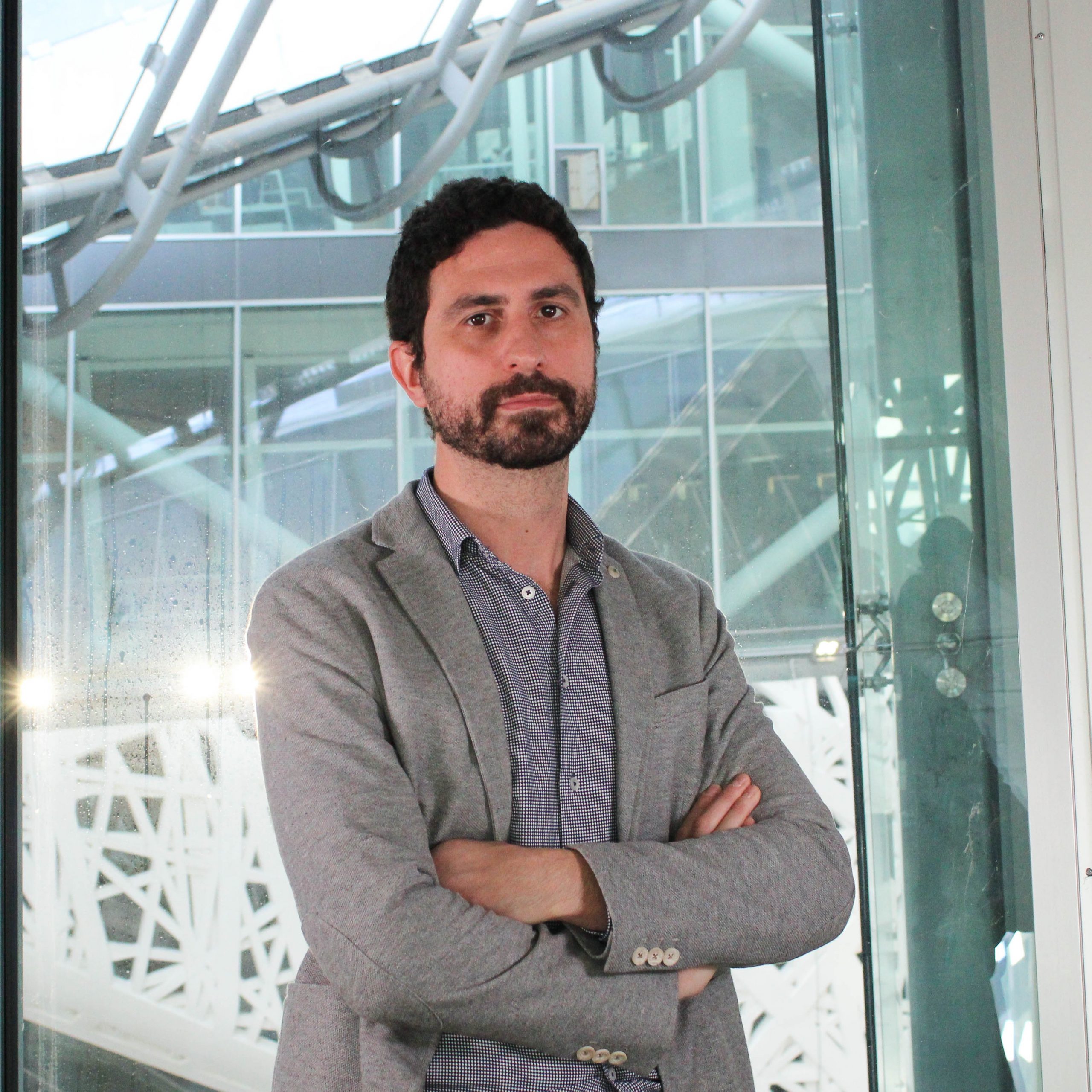
Andrea Sottoriva is the Head of the Computational Biology Research Centre at Human Technopole , Milan, Italy, and holds the title of Professor of Cancer Genomics and Evolution . His work bridges computational biology, evolutionary theory, and clinical oncology to predict cancer progression and design adaptive treatment strategies. University of Bologna – BSc in Computer Science (2006) University of Amsterdam – MSc in Computational Sciences (2008) University of Cambridge – PhD in Computational Biology (2012) Dr. Sottoriva's research focuses on cancer evolution , applying machine learning and population genetics to decode tumor heterogeneity through multi-omics data. His lab integrates patient-derived organoids and spatial genomics to understand how genetic and epigenetic factors drive cancer progression. The 15 most recent publications demonstrate a consistent emphasis on subclonal dynamics (7/15), computational methods (6/15), and evolutionary modeling (5/15). Key themes include adaptive mutability in colorectal cancer , immune editing in post-transplantation relapses, and deep learning applications for tumor heterogeneity. Scientific recognition includes: Cancer Research UK Future Leaders in Cancer Research Prize (2016) His lab currently trains PhD students and postdoctoral researchers in computational oncology, maintaining a living biobank of patient-derived models while pioneering AI-mechanistic hybrid models for clinical translation.
Professor Andrew Reeves is a Professor of Counselling Professions and Mental Health at the University of Chester, affiliated with the Faculty of Arts, Humanities and Social Sciences. He holds additional roles as a Registered Social Worker, Accredited Counsellor/Psychotherapist, and Senior Fellow of Advance HE. His academic career includes positions as Associate Professor (2018–2021) and Senior Lecturer (2015–2018) at the University of Chester, alongside an Associate Affiliate Professorship at the University of Malta since 2024. Reeves' education includes a PhD in Counselling and Psychotherapy from the University of Birmingham, MSc in Counselling from the University of Salford, and professional qualifications in social work and coaching. His research focuses on suicide risk management, ethical frameworks in counselling, pluralistic practice, and therapeutic coaching. He has published extensively, including key texts like An Introduction to Counselling and Psychotherapy and Standards and Ethics for Counselling in Action . His teaching responsibilities include supervising PhD students in counselling, psychotherapy, and psychological trauma, and leading professional doctorates (DProf) in these fields. He has also delivered practitioner-based training to over 30,000 professionals, emphasizing suicide risk, self-injury, and ethics. Reeves' awards include Senior Fellow of Advance HE and Fellow of the British Association for Counselling and Psychotherapy (BACP). He contributes to BACP's Ethical Framework development and has consulted for organizations like Samaritans and CALM. His funded projects include evaluations of mental health services, such as the Greater Manchester Bereavement Service. His current research explores definitions of 'therapeutic coaching' and co-produced research methodologies. Reeves maintains active roles in professional bodies, including editorial work for Pluralistic Practice Journal and advisory roles for BACP and other institutions.
Dr. Neil O'Connor is an Associate Professor in the Department of Computer Science & Information Systems at the University of Limerick, and a member of the Digital Media and Arts Research Centre. His expertise spans electroacoustic music, modular synthesis, and live performance. He has performed globally, collaborating with renowned ensembles like the Crash Ensemble and the Glenn Branca Ensemble. O'Connor holds a PhD from Trinity College Dublin and has taught at institutions including the Art Institute of California and the Institute of Audio Research. His research focuses on sound studies, real-time composition, and scoring for visual media. He currently accepts PhD students under topics like Composition and Sound Studies. Education: PhD/M.Litt in Electronic Music Composition, Trinity College Dublin Research Interests: Neil explores dialogical performance in live modular synthesis, solo improvisation, and scoring for visual media. His work emphasizes real-time sound experimentation and the relationship between musicians in unmediated performance contexts. He has composed for orchestras and chamber ensembles, but is best known for his prolific output in live electronics using modular synthesizers. Key Awards: Concurso Internacional de Música Eletroacústica de São Paulo (2018) Musica Nova Electroacoustic Music Competition (2019) Noroit-Léonce Petitot Special Mention (2020) Advising & Grants: While no specific grants are detailed, he actively advises PhD students and has organized major events like the International Computer Music Conference (2023). His work often intersects with scientific institutions like the Massachusetts Museum of Modern Art and EMS Stockholm. Labs & Collaborations: Affiliated with the Digital Media and Arts Research Centre, his activities include curating experimental music festivals and publishing interdisciplinary works on music technology and cultural studies.
Sunny Jiang is a Professor in the Civil and Environmental Engineering Department at the University of California, Irvine, with a joint appointment in the Ecology and Evolutionary Biology Department . Her research integrates environmental microbiological and engineering principles to address critical challenges in water treatment, microbial ecology, and public health. Research projects in her Applied Environmental Microbiology Laboratory (AEML) focus on: Wastewater-based surveillance for pathogens like SARS-CoV-2 Antibiotic resistance dynamics in water systems Advanced biodegradation techniques for toxins Biofouling mitigation in desalination systems Microbial risk assessment under climate change Key scientific contributions include: NSF Graduate Research Fellowship (awarded to Katherine Brenner) Development of microfluidic portable pathogen analysis systems Leadership in climate change-microbial risk modeling Innovations in nanobubble technology for wastewater systems Notable students include Dr. Hunter Quon (PhD Environmental Engineering) and Katherine Brenner (NSF Fellow). Her lab actively engages in interdisciplinary work spanning water quality, biotechnology, and health risk assessment.
James Gross is a Professor at the School of Electrical Engineering and Computer Science at KTH Royal Institute of Technology, Stockholm. He leads research in mobile systems and networks, with a focus on 5G/6G, edge computing, and performance evaluation. He is Associate Director of KTH's Digital Futures center and a board member of the Innovative Centre for Embedded Systems. Previously, he directed the ACCESS Linnaeus Centre (2016–2019) and was Assistant Professor at RWTH Aachen University. PhD, TU Berlin (2006) Studies: TU Berlin, UC San Diego His research lies at the intersection of wireless networking, edge computing, and mathematical performance modeling. Key areas include ultra-reliable low-latency communications (URLLC), age-of-information, network calculus, and resource allocation. He applies these to 5G/6G, cyber-physical systems, and industrial IoT. His work combines theoretical modeling with real-world implementation and standardization impact. The recent publications highlight a strong focus on deterministic and reliable communications for future networks. Topics include hierarchical inference at the edge, age-of-information optimization, finite blocklength coding, and integration of TSN with wireless systems. There is a clear trend towards AI/ML for resource management and semantic communications, reflecting the evolution of intelligent edge networks. Best Paper Award, ACM MSWiM 2015 Best Demo Paper Award, IEEE WoWMoM 2015 Best Paper Award, IEEE WoWMoM 2009 Best Paper Award, European Wireless 2009 ITG/KuVS Dissertation Award, 2007 James Gross has supervised PhD students such as Samie Mostafavi and advises numerous master's projects. His research has been funded by national science foundations in Germany and Sweden, the ICT TNG SRA, Linnaeus ACCESS Centre, DFG-funded UMIC Centre, German Ministry of Science, and various industry partners. His work has led to patents and influenced wireless standards. He is involved in initiatives like the TECoSA project on trustworthy edge computing and organizes summer schools on Edge AI and 6G. His lab conducts experimental research on edge computing testbeds (e.g., Ainur, ExPECA) and wireless performance evaluation.
Bruno Tucunduva Ruviaro is an Associate Professor in the Department of Music within the College of Arts and Sciences at Santa Clara University, where he has taught since Fall 2012. Originally from Brazil, Ruviaro is a composer and performer with a specialization in electronic music. Prior to joining Santa Clara, he studied and worked at the Center for Computer Research in Music and Acoustics (CCRMA) at Stanford University. Ruviaro's primary research focus is Music Composition with a strong emphasis on Electronic Music. His specific interests include electronic music composition, laptop orchestras, live-electronics, acousmatic music, and sampling & musical borrowing. He also explores secondary interests spanning theater, dance, linguistics, speech, radio art, Linux, intellectual (im)property issues, and the intersection of music & politics. His work demonstrates a consistent exploration of how technology transforms musical creation and performance. Ruviaro's scholarly output reveals a strong trajectory in electronic and computer music composition, with particular attention to laptop orchestras and musical borrowing practices. His recent works like Pós-Tudos and Mozart and the Elections demonstrate his continued innovation in contemporary composition, while publications such as From Schaeffer to* lorks and Intellectual Improperty reveal his theoretical engagement with the evolving nature of musical instruments and copyright in digital contexts. His compositions frequently incorporate technology in innovative performance setups, as seen in works utilizing smartphones and unconventional sound production methods. Ruviaro is the director of SCLOrk (Santa Clara Laptop Orchestra), continuing a tradition from his time at Stanford where he was part of SLOrk (Stanford Laptop Orchestra). He teaches courses including Intro to Electronic Music (MUSC 9), SCLOrk - Santa Clara Laptop Orchestra (MUSC 157), Music Theory III (MUSC 3), Experimental Sound Design (MUSC 115), Form and Analysis (MUSC 113), and Beginning Composition (MUSC 37), along with private composition lessons. His educational contributions include A Gentle Introduction to SuperCollider , making complex music programming more accessible to students.
Joshua Edel is a Professor of Biosensing & Analytical Sciences at Imperial College London's Department of Chemistry within the Faculty of Natural Sciences. He specializes in developing trace analyte analytical platforms, including bioanalytical sensors for clinical applications. His work focuses on single-molecule detection, nanopore sensors, and microfluidic systems. Edel has published over 180 research articles and secured prestigious grants like the ERC Starting Grant (2011) and ERC Consolidator Award (2017). His research spans nanobiotechnology, plasmonic sensors, and biosensor innovation. Education: PhD in developing single-molecule detection within microfluidic systems from Imperial College London (2003). Postdoctoral research at Cornell University (School of Applied and Engineering Physics) and a fellowship at Harvard University's Rowland Institute (single-molecule biophysics). Research Interests: Edel’s lab pioneers techniques such as high-throughput droplet microfluidics, optical/electrical single-molecule sensors, and plasmonic nanopore sensors. His work addresses challenges in diagnostics, nanoelectronics, and structural chemistry. Key areas include developing selective biosensors for clinical samples and advancing nanoscale probing technologies. Grants & Awards: ERC Starting Grant (2011): Rare event bioanalysis ERC Consolidator Award (2017): Selective single-molecule biosensors Funding from EPSRC, Wellcome Trust, and industrial partners Advising & Labs: Edel leads projects in Imperial’s Department of Chemistry and collaborates across disciplines. His lab develops cutting-edge tools like nanoscale tweezers for single-cell analysis and nanofluidic platforms for biomarker detection. He actively consults in biosensing technology.
James Bradbury is a Music Lecturer at the Conservatorium of Music, University of Western Australia. He holds a PhD in Music Technology (2021) from the same institution. His research focuses on integrating machine learning into music creation and performance, with expertise in sound art, experimental art, and software development for creative applications. Previously, he served as a Post-Doctoral Research Fellow in Creative Coding at the University of Huddersfield (2021–2022). Education: Doctor of Philosophy in Music Technology, University of Western Australia (2021) Research Interests : Bradbury explores machine learning's role in shaping contemporary music through real-time interactive systems, sound art installations, and experimental music performance. His work emphasizes computational tools for creative processes, including the Fluid Corpus Manipulation (FluCoMa) platform, which enables novel compositional workflows. He investigates how algorithmic approaches can expand artistic expression while maintaining human creativity at the core. Research Trends : Recent works highlight interdisciplinary collaborations between music and computer science, particularly in developing open-source tools like FluCoMa. His performances and publications demonstrate a focus on non-narrative musical forms and real-time algorithmic generation. The 2025 Audible Edge performance exemplifies this through live machine learning-driven sample selection. Awards and Grants : No specific awards or grants mentioned in the provided texts. His contributions are primarily reflected in creative outputs and academic publications. Labs and Teams : Active within the Conservatorium of Music, Bradbury collaborates with institutions like the University of Huddersfield and participates in festivals such as Audible Edge. His work is closely tied to the FluCoMa research collective, emphasizing open-source software development for artistic innovation.
John T. Ngo is an Associate Professor in the Department of Biomedical Engineering at Boston University. He leads The Ngo Lab , focusing on developing novel technologies to study cellular function and disease through principles of evolution, chemistry, and engineering. His research emphasizes live-cell imaging, protein engineering, and advanced microscopy techniques. Education: PhD in Biochemistry and Molecular Biophysics from the California Institute of Technology Research Interests: His work spans three core areas: live-cell imaging of signal transduction , innovative labeling techniques for high-resolution imaging , and protein engineering applications in biotechnology and nanotechnology . Recent projects include developing nanobodies for intracellular antigen detection and synthetic receptors for mechanotransduction. Publications: Over 20+ peer-reviewed articles since 2013, with recent focus on drug-controlled synthetic biology circuits, tension-tuned receptors, and RNA tracking tools. His work bridges molecular engineering and biomedical applications, emphasizing cross-disciplinary innovation. Labs/Teams: The Ngo Lab at Boston University collaborates on developing next-generation tools for live-cell analysis and synthetic biology. Current projects include antiviral drug-controlled systems and high-resolution imaging probes.
Jennifer Grant Weinandy is an Assistant Professor in the Department of Psychology at Ohio University’s College of Arts and Sciences. She leads the Thoughts and Experiences of Addiction (TEA) Lab, where she conducts mixed-methods research on behavioral addictions, particularly gambling and compulsive sexual behavior, with a focus on harm reduction and cultural factors such as religion and spirituality. She is actively involved in training and mentoring, currently accepting Ph.D. students for Fall 2025. Ph.D., Clinical Psychology, Bowling Green State University, 2023 Predoctoral Internship, New Mexico Veteran’s Affairs Health Science Consortium, 2022–2023 B.S., Psychology, John Carroll University, 2017 Dr. Grant Weinandy’s research explores the intersection of behavioral addictions, cultural identity, and treatment accessibility. Her work emphasizes harm reduction , diversity , and open science practices. She investigates how religious and spiritual struggles influence addiction experiences and treatment outcomes, particularly among vulnerable populations such as veterans and rural communities. Her lab is committed to reducing health disparities and improving evidence-based care through rigorous, transparent research. The recent publications and presentations highlight a strong trend in understanding public perceptions of addiction , help-seeking behaviors , and the role of moral and religious beliefs in defining and responding to addictive behaviors. Using nationally representative datasets and mixed-method designs, her work bridges clinical psychology with public health, contributing significantly to the discourse on non-abstinence treatment goals and culturally sensitive interventions. She has not received any explicitly mentioned scientific awards. Dr. Grant Weinandy is actively involved in advising and grant-funded research. She is currently mentoring graduate and undergraduate students in the TEA Lab, supervising projects on gambling in college students, harm reduction practices among providers, and rural addiction experiences. She collaborates with researchers at the University of New Mexico, UC Berkeley, Boston University School of Medicine, and others. While specific grants are not listed, her multi-institutional collaborations suggest active external funding and research support. She teaches PSY 6760 (Diversity Issues in Research and Clinical Practice) and PSY 2710 (Psychopathology), contributing to both clinical training and academic education. The TEA Lab operates under core values of respect, open-mindedness, care for the whole person, independence, and work-life balance. It conducts research on gambling disorder, harm reduction, and cultural impacts on addiction, with current projects focusing on provider beliefs, rural gambling experiences, and college student behaviors. The lab emphasizes open science, public engagement, and inclusivity, welcoming students from underrepresented backgrounds and those with lived experience in addiction.
Øyvind Brandtsegg is a Professor in the Department of Music at the Norwegian University of Science and Technology (NTNU), Faculty of Humanities. His work integrates music technology, sound art, and performance through innovative digital systems and artistic research. Research Interests: His primary research areas include digital signal processing , feedback systems , granular synthesis , convolution , artificial intelligence in music , and improvisation . He explores how technology enables new forms of musical expression, especially in live performance and sound installations. His projects often simulate natural processes or use AI to generate dynamic sonic environments. Recent Publications & Artistic Output Trends: Over the past few years, his work has focused on crossadaptive audio processing, real-time interaction systems, and immersive installations. Themes include environmental sound, mechanical music, and the limits of human-machine collaboration. His output spans scientific articles, software, compositions, performances, and exhibitions, reflecting a strong integration of research and artistic practice. Scientific Awards: No specific awards listed in the provided text. Advising and Grants: Brandtsegg supervises multiple doctoral and artistic research students, often in collaborative, interdisciplinary projects. He has led research initiatives such as the Crossadaptive Processing project and organized the Live Interfaces conference. He has received project funding for artistic research and technology development, though specific grants are not detailed. Labs and Teams: He is affiliated with the Trondheim EMP (Electroacoustic Music Performance) group and contributes to the GDSP (Global Digital Sound Processing) platform. His work is often collaborative, involving researchers and artists across institutions in Norway and internationally.
Juri Seo is an Associate Professor of Music at Princeton University, where she teaches composition. She is a Korean-born American composer and pianist known for her innovative approach to contemporary classical music that bridges historical forms with modern techniques. Her educational background includes a B.A. from Yonsei University in Korea and an M.M. and D.M.A. from the University of Illinois at Urbana-Champaign, where she studied with Reynold Tharp. Her dissertation focused on Jonathan Harvey's String Quartets (2013). Seo's research interests span Contemporary Music Composition, Counterpoint, Harmony, Just Intonation, Microtonality, Piano Composition, and the intersection of Ecology with Music. Her work explores "the continuum between timbre, harmony, and noise" while maintaining a deep connection to traditional Western classical forms. She is particularly passionate about counterpoint, which she describes as "a lost art" in contemporary composition. Her compositions demonstrate a unique synthesis of historical forms (like fugue and cantus firmus) with contemporary techniques including extended just intonation and electronics. A recurring theme in her recent work is ecology, with pieces like "Birds, Bees, Electric Fish" exploring the perceptual worlds of different organisms. She has pioneered performances with blindfolded audiences to heighten auditory awareness. Guggenheim Fellowship (2016) Goddard Lieberson Fellowship from American Academy of Arts and Letters (2013) Kate Neal Kinley Fellowship (2011) Otto Eckstein Fellowship from Tanglewood (2011) Koussevitzky Commission from the Library of Congress Copland House Residency Award Seo has received commissions from prestigious organizations including the Fromm Foundation, Barlow Endowment, Tanglewood Music Center, and the University of Illinois. She has been a composition fellow at Tanglewood, Bang on a Can, and SoundSCAPE festivals. Her debut album "Mostly Piano" was released by Innova Recordings in 2017, and her recent album "Obsolete Music" was released by New Amsterdam Records in June 2025. She leads an active creative life with numerous upcoming commissions through 2026, including works for So Percussion, the Grossman Ensemble, and the University of Illinois Percussion Studio. Her work with the JACK Quartet on pieces using extended just intonation has been particularly significant in her recent output.
Kerry Whittaker serves as Associate Professor of Coastal and Marine Environmental Science within the Ocean Studies Department at Maine Maritime Academy's Corning School of Ocean Studies. Since joining MMA in 2020, she has developed the new Coastal and Marine Environmental Science (CMES) program, teaching courses including Introduction to Oceanography, Coastal Resource Management, and Land Margin Ecosystems. Prior to MMA, she held positions as Assistant Professor of Oceanography at Sea Education Association (sailing as Chief Scientist on tall ships in Pacific/Atlantic Oceans) and Faculty Chair of Coastal Studies for Girls. Her educational credentials include a B.A. in English and Environmental Science from Colby College (2008) and a Ph.D. in Oceanography from the University of Rhode Island's Graduate School of Oceanography (2014). Dr. Whittaker's research centers on ecological, physical, and evolutionary processes generating oceanic diversity, with emphasis on marine microbes. She employs molecular ecology and population genetics across taxa and ecosystems—from diatoms to dragonfish, polar regions to mesopelagic zones—with phytoplankton (especially diatoms) as her primary focus. Her work bridges field-based oceanography with molecular techniques to address conservation challenges, including endangered species policy under the U.S. Endangered Species Act. Her recent publications reveal interdisciplinary trends spanning microbial colonization of volcanic islands, Sargasso Sea bacterioplankton dynamics, phytoplankton microbiome structures, and genetic divergence in pelagic Sargassum, demonstrating consistent integration of molecular biology, oceanography, and conservation policy across marine ecosystems. Her scientific recognition includes the Sea Grant Knauss Fellowship (2014), during which she advanced endangered species listings at NOAA Fisheries' Office of Protected Resources. As an educator, Dr. Whittaker passionately merges oceanographic research with undergraduate experiential learning. She has extensive at-sea teaching experience aboard research vessels worldwide and advocates for scientific inquiry through sea-going field work, believing it provides profound perspective on human impacts on marine environments. Her media appearances include NASA Earth Expeditions, WCAI Living Lab Radio, and Maine Public Radio.
Dr Stace Constantinou is a Senior Lecturer in Popular Music and Programme Leader for the Popular Music course at the University of Northampton, affiliated with the Centre for Cultural and Literary Studies within the Culture school. He holds a PhD from Kingston University and is actively engaged in creative research, supervision, and public engagement. PhD, Processes of creative patterning: a compositional approach, Kingston University (2015) His research centers on the intersection of music, technology, and artificial intelligence. He explores AI through programmatic electronic music, develops analytical tools for popular song, and investigates the adaptation of mathematical symmetry into digital signal processing. His creative work emphasizes spatial sound, immersive performance, and the materiality of the audio-object within DAW environments. Key themes include musical creativity, novelty, patterns, and the philosophical implications of AI in music. His recent creative outputs form a thematic arc exploring AI, rebellion, and human identity, most notably through The SAPIAN Trilogy and Rebel-Misfit . These works blend electronic composition with narrative depth, often inspired by thinkers like Zylinska, Bostrom, and Kurzweil. His publications and compositions reflect a consistent focus on sound as a medium for knowledge exchange and conceptual exploration. His scientific recognition includes the Ricordi Prize for Best Composition and the Schillinger Composition Prize. Ricordi Prize for Best Composition Schillinger Composition Prize He supervises two practice-based PhD students: Gemma Boaden, exploring hybrid voice practices for actors, and Michael W. Bell, researching experiential soundtracks using spatial audio technologies. He has secured internal funding for the LIPSY: Live Immersive Performance Soundscape project (2024–2025), demonstrating active grant involvement. His work extends to public engagement through podcasts, radio programs, and exhibitions with the Royal Society of Arts. Dr Constantinou is actively involved in a creative research lab focused on immersive and spatial sound, leading the LIPSY project. His work is inherently collaborative, involving partnerships with artists, film directors, and institutions like Resonance FM, Angel Studios, and The Podcast Company.
Andrea Botta serves as a Fixed-term Assistant Professor in the Department of Mechanical and Aerospace Engineering (DIMEAS) at the Polytechnic University of Turin. He is an invited member of both the College of Electrical and Energy Engineering and the College of Mechanical, Aerospace, and Automotive Engineering. His academic career spans teaching Mechanics of Automatic Machines across multiple degree programs including Mechanical Engineering and Energy Engineering since the 2020/21 academic year. Botta's research focuses on Applied Mechanics and Robotics, with particular expertise in articulated robots, mobile manipulators, precision agriculture systems, and rehabilitation robotics devices. His work bridges theoretical mechanics with practical applications in agricultural automation and assistive technologies, addressing challenges in mobility platforms, mechanism design, and human-robot interaction. His research directly contributes to multiple UN Sustainable Development Goals including Zero Hunger, Good Health, Clean Energy, and Climate Action. His publication record shows consistent output with significant contributions in 2023-2025, demonstrating expertise across both agricultural and medical robotics domains. Recent work reveals a strong trend toward practical implementations of robotic systems for greenhouse agriculture, rehabilitation assistance, and hospital service applications, with notable emphasis on control strategies, kinematic modeling, and user-centered design. Scientific Recognition: Best Paper Award of Jc-IFToMM International Symposium (2022) Botta actively supervises doctoral research, currently guiding Francesco Amodio in the 40th cycle of the Mechanical Engineering PhD program. He participates in competitive research projects including PAL-HAND (Pneumatic And Lightweight Handheld Device) and TWIN-IT-ROMANS (Twinning IZTECH in Robotics Manufacturing Systems), with funding from European Union initiatives including EIT and Horizon Europe Widening Participation programs. His work demonstrates strong interdisciplinary collaboration across mechanical engineering, control systems, and application-specific domains. As a member of the Automation and Robotics research group within DIMEAS, Botta contributes to developing innovative robotic solutions with practical implementations in precision agriculture through projects like AGRIMARO.Q and rehabilitation technology through wearable assistive devices like WELiBot.