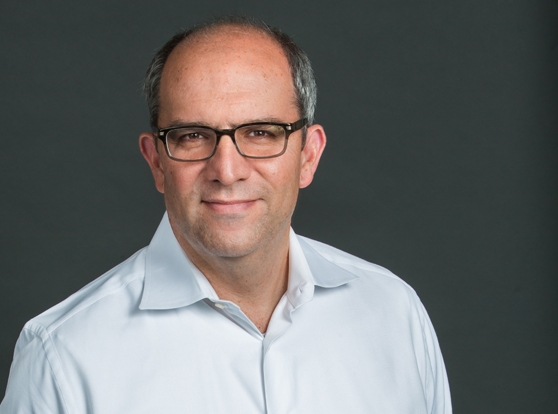
Alan Marco is an Associate Professor at the Jimmy and Rosalynn Carter School of Public Policy within Georgia Tech's Ivan Allen College of Liberal Arts. His research focuses on innovation policy, patent economics, and intellectual property strategy. Previously, he served as Chief Economist at the U.S. Patent and Trademark Office (USPTO), where he co-created PatentsView.org and led the Cancer Moonshot Patent Challenge. Research interests span antitrust regulation, patent valuation, technology markets, and empirical legal studies. Marco holds a Ph.D. in economics from UC Berkeley and a B.A. from Skidmore College. Publications demonstrate expertise in patent analytics, with recent work examining strategic citation behaviors, FRAND royalty calculations, and links between antitrust enforcement and innovation. Research methodologies emphasize large-scale data analysis of USPTO records, litigation outcomes, and market transactions.
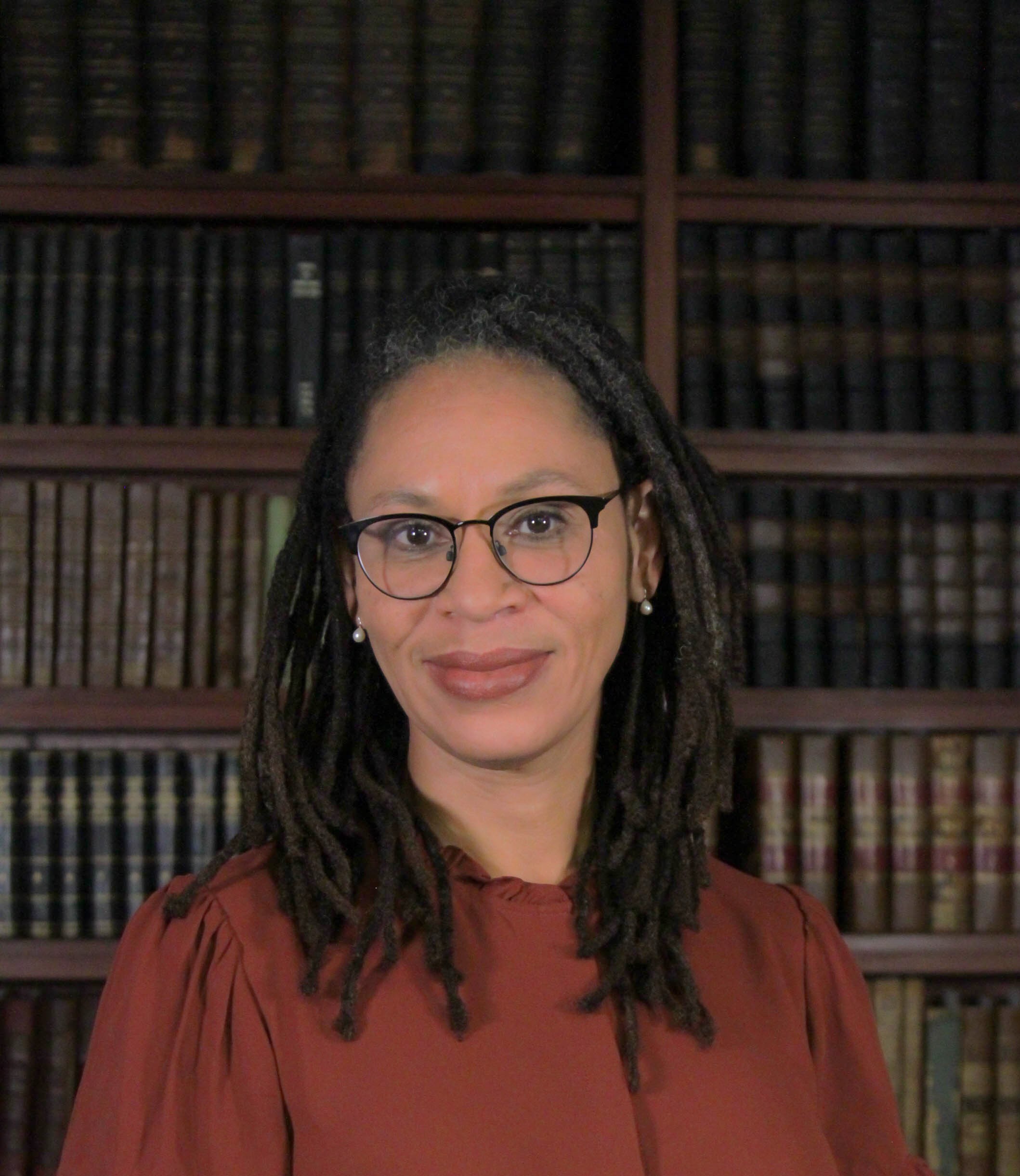
Rachel Best is an Associate Professor and Director of Graduate Studies in the Department of Sociology at the University of Michigan. Her research focuses on the intersections of politics, culture, inequality, and health, with a particular emphasis on disease advocacy, disability discrimination, and the sociological implications of medical policy. She directs the Sociology graduate program and leads computational studies on disease stigma, advocacy strategies, and ADA litigation outcomes. Her work bridges medical sociology, legal studies, and public health, addressing how societal structures shape health outcomes and policy responses. Her research interests include analyzing how disease campaigns influence health policy, the political consequences of overestimating individual health control, and the role of stigma in disability rights litigation. Notable projects use computational methods to trace policy advocacy impacts and explore visibility dynamics in disability cases. Recent publications (2022–2025) highlight her focus on disease stigma’s societal effects, legal interpretations of invisible disabilities, and the evolving nature of advocacy in health policy. Her earlier works, such as Common Enemies: Disease Campaigns in America , critique single-disease advocacy frameworks and their unintended policy consequences. Rachel Best advises on graduate studies and collaborates with interdisciplinary teams. Her research has been supported by grants focusing on sociological methods in health policy analysis. She is affiliated with the University of Michigan’s Sociology Department and the LSA College, contributing to discussions on inequality and institutional sociology.
Dr. Aleksandra Jordanoska is a Senior Lecturer at King's College London's Dickson Poon School of Law, specializing in corporate law and financial regulation. She holds a PhD from Queen Mary University of London (funded by a Queen Mary Research Studentship) and an MPhil in Criminology from the University of Cambridge. Her research focuses on financial markets governance, FinTech regulation, and white-collar crime, with recent grants from the British Academy and Leverhulme Trust. She has held visiting roles at institutions like UC Berkeley and ANU. Teaching includes undergraduate Company Law and postgraduate courses on FinTech policy and financial crime regulation. Key research projects include the 'Global White-Collar Crime Survey' and studies on NFT regulatory risks. She co-chairs the Law and Society Association's Regulatory Governance Network and collaborates internationally on compliance and crime prevention initiatives. Her work employs interdisciplinary methods, including interviews with industry stakeholders and observational studies of legal proceedings. She is actively involved in funding initiatives through organizations like the ESRC and King's College London.
Dr. Nikolas Roberts serves as an Assistant Professor in the Department of Criminal Justice at Pennsylvania Western University, tenured since 2022. He holds appointments in the College of Education, Arts, and Humanities. His roles include teaching courses on correctional systems, criminological theory, research methods, and international conflict resolution. He previously worked with the Pennsylvania Department of Corrections, focusing on inmate education and solitary confinement reform. Dr. Roberts is AccessData-certified in digital forensics and authored the 2024 anthology The Law Behind the Wall . Education: B.A., B.S., and M.S. from Pennsylvania Western University M.A. from Indiana University of Pennsylvania Ph.D. from Saybrook University Research Interests: Dr. Roberts specializes in corrections policy, criminological theory, and conflict resolution. He emphasizes practical applications of research, such as re-entry training and policing strategies. His upcoming work Research Methods for Qualitative Justice Studies (co-edited) underscores his commitment to methodological rigor. Service & Leadership: Elected Co-Chair of the University-wide Tenure Committee (2024–) Title IX Student Advisor and Hearing Board Member (2023–2024) Member of numerous committees, including curriculum development, faculty professional development, and policy review Community Engagement: Dr. Roberts serves as an official prison monitor with the Pennsylvania Prison Society and contributed to the Donora Smog Museum’s historical preservation efforts. His consultancy work with legal institutions includes mediation for federal litigation cases.
Edward R. Morrison is the Charles Evans Gerber Professor of Law at Columbia University's Columbia Law School, where he has been a full-time faculty member since 2003. His academic rank is Professor, specializing in corporate finance, bankruptcy law, and law and economics. He holds a Ph.D. in economics (University of Chicago, 2003), J.D. (University of Chicago Law School, 2000), M.A. in economics (University of Chicago, 1997), and B.S. (University of Utah, 1994). Morrison’s research focuses on corporate reorganization, consumer bankruptcy, and systemic market risk regulation. Notable work includes studies on racial disparities in Chapter 13 filings, valuation disputes in bankruptcies, and the link between financial distress and mortality. He co-edits the Journal of Legal Studies and directs Columbia’s Executive LL.M. Program. His teaching portfolio includes Contracts, Bankruptcy Law, and Corporate Finance. He co-directs the Richard Paul Richman Center for Business, Law, and Public Policy. Awards include the Willis L.M. Reese Prize (2018) for teaching excellence and the John Wesley Steen Law Review Writing Prize (2012). Morrison’s work is supported by the National Science Foundation and Pew Charitable Trusts. He previously served as Paul H. and Theo Leffmann Professor of Commercial Law at the University of Chicago (2013–2014) and has held roles on the Supreme Court’s Advisory Committee on Bankruptcy Rules and as associate editor of the American Law & Economics Review .
Eric Y. Drogin is an Adjunct Professor and Honorary Professor with dual expertise in clinical psychology and law. He is affiliated with Harvard Medical School, serving on the staff of the Forensic Psychiatry Service at Beth Israel Deaconess Medical Center, and is involved in the Harvard Longwood Psychiatry Residency Training Program. He also teaches at the University of New Hampshire School of Law and lectures internationally at Prifysgol Aberystwyth (formerly University of Wales) in both Psychology and Law. His work integrates mental health and legal systems through research, education, and practice. Education: Doctor of Philosophy (Ph.D.) in Clinical Psychology – Hahnemann University Juris Doctor (J.D.) – Villanova University School of Law Dr. Drogin's research interests center on the intersection of psychology, psychiatry, and law, particularly in forensic assessment, expert testimony, ethics, and mental disability law. His work emphasizes multidisciplinary approaches to legal and clinical challenges, supporting both mental health professionals and attorneys. He regularly presents continuing education seminars across North America, Europe, Asia, and Australia. His scholarly publications span criminal and civil law applications of psychological evidence, guardianship evaluation, forensic assessment standards, and the role of mental health professionals in court. These works reflect a consistent focus on improving legal processes through scientific rigor and ethical practice. Scientific Honors and Professional Recognition: Fellow of the American Psychological Association Fellow of the American Academy of Forensic Psychology Diplomate, American Board of Forensic Psychology Diplomate, American Board of Professional Psychology Life Fellow, American Bar Foundation Dr. Drogin has held leadership roles in major professional organizations, including President of the American Board of Forensic Psychology, Chair of APA committees on Legal Issues and Professional Practice, and Co-Chair of the ABA’s Behavioral & Neuroscience Law Committee. He serves as Editor-in-Chief of The Journal of Psychiatry & Law and has co-authored over 250 publications. While formal student advising is not detailed, his instructional roles in residency programs and trial workshops indicate active mentorship. He is a key figure in advancing forensic psychology through education, policy, and interdisciplinary collaboration.
Aviv Nevo is the George A. Weiss and Lydia Bravo Weiss University Professor at the University of Pennsylvania, holding joint appointments in the Department of Economics (School of Arts and Sciences) and the Marketing Department at the Wharton School. His research focuses on empirical industrial organization, antitrust economics, marketing, and econometrics, with applications to consumer packaged goods, healthcare, telecom, and real estate. Nevo earned his Ph.D. (1997) and AM (1994) in economics from Harvard University and a BSc in mathematics and economics from Tel Aviv University (1991). He joined Penn through the Penn Integrates Knowledge (PIK) program, which recognizes scholars who bridge disciplines. His work has examined price competition, merger implications, and regulatory policy, with notable contributions to understanding market dynamics in digital platforms and telecommunications. Nevo serves as a fellow of the Econometric Society, a research associate at NBER, and co-editor of Econometrica and the RAND Journal of Economics . Nevo’s research interests span antitrust analysis, consumer behavior, and applied econometrics. His recent studies address issues such as steering incentives in telecom gatekeepers, substitution effects in streaming media, and the misuse of economic metrics in merger reviews. He has advised on high-profile cases, including the Sabre/Farelogix and Aetna-Humana mergers, integrating empirical rigor into policy debates. Awards: Fellow of the Econometric Society, NBER Research Associate, Institute for Fiscal Studies International Fellow. Editorial Roles: Co-editor of Econometrica and RAND Journal of Economics . Professional Activities: PIK University Professor, Penn Integrates Knowledge initiative participant. Nevo’s work bridges academia and policy, with a focus on real-world applications of economic theory. His teaching spans both economics and marketing disciplines, reflecting his dual departmental affiliation.
Hilary Biehler is a Professor of Public Law at the Law School, Trinity College Dublin. She holds a B.A.(Mod.), M.Litt., Ph.D., and LL.D. from Trinity College Dublin. Her career includes roles as Head of the Law School (2003-2005, 2008-2010, 2011-2014), Vice Dean of the Schools of Law and Education (2005-2006), and Pro-Dean of the Faculty of Social and Human Sciences (2007) and Arts, Humanities, and Social Sciences (2010-2011). She was a Commissioner with the Law Reform Commission (1997-2005) and Editor of the Irish Law Reports Monthly (1993-2008). Her research focuses on Equity and Trust Law, Administrative Law (particularly judicial review), and Civil Procedure. She has authored seminal texts like Equity and the Law of Trusts in Ireland and Judicial Review of Administrative Action , and co-edited Delany & McGrath on Civil Procedure . Over 120 peer-reviewed publications reflect her expertise in procedural fairness, legal remedies, and administrative decision-making standards. Recognition includes Fellowship of Trinity College Dublin (1998). Her work bridges academic scholarship, legal practice, and institutional leadership, shaping Irish legal education and jurisprudence.
Robert N. Proctor is a Professor of History at Stanford University, with courtesy appointments in Medicine (Pulmonary and Critical Care Medicine). He holds degrees from Harvard University (Ph.D., M.S. in History of Science) and Indiana University (B.S. in Biology). His research focuses on the history of scientific controversy, tobacco history, Nazi science, agnotology (the study of culturally produced ignorance), and the cultural dimensions of scientific inquiry. His notable works include 'Golden Holocaust: Origins of the Cigarette Catastrophe' and 'Agnotology: The Making and Unmaking of Ignorance.' Proctor has advised on tobacco litigation and frequently engages with global health policy debates, advocating for cigarette abolition. His recent projects explore the historical roots of scientific denialism and the intersection of science with ethical and political issues. Proctor’s academic contributions span environmental history, intellectual history, and the history of medicine. He critiques corporate disinformation strategies, particularly in the tobacco industry, and analyzes how scientific knowledge is manipulated to serve political or economic agendas. His interdisciplinary approach bridges history, science, and public policy, making him a leading voice in understanding the social implications of scientific advancements. His publications reflect a commitment to exposing the hidden histories of scientific and corporate malfeasance. Notable articles include critiques of tobacco industry tactics, analyses of Nazi-era health policies, and explorations of agnotology’s role in modern discourse. Proctor’s work often emphasizes the ethical responsibilities of scientists and historians in addressing societal challenges like the cigarette epidemic.
Professor Hilary Bambrick is a distinguished environmental epidemiologist and anthropologist at the Australian National University (ANU), leading the National Centre for Epidemiology and Population Health. She specializes in climate change and health, focusing on adaptation strategies, vector-borne diseases, and urban resilience. Her work bridges research, policy, and practice, with significant contributions to global health initiatives like the WHO and UNDP. Bambrick has over 180 publications and $11M in research funding, addressing climate impacts on vulnerable populations, including First Nations communities and Pacific Island nations. She serves on the Climate Council of Australia and the Australia Institute, advocating for evidence-based climate policies. Her research integrates epidemiology, anthropology, and environmental science to enhance health resilience in changing climates. Education: PhD (ANU, 2003), BA (Hons), BSc, Grad Cert Higher Ed. Key Research Focus: Climate change health impacts, adaptation strategies, vector-borne diseases, urban design, and health equity. She leads interdisciplinary projects on climate litigation, heatwaves, and infectious disease forecasting. Grants & Funding: Over $11 million in research grants, including projects on bushfire preparedness, dengue transmission modeling, and climate-sensitive disease surveillance. Labs/Teams: National Centre for Epidemiology and Population Health (ANU), collaborating with global networks like the Lancet Countdown and MJA-Lancet Countdown.
Sue Mialon is an Associate Professor in the Department of Economics at Emory University. Her research focuses on Law and Economics, Industrial Organization, and Microeconomic Theory. She holds a PhD from the University of Texas, Austin (2002), alongside advanced degrees from Korea University (MA, 1996; BA, 1992). Her work analyzes regulatory frameworks, market competition dynamics, and the intersection of legal systems with economic behavior. Notable themes include net neutrality, discrimination incentives, and the economic impacts of legal standards. Recent studies address abortion policy, inheritance inequality, and counterterrorism strategies. Mialon’s research often bridges theoretical models with real-world policy implications, contributing to fields like antitrust enforcement and public policy evaluation. Her publications span journals such as the Journal of Regulatory Economics, Labour, and the Journal of Economic Behavior and Organization. She maintains a website at Emory and can be contacted via smialon@emory.edu.
Ryan Calo is the Lane Powell & D. Wayne Gittinger Professor of Law at the University of Washington School of Law, with joint appointments at the Information School and adjunct roles at the Paul G. Allen School of Computer Science and Engineering. He co-founded the UW Tech Policy Lab and Center for an Informed Public, focusing on technology policy, data privacy, and AI ethics. His research explores the intersection of law and technology, emphasizing AI regulation, surveillance law, and privacy harms. Key themes include legal indeterminacy in tech policy, ethical challenges of autonomous systems, and market manipulation in digital economies. His work spans law reviews, technical journals, and policy reports. Ryan Calo's articles highlight critical gaps in AI governance, surveillance frameworks, and robotics law. His publications address algorithmic bias, cultural responsiveness in AI, and legal implications of autonomous vehicles, with recurring focus on consumer protection, constitutional challenges, and cross-disciplinary policy solutions. Phillip A. Trautman 1L Professor of the Year Award (2014, 2017) Washington Law Review Faculty Award (2019) As a public intellectual, Calo has testified before the U.S. Senate multiple times, including on AI-driven privacy risks. He serves on advisory boards for major tech policy organizations and frequently appears in media discussing AI ethics, data breaches, and constitutional tech regulation.
Kara McKinley is an Assistant Professor of Stem Cell and Regenerative Biology at Harvard University , joining the department in 2021. She is a Principal Faculty member at the Harvard Stem Cell Institute , an Associate member of the Broad Institute of MIT and Harvard , and a Freeman Hrabowski Scholar at the Howard Hughes Medical Institute . Her research focuses on the regenerative capacity of the human uterus , particularly the endometrium, which undergoes ~400 cycles of tissue remodeling, shedding, and repair during the reproductive lifespan. Using rodent models , genetic, molecular, and live microscopy tools, her lab investigates cellular and molecular mechanisms of regeneration, defects leading to diseases like endometriosis, and applications in regenerative medicine . Her work also explores cell division , centromere biology , and CRISPR genome engineering . Current research trends in her publications include epithelial zonation in the small intestine , mechanisms of endometrial regeneration , macropinocytosis in Hydra , and academic mentorship strategies . Her studies span cellular biomechanics , mitotic regulation , and translational approaches for tissue repair. NIH Director’s New Innovator Award (terminated in 2025 litigation with federal government) Freeman Hrabowski Scholar (Broad Institute) Kara mentors Harvard undergraduates, graduate students, and postdoctoral fellows through rotations and research opportunities. Her lab is based at Harvard’s Bauer 306 and advocates for gender equity in life sciences faculty via the Leading Edge initiative. Funding includes a now-terminated NIH New Innovator grant aimed at menstrual health research.
Andrea Armstrong is the Dr. Norman C. Francis Distinguished Professor of Law at Loyola University New Orleans College of Law and a 2023 MacArthur Fellow. She joined the faculty in 2010 and is a leading expert on prison and jail conditions, certified by the U.S. Department of Justice as a Prison Rape Elimination Act auditor. J.D., Yale Law School, 2007 M.P.A., Princeton University School of Public and International Affairs, 2001 B.A., New York University, 1996 Her scholarship focuses on the constitutional dimensions of prisons and jails, particularly prison labor practices, the intersection of race and incarceration, public oversight of detention facilities, and healthcare disparities. She integrates law with history, public policy, and the arts to highlight the human costs of incarceration, advocating for systemic reforms through environmental justice and anti-discrimination frameworks. Andrea’s research includes 15 recent articles, spanning public health in prisons, constitutional challenges to labor practices, and environmental justice analyses of death row conditions. Her work emphasizes transparency, government accountability, and the systemic failures in carceral healthcare. Scientific Awards: 2023 MacArthur Fellow 2019 Interdisciplinary Research Leader, Robert Wood Johnson Foundation Armstrong has testified before Congress on prison labor and deaths in custody, served on Louisiana legislative committees, and collaborated with museums and foundations to make incarceration law accessible. She founded IncarcerationTransparency.org and leads grant-funded projects requiring IRB approval.
Michael J. Meurer is a Professor of Law at Boston University School of Law, holding the Abraham and Lillian Benton Scholar title. He holds an SB in Economics and Interdisciplinary Science from MIT, a JD cum laude from the University of Minnesota, and a PhD in Economics from the same institution. His research focuses on Intellectual Property & Economics , with emphasis on patent policy, antitrust, and high-tech industry regulation. He has received multiple Pew Charitable Trust Grant Ford Foundation Grant Olin Faculty Fellowship at Yale Law School AT&T Bell Labs Postdoctoral Fellowship His teaching includes core courses in Intellectual Property and Patent Law, alongside workshops for international scholars and policymakers. Meurer's recent publications analyze patent reform frameworks collusion dynamics in patent disputes economic models for nonobviousness costs of patent trolling copyright policy in digital markets innovation economics He actively contributes to antitrust symposiums and law & economics workshops, maintaining a dual focus on legal theory and empirical economic analysis.