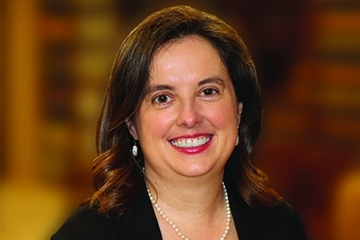
Christine Lazaro is a Clinical Professor of Legal Education and Co-Director of the Securities Arbitration Clinic at St. John's University School of Law. She has been with the university since 2007, focusing on securities arbitration, regulatory compliance, and investor protection. She holds a B.A. from New York University and a J.D. from Fordham Law School. Her professional roles include advising the Moot Court Honor Society and Corporate and Securities Law Society, alongside her consultancy work at Brent A. Burns, LLC. Her research and practice emphasize securities law, fiduciary duties, and arbitration proceedings. Key areas include regulatory challenges in online brokerage platforms, broker-dealer compliance, and financial exploitation prevention. She actively contributes to legal education through her clinic and serves on prominent committees like the SEC’s Investor Advisory Committee and FINRA’s Investor Issues Advisory Committee. Her publications span over 20 years, addressing topics like the Regulation Best Interest framework, digital investment advice regulation, and arbitration eligibility. She frequently collaborates with peers on PIABA (Public Investors Advocate Bar Association) initiatives, having previously served as its President and Board member. Professionally, she is admitted to multiple federal courts and state bars, and her advisory work extends to industry standards through roles in the New York State Bar Association’s Dispute Resolution Section and the CFP Board’s Standards Resource Commission.
Afra Afsharipour is the Martin Luther King, Jr. Professor of Law at the University of California, Davis School of Law. She served as Senior Associate Dean for Academic Affairs from 2018 to 2024 and teaches courses in business associations, mergers and acquisitions, startups and venture capital, and antitrust. B.A., Cornell University (magna cum laude, 1996) J.D., Columbia Law School (Harlan Fiske Stone Scholar, 1999) Her research focuses on comparative corporate law, corporate governance, and mergers and acquisitions. Recent work explores ESG integration in dealmaking, gender dynamics in corporate law, and inclusive leadership practices. She has contributed to global discussions on board diversity, risk management, and shareholder rights. Her publications have been featured in top journals like the University of Chicago Law Review and Vanderbilt Law Review , with recognition as a Top Ten Corporate and Securities Article in 2011 and 2023. She has delivered talks in India, China, and Taiwan and serves on editorial boards such as the Asian Journal of Law and Society and the Indian Law Review . Scientific Awards & Honors: Elected member of the American Law Institute (ALI) ECGI Research Member (2023) American Bar Foundation Fellow (2019) AALS Outstanding Mentor Award (2018) Lawyers of Color’s 50 Under 50 list (2014) Prior to academia, she practiced at Davis Polk & Wardwell LLP, focusing on mergers, securities offerings, and corporate governance. She clerked for Judge Rosemary Barkett on the Eleventh Circuit Court of Appeals.
Professor Rodrigo Olivares-Caminal is a leading academic in Banking and Finance Law at Queen Mary University of London's Centre for Commercial Law Studies (CCLS). He holds an LLB from Buenos Aires, an LLM from Warwick, and a PhD from London. His roles include Editor-in-Chief of the Business Law Review and advisory roles at UNCTAD, World Bank/IFC, and international law firms. His expertise focuses on international finance, insolvency law, cross-border litigation, and sovereign debt restructuring. Education: LLB (Buenos Aires) LLM (University of Warwick) PhD (London) Research Interests: Specializes in sovereign debt crises, cross-border insolvency frameworks, and legal aspects of financial crises. His work bridges law, economics, and public policy, addressing systemic risk, creditor equality, and the design of sustainable debt management frameworks. He advocates for improved transparency in sovereign lending and equitable restructuring mechanisms. Professional Contributions: Authored/edited 7 books and over 100 peer-reviewed articles/chapters. Key works include *Debt Restructuring* (OUP), *Expedited Corporate Debt Restructuring in the EU*, and *Legal Aspects of Sovereign Debt Restructuring*. Serves on editorial boards of major law journals and advises international institutions on financial regulation and crisis containment. Grants & Awards: No specific awards mentioned, but recognized internationally for contributions to insolvency law and sovereign debt policy. Has received honors from Saudi Arabia’s Bankruptcy Commission and participation in high-level policy dialogues (e.g., UNCTAD, IMF). Teaching & Mentorship: Leads postgraduate courses on Corporate Finance Law, Sovereign Debt Restructuring, and Bank Resolution. Teaches globally at institutions in Spain, Italy, Greece, France, China, and Argentina. Active in professional training programs across Africa, Asia, Middle East, and Europe. Labs/Teams: Core member of Queen Mary’s Insolvency & Governance Research Group. Collaborates with global networks like the International Insolvency Institute and the European Banking Authority. Leads interdisciplinary projects on sovereign debt frameworks and cross-border financial stability.
Sharona Hoffman is the Edgar A. Hahn Professor of Law and Professor of Bioethics at Case Western Reserve University , where she also serves as Co-Director of the Law-Medicine Center . Since joining the faculty in 1999, she has become a leading voice in health law, employment discrimination, and the legal and ethical implications of health information technology and artificial intelligence. Education: Doctor of Juridical Science (SJD) in Health Law – Case Western Reserve University Master of Laws (LLM) in Health Law – University of Houston Juris Doctor (JD) – Harvard Law School Bachelor of Arts – Wellesley College Research Focus: Hoffman's scholarship spans health law , employment discrimination , health information technology , AI and the law , public health emergencies , and elder law . She has authored over 70 scholarly articles and two books: Electronic Health Records and Medical Big Data: Law and Policy (Cambridge University Press, 2016) and Aging with a Plan: How a Little Thought Today Can Vastly Improve Your Tomorrow (2nd ed., 2022). Awards & Honors: 2021 CWRU Faculty Distinguished Research Award Elected to the American Law Institute (2017) 9th most-cited health law scholar in the U.S. (2016–2020, Leiter’s Law School Reports) First Year Teacher of the Year – 2011, 2012, 2019, 2024 Grants & Fellowships: Hoffman has held prestigious fellowships including the Robert Wood Johnson Foundation Scholar-in-Residence (2013), and visiting scholar positions at the CDC (2007, 2014), Emory University (2014), and NIH Bioethics Department (2022). Professional Roles: Prior to academia, Hoffman served as a Senior Trial Attorney at the EEOC, litigation associate at O'Melveny & Myers, and judicial clerk for U.S. District Judge Douglas W. Hillman.
Professor Donna Green is an internationally recognized environmental scientist at the University of New South Wales (UNSW), affiliated with the School of Biological, Earth & Environmental Sciences. She holds a PhD from the University of California, Berkeley (2004) and leads multidisciplinary research at the intersection of climate change, energy policy, and air pollution. Her work focuses on balancing improvements in indoor air quality against outdoor pollution sources such as traffic, bushfires, and industry, while addressing increasingly recognized risks from indoor air contaminants including airborne diseases. PhD, University of California, Berkeley (2004) Professor Green's research spans environmental science, climate change impacts, air pollution health effects, renewable energy policy, and environmental justice. Her work demonstrates particular expertise in the health impacts of climate change, with emphasis on vulnerable populations including Indigenous communities. She investigates the synergistic impacts of urban air pollution compounding climate emergencies, and has published extensively on environmental injustice in resource-rich Aboriginal Australia. Her research often bridges scientific findings with practical policy solutions, working collaboratively with engineers, legal practitioners, and public health experts to design evidence-based approaches to environmental challenges. The most recent publications reveal a strong focus on wildfire smoke impacts on health, indoor air quality in educational settings, climate litigation trends, and the intersection of renewable energy development with Indigenous rights. Her work shows increasing attention to the health consequences of climate change, particularly through the MJA-Lancet Countdown reports which document Australia's preparedness (or lack thereof) for climate-related health challenges. There's also a clear trend toward interdisciplinary collaboration, with publications spanning environmental science, public health, engineering, and social justice perspectives. Clean Air Society Australia & New Zealand Innovation & Excellence in Air Quality Award for CleanAir Schools program Professor Green leads the CleanAir Schools program and is currently implementing Fresh Air Innovators in 100 NSW school classrooms. She has secured significant research funding through collaborations with multiple institutions and has supervised numerous students, though specific advisees aren't listed in the provided text. Her research has informed policy discussions on air quality standards, climate adaptation strategies, and environmental justice frameworks. Professor Green directs research teams investigating indoor air quality solutions, climate-health interactions, and renewable energy policy frameworks. Her CleanAir Schools initiative represents a major practical application of her research, translating scientific findings into classroom interventions that protect children from air pollution. She collaborates extensively with engineers, public health experts, and policy practitioners to develop evidence-based solutions to environmental challenges.
Katažyna Bogdzevič is a Professor at Mykolas Romeris University (MRU) Law School, specializing in Private International Law , European Law , Human Rights , and Environmental Law . She leads the MRU Human Rights LAB and contributes to the Environmental Management Research LAB, focusing on legal frameworks for ecosystem services, climate change mitigation, and stakeholder engagement. Key Research Themes: Integration of Private International Law with Environmental Law , analysis of legal conflicts in nature-based solutions, and name rights under international human rights conventions. Policy Engagement: Serves as advisor to Lithuania's Minister of Justice Ewelina Dobrowolska , emphasizing knowledge transfer to legislative and judicial practices. Email: roffice@mruni.eu
Christopher T. Bavitz is the WilmerHale Clinical Professor of Law and Vice Dean for Experiential and Clinical Education at Harvard Law School. He serves as Managing Director of the Cyberlaw Clinic at the Berkman Klein Center for Internet & Society and is a Faculty Co-Director of the Center. His expertise spans intellectual property, media law, AI governance, and technology policy. Bavitz teaches courses like Music & Digital Media and Counseling and Legal Strategy in the Digital Age . His research focuses on algorithmic fairness, intermediary liability, and regulatory frameworks for emerging technologies. Bavitz holds a B.A. from Tufts University and a J.D. from the University of Michigan Law School. Before joining HLS, he was Senior Director of Legal Affairs at EMI Music and practiced litigation at Sonnenschein Nath & Rosenthal. Key initiatives include work on the Lumen Database for transparency in content takedowns, the AGTech Forum for state attorneys general, and policy analysis on AI ethics, facial recognition, and algorithmic risk assessment tools. He advises on startup legal strategy, digital finance, and generative AI accountability.
Carla Hayn is a Professor of Accounting and the Ernst & Young Chair in Accounting at UCLA Anderson School of Management. She serves as the Accounting Area Chair and Director of International Initiatives at the Center for Global Management. Her research focuses on financial reporting, tax disclosures, mergers and acquisitions, and the economic consequences of accounting information. Ph.D., University of Michigan (1988) Hayn's research examines the impact of accounting numbers on stock prices, analysts' forecasts, and corporate valuation. She has pioneered hybrid educational models like FEMBA Flex and EMBA Monthly sections, blending intensive classroom learning with online modules. Her work also addresses corporate governance and international business strategies. Hayn's recent publications explore measurement conservatism, goodwill impairment indicators, and earnings forecast dynamics, reflecting her expertise in financial disclosures and market responses. Her work bridges academic rigor with practical applications in taxation, M&A, and regulatory compliance. Ernst & Young Chair in Accounting Coopers & Lybrand fellowship in mergers and acquisitions Hayn consults with corporate boards on financial strategy and serves as an expert witness in securities litigation, focusing on financial reporting, valuation fraud, and damage assessment. She co-directs UCLA Anderson Executive Education’s corporate governance program.
Lucila de Almeida is an Associate Professor at NOVA School of Law, Universidade NOVA de Lisboa, holding the prestigious Abreu Chair in ESG Impact, Climate and Energy Law. She concurrently serves as coordinator of the NOVA Green Lab and the Master's in International and European Law, while maintaining a part-time Full Professor position at the European University Institute's Florence School of Regulation. Her academic leadership spans energy regulation, climate policy, and European legal frameworks. Her educational foundation includes: PhD in European Law from the European University Institute LL.M. in Comparative, European and International Law from the European University Institute Master's in Law and Development from FGV São Paulo Law Degree from the Federal University of Rio Grande do Norte Professor de Almeida's research confronts urgent energy-climate intersections through critical analysis of regulatory frameworks. She pioneers studies on peer-to-peer energy trading, consumer protection in digitalized markets, and the legal architecture of sustainable consumption. Her work dissects the European Green Deal's implementation challenges, examining how securitization narratives impact energy, food, and climate policies while advocating for equitable regulatory solutions in energy democratization. Her publication trajectory reveals deepening engagement with energy market transformation, shifting from foundational contract law analyses toward systemic examinations of digitalization, community energy models, and Green Deal stress-testing. Recent works increasingly integrate consumer protection with energy democratization frameworks, highlighting regulatory gaps in peer-to-peer platforms and sustainability reporting. Her scholarly recognition includes: Abreu Chair in ESG Impact, Climate and Energy Law Edmond J. Safra Research Fellowship at Tel Aviv University Finnish Distinguished Professorship by the Academy of Finland As principal investigator for major EU-funded initiatives including Horizon Europe's U2Demo project and International Energy Agency's UserTCP Observatory, she directs cutting-edge research on P2P energy sharing and consumer rights. Her editorial leadership spans Competition and Regulation in Network Industries (Sage) and Energy Research & Social Science (Elsevier), shaping discourse on regulatory innovation. Through the NOVA Green Lab, she cultivates interdisciplinary collaboration on climate law implementation and energy justice, developing practical ESG training frameworks for Portuguese SMEs while advancing theoretical foundations of regulatory private law.
Tyler Custis serves as an Associate Professor at the University of South Dakota's Beacom School of Business, specializing in Business Law and the Legal Environment. His academic appointments reflect deep engagement with contemporary legal challenges in sports, finance, and corporate governance. His educational background includes: JD from University of South Dakota (2013) MBA from University of South Dakota (2012) BS from Texas A&M University (2007) Custis' research focuses on high-impact legal intersections, particularly NCAA regulations, corporate fraud mechanisms, and healthcare compliance failures. His work bridges theoretical legal frameworks with real-world economic consequences, examining how regulatory gaps enable systemic misconduct in sports leagues and financial institutions. Key themes include Title IX implications for athlete compensation, internal control failures in banking scandals, and antitrust considerations in collegiate athletics. His publication portfolio reveals strong emphasis on sports law evolution (2016-2025), corporate ethics case studies (2018-2022), and financial regulation analysis (2019-2024). The research demonstrates methodological diversity spanning empirical analysis of NCAA labor models, forensic accounting of banking fraud, and policy evaluation of legislative responses to corporate misconduct. Award recognition includes: Beacom School of Business Faculty Excellence Teaching Award (2023) Excellence in Teaching Award Nominee (2023) Best Paper Award at ICTO International Conference (2019) Custis actively disseminates research through scholarly presentations at venues including ASHE Annual Conferences, Academy of Legal Studies meetings, and Beacom Scholar Series. His work engages directly with policymakers on NCAA reform and corporate compliance frameworks, demonstrating applied impact beyond academic circles.
Katri Havu is an Associate Professor at the University of Helsinki's Faculty of Law and a key member of the Helsinki Institute of Sustainability Science (HELSUS). She specializes in EU law, competition law, and technology-related legal challenges. Current projects: Green and Tempting? (combating greenwashing) and Private Enforcement, Sustainability & Technology Research themes: AI liability, EU damages directives, and sustainable regulatory frameworks Her publications focus on algorithmic accountability, competition law enforcement, and non-material harm compensation in EU courts. Recent work examines AI-induced damages and greenwashing in consumer marketing. Scientific recognition includes: Nordic Prize for Young Private Law Scholars (2021) Lakimies journal's best article award (2019) European Journal of Risk Regulation Reviewer Award (2023) Havu actively supervises doctoral researchers and participates in EU regulatory policy development. She serves as editor for Lakimies journal and contributes to EU soft law implementation analysis.
Dr. Andres Guadamuz is a Reader in Intellectual Property Law at the University of Sussex, affiliated with the School of Law, Politics and Sociology. He serves as Editor in Chief of the Journal of World Intellectual Property . His research focuses on intersections of law and technology, including artificial intelligence and copyright, open licensing, cryptocurrencies, smart contracts, and blockchain. He has authored over 40 articles, book chapters, and two books, alongside regular blog posts on technology regulation. Research Interests: Artificial Intelligence and Copyright Blockchain Technology and IP Cryptocurrency Regulation Open Source Licensing Internet Governance Data Mining Legal Frameworks Publication Trends: His recent work addresses AI's impact on copyright law, NFTs, and legal challenges in smart contracts. He critically explores EU AI legislation, liability frameworks for AI inputs/outputs, and NFT authenticity issues. Teaching: Teaches courses on Digital Intellectual Property Law, Internet Law, and Information Technology IP Law, including developing the specialized LLM in IT and Intellectual Property Law. Grants/Advising: Supervises PhD/postgraduate students in his research areas. His work is widely cited in legal, academic, and policy circles, with over 100 Mendeley readers for key papers.
Dr. Felix Mezzanotte is an Assistant Professor of Law at Trinity College Dublin and Director of the MSc in Law and Finance Programme, a collaboration between Trinity Law School and Trinity Business School. He holds a PhD and advanced degrees from the University of East Anglia, SOAS (University of London), and the University of Warwick. His research focuses on the legal dimensions of sustainable finance, corporate sustainability reporting, investor protection, and compliance frameworks within financial markets. Academic Role: Assistant Professor of Law Affiliations: Trinity Law School, Trinity Business School (MSc Programme Director) Professional Experience: Former teaching at Hong Kong Polytechnic University, policy advisor for the World Bank, and visiting scholar at Columbia Law School and others. Dr. Mezzanotte's research interests span sustainable finance regulatory design, ESG compliance, blockchain applications in reporting, and cross-border enforcement challenges. His recent work emphasizes the legal accountability mechanisms linking corporate sustainability disclosures to investor rights under EU directives. Publications reflect a focus on EU sustainable finance policy, with analysis of regulatory complexity, blockchain innovations, and investor protection gaps. Recent articles address double materiality frameworks, impact reporting standards, and the role of robo-advisors in ESG integration. Key Award: Faculty of Business Award for Outstanding Teaching (Hong Kong Polytechnic University) Research Collaborations: European-China Law Studies Association, Columbia Center for Sustainable Investment He supervises doctoral candidates exploring topics like greenwashing prevention, non-financial disclosure obligations, and regulatory enforcement in sustainable finance contexts.
Dr. Baizhou Chen is an Assistant Professor of Accounting and Finance at the Lombardo College of Business, Millersville University. Previously, he served as full-time accounting faculty at Penn State University and the University of Minnesota Crookston. He holds certifications as a Certified Public Accountant (licensed in New York and California) and passed the Series 65 Exam. Education: Bachelor of Science from University of Minnesota (Michael Chowdry Entrepreneurial Scholarship recipient) MBA in Public Accounting from St. John's University (Executive-In-Residence program participant) DBA from Jacksonville University (dissertation: Litigation Risk, Financial Crisis, and Non-GAAP Financial Reporting) Professional Experience: Senior Assistant Controller at Oracle Corporation EY Senior Auditor in New York and Beijing His research interests focus on auditing practices, financial reporting compliance, and the intersection of accounting with corporate governance. He teaches courses in auditing, financial accounting, and managerial accounting. Dr. Chen has advised on high-stakes financial integrations, including Oracle’s $9.3B NetSuite acquisition, and has global experience through assignments in EY’s Beijing office.
Tracy Hester is a Lecturer at the University of Houston Law Center, focusing on the intersection of artificial intelligence and legal practice. Her work examines how AI tools reshape legal functions, such as predictive analytics for disaster response and environmental regulation. She collaborates with organizations like the Red Cross and environmental agencies to address legal challenges posed by machine learning systems. Hester’s research emphasizes climate law, corporate environmental liability, and international agreements, with a particular focus on the legal implications of climate engineering and sustainability policies. Her research interests include AI-driven legal decision-making, climate litigation strategies, and the ethical dimensions of environmental governance. Notably, she explores how lawyers and bar associations can combat climate change through advocacy and policy reform. Hester’s publications analyze transnational environmental liability, USMCA treaty provisions, and the role of consent decrees in enforcing environmental standards. Recent articles highlight her work on advised emissions ethics, corporate restructuring in climate crises, and the paradoxes of regulating negative emissions technologies. She has also contributed to debates on climate engineering governance and the legal frameworks for carbon capture. Hester’s interdisciplinary approach bridges environmental law, corporate responsibility, and emerging technologies to address global sustainability challenges. Tracy Hester holds no listed scientific awards but has been active in shaping legal responses to climate issues through scholarly contributions and institutional collaborations. Her expertise is further reflected in her engagement with international climate negotiations and domestic regulatory reforms.