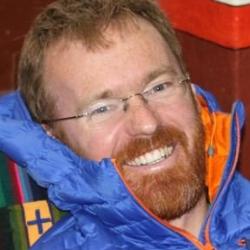
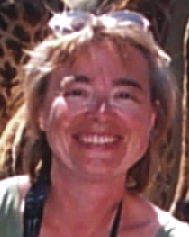
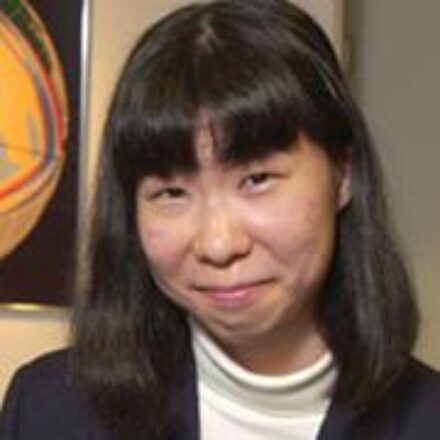
Jonathan Snow is a Professor and Chair of the Department of Geology and Geophysics at Louisiana State University (LSU), College of Science. Previously, he held faculty positions at the University of Houston, including roles as Assistant Professor (2005–2008), Associate Professor (2008–2014), and Professor (2014–2019), and served as President of the Faculty Senate (2016). His academic journey includes a Bachelor’s in Geology from Indiana University (1983), Master’s from the University of Rochester (1986), PhD in Oceanography from MIT/WHOI (1993), and a Habilitation in Mineralogy from Universitat Mainz, Germany. Research interests focus on the Earth’s lithosphere formation, mantle melting processes, and oceanic crustal accretion. Key areas include mid-ocean ridge basalt petrogenesis, mantle noble metal geochemistry (Os, Re), and tectonics of fracture zones. Notable contributions include studies on the Arctic Ocean’s Gakkel and Lena Troughs, Hess Deep, and Shikoku Basin oceanic core complexes. Professional recognitions include NSF Graduate Fellowship (USA), Alexander von Humboldt Foundation Fellowship (Germany), DFG Heisenberg Program (Germany), and Japan Society for the Promotion of Science Fellowships. His work integrates field expeditions (e.g., ARKTIS cruises), laboratory geochemistry, and computational models to advance understanding of mantle dynamics and crustal evolution.
Angelo Peccerillo is a distinguished Full Professor of Petrology at the University of Perugia, Italy, with an extensive academic career spanning multiple Italian universities. He previously served as Full Professor of Petrology at the Universities of Calabria (1993-1997) and Messina (1985-1993), and as Associate Professor of Volcanology (1982-1985) and Assistant Professor (1971-1982) at the University of Florence. He earned his Laurea Degree in Geology from the University of Florence in 1970 and has been a member of Academia Europaea since his election. Peccerillo's research focuses on the petrology and geochemistry of magmatic processes, with particular expertise in igneous petrology, geochemistry, volcanology, orogenic volcanism, and continental rift magmatism. His scholarly work has established him as a leading expert in understanding the complex relationships between mantle processes, crustal interactions, and volcanic activity in the Mediterranean region and beyond. His research methodology integrates petrological, geochemical, and geophysical approaches to develop comprehensive models of magmatic systems. Analysis of Peccerillo's recent publications reveals a consistent focus on magmatic processes across diverse geological settings. His work spans from detailed studies of specific volcanic systems like the Aeolian Islands and Ethiopian Rift to broader investigations of mantle structure and geodynamic processes in the Mediterranean region. A recurring theme is the integration of multiple analytical approaches to model magma plumbing systems, understand mantle composition, and elucidate the geodynamic evolution of volcanic regions, particularly examining the relationships between deep and shallow mantle processes. Antonio Feltrinelli Price 2006 for Earth Sciences, awarded by the National Academy of Lincei, Italy Professor Peccerillo has supervised numerous MSc and PhD students both at his home institution and abroad. His editorial leadership includes serving as Chief Editor of the "European Journal of Mineralogy" from 2006 to 2008 and membership on the editorial boards of several prestigious journals including "Lithos," "Journal of Volcanology and Geothermal Research," "Geological Society of Italy Bulletin," and "Open Mineralogy Journal." He has been actively involved in research evaluation, serving on national and international panels for organizations such as NSF, ESF, CNR, MIUR, and NATO. Peccerillo maintains strong international scientific connections through visiting positions at institutions like the Australian National University, University of Gottingen, and University of Paris XI at Orsay. His leadership extends to professional organizations, having served as President of the Italian Petrology Group and currently as a Member of Academia Europaea. His administrative experience includes serving as Department Head and Coordinator of PhD programs at the Universities of Messina, Cosenza, and Perugia.
Peter Shearer is a Professor of Geophysics at the Institute of Geophysics and Planetary Physics , affiliated with the Scripps Institution of Oceanography at the University of California, San Diego. His research focuses on observational seismology, mantle discontinuities, earthquake location methods, source properties, and seismicity patterns. Education: B.S. in Geology and Geophysics, Yale University (1978) Ph.D. in Geophysics, UCSD Scripps Institution (1986) Research Interests Shearer's work uses large seismic datasets to study Earth's interior structure, particularly mantle transition zones, lithospheric discontinuities, and earthquake triggering mechanisms. His methods include waveform cross-correlation relocation, SS precursor analysis, and seismic wave scattering studies. Scientific Contributions His publications span 40+ years, with recent works analyzing aftershock migration, mantle discontinuities, and fault weakening. Key themes include Global mantle imaging using teleseismic data High-resolution fault zone seismicity Deep Earth structure from scattered waves Scientific Awards AGU Fellow (1999) SIO Outstanding Teaching Award (2003) Lehmann Medal (AGU, 2020) National Academy of Sciences member (2009)
Professor Saskia Goes is a Professor of Geophysics at Imperial College London's Department of Earth Science & Engineering within the Faculty of Engineering. She specializes in geodynamics, subduction dynamics, and seismic hazard analysis using numerical modeling and geophysical data interpretation. Her affiliations include the Dynamic Earth and Hazards groups at the Imperial Centre for Geohazards Dynamics. Education: PhD in Geophysics from UC Santa Cruz (1995), Drs (BSc/MSc equivalent) from Utrecht University (1990). Prior roles include SNF Professor of Tectonophysics at ETH Zurich (2003-2005), Visiting Assistant Professor at the University of Michigan (1995-1996), and postdoctoral research at Utrecht University (1996-1999). Research focuses on mantle dynamics, lithosphere structure, and subduction zone processes. Her work integrates seismic imaging, machine learning, and numerical simulations to study phenomena like slab dynamics, mantle plumes, and fluid migration. Key themes include the interplay between tectonic forces and geochemical processes in continental and oceanic settings. Publications emphasize subduction zone processes, seismic tomography, and induced seismicity. She has led projects like the VoiLA initiative studying volatile recycling in the Lesser Antilles. Awards and recognition include invited lectures at leading conferences (AGU, EGU) and universities worldwide. Teaching includes undergraduate geodynamics, geohazards courses, and advanced MSc modeling modules. Active in promoting geohazard research through interdisciplinary collaboration and public engagement.
Dr. Mark Hoggard is an ARC DECRA Research Fellow at the Research School of Earth Sciences, The Australian National University (ANU). His research focuses on geodynamics, sea-level modelling, nuclear test monitoring, and critical mineral systems. He holds a PhD from ANU and has studied at institutions including Cambridge University, Harvard, and Columbia. Hoggard’s work integrates geophysical data with numerical modelling to explore Earth’s dynamic processes, including mantle convection, glacial isostatic adjustment, and lithospheric evolution. Affiliations: Research School of Earth Sciences (ANU), Geoscience Australia (collaborative projects). Education: PhD (ANU), MA (Cambridge), BSc (ANU). Research Interests: Dynamic topography and its influence on sea-level records. Mantle structure and its relationship to mineral systems. Glacial cycles and ice sheet dynamics. Seismic monitoring of underground nuclear tests. Recent Article Trends: Recent work emphasizes geodynamic corrections to Pliocene sea-level estimates, mantle rheology influences on ice sheet models, and statistical methods for distinguishing seismic events from explosions. Key themes include linking deep Earth processes to surface observations and advancing methods for critical mineral exploration. Grants & Projects: Leads projects such as CoastRI GIA Modelling (2024–2027) and Next Generation Sea-Level Modelling (2022–2025). Collaborates with institutions like Los Alamos National Laboratory on nuclear test detection algorithms. Labs/Teams: Part of ANU’s Geodynamics group and the Exploring for the Future program at Geoscience Australia, focusing on Australia’s crustal structure and mineral potential.
Dr. Ernst Willingshofer is an Associate Professor of Tectonics in the Department of Earth Sciences at Utrecht University's Faculty of Geosciences. His research focuses on the coupling of deep crustal and upper mantle processes with surface deformation, particularly in collision zones and rift systems. He employs field studies and physical analogue modelling to investigate lithospheric rheology, strain localization, and tectonic evolution. Research Interests: Willingshofer's work spans tectonics, lithosphere deformation, and structural geology. Key themes include the influence of rheological stratification on strain partitioning, analogue modelling of orogenic systems, and dynamics of basins and orogens. His research has applications in understanding Alpine, Mediterranean, and global tectonic processes. Articles Trend: Recent publications (2021–2024) emphasize analogue modelling innovations, strain partitioning mechanisms, and tectonic evolution of collision zones. Subduction initiation, passive margin dynamics, and intracontinental deformation are recurring themes, with strong focus on Mediterranean and Alpine geology. Teaching & Advising: Coordinates BSc courses ( Deformation and Metamorphism of the Crust , Pyrenean Fieldwork ) and MSc courses ( Modelling Crust and Lithosphere Deformation , Dynamics of Basins and Orogens ). Supervises MSc, BSc, and guided research projects. Laboratory: Leads the Earth Simulation Lab, specializing in analogue modelling of tectonic processes.
Neal Driscoll is a Professor of Geology and Geophysics at the Geosciences Research Division, Scripps Institution of Oceanography, UC San Diego. He specializes in tectonic deformation, landscape evolution, and seafloor imaging, with a focus on understanding Earth's processes through sediment records. Driscoll co-directs UC San Diego’s Center for Public Preparedness (CP2) and leads ALERTCalifornia, a critical infrastructure network monitoring wildfires, floods, and earthquakes via over 1,000 cameras. His work bridges geohazard mitigation, climate impacts, and disaster response. Education: B.S., Geology, University of New Hampshire M.S., Oceanography, University of Rhode Island Ph.D., Columbia University (Lamont-Doherty Earth Observatory) Research Interests: Driscoll investigates tectonic deformation’s role in shaping landscapes and seascapes, particularly in response to climate and sea-level changes. His fieldwork includes high-resolution seafloor imaging and seismic data analysis in regions like Iceland and California. He also studies neotectonics, geohazards, and coastal processes, with recent focus on the San Andreas Fault system and Salton Trough rift dynamics. ALERTCalifornia: This program uses advanced camera networks to monitor natural disasters, providing real-time data for first responders and researchers. Its infrastructure, originally for earthquake monitoring, now supports multi-hazard tracking, including wildfires and landslides, enhancing public safety and environmental understanding. Awards: Office of Naval Research Young Investigator Award Heezen Award and Storke Award (Lamont-Doherty Earth Observatory) Scripps Undergraduate Teaching Award MIT Distinguished Crosby Lecturer Advising & Grants: Driscoll has mentored students in geology and geophysics, with grants supporting his research on fault systems, climate impacts, and disaster preparedness. His collaborative projects include the Salton Seismic Imaging Project and Arctic Ocean sediment studies. Labs & Teams: Leads ALERTCalifornia and CP2 teams, collaborates with Scripps’ Geosciences Research Division on marine geophysics and tectonic studies, and partners with global institutions like WHOI and Icelandic research groups.
Sally Gibson is a researcher at the Department of Earth Sciences, University of Cambridge, specializing in mantle geodynamics and volatile cycling processes. Her work integrates field observations, geochemical analysis, and numerical modeling to investigate how deep Earth processes influence surface environments over 3.5 billion years of planetary evolution. Research focuses on volatile cycling (CO₂, H₂O, F, Cl, S) in mantle systems Key projects include mantle plume-ridge interactions with collaborators in the US and Ecuador Operates a LA-ICP-MS laboratory for high-resolution geochemical analyses Supervises PhD students in petrology, geochemistry, and numerical modeling Her research addresses fundamental questions about Earth's habitability through studies of mantle-derived volatiles critical for climate regulation and energy transition metal deposits. Fieldwork in remote regions like Antarctica, Lesotho, and the Galápagos Islands provides empirical data for her interdisciplinary approach. Recent publications highlight her expertise in mantle xenolith analysis, plume dynamics, and volatile quantification in large igneous provinces. Her group's work combines 3He/4He isotopic analysis with seismic tomography to constrain lithospheric evolution and mineral deposit formation. Students under her supervision develop expertise in petrology and geochemical modeling while engaging with environmental and societal impacts of geological research. She actively promotes scientific outreach and community engagement, fostering connections between academia and broader society.
Dr. Derek Keir is an Associate Professor in Earth Science within the Ocean and Earth Science department at the University of Southampton. He specializes in passive seismology, remote sensing, geochemistry, and field geology to study earthquakes and volcanoes in Africa, Arabia, the Caribbean, and Italy. He leads the Geology and Geophysics research group and serves as Chief Editor of the Structural Geology and Tectonics section in Frontiers in Earth Science , and holds editorial roles in Volcanology and Structural Geology. Education: MSci Geology and Geophysics (Imperial College London, 1998-2002), PhD in Tectonics and Seismology (Royal Holloway University of London, 2002-2006). Previous roles include NERC Research Fellow (University of Leeds, 2007-2011) and Lecturer (University of Southampton, 2011-2015). Research focuses on continental rifting, magmatic systems, and geothermal resources. Notable projects include the South Tanganyika Active Rift Seismicity study (sponsored by Beach Energy) and investigations into the lithospheric structure of the Ontong Java Plateau (NERC-funded). His work combines seismology, InSAR, and geochemical analyses to understand tectonic processes. Publications highlight contributions to understanding volcanic subsidence (Dallol), rift-scale magmatic inflation in Afar, and seismic hazard in the Apennines. Awards include the 2024 Nature Paper (Coevolution of craton margins), Jason Morgan Early Career Award (2011), and Bullerwell Award (2013). Supervises PhD students in INSPIRE programs and collaborates on international projects like the Afar Dallol Drilling initiative. His research bridges field observations with advanced geophysical modeling to advance continental dynamics understanding.
Dr. Robert Pickle is a Postdoctoral Fellow at the Research School of Earth Sciences (RSES), Australian National University (ANU), specializing in Geophysics. His work focuses on seismic network design, machine learning applications in seismology, and tectonic studies in active seismic zones. He contributes to projects like the Southwest Australia Seismic Network (SWAN) and the Australian Passive Seismic Server, advancing understanding of crustal dynamics and seismic hazard assessment. Education: PhD (specific details not provided in texts). Research Interests: Dr. Pickle’s expertise spans seismic instrumentation, regional seismic monitoring, and the integration of machine learning for improving earthquake catalog accuracy. His studies address critical areas such as the Banda Arc–Australian Plate collision zone and the seismicity of southwest Australia. Projects: Principal investigator on the Australian Passive Seismic Server and researcher on the Enhanced 3-D seismic structure of Southwest Australia (SWAN) project. Collaborates with institutions like the ANU’s RSES and international seismological networks. Labs/Teams: Active in ANU’s Geophysics research groups, contributing to collaborative efforts in seismic data acquisition and analysis.
Professor Alex Copley holds the position of Professor of Tectonics at the Department of Earth Sciences, University of Cambridge. His research focuses on understanding Earth's crustal deformation, tectonic forces, and earthquake dynamics across scales from microcrystalline to continental. He employs integrated approaches combining field geology, geophysical data, numerical modeling, and petrological analysis. His work addresses key questions on earthquake controls, tectonic force origins, and crustal material properties, with global field projects spanning Asia, the Middle East, Europe, Africa, and South America. Research interests include: Earthquake mechanics and seismic hazard mitigation Continental tectonics and mountain belt evolution Crustal rheology and lithospheric dynamics Metamorphic petrology and continental collision processes Large-scale controls on critical mineral distributions Recent publications highlight studies on fault mechanics in Iran, Himalayan shortening, and the thermal evolution of mountain ranges. His work bridges fundamental geoscience with societal applications, including earthquake resilience and tectonic influences on resource formation. Affiliations include Bullard Laboratories and collaborations with global institutions. No formal awards are listed in the provided text, though his research has been published in high-impact journals like Nature and Geophysical Research Letters .
Gabi Laske is a Professor at the Institute of Geophysics and Planetary Physics (IGPP), Scripps Institution of Oceanography (SIO), University of California, San Diego (UCSD). She is a leading researcher in seismology and geophysics, with a focus on Earth's internal structure, crustal and mantle modeling, and ocean-bottom seismology. Her work has significantly advanced global crustal models, including CRUST5.1, CRUST2.0, and CRUST1.0. Her research interests include seismology, geophysics, Earth's internal structure, surface wave tomography, normal mode analysis, crustal and lithospheric modeling, ocean bottom seismology, mantle plumes, inner core rotation, ambient noise seismology, and earthquake signal processing. She has led major projects such as the Hawaiian PLUME and SWELL experiments, utilizing ocean-bottom seismometers to study mantle dynamics and lithospheric rejuvenation. Her work on inner core differential rotation, particularly with Guy Masters, has been published in top journals like Nature and Science . The 15 most recent publications reflect a strong trend in ocean-bottom seismology, ambient noise analysis, instrument calibration, seismic signal quality, and imaging of crustal and mantle structure. Her work combines observational seismology with advanced signal processing and modeling techniques, often in collaboration with students and international teams. She has made significant contributions to understanding seismic anisotropy, normal modes, and the structure of volcanic and tectonic regions. Funded by NSF (OCE, EAR, CSEDI, MG&G) Collaborative projects with USGS, international institutions Advisor to PhD students, including Adrian Doran Lead developer of DLOPy for OBS orientation Contributor to global reference models (CRUST1.0, LITHO1.0) Gabi Laske has made enduring contributions to geophysics through her development of global crustal models, leadership in major seismic experiments, and mentorship of the next generation of seismologists. Her work continues to shape our understanding of Earth's deep interior and surface processes.
Prof. Dr. Frederik Tilmann is a leading seismologist at the GFZ German Research Centre for Geosciences (Section 2.4 Seismology) and a professor at the Freie Universität Berlin . His work focuses on seismic waveform analysis to understand geodynamic processes in subduction zones and continental collisions. Current affiliations: Head of Seismology Section, GFZ Potsdam University Professor, Freie Universität Berlin Research interests include: Earthquake source characterization Seismic tomography methods Mantle dynamics and lithospheric deformation Machine learning applications in seismic data analysis Volcano-seismic monitoring Ocean bottom seismology techniques Recent publications highlight advancements in: Full waveform inversion for mantle dynamics Machine learning for seismic phase picking Anisotropy studies in Alpine and Himalayan regions Subduction zone microseismicity analysis Volcano-induced landslide detection Scientific awards include: Feodor-Lynen Fellowship (Humboldt Foundation) Trinity Hall College Staff Fellowship Multiple citations in high-impact journals Collaborative work spans global seismic infrastructure projects like SMART cables, the Collaborative Seismic Earth Model, and the AlpArray network. His methodology innovations in shear wave splitting and depth phase picking have become standards in computational seismology.
Miaki Ishii is a Professor of Earth and Planetary Sciences at Harvard University, affiliated with the Department of Earth and Planetary Sciences. She leads the Harvard Seismology Group and has held academic roles at Harvard since 2006, progressing from Assistant to Associate Professor and then Full Professor. Education: Ph.D. in Geophysics (2003), Harvard University Hon.B.Sc. in Physics (1998), University of Toronto Research Interests: Ishii specializes in seismic imaging of Earth's internal structure, including the mantle and core. Her work focuses on earthquake mechanisms, signal processing, and theoretical seismology. She uses seismic data to study rupture dynamics, subduction zone processes, and free oscillations of the Earth. Key Contributions: Notable projects include analyzing the 2011 Tohoku-Oki earthquake rupture, developing the DigitSeis software for analog seismogram digitization, and studying inner core anisotropy using normal mode splitting. Her research integrates high-performance computing and waveform inversion techniques. Awards: James B. Macelwane Medal (2009) Kavli Fellow (2012) Charles F. Richter Award (2008) Alice Wilson Award (2004) Labs/Teams: Directs the Harvard Seismology Group, collaborating internationally on seismic networks like Hi-net and USArray. Her work bridges computational seismology with observational geophysics.
Keith D. Koper is a Professor in the Department of Geology & Geophysics at the University of Utah and serves as Director of the University of Utah Seismograph Stations (UUSS). He is also the editor-in-chief of The Seismic Record . His work integrates academic research with operational seismic monitoring and public safety initiatives across Utah and the Intermountain West. Education: PhD in Geophysics, Washington University, 1998 BA in Math, Geology, and ISP, Northwestern University, 1993 Dr. Koper's research focuses on array seismology, forensic seismology, deep Earth structure (especially the inner core), earthquake rupture imaging, ambient seismic noise, and seismic hazards in the Intermountain West, including mining-induced and urban earthquakes. His work combines observational seismology with advanced signal processing and machine learning techniques to improve detection, discrimination, and imaging capabilities. He has led or contributed to major projects involving the Wasatch Front, Yellowstone, and regional seismic networks. His recent research emphasizes machine learning for earthquake detection, high-resolution relocation of aftershock sequences (e.g., Magna 2020, Bluffdale 2019), microseism generation in lakes, and fine-scale imaging of the Earth's inner core using seismic reflections. His studies often involve interdisciplinary collaboration, particularly with mining engineering and geodesy. Dr. Koper's research has been consistently funded by federal and state agencies, including the National Science Foundation (NSF), U.S. Geological Survey (USGS), Department of Energy (DOE), Air Force Research Laboratory (AFRL), and the Utah Department of Public Safety. His publications reflect a strong trend toward integrating computational methods with traditional seismological analysis to tackle complex problems in both natural and induced seismicity. Scientific Service and Leadership: Editor-in-Chief, The Seismic Record Director, University of Utah Seismograph Stations Secretary, U.S. Air Force Seismic Review Panel Former Chair and Vice-Chair, Utah Seismic Safety Commission Dr. Koper mentors graduate students in seismology and geophysics, including recent advisees Sean Hutchings and Alysha Armstrong. His research group actively engages in both fundamental and applied seismological research, with strong ties to national labs such as Sandia. The group is involved in deploying portable seismic arrays, analyzing large datasets, and developing new algorithms for event detection and classification. The University of Utah Seismograph Stations, under his leadership, plays a critical role in monitoring seismicity in Utah and Yellowstone, producing real-time earthquake information, ShakeMaps, and public outreach materials. The station also contributes to national and international efforts in nuclear test monitoring and volcanic hazard assessment.