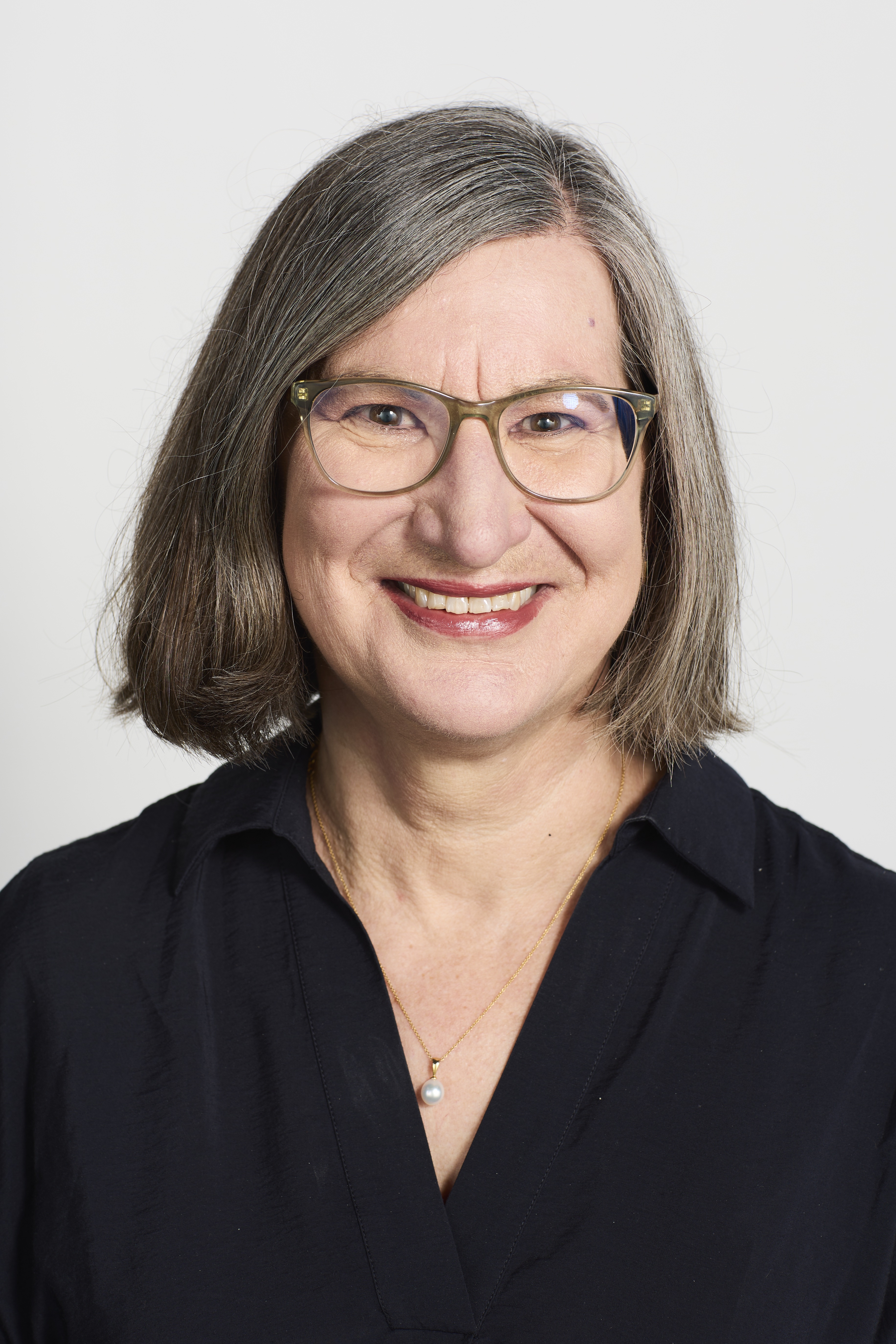
Professor Kathy Bowrey is a leading academic in Intellectual Property Law at UNSW Sydney's Faculty of Law. Her work explores laws shaping knowledge creation, technology, and culture, with expertise in IP, Indigenous rights, and open research advocacy. She holds a Doctor of Juridical Studies from the University of Sydney and a BA LLB from Macquarie University. Her research focuses on historical and contemporary IP frameworks, including their impact on creators, Indigenous communities, and global innovation systems. Notable projects include the ARC-funded 'Producing, Managing and Owning Knowledge in the 21st Century University' (2019–2022), which shaped Australia's open research policies. Awards include the 2022 ANZLHS Book Prize for *Copyright, Creativity, Big Media & Cultural Value* and fellowships at the State Library of NSW and Museum of Applied Arts and Sciences. She co-authored *Adventures in Childhood* (2023), examining IP in toy and media industries, and *David Unaipon* (2023), exploring Indigenous innovation. Professor Bowrey co-leads the International Society for the History and Theory of Intellectual Property (ISHTIP) and advises on national research policies. Her grants include ARC Discovery Projects on Australian copyright history and IP commercialization.
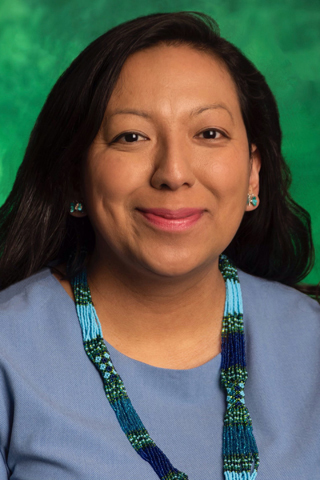
Jennifer Gómez Menjívar is Professor and Director of the M.A. in Media Industries and Critical Cultural Studies at the University of North Texas. Her research examines historical and ethno-linguistic movements influencing text production, circulation, and reception across print media, screen cultures, and digital communities. With over 18 years of teaching experience, she previously held positions at international organizations including the UNECE and UNDP. Her scholarly interests span media linguistics, film adaptation, digital activism, hemispheric animation histories, Indigenous sovereignty media, and Spanish-language media. Her publications demonstrate interdisciplinary work bridging media studies, cultural history, and postcolonial theory. Her extensive publication record includes books such as Tropical Tongues: Language Ideologies, Endangerment, and Minority Languages in Belize (2018) and Black in Print: Plotting the Coordinates of Blackness in Central America (2023), as well as co-edited volumes on Indigenous technology and hemispheric Blackness. She received a Senior Research Fellowship at Freie University Berlin for her upcoming work on Indigenous sovereignty media. Gómez Menjívar teaches courses including Introduction to Graduate Studies in Media Arts, Women in Film, and Global Media. She also mentors students in critical media analysis and serves as faculty advisor for media research projects.
Rachel Morley is an Associate Professor at the School of Slavonic and East European Studies (SSEES), University College London. She holds a BA in French Language and Literature from the University of Oxford (1992), followed by BA, MA, and PhD degrees from UCL (1999, 2001, 2011). Her roles include Academic Director of Education and Student Experience at SSEES (2022–2027) and Co-Convenor of the UCL SSEES Cinema Research Group. Dr. Morley's research focuses on Cinema studies Cultural studies Feminist and queer theory Literary studies with emphasis on Soviet/Russian cinema, gender representation, and film historiography. She held a Leverhulme Trust Research Fellowship (2020–2022) for her project on female subjectivity in contemporary Russian cinema. Her teaching spans Russian cinema, poetry, language, and translation. Past roles include Postgraduate Teaching Assistant at SSEES (1999–2009) and lecturer at the University of Cambridge (2006, 2008). She has also supported international students as SSEES International and Affiliate Tutor (2014–2018). Key Achievements: Leverhulme Trust Research Fellowship Fellow of the Higher Education Academy (2016) Her work bridges film, literature, and cultural history, emphasizing underrepresented narratives and feminist perspectives in Russian and Soviet cinema.
Lynn S. Meskill is a Professor at Toulouse Jean-Jaurès University, affiliated with the Center for Anglophone Studies (CAS). Her academic work bridges literature, history of ideas, and translation, with a strong focus on early modern British culture. She teaches Medieval and Early Modern Literature and Translation. Her research interests include: 16th and 17th Century Theatre Stuart and Caroline Court Masque History of the Book History of Ideas Translation Studies Authorship in Early Modernity Ben Jonson and Shakespearean Drama Her publications reveal a deep engagement with themes of authorship, fame, religious symbolism, and cultural representation in Renaissance literature. She frequently explores the intersections of performance, politics, and print culture, particularly in court masques and tragedies. Her work often combines literary analysis with intellectual and cultural history. Her scholarly contributions include a monograph on Ben Jonson and numerous articles in leading journals such as Huntington Library Quarterly and English Studies . She has also contributed chapters to authoritative handbooks and translated significant works in print culture. She has supervised doctoral research and holds an HDR (Habilitation à Diriger des Recherches), qualifying her to direct research in France. While no specific grants are listed, her involvement in structured research axes at CAS suggests active participation in collaborative projects. Lynn S. Meskill is a core member of the Center for Anglophone Studies (CAS), contributing to its seminars, research programs (such as AXIS 1–3), and academic events. The center fosters interdisciplinary research in Anglophone cultures, and she plays a vital role in its scholarly community.
Svetlana Evdokimova is a Professor of Slavic Studies and Comparative Literature at Brown University, where she has been a faculty member since 1991. She previously taught at Yale University and holds a PhD in Slavic Languages and Literatures from Yale University and an MA in French Language and Literature from St. Petersburg University. She is a leading scholar in Russian literature of the 19th and 20th centuries, with a focus on Pushkin, Dostoevsky, Tolstoy, and especially Chekhov. Her research explores the intersections between literature, philosophy, history, and aesthetics. She has published extensively on Russian Romanticism, the Russian intelligentsia, and the cultural significance of St. Petersburg. Her major works include Pushkin's Historical Imagination (1999) and Staging Existence: Chekhov's Tetralogy (2023), with a forthcoming monograph A Genius of Culture: The Chekhov Phenomenon . The recent publications reflect a deep engagement with Chekhov’s aesthetics, corporeality, and cultural philosophy, as well as Dostoevsky’s dialogues with Nietzsche and postmodern thought. Her work frequently examines the ethical dimensions of literature and the interplay between fiction and historical consciousness. Choice Outstanding Academic Title (2004) for Alexander Pushkin's Little Tragedies: The Poetics of Brevity NEH Research Fellowship (1995–1996) IREX Research Fellowship (1995) The Bogliasco Foundation Residency Fellowship (2018) Paul C. Gignilliat Fellowship, Yale University (1988–1989) Council on Russian and East European Studies Summer Fellowship, Yale University (1985) She has advised numerous graduate students and has secured competitive research grants from the National Endowment for the Humanities, IREX, and Brown University. She is actively involved in scholarly communities, including the Modern Language Association, AATSEEL, and author-specific societies such as the North American Chekhov Society and the North American Dostoevsky Society. She teaches courses on Russian Romanticism, major novelists, theater, and cultural history.
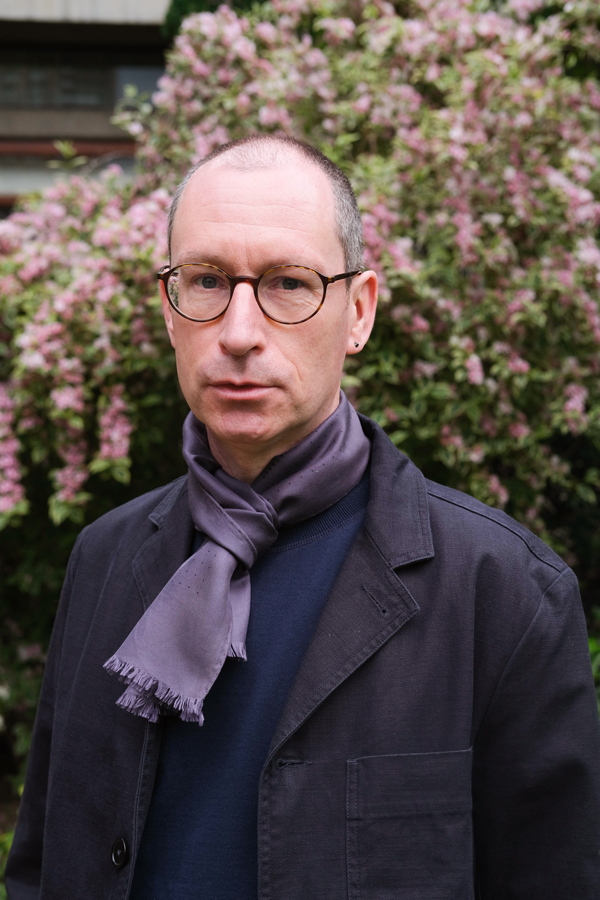
Professor Brian Dillon is the Professor of Creative Writing and Director of Creative Writing at Queen Mary University of London's School of English and Drama. Previously, he served as Head of the Writing Programme at the Royal College of Art. He holds a PhD from the University of Kent (1999) and has authored numerous books blending creative nonfiction, literary criticism, and art analysis. His research focuses on the essay form, autobiography, literature-visual arts intersections, and writing about illness. Key publications include *Suppose a Sentence* (2020), an experimental essay collection analyzing literary sentences, and *Affinities* (2023), exploring photographic imagery. Current projects include a study of Kate Bush's *Hounds of Love* and an essay on education. Dillon frequently contributes to *The Guardian*, *London Review of Books*, and *Artforum*, and has curated exhibitions for Tate and Hayward Galleries. His awards and fellowships are not explicitly listed here, but his work has been widely exhibited and published internationally. He supervises doctoral students in creative writing and related fields, emphasizing interdisciplinary approaches to literature and art. Public engagement includes talks at institutions like the British Museum and Pompidou Centre, and appearances on BBC Radio 3 and RTE Radio. His work bridges academic critique with accessible creative writing, making complex themes engaging for broader audiences.
Ali Karjoo-Ravary is the Richard W. Bulliet Assistant Professor of Islamic History at Columbia University, specializing in the intellectual, social, and visual histories of premodern Islam through Arabic, Persian, and Turkic sources. His research intersects historical writing, cosmology, Sufism, and multilingual poetry in the Islamic East (Mashriq). Education: Ph.D., University of Pennsylvania (2018) M.A., University of Pennsylvania (2016) B.A., SUNY Stony Brook (2011) His current book project, Muhammad’s Song: Politics, Performance, and Cosmology in the Fourteenth Century , examines post-Mongol Islamic monarchy through Kadi Burhaneddin's life and rule. He also explores Sufi visual iconography, science fiction's relationship to religion, and architecture's role in evolving Islamic discourses. Scientific Awards and Fellowships: Bard Graduate Center Visiting Fellow (Fall 2020) Wolf Humanities Center Graduate Research Fellow (2016-2017)
Purnima Dhavan is an Associate Professor of History at the University of Washington's College of Arts & Sciences, holding the Giovanni and Amne Costigan Endowed Professorship. She specializes in early modern South Asia (1500-1800), focusing on religious and cultural identity, Mughal institutions, and literary networks. Her research integrates interdisciplinary methods, with adjunct affiliations in Near Eastern Languages and the Jackson School's South Asia Center. Education: PhD in South Asian History from the University of Virginia (2003), MA (1998), and BA (1996) from the University of Michigan. She has taught at multiple institutions, including the College of St. Benedict/St. John’s University and Bowdoin College. Research Interests: Mughal literary culture, Sikh warrior traditions, gender in pre-colonial societies, and environmental history. Notable works include her book *When Sparrows Became Hawks* (2011) on Sikh militarization and a forthcoming project on literary associations in Mughal urban centers. Publications span peer-reviewed journals and edited volumes, emphasizing pre-colonial South Asia’s intellectual and socio-political dynamics. Awards include the Howard Keller Chair and NEH fellowships. Service: Extensive contributions to academic governance at UW, including roles in the Faculty Senate, departmental leadership, and national professional organizations like the American Historical Association and Association of Asian Studies. Languages: Native Hindi speaker, advanced Urdu/Persian/Punjabi, and proficient in Spanish.
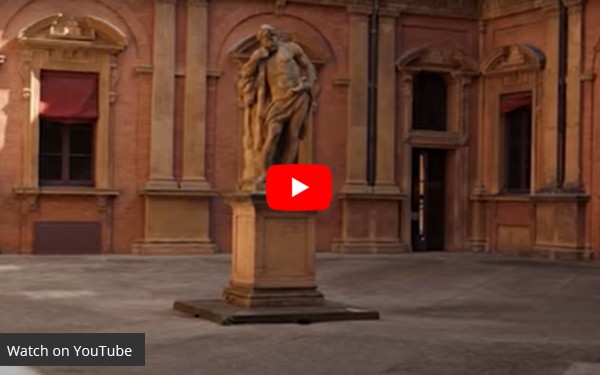
Umberto Eco was a renowned Professor of Semiotics at the University of Bologna and founder of Communication Science studies in Italy. Born in Alessandria (1932), he pursued classical studies before earning his philosophy degree from Turin University (1954). His academic career spanned Turin, Milan, and Florence universities, where he explored semiotics, media studies, and medieval aesthetics. He pioneered interdisciplinary approaches, blending literary criticism with contemporary cultural analysis. Eco's work in publishing (Bompiani, 1959–1975) and media (RAI, L'Espresso) shaped Italian intellectual discourse. The University of Bologna honored him with its highest accolades for his transformative contributions to academia and semiotic theory. Educations: Classical High School in Alessandria Laurea in Literature and Philosophy, University of Turin (1954) His research integrated medieval scholasticism with modern semiotics, analyzing mass media's societal impact through works like Apocalittici e integrati (1964) and the La bustina di Minerva column (1985–2016). Key themes included countercultural movements, communication theory, and the philosophy of aesthetics. His lectures and publications, such as Il costume di casa (1973), became foundational texts for understanding 20th-century intellectual trends. Though no specific scientific awards are listed, his academic legacy was celebrated through institutional recognitions from the University of Bologna. His advisory roles and editorial work fostered avant-garde movements like Gruppo 63, challenging 1950s literary norms. Eco's intellectual reach extended to founding the Scuola Superiore di Studi Umanistici, cementing his role as a pivotal figure in humanistic education.
Rashmi Varma is a Professor at the University of Warwick, affiliated with the Faculty of Arts. She has previously taught at the University of North Carolina, Chapel Hill, and Jesus and Mary College, University of Delhi. Education: BA in English (Honours) from Lady Shri Ram College, University of Delhi MA in English Literature from University of Delhi PhD in English and Women’s Studies from University of Illinois at Chicago Research interests: Varma specializes in the postcolonial city, postcolonial Indian and African theory, global feminism, representations of indigeneity, and world literature theory. Her work interrogates urban political ecologies, feminist pedagogy, and subaltern politics. Scientific awards: British Academy Mid-Career Fellowship (2011-2012) for Modern Tribal: Representing Indigeneity in Postcolonial India Supervision: She currently supervises PhD students Angel Maria Varghese, Shavena Malvika Nair (Chancellor's International Scholar), Ragesree Roy, and Archana Vinod (Chancellor's International Scholar). Collaborations: Varma co-edited journals like Feminist Dissent and special issues on transnational feminism, urban political ecologies, and postcolonial theory. She was involved in the Tate Exchange workshop on 'Production, Truth and Justice' (2021).
Edward L. Shaughnessy serves as the Lorraine J. and Herrlee G. Creel Distinguished Service Professor in Early Chinese Studies and Director of Graduate Studies in the Department of East Asian Languages and Civilizations at the University of Chicago. A renowned scholar of ancient China, he specializes in archaeologically recovered texts from the Zhou dynasty period (c. 1045-249 BCE), particularly bronze inscriptions, bamboo-slip manuscripts, and the classical texts Zhou Yi (I Ching), Shang Shu, and Shi Jing. His research interests focus on the intersection of archaeological discoveries and literary traditions, with particular expertise in bronze inscriptions and the Zhou Yi. Shaughnessy has pioneered efforts to bridge Western and Chinese scholarly traditions, publishing extensively in both English and Chinese. He has written seven volumes of technical scholarship in Chinese and is currently leading an international team translating Tsinghua University's fourth-century BCE bamboo-slip manuscripts. His recent scholarly output shows strong trends in paleographic studies, with numerous publications analyzing newly excavated manuscripts. His work demonstrates a consistent focus on textual transmission, historical context, and the relationship between archaeological evidence and received literary traditions. Notable patterns include systematic analysis of bamboo-slip manuscripts, comparative studies of textual variants, and interdisciplinary approaches combining philology, archaeology, and historical analysis. Shaughnessy has received recognition through his appointment as a Distinguished Service Professor, one of the highest academic honors at the University of Chicago. His scholarly contributions have significantly advanced the field of early Chinese studies through both original research and editorial work. As an educator, Shaughnessy teaches seminars on oracle-bone inscriptions, bronze inscriptions, bamboo-strip inscriptions, and courses on the Yi jing, Shi jing, and Shang shu. He serves as Director of Graduate Studies for the department and has supervised numerous graduate students. His current and upcoming courses include 'The Ji Zhong Discovery,' 'The Development of Early China Studies in the West,' 'Western Zhou Bronze Inscriptions,' 'The Shang shu,' and 'The Shi jing.' Shaughnessy maintains an active research program with current projects including the translation of Tsinghua University's bamboo manuscripts and serving as co-editor of the journal Bamboo and Silk. His scholarly network extends internationally, as evidenced by his 2013 lecture series at the Collège de France titled 'Unearthing the Chinese Classics,' where he presented on the Zhou Yi, Shang Shu, Shi Jing, and Laozi.
Ksana Blank is a Senior Lecturer at Princeton University’s Department of Slavic Languages and Literatures. She coordinates the Russian Language Program and directs the Princeton-in-Petersburg Program, fostering academic exchange and interdisciplinary research. With a PhD in Russian Literature (Columbia University, 1997) and a BA in French Philology (St. Petersburg State University, 1979), her academic career spans over two decades at Princeton, preceded by teaching roles at Hunter College and Middlebury College Russian Summer School. Education: PhD, Russian Literature, Columbia University (1997) BA, French Philology, St. Petersburg State University (1979) Her research centers on Russian literature, emphasizing stylistic analysis and interdisciplinary connections with music, visual arts, folklore, and religious philosophy. Notable works include studies on Dostoevsky’s dialectics, Gogol’s The Nose , and the interplay between Russian modernism and Western art movements. She has authored multiple books and articles, many translated into Russian, and has published in academic journals across Russia, Europe, and China. Recent publications explore Dostoevsky’s paradoxes, Gogol’s linguistic innovation, and the intersection of Russian literature with music (Shostakovich), art (Malevich), and philosophy. Her 2023 book Парадоксы классики expands traditional interpretations of classic works through interdisciplinary lenses, while her 2021 The Nose guide deciphers Gogol’s wordplay and its narrative function. Earlier works address Tolstoy’s spiritual crisis and Bakhtinian dialogism in Russian literary theory. While no scientific awards are listed, her contributions to pedagogy include advanced Russian language courses and graduate-level Tolstoy studies. She currently works on Leo Tolstoy’s The Prisoner of the Caucasus and teaches courses on Russian literature, spirituality, and translation.
Anupama Rao is Professor of History and MESAAS (Institute for Comparative Literature and Society) at Columbia University, with affiliations in Women's, Gender and Sexuality Studies and Human Rights. She is based at Barnard College, where she holds office hours and engages in interdisciplinary teaching and research. Her educational background includes a B.A. with honors from the University of Chicago and a Ph.D. from the Interdepartmental Program in Anthropology and History at the University of Michigan. Rao’s research spans South Asian history and anthropology , gender and sexuality studies , caste and race , social theory , comparative urbanism , and colonial genealogies of human rights . She is known for her groundbreaking work on anti-caste thought, particularly the political philosophy of B. R. Ambedkar, and for theorizing caste subalternity in modern India. Her scholarship critically examines the intersections of caste, gender, urban space, and political subjectivity. Her recent and ongoing publications reflect a deep engagement with global racisms, Cold War humanism, and justice futures. Key themes across her articles include Dalit aesthetics, subaltern urbanism, affirmative action, and the transnational dimensions of caste. Her work shows a consistent trend toward interdisciplinary, postcolonial, and decolonial frameworks that challenge Western-centric epistemologies. Fellow-in-Residence, National Humanities Center (2008–2009) Fellow, Center for Advanced Study in the Behavioral Sciences, Stanford (2010–2011) Fellow, REWORK, Humboldt University, Berlin (2014–2015) Global Humanities Institute Awardee, CHCI (2023) Rao has served as Senior Editor of Comparative Studies in South Asia, Africa, and the Middle East (2012–2021), President of the Society for the Advancement of the History of South Asia (SAHSA), and member of the South Asia Council of the Association for Asian Studies. She is Principal Investigator for the Mellon-funded Global Humanities Institute project Global Racisms, Cold War Humanism, and Just Futures (2022–2024) and co-directs Geographies of Injustice at Columbia’s Center for the Study of Social Difference. She has secured major research grants from the ACLS, NEH, SSRC, and Mellon Foundation. She advises and mentors graduate students, though specific names are not listed in the text. Rao directs the Institute for Comparative Literature and Society and convenes the Ambedkar Initiative, fostering interdisciplinary research and public engagement on caste, race, and justice. She leads and participates in multiple research collectives, including the Geographies of Injustice project and the Asian Spatialities initiative. She is deeply involved in institutional leadership through her roles at the Institute for Comparative Literature and Society and the Ambedkar Initiative, both of which serve as hubs for critical humanities research.
Dr. Doyle D. Calhoun serves as University Assistant Professor of Francophone Postcolonial Studies within the Department of French at the Faculty of Modern and Medieval Languages and Linguistics, University of Cambridge, where he is also a Fellow of Peterhouse College. His scholarly profile spans African and Caribbean literary studies, cinema analysis, and historical sociolinguistics with a focus on resistance narratives. His educational trajectory includes a Ph.D. in French from Yale University (2022), an M.A. in Linguistics from KU Leuven, and undergraduate studies in Linguistics and French Literature at Boston College. Additional academic development occurred through residencies at Fondation Camargo (Cassis) and Bibliothèque Marmottan (Paris). Calhoun’s research centers on Francophone postcolonial resistance, particularly suicidal acts against French colonialism as documented in The Suicide Archive (2024). His work excavates silenced histories of Atlantic slavery, abolition movements, and Négritude philosophy through literary and cinematic archives, emphasizing Senegalese and Caribbean contexts. He explores how contemporary writers reconstruct erased narratives of enslaved resistance through transmedia practices. His recent publications reveal a methodological convergence between literary analysis, historical recovery, and decolonial theory. Articles frequently address archival silences in colonial documentation while examining how contemporary artists reimagine resistance through linguistic innovation, cinematic storytelling, and embodied protest. Key thematic clusters include the weaponization of silence, subversive uses of missionary linguistics, and the politics of memory in postcolonial contexts. 2024 Malcolm Bowie Prize (Society for French Studies) 2024 William R. Parker Prize (Modern Language Association) 2021 Ralph Cohen Prize (New Literary History) 2016 Vivien Law Prize (Henry Sweet Society) Calhoun actively mentors graduate students in African/Caribbean literatures and cinema studies, with current projects including Africa after 1848 and Florence . His grant history features academic residencies at Fondation Camargo and Bibliothèque Marmottan, alongside a 2021 scholarship from the latter institution. Public engagement includes the 2025 La Noire de... film symposium and contributions to Los Angeles Review of Books and Salon . He contributes to the Cambridge Language Collective and Polyglossia Magazine while organizing events through Peterhouse. His 2025 podcast appearances on Stegi Radio and New Books Network demonstrate active knowledge dissemination beyond traditional academic channels.
Prof. Dr. Kianoosh Rezania is a Professor of West Asian Religious History and Director of the Käte Hamburger Kolleg Dynamics of Religious History at Ruhr University Bochum. His research focuses on Zoroastrianism, Iranian religions, and the history of religions, with a particular emphasis on ancient Iranian languages and interreligious dynamics. He holds a Ph.D. from Georg-August University Göttingen and has conducted extensive research on topics such as Zoroastrian cosmology, Sasanian-Zoroastrian interactions, and the transmission of religious texts. His work combines philological analysis with historical and cultural studies approaches. Rezania's academic career includes roles as a research associate at Göttingen University and his habilitation project on spatial concepts in early Zoroastrianism. He has directed major research initiatives like the Graduate School of Metaphor and Religion (GSMR) and the Käte Hamburger Kolleg. His publications span monographs, edited volumes, and peer-reviewed articles exploring themes such as religious economics, Middle Persian lexicography, and cross-cultural exchanges between the Safavid and Mughal empires. His current projects include the 'Zoroastrian Middle Persian: Digital Corpus and Dictionary' initiative and studies on Pahlavi literature's interreligious context. He collaborates internationally, leading interdisciplinary teams and contributing to digital humanities efforts in religious studies.