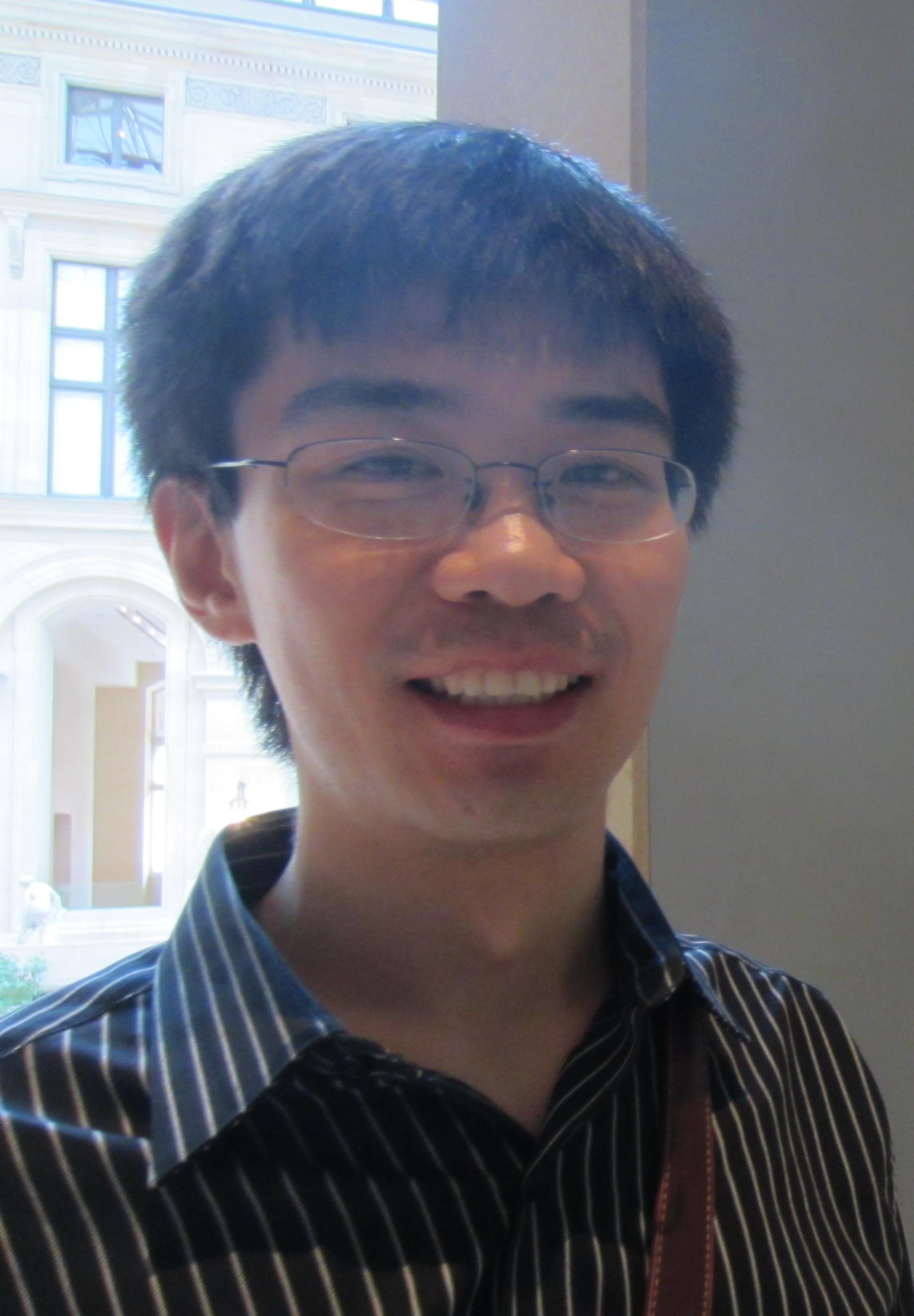
Sophie Volpp is a Professor in the Department of East Asian Languages and Cultures and Comparative Literature at the University of California, Berkeley. Her research focuses on Chinese literature from the 16th to 19th centuries, with particular emphasis on theatricality, material culture, and literary objects. She is the author of *Worldly Stage: Theatricality in Seventeenth-Century China* (2011) and *The Substance of Fiction: Literary Objects in China, 1550-1775* (2022). Her current projects include a book on the National Peiping Library’s preservation efforts during the Sino-Japanese War and an analysis of referents in *The Story of the Stone*. Her scholarly work bridges literary analysis and cultural history, examining themes such as gender, power, and spectacle in late-imperial China. She has translated works by pre-modern women poets and dramatists, contributing to gender-centric scholarship in East Asian studies. Her publications span journal articles and edited volumes, addressing topics like Qing-era theatrical design, material circulation in classical novels, and cross-cultural influences in literary production. Her research has been published in venues such as *Harvard Journal of Asiatic Studies* and *Journal of Asian Studies*.
Thomas P. Kelly is an Assistant Professor in East Asian Languages and Civilizations at Harvard University, where he holds a position in the Faculty of Arts and Sciences. He earned his PhD from the University of Chicago (2017) and BA from the University of Oxford (2009). Previously, he served as a Junior Fellow in the Society of Fellows at the University of Michigan. As President of the Society for Ming Studies, he actively contributes to scholarly networks in early modern Chinese studies. His research focuses on Chinese literature, material culture, and pre-modern media studies, particularly exploring the interplay between writing and material objects in the Ming and Qing periods. His monograph The Inscription of Things: Writing and Materiality in Early Modern China (2023) examines how writers engaged with materiality through inscriptions on objects. Current projects include The Unfinished Book , analyzing manuscript culture during the Ming-Qing transition, and a study of performance theory via Pan Zhiheng’s essays. His work spans late imperial drama, fiction, poetry, and prose. Key research themes include the materiality of literature, rituals in performance, and the poetics of incompletion. His publications investigate topics such as mourning rituals in early Qing theater, the cultural significance of seal carvers’ biographies, and the role of objects in Ming-Qing literary imagination. He frequently critiques the relationship between textual production and social dynamics, emphasizing how material forms shape literary meaning. His articles demonstrate a focus on interdisciplinary approaches, blending literary analysis with art history, anthropology, and cultural studies. Notable works include explorations of Hong Sheng’s Palace of Lasting Life , Su Shi’s ink-making practices, and Fang Yongbin’s calligraphic materiality. His 2024 article ' The Crying Statue in Early Qing Drama ' delves into contested staging practices of theatrical mourning rituals. Though no formal grants or labs are listed, his academic leadership (e.g., Society for Ming Studies presidency) underscores his role in fostering collaborative research. His work bridges textual analysis with broader cultural histories, positioning material objects as central to understanding Chinese literary and intellectual traditions.
Judith Zeitlin is the William R. Kenan, Jr. Professor in the Department of East Asian Languages and Civilizations and the Committee on Theater and Performance Studies (TAPS) at the University of Chicago. She holds a joint appointment with both departments and is deeply engaged in interdisciplinary scholarship that bridges literary history with performance studies, visual culture, gender studies, and medicine. Her work exemplifies the University of Chicago's commitment to rigorous interdisciplinary inquiry across traditional academic boundaries. Professor Zeitlin's research interests center on Ming-Qing literature, cultural history, and the arts, with specialties in Chinese opera and the classical tale. She often describes herself as a 'ghostologist' given her extensive work on ghosts in Chinese literature and culture. Her scholarship combines literary history with performance, music, visual and material culture, medicine, gender studies, and film. She has developed innovative approaches to Chinese cultural artifacts, examining them through multiple sensory and disciplinary lenses while maintaining close textual analysis as a foundation of her scholarship. Her publications demonstrate a consistent trajectory of exploring the intersections between literature and other art forms, particularly focusing on ghost narratives, opera, and material culture. Zeitlin's recent work has increasingly emphasized the performing and visual arts as ways to engage actively with all the senses, moving beyond text-centered analysis. Her scholarship shows a growing interest in music, especially as related to opera, which has driven much of her current research and collaborative projects. Scientific Awards and Recognition: NEH fellowship (2019-2020) supporting research on musical entertainment in early modern China Mellon grant from the Gray Center for Arts and Inquiry for collaborative opera project Co-principal investigator of interdisciplinary faculty seminar on the voice funded by the Neubauer Collegium for Art and Society Professor Zeitlin is deeply committed to involving students in her research and creative projects. She has collaborated with numerous University of Chicago MA and PhD students on exhibitions, publications, and performance projects. Her teaching includes innovative courses such as 'Ghosts and the Fantastic in Literature and Film' and experimental seminars like 'Literature of the Fantastic and Opera Adaptation' taught with composer Yao Chen. She regularly creates opportunities for students to participate in her research through exhibitions, publications, and performance projects, including co-curating the 'Performing Images: Opera in Chinese Visual Culture' exhibition at UChicago's Smart Museum of Art. Her major collaborative projects include co-curating the 'Performing Images' exhibition, co-editing 'The Voice as Something More: Essays Toward Materiality' with Martha Feldman, and collaborating with composer Yao Chen on the English-language opera 'Ghost Village' based on a Liaozhai tale. She has also co-taught interdisciplinary seminars such as 'Opera Without Borders' and 'Opera Film, China/Europe: Cases in Media Hybridity,' demonstrating her commitment to cross-cultural and cross-disciplinary dialogue.
Kaijun Chen is an Associate Professor of East Asian Studies at Brown University. He specializes in the Chinese literature and material culture of the Ming and Qing dynasties (1368–1912), with a focus on the history of technology. His research explores how the Qing state managed technical expertise in the porcelain industry and its impact on cultural production, including literary works. He joined Brown in 2016 after a postdoctoral fellowship at the Max-Planck-Institute for the History of Science in Berlin. Education: PhD Columbia University (2014), MA Sorbonne I (2007), BA Albert Einstein College of Medicine (2005). Research interests include the intersection of technology, literature, and material culture, particularly in the context of transnational networks and imperial governance. His monograph Porcelain for the Emperor (2023) examines techno-political control in Qing porcelain production. He has curated exhibitions and organized scholarly events on ceramic archaeology and artisanal histories. Publications span books, articles, and reviews, addressing topics like Qing porcelain, artisanal rhetoric, and transcultural object histories. His work bridges literary analysis with material culture studies, offering insights into how technical knowledge shaped cultural narratives in early modern China.
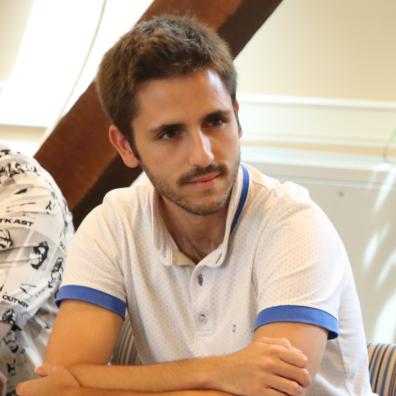
National Institute of Oriental Languages and CivilizationsFrance
Rubén Almendros serves as a Lecturer in Chinese Studies at the National Institute of Oriental Languages and Civilizations (INALCO) in Paris, specializing in premodern Chinese literature with particular focus on Ming-Qing vernacular fiction. His academic profile bridges multiple institutions including the French Institute for Research on East Asia (IFRAE) where he serves on the board, and the French Association for Chinese Studies (AFEC) where he acts as Deputy Secretary. His research centers on Vernacular Novels of the Ming and Qing Dynasties , particularly examining Shenlou zhi (The Pavilion of Mirages) as a window into 19th-century Guangdong's historical-commercial landscape. Key thematic interests include fictional representation of history , regional identity in premodern Chinese fiction , and gender/sexuality in late imperial literature , often employing Foucauldian frameworks to analyze literary constructions of truth and power. His publication record reveals strong engagement with both Chinese literary history and comparative theoretical frameworks , with recent works exploring the material turn in Chinese literature, Sino-European cultural encounters, and the literary representation of Canton's international trade. His trilingual output (English/French/Spanish) demonstrates transnational scholarly reach. Deputy Secretary, French Association for Chinese Studies (AFEC) Board Member, French Institute for Research on East Asia (IFRAE) Editorial Secretary, Theory Now: Journal of Literature, Critique, and Thought Visiting Researcher at Academia Sinica's Institute of Chinese Literature and Philosophy (2024) Almendros actively participates in international academic discourse through presentations at major conferences including the European Association for Chinese Studies (EACS) and Association for Asian Studies (AAS), with recent work focusing on literary geography, material culture in vernacular fiction, and cross-cultural theoretical applications.