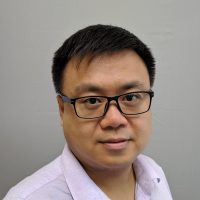
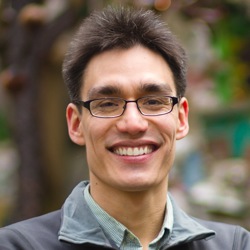
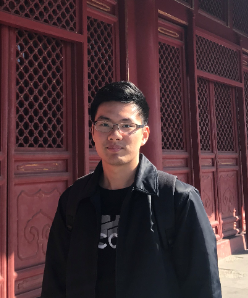
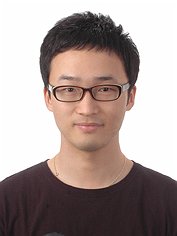
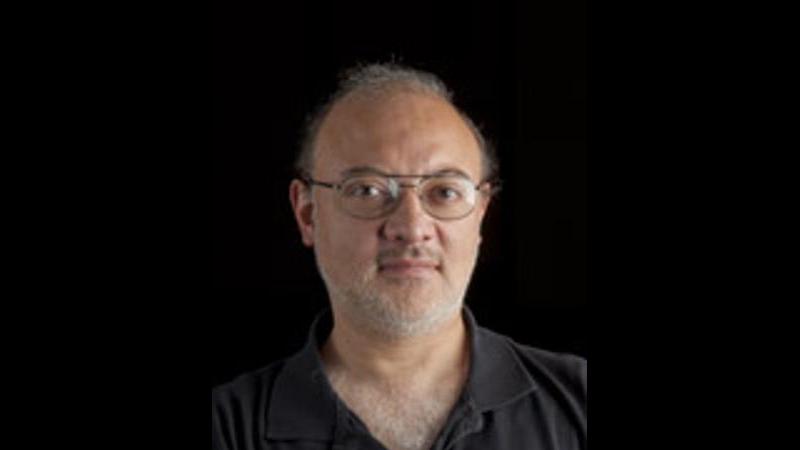
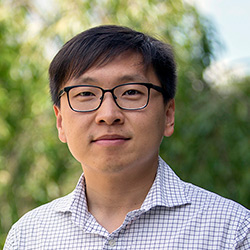
Lianying Zhao is an Associate Professor in the School of Computer Science at Carleton University and serves as a Director of the Carleton Computer Security Lab (CCSL). His research focuses on low-level platform security, including hardware, firmware, hypervisor, and operating systems, with an emphasis on trusted computing, authentication, privacy preservation, and security metrics. He leads the CCSL research group, collaborating with interdisciplinary teams to address critical security challenges in IoT, cloud systems, and web applications. Education: Not explicitly listed in provided texts. Roles: CCSL Director, Research Supervisor, and Graduate Program Advisor. Dr. Zhao’s work spans hardware security improvements, firmware vulnerability analysis, and user-centric security metrics. Recent research highlights include studies on router configuration habits, tracker detection in web browsers, and CVSS score discrepancies. He has supervised numerous graduate students in cybersecurity domains, contributing to over 30 peer-reviewed publications since 2013. His lab affiliations include CCSL and CISL, where he collaborates on projects such as secure deletion frameworks, TLS validation vulnerabilities, and hybrid decision-making models for cloud security. Current research also explores cross-regional login throttling mechanisms and AI-driven vulnerability detection in embedded systems.
Maria Mushtaq is an Associate Professor at Telecom Paris , affiliated with the Information Processing and Communication Laboratory (LTCI) and the Secure and Safe Hardware (SSH) Lab . She received her PhD in Information Security from the University of South Brittany, France (2019) and completed 2 years of postdoctoral research at LIRMM, University of Montpellier under the CNRS excellence post-doc grant. Research Focus: Microarchitectural vulnerability assessment, runtime mitigation against side/covert-channel attacks, cryptanalysis, OS-based security primitives, and hardware-software interface security Technical Expertise: Cache timing attacks, transient execution attacks (Spectre/Meltdown), Hardware Performance Counter analysis, gem5 simulation Her recent work involves RISC-V security analysis using gem5 simulations and machine learning for attack detection. She serves as Guest Editor for the Journal of Applied Sciences special issue on Side Channel Attacks in Embedded Systems and has been on the Program Committee for the European Test Symposium (2020-2021). 2021 HiPEAC Collaboration Grant recipient Organized IP Paris Winter School on Microarchitectural Security (2022) Active in international conferences as panelist and keynote speaker
Joseph Devietti is an Associate Professor in the Department of Computer & Information Science at the University of Pennsylvania. His research focuses on improving programmability and performance of multiprocessor systems through architectural and programming model innovations. He actively advises PhD students and has supervised numerous graduates now employed at leading tech companies and academic institutions. Education: PhD (2012), MS (2009) in Computer Science and Engineering from University of Washington; BSE (2006) in Computer Science and BA (2006) in English from University of Pennsylvania. Employment: Associate Professor (2020–present), Assistant Professor (2013–2020) at University of Pennsylvania; Principal Scientist & Co-founder at Cloudseal, Inc. (2018–2020). Devietti’s research spans computer architecture, parallel programming, and deterministic execution. Key areas include cache/memory optimization (prefetching, false sharing repair), GPU programming models (race detection, block-size independence), and hardware-software co-design for concurrency safety. His recent work addresses dynamic runtime prefetch tuning (RPG 2 ), online code layout optimization (OCOLOS), and intelligent BTB prefetching (Twig) for data center applications. His publications from 2024–2017 reveal trends in instruction/cache optimization (2024–2020), GPU determinism (2018–2017), and race detection (2018–2016). Awards include the 2024 Penn Engineering Ford Motor Company Award, Radhia Cousot Best Paper (2018), and IEEE Micro Top Picks recognition (2023, 2009, 2008). Scientific Awards : 2024 Penn Engineering Ford Motor Company Award Radhia Cousot Young Researcher Best Paper Award (SAS 2018) IEEE Micro Top Picks (2023, 2009, 2008) Intel Early Career Faculty Honor Program (2013) Intel Ph.D. Fellowship (2011) Advising : Supervised 15+ PhD/Master’s students with placements at Google, Microsoft, Amazon, NYU, and the United States Naval Academy. Collaborations : Works with industry leaders (NVIDIA, Facebook) and academic institutions (University of Washington, Penn).
Thomas Pasquier is an Assistant Professor in the Department of Computer Science at the University of British Columbia, where he is affiliated with both the UBC Security & Privacy Group and the Systopia Lab. His research focuses on designing and implementing computer systems that are inherently observable and transparent, with particular emphasis on security, privacy, and system accountability. Dr. Pasquier earned his PhD in Computer Science from the University of Cambridge in 2016, following an MPhil in Advanced Computer Science from the same institution in 2012. His educational background also includes a Diplôme d'Ingénieur from Institut Supérieur d'Electronique de Paris and a Diplôme Universitaire de Technologie from Conservatoire National des Arts et Métiers. His primary research interests span Security, Intrusion Detection, Digital Provenance, Operating Systems, Distributed Systems, Data Protection, and Privacy. His work specifically addresses the design of systems with built-in observability and transparency mechanisms, focusing on provenance-based security solutions. Analysis of his recent publications reveals a consistent focus on provenance-based intrusion detection systems, with significant contributions in making these systems more practical, usable, and robust. His research also extends to eBPF technology in the Linux kernel, exploring security applications and performance optimizations. Amazon Research Award 2023 for Building Robust Provenance-based Intrusion Detection Incredible Instructor Award Dr. Pasquier has advised numerous graduate students at both UBC and the University of Bristol, where he previously held an Assistant Professor position. His students have gone on to careers at major technology companies including Amazon, Salesforce, Huawei, and Oracle Labs. He has served on program committees for prestigious conferences including ACM ASPLOS, EuroSys, USENIX Security, and ACM CCS. His research is conducted within the Systopia Lab at UBC, which focuses on systems research broadly construed, with particular emphasis on security, privacy, and performance optimization. The lab collaborates with industry partners including Amazon through the Amazon Research Awards program.
Andreas J. Kassler is a Full Professor of Computer Science at Karlstad University, Sweden, where he has been since 2005. He co-chairs the Distributed Systems and Communication (DISCO) group and focuses on networking, cloud computing, and wireless networks. His research includes software-defined networking, future internet architectures, and network optimization. He has authored/co-authored over 130 peer-reviewed publications, holds 6 patents, and serves on editorial boards of journals like Journal of Internet Engineering . Education : Ph.D. in Computer Science, Universität Ulm (2002) Docent (Habilitation), Karlstad University (2007) M.Sc. in Mathematics/Computer Science, Universität Augsburg (1995) Research Interests : Software Defined Networking (SDN) Programmable Dataplanes Wireless Mesh Networks Time-Sensitive Networking (TSN) Edge Computing Machine Learning for Network Optimization Recent Directions : His work spans TSN scheduling, hybrid P4 solutions for 5G, and explainable AI in energy communities. He explores network resilience, latency optimization, and multi-objective control in microgrids. Service Contributions : Track co-chair for VTC 2015 General chair for Wired/Wireless Internet Communications (WWIC) 2013 Editor-in-Chief of IARIA Journal on Advances in Internet Technology Labs/Teams : Leads DISCO group at Karlstad University. Collaborates with global teams on projects like mmWave backhaul networks and SDN-enabled industrial control systems.
Professor Lingxiao Jiang is a full-time faculty member at the School of Computing and Information Systems (SCIS), Singapore Management University (SMU) , where he serves as Director of the Centre for Research on Intelligent Software Engineering (RISE) . His research and teaching focus on software engineering , program analysis , code search & reuse , and deep learning of code to enhance software quality, development productivity, and security. PhD, University of California, Davis (2009) Professor Jiang's research explores context-aware software deep learning , code clone detection , and security & privacy through tools like DECKARD (code clone detection), EqMiner (functionally equivalent code), and SmartEmbed (smart contract security). His work leverages distributed computing , symbolic execution , and neural program models for large-scale code analysis. Recent publications highlight trends in deep learning-based code analysis , smart contract vulnerabilities , and automated program transformation . Key themes include code clone detection , semantic patches , and cross-language API mappings . Scientific Awards ACM SIGSOFT Impact Paper Award (2018) for scalable code clone detection As advisor, Professor Jiang has mentored 14 graduate students, including Lucia (Ph.D. 2014) , Shaowei Wang (Ph.D. 2015) , and current advisees in intelligent software engineering. He leads multiple grants on code mining , security of digital platforms , and AI systems governance . RISE Lab at SMU develops tools like MANDO (smart contract analysis), iTiger (issue title generation), and TreeCaps (code processing with capsule networks). The lab actively recruits researchers in software engineering and AI.
Dr. Daniel German is a Professor in the Department of Computer Science at the University of Victoria, part of the Faculty of Engineering and Computer Science. He holds a PhD from the University of Waterloo, specializing in software engineering and open source ecosystems. His research focuses on software evolution, open source development practices, intellectual property issues in software systems, and licensing compliance challenges in modern AI/ML environments. German has contributed extensively to understanding dependency management, developer workflows, and legal aspects of software development. His work includes seminal studies on code provenance tracking (e.g., Cregit), library dependency management, and the sociotechnical dynamics of open source communities like the Linux kernel and GitHub ecosystems. German has explored critical topics such as licensing inconsistencies in software projects, ethical implications of AI-generated code, and the integration of open source components into proprietary systems. He is actively involved in software engineering education, examining how students engage with open source projects and the challenges of maintaining code quality in large-scale distributed systems. German’s research has practical implications for both academic and industrial software development practices, addressing real-world issues like security vulnerabilities in dependency chains and the legal risks of AI training data usage.
Rakesh Kumar is an Associate Professor in the Department of Computer Science (IDI) at the Norwegian University of Science and Technology (NTNU) , affiliated with the Computer Architecture Lab (CAL) within the Faculty of Information Technology and Electrical Engineering . Prior to joining NTNU, he held postdoctoral and research associate positions at Uppsala University and the University of Edinburgh, and interned at Intel Barcelona Research Center. Research Interests include improving large-scale datacenter efficiency through microarchitecture and memory system optimizations, hardware/software co-designed processors, dynamic code translation, vectorization, and serverless function execution. His work explores ready-aware instruction scheduling, branch prediction organization, and address translation mechanisms. Scientific Contributions span publications at top-tier conferences like MICRO (2024, 2023, 2018, 2016) HPCA (2020, 2019, 2023, 2022) ASPLOS (2018) DATE (2019, 2021) Journal articles appear in ACM Transactions on Computer Systems and IEEE Computer Architecture Letters . Awards include Intel Spontaneous Level II/Excellence Award (2014) Best Presentation Award at HiPC-SS08 (2008) Best Paper Award at National Conference on High Computing Technologies (2008) Distinguished Artifact Award at MICRO 2023 PhD Supervision involves advising students like Roman Kaspar Brunner, Elias Orrem, and Truls Asheim on topics spanning microarchitecture, vector units, and runahead execution policies.
Simone Ferlin is an Adjunct Senior Lecturer at Karlstad University working with 5G and Internet evolution. She completed her PhD in computer science in 2017 at the Simula Research Lab and Universitetet i Oslo under the supervision of Dr. Ozgu Alay and Prof. Michael Welzl. Her PhD dissertation focused on increasing robustness in multipath transport with MPTCP. Dr. Ferlin's educational background includes a PhD in Computer Science from the Simula Research Lab and Universitetet i Oslo (2017). Her doctoral research centered on enhancing robustness in multipath transport protocols, specifically focusing on MPTCP (Multipath TCP). She also completed undergraduate work that contributed to a book project with Prof. Friedrich Oehme on electronics and circuit technology. Dr. Ferlin's research spans multiple domains at the intersection of networking, systems, and performance engineering. Her primary interests include network and system measurements, performance analysis, security, and congestion control. She investigates how networks like the Internet evolve, examining technology development, adoption patterns, and their impacts on various entities. Additionally, she explores ways to harmonize security and privacy while making them more usable and assessable. Her work particularly focuses on transport layer and multipath transport protocols, examining their performance and security aspects. She also investigates application and transport layer performance, automation, and monitoring. Her research extends to network programming in both Linux kernel and user space, mobile broadband networks from 2G to 5G, and their intersection with the Internet. She is deeply engaged in observability, distributed and system performance monitoring, and automation. Analysis of Dr. Ferlin's recent publications reveals a strong focus on next-generation networking technologies. Her work spans multiple domains including 5G/6G networks, transport protocols (particularly QUIC and MPTCP), network virtualization, container orchestration, and the application of machine learning to networking problems. She has increasingly incorporated large language models into network configuration and automation research. Her publications demonstrate a consistent emphasis on performance measurement, optimization, and security across diverse networking environments from the edge to the cloud. Dr. Ferlin has received notable recognition for her research contributions: Best paper award at IEEE ICIN'21 for 'Learning-based Incast Performance Inference in Software-Defined Data Centers' Applied Networking Research Prize (ANRP)'25 winner for 'NetConfEval: Can LLMs Facilitate Network Configuration?' Dr. Ferlin is actively involved in mentoring the next generation of networking researchers. She has co-supervised numerous Master's and PhD students across multiple institutions including Karlstad University, KTH, TU Berlin, University of Oslo, and universities in Brazil. Her students have worked on diverse topics including NAT64 performance comparison, system tracing visualization, network observability, ML applications to multipath transport, FEC integration with QUIC, high-performance networking for 5G, congestion control, shared bottleneck detection, multipath IoT applications, and container runtime performance. She is also involved in several significant research projects including Vinnova's SEMLA (Securing Enterprises via Machine-Learning-based Automation), Horizon Europe's CODECO (Cognitive Decentralised Edge Cloud Orchestration), and the Knowledge Foundation of Sweden's DRIVE (Data-driven Latency-Sensitive Mobile Services for a Digitized Society). Dr. Ferlin serves as Workshop Chair for ACM SIGCOMM '25, is a member of the ACM/IRTF Applied Networking Research Workshop (ANRW) steering committee, and co-chairs the Internet Congestion Control Research Group (ICCRG) at the IRTF. She previously served as Associate Technical Editor for IEEE Communications Magazine and has been active on numerous program committees for major networking conferences including SIGCOMM, CoNEXT, IMC, and PAM.
Tudor Dumitras is an Affiliate Associate Professor at the University of Maryland, College Park, holding appointments in the Department of Electrical and Computer Engineering (ECE) and the Department of Computer Science (CS). He is affiliated with The Maryland Cyber Security Center (MC2), where he leads research initiatives in cybersecurity and cryptography. His work focuses on malware detection, system security, and analyzing real-world vulnerabilities like the Heartbleed bug. Dumitras has collaborated with institutions such as Northeastern and Stanford Universities on critical security challenges, including SSL certificate reissuance and revocation strategies. His research interests span machine learning applications in cybersecurity, network security protocols, and adversarial attack mitigation. Notable contributions include developing automated tools for vulnerability exploitation prediction (SCAVY) and investigating the robustness of machine learning models against adversarial examples. Dumitras advises PhD students Simge Tekin and Kamala Varma, focusing on advancing cybersecurity through data-driven approaches. Key projects include analyzing software adoption patterns, studying zero-day attacks, and improving PKI security. His work often bridges academic research with industry practices, leveraging big data from sources like Symantec's WINE system. Dumitras has published extensively on topics ranging from malware behavior analysis to hardware fault attacks on neural networks.
Heyuan Shi is an Associate Professor at the School of Electronic Information, Central South University since 2023. He earned his B.S. (2015) and Ph.D. (2020) from Central South University and Tsinghua University respectively. His research focuses on software quality assurance with emphasis on kernel fuzz testing , open source software security , and AI application security . Presided over 10+ projects including NSFC General Program (No.62472448) and National Key R&D Sub-Project Published 30+ CCF-A/B papers across software security, machine learning, and quantum testing Supervised 15+ graduate students in software quality assurance areas His recent 2024-2025 publications demonstrate expertise in: LLM-enhanced patch classification Quantum neural network verification Hypergraph adversarial attacks RTOS fuzzing techniques Scientific recognition includes: 2024 Beijing Science & Technology Progress Award (First Prize) Hunan Province Xiaohe Sci-Tech Talent (2023) China Association for Science & Technology Young Talent (2025-2027) Active in academic service as PC member for FM2024 and reviewer for IEEE Transactions journals. Leads industry collaborations with Alibaba and Beijing Institute of Aerospace Metrology.
Changhee Jung is the Samuel D. Conte Associate Professor in the Department of Computer Science at Purdue University. His research focuses on compilers and computer architecture with an emphasis on performance, reliability, and security. His educational background includes a Ph.D. from Georgia Tech (2013) under the supervision of Prof. Santosh Pande. Professor Jung's research spans compilers and computer architecture with a focus on performance, reliability, and security. He has developed program analysis and microarchitecture optimization techniques for soft error resilience, concurrency bug detection, and system security such as memory safety and Linux kernel permission check. Currently, he is working on energy-efficient intermittent computation and nonvolatile memory crash consistency. He often leverages compiler-architecture codesign and repurposes existing hardware features to develop cost-effective solutions for complex computing challenges. His recent publications demonstrate a clear trajectory toward intermittent computing systems, nonvolatile memory architectures, and security mechanisms for energy-constrained environments. His work shows innovative approaches to power failure recovery, capacitor vulnerability exploitation, and EMI attack defense in intermittent systems, with significant contributions to whole-system persistence, cache design, and prefetching techniques for low-power computing. His notable scientific achievements include: NSF CAREER Award (2018) Inducted into MICRO Hall of Fame (2021) Best Paper Honorable Mention in ISCA 2025 Memorable Paper Award Finalist in NVMW 2024 Dissertation Advisor of 2023 ACM SIGBED Paul Caspi Memorial Dissertation Award winner Jongouk Choi 2017 AMD Faculty Research Award Professor Jung has successfully advised numerous graduate students, many of whom have secured prominent positions at leading technology companies including Google, Intel, and Samsung Electronics. His lab, the CompArch (Compiler and Architecture) research group, was formed in 2013 at Virginia Tech and continues at Purdue, focusing on compiler-architecture cooperation to address cross-cutting concerns involving performance, reliability, and security. The lab has received significant research funding, including an NSF CAREER Award in 2018 and an AMD Faculty Research Award in 2017.
Binoy Ravindran is a Professor at Virginia Tech’s College of Engineering, Department of Electrical and Computer Engineering, leading the Systems Software Research Group (SSRG). His research focuses on computer systems, emphasizing security, performance, concurrency, distributed systems, and real-time computing, with recent work in software verification and heterogeneous-ISA platforms. Key projects: Low-level Reasoning Machine (LLRM), Popcorn Linux, LibrettOS, Hyflow, HermiTux, SlimGuard, HydraVM, KairosVM. He has co-authored 15+ papers from 2025 to 2022, spanning venues like ASPLOS, POPL, PLDI, VEE, PPoPP, and MIDDLEWARE, with awards including ACM Distinguished Scientist and eight Best Paper Awards. Service roles: Editorial Boards (IEEE Transactions on Cloud Computing, ACM TECS), Program Co-Chair (ACM Systor 2025), Committee memberships across ASPLOS, PLDI, and more.
Gustavo Rodriguez-Rivera is an Associate Teaching Professor in the Department of Computer Science at Purdue University, part of the School of Science. He joined the department in 2000 and holds a Ph.D. in Computer Science from Purdue University (1998), an M.S. in Electrical Engineering from ITESM Campus Monterrey (1990), and a B.S. in Electrical Engineering from the same institution (1985). His research focuses on Operating Systems, Computer Networks, Memory Management, Embedded Systems, Real-Time Systems, and broader areas like Numerical Analysis and Artificial Intelligence. Dr. Rodriguez-Rivera has received multiple teaching awards, including the ACM Faculty Award in Computer Science (2020, 2023) and Best Teacher in the School of Science (2014, 2016). His work spans software engineering education, structural health monitoring for wind turbines, and memory management algorithms. Notable publications include studies on garbage collection techniques, real-time project tracking in programming courses, and vibro-acoustic modulation for turbine blade inspection. He has advised numerous projects and contributed to grants such as the NSF-funded work on wind turbine blade monitoring. His academic contributions also include developing secure programming course modules and tools for interactive debugging systems.
Xing Xinyu is an Associate Professor of Computer Science at Northwestern University's McCormick School of Engineering. Their research focuses on kernel security, reverse engineering, and AI security, with a strong emphasis on fuzzing techniques, adversarial machine learning, and vulnerability discovery. They hold a PhD from Georgia Institute of Technology, an MS from the University of Colorado Boulder, and a BASc from Beihang University. Research interests include advanced cybersecurity methodologies such as heap memory protection, automated exploit generation, and defense mechanisms against adversarial attacks on large language models. Their work bridges theoretical computer science with practical applications in system security and AI ethics. Publications span topics like LLM jailbreak assessments, reinforcement learning optimization, and blockchain anomaly detection. Notable contributions include frameworks like BandFuzz for collaborative fuzzing and SeaK for secure kernel allocators.