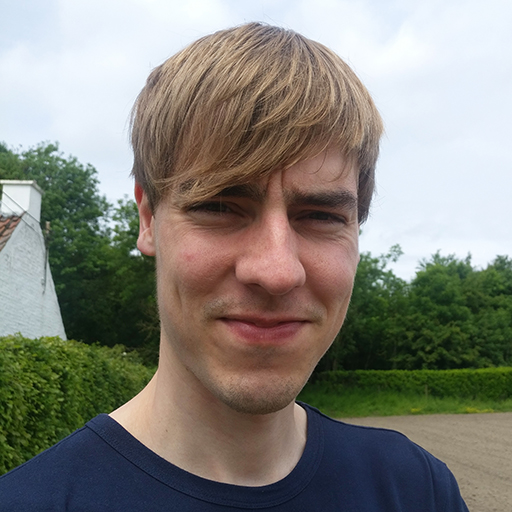
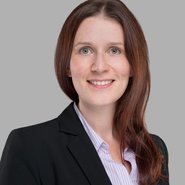
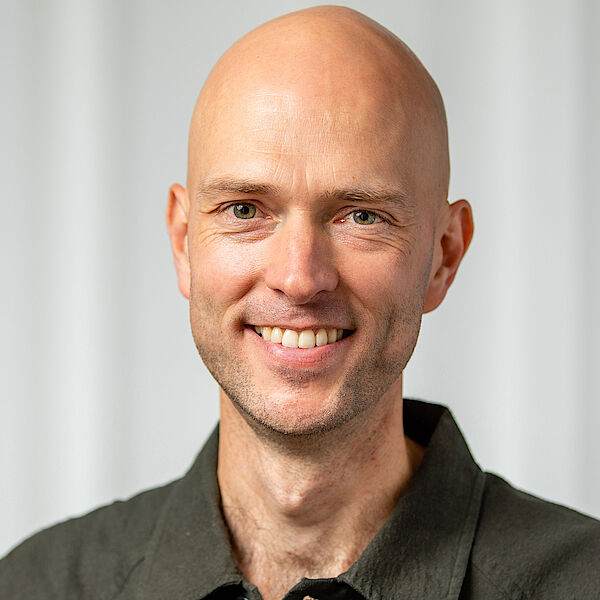
Tanja Blascheck is a PostDoc Researcher and Margarete von Wrangell Fellow at the Institute for Visualization and Interactive Systems (VIS) at the University of Stuttgart. Her work focuses on visual analytics , eye tracking , and microvisualizations for smartwatches and other wearable devices.
Schloss Dagstuhl - Leibniz Center for InformaticsGermany
Pierre Monnin is a Junior Fellow in AI at Université Côte d'Azur , conducting research within the Wimmics team at the I3S Laboratory . He also teaches within the EFELIA Côte d'Azur program. His work spans multiple institutions through funded projects like SHACKLE (EU Horizon), ECLADATTA and AT2TA (ANR), with collaborations at Télécom Paris , Università di Bari , and INESC-ID in Lisbon. Previous roles include temporary lecturer at TELECOM Nancy (2023-2024) and researcher at Orange (2020-2023). Research Interests focus on the knowledge graph lifecycle (construction, matching, refinement, mining, discovery) from neurosymbolic AI and analogical reasoning perspectives. He explores Domain knowledge injection into ML models Symbolic-semantics for graph embeddings Zero-shot bootstrapping techniques Context-aware semantic annotation Link prediction with constraint enrichment Life sciences applications Recent scientific awards include: Best Paper Award at ESWC 2024 (Student & Resource Papers) Best Thesis Award from French Association EGC (2022) 1st Prize (Accuracy Track) at Semantic Web Challenge (2021) His teaching portfolio covers AI fundamentals for foreign languages, marketing, and adult education programs, with specialized courses in Semantic Web technologies NoSQL databases XML tools Compiler implementation He supervises multiple PhD students and interns on topics involving neurosymbolic refinement , knowledge reconciliation , and analogical reasoning . Key software contributions include: KGPrune - Web application for thematic Wikidata subgraph extraction PyGraft - Synthetic knowledge graph generation tool DAGOBAH UI - Semantic table interpretation interface He also maintains datasets like PGxLOD and YAGO4-LP for pharmacogenomics and link prediction.
Prof. Dr. rer. nat. Rainer Leupers is a faculty member at RWTH Aachen University, chairing the Department of Software for Systems on Silicon. His research focuses on embedded systems, hardware-software co-design, virtual prototyping, and security in computing-in-memory architectures. He has published extensively on RRAM accelerators, logic locking, and neuromorphic security. Chair of Software for Systems on Silicon Research in hardware security and deep learning accelerators Recent publications on cross-tool virtual frameworks and thermal side-channel attacks His work bridges system-level modeling with practical security implementations, emphasizing reliability and performance in heterogeneous computing environments. Key trends in his 2025-2023 articles include compute-in-memory optimization, neural network inference efficiency, and security vulnerabilities in emerging hardware. Awards and formal recognitions are not explicitly detailed in the provided materials. He has not directly mentioned advising students or research grants in the given text fragments. The chair's contact information includes an office at ICT Cube 1, Electrical Engineering, Aachen, with direct email and website links.
Roles & Affiliations: Dagmar Gromann is an Associate Professor for Terminology Science and Translation Technology at the University of Vienna's Centre for Translation Studies. Previously, she served as a Research Associate at TU Dresden's International Center for Computational Logic (ICCL) and held postdoctoral roles in Barcelona within the ESSENCE Marie Curie Training Network. She completed her PhD at the University of Vienna under Prof. Gerhard Budin, focusing on ontology-terminology integration. Education: PhD in Computer Science and Linguistics, University of Vienna (2015) Postdoctoral Research, Artificial Intelligence Research Institute (IIIA), Barcelona (2015–2017) Research Assistant, Vienna University of Economics and Business (until 2015) Research Interests: Her work bridges computational linguistics, cognitive science, and terminology science. Key areas include: Ontology learning and neurosymbolic AI Image schemas in natural language processing Machine translation ethics and genderfair language Multilingual knowledge extraction and linked data Terminology modeling and semantic web applications Publications & Awards: Over 60 peer-reviewed papers in journals such as Future Generation Computer Systems and Journal of Lexicography . Notable awards include the Best Paper Award at MuC 2021 (GenderFairMT team) and the ISWC 2019 Best PC Award. Her research has pioneered methods for extracting embodied cognition concepts like image schemas from text. Grants & Leadership: PI of the European Language Grid (ELG) pilot project Text2TCS, member of the COST Action NexusLinguarum, and organizer of conferences like LDK 2023. Editorial board roles include the Semantic Web Journal and Applied Ontology . Labs & Teams: Former member of TU Dresden's ICCL and currently part of the University of Vienna’s translation technology initiatives. Active in interdisciplinary collaborations spanning computational linguistics, AI ethics, and multilingual systems.
FH-Prof. Mag. Dr. Tassilo Pellegrini is a Professor at the University of Applied Sciences St. Pölten , leading the Institute for Innovation Systems within the Department of Digital Business and Innovation . His work bridges semantic technologies with digital business strategies. Education : Business Economics, Communication Studies, Political Science Research Focus : Semantic Web, Linked Data, Digital Media Economics, Network Neutrality, Data Licensing His publications highlight trends in Semantic Metadata for news production, Linked Data Integration , and Cloud-based Business Models under network neutrality constraints. Recent work explores thesaurus-driven knowledge organization and the economic implications of Big Data. Scientific Awards : Best Paper Award at I-Semantics 2012 Key Projects : ECO-TCO (Digital Data for Sustainability), Corporate Semantic Web initiatives Contact: tassilo.pellegrini@fhstp.ac.at
Stefan Decker is a full University Professor (Universitätsprofessor) at RWTH Aachen University, Germany, where he heads the Chair of Information Systems and Databases (Informatik 5) within the Faculty of Mathematics, Computer Science and Natural Sciences. He is actively involved in teaching, research, and the supervision of numerous ongoing and completed doctoral, master’s, and bachelor theses. Education & Academic Background Doctorate (Dr. rer. pol.) – field of Information Systems or related (exact institution/year not stated in text). Appointed as University Professor and Chair of Information Systems and Databases at RWTH Aachen University. Research Interests Prof. Decker’s work lies at the intersection of databases, knowledge graphs, semantic web technologies, data science, and cybersecurity . He investigates architectures and algorithms for large-scale, privacy-preserving, decentralized data analytics , develops ontology-driven information systems , and explores the use of large language models (LLMs) for educational technology, anomaly detection, and incident-response playbooks. Additional focal areas include smart energy systems, mixed-reality learning environments, FAIR data principles, and federated machine learning . Scientific Contributions & Trends His recent publications (2022-2025) demonstrate a clear trend toward explainable AI, LLM-enhanced systems, secure data spaces, and semantic interoperability . Key contributions include novel anomaly-detection frameworks for encrypted power-grid communications, knowledge-graph-driven chatbots for higher-education support, and methodological advances in decentralized analytics and FAIR data sharing. These works are disseminated in top-tier venues such as AAAI, IEEE ISGT Europe, ESWC, IDEAL, and various Springer LNCS and IEEE Transactions. Supervision & Grants Doctoral Theses Advised: A. T. Neumann – “Chatbots as professional companions in large-scale community information systems” (2024) S. M. Welten – “Methods for practical data sharing and decentralized analytics” (2025) Master’s Theses Co-Advised: A. R. Küsters – “Object-centric process constraints using variable bindings” (2025) Additionally supervising more than 30 ongoing bachelor, master, and doctoral projects covering topics such as LLM-driven cybersecurity playbooks, knowledge-graph construction for German law, privacy-preserving analytics in smart grids, and mixed-reality learning agents. Principal investigator or senior researcher in large collaborative projects including NFDI4DS, WestAI, champI4.0ns and several EU/national initiatives on sovereign data spaces and AI services. Labs & Teams Prof. Decker leads the Information Systems & Databases (DBIS) Research Group . The group operates well-equipped laboratories for knowledge-graph engineering, mixed-reality applications, privacy-enhancing technologies, and secure distributed analytics . Current team size exceeds 30 researchers including PhD candidates, postdocs, and scientific programmers, supported by national and EU funding streams.
Prof. Dr. Christian Merkl holds the Chair of Economics, specializing in Macroeconomics at Friedrich-Alexander University Erlangen-Nuremberg (FAU) within the Department of Business, Economics, and Social Sciences. He has been in this position since 2010 and also serves as a research professor at the Institute for Employment Research since 2012. Prof. Merkl is one of the coordinators of the institutional network "Ensuring Economic and Employment Stability" and has held editorial positions at prominent economics journals, including serving as co-editor of the open-access journal Economics from 2015 to 2024 and as associate editor of the Journal for Labour Market Research since 2024. Education: Studied business administration and economics from 1998 to 2004 at the University of Erlangen-Nuremberg, the Institut d'Etudes Politiques, Strasbourg (France), and Wayne State University, Detroit (USA) Doctorate: Received from Kiel University in 2007 after working as a research associate at Kiel University and the Kiel Institute for the World Economy from 2004 to 2007 Prof. Merkl's research focuses on macroeconomics and labor market research, with particular emphasis on labor market dynamics, unemployment, business cycles, and labor market policy. His work combines theoretical modeling with empirical analysis of German and international labor markets, examining issues such as matching efficiency, wage cyclicality, gender earnings gaps, and the effects of labor market institutions and reforms. Analysis of his publication history reveals strong trends in studying German labor market institutions like Hartz IV reforms, short-time work policies (Kurzarbeit), and public employment agency effectiveness. Research spans theoretical labor economics, empirical analysis of German labor markets, and policy evaluation Recent work focuses on gender-specific application behavior, establishment-level wage dynamics, and business cycle asymmetries Prof. Merkl maintains an extensive international research network, having served as a visiting researcher at prestigious institutions including the Banque de France, the Federal Reserve Bank of San Francisco, the International Monetary Fund, the National Bureau of Economic Research, the University of Melbourne, and the University of Texas at Austin. His research has significant policy relevance for German labor market institutions and reforms, contributing to debates on unemployment insurance, labor market efficiency, and economic stabilization policies.
Schloss Dagstuhl - Leibniz Center for InformaticsGermany
Catia Pesquita is an Associate Professor in Computer Science at the Faculty of Sciences of the University of Lisbon , where she is also a Senior Researcher at LASIGE and leads the Health and Biomedical Informatics Research Line . With a multidisciplinary background in Biology and Computer Science, she focuses on Artificial Intelligence and Data Science applications in life and health sciences . Her research spans Semantic Web , Biomedical Ontologies , Knowledge Graphs , and Explainable AI , with significant contributions to ontology matching and semantic similarity . Education: PhD in Computer Science - Bioinformatics (2012) MSc in Bioinformatics (2008) Degree in Cell Biology and Biotechnology (2005) Current Projects: KATY (2021-2024): AI-Empowered Personalized Medicine for cancer treatments. BRAINTEASER (2021-2024): AI for ALS and MS disease progression models. Research Outputs: Developed tools like AgreementMakerLight (AML) , KGsim-benchmark , and the Epidemiology Ontology . Over 133 publications with significant citations (32,909 reads, 3,889 citations). Teaching: Lectures advanced topics in Databases , Data Integration , Bioinformatics , and Big Data . Advocacy: Vice-president of Biodata.pt , promoting biological data valorization in Portugal. Actively involved in initiatives to promote computer science careers to young women .
Schloss Dagstuhl - Leibniz Center for InformaticsGermany
Ruben Taelman is a postdoctoral researcher at IDLab , Ghent University – imec, specializing in decentralization, Linked Data publishing, and querying. He develops open-source JavaScript libraries like the Comunica engine for decentralized data access and focuses on intelligent infrastructure for data publication and retrieval. His research bridges academic and industrial perspectives, addressing challenges in decentralized knowledge graphs, policy negotiation, and data governance. Key projects include Triple Storage for versioned RDF querying and contributions to the Solid ecosystem for user-centric data control.
Christian Wietfeld is a Professor at TU Dortmund, Germany, specializing in telecommunications, 5G/6G networks, and robotics. His research focuses on network slicing, machine learning for communications, vehicular networks, and intelligent reflecting surfaces. Affiliations: TU Dortmund Key Collaborations: Stefan Böcker, Benjamin Sliwa, Manuel Patchou His work spans 6G multi-X communications, private industrial networks, and disaster response robotics. Recent projects include mmWave reflector systems, predictive uplink slicing, and AI-driven network planning. 2024-2025 publications highlight advancements in 6G IRS, energy-efficient 5G, and vehicular connectivity. Sub-fields include beam management, digital twins, and non-terrestrial networks. He contributes to experimental frameworks like Open RAN and ns-3 simulations, emphasizing scalable solutions for industrial and emergency applications.
Prof. Anika Groß is a Professor for Database Systems and Programming at the Department of Computer Science and Languages at Anhalt University of Applied Sciences in Köthen, Germany. She holds a PhD from the University of Leipzig (2014) and has held roles as a PostDoc in strategic research at Daimler AG and as a research assistant at the Interdisciplinary Centre for Bioinformatics (IZBI). She is actively involved in academic governance, serving on the faculty council, board of examiners, and various sustainability and research data management committees. Her research focuses on database systems, knowledge graphs, and ontology engineering, with applications in environmental science, medicine, and material sciences. Education - PhD (Dr. rer. nat.) in Computer Science, University of Leipzig (2014) - Diploma in Bioinformatics, MLU Halle-Wittenberg (2007) - Postdoctoral research at University of Leipzig's Database Group (2008–2013) Research Interests Her work emphasizes temporal graphs, ontology evolution, and semantic data integration. She develops tools like Region Evolution eXplorer (REX) and contributes to projects such as AgriRestore (ecosystem restoration) and MeineWaldKI (AI-based forest monitoring). Her recent focus includes wearable device applications in healthcare and digital twins for lithium value chains. Recent Research Trends Recent publications highlight interdisciplinary applications of knowledge graphs in agriculture and environmental science, leveraging temporal analysis and machine learning for tasks like chemical transformation prediction and bladder monitoring. She also explores cross-lingual semantic annotations in medical forms and holistic clustering of linked data. Professional Roles - Executive Committee Member, GI Database Systems Group - Fellow, Institute for Technologies and Economics of Lithium (ITEL) - Co-Chair of multiple workshops including FGDB-Workshop @ LWDA 2018 and BigDS@BTW 2017 Labs & Collaborations She leads research teams in projects funded by DFG, European Union (EFRE), and ITEL, collaborating with organizations like Daimler AG and ANU. Her lab focuses on advancing database systems and interdisciplinary data science applications.
Yang Lei is an academic affiliated with the University of Melbourne's Department of Computing and Information Systems. Their research focuses on knowledge graphs, FAIR data principles, large language models (LLMs), and ontology engineering. They contribute to initiatives like the Open Research Knowledge Graph (ORKG) and NFDI4DataScience, emphasizing reproducibility, scholarly metadata, and systematic literature reviews. Recent work includes applications of LLMs for abstract summarization, leaderboard extraction, and entity recognition in scholarly documents. Yang also explores challenges in FAIR Digital Objects, machine-actionable workflows, and interoperability in research data management.
Eva-Maria Ahrer is a postdoctoral researcher in the Atmospheric Physics of Exoplanets department, focusing on exoplanetary atmospheres and data analysis techniques for space-based telescopes like JWST and HST. Her work bridges observational astronomy with computational methods to advance planetary science. Her research spans exoplanet atmospheric characterization , planetary formation models , and JWST spectroscopic data analysis . Key projects include the BOWIE-ALIGN comparative survey and the KRONOS initiative, emphasizing the link between migration history and atmospheric composition. Recent publications highlight her contributions to understanding hot Jupiter alignment , metallicity , and chemical signatures using JWST’s NIRSpec and NIRISS instruments. She co-developed the open-source Eureka! pipeline for time-series observations and advocates for equity in STEM through the Equitea forum.
Emmanuel Baccelli is a Professor for "Open and Secure IoT Ecosystem" at Freie Universität Berlin since September 2019, holding a joint position with Inria and the Einstein Center Digital Future (ECDF). He is also a scientific researcher at Inria since 2007 and co-founder/coordinator of the RIOT open source operating system for IoT devices since 2013. His research focuses on the intersection of low-power protocols, deeply embedded open source software, and security in the Internet of Things (IoT) ecosystem. Baccelli emphasizes the critical trade-off between energy efficiency and security in IoT systems, advocating for privacy-by-design principles and open specifications. His work addresses how users can maintain control over their systems and data in an increasingly connected world. Baccelli's publications demonstrate a clear progression toward secure, efficient IoT systems with recent work focusing on secure firmware updates, TinyML deployment, and privacy-preserving protocols. His research spans from foundational networking protocols to practical implementations for constrained devices, with a consistent emphasis on open source solutions and security-by-design. Baccelli completed his PhD in 2006 at École Polytechnique in Paris on "Routing and Mobility in Large Packet-Based Networks" and received his habilitation from Université Pierre et Marie Curie in 2012. He previously served as a Guest Professor at Freie Universität Berlin in 2013-2014 with a DAAD Grant. His professional activities include significant contributions to IETF standards, particularly RFCs related to routing protocols for low-power networks. Baccelli's research has practical applications across multiple domains including healthcare, smart agriculture, and industrial IoT systems, where security and energy efficiency are paramount concerns.
Jan Brase is a prominent figure in academic data management and digital library systems. Currently serving as the Head of the Research and Development Department at the Lower Saxony State and University Library Göttingen, he has held key roles in international data infrastructure projects, including leadership positions in DataCite and the International DOI Foundation. Education: Dr. rer. nat. (2005) - Leibniz University Hannover, thesis: "Usage of metadata" Diplom in Mathematics and Computer Science (1999) - Leibniz University Hannover His work focuses on metadata standards, digital object identifiers (DOI), and the evolving role of libraries in managing research data. He has significantly advanced data citation practices through his involvement in global initiatives like DataCite, CODATA, and the Research Data Alliance (RDA). Recent publications highlight his expertise in persistent identifier systems, linked data infrastructure, and the integration of non-textual resources in academic libraries. Brase’s contributions span two decades, bridging library science with computational methods and open science principles. Notable Committees: President of the International Council for Scientific and Technical Information (ICSTI) Delegate to CODATA International Council for Science Co-chair of CODATA task group on data citation