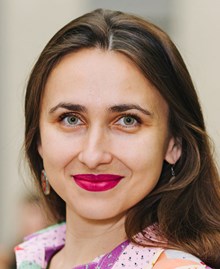
Ada Fort is an Associate Professor in the Department of Information Engineering and Mathematics at the University of Siena, Italy. Her research focuses on advanced sensor systems, including environmental monitoring, biomedical instrumentation, and IoT applications. She holds a Laurea in Electronic Engineering (1989) and a Ph.D. in Nondestructive Testing (1992) from the University of Florence. Key research areas include wearable sensors for air quality monitoring, magnetic detection of contaminants, and QCM-based biosensors. Her work integrates machine learning for signal processing and fault detection in industrial and environmental systems. Notable projects involve self-sufficient IoT nodes powered by solar energy and low-cost sensor networks for agriculture and healthcare. Publications highlight innovations in sensor design, data imputation for environmental monitoring, and entropy-based security systems. Her contributions span interdisciplinary fields, linking engineering principles with applications in healthcare, agriculture, and climate science.
Gregory S. Okin is a Professor of Geography and Chair of the Department of Geography at UCLA, affiliated with the Institute of the Environment and Sustainability. He holds a PhD in Geochemistry from Caltech (2001) and has been at UCLA since 2006. His research focuses on dryland geomorphology, aeolian processes, and mineral aerosol dynamics, with emphasis on dust emission impacts on climate, ecosystems, and human health. Okin employs remote sensing, field studies, and modeling to analyze soil-vegetation-atmosphere interactions in arid regions, particularly wind erosion's role in grassland-to-shrubland transitions. He co-leads NASA's Earth Surface Mineral Dust Source Investigation (EMIT), creating global mineral maps using imaging spectroscopy. Recent work addresses dust-climate links, wildfire health impacts, and rangeland monitoring via satellite-cloud computing integration. Education Background: Ph.D., Geochemistry, California Institute of Technology (2001) M.S., Geology, California Institute of Technology (1997) B.A., Chemistry & Philosophy (Double Major), Middlebury College (1995) Postdoctoral Research, Geography, UC Santa Barbara (2001–2002) Research Interests: Dr. Okin's work integrates aeolian geomorphology , remote sensing , and Earth system modeling to explore: - Dust emission mechanisms and climate feedbacks - Dryland ecosystem resilience under climate change - Vegetation-soil connectivity in arid landscapes - Applications of imaging spectroscopy (e.g., EMIT mission) His projects often involve interdisciplinary collaborations, combining field measurements with computational modeling. Scientific Contributions: Key innovations include developing dust emission models (e.g., MAPTALE) and advancing spectral unmixing techniques for mineral mapping. His findings on pet food environmental impacts (e.g., carbon pawprints) have gained media attention.
Lars Magne Lundheim is a Professor at the Department of Electronic Systems at Norwegian University of Science and Technology (NTNU). He holds an MSc and PhD in electrical engineering from NTNU. His career includes roles as Associate Professor (2002–2010), Research Scientist at SINTEF, and part-time academic positions. He belongs to the Signal Processing Group and focuses on signal processing for radar systems, power consumption optimization, and engineering education. His research spans technical domains like multicarrier communication systems and pedagogical innovations such as project-based learning and curriculum design. Notable contributions include work on sustainability integration in STEM education and competency development through active learning strategies. Lundheim is a Senior Member of IEEE and has reviewed for major journals/conferences including IEEE Transactions on Signal Processing. Recent publications emphasize educational frameworks linking mathematics with engineering practice, while earlier works address technical challenges in radar distortion correction and power-efficient multiplier design. He has contributed to 16 PhD examination committees and teaches courses like TTT4270 (Electronic System Design) and TTT4260 (Electronic System Design and Analysis). Lundheim’s outreach includes presenting at events like the Læringsfestivalen and collaborating on national initiatives like the 'Fremtidens teknologistudier' educational strategy report. His interdisciplinary work bridges technical innovation with pedagogical excellence in electrical engineering education.
Ingrid Daubar is an Associate Professor of Earth, Environmental, and Planetary Sciences at Brown University, specializing in planetary geology and impact processes. Her research focuses on Martian geology, including impact cratering, aeolian processes, atmosphere-surface interactions, and the exploration of Europa. She collaborates with NASA missions such as InSight, Europa Clipper, and Juno, contributing to seismic and imaging studies of planetary surfaces. Daubar’s work integrates orbital data (e.g., HiRISE) and seismic observations (e.g., InSight) to study impact cratering rates, subsurface properties, and seismic activity on Mars. Her research has revealed insights into modern Martian geological processes, including the role of impacts in modifying surfaces and triggering phenomena like avalanches. She also investigates Europa’s potential habitability through the Europa Clipper mission, focusing on geological features and ice-shell dynamics. Her publications emphasize interdisciplinary approaches, combining field analog studies, numerical modeling, and machine learning for impact detection. Key contributions include linking seismic events to impact craters, analyzing ejecta patterns, and characterizing subsurface structure. Despite no listed awards, her work has significantly advanced understanding of planetary surface processes and mission science operations.
Dr. Sanda Harabagiu is the Research Initiation Chair Professor in the Department of Computer Science at The University of Texas at Dallas (UTD), affiliated with the Erik Jonsson School of Engineering and Computer Science. Her expertise spans natural language processing, medical informatics, and artificial intelligence for public health. She holds dual doctorates in Computer Engineering (University of Southern California, 1997) and Electrical Engineering and Computer Science (University of Rome, 1994), alongside a diploma in Computer Science from the Polytechnic Institute of Bucharest (1983). Her research focuses on advancing technologies for medical data analysis, including automatic extraction of actionable insights from radiology reports and EEG records. Notable projects include the Multimedia Vaccine Informatics System for analyzing social media discourse on vaccines and the development of AI tools for clinical decision support. She has led interdisciplinary collaborations through the Human Language Technology Research Institute (HLTRI), established in 2002 to pioneer advancements in human language processing. Dr. Harabagiu’s honors include the 2019 AMIA Distinguished Paper Award and the 2017 Homer Warner Award. Her work bridges computational linguistics with healthcare, emphasizing applications in public health communication, misinformation detection, and clinical informatics. She has contributed to over 150 publications and served on numerous editorial and organizing committees for conferences such as ACL, AAAI, and AMIA. Education: Ph.D., Computer Engineering, University of Southern California, 1997 Doctorate, Electrical Engineering and Computer Science, University of Rome, 1994 Diploma, Computer Science and Engineering, Polytechnic Institute of Bucharest, 1983 Awards: 2019 AMIA Distinguished Paper Award 2017 Homer Warner Award 2000 NSF CAREER Award 1991-1993 Fondazione Ugo Bordoni Research Award Her research also addresses social media analysis for public health, including frameworks to detect vaccine hesitancy and misinformation. Current projects involve leveraging large language models (LLMs) and multimodal data to understand communication patterns in health-related discourse. She has advised students like Travis Goodwin, contributing to impactful work in clinical informatics and AI ethics.
Dr. Anne Lauscher is a Researcher at the Data and Web Science Group, University of Mannheim, School of Business Informatics and Mathematics. Her work focuses on neural methods for natural language understanding, particularly in Argument Mining, Scientific Publication Mining (scitorics), and ethical considerations in NLP. She investigates language representations, bias detection in models, and fair AI. She has been involved in projects like the Linked Open Citation Database (LOC-DB) and contributes to conferences like ACL and EMNLP. She has taught courses on Text Analytics, Machine Learning, and Ethics in NLP, and supervised theses on topics like detecting unfairness in Arabic text representations and hyperpartisan news detection. Her research bridges computational linguistics with societal ethics, aiming to improve fairness and interpretability in AI systems. Her research interests span Argumentation Mining, Scientific Publication Mining, scitorics, Transfer Learning, Representation Learning, and Ethics in NLP. She explores how to inject knowledge into language models and analyze biases in text representations. Her work on 'scitorics' involves analyzing rhetorical aspects of scientific writing to understand argumentation structures. Publications highlight contributions to bias mitigation (e.g., DebIE platform), specialized language models, and multilingual datasets like Multi2WOZ. Her work appears in top venues such as EMNLP, ACL, and COLING. She actively contributes to the academic community through roles like Publication Co-Chair for EurNLP 2020 and PC member for multiple conferences. Her advising includes guiding students on thesis projects addressing fairness, argumentation, and NLP applications. She collaborates with institutions like Stuttgart Media University and the Data and Web Science Group to advance research in ethical AI and NLP.
Leonardo Arias Alvis is a postdoctoral researcher in the Department of Evolutionary Genetics at the Max Planck Institute for Evolutionary Anthropology, Leipzig. He holds a PhD in Evolutionary Genetics (2018, MPI-EVA) and earlier degrees from Universidad del Valle, Colombia. His research focuses on human population history, genetic diversity in Amazonian indigenous groups, and the impact of sociocultural practices on genetic patterns. He has conducted extensive fieldwork in Colombia’s Amazonia, collecting genetic samples from over 30 ethnolinguistic groups. Education: PhD (2012–2018, MPI-EVA), MSc (2007–2012, Universidad del Valle), BSc (2000–2006, Universidad del Valle). He has taught courses on human population history, molecular anthropology, and applied phylogenetics at the University of Leipzig and MPI-EVA. His grants include a COLCIENCIAS scholarship and a DAAD Research Stay Award. Research interests include genomic analysis of demographic history, fine-scale population structure in Amazonia, and interdisciplinary approaches linking genetics with linguistics/anthropology. His work has revealed extensive intergroup interactions facilitated by river networks and historical migration patterns. Key projects include studies on Northwestern Amazonia’s genetic diversity and the demographic history of Colombia’s Bogotá Altiplano. Scientific awards include the COLCIENCIAS Graduate Scholarship and DAAD Research Stay Award. His work has been published in journals like Science Advances , Molecular Biology and Evolution , and Proceedings of the National Academy of Sciences .
Minseok Kwon is a Professor and Associate Chair in the Department of Computer Science at Rochester Institute of Technology (RIT), part of the Golisano College of Computing and Information Sciences. He holds a Ph.D. and M.S. from Purdue University and a B.S. from Seoul National University. His research focuses on network systems and protocols (including programmable networks, P4 software testing, SDN, and in-network security) as well as machine learning systems (especially workload prediction). He is a member of the RIT Center for Cybersecurity. Professional Contributions Technical committee member for Computer Communications Journal and multiple IEEE conference program committees (e.g., HPCC 2021, ICC 2021-2021). Publicity Chair for ICNP 2008 and NPSec 2005. Research Highlights Recent work emphasizes programmable data planes for green data centers, security in wireless server networks, and efficient packet processing using P4. Notable projects include P4Kube (in-network Kubernetes load balancing) and CuVPP (filter-based routing optimization). His publications span topics from network latency measurement tutorials to cutting-edge SDN implementations. Awards & Recognition Recipient of the Best Paper Award at IEEE Cluster 2020 for CuVPP . Teaching & Advising Current courses include CSCI-261 (Algorithms), CSCI-788 (MS Project), and supervising graduate co-op placements. His advising focuses on advanced network systems and cloud computing.
Prof. Anja Rammig is a Professor at the Technical University of Munich (TUM), holding the Chair of Land Surface-Atmosphere Interactions within the TUM School of Life Sciences. Her research focuses on understanding how terrestrial ecosystems respond to environmental changes such as climate and land-use shifts. She employs integrated model-based and observational approaches to study processes like plant responses to drought, aiming to inform climate change mitigation strategies. Education: B.Sc./M.Sc. in Biology (Friedrich-Alexander University Erlangen-Nuremberg) and Ph.D. in Environmental Sciences (ETH Zurich, 2006). Professional Journey: Postdoctoral roles at the SLF Davos, Lund University, and PIK, before joining TUM as Assistant Professor in 2015 and advancing to full Professor. Her research emphasizes modeling ecosystem dynamics under climate extremes, with particular attention to the Amazon rainforest, European forests, and boreal landscapes. Key themes include CO2 fertilization effects, phosphorus cycling limitations, and the interplay between vegetation and atmospheric processes. She leads interdisciplinary projects like AmazonFACE, a large-scale CO2 enrichment experiment. Publications span topics from drought impacts to model development, with a focus on global carbon cycle projections and ecosystem resilience. Her work bridges ecology, climatology, and policy, contributing to climate-smart forestry strategies and biodiversity conservation frameworks.
Andreea Enache is an Assistant Professor at the Department of Economics, Stockholm School of Economics (SSE), with affiliations to the House of Governance and Public Policy, Center for Resilient Health, and Karl-Adam Bonnier Center for Governance. She holds a PhD in Mathematical Economics and Econometrics from Paris School of Economics (2015) and has held academic positions at institutions like Bocconi University, the European University Institute, and the University of Chicago. Her research focuses on structural econometrics, industrial organization, auctions, health economics, digital economics, and cultural economics. Education: PhD in Mathematical Economics and Econometrics, Paris School of Economics, 2011–2015 MSc in Economics, Toulouse School of Economics, 2010–2011 MSc in Applied Econometrics and Statistics, University of Orléans, 2009–2010 Bachelor’s Degree in Finance, Academy of Economic Studies (Bucharest), 2005–2008 Research Interests: Her work integrates econometric methods with applications in auctions, healthcare markets, digital platforms, and cultural industries. She explores topics like market competition dynamics, pricing strategies, and policy impacts using structural models and advanced statistical techniques. Publications: Recent work includes studies on Swedish primary care ownership structures, mobile app consumer behavior, and auction models. These contributions highlight her expertise in linking theoretical frameworks to real-world economic phenomena. Awards: Recipient of the PhD Thesis Prize 'Agguire-Basualdo' (2015), recognizing her doctoral research on structural econometrics and nonlinear inverse problems. Advisees & Grants: While no formal advisee list is provided, her collaborations span institutions like CEPR and involve co-authored research on healthcare, digital markets, and cultural economics. Active participation in workshops like SweRIE (2025) underscores her engagement with academic communities. Labs/Teams: Affiliated with interdisciplinary centers like the Center for Resilient Health and Karl-Adam Bonnier Center for Governance, focusing on policy-relevant research in health systems and governance structures.
Vittorio Curri is a Full Professor in Optical Communications and Networking at the Department of Electronics and Telecommunications (DET) of Politecnico di Torino , Italy. He is a founding member of the OptCom Group and PhotonLab and leads the PLANET research team. His work spans optical network modeling, AI-assisted control, open-source software (GNPy), and environmental sensing via optical fiber. He has led numerous EU and industry-funded projects and is a key figure in open optical networking. Research Interests: Multi-band optical transmission in single-mode fibers Physical layer aware networking Machine learning and AI for optical network optimization Environmental sensing using optical network telemetry Open and disaggregated optical networks Digital twin development (GNPy project) WDM and coherent transmission modeling The recent publications reflect a strong trend toward integrating AI and machine learning with digital twin technologies for real-time network control, anomaly detection, and performance optimization. There is a clear focus on wideband, multi-band, and converged metro-access networks , with modeling efforts extending to filtering effects, polarization, and nonlinear impairments. The research is highly applied, with strong industry collaboration and open-source contributions. Scientific Awards: Concorso "Galileo Feraris" (2002) JLT Best Paper Award (2014, 2015) FFABR 2017 Research Grant Advising and Grants: Prof. Curri has supervised 25 PhD students and numerous postdocs. He has served as Principal Investigator on major projects including WON (EU H2020) , ALLEGRO , NESTOR , RESTART , SENSEI , and SCIPIO . He leads the GNPy open-source project under TIP and has extensive collaborations with Synopsys, Open Fiber, INFINERA, and CESNET. His research is funded by EU programs (Horizon Europe, H2020), PNRR, and multiple industrial contracts. Labs and Teams: He leads the PLANET (Physical Layer Aware NETworking) team, a subgroup of the OptCom Group at PoliTo. The team focuses on simulation, modeling, and AI-driven control of next-generation optical networks. They collaborate closely with the LINKS Foundation and international partners including Soochow University and CESNET .
Jan Rolfes is an Associate Professor in the Department of Mathematics at Linköping University, specializing in Applied Mathematics (TIMA). He also holds concurrent research and teaching roles at RISE - Research Institutes of Sweden and the University of Erlangen-Nuremberg, Germany, where he serves as Interim Professor for Data Driven Design of Dynamical Systems. His academic affiliations span Sweden and Germany, reflecting a transnational research profile in optimization and data science. Research Interests: His work centers on optimization under uncertainty , particularly in systems affected by stochastic fluctuations such as renewable energy grids. He integrates distributional robustness to protect decisions against rare but impactful events and employs data science to model complex dependencies, such as weather impacts on energy production. His research extends into economics, engineering disciplines (electrical, chemical, vehicular), and metric and discrete geometry, using advanced mathematical tools like semidefinite and mixed-integer programming. Recent Research Trends: His latest publications (2024–2025) demonstrate a strong focus on robust optimization frameworks, geometric optimization problems, and data-driven approximations. The articles reveal a consistent methodological thread—using mathematical programming to address uncertainty in both theoretical (e.g., discrete geometry) and applied (e.g., nanotomography, power systems) domains. Keywords across these works include distributional robustness, mixed-integer programming, semidefinite programming, and data-driven modeling. Scientific Awards: No awards or fellowships are mentioned in the provided text. Advising and Grants: While no formal list of advisees is provided, Jan Rolfes has been advised by prominent researchers including Frank Vallentin, Jan Kronqvist, and Michael Jünger, indicating a strong mentorship network. He has collaborated extensively, particularly with Frauke Liers and others in optimization and computer science. No grants are explicitly mentioned, but his positions at RISE and Linköping University suggest involvement in funded research projects. Labs and Teams: He is affiliated with the Division of Applied Mathematics (TIMA) at Linköping University, which conducts research in computational mathematics, optimization, and mathematical statistics. His work at RISE connects him to the Unit of Power Systems, and his role at Erlangen-Nuremberg links him to data science and dynamical systems research teams.
Andreas Thor is affiliated with the University of Applied Sciences for Telecommunications Leipzig, Germany. He has been actively publishing in computer science since 2004, with a focus on database systems, data integration, bibliometrics, and educational technology. His research spans several domains, including database systems, entity resolution, ontology matching, and more recently, e-assessment and digital learning tools. He has made significant contributions to bibliometrics through the development and application of CRExplorer for Reference Publication Year Spectroscopy (RPYS). His work also includes the design of educational tools like DMT and FeeDI for automated assessment in higher education. The recent articles (2021–2023) reflect a strong trend toward educational technology, particularly in the development of tools for e-assessment, Jupyter Notebook integration, and knowledge graphs for learning. Earlier works (2004–2012) focus on core database research such as entity resolution, data fusion, and MapReduce-based systems. The publications collectively demonstrate a transition from foundational database research to applied educational informatics. Scientific Awards: No scientific awards mentioned in the provided text. Advising and Grants: No information is available regarding students advised or grants received. However, his extensive publication record and leadership in workshop proceedings (e.g., GI-Workshop Grundlagen von Datenbanken) suggest involvement in academic mentoring and collaborative research initiatives. Labs and Teams: Andreas Thor has collaborated extensively with researchers at the University of Leipzig, particularly with Erhard Rahm, Toralf Kirsten, and Stefanie Scherzinger. His work on bibliometrics involves collaboration with Lutz Bornmann, Loet Leydesdorff, and Robin Haunschild. These collaborations indicate participation in research groups focused on data management and scientometrics.
Professor Roger Smith is a Distinguished Professor in the Evolutionary Studies Institute at the University of the Witwatersrand (Wits) and Emeritus Research Associate at Iziko Museums, Cape Town. He holds a PhD from the University of Cape Town (UCT), with earlier degrees in Geology and Zoology from the University of Manchester and a master’s from Wits. His research focuses on the Palaeoecology of Gondwana , integrating paleontological and sedimentological data to study ancient landscapes, particularly the dramatic changes in the Karoo Basin during and after the End-Permian mass extinction. He leads field expeditions to Namibia, Zambia, Tanzania, Brazil, and Antarctica, investigating tetrapod fossils and paleoenvironmental dynamics. His work explores topics like mass extinction events, post-extinction recoveries, and the ecological roles of pre-mammalian synapsids. Key contributions include studies on the Gorgonopsian survival , Triassic temnospondyls , and Karoo geoheritage sites . He has been A1-rated by South Africa’s National Research Foundation for research excellence. Recent projects analyze mercury evidence linking end-Permian volcanic activity to terrestrial impacts and use computed tomography (CT) to study rhynchosaur cranial anatomy. Education: Bachelor’s in Geology and Zoology (University of Manchester) Master’s in Geology (University of the Witwatersrand) PhD in Paleontology (University of Cape Town) Research Interests: Paleoecology of mass extinction events Karoo Basin stratigraphy and tetrapod evolution Global climate-paleoenvironment interactions Vertebrate taphonomy and fossil preservation Key Awards: A1 Rating, National Research Foundation (South Africa) Grants & Projects: Field expeditions to Antarctica, Brazil, and Africa Analysis of Karoo Basin geochemical data CT-based anatomical studies of fossil reptiles Labs/Teams: Karoo Basin Research Group Global Change Institute collaborations
Mark Rollins is an Assistant Professor in the Department of Emergency Medicine at Yale School of Medicine. He is board-certified by the American Board of Emergency Medicine and actively contributes to clinical and academic advancements in emergency care systems, with a focus on prehospital services and patient safety. Research Interests: Emergency Medical Services (EMS) Prehospital Triage and Non-Transport Protocols Emergency Pharmacology (e.g., adenosine use) Pandemic Response in Emergency Settings Anesthesia for rare fetal and placental conditions His recent publications highlight his work on optimizing EMS decision-making during the COVID-19 pandemic and evaluating field treatments for cardiac arrhythmias. The research reflects a strong trend toward improving system efficiency, patient outcomes, and evidence-based protocols in emergency medicine. Scientific Awards: No awards listed in available sources. Advising and Grants: There is no public information indicating graduate student advising or grant funding. However, his collaborative research with faculty such as Kate Couturier, Andrew Ulrich, and Arjun Venkatesh suggests active engagement in team-based clinical research, likely supported by institutional or departmental funding at Yale. Labs and Research Teams: Mark Rollins is associated with research efforts in the Department of Emergency Medicine at Yale, particularly linked to the Center for Outcomes Research & Evaluation (CORE). His work involves collaborative, data-driven studies on emergency care delivery and system performance, indicating integration within interdisciplinary research teams focused on healthcare innovation and quality improvement.