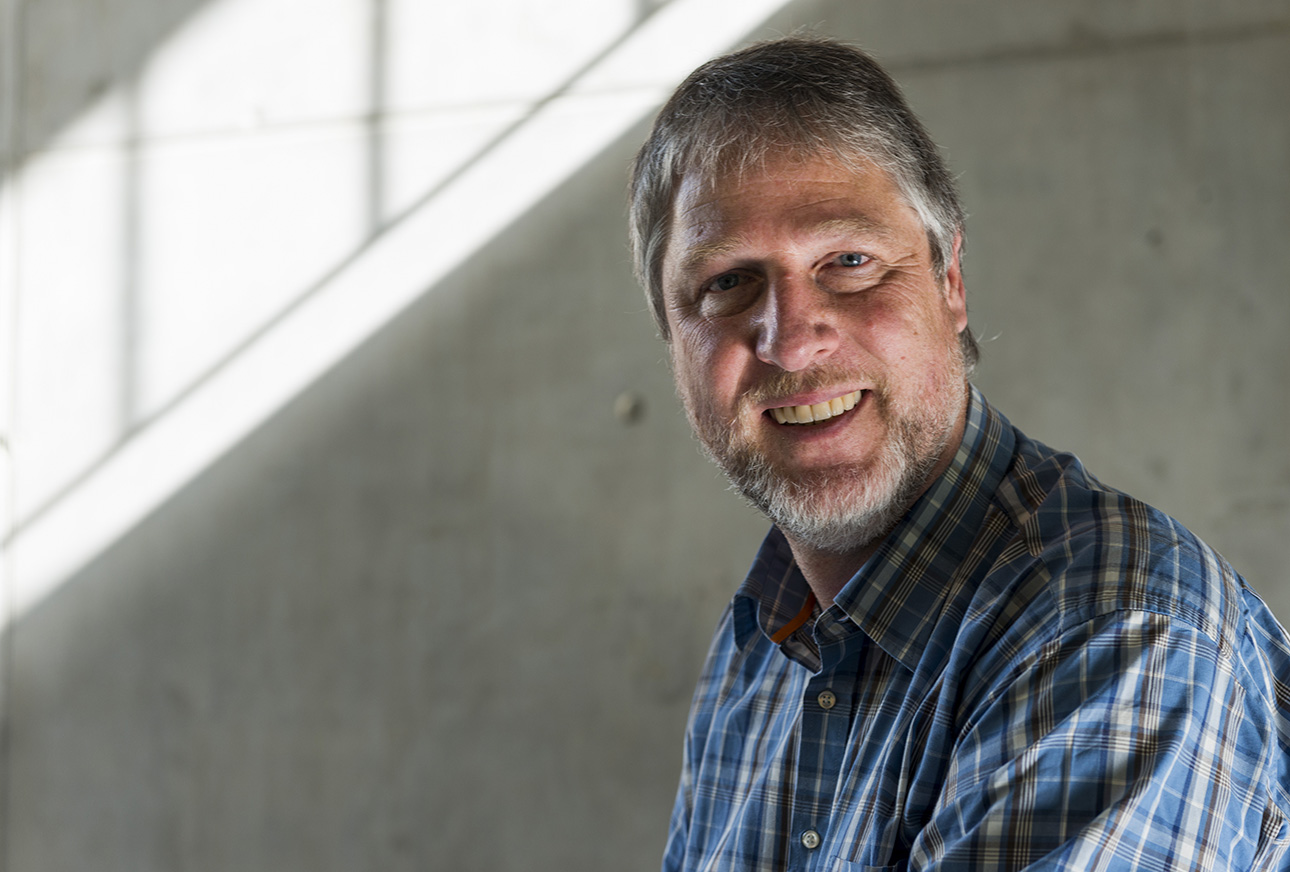
Professor Bernd Möbius is a leading academic in Phonetics and Phonology at the Department of Language Science and Technology, Saarland University. His research bridges phonetic theory with speech technology applications, focusing on text-to-speech systems, prosody modeling, and computational simulations of speech processes. Current research projects: DFG SFB 1102, C1: Information density and phonetic structure predictability DFG SFB 1102, C4: Slavic intercomprehension and surprisal theory (INCOMSLAV) Research Themes: Key areas include text-to-speech synthesis, speech prosody analysis, experimental methods in speech production/perception, information density in phonetics, and cross-linguistic studies of Slavic-Germanic languages. Scientific Contributions: Recent work explores Parkinson-induced dysarthria detection, breath noise acoustics, surprisal-driven speech behaviors, multilingual BERT models for idiomaticity, and perceptual consequences of acoustic adjustments.
Prof. Dr. Claudine Moulin is a Full Professor of Historical Linguistics at the Department of German Studies, University of Trier. She co-directs the Trier Center for Digital Humanities and serves as Vertrauensdozentin der Deutschen Forschungsgemeinschaft. With academic roots in Brussels and Bamberg, she completed her PhD in 1990 and Habilitation in 1999 at the University of Bamberg. Her research spans medieval and early modern languages, manuscript studies, digital humanities, and Luxembourgish linguistics. As a leading scholar in historical linguistics, Moulin's work explores urban language history, phraseology, and cultural knowledge transmission through manuscripts. She has directed major digital humanities projects like LexicoLux and Cartul@rium, while pioneering digital codicology methods for medieval texts. Her research combines traditional philology with computational approaches. Her academic accolades include the Akademiepreis Rheinland-Pfalz (2010), Landesverdienstorden (2014), and the Verdienstkreuz am Bande (2025). She has held visiting professorships at Sorbonne, EHESS Paris, and EPHE, and received fellowships from the Humboldt Foundation and European Science Foundation. Notable Academic Roles: Co-founder and Chair of DHd (Digital Humanities in German-speaking countries) Founding member of Trier Center for Language and Communication Member of German Historical Institute Paris scientific board Advisory positions at Austrian Center for Digital Humanities and Herzog August Bibliothek Her editorial leadership includes chief editorship of Sprachwissenschaft journal and co-editorship of Germanistische Bibliothek monograph series. She has mentored over 40 graduate students in topics ranging from medieval marginalia to urban language studies.
Prof. Stefan Müller is a Professor at the Institute for German Language and Linguistics , part of the Faculty of Languages and Literature at Humboldt University. His research focuses on syntax, formal grammar theories (especially Head-Driven Phrase Structure Grammar), and computational linguistics. He leads the CoreGram Project , developing cross-linguistic grammars using HPSG formalisms. His work includes analyses of German syntax, constituent order, anaphoric binding, and register phenomena. He is also involved in open-access publishing initiatives through Language Science Press . Contact: St.Mueller@hu-berlin.de . Education and academic background details are not explicitly stated in the provided text, but his professional trajectory indicates deep expertise in theoretical linguistics. His research spans multiple languages including German, Mandarin, and Persian, with a focus on grammar implementation and syntax-semantics interfaces. Key contributions include the Head-Driven Phrase Structure Grammar Handbook (2024), analyses of headless nominal structures in German (2022), and exploration of large language models' theoretical implications (2024). He actively engages in interdisciplinary projects bridging formal grammar and computational methods.
Prof. Dr. Claudia Peus is a full Professor of Research and Science Management at the Technical University of Munich (TUM) School of Management , serving since May 2011. She holds executive roles as Founding Director of the TUM Institute for LifeLong Learning (TUM IL3) since December 2019 and Executive Vice President for Talent Management and Diversity since October 2017. Her career spans visiting positions at MIT's Sloan School of Management and Harvard University, alongside her habilitation (2011) and PhD (2005) from LMU Munich. Current affiliations: TUM School of Management, TUM IL3, RWI – Leibniz Institute for Economic Research Research focuses: Leadership development in the digital age, diversity in organizations, ethical leadership, and research organization management Recent research trends analyze digital leadership dynamics, gender-decoded recruitment practices, robotic leadership interfaces, and neurophysiological mechanisms in leadership behavior. Her 2025 work on moral careers and 2024 resource-based absorption theory highlight evolving themes in organizational psychology. Scientific honors include: Highly Cited Research Award, Leadership Quarterly (2016) Emerald Citations of Excellence (2016) Best Teaching Award, TUM School of Management (2014) Academy of Management Symposium Award (2010) Bayerische Landesbank Wissenschaftspreis (2006) Prof. Peus advises organizations on diversity and talent management. She was recognized as one of Germany's Most Inspiring Women (2020) and leads projects like FührMINT, ForGenderCare, and the TUM Neurophysiological Leadership Lab (NeLeLab).
Sebastian Thies is Professor and Chair for Ibero-American Literary and Cultural Studies at the University of Tübingen, where he has been employed since October 2012. He serves as Vice Director of the Interdisciplinary Centre for Global South Studies (ICGSS) and coordinates the BMBF/DAAD thematic network 'Futures under construction in the Global South'. His academic journey began with a PhD in Hispanic Studies from the University of Osnabrück in 2000, followed by positions at the University of Bielefeld where he progressed from Junior Professor for Hispanic Literary and Media Studies to Full Professor for Inter-American Studies. Thies' research focuses on Global South Studies, with particular emphasis on Latin American literature, film, and media. His work explores subjectivity formations, entangled temporalities, and political communication across borders. He has directed significant research initiatives including the doctoral studies program 'Entangled Temporalities in the Global South' and has co-edited major reference works such as The Routledge Handbook for Global South Studies on Subjectivities (2024). His extensive publication record demonstrates a consistent engagement with transnational cultural phenomena, particularly examining how Latin American cultural production intersects with global political and social dynamics. Thies frequently collaborates with international scholars, reflecting his commitment to transdisciplinary and transregional approaches to cultural analysis. Project Leader: Research Training Network 'Entangled Temporalities in the Global South' Vice Project Leader: Thematic network 'Literary Cultures of the Global South' Associated Investigator: BMBF-Area Studies Project 'The Americas as a Space of Entanglement' Project Leader: Research Group 'E Pluribus Unum? Ethnic Identies in Processes of Transnational Integration' Thies actively supervises doctoral students through the Interdisciplinary Centre for Global South Studies and has established collaborative networks across Latin America, particularly with institutions in Mexico and Colombia. His current research agenda focuses on 'Futures under construction in the Global South' and continues to explore the intersections of cultural production, political communication, and subjectivity formation in transnational contexts.
Ekaterina Shutova is an Associate Professor at the Institute for Logic, Language and Computation (ILLC) within the Faculty of Science at the University of Amsterdam. She concurrently holds a Visiting Associate Professor position in the Computer Science Department at Stanford University. She leads the Amsterdam Natural Language Understanding Lab and heads the NLP & Digital Humanities research unit at ILLC. An ELLIS Scholar, she earned her PhD from the University of Cambridge Computer Laboratory and Pembroke College. Her research has been funded by ERC, Innovate UK, British Academy, Leverhulme Trust, Google, Meta, and Deloitte. Her research spans natural language processing and machine learning, with core interests in: Few-shot learning for NLP Multilingual and cross-lingual systems Joint modeling of language and vision Cognitive processing and semantic representation Figurative language interpretation Computational social science applications Her recent publications (2024-2025) predominantly focus on multimodal learning, cultural alignment in AI, metaphor processing, and evaluation methodologies for language models. These works reflect a trend toward integrating cognitive science with multilingual systems and ethical considerations. Awards & Fellowships: ERC Consolidator Grant (2025) ELLIS Scholar Outstanding Paper Award at ACL 2023 Finalist for Outstanding Certification by TMLR Runner-up Best Paper Award at NAACL-HLT 2016 Research Leadership: She directs the Amsterdam Natural Language Understanding Lab, supervising 8 PhD students, 1 MSc student, and 34 alumni. Her projects include an ERC-funded initiative on globally accessible language technology and an AI Democratization grant for hate speech detection.
Kyung-Ho Cha serves as Junior Professor of Modern German Literature at the University of Bayreuth's Faculty of Languages & Literature within the Department of New German Literature. His academic journey includes studies at Bonn, Oxford, and Columbia University, followed by doctoral work at Technical University Berlin completed in 2010. His research centers on three interconnected domains: literature-science intersections with focus on evolutionary biology and Walter Benjamin's writings; literary representations of migration; and human rights discourse in contemporary literature. This tripartite framework informs his critical analysis of authors like Elfriede Jelinek and Fatih Akin. Cha's publications reveal consistent engagement with transnational themes, particularly examining German-Turkish cultural dynamics, refugee narratives, and ethical dimensions of literary representation. His work demonstrates methodological rigor in bridging literary analysis with philosophical and scientific discourse. German National Merit Foundation Fellowship DAAD Fellowship ICI Berlin Institute Fellowship DFG Fellowship Volkswagen-Foundation Support Harvard Mahindra Humanities Center Fellowship (2011-2012) Cha has directed significant research projects including the DFG-funded 'Seelenwanderung und literarische Kommunikation' at Freie Universität Berlin and contributed to the DFG Graduiertenkolleg 'Körper-Inszenierungen'. His editorial work on human rights literature demonstrates leadership in establishing interdisciplinary scholarly dialogues. Current research continues to explore migration narratives within the 'Future Migration' initiative at Bayreuth.
Prof. Dr. Kianoosh Rezania is a Professor of West Asian Religious History and Director of the Käte Hamburger Kolleg Dynamics of Religious History at Ruhr University Bochum. His research focuses on Zoroastrianism, Iranian religions, and the history of religions, with a particular emphasis on ancient Iranian languages and interreligious dynamics. He holds a Ph.D. from Georg-August University Göttingen and has conducted extensive research on topics such as Zoroastrian cosmology, Sasanian-Zoroastrian interactions, and the transmission of religious texts. His work combines philological analysis with historical and cultural studies approaches. Rezania's academic career includes roles as a research associate at Göttingen University and his habilitation project on spatial concepts in early Zoroastrianism. He has directed major research initiatives like the Graduate School of Metaphor and Religion (GSMR) and the Käte Hamburger Kolleg. His publications span monographs, edited volumes, and peer-reviewed articles exploring themes such as religious economics, Middle Persian lexicography, and cross-cultural exchanges between the Safavid and Mughal empires. His current projects include the 'Zoroastrian Middle Persian: Digital Corpus and Dictionary' initiative and studies on Pahlavi literature's interreligious context. He collaborates internationally, leading interdisciplinary teams and contributing to digital humanities efforts in religious studies.
Dr. Stephan Lesker is a Researcher at the Institute for German Studies within the Faculty of Philosophy at the University of Rostock, serving as a research and teaching assistant to Prof. Dr. Lutz Hagestedt at the Chair of Modern and Contemporary Literature since April 2015. His educational background includes: Bachelor of Arts in German and Philosophy, University of Rostock (2005-2008), thesis on narrative aspects in Edgar Hilsenrath's Jossel Wassermann's Homecoming Master of Arts in German and Linguistic Communication/Communication Disorders, University of Rostock (2011), thesis on crisis experiences in Hermann Hesse and Ernst Jünger Dr. Lesker's research centers on 20th-century German literature with specialized focus on narrative theory, media staging and simulation (particularly in Rainald Goetz and Walter Kempowski), and the complex interplay between autobiography and fiction. His scholarly approach examines how literary texts negotiate historical representation and personal narrative boundaries through theoretical frameworks of simulation and mediality. Analysis of his recent publications reveals sustained engagement with German literary figures Matthias Claudius and Walter Kempowski, exploring themes of intellectual history, travel literature, and the tension between factual and fictional elements. His editorial work on the Kempowski Yearbook and contributions to Claudius scholarship demonstrate methodological consistency in examining autobiographical impulses within literary production. No scientific awards were documented. Information regarding student advising, research grants, or laboratory teams was not provided in the source materials.
Ignacio Ojea Quintana serves as Assistant Professor at Ludwig Maximilian University of Munich's Faculty of Philosophy, Philosophy of Science and Religious Studies within the Chair of Philosophy of Science. He joined LMU in 2022 after a three-year research fellowship at the Australian National University's School of Philosophy. His academic foundation includes a PhD in Philosophy from Columbia University (2019), supervised by Philip Kitcher with focus on formal social epistemology, and prior Masters/BA degrees in Philosophical Logic from the University of Buenos Aires where he collaborated with the Buenos Aires Logic Group. Ojea Quintana's research employs formal methodologies to examine digital technologies' impact on knowledge organization across scientific and public spheres. His work intersects Social Epistemology , Philosophy of Data Science , and Autonomous Systems Ethics , with significant contributions to social media network analysis of controversial movements. Current projects analyze Twitter dynamics in racial justice movements, ethical constraints in AI decision systems, and consensus formation in scientific modeling. His 2021-2022 publications reveal an interdisciplinary trajectory bridging philosophy, computer science, and social sciences. Key trends include computational analysis of online discourse, formal modeling of group rationality under uncertainty, and ethical frameworks for AI systems. Works appear in high-impact venues including Nature Humanities and Social Sciences Communications and the AAAI/ACM Conference on AI, Ethics, and Society. Ojea Quintana maintains active collaborations with the "Humanising Machine Intelligence" initiative (formerly at ANU) and the Buenos Aires Logic Group. His research program demonstrates sustained engagement with technology's societal implications through formal modeling approaches and empirical digital trace analysis.
Prof. Dr. Christoph U. Werner is the Chair of Iranian Studies at Otto-Friedrich-University Bamberg since 2019, following his 12-year professorship at Marburg University (2007-2019) and previous academic roles. He specializes in Iranian Studies with focus areas in social history , legal institutions , Shiite religious structures , and Persophone literary history . As a Research Dean of Humanities and Cultural Studies (2023-2025) Managing Director of the Institute of Oriental Studies (2021-2025) President of Societas Iranologica Europaea (2019-2023) , he leads major academic initiatives. His research spans Qajar-era legal contracts Waqf (endowment) systems Persian-Ottoman-Georgian historical interconnections Manuscript studies of Persian documents , often combining archival analysis with interdisciplinary approaches. Recent publications focus on 20th-century Persian cultural politics, early modern Persian-Ottoman interactions, and legal epigraphy. He collaborates extensively with institutions like the University of Oxford's Invisible East and DFG Priority Programme Transottomanica . His editorial work includes Orientalistische Literaturzeitung (2022-) Persimone blog (2022-) Bamberg University Press publications and multiple Iranian academic journals.
Prof. Marianne Pouplier is a Professor at the Institute of Phonetics and Speech Processing (IPS) at Ludwig Maximilian University of Munich. Her research focuses on speech production mechanisms, particularly coarticulation, phonetic universals, and language-specific variations. She investigates articulatory timing, speech errors, and cross-linguistic differences in consonant clusters using advanced methodologies like real-time MRI and electromagnetic articulography. Her work bridges theoretical models (e.g., Articulatory Phonology) with empirical data, emphasizing the interplay between phonological representation and motor execution. Key contributions include studies on nasal coarticulation, larynx dynamics, and the role of articulatory effort in speech production. Selected publications highlight her expertise in analyzing speech motor control through interdisciplinary approaches. She collaborates internationally, contributing to projects like the Bavarian Archive for Speech Signals (BAS). No awards or grants are explicitly listed, but her extensive publication record underscores her scholarly impact.
Rhenish Friedrich Wilhelm University of BonnGermany
Prof. Cornelia Richter is a Professor of Systematic Theology and Hermeneutics at the Protestant Theological Faculty of the University of Bonn since 2012. She serves as Chair of the Senate of the University of Bonn since 2024 and has held leadership roles such as Dean of the Faculty of Protestant Theology (2020–2024). Born in 1970, she earned her doctorate (summa cum laude) from the University of Marburg in 2002 and habilitation in 2010. Her research focuses on Philosophy of Religion, Hermeneutics, and Resilience in Religion and Spirituality, notably leading the DFG-funded project FOR 2686. She has held visiting professorships in Zurich and Giessen and contributed to theology through editorial roles in journals like International Journal of Philosophy and Theology . Her work bridges theology with interdisciplinary studies, addressing modern challenges like pandemic resilience and interfaith dialogue. Education: PhD (2002), Habilitation (2010) – University of Marburg Studies in Protestant Theology and Philosophy – Universities of Vienna and Munich Research Fellowship – Center for Subjectivity Research, Copenhagen (2003–2005) Research Interests: Her work explores hermeneutical approaches to religious meaning, resilience in crises, and the interplay between theology and modern challenges. Key areas include: - Critical analysis of resilience frameworks in theology and philosophy - Theological engagement with modern existential issues (e.g., hope, fear, powerlessness) - Interdisciplinary dialogue on religion’s role in human sciences. - Resilience studies in healthcare and pandemic contexts. Grants & Projects: DFG-FOR 2686 “Resilience in Religion and Spirituality” (2019–2022) Editorial leadership in multiple theological journals and book series Co-director of the Bonn Institute of Hermeneutics Labs/Teams: Department of Systematic Theology, University of Bonn; interdisciplinary research groups on resilience and theology.
Prof. Dr. Pia Knoeferle is a leading academic at Humboldt-Universität zu Berlin , where she serves as a Professor in the Department of German Language and Linguistics . She is a principal investigator in the Collaborative Research Center (CRC 1412) focused on register phenomena and leads the Reaction Time, Eye-tracking, and EEG Laboratories . Her research spans psycholinguistics , cognitive neuroscience , and computational modeling of language , with a central interest in how real-time language comprehension interacts with social context , formality-register congruence , and morphosyntactic processing . Appointments: Professor at Humboldt-Universität (2024), CRC 1412 member Methodologies: Eye-tracking, EEG, Visual World Paradigm, ERP Her work investigates lifespan language processing (children, adults, older adults) through contextual cue integration , including emotional , spatial , and social context such as gender cues , eye gaze , and facial expressions . Key questions include: How do pragmatic and contextual factors modulate lexical and grammatical processing ? What representations underlie register sensitivity in spoken and written comprehension ? Recent articles (2022-2024) focus on register congruence effects in German sentence processing, age-related differences in formality-register anticipation , and interactions between register and morphosyntactic knowledge . Using eye-tracking and visual world paradigms , her team examines incremental integration of socially-situated context with verb-argument relations and grammatical constraints . Findings suggest subtle late-stage register effects and interference between pragmatic and syntactic processing . Her lab collaborates with researchers like Katja Maquate , Valentina Nicole Pescuma , and Camilo Ronderos , contributing to the Frame text of the Second Phase Proposal for CRC 1412 (2020) and subsequent reviews in Frontiers in Psychology (2023). The work emphasizes complementary methods to model register variability across languages , modalities , and cultural contexts .
Max Planck Institute for Evolutionary AnthropologyGermany
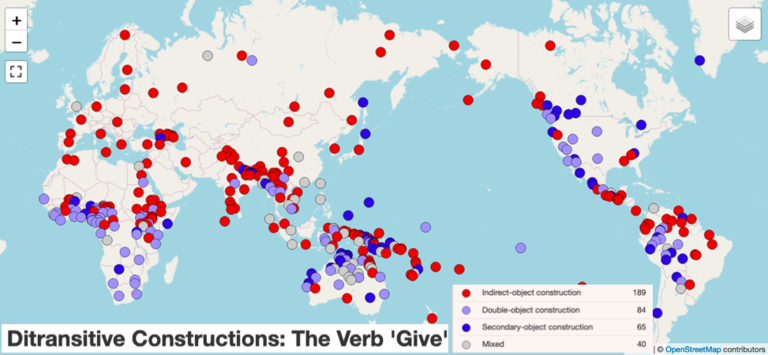
Martin Haspelmath is a Senior Research Scientist at the Department of Linguistic and Cultural Evolution at the Max Planck Institute for Evolutionary Anthropology (MPI-EVA), Leipzig, and an honorary (adjunct) professor at Leipzig University. His research focuses on comparative linguistics, language universals, and typology, particularly in syntactic and morphological systems. He co-edited the World Atlas of Language Structures (2005/2013) and co-founded Language Science Press . Education: PhD in Linguistics, Freie Universität Berlin (1990–1993) MA in Linguistics, University of Cologne and University at Buffalo (1985–1989) Undergraduate studies in Linguistics, University of Vienna (1983–1985) Research Interests: Haspelmath investigates global grammatical diversity, form-function correspondences, and universals in syntax, morphology, and lexical systems. His work emphasizes comparative concepts for cross-linguistic analysis and critiques traditional grammatical categories. Grants & Projects: ERC project leader at Leipzig University (2015–2020) Co-creator of Grambank , an open-access database of grammatical structures Leading initiatives for open-access publication and linguistic data sharing Labs/Teams: Active in the MPI's Department of Linguistic and Cultural Evolution, collaborating on projects like APICS (Atlas of Pidgin and Creole Language Structures) and ValPal (Valency Patterns Leipzig).