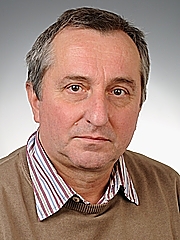
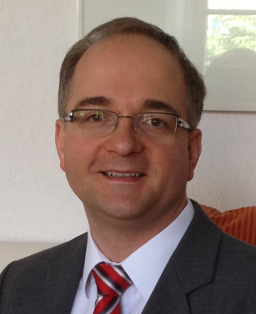
Rüdiger Weiner is a Professor of Scientific Computing at the Institute of Mathematics, Faculty of Natural Sciences II - Chemistry, Physics and Mathematics, Martin-Luther-Universität Halle-Wittenberg. He specializes in numerical methods for differential equations and leads teaching in numerical mathematics across all mathematical programs. His research focuses on linearly implicit methods, Krylov subspace techniques, parallel methods, and peer methods for solving ODEs, DAEs, PDEs, and DDEs. He co-organizes the international NUMDIFF conference series and contributes to projects such as the Saxony-Anhalt Research Portal. Further details are available on his personal website.
Dr. Veronika Singer is a Postdoctoral Researcher (Akademische Rätin a.Z.) at the Chair of Statics and Dynamics, Technical University of Munich, working under Prof. Dr.-Ing. habil. Roland Wüchner since October 2024. Previously, she served as an Academic Councillor at the Chair of Structural Analysis under Prof. Dr.-Ing. Kai-Uwe Bletzinger from December 2020 to September 2024, and as a Research Assistant from April 2017 to November 2020. Her educational background includes: M.Sc. in Civil Engineering from Technical University of Munich (2014-2017), with thesis on 'Detailed lateral-torsional buckling investigations of steel profiles and frame systems' B.Sc. in Civil Engineering from Technical University of Munich (2010-2014), with thesis on 'Beam elements for linearly variable cross-sections' Dr. Singer's research focuses on advanced computational methods for structural analysis, particularly the Material Point Method (MPM) and its applications in natural hazard simulation. She has pioneered innovative coupling strategies between MPM and Finite Element Method (FEM), as well as MPM and Discrete Element Method (DEM), to address complex multiphysics problems involving large deformations. Her work has significant applications in simulating granular mass flows and designing protective structures against natural disasters, contributing to improved infrastructure resilience. Her publication record shows a consistent trajectory of high-impact research in computational mechanics, with a concentration on partitioned coupling approaches that enable more efficient and accurate simulations of complex engineering problems. The research demonstrates increasing sophistication in handling boundary conditions, large deformations, and multiphysics interactions. Her scientific contributions have been recognized with multiple teaching awards: Doce et Delecta, 3rd prize for Statics 1 in the 'NextGen & Young Talents' category (July 2025) Doce et Delecta, 1st Prize for Statics 2 (July 2024) Certificate of University Teaching at Bavarian Universities (December 2022) Multiple previous Doce et Delecta awards (2018, 2019) Dr. Singer actively supervises student theses across computational mechanics topics, with over 20 completed projects ranging from element formulation to natural hazard simulation. She is involved in research projects including CoDA, MistralWind, WINSENT, and FlexWing, focusing on advanced computational methods for structural analysis and natural hazard mitigation. She is an integral member of the Chair of Statics and Dynamics research team, collaborating on developing more reliable simulation tools for civil engineering applications, particularly in natural hazard contexts. Her work bridges theoretical computational mechanics with practical engineering solutions for infrastructure protection.
Dr. Petru Cioica-Licht is an Assistant Professor (Akademischer Rat) at the Institut für Mathematik, Universität Kassel, specializing in Stochastic Analysis and Applied Mathematics. His research focuses on stochastic partial differential equations (SPDEs), regularity theory in functional spaces (Sobolev/Besov), and numerical methods for high-dimensional problems. He holds a PhD from Philipps-Universität Marburg (2010-2013) and has held positions at the University of Otago (New Zealand) and the University of Duisburg-Essen. His work bridges theoretical analysis and computational approaches, addressing challenges in stochastic integration, domain geometry effects, and adaptive numerical schemes. Professional History: Since 2021 – Academic Council Member (Akademischer Rat), Universität Kassel. 2019–2021 – Researcher in Stochastic Analysis at Universität Duisburg-Essen. 2017–2018 – Lecturer (Assistant Professor) at University of Otago. 2016–2017 – Postdoctoral Fellow funded by the Marsden Fund (New Zealand). 2014–2015 – Postdoc in DFG-funded project on SPDE regularity in quasi-Banach spaces. Research Interests: SPDEs on non-smooth domains, regularity theory in weighted spaces, numerical approximation of high-dimensional PDEs, and adaptive wavelet methods. His work emphasizes the interplay between stochastic processes and functional analytic techniques, particularly in analyzing solution regularity and developing efficient computational frameworks. Publications Trends: Recent articles address Sobolev/Besov regularity for SPDEs on angular domains, stochastic integration in quasi-Banach spaces, and overcoming the curse of dimensionality via deep neural networks. Earlier work includes Besov regularity for Navier-Stokes equations and convergence analysis of adaptive Rothe methods. Grants & Funding: Recipient of DFG and Marsden Fund support for projects on SPDE regularity and stochastic fluctuations. Active contributor to collaborative research in numerical analysis and stochastic processes. Labs/Teams: Part of the Analysis and Applied Mathematics group in Stochastics at Universität Kassel, focusing on interdisciplinary applications of stochastic and functional analytic methods.
Thorsten Raasch is a Professor of Numerical Mathematics at the Institute of Mathematics, Johannes Gutenberg University Mainz, Germany. He is affiliated with the Department of Physics, Mathematics, and Computer Science, and leads research in numerical analysis, particularly adaptive methods for PDEs and inverse problems. Research Interests: His work focuses on adaptive discretization methods for partial differential equations and inverse problems, non-smooth numerical optimization , wavelet systems , multilevel frames , and GPGPU computing . These interests are deeply rooted in applied and computational mathematics, with applications in scientific computing and engineering. The most recent articles show a strong trend in developing adaptive wavelet-based numerical schemes for solving inverse and stochastic PDEs, with a particular emphasis on sparsity, convergence analysis, and preconditioning. His publications span high-impact journals in numerical analysis and inverse problems, indicating sustained scholarly activity. Teaching: He has taught a variety of courses including Fundamentals of Numerics, Convex Optimization, Numerical PDEs, Spectral Methods, and advanced seminars on topics like semi-smooth Newton methods and reduced basis methods. Thorsten Raasch earned his doctorate in 2007 from Philipps University of Marburg and has held academic positions at JGU Mainz, the University of Siegen, and the University of Rostock. He was appointed W2 Professor at JGU Mainz in 2015 and previously held a junior professorship there. No scientific awards are mentioned in the provided texts. Advising and Grants: While no students or grants are explicitly listed, his role as a professor and active researcher suggests involvement in supervising graduate students and participating in research projects, possibly within the 'Mathematics of Computation' research network. Labs and Teams: He is part of the Numerical Mathematics Working Group at JGU Mainz and contributes to the 'Mathematics of Computation' research network, indicating collaboration within a structured research environment.
Prof. Dr. Felix Lindner is a Professor in the Department of Analysis and Applied Mathematics at the University of Kassel. His research focuses on stochastic partial differential equations (SPDEs), numerical analysis of stochastic processes, and their applications in computational mathematics and mechanics. He holds a PhD in Mathematics from Dresden and has contributed extensively to the study of SPDE regularity, numerical schemes for stochastic dynamics, and convergence analysis of approximation methods. Research Interests: Stochastic Analysis and Numerics Stochastic Partial Differential Equations (SPDEs) Numerical Methods for PDEs/SDEs Convergence and Stability of Numerical Schemes Applications in Material Science and Mechanical Engineering Recent Publications Trends: Advances in weak and strong convergence rates for SPDE approximations Stochastic modeling of fiber dynamics and composite materials Development of adaptive numerical methods for SPDEs Analysis of singular behavior in stochastic heat equations Students: Current doctoral advisees include Quinten Kürpick, Manuel Lorenz, Felipe Trolldenier, and P. Tobias Werner. Former student Saeed Hadjizadeh completed his research under Lindner's supervision. Labs/Teams: Lindner leads a research group focused on stochastic computational methods, collaborating with industry partners on fiber dynamics modeling and numerical analysis of mechanical systems.