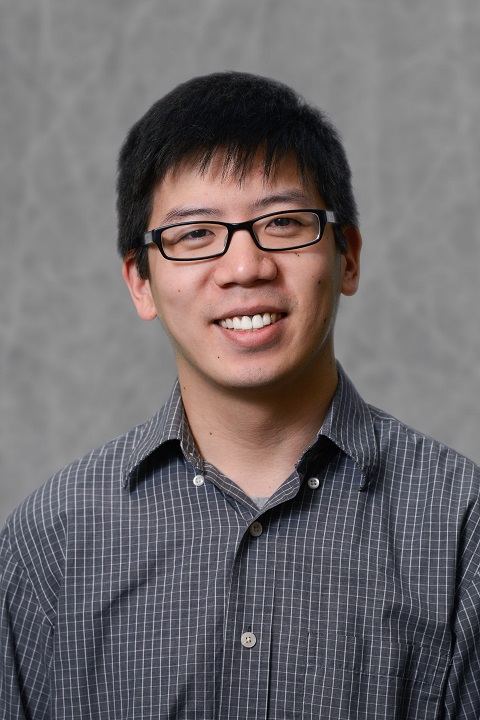
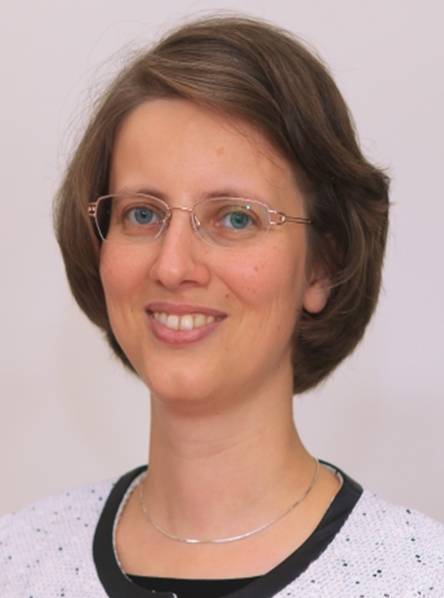
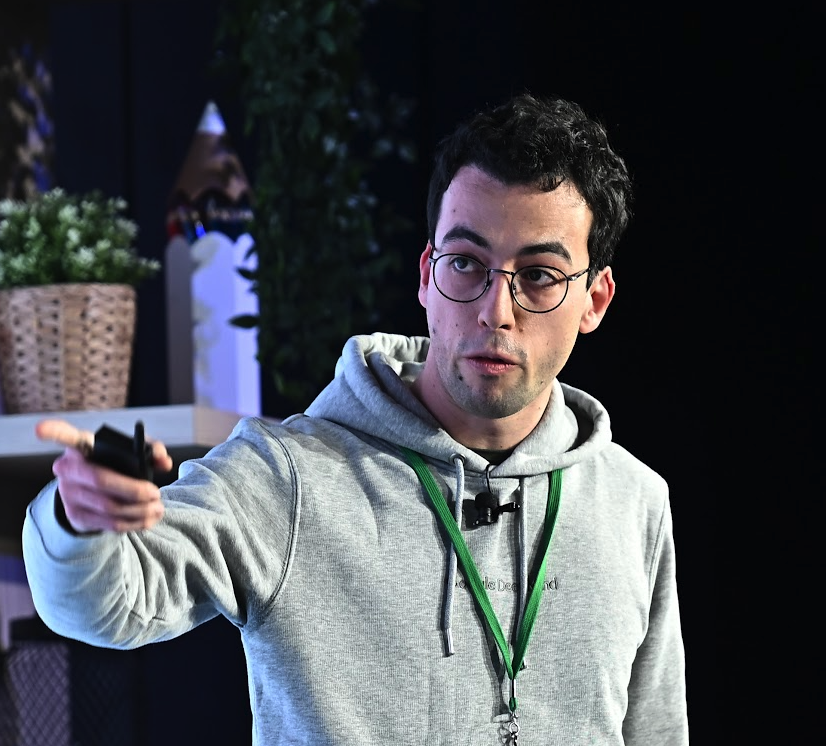
Ricky Ini Liu is an Associate Professor in the Department of Mathematics at the University of Washington. Previously, he held positions at North Carolina State University, the University of Michigan, and the University of Minnesota. He earned his Ph.D. in Mathematics from MIT in 2010 under Alexander Postnikov. His research focuses on algebraic combinatorics, particularly its intersections with algebraic geometry, combinatorial geometry, and representation theory. Key interests include Schubert polynomials, polytopes, Hopf algebras, and Kronecker coefficients. He has contributed to foundational work on birational rowmotion, Gelfand-Tsetlin polytopes, and Fomin-Kirillov algebras. Liu has taught a wide range of courses at UW, including special topics in dynamical algebraic combinatorics, combinatorial theory, and problem-solving. He has also been a key instructor at the Mathematical Olympiad Summer Program since 2007 and mentored undergraduates in research programs at the University of Minnesota, Duluth. His publications span high-impact journals like Selecta Mathematica and Journal of Combinatorial Theory , with recent work addressing topics such as determinantal formulas for Schubert polynomials and applications of flow polytopes to diagonal harmonics. Though no specific awards are listed, his extensive publication record and academic roles reflect significant contributions to combinatorial mathematics.
Christopher Potts is Professor and Chair of Linguistics at Stanford University, with a courtesy appointment as Professor of Computer Science. He serves as Director Emeritus of the Stanford Center for the Study of Language and Information (CSLI) and leads the Pragmatic Enrichment & Contextual Interface Lab. His work bridges theoretical linguistics and computational approaches to language understanding. Education: B.A. in Linguistics from New York University (1999) Ph.D. in Linguistics from University of California, Santa Cruz (2003) Potts' research focuses on how computational methods can illuminate linguistic phenomena, particularly in the areas of semantics, pragmatics, and sentiment analysis. His work explores how emotion is expressed in language and how linguistic production and interpretation are influenced by context. He has made significant contributions to understanding conventional implicatures, sentiment analysis frameworks, and the application of neural networks to linguistic problems. His recent work has increasingly focused on the interpretability of large language models and the development of frameworks like DSPy for building reliable AI systems. An analysis of Potts' recent publications reveals a strong trend toward the intersection of linguistic theory and practical AI applications. His work spans theoretical linguistics (e.g., compositionality, preposing constructions), neural network interpretability, and practical NLP systems (e.g., ColBERT, DSPy). The research demonstrates consistent focus on making language models more transparent, controllable, and linguistically informed, with particular attention to how context shapes meaning. Scientific Awards: Best Paper Award at 2024 ACL for 'Mission: Impossible Language Models' Outstanding Paper Award at 2024 ACL for 'CausalGym' ACL Test of Time Award 2023 Dean's Award for Distinguished Teaching (2015-2016) Best New Data Set or Resource Award at 2015 EMNLP Potts has secured numerous research grants as PI or Co-PI from major organizations including Google, Amazon, NSF, Office of Naval Research, and Stanford's HAI institute. His current projects focus on evaluation of retrieval-augmented generation systems, LLM-mediated communication in organizations, interpretability techniques for language models, and frameworks like DSPy for building next-generation AI systems. He has mentored numerous researchers who have gone on to make significant contributions in NLP and computational linguistics. As Director of CSLI (2013-2020) and current Chair of Linguistics at Stanford, Potts has played a key leadership role in shaping interdisciplinary research at the intersection of language, computation, and cognition. His Pragmatic Enrichment & Contextual Interface Lab continues to be a hub for innovative research combining formal linguistic theory with cutting-edge computational methods.
Tanja Eisner is a Professor at the University of Leipzig , affiliated with the Institute of Mathematics. Her work bridges functional analysis and operator theory with dynamical systems and ergodic theory . Research Interests : Functional analysis and operator theory Dynamical systems and ergodic theory Applications to number theory and additive combinatorics Recent Publications (15 most recent): Her articles focus on ergodic theorems, stability of operators, and connections between dynamics and number theory, with keywords spanning Mathematics , Operator Theory , Dynamical Systems , and Harmonic Analysis . Notable subfields include multiple recurrence , nilsystems , automatic sequences , and Wiener's lemma . Teaching & Collaboration : Organized miniworkshops on operator-theoretic aspects of ergodic theory in Leipzig, Wuppertal, Kiel, Feldkirch, and Tübingen Co-authored books with Bálint Farkas, Markus Haase, and Rainer Nagel Co-organized seminars like the Internet Seminar on Ergodic Theorems
Patrick Allen is an Associate Professor in the Department of Mathematics and Statistics at McGill University, where he contributes to research in number theory and related fields. He is affiliated with the Montreal Number Theory Group and the Centre Interuniversitaire en Calcul Mathématique Algébrique (CICMA), focusing on areas such as Galois representations, automorphic forms, and algebraic number theory. His work bridges algebraic geometry and arithmetic, with a particular emphasis on modularity lifting theorems and deformation theory. Allen's research interests include the study of CM fields, modular forms, and elliptic curves, alongside investigations into the Langlands program and p-adic methods. He has published extensively on topics such as potential automorphy, monodromy, and adjoint Selmer groups. His contributions address questions in arithmetic algebraic geometry and cohomological automorphic forms, often intersecting with representation theory. While his articles span over 20 years, recent work (2020–2023) emphasizes the modularity of Galois representations over CM fields and the application of automorphic techniques to solve problems in number theory. Allen’s research often involves collaboration with international experts in algebraic number theory and arithmetic geometry. Scientific Awards: None explicitly listed in the provided materials. Advising & Grants: No formal advisees or grant details are listed in the text. His affiliations with CICMA suggest participation in collaborative research initiatives, though specific grants are not mentioned. Labs/Teams: Active member of the Montreal Number Theory Group and CICMA, contributing to inter-university collaborative projects in algebraic number theory.
Prof. Dr. Gerold Alsmeyer is a faculty member at the Institute of Mathematical Stochastics, Department of Mathematics and Computer Science, University of Münster. He is an active researcher with a focus on stochastic processes, particularly stochastic fixed-point equations and iterated function systems. His work is supported by his role as an Investigator in Mathematics Münster in the project EXC 2044 - C1: Evolution and asymptotics. His primary research interests include the theory of stochastic processes, branching processes, Markov random walks, renewal theory, and the asymptotic analysis of random structures such as random trees and polytopes. He has made significant contributions to the understanding of fluctuation theory, perpetuities, and the smoothing transform. His recent publications (2017–2023) reveal a sustained focus on theoretical probability, with recurring themes in random difference equations, iterated function systems, and limit theorems for stochastic processes. The work spans pure mathematical theory and applications in mathematical biology and combinatorics, indicating a broad yet deep research profile. Prof. Alsmeyer has supervised numerous doctoral and master’s students, including Viet Hung Hoang, Christopher Eick, Philipp Godland, and Fabian Buckmann, whose dissertations cover topics in branching processes, random walks, and stochastic fixed-point equations. He has no listed scientific awards in the provided texts. He teaches courses in probability theory, mathematical statistics, branching processes, and stochastic recursion equations, demonstrating a strong commitment to academic mentoring and education.
Junier Oliva is an Assistant Professor in the Department of Computer Science at the University of North Carolina at Chapel Hill and Lead Faculty of the Master of Applied Data Science program. His research focuses on machine learning, artificial intelligence, and nonparametric statistics, particularly in high-dimensional density estimation, sequential modeling, and learning from complex/structured data. He holds a B.S., M.S., and Ph.D. in Computer Science from Carnegie Mellon University, with prior industry experience at Yahoo! and Uber ATG. Research Interests: Machine learning, artificial intelligence, nonparametric statistics, deep learning, statistical data mining, signal processing, kernel methods, and scalability. His work bridges machine and human learning via collective approaches, emphasizing simple yet flexible models for massive datasets. Awards/Grants: $592K AIM-AHEAD/NIH Grant for Human+AI Collaboration $594K NSF Grant for Scientific Discovery $500K NSF Grant for 'Machine Detectives' Project ACM BCB Best Paper Award (2022) for transparent single-cell classification work Labs/Teams: Director of the LUPA Lab, which develops machine learning techniques for holistic data understanding across domains like healthcare, earth science, and computer vision.
Pierre Marion is a Researcher at INRIA Paris, working within the Sierra research team since September 2025. His work focuses on the theoretical foundations of deep learning and he is beginning to explore applications of AI in mathematics. Marion has established collaborations across multiple institutions including EPFL, Sorbonne Université, and Google DeepMind. His educational background includes: Engineering degree from École polytechnique (2015-2018) with specialization in Applied Mathematics Master's degree from Sorbonne Université (2019-2020) PhD from Sorbonne Université (2020-2023) under the supervision of Gérard Biau and Jean-Philippe Vert Postdoctoral research at EPFL (2024) supervised by Lénaïc Chizat Marion's research interests primarily focus on the theory of deep learning, where he investigates the optimization and statistical properties of various neural network architectures. His work spans from shallow networks to complex generative models, with a particular emphasis on understanding the mathematical foundations that govern deep learning performance. Recently, he has begun exploring applications of AI in mathematical research, aiming to bridge the gap between theoretical machine learning and mathematical discovery. His research often combines rigorous theoretical analysis with practical implications for training deep neural networks. Analysis of Marion's recent publications reveals several key trends in his research. He has made significant contributions to understanding the role of large learning rates in optimization dynamics, demonstrating how they can accelerate convergence in logistic regression and prevent memorization in score-based generative models. His work on attention mechanisms has provided theoretical guarantees for their effectiveness in specific tasks like single-location regression and clustering. Additionally, Marion has extensively studied the connections between residual networks and neural ordinary differential equations , establishing generalization bounds and exploring scaling properties in the large-depth regime. His earlier work included contributions to natural language processing and quasi-Monte Carlo methods, reflecting a broad mathematical foundation that informs his current deep learning research. Marion has received several notable scientific awards: Runner-up PhD Award of AFIA (French Association for Artificial Intelligence) in 2024 Google PhD Fellowship in 2022 Ecole polytechnique Grand Prize of Research Internships in 2018 As an advisor, Marion currently supervises PhD student Yu-Han Wu (since 2024), with whom he has co-authored multiple publications on large learning rates and denoising score matching. Previously, he co-supervised several Master's students including Seorim Park, Yerkin Yesbay, and Nathan Doumèche. Marion has been actively involved in the machine learning community through conference organization (NeurIPS@Paris meetups), session chairing (ICSDS 2022), and extensive reviewing activities. He has served as a reviewer for top journals including JASA and Annals of Statistics, and conferences including NeurIPS and ICLR, where he was recognized as a top reviewer at NeurIPS 2023. Marion is a member of the Sierra research team at INRIA Paris, which focuses on machine learning theory and applications. He has also collaborated with researchers at CREST (Center for Research in Economics and Statistics), as evidenced by his participation in seminars organized by Anna Korba and Karim Lounici. His work often bridges theoretical computer science, statistics, and applied mathematics, reflecting the interdisciplinary nature of modern machine learning research.
Vitaly Bergelson is a Professor of Mathematics and Physical Sciences at The Ohio State University, affiliated with the Department of Mathematics within the College of Arts and Sciences. His work focuses on Ergodic Theory , Combinatorics , Ergodic Ramsey Theory , Polynomial Szemerédi Theorems , and Number Theory . He holds a PhD from the Hebrew University of Jerusalem (1984). His research explores the interplay between ergodic systems, combinatorial structures, and number-theoretic phenomena. Notable contributions include polynomial extensions of Szemerédi's theorem and foundational work on ergodic Ramsey theory. Recent articles address topics like multiplicative functions, Diophantine approximations, and quasirandom group structures. His work often bridges abstract mathematical frameworks with concrete combinatorial problems, yielding applications in additive combinatorics and symbolic dynamics. Publications highlight advancements in recurrence properties, uniform distribution, and the structure of algebraic dynamical systems. Collaborations with scholars like A. Leibman, N. Hindman, and J. Moreira underscore his interdisciplinary approach. His research is disseminated through top-tier journals such as Inventiones Mathematicae and Journal d'Analyse Mathématique .
Peter A. Tass is a Professor of Neurosurgery at Stanford University's School of Medicine, where he leads the Tass Lab within the Department of Neurosurgery. His research focuses on developing groundbreaking neuromodulation techniques designed to impact the course of neurological diseases including Parkinson's disease, stroke, epilepsy, and tinnitus. The Tass Lab is part of several prestigious Stanford initiatives including Bio-X, the Wu Tsai Human Performance Alliance, the Maternal & Child Health Research Institute (MCHRI), and the Wu Tsai Neurosciences Institute. MD from Universities of Ulm and Heidelberg, Germany (1989) PhD in Physics from University of Stuttgart, Germany (1993) Diploma (master's degree) in Mathematics from University of Stuttgart, Germany (1993) Habilitation thesis in Physiology from RWTH Aachen University, Aachen, Germany (2001) Dr. Tass's primary research interests center around computational neuroscience approaches to understanding and treating neurological disorders. His lab pioneers neuromodulation techniques based on thorough computational modeling that employs dynamic self-organization, plasticity, and other neuromodulation principles to produce sustained therapeutic effects after stimulation. He specifically focuses on developing stimulation methods that cause sustained neural desynchronization by unlearning abnormal synaptic interactions. His work spans both invasive techniques like deep brain stimulation and non-invasive approaches such as vibrotactile and acoustic stimulation. Current projects involve developing novel therapies for Parkinson's disease, epilepsy, tinnitus, and other neurological conditions using comprehensive computational neuroscience methods derived from non-linear dynamics, statistical physics, and numerics. Analysis of Dr. Tass's recent publications reveals a strong focus on coordinated reset stimulation techniques, neural network modeling with plasticity mechanisms, and computational approaches to brain stimulation. His work consistently bridges theoretical computational neuroscience with clinical applications, particularly for Parkinson's disease treatment. A significant portion of his recent research examines how stimulation parameters, sequences, and timing affect long-lasting desynchronization effects in neural networks. His publications demonstrate an interdisciplinary approach combining physics, mathematics, neuroscience, and clinical medicine to develop novel therapeutic interventions. Member of the European Academy of Sciences and Arts (2012) Nicolaus August Otto Innovation Prize (2011) German Innovation Award in Medicine (2011) Rapid Response Innovation Awards from The Michael J. Fox Foundation (2009, 2010) Runner-up for the German future prize (2006) Erwin Schrödinger prize (2005) Fritz Winter prize (2000) Dr. Tass actively mentors a diverse team of researchers including staff scientists, postdoctoral fellows, clinician-scientists, and students. His lab currently includes researchers with backgrounds in physics, computational neuroscience, biomedical engineering, and clinical neurology. The lab is involved in multiple clinical trials, including studies on coordinated reset spinal cord stimulation and vibrotactile coordinated reset stimulation for Parkinson's disease. His research is supported by various funding sources including foundations focused on neurological disorders and innovation in medical technology. Dr. Tass collaborates extensively with both internal Stanford researchers and external collaborators worldwide. The Tass Lab at Stanford is a multidisciplinary research group comprising physicists, neuroscientists, engineers, and clinicians working together to develop novel neuromodulation therapies. The lab team includes staff scientists like Justus Kromer (theoretical physicist), postdocs like Daniel Ehrens and Kanishk Chauhan, clinician-scientists like Tina Munjal, and clinical research coordinators. The lab maintains active collaborations with Stanford colleagues across departments including Kwabena Boahen, Vivek P. Buch, and Jaimie Henderson, as well as external collaborators like Alexander Neiman and Kęstutis Pyragas. Current research directions include developing non-invasive vibrotactile treatments for Parkinson's disease, acoustic coordinated reset therapy for tinnitus, and responsive deep brain stimulation for conditions like loss-of-control eating.
Donald Robertson is a Lecturer in Pure Mathematics at the University of Manchester, specializing in ergodic theory with applications to additive combinatorics. His work connects measurable dynamics with combinatorial number theory problems. Research explores ergodic properties of interval exchange transformations, sumset configurations in infinite sets, and equidistribution in homogeneous dynamics. Recent publications address Erdős' sumset conjecture (2022), saddle connection distributions (2023), and disjointness in measurable group actions. He teaches measure theory and ergodic theory courses, employing problem-based learning through weekly take-home tests. Coursework emphasizes Lebesgue integration, ergodic theorems, and connections between dynamics and combinatorics.
Mikael Johansson is a Professor at Kungliga Tekniska Högskolan (KTH), specializing in Control Technology . He teaches and coordinates courses such as Distributed Optimization (FEL3311) and various advanced-level degree projects in computer science, electrical engineering, and systems engineering. His research spans Control Systems , Machine Learning , and Optimization , with a focus on asynchronous algorithms, federated learning, and applications in energy systems and construction. His work includes 15 recent publications on topics like neural networks, distributed optimization, and battery technology. Notable areas of contribution are in asynchronous learning, federated learning with privacy constraints, and quasi-Newton methods for optimization. His research bridges theoretical advancements with practical applications in urban design, healthcare, and autonomous systems.
Jan Draisma is a full professor of Mathematics at the University of Bern and a part-time full professor of Applied Algebra and Geometry at Eindhoven University of Technology (TU/e), where he is affiliated with the Department of Mathematics and Computer Science, specifically in Discrete Algebra and Geometry and Coding Theory and Cryptology. He obtained his Master's and Ph.D. degrees from TU/e cum laude and held a postdoctoral position at the University of Basel (2002–2005). He returned to TU/e as an assistant professor, later advancing to associate professor (2011–2016), and served as a part-time full professor at VU Amsterdam (2015–2016). His research focuses on the interplay between combinatorics, statistics, and algebraic geometry. Key areas include tropical geometry, algebraic statistics, symmetric systems of polynomial equations in infinitely many variables, and representation stability. His work often explores the structure of infinite-dimensional algebraic objects and their finite approximations. The most recent publications highlight trends in polynomial functors, topological Noetherianity, amoebas of linear spaces, and the geometry of tensor representations. These works reflect a deep integration of algebraic geometry with combinatorics and category theory, emphasizing stabilization phenomena and symmetry in algebraic structures. NWO Vici Award: Stabilisation in Algebra and Geometry (2015) NWO Vidi Award: Finite thanks to symmetry (2010) Draisma has received significant research funding, including the NWO Vidi and Vici grants, and two NWO Free Competition grants (2008, 2012). He has supervised 16 students and is actively involved in the academic community as an associate editor for Experimental Mathematics, SIAM Journal on Applied Algebra and Geometry, and Linear and Multilinear Algebra. He has held leadership roles in major conferences such as MEGA 2015 and SIAM AG 19. He is affiliated with the research groups in Discrete Algebra and Geometry and Coding Theory and Cryptology at TU/e and leads research activities centered on algebraic methods in discrete mathematics and statistics.
Daniela Calvetti is the James Wood Williamson Professor in the Department of Mathematics, Applied Mathematics, and Statistics at Case Western Reserve University. Her research focuses on large-scale scientific computing, computational inverse problems, uncertainty quantification, and predictive modeling in neuroscience, metabolism, and cellular physiology. She holds a PhD from the University of North Carolina-Chapel Hill. Her work integrates advanced mathematical techniques with biomedical applications, including brain energy metabolism modeling, MEG/EEG source reconstruction, and computational methods for medical imaging. Notable contributions include Bayesian hierarchical algorithms for inverse problems and interdisciplinary collaborations bridging mathematics with neuroscience and physiology. Recent research highlights include developing sparsity-promoting Bayesian models for tomography, computational frameworks for neuromuscular control variability, and predictive models of disease dynamics like post-pandemic COVID-19 recurrence. Her methodologies emphasize statistically inspired preconditioning and adaptive meshing techniques to enhance computational efficiency in solving complex inverse problems. Dr. Calvetti has published extensively across computational science, inverse problems, and biomedical applications. She leads a research group advancing interdisciplinary computational methods with applications in neuroscience, virology, and metabolic systems.
R.K. Shyamasundar is a Professor at the Indian Institute of Technology Bombay , with a focus on Real-Time and Reactive Programming, Logic Programming, Pi-Calculus, and Parallel Programs. Research spans formal verification, concurrency, and distributed systems. Key contributions include RT-CDL semantics, Esterel language extensions, and hybrid system controller synthesis. Scientific awards include JC Bose National Fellow, Fellowships at Indian Academy of Sciences and Indian National Science Academy, and Senior Membership in IEEE. His work involves collaborations with institutions like TCS Group and researchers such as Basant Rajan, N. Raja, and Deepak Kapur.
Associate Professor Zhidong Li is a prominent researcher at the Data Science Institute within the Faculty of Engineering and Information Technology at University of Technology Sydney (UTS), Australia. With over a decade of experience in data science and machine learning, he leads impactful research bridging theoretical advancements with practical applications across multiple critical infrastructure domains. Dr. Li earned his PhD from the University of New South Wales, Sydney, Australia, and previously served as a senior engineer at Data61, CSIRO (Commonwealth Scientific and Industrial Research Organisation), Australia's federal government agency for scientific research. His research spans machine learning, data mining, pattern recognition, image processing, and human-computer interaction with applications in water, gas, traffic, urbanization, visitor economy, agriculture, environment, finance, property market, railway, law, electric and health sectors. His work particularly focuses on developing interpretable AI models, temporal point processes, and practical applications for smart infrastructure management. His extensive publication record reveals strong thematic consistency in applying advanced machine learning techniques to infrastructure management problems, with particular emphasis on water systems. His research demonstrates progression from fundamental algorithm development toward increasingly sophisticated applications with real-world impact, especially in temporal modeling, graph neural networks, and fairness in AI systems. Scientific Awards 2022 R&D Excellence Award NSW Water Award 2021 UTS Medal for Research Impact for the Vice-Chancellor's Awards for Research Excellence 2018 Australian Museum Eureka Prize for Excellence in Data Science 2019 Victorian iAwards - Industrial & Primary Industries Merit for 'Predictive Analytics for Water Pipe Maintenance' Multiple AWA research innovation awards (NSW, National, QLD) Dr. Li actively supervises Masters and PhD students and leads numerous funded research projects across diverse sectors. His collaborative approach is evident through partnerships with water utilities, transport agencies, and various CRC projects focusing on Food Agility, Digital Finance, and Smartcrete. His work on the world's first independently-audited ethical talent AI in partnership with Reejig demonstrates his commitment to translating research into real-world solutions that address societal challenges while maintaining ethical standards.