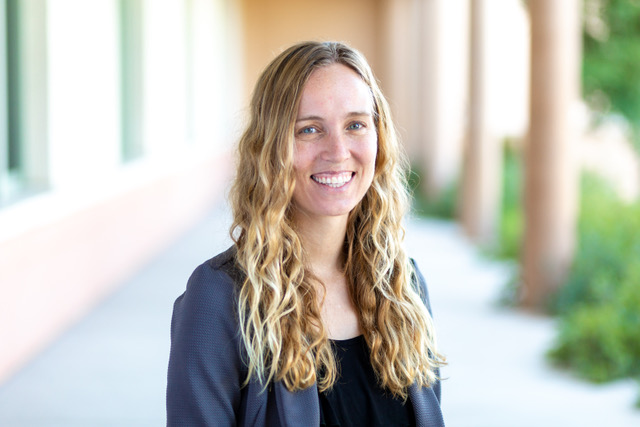
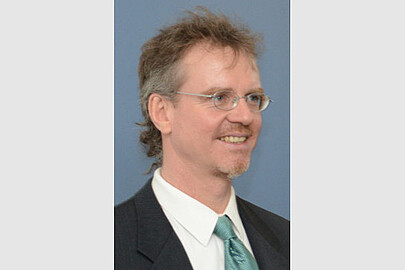
Yuri Faenza is an Associate Professor in the Department of Industrial Engineering and Operations Research at Columbia Engineering, with affiliations to the Data Science Institute (DSI) and Foundations of Data Science Center. His research bridges Discrete Optimization, Operations Research, and Computer Science, focusing on algorithmic theory and applications to Market Design (particularly School Choice) and Machine Learning. Key research areas include Knapsack , Matching , and Extended Formulations , with methodological work on polytope structures, greedy algorithms, and stochastic or semi-random models. His recent publications emphasize stable matching, optimization under uncertainty, and the intersection of discrete mathematics with data science. Scientific awards include the NSF CAREER award Meta Research Award . He has served on program committees for major conferences like ALGA, EC, APPROX, and IPCO, and is an Associate Editor for journals including Mathematical Programming and Discrete Optimization . Prior to Columbia, he held postdoctoral positions at the University of Brussels, EPFL, and University of Padua.
Amanda Bienz serves as an Assistant Professor in the Department of Computer Science at the University of New Mexico (UNM), where she leads the Scalable Solvers Lab and acts as faculty advisor for Women in Computing. Her academic roles include teaching operating systems and parallel computing courses while spearheading efforts to restructure New Mexico's CS4ALL curriculum for statewide computer science education expansion. Her research centers on overcoming communication bottlenecks in high-performance computing systems, specifically targeting the performance gap between emerging exascale hardware and real-world applications. Key focus areas include developing portable communication optimizations, enhancing MPI collective operations, creating topology-aware message passing extensions, and benchmarking heterogeneous architectures. Her work directly addresses critical challenges in scaling parallel applications through innovations in sparse solvers, neighborhood collectives, and node-aware communication strategies for GPU-accelerated systems. Analysis of her 2022-2024 publications reveals consistent emphasis on communication optimization across diverse HPC domains. Her research demonstrates particular expertise in irregular communication patterns, locality-aware algorithms, and performance modeling for heterogeneous architectures. Significant contributions include novel approaches to sparse dynamic data exchange, compressed linear algebra algorithms, and persistent communication techniques that reduce synchronization overhead in large-scale simulations. Scientific Awards: NSF CAREER Award for "Towards Exascale Performance of Parallel Applications" Dr. Bienz actively mentors students through the Scalable Solvers Lab, welcoming new researchers interested in high-performance computing. Her NSF CAREER grant provides substantial research funding supporting both technical innovation and educational initiatives. The CS4ALL curriculum restructuring project demonstrates her commitment to broadening computer science access throughout New Mexico's K-12 education system. The Scalable Solvers Lab develops open-source tools including the Raptor algebraic multigrid solver and MPI-Advance communication library. Current projects focus on benchmarking heterogeneous architectures (Summit/Lassen supercomputers), optimizing FFT implementations, and creating node-aware communication strategies for conjugate gradient methods. The lab maintains active GitHub repositories with substantial community engagement, including contributions to CUDA-aware MPI implementations and halo exchange libraries for multi-GPU systems.
Professor Gareth Taylor is a Professor of Power Systems and Director of the Brunel Interdisciplinary Power Systems (BIPS) Research Centre at Brunel University London's College of Engineering, Design and Physical Sciences. He serves as Module Leader for the MSc Sustainable Electrical Power program and has been actively involved with the university since May 2000, progressing from National Grid Post-doctoral Scholar to his current position as Professor (appointed in 2012). He previously served as Head of the Department of Electronic and Electrical Engineering from May 2019 to June 2023 and holds a Visiting Professor position at Imperial College London (2023-2026). Professor Taylor earned his BSc in Applied Physics from Royal Holloway College, University of London (1987), followed by an MSc in Scientific and Engineering Software Technology from the University of Greenwich (1992), and completed his PhD in Computational Solid Mechanics at the University of Greenwich in March 1997. His doctoral research focused on finite volume methods for material non-linearity within multi-physics frameworks. His research spans power systems engineering with particular emphasis on smart grid technologies, renewable energy integration, and advanced computational methods. Professor Taylor has contributed to over 250 research publications in areas including power system operation and management, reactive power control, voltage regulation, and high-performance computing applications in electrical power systems. His work addresses critical challenges in modern power systems, particularly those related to the integration of renewable energy sources and the development of more resilient grid infrastructure. Analysis of his recent publications reveals a strong focus on addressing contemporary power system challenges, particularly the integration of renewable energy sources, smart grid technologies, and advanced computational methods. His work spans from fundamental power system analysis to practical applications in grid operation, with increasing emphasis on cybersecurity aspects of power system monitoring and the challenges posed by reduced system inertia in grids with high renewable penetration. Senior Member of IEEE Fellow of the Institute of Engineering and Technology (FIET) Chartered Engineer Fellow of the Higher Education Academy (FHEA) UK Regular Member for CIGRE Study Committee D2 (2016-2022) Member of Strategic Advisory Group for CIGRE Study Committee D2 (2023) Professor Taylor has led numerous significant research projects including TDX-ASSIST (€5.2M), e-HIGHWAY2050 (€8.2M), and HiPerDNO (€5.4M), with funding from EPSRC, European Commission, National Grid, and other major organizations. His current research portfolio includes projects on novel decoupled active/reactive power oscillation response, digitalization of power systems operation, and examining net zero policy in European energy markets. He also directs the BIPS Research Centre, which focuses on interdisciplinary power systems research with strong industry connections.
Jeffrey R. O'Connell, DPhil is an Associate Professor in the Department of Medicine at the University of Maryland School of Medicine, with a secondary appointment in Epidemiology & Public Health. He has held his position at the University of Maryland since 2002, initially as an Assistant Professor (2002-2008) before being promoted to Associate Professor in 2009, a position he continues to hold. Additionally, he maintains a research appointment at the USDA Animal Genetics Improvement Laboratory where he has worked since 2007. Dr. O'Connell's educational background includes a BS in Mathematics from the University of Delaware (1979), an MS in Mathematics from Drexel University (1984), an MS in Computer Science from Drexel University (1993), and a D.Phil in Mathematical Biology from Oxford University (2000). His academic journey reflects a strong foundation in mathematics and computational methods that underpins his research career. Dr. O'Connell's research focuses on developing, implementing and applying methods to analyze genomic data in large pedigree and population data. His primary area has been human genetics, which expanded to animal genetics in 2007 with his appointment at the USDA Animal Improvement Laboratory. He is the developer of MMAP (Mixed Models for Analysis of Pedigree/Populations), a comprehensive software package implementing analysis options for genome-wide association, variance components estimation, linkage analysis, genotype imputation, genomic prediction, haplotyping, and mega analysis. His work extensively utilizes large pedigree data such as the Old Order Amish and Holstein cattle. Dr. O'Connell collaborates with numerous research consortia including the Genetics of Liver Disease (GOLD), the Genetic Factors for Osteoporosis (GEFOS), the Cohorts of Heart and Aging Research in Genetic Epidemiology (CHARGE) musculoskeletal, adiposity, and lipid groups, and the Gene-by-Lifestyle Interaction consortium. He is also a member of the TOPMed whole genome sequencing effort and has been heavily involved in developing analytical tools for cloud-based computing to run genome-wide association and rare variant analysis, generalized linear mixed models for binary and threshold traits, and multi- and correlated trait models for analysis of large omics data sets. His research has resulted in numerous high-impact publications spanning statistical genetics, genomic analysis methods, and applications to both human and animal genetics. His work bridges computational methodology development with practical applications in genetic epidemiology and animal breeding.
Amador García Ramos is a Permanent Contract Professor in the Department of Physical Education and Sports at the Faculty of Sports Sciences, University of Granada. His research focuses on strength training specificity, biomechanics, and physiological responses to exercise. His work spans multiple subfields: Resistance training adaptations Force-velocity profiling Neuromuscular performance Ocular pressure responses during exercise Virtual reality applications in physical training Strength assessment methodologies Recent publications analyze: Free-weight vs. machine-based training Velocity-based training metrics Supplementation effects on training outcomes Adapted physical activity for special populations Technical aspects of sprint and throwing performance
Matteo Acclavio is an Assistant Professor in Computer Science at the School of Engineering and Informatics, University of Sussex, affiliated with the Foundations of Software Systems (FoSS) research group. A logician specializing in proof theory and its applications to computer science, his work bridges mathematical logic with concurrency theory and process calculi. Education: PhD in Mathematics, Aix-Marseille University, France Master in Discrete Mathematics and Foundations of Theoretical Computer Science, Aix-Marseille University Master in Mathematics, Roma Tre University, Italy Bachelor in Mathematics, Roma Tre University His research focuses on graphical proof systems, linear logic, modal logic, and concurrency theory. Publications highlight contributions to deep inference, sequent calculus, and the intersection of logic with distributed systems. Recent work explores logical frameworks for concurrency, such as choreographic programming, and graphical models for proof systems. He teaches courses like Operating Systems and maintains active collaborations in theoretical computer science.
Avery Berman is an Assistant Professor in the Department of Physics at Carleton University and a Scientist at the University of Ottawa Institute of Mental Health Research (IMHR) at The Royal. His work focuses on advancing functional MRI (fMRI) techniques for high-resolution imaging of brain activity and physiology, with applications in neuroscience and mental health disorders. PhD in Biomedical Engineering and MSc in Medical Radiation Physics from McGill University Postdoctoral research at Harvard Medical School and the Martinos Center for Biomedical Imaging Research Interests include: High-resolution fMRI at 7 Tesla Biophysical modeling of vascular networks Quantitative biomarkers for oxygen metabolism PET-MRI hybrid imaging systems Neurovascular coupling in mental illness Scientific Awards include: NSERC Canada Graduate Scholarship (Master's) CIHR Canada Graduate Scholarship (Doctoral) CIHR Postdoctoral Fellowship (top 10/600 applicants) NSERC Postdoctoral Fellowship (top Physics section recipient) Research Funding from NSERC, CFI, and institutional support from Carleton University and IMHR. His lab develops the open-source BOLDsωimsuite software for fMRI signal modeling and collaborates with Canada-wide vascular training programs.
Matthias Becker is a Professor at the Institute for Practical Computer Science within the Faculty of Electrical Engineering and Computer Science at Leibniz University Hannover, where he has been a core member of the Human-Computer Interaction group since 2019. He serves as Internship Coordinator for Computer Science and Computer Engineering and holds key roles in the Computer Science Examination Board and Selection Committee, actively shaping academic governance and student development. His academic journey began with PhD studies at the University of Bremen (1996-2000) supported by a DFG grant, followed by a postdoctoral permanent position at Leibniz University Hannover (2000-2019), an Associated Assistant Professor role at École des Mines de Nantes (2000), and a Habilitation in Computer Science in 2013. This foundation enabled his transition to a full professorship in 2019. Becker's research spans Human-Computer Interaction, Simulation and Modeling, and Bio-inspired Computing, with applications in agriculture, renewable energy, and manufacturing. His work integrates distributed systems, optimization algorithms, and wireless sensor networks to solve complex real-world problems, such as greenhouse monitoring, wind farm logistics, and tire noise reduction. Recent publications reveal a strategic focus on practical validation of simulation models and cross-domain applications of nature-inspired algorithms. His 15 most recent publications (2018-2024) demonstrate consistent innovation in applying simulation techniques to offshore wind farm installation, agricultural pest management, and sports science. These works emphasize real-world validation, collaborative problem-solving, and the development of domain-specific optimization frameworks that bridge theoretical algorithms and industrial implementation. As Internship Coordinator, Becker facilitates critical industry-academia connections for students, while his examination board responsibilities ensure rigorous academic standards. His leadership in the Human-Computer Interaction group drives research on interactive systems for agriculture, energy, and health, with particular emphasis on user-centered design in complex operational environments like wind farm logistics and greenhouse automation.
Paola Lorenzon is an Associate Professor of Physiology at the University of Trieste 's Department of Life Sciences since 2002. She coordinates the International Master's Degree in Neuroscience , serves as Coordinator of the OPBA program , and holds key roles in multiple PhD cycles including Neuroscience and Cognitive Science (XXVIII to XXXVIII cycles) and Biology (SM50). Her research focuses on neuromuscular plasticity , aging effects, and microgravity adaptation mechanisms. Education : Bachelor's in Biological Sciences and PhD in Biochemistry from University of Trieste Research Experience : University of Milan, San Raffaele Milan, University of Ljubljana, University of Bonn Her research spans three main areas: neuromuscular junction plasticity , electrostimulation protocols for muscle regeneration, and Piezo1 ion channels in mechanotransduction. Current projects funded by the Italian Space Agency (MIAG, NEMUSY) investigate muscle atrophy in spaceflight and aging. Notable collaborations include working with Annalisa Bernareggi (electrophysiology), Marina Sciancalepore (electrostimulation), and Alessandra Bosutti (project coordination). Her lab employs primary satellite cell cultures , electrophysiology , and mechanotransduction studies to explore muscle regeneration mechanisms.
Eli Ben-Michael is an Assistant Professor in the Department of Statistics & Data Science and the Heinz College of Information Systems and Public Policy at Carnegie Mellon University. He is also affiliated with the CMU-NIST AI Measurement Science & Engineering Cooperative Research Center (AIMSEC). Previously, he was a Post-Doctoral Fellow at Harvard University in the Institute for Quantitative Social Science and the Department of Statistics. Ben-Michael's research focuses on developing statistical and computational methods to solve practical issues in public policy and social science research. His work brings together ideas from statistics, optimization, and machine learning to create methods for credible and robust causal inference and data-driven decision making. His research spans multiple domains including healthcare policy, criminal justice reform, reproductive health, and education. His scholarly work shows a strong emphasis on causal inference methodology, with particular attention to synthetic control methods, balancing weights, policy learning, and sensitivity analysis. His recent publications demonstrate applications across diverse fields including healthcare, economics, social policy, and criminal justice. Ben-Michael completed his PhD in Statistics from UC Berkeley and earned his undergraduate degree in Computer Science and Statistics from Columbia University. His technical expertise includes developing open-source software, with contributions to the R packages 'augsynth' and 'multical' for synthetic control methods and multilevel calibration.
Associate Professor Zhan Wu is a faculty member at the University of Sydney Business School, specializing in International Business. He holds a PhD from Nanyang Technological University in Singapore and has established himself as a leading researcher in international business, strategic management, and innovation in emerging markets and transition economies. His educational background includes BSc and MSc from Sichuan and PhD from Nanyang Technological University in Singapore. His academic journey has positioned him at the forefront of research examining how firms navigate complex institutional environments in developing economies. Professor Wu's research focuses on the intersection of international business, strategic management, and innovation in the context of emerging markets and transition economies. His work particularly examines the strategy of firms in and from emerging economies, OFDI and IFDI, competitive dynamics, green innovation and energy economics, entrepreneurship, and dynamic capabilities. His publications in top journals like Journal of Management Studies and Energy Economics demonstrate the theoretical and practical significance of his research, which has important implications for multinational corporations operating in developing economies and for understanding how emerging market firms can successfully expand globally. His extensive publication record shows a clear trajectory of research excellence across multiple domains of international business. A notable trend in his recent work is the growing emphasis on sustainability and green innovation within international business contexts, reflecting broader global concerns about environmental challenges. His 2024 and 2025 publications demonstrate continued research productivity with increasing attention to the intersection of artificial intelligence, new energy vehicles, and corporate sustainability strategies. Wayne Lonergan Outstanding Teaching Award (Early Career) valued at $10,000 Dean's Citation for Teaching Excellence USS Awards Research Excellence Award nomination (2024) Competitive research grant from China's NNSF (AUD80,000) Professor Wu has demonstrated significant leadership in academic service, serving as Associate Editor of Journal of Business Research and Senior Editor of Asia Pacific Journal of Management. He has secured research funding from China's National Natural Science Foundation and serves as an ARC assessor. In educational leadership, he has served as Learning and Teaching Associate, Undergraduate Program Coordinator for International Business, and Program Director for the Master of International Business, significantly contributing to curriculum development and student experience. As an academic ambassador for the Business School, Professor Wu has cultivated a strong global research network, including a visiting scholar position at Fudan University Management School in China. His research collaborations span multiple continents, reflecting the international nature of his scholarly interests in global business dynamics and the increasing interconnectedness of emerging and developed economies.
Florin Rusu is a Professor and Chair of the Department of Computer Science and Engineering at the University of California Merced, School of Engineering. He joined UC Merced in 2010 and has served in multiple administrative positions including as chair of the School of Engineering's Executive Committee and currently as chair of the Department of Computer Science and Engineering. His educational background includes a B.Eng. degree from the Technical University of Cluj-Napoca, Faculty of Automation and Computer Science (2004), and M.Sc. and Ph.D. degrees from the University of Florida in Computer Science (2008 and 2009). Rusu's research focuses on database systems and large-scale data management, with particular emphasis on designing infrastructure for Big Data analytics. His specific research areas include query processing and optimization, approximate and randomized algorithms, scalable machine learning, multi-dimensional array data management, and in-situ data processing. His work bridges theoretical aspects with practical system design issues. His research has been funded by multiple prestigious organizations including the US Department of Energy (DOE), National Science Foundation (NSF), California Department of Education, Hellman Foundation, LogicBlox, and TigerGraph. His recent publications show a continued focus on database query optimization, particularly around cardinality estimation, sketch-based methods, and innovative approaches to query plan generation. His work spans both theoretical contributions and practical implementations, with several projects transitioning into real-world database systems. Scientific Awards: DOE Early Career Award (2014) Hellman Faculty Fellowship (2013) Rusu has advised numerous graduate students through their Ph.D. and Master's programs, with many going on to successful careers at major tech companies (Google, Meta, TigerGraph) and academic positions. His research group has secured substantial funding from NSF (COMPASS project 2020-2025), DOE Early Career Award (2014-2021), TigerGraph, California Department of Education, and Hellman Foundation. His research group maintains active projects in Database Query Optimization, Scalable Gradient Descent Optimization, Array Databases, In-Situ Data Processing, GLADE, Online Aggregation, and Sketches, demonstrating a comprehensive research program spanning multiple aspects of database systems and large-scale data management.
Kimberley O'Neill serves as a Lecturer in Design-Communication Design at The Glasgow School of Art. Her practice encompasses visual arts, media arts, and cross-disciplinary methodologies, often exploring intersections between installation art, digital media, and conceptual frameworks. 2023 : Featured in Berwick Film Festival through Screentime exhibition and screening. 2019 : Presented solo exhibition 'Enigma Bodytech' and participated in Artists Moving Image Festival. 2018 : Coordinated 'Rough Music Workshop' and exhibited at Plymouth Arts Centre. 2017 : Showcased 'Circuits of Bad Conscience' and contributed book chapter 'Slippery Women'. 2016 : Participated in 'Conatus TV' and 'Line of Sight' group exhibition. 2015 : Collaborated on 'Nos Algae's' and 'Amygdala N.O.S' projects. Her research focuses on experimental visual practices that synthesize technology, environmental themes, and spatial interventions. Recent works like 'Screentime' (2023) and 'Porpoise Escape' (2017) demonstrate her interest in abstract narrative structures and digital-physical intersections. Collaborative projects such as 'Visualising the Rite' (2013) highlight educational methodologies that bridge traditional and contemporary art approaches. Exhibition activity spans diverse contexts including Edinburgh Art Festival (2016), South London Gallery (2015), and Glasgow's Tramway (2019). While specific awards and student mentorship data aren't provided, her extensive exhibition record indicates significant contributions to contemporary art practices through installations, video works, and participatory formats.
Leonhard Summerer is an Associate Professor at the Faculty of Mathematics, Department of Mathematics . His research primarily focuses on Diophantine Approximation , Geometry of Numbers , and Parametric Approximation . His work explores the Approximation Property in parametric settings, Lattice Theory , and Linear Dependence in number theory. Recent publications include studies on Jarník’s identity, simultaneous approximation to multiple reals, and geometric interpretations of number-theoretic problems. He has authored numerous peer-reviewed articles and contributed chapters to educational books such as 77-mal Mathematik für Zwischendurch , emphasizing mathematical outreach and pedagogical innovation . Active in academic discourse, he has delivered talks on topics like Packings and Tilings in Z and Simultane Approximation m reeller Zahlen since 2006.
Ross Horne is a Senior Lecturer in the Department of Computer & Information Sciences at the University of Strathclyde, Glasgow, United Kingdom. He is a member of the StrathCyber and Mathematically Structured Programming research groups. Education: PhD (University of Southampton, 2012), BA (Oxford University, 2005) Prior Appointments: Research Fellow at University of Luxembourg (2018-2023), Senior Research Fellow at Nanyang Technological University (2015-2018), Associate Professor at Kazakh-British Technical University (2012-2015) Research Interests: Dr. Horne's work focuses on security and privacy protocols for digital systems, particularly addressing threats in payment technologies, ePassports, and decentralized identity management (e.g., Solid protocol). His theoretical contributions bridge concurrency theory, proof theory, and logic through applications to security verification and process calculi. Developed formal models for unlinkability in EMV payment protocols Created intuitionistic logical frameworks for process equivalence Explored graphical proof systems beyond formulaic representations Investigated legal-compliant AI for space systems (CubeSat anomaly detection) Scientific Contributions: He has published extensively in top venues including ACM CCS, IEEE CSF, LICS, and CONCUR. His 2017 CONCUR best paper introduced intuitionistic characterizations of bisimilarity. Principal Investigator for EU COST Action on Distributed Knowledge Graphs Co-developed privacy models adopted in Luxembourg parliamentary responses Advising: Currently accepting PhD students with strong mathematical and computer science skills for research in security/privacy of emerging systems. Former student Semen Yurkov completed a thesis on privacy-preserving smart card payments. Interdisciplinary Work: Collaborates with space lawyers through the Interdisciplinary Master Program in Space Resources. Projects include AI for CubeSat reliability and legal-compliant software certification frameworks.