Lina von Sydow is a Professor in Computational Science at Uppsala University's Department of Information Technology. She serves as Section Dean for the Mathematical-Computer Science Section since July 2023. Her academic journey includes becoming an Associate Professor in 2000, Senior Lecturer since 1997, and leading the Department of Information Technology from 2018 to 2023. PhD in Domain Decomposition Methods (1995, Uppsala University) Postdoctoral Fellow at Oxford University (1996-1997) Her research spans computational science with dual focuses on Computational Finance and Ice Sheet Modeling . In finance, she develops numerical methods for option pricing using PDEs, radial basis functions, and stochastic volatility models. In climate science, she contributes to ice sheet dynamics through full Stokes models and adaptive time-stepping approaches, particularly in simulating grounding line migration. Recent publications (2025) address gender disparities in IT education, including comparative analysis of admission trends and intervention studies to boost female enrollment. Earlier works (2020-2015) focus on high-order finite difference methods for financial derivatives, BENCHOP benchmarking projects, and preconditioning techniques for PDEs. Scientific awards include Excellent Teacher (2013) She actively collaborates on educational reforms, co-authoring studies like Gender-aware course reform in Scientific Computing (2013). Her leadership roles include Head of Department (2018-2023) and Section Dean (2023-present), influencing academic governance and interdisciplinary research. Labs and teams: Works with Uppsala University's Computational Science group, Elmer/ICE project collaborators (e.g., Per Lötstedt, Gong Cheng), and international partners in numerical finance and climate modeling.
Mahdi Fazeli is an Associate Professor at the School of Information Technology, Halmstad University, Sweden, specializing in hardware security and trust, energy-efficient computing, and embedded and cyber-physical systems. His academic journey began with a Ph.D. in Computer Engineering from Sharif University of Technology, Iran, in 2011. His career progression includes positions as Associate Professor at Bogazici University (2019-2021) and Iran University of Science and Technology (2016-2019), and Assistant Professor at the same institution (2011-2016). His research interests focus on hardware security and trust, reliable VLSI circuits and systems, energy-efficient computing, and dependable embedded systems. His work bridges the gap between theoretical security concepts and practical implementations in real-world systems, particularly in IoT and embedded environments. He has established himself as a leading researcher in Physical Unclonable Functions (PUFs), hardware trojans detection, and energy-efficient security solutions for resource-constrained devices. His publication record shows a clear progression and deepening expertise in hardware security, with recent work focusing on cutting-edge applications in edge computing, vehicular networks, and IoT security. His 2023-2025 publications demonstrate significant contributions to magnetic memory-based security primitives, anomaly detection systems, and energy-efficient security mechanisms. Throughout his career, Fazeli has led multiple research initiatives including the Dependable Systems and Architecture Lab (DSA) and the Networked and Embedded Systems Lab at Iran University of Science and Technology. His leadership extends to heading the Hardware Group and serving as Vice Chair for Educational Affairs, demonstrating his commitment to both research excellence and academic administration.
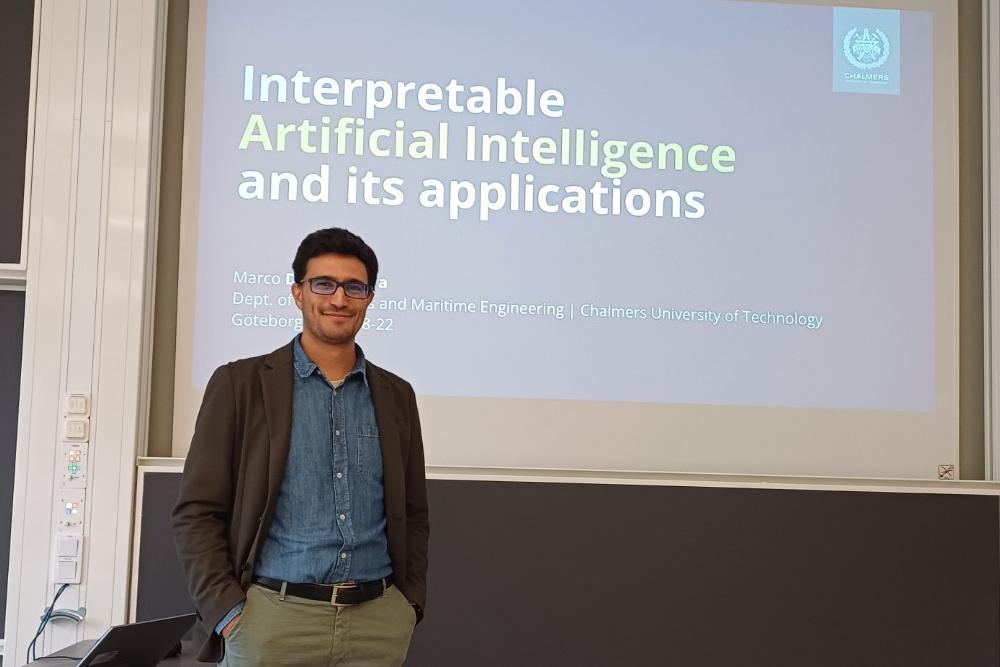
Marco L. Della Vedova is a Senior Lecturer in Applied Artificial Intelligence at Chalmers University of Technology, Sweden. He works in the Vehicle Engineering and Autonomous Systems division within the Department of Mechanics and Maritime Sciences, as part of Prof. Mattias Wahde's research group. Since 2025, he has served as Director of the Data Science and AI master's programme (MPDSC) at Chalmers, where he teaches courses including Introduction to Artificial Intelligence and Digitalization in Sports. Dr. Della Vedova earned his academic foundation at the University of Pavia, Italy, where he completed his BSc (2006), MSc (2009), and PhD (2013) in Computer Engineering. His doctoral research focused on "Real-Time Physical Systems and Electric Load Scheduling" under Prof. Tullio Facchinetti. During his PhD studies, he spent a year at U.C. Berkeley hosted by Prof. Francesco Borrelli at the Model Based Predictive and Distributed Control Lab. His research spans multiple AI domains with a strong emphasis on interpretability. Dr. Della Vedova develops interpretable methods for conversational AI, naturalness evaluation of forests using canopy height models, and geospatial applications. His work bridges theoretical AI with practical societal benefits, particularly in environmental monitoring, transportation systems, and orienteering. He has previously contributed to cloud computing, hate speech detection, and cyber-physical energy systems, demonstrating his interdisciplinary approach to AI research. Dr. Della Vedova's publication record reveals a consistent trajectory of impactful research across multiple domains of artificial intelligence. His recent work shows a strong focus on interpretability in AI systems, with significant contributions to natural language processing, geospatial analysis, and causal inference. The research demonstrates both theoretical depth and practical applications, particularly in environmental monitoring and social media analysis. His methodology often combines traditional machine learning approaches with novel interpretability techniques, creating bridges between complex AI systems and human understanding. Dr. Della Vedova has received several prestigious recognitions for his work: Best PhD thesis award from the Order of the Engineers of Bergamo (2013) Italian champion of Il Cervellone (2012) Top Italian performer in IEEEXtreme 6.0 programming competition (148th overall globally, 2012) Premio Arturo Schena award from Fondazione Credito Valtellinese (2010) With over 50 students supervised through bachelor's and master's theses, Dr. Della Vedova has established himself as a dedicated mentor in the AI community. His current PhD students include Minerva Suvanto working on interpretable NLP and Vivien Lacorre developing AI for railway infrastructure inspection. His supervision spans diverse topics from forest naturalness evaluation to hate speech detection and transportation optimization. Beyond formal supervision, he actively contributes to educational initiatives including serving as Director of Chalmers' Data Science and AI master's program and developing innovative teaching methods that connect theoretical concepts with real-world applications. Dr. Della Vedova is deeply embedded in both academic and professional communities. He leads the Applied Artificial Intelligence research group at Chalmers while maintaining strong connections with European research networks through projects like the ERASMUS+ EUrienteering initiative. His interdisciplinary approach is reflected in collaborations across computer science, environmental science, and social sciences. Notably, he applies his AI expertise to orienteering both as a researcher developing localization methods and as a licensed Event Advisor for the International Orienteering Federation, demonstrating how his professional and personal interests converge in innovative ways.
Nacira Agram is an Associate Professor at Kungliga Tekniska Högskolan (KTH), specializing in stochastic analysis, mean-field processes, and mathematical finance. She contributes to education through roles as Examiner and Teacher in advanced financial mathematics courses. Research Focus: Her work centers on stochastic differential equations with applications to financial markets, energy systems, and population modeling. Key areas include conditional McKean–Vlasov jump diffusions, singular control of stochastic Volterra equations, and deep learning applications in stochastic modeling. Publications: Recent research explores mean-field control, optimal stopping, and SPDEs with space interactions, emphasizing advanced mathematical techniques for financial and ecological systems. Teaching: Currently involved in courses like Financial Derivatives and Martingales and Stochastic Integrals , where she serves as course responsible and examiner.
Torbjörn Larsson is a Professor in the Department of Mathematics at Linköping University, affiliated with the Division of Applied Mathematics (TIMA). His work bridges theoretical and applied optimization with significant impact in healthcare, logistics, and finance. His research interests include Mathematical Optimization , Operations Research , Brachytherapy Treatment Planning , Vehicle Routing , and Portfolio Optimization . He develops advanced algorithms such as Lagrangian heuristics, metaheuristics, and feasible direction methods to solve complex decision problems. The recent publications indicate a strong focus on developing bounding techniques and heuristic frameworks for discrete and multi-objective optimization, with applications ranging from radiation therapy to transportation logistics. His work emphasizes both theoretical rigor and practical implementation. Scientific Contributions: Development of novel optimization methods for brachytherapy treatment planning Advancement of Lagrangian and metaheuristic frameworks Application of optimization in finance (portfolio selection) and scheduling He collaborates extensively on research projects involving mathematical modeling and algorithm design. While specific advising roles are not listed, his co-authorship with junior researchers suggests mentorship activity. He has contributed to projects on decision support systems for scheduling and large-scale optimization in finance. Laboratories and Research Groups: Applied Mathematics (TIMA), Department of Mathematics, Linköping University Research environment focused on optimization and its applications in medicine and logistics
Marc Hellmuth is an Associate Professor of Computational Mathematics at the Department of Mathematics, Stockholm University, Sweden. His academic career includes previous positions as Junior Professor for Biomathematics and Computer Science at University of Greifswald, Germany (2015-2020), Lecturer at School of Computing, University of Leeds, UK (2020), and PostDoc positions at Saarland University and Max-Planck Institutes. Dr. Hellmuth earned his PhD in Computer Science from University of Leipzig, Germany (2007-2010, summa cum laude), supervised by Peter F. Stadler, and completed his Venia Legendi (habilitation) at Saarland University, Germany (2016). His research spans the interface of discrete mathematics, computer science, and life sciences with emphasis on: Discrete Mathematics including Graph Theory, Combinatorics, and Optimization Algorithm Design and Complexity Theory Mathematical and Computational Biology Phylogenomics and Evolutionary Analysis Computational Chemistry and Atom Tracking His publication record demonstrates a consistent focus on developing mathematical frameworks and efficient algorithms for biological problems, particularly in phylogenomics, orthology detection, and evolutionary analysis. His work bridges theoretical computer science with practical applications in biology and chemistry, often resulting in open-source software tools. Dr. Hellmuth has developed numerous software tools including AsymmeTree for phylogenetic simulation, tralda for tree algorithms, and specialized tools for phylogenomics, atom tracking, and graph analysis. His collaborative work extends internationally with research visits to institutions including Yale University, University of Leoben, Vienna University of Economics, University of Southern Denmark, Université de Montréal, and institutions in China.
Mehrdad Ghandhari Alavijh is a Full Professor in Electric Power Systems at KTH Royal Institute of Technology. He leads research in power system dynamics, stability, and control, with a focus on FACTS (Flexible AC Transmission Systems), HVDC systems, and advanced control strategies. His work addresses challenges in grid reliability, renewable energy integration, and environmental sustainability. Education: Received M.Sc. (1995) and Ph.D. (2000) in Electrical Engineering from KTH. His research group develops innovative methods for secure, efficient power system operation, leveraging advanced monitoring and communication technologies. Research Interests: Power System Dynamics and Stability Transient Stability Assessment HVDC and FACTS Technologies Renewable Energy Integration Publications: Recent works focus on HVDC systems, battery storage, transient stability algorithms, and frequency control. His studies emphasize real-time monitoring and control strategies to enhance grid resilience against outages. Teaching: Supervises courses in power systems engineering, including degree projects in Electric Power Systems and Energy Innovation. Serves as an examiner and course responsible for multiple graduate programs.
Jakob Bergman serves as Senior Lecturer, Associate Professor, and Director of Studies at Lund University's Department of Statistics. His academic profile demonstrates significant expertise in compositional data analysis, where he studies vectors of proportions (compositions) that arise across diverse fields including geochemistry, household economics, and political science. His research focuses on developing innovative statistical methodologies, particularly his compositional loess method for smoothing compositional time series data. Bergman maintains active interdisciplinary collaborations with archaeologists like Mikael Larsson (on cereal grain analysis and early farming practices) and philosophers like Martin Jönsson (on post-hoc interventions and gender bias in research funding systems). Bergman's scholarly output reveals strong interdisciplinary trends, with recent publications bridging statistics with archaeology, political science, and philosophy. His work consistently addresses practical methodological challenges while maintaining theoretical rigor, particularly in analyzing party shares over time and archaeological specimen compositions. As an educator, Bergman teaches theoretical and applied statistics across undergraduate, advanced, and PhD programs, with special emphasis on sampling/survey research and regression analysis. His outreach extends to providing statistical expertise to numerous NGOs, authorities, and companies. His research contributes to UN Sustainable Development Goals related to quality education and gender equality. Bergman has led significant projects including 'Post-hoc Interventions' at Pufendorf IAS and 'Manure matters' investigating early farming practices through nitrogen analysis of archaeological crop assemblages.
Andrew Winters is a Senior Associate Professor in the Department of Mathematics at Linköping University, Sweden. He is affiliated with the Division of Applied Mathematics (TIMA), where he conducts research in computational mathematics and numerical methods for partial differential equations. His research focuses on the design and analysis of high-order numerical schemes, particularly nodal discontinuous Galerkin (DG) methods with summation-by-parts (SBP) properties, for solving hyperbolic and mixed hyperbolic-parabolic PDEs such as shallow water, Euler, Navier-Stokes, and magnetohydrodynamic (MHD) equations. His work emphasizes conservation, entropy stability, and thermodynamic consistency in numerical approximations. The recent publications highlight a strong trend in developing robust, high-order, entropy-stable methods for nonlinear conservation laws, with applications in fluid dynamics and geophysical modeling. His work integrates theoretical analysis with high-performance computing, particularly through the development of the FLUXO and Trixi.jl simulation frameworks. Energy Bounds for Discontinuous Galerkin Spectral Element Approximations Entropy Stable Hydrostatic Reconstruction Efficient Implementation of Entropy Stable DG Methods Adaptive Simulations with Trixi.jl Subcell Finite Volume Shock Capturing Andrew Winters is actively involved in software development and scientific computing education, including an introductory Fortran course for MATLAB users. He contributes to international collaborations, such as a four-way research and exchange program between Linköping University and Washington State University. He has no listed scientific awards in the provided text. He advises students in computational mathematics, though specific names are not mentioned. He is a core developer of the FLUXO (Fortran/MPI), Trixi.jl (Julia), and HOHQMesh.jl projects, which support high-order simulations and mesh generation.
Lars Arvestad is a Senior Lecturer at Stockholm University's Department of Mathematics, Faculty of Science. His research focuses on computational biology problems in evolution and comparative genomics, with significant contributions to bioinformatics tool development for genome assembly and phylogenetic analysis. He teaches courses in programming techniques for mathematicians, database technology, and software engineering. Academic Appointments: Senior Lecturer in Mathematics (2013-present) Research Focus: Computational modeling of biological systems, particularly in evolutionary genomics and genome assembly challenges His work includes creating BESST for efficient genome scaffolding, VMCMC for Bayesian phylogeny analysis, and Fastphylo for accelerated phylogenetic tree construction. Key technical innovations involve handling PE-contamination in mate-pair libraries and developing automated burn-in estimation for MCMC methods. Recent publications demonstrate expertise in integrating mathematical modeling with biological data analysis, particularly in solving practical challenges in next-generation sequencing data processing. The research group Computational Mathematics at Stockholm University develops methods applicable across molecular to planetary scale systems.
Martin Karp is a Research Fellow and postdoctoral researcher at KTH Royal Institute of Technology's Department of Engineering Mechanics, working under Dan Henningson. His research focuses on high-fidelity numerical simulations of turbulence and transition, with a specialization in high-performance computing (HPC) and supercomputing architectures. He holds a PhD in computer science from KTH and an MSc in Engineering Physics from Lund University, complemented by studies at ETH Zürich's computer science department. His research interests explore computational limits in nonlinear chaotic systems and future computational advancements. He leads the development of the Neko framework, a scalable simulation tool for extreme-scale CFD with extensive accelerator support. Karp's work emphasizes GPU and FPGA acceleration, parallel computing, and optimizing algorithms for heterogeneous architectures. Key contributions include large-scale turbulence simulations using GPUs, reducing communication in conjugate gradient methods, and evaluating FPGA-based flow solvers. His publications span journals like Concurrency and Computation and Scientific Reports , with conference presentations at IEEE Cluster, PASC, and HPCAsia. Karp's research bridges theoretical computational limits and practical HPC implementation, addressing challenges in precision, scalability, and hardware utilization. His educational background combines engineering physics with computer science, enabling interdisciplinary approaches to fluid dynamics and high-performance simulation. Current projects aim to push the boundaries of computational fluid dynamics through novel algorithm design and leveraging emerging hardware capabilities.
Boualem Djehiche is a Professor of Mathematical Statistics at the Department of Mathematics, KTH Royal Institute of Technology. He is affiliated with the Digital Futures Faculty and the SCI School at KTH. His research focuses on Stochastic Analysis, including Stochastic Control, Insurance Mathematics, Mathematical Finance, and Game Theory. Djehiche holds editorial roles in journals such as Scandinavian Actuarial Journal and Finance and Stochastics . Education details are not explicitly stated in the provided texts. His teaching responsibilities include courses like Game Theory, Probability Theory, and Financial Mathematics. He advises students in these areas, though explicit student names are not listed. His research explores advanced topics such as mean-field games, time-inconsistent optimal control, and applications in finance and economics. Recent publications address topics like zero-sum Dynkin games, generative AI outcomes as Nash equilibria, and commodity futures pricing with regime switching. Research Interests: Stochastic Control, Insurance Mathematics, Mathematical Finance, Mean-Field Games, System Identification. Editorial Duties: Editor-in-Chief of Scandinavian Actuarial Journal , Associate Editor of Finance and Stochastics , and roles in multiple other journals. Grants & Collaborations: Collaborations include work on disability insurance modeling, credit scoring, and energy market dynamics via mean-field-type games. Labs/Teams: Involved in cross-disciplinary initiatives like the Digital Futures research center, focusing on digital technologies and societal challenges.
Stefan Karlsson is a Senior Lecturer in Mathematics at the University of Skövde , affiliated with the School of Engineering Science. He has taught numerous mathematics courses for engineers and game programming since the early 2010s, including Mathematics for Engineers I–IV , Linear Algebra , and Number Theory and Cryptography . His research focuses on Mathematical modeling of biological systems Algebraic geometry Quorum-sensing networks in bacteria Conceptual rigor in mathematical education Key publication trends include interdisciplinary work in microbiology and immunology, using mathematical frameworks to analyze bacterial transcription and immune cell development. He has also contributed to pedagogical discussions on mathematical notation and teaching practices. As a course coordinator and examiner, he has held leadership roles in curriculum development and academic governance, including chairing the Engineering Education Committee.
Fan Yang Wallentin is a Professor in Statistics at Uppsala University, Sweden, where she works in the Department of Statistics. She serves as the Coordinator for International Exchange Programs and has been responsible for the statistical consultant service at the department since 2009. Her academic career is deeply rooted at Uppsala University, where she earned her PhD in Statistics in 1997. Her educational background includes: PhD in Statistics from Uppsala University (1997) Professor Wallentin's research primarily focuses on structural equation modeling and multivariate statistical analysis, with particular applications in social and behavioral sciences. Her work bridges theoretical statistical advancements with practical applications across diverse fields including public health, psychology, economics, and education. She has made significant contributions to psychometrics, particularly in the development and validation of measurement instruments used in healthcare and education settings. Her methodology work addresses specification issues, robustness properties, and computational aspects of statistical models. Her publication record demonstrates an evolving research trajectory that has recently incorporated pressing global issues such as the statistical analysis of the COVID-19 pandemic, while maintaining her core expertise in structural equation modeling and related methodologies. Her work often involves cross-disciplinary collaborations, reflecting the broad applicability of her statistical expertise across healthcare, energy policy, and development economics. Among her notable recognitions: Arnberg Prize from the Swedish Royal Academy of Sciences (2000) for her PhD thesis "Non-linear structural equation models: Simulation studies of the Kenny-Judd model" Professor Wallentin has extensive experience providing statistical consultation to researchers in social and behavioral sciences. Her role as Coordinator for International Exchange Programs suggests active engagement in global academic networks. Her research has been applied in diverse contexts including pandemic response analysis, women's empowerment through microfinance, healthcare quality assessment, and educational statistics, demonstrating the versatility and impact of her methodological contributions.
Farnaz Adib Yaghmaie serves as an Assistant Professor and Docent at Linköping University's Department of Electrical Engineering (ISY), specializing in the Automatic Control division. Her research bridges control theory and machine learning, with significant contributions to reinforcement learning applications in complex systems. Education: Ph.D. in Electronic and Electrical Engineering, Nanyang Technological University (NTU), Singapore (2017, Best Thesis Award) Master's Degree in Electrical Engineering (Control), K. N. Toosi University of Technology, Tehran, Iran (2011) Bachelor's Degree in Electrical Engineering (Control), K. N. Toosi University of Technology, Tehran, Iran (2009) Her research focuses on redefining machine learning paradigms for control problems , particularly through reinforcement learning applications. Current projects include Foundation Models and RL for General-Purpose Control (2025-present), Online Control with Adversarial Noise (2022-present), and RL for Partially Observable Systems (2021-present). She explores how foundation models can enable control systems to generalize across diverse tasks and adapt to unseen scenarios, with applications in robotics and autonomous systems. Her work integrates large language models and generative AI into control frameworks, addressing fundamental challenges in sequential decision-making under uncertainty. Scientific Recognition: Best Thesis Award at Nanyang Technological University (2017) CENIIT research grant (2020) Co-founded SEDDIT competence centre (2024) As an educator, she teaches Ph.D.-level courses including Reinforcement Learning (2021-2024) and Advanced Robotics (2025), with her WASP course ranking as the second-best Ph.D. course in the program (3.9/5 evaluation). She actively mentors Ph.D. students including Abbas Pasdar, who is working on Foundation Models for General-Purpose Control. Her research is supported by grants including CENIIT and collaborations through the SEDDIT competence centre. She contributes to the academic community through workshops like the LINK-SIC Core Competence Workshops on Reinforcement Learning and by chairing sessions at major conferences including ECC 2025.