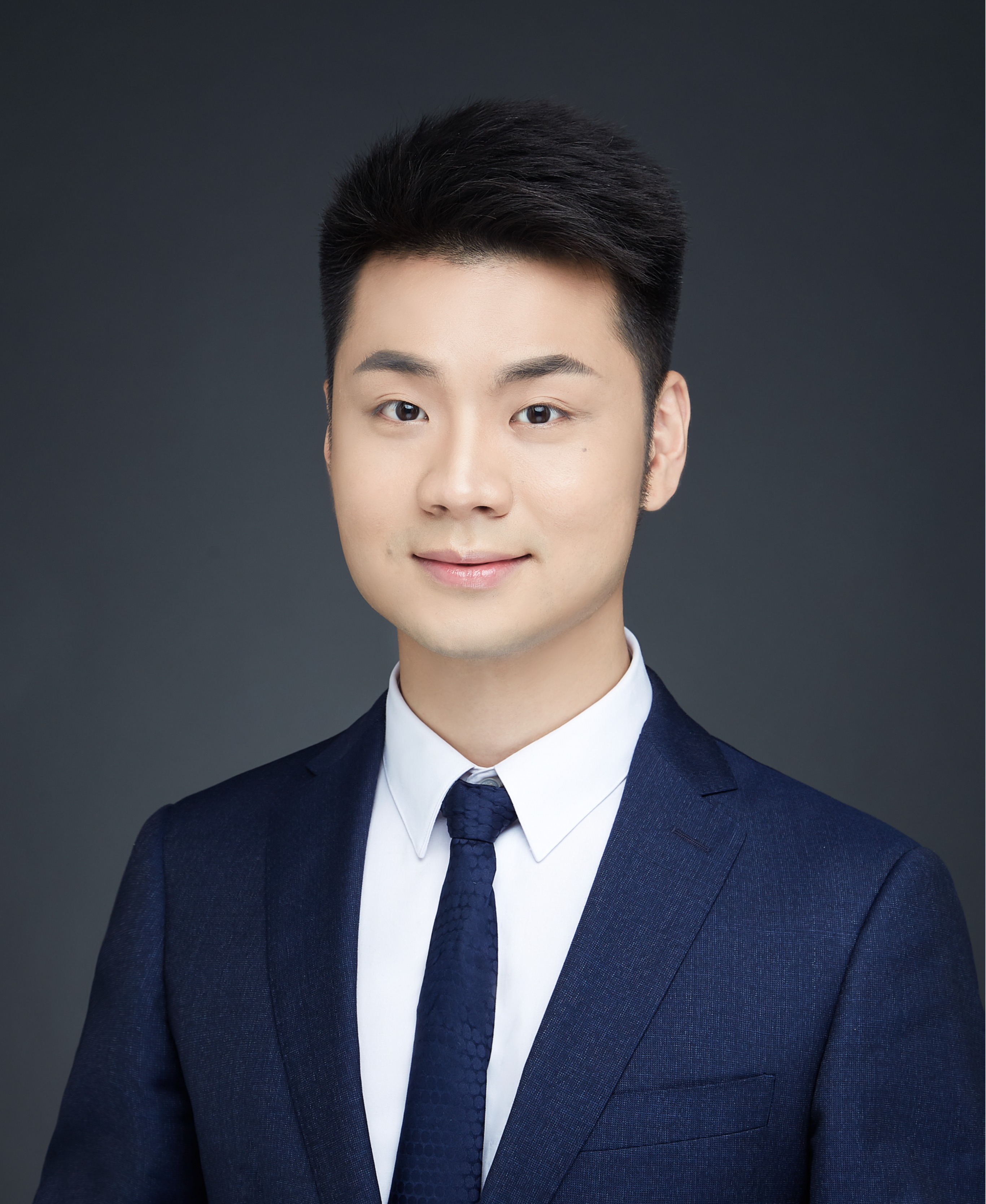
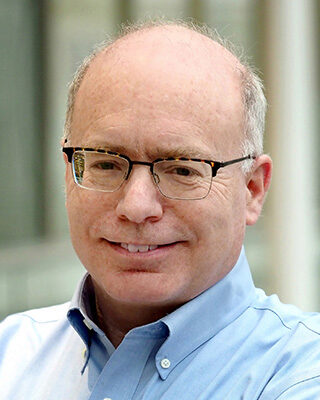
Mao Xiaojie is an Associate Professor at the Department of Management Science and Engineering, Tsinghua University's School of Economics and Management . Holding a PhD in Statistics and Data Science from Cornell University (2021) and a bachelor's in Mathematical Economics and Finance from Wuhan University (2016), Mao specializes in causal inference and data-driven optimization decision-making . PhD: Cornell University (2016-2021) Bachelor: Wuhan University (2012-2016) Mao's research bridges machine learning , statistics , and operations research to address challenges in contextual optimization, algorithmic fairness, and robust causal inference. Recent work focuses on data combination , surrogate variables , and minimax methods for handling unobserved confounding and limited outcome data. Key trends in Mao's publications include: Advancing bandit algorithms for efficient contextual decision-making Developing debiased machine learning frameworks for quantile treatment effects Designing robust optimization models under noisy and incomplete covariates Scientific recognition includes: Applied Probability Society Best Student Paper Competition Finalist (2020) Multiple teaching excellence awards at Tsinghua University (2022-2024) Research grants from the National Natural Science Foundation of China Mao currently teaches Empirical Methods in Management Science (PhD), Data Analysis: Inference and Decision Making (Master), and Probability Theory and Mathematical Statistics (Undergraduate). Research collaborations span institutions like Cornell and MIT, with publications in top venues including NeurIPS , ICML , and Operations Research .
Carola-Bibiane Schönlieb is a Professor of Applied Mathematics and head of the Cambridge Image Analysis (CIA) group at the Department of Applied Mathematics and Theoretical Physics, University of Cambridge. She concurrently serves as co-director of the Cambridge Mathematics of Information in Healthcare (CMIH) Hub, leading interdisciplinary initiatives at the intersection of mathematics, healthcare, and data science. Her research centers on variational methods, partial differential equations, and machine learning for image analysis, processing, and inverse problems. She maintains active collaborations with clinicians, biologists, physicists, chemical engineers, plant scientists, artists, and art conservators, driving innovations in biomedical imaging, image sensing, and digital art restoration. This interdisciplinary approach bridges theoretical mathematics with real-world applications across healthcare and cultural heritage domains. Analysis of her recent publications reveals a dominant focus on deep learning applications for medical imaging challenges, particularly in cardiology, oncology, and neuroimaging. Her work consistently addresses inverse problems in reconstruction and segmentation while emphasizing robustness against artifacts, model efficiency, and integration of physical constraints. A clear trend emerges toward foundation models and transfer learning techniques specifically adapted for medical image analysis with limited annotated data. Prof. Schönlieb leads the Cambridge Image Analysis research group and co-directs the CMIH Hub, which unites mathematicians, computer scientists, and clinicians to translate advanced data science into clinical practice through collaborative healthcare innovation.
Yoshua Bengio is a Full Professor at Université de Montréal, Canada CIFAR AI Chair (2018–present), and founder of Mila – Quebec AI Institute. He co-directs the CIFAR Learning in Machines & Brains program and serves as Scientific Director of IVADO. A Fellow of the Royal Society of London and Canada, and Officer of the Order of Canada, Bengio is a pioneer in deep learning and co-recipient of the 2018 A.M. Turing Award. His research spans Deep learning architectures Neural networks Machine learning theory Generative models Optimization algorithms Recent work focuses on generative adversarial networks, neural machine translation, and theoretical foundations of deep learning. Awards include the Killam Prize (2019), IEEE Neural Networks Pioneer Award (2019), and global recognition as the second-most cited computer scientist (2021).
Prof. Dr. Georg Merz serves as a Professor of Applied Mathematics at the Department of Computer Science and Media, Brandenburg University of Technology, specializing in artificial intelligence with emphasis on industrial applications and large language models. Education: PhD in Pure Mathematics (Algebraic Geometry) from University of Göttingen Research Interests: Merz bridges advanced mathematics with practical AI systems, focusing on Large Language Model functionality (ChatGPT, Llama), industrial AI integration, and mathematical foundations of machine learning. His work prioritizes real-world implementation of theoretical concepts in operational environments. Publication Trends: His research evolved from pure algebraic geometry (2017-2018 Newton-Okounkov body studies) to applied AI (2020-2021), demonstrating a strategic shift toward solving industrial scheduling problems through reinforcement learning and language model applications. Scientific Awards: No awards documented in available materials. Advising and Grants: Currently recruiting thesis students for ChatGPT projects with GIZ. Previously led Deutsche Bahn's "AI in Dispatching" initiative with ML engineering teams. Teaches core mathematics and specialized AI courses including ChatGPT and Machine Learning projects. Teams and Committees: Active in academic governance as Deputy Chair of Departmental Council, member of Commission for Good Scientific Practice, and Ethics Committee participant.
Sergio Lucia is a Full Professor (W3) for Process Automation Systems at the Department of Biochemical and Chemical Engineering, TU Dortmund University. His research integrates control engineering, numerical optimization, and machine learning to address challenges in chemical processes, biotechnology, and energy systems. Education: Dr.-Ing. (summa cum laude) from TU Dortmund University (2014); Diploma in Electrical Engineering from University of Zaragoza (2010) Professional Journey: Full Professor (2023–present), Professor (W2) at TU Dortmund University (2020–2023), Assistant Professor at TU Berlin (2017–2020), Postdoctoral Fellow at MIT (2016) His recent work focuses on combining machine learning with model predictive control (MPC) for robust applications in chemical recycling, bioreactors, and energy networks. Key trends include AI-driven optimization, uncertainty quantification, and real-time control for complex systems. Scientific Awards Teaching award, TU Dortmund (2023) Best student paper award (PhD student Sarah Braun) (2022) Best paper by young author award (PhD student Benjamin Karg) (2021) VAA Dissertation Award for outstanding work in process engineering (2015) Erasmus Scholarship (2010) He has advised PhD students in chemical and biotechnological process optimization and led the Laboratory of Process Automation Systems at TU Dortmund's North Campus. His service includes Vice Chair of IFAC Technical Committee on Optimal Control (2020–present) and editorial roles in leading journals.
Somdatta Goswami serves as Assistant Professor in Civil and Systems Engineering and Applied Mathematics and Statistics at Johns Hopkins University, with dual affiliations at the Institute for Data Intensive Engineering and Science (IDIES) and Hopkins Extreme Materials Institute (HEMI). She leads the Centrum IntelliPhysics research group developing AI-driven methodologies for scientific discovery. Her educational trajectory includes: Bachelor's in Civil Engineering from Birla Institute of Technology, Mesra (2011) Master's in Structural Engineering from Indian Institute of Engineering Science and Technology (2013) PhD in Civil Engineering and Structural Mechanics from Bauhaus University-Weimar, Germany (2020) funded by DAAD Dr. Goswami's research pioneers Scientific Machine Learning at the intersection of computational mechanics and AI, focusing on neural operator architectures that accelerate physics-based simulations. Her group develops methods for long-time horizon prediction, multiscale multiphysics modeling, and real-time inference in complex systems through latent space representations and physics-informed learning. Current emphases include cardiac digital twins, structural response under natural hazards, and RNA electrophoresis modeling. Analysis of her 2024-2025 publications reveals dominant trends in latent operator learning, physics-informed neural networks, and hybrid solvers combining traditional numerical methods with deep learning. These innovations enable breakthroughs in computational efficiency across engineering and biological domains, particularly in multiscale modeling and uncertainty-aware simulation. Her scientific recognition includes: National Science Foundation’s National Artificial Intelligence Research Resource (NAIRR) Pilot Johns Hopkins University Discovery Award 2024 Dr. Goswami mentors PhD candidates including Dibakar Roy Sarkar (Creel Family Engineering Fellow), Sharmila, and Maryam. Major research funding comprises: NSF grant for "Cardiac Digital Twins" with Kevrekidis, Trayanova, and Maggioni NSF grant for exascale AI-integrated simulations with UT Austin DOE grant for uncertainty-informed latent operators with Shields, Graham-Brady, and Kevrekidis Johns Hopkins Discovery Award for biological systems modeling The Centrum IntelliPhysics group operates within JHU's Latrobe Hall, collaborating with IDIES and HEMI on interdisciplinary projects spanning computational mechanics, materials science, and biological systems. Their work integrates high-performance computing with novel neural architectures to solve previously intractable scientific problems.
Professor at Aix Marseille University's Faculty of Sciences , Mustapha Ouladsine leads cutting-edge research in diagnostic and prognostic methods for complex systems . As Vice-President for Research Infrastructure and AI since 2020, he oversees LIS Computer Science and Systems Laboratory. Directed LIS UMR 7020 (2018–present) Former Director of LSIS UMR 7296 (2008–2018) Scientific manager for €1.2M+ projects with STMicroelectronics Research Focus : Developed innovative approaches for: Equipment health index modeling in semiconductor manufacturing Dynamic sampling techniques for High-Mix Low-Volume systems Fault-tolerant control systems for drones and autonomous robots AI-based cardiac arrhythmia detection with Timone Hospital Scientific Leadership : Founded Aix-Marseille Research Federation in Computer Science Active associate editor for IEEE journals and conferences Coordinated 17+ recruitment committees at Aix Marseille University
Bruno Gaujal is a Research Professor at Inria Grenoble-Rhône-Alpes, affiliated with Université Grenoble Alpes. He obtained his PhD from the University of Nice in 1994 under François Baccelli's supervision and has held positions at AT&T Bell Labs, INRIA, and École Normale Supérieure de Lyon. He previously led the MESCAL (now POLARIS) research group focused on large-scale computing until 2015. His research interests center on performance evaluation, optimization, and control of discrete event dynamic systems with stochastic inputs. Specific areas include: Markov Chains and Markov Decision Processes Reinforcement Learning and stochastic optimization Queueing theory and scheduling algorithms Energy-efficient computing in distributed systems Game-theoretic approaches in network optimization Gaujal's recent publications show strong emphasis on reinforcement learning applications in queueing networks, energy optimization for real-time systems, and scalable algorithms for Markov Decision Processes. His work bridges theoretical frameworks like Whittle indices with practical implementations in cloud computing and distributed systems. He has supervised numerous PhD students including Nicolas Gast (now Inria researcher), Anne Bouillard (Huawei researcher), and Emmanuel Hyon (Paris Nanterre professor). Current students include Hélène Arvis and Romain Cravic. Gaujal co-founded RTaW, a startup specializing in real-time network design tools. At Inria, he leads research in the POLARIS group, focusing on optimization methods for large-scale distributed computing infrastructures. His work involves collaborations with 85+ co-authors across institutions globally.
Dongdong Chen serves as an Assistant Professor in the Department of Computer Science at Heriot-Watt University's School of Mathematical and Computer Sciences in Edinburgh, United Kingdom. His research profile indicates active supervision of PhD students with full scholarships available, demonstrating his established position within the academic community. Current research outputs show consistent publication activity from 2020 through 2024 with increasing impact. Dr. Chen's research interests center on machine learning applications for imaging systems, with particular expertise in image processing, computer vision, computational imaging, and inverse problems. His work bridges theoretical machine learning with practical applications, especially in medical imaging contexts. The fingerprint analysis of his publications reveals strong connections to Deep Learning (31%), Unsupervised Learning (25%), and Inverse Problems (43%), indicating a cohesive research trajectory focused on unsupervised frameworks for imaging challenges. Analysis of his 15 most recent publications (2021-2025) shows a clear evolution toward unsupervised and equivariant learning approaches for inverse problems, with increasing focus on diffusion models and medical applications. The research demonstrates strong theoretical foundations combined with practical implementations, particularly in MRI and medical diagnostics. Citation metrics indicate significant impact, with several papers exceeding 40 Scopus citations. His notable scientific achievements include: IES Best Student Paper Award (2014) MICCAI'18 BIA Best Paper Nomination (2018) Dr. Chen actively mentors PhD students and has attracted research attention through media coverage of his ICCV paper on Equivariant Imaging. His research contributes to UN Sustainable Development Goals through imaging technology development. Current activities include recruiting PhD students for projects in Edinburgh with full scholarship support, indicating ongoing research expansion and team development.
Necati Olgun is a Professor in the Department of Mathematics at Gaziantep University, Faculty of Arts and Sciences. He has been serving at Gaziantep University since 2005, progressing through academic ranks from Research Assistant to Professor. His academic journey began with a Mathematics degree from Çukurova University, followed by a Master's and Doctorate in Mathematics from the same institution and Hacettepe University respectively. Professor Olgun's educational background includes: Bachelor of Science in Mathematics from Çukurova University (1990-1995) Master of Science in Mathematics with Thesis from Çukurova University (1995-1998) Doctorate in Mathematics from Hacettepe University (1999-2005) His research primarily focuses on Algebra and Number Theory, with specialized expertise in Neutrosophic Mathematics, Fuzzy Sets, and Mathematical Logic. Professor Olgun has made significant contributions to the understanding of Neutrosophic structures, Plithogenic sets, and their applications in various mathematical domains. His work bridges theoretical mathematics with practical applications in decision-making systems and computational models. His research has evolved from traditional algebraic structures to innovative frameworks incorporating neutrosophic logic, plithogenic sets, and fuzzy mathematics. Professor Olgun has received multiple scientific awards, including: TÜBİTAK Yayın Teşvik Ödülü in 2018 TÜBİTAK Yayın Teşvik Ödülü in 2015 TÜBİTAK Yayın Teşvik Ödülü in 2014 TÜBİTAK Yayın Teşvik Ödülü in 2012 Professor Olgun has supervised numerous graduate students, guiding 7 doctoral theses and 35 master's theses to completion. His research projects span both theoretical mathematics and applied domains, including 'High Order Universal Modules Fitting Ideals Investigation' and various educational initiatives like 'Easy Mathematics' projects aimed at improving mathematics education. He has served in administrative roles including Department Head, Institute Deputy Director, and Institute Management Board membership. His work has established him as a leading researcher in neutrosophic algebraic structures, with collaborations spanning multiple institutions and contributing to the development of new mathematical frameworks that extend classical algebra through neutrosophic logic.
David Asch is the Senior Vice President for Strategic Initiatives at the University of Pennsylvania and holds the John Morgan Professorship at both the Perelman School of Medicine and the Wharton School. His academic roles span multiple disciplines, including Medicine , Medical Ethics and Health Policy , Health Care Management , and Operations, Information, and Decisions . Education : MD from Cornell University (1984), MBA from the Wharton School (1989), AB from Harvard University (1980) Dr. Asch’s research focuses on behavioral economics , exploring how clinicians and patients make medical choices , with implications for health care management and policy innovation . His work integrates technology assessment and decision support systems to improve health outcomes. His recent publications emphasize privacy in digital health , remote monitoring , machine learning applications , and equity in health care delivery , reflecting his commitment to translating evidence into practice through design thinking and innovation methodologies . Scientific Awards : Ken Shine Prize in Health Leadership (2022), Distinguished Investigator Award (2019), Elected Member, Institute of Medicine (2007), RWJF David E. Rogers Award (2018), and over 20 additional honors for teaching, research, and mentorship. Dr. Asch leads the Center for Health Care Innovation and has directed programs like the Leonard Davis Institute of Health Economics (1998-2012) and the Robert Wood Johnson Foundation Clinical Scholars Program (2013-2017). His teaching includes courses on health care innovation and thesis mentorship in health policy research.
Professor Jun Liu is a Professor of Artificial Intelligence and Director of the Artificial Intelligence Research Centre (AIRC) at the School of Computing, Ulster University. With over 270 publications and more than £18 million in research funding, he is a leading figure in artificial intelligence, particularly in trust and explainable AI systems and logic-based reasoning methods. Dr. Liu received his BSc and MSc degrees in Applied Mathematics, and PhD degree in Information Engineering from Southwest Jiaotong University, Chengdu, China, in 1993, 1996, and 1999, respectively. Prior to joining Ulster University, he held postdoctoral positions at The University of Manchester, UK (Feb. 2002 - Dec. 2004) and the Belgian Nuclear Research Centre (SCK*CEN) (Mar. 2000 - Feb. 2002). Professor Liu's research focuses on trust and explainable data-knowledge integrated AI decision models with applications in safety and risk analysis, policy decision making, security/disaster management, and healthcare; and logic and automated reasoning methods for intelligent systems, including resolution-based automated reasoning and lattice-valued logics for handling incomparability, inconsistency, and imprecision. His work spans theoretical foundations to practical applications in smart homes, healthcare, and industrial settings. His recent publications demonstrate a strong trend toward developing more trustworthy and explainable AI systems, with particular emphasis on belief rule-based approaches for handling uncertainty in decision-making. The research spans multiple domains including smart home activity recognition, medical imaging, food quality analysis, and environmental monitoring, showing the versatility and applicability of his methodologies. Ulster University best computer science paper award for 2016 IEEE Senior Member including IEEESMC and IEEECI Fellow of the UK Higher Education Academy Associate Editor of IEEE Transaction on Fuzzy Systems Current Chair of IEEE CIS Emergent Technologies Technical Committee As Director of the Artificial Intelligence Research Centre, Professor Liu has secured significant research funding as principal investigator and co-investigator. His current projects include "The use of Agentic AI in judicial decision-making" funded by EPSRC and "Adaptive Modeling Method for Deep Belief Rule Base" for smart home applications. He serves on editorial boards of multiple high-impact journals and organizes international conferences including the 23rd UK Workshop on Computational Intelligence. The Artificial Intelligence Research Centre under Professor Liu's leadership focuses on developing cutting-edge AI methodologies with practical applications. The center collaborates extensively with industry partners including BT through the BTIIC Phase 2 initiative and PwC through their Advanced Engineering and Research Centre, ensuring research has real-world impact across multiple sectors.
Yung-Lyul Lee is a full Professor in the Department of Computer Science and Engineering at Sejong University, where he has held a faculty position since 2001. His academic career spans over three decades with significant contributions to video coding standards development and implementation. His educational background includes: Ph.D. in Computer Science from KAIST (1992) M.S. in Computer Science from Sogang University (1988) B.S. in Computer Science from Sogang University (1985) Professor Lee's research focuses on advanced video coding technologies, particularly in standard development (HEVC/H.265, VVC), 360° video processing, and CNN-integrated compression systems. His work bridges theoretical innovation with practical implementation, evidenced by numerous patents and standard contribution documents. Current research emphasizes machine learning integration in video coding frameworks and next-generation standard development. Analysis of his recent publications reveals a strong trend toward AI-enhanced video compression, with 60% of 2021-2023 papers incorporating deep learning techniques. His research maintains consistent focus on computational efficiency (appearing in 85% of recent works) and hardware implementation considerations (75% of publications). Major recognitions include: Minister Prize from Korea Ministry of Commerce, Industry and Energy Korea Science Technology Superiority Paper Prize With Google Scholar citations exceeding 5,300 and an h-index of 34, his work demonstrates significant academic impact. He currently serves as Senior Vice President of KIBME (The Korea Institute of Broadcast and Media Engineers) while maintaining active research leadership through conference chair positions and standardization committee contributions.
Professor Hyung Seok Kim is a distinguished academic at Sejong University, currently serving as Professor in the Department of AI and Robotics. He also holds significant administrative positions including Dean of the College of Software Convergence at Sejong University. Professor Kim leads the MINES LAB (Mobile Intelligent Embedded Systems Lab), located in Room 211, Chungmu Hall at Sejong University, where he directs research in cutting-edge AI and embedded systems technologies. Professor Kim's educational background includes: Bachelor of Engineering: Department of Electrical Engineering, Seoul National University Master of Engineering: Department of Electrical and Computer Engineering, Seoul National University Doctor of Engineering (Ph.D.): Department of Electrical and Computer Engineering, Seoul National University Professor Kim's research spans multiple domains at the intersection of artificial intelligence and embedded systems. His work focuses on AI robots, wearable AI devices, Large Language Models (LLMs), and on-device AI technologies . His research group develops innovative solutions for emotion recognition, medical imaging analysis, and IoT applications. The MINES LAB specifically targets the integration of AI with embedded systems to create efficient, low-latency solutions for real-world problems ranging from healthcare monitoring to industrial applications. Analysis of Professor Kim's recent publications reveals a strong focus on medical AI applications, federated learning for IoT networks, and multimodal emotion recognition . His work demonstrates consistent innovation in applying deep learning techniques to medical imaging (particularly ophthalmology and cardiology), developing efficient edge-AI solutions for wearable devices, and creating novel network optimization approaches for industrial IoT. The publications show a clear trajectory toward more integrated, privacy-preserving AI systems that can operate effectively on resource-constrained devices. While specific awards to Professor Kim aren't detailed in the provided information, his research group has achieved notable recognition: Dr. Song Seung-hwan, a Ph.D. candidate at the lab, received the Presidential Industrial Service Medal Professor Kim has mentored an extensive number of students throughout his career, with alumni pursuing diverse career paths at leading organizations worldwide. His former students have secured positions at major technology companies including Samsung Electronics, LG Electronics, Kakao, and Amazon, as well as academic positions at universities globally. The MINES LAB currently supports multiple graduate students, post-doctoral researchers, and research assistants working on various AI and embedded systems projects. Professor Kim's research appears to be well-funded, with connections to industry partners including Hyundai Motor Company and Samsung Electronics, though specific grant details aren't provided in the text. The MINES LAB serves as the central hub for Professor Kim's research activities, focusing on AI robots, wearable AI devices, and LLM applications. The lab maintains active collaborations with industry partners and has produced numerous commercial applications through its alumni network. Current research directions include developing low-latency emotion recognition systems, medical imaging analysis tools, and efficient network protocols for IoT applications. The lab environment appears highly collaborative, with both full-time and part-time researchers contributing to various projects across the AI and embedded systems spectrum.
Hoda Eldardiry is an Associate Professor in the Department of Computer Science at Virginia Tech, where she directs the Machine Learning Laboratory. Her research focuses on artificial intelligence and machine learning, particularly in building human-machine collaborative AI systems that can learn context-aware and explainable models from multisource and interconnected data. Prior to joining Virginia Tech, she led research at Palo Alto Research Center (Xerox PARC) in the machine learning research group. Dr. Eldardiry received her educational qualifications from: BE in Computer and Systems Engineering from Alexandria University, Egypt MS and PhD in Computer Science from Purdue University Her research interests span multiple domains of AI and machine learning. She specializes in robust machine learning for information extraction, forecasting, and control. Her work integrates graph neural networks, time-series analysis, and relation extraction to develop explainable and context-aware AI systems. She also investigates the intersection of AI with ethics, policy, and governance, exploring how to build responsible AI systems that align with human values and societal needs. Dr. Eldardiry's recent publications demonstrate a strong focus on advancing graph-based time-series modeling, zero-shot learning techniques, and optimal control systems. Her work bridges theoretical advancements with practical applications in healthcare, transportation, and e-commerce. She has made significant contributions to knowledge graph construction, explainable AI, and federated learning frameworks that operate efficiently in resource-constrained environments. Her scientific achievements have been recognized with several prestigious awards: Purdue University College of Science Early Career Scientist Award for the Department of Computer Science (2021) Honorable Mention Best Paper Award for Exploring Approaches to Artificial Intelligence Governance: From Ethics to Policy (IEEE Ethics 2023) Most Cited Paper Award for COVID-19 Pandemic Impacts on Traffic System Delay, Fuel Consumption and Emissions (2023) Purdue CS Women's History Month Celebration Recognition (2022) VT CS Women's History Month Celebration Recognition (2023) Early Career Distinguished Scientist Award from Purdue University College of Science (2021) Purdue University College of Science Distinguished Alumni (2021) Dr. Eldardiry has successfully secured substantial research funding, with total grant funding of $27,424,460 ($13,808,328 share) from diverse sources including VT, IARPA, DOE, NSF, DARPA, NIH-iTHRIV, CCI, EBAY, SIEMENS, ADOBE, P&G and XEROX. Her current projects include NSF-funded research on Advancing Health Equity using Interactive Condition Assessment and Monitoring and Exploring How AI Engineers Perceive and Develop Translational Ethical Competency, as well as industry collaborations with EBAY on Heterogeneous Hypergraph Modeling for Zero-Shot Product Aspect Identification. As director of the Machine Learning Laboratory at Virginia Tech, Dr. Eldardiry leads a research team that bridges theoretical AI advancements with real-world applications. Her lab collaborates extensively with industry partners and government agencies to develop practical AI solutions while maintaining a strong commitment to ethical considerations and societal impact.