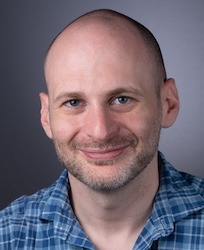
Jont Allen is a Professor at the University of Illinois at Urbana-Champaign, holding joint appointments in the Electrical and Computer Engineering , Nuclear, Plasma, and Radiological Engineering , Speech and Hearing Science departments, and the Coordinated Science Lab . He is an IEEE Fellow (1985) and has contributed extensively to cochlear modeling, hearing science, and mathematical physics. Allen’s research spans auditory mechanics, signal processing, and interdisciplinary applications in biomedical and environmental engineering. His research interests include cochlear amplification , hearing impairment , acoustic signal analysis , and mathematical pedagogy . Recent work focuses on cochlear function from the canal to the cortex, chaotic systems in numerical methods, and historical perspectives in mathematical physics. Key contributions include the Chaotic Convergence of Newton’s method (2024) and a 50-year retrospective on cochlear modeling. His publications bridge theoretical frameworks with practical applications in audiology, engineering, and education. Allen is affiliated with the Coordinated Science Lab, emphasizing collaborative, interdisciplinary research.
Zhizhen Zhao is an Associate Professor in the Department of Electrical and Computer Engineering at the University of Illinois. He holds additional appointments as Associate Professor in the Coordinated Science Lab, Department of Statistics, and Department of Mathematics, and is an Affiliate at the Carl R. Woese Institute for Genomic Biology. He is also recognized as a William L. Everitt Faculty Fellow. His research encompasses machine learning, computational imaging, high-energy physics, climate modeling, cryo-electron microscopy, and quantum computing. He develops algorithms for complex data analysis, inverse problems, and interdisciplinary scientific applications. Recent publications (2023–2025) focus on generative AI, FAIR-compliant models for physics, climate prediction, and advanced imaging techniques. Key trends include deep learning for inverse problems, community detection in networks, and energy informatics. Scientific Awards: William L. Everitt Faculty Fellow He collaborates with the Coordinated Science Lab and the Carl R. Woese Institute for Genomic Biology, contributing to cross-disciplinary initiatives in AI, physics, and computational biology.
Prof. Gunther Cornelissen is a Professor of Fundamental Mathematics and Academic Director at the Mathematical Institute of Utrecht University's Faculty of Science. His research focuses on algebraic and arithmetic geometry, automorphic forms, number theory, noncommutative geometry, and mathematical physics, with a thematic emphasis on Foundations of Complex Systems. He led the Utrecht Geometry Centre (2014–2020), a graduate program funded by NWO to support four PhD candidates in geometry. Cornelissen teaches advanced courses like Fields and Galois theory and serves as editor for Indagationes Mathematicae (Dutch Royal Mathematical Society). His professional roles include membership in the Royal Holland Society of Sciences (KHMW) and the ESF College of Expert Reviewers. His research integrates algebraic methods with dynamical systems, spectral geometry, and quantum statistical mechanics. Recent work explores isospectrality, endomorphisms of algebraic groups, and applications of automata theory to group structures. Cornelissen’s projects often bridge pure mathematics with computational methods, such as polynomial-time graph recognition algorithms and stable gonality analysis.
Tristan van Leeuwen is a Professor of Computational Inverse Problems at Utrecht University's Faculty of Science, within the Mathematical Institute's Department of Mathematical Modeling. He holds a MSc in Computational Science (2006) and a PhD in Geophysics (2010). His career includes postdoctoral roles at the University of British Columbia and Centrum Wiskunde & Informatica (CWI), followed by faculty positions at Utrecht University and group leadership at CWI. His research focuses on inverse problems, scientific computing, imaging reconstruction, and computational methods for geophysics and medical imaging. Key areas include wave-equation inversion, tomographic reconstruction, and uncertainty quantification. Notable contributions span seismic inversion techniques, convex optimization frameworks for tomography, and deep learning applications in imaging. His publications emphasize methodologies like wavefield reconstruction inversion, convex programming for shape sensing, and Bayesian approaches for uncertainty analysis. He collaborates with institutions like CWI and the University of British Columbia, contributing to open-source tools like Tomosipo for tomography. His work bridges theoretical mathematics with practical applications in geophysics, medical diagnostics, and industrial inspection.
Jan Bohr is a Research Fellow at the Mathematical Institute of the University of Bonn, affiliated with the research group 'Analysis and Partial Differential Equations' under the mentorship of Herbert Koch. Previously, he completed his PhD at the University of Cambridge under Gabriel Paternain's supervision and was associated with Richard Nickl's research group. Education includes studies at the University of Bonn, University of British Columbia, and MLU Halle-Wittenberg. Research focuses on inverse problems and their geometric/analytic foundations, utilizing tools from differential geometry, partial differential equations, microlocal analysis, and Bayesian non-parametric statistics. His work bridges theoretical mathematics with statistical methodologies to address complex challenges in geometric inverse problems. Publications emphasize geometric analysis and statistical inverse problems, with recurring themes in transport equations, twistor spaces, and Bayesian methodologies. Recent works explore rigidity properties in complex geometry (2024), high-dimensional statistical approximations (2024), and stability analysis of inverse transforms (2021–2023). No scientific awards are mentioned in available materials. Teaching includes graduate seminars and specialized courses on microlocal analysis, KAM theory, and geometric inverse problems (2023–2025). No PhD/Master's advisees or grants are documented. Bohr collaborates with the 'Analysis and Partial Differential Equations' research group at Bonn, focusing on analytical methods in PDEs and inverse problems.
Anna Ma is an Assistant Professor in the Department of Mathematics at the University of California, Irvine (UCI). Her research focuses on optimization, computational mathematics, and algorithm design with applications to inverse problems, signal processing, and high-dimensional data analysis. Key research interests include iterative algorithms (e.g., randomized Kaczmarz methods), tensor recovery, stochastic gradient descent, and robust recovery techniques for noisy data. Her work emphasizes algorithmic efficiency, convergence guarantees, and applications in machine learning and data science. Recent publications highlight advancements in quantile-based iterative methods, tensor linear systems, and robust low-rank recovery. These studies address challenges in handling missing data, noisy observations, and scalable solutions for large-scale systems. No scientific awards are explicitly mentioned in the provided text. Her research has been supported by grants focused on algorithm development and data-driven methodologies. Anna collaborates on projects involving multidisciplinary teams and contributes to advancing numerical methods for modern data analysis challenges.
Martijn J.H. Anthonissen is an Assistant Professor in Computational Illumination Optics at Eindhoven University of Technology. His research develops inverse methods for optical system design using physical models of light interaction, with applications in LED lighting and optical prototyping. Research focuses on three tracks: 1) Freeform design using Monge-Ampère equations, 2) Improved direct methods like Liouville equation solvers as alternatives to ray tracing, and 3) Imaging optics via Lie algebraic methods for aberration analysis. Current projects include MALIOD (machine learning for optics design) and photolithography aberration compensation. He teaches mathematics courses including Calculus, Linear Algebra, and Numerical Methods. Academic background includes a PhD in numerical combustion from TU/e and research visits to Yale University, Weierstrass Institute, and Japanese institutions.
Dr. Jochen Broecker serves as Associate Professor in Environmental Data Analysis at the University of Reading, UK, within the School of Mathematical and Physical Sciences and Department of Mathematics and Statistics. Since September 2015, he has held this position, following a Lecturer role from September 2012 to September 2015. He currently serves as Co-director of the Mathematics of Planet Earth Centre for Doctoral Training (MPECDT) and has organized significant academic events including the June 2024 Ver-AI workshop on Verification of AI-Based Meteorological Forecasts. Dr. Broecker's research spans the critical intersection of mathematical theory and practical meteorological applications. His work bridges Analysis, Dynamical Systems, Probability Theory, and Statistics with real-world applications in Weather, Climate, and Ocean systems. He develops both rigorous mathematical methods and practical software tools for implementation. His current research focuses include Nonlinear and Infinite Dimensional Stochastic Systems, Data Assimilation, Applied Nonlinear Filtering, Statistical Learning, and the Evaluation of Weather- and Climate Forecasts, with particular emphasis on Calibration, Skill Scores and Reliability metrics. Analysis of Dr. Broecker's recent publications reveals a consistent trajectory at the forefront of climate mathematics and forecast verification. His work demonstrates increasing focus on the signal-to-noise paradox in climate forecasting, mathematical foundations of data assimilation techniques, and rigorous verification methodologies for both traditional and AI-based forecasting systems. His research shows strong interdisciplinary connections between pure mathematics, statistics, and practical meteorological applications, with particular relevance to improving the reliability and accuracy of weather and climate predictions. Dr. Broecker actively supervises postdoctoral researchers and graduate students, including Noeleene Mallia-Parfitt (working on validation of data assimilation algorithms), Lea Oljača (researching filtering in dissipative and hyperbolic dynamics), and Giulia Carigi (investigating ergodic properties of stochastic two-layer geophysical fluid dynamics models). His teaching responsibilities include advanced courses such as MA3PAM Probability and Measure and MA3TPA Topics in Pure and Applied Mathematics. Beyond his academic work, Dr. Broecker maintains diverse personal interests including calligraphy, history, model airplanes, woodworking, and dinghy sailing, with his personal website featuring extensive information about OK dinghy sailing, indicating a dedicated involvement in this sailing discipline.
Giovanni Samaey is a Professor of Applied Mathematics and Mathematical Engineering at KU Leuven's Faculty of Engineering Science. He leads research in computational and multiscale methods, focusing on plasma edge modeling for nuclear fusion reactors, Bayesian inversion, and Monte Carlo algorithms. Appointed in 2011, he currently supervises ten PhD students and has held a five-year membership in the Young Academy. His work bridges academic research with societal impact, co-founding Platform Wiskunde Vlaanderen to strengthen mathematics in Flanders. Education: Graduated in Computer Science (specializing in applied mathematics) from KU Leuven (1996), completed a PhD in 2001 under Prof. Dirk Roose, supported by an NFWO fellowship. He transitioned from engineering studies due to a passion for mathematics' societal impact, initially avoiding academia but ultimately embracing teaching and research. Research Interests: Development of numerical methods for multiscale phenomena, including micro-macro acceleration algorithms, multilevel Monte Carlo techniques, and hybrid fluid-kinetic models. His work addresses challenges in plasma physics, fusion energy systems, and inverse problems. Key contributions include the X-Factor book (with Joos Vandewalle) promoting mathematics outreach and advancing computational tools for plasma edge simulations. Awards/Honors: Member of the Young Academy (2016-2021), NFWO Aspirant Fellowship (2001-2002). His efforts in STEM advocacy and mathematics promotion through Platform Wiskunde Vlaanderen highlight his dedication to education and public engagement. Advising & Leadership: Supervises a team of PhD students in applied mathematics and computational science. Active in curriculum development and interdisciplinary collaborations, particularly in fusion energy modeling. His research group contributes to codes like EMC3-EIRENE for plasma edge simulations. Labs/Teams: Leads projects in multiscale numerical methods and plasma simulation within KU Leuven's engineering faculty. Collaborates internationally on fusion reactor modeling and Monte Carlo algorithm design, emphasizing computational efficiency and scalability.
Constantine Caramanis is a Professor and holder of the Chandra Family Endowed Distinguished Professorship in Electrical and Computer Engineering at the University of Texas at Austin. His research focuses on decision-making in large-scale complex systems, specializing in robust optimization, high-dimensional statistics, machine learning, and applications to networks including social, wireless, transportation, and energy systems. Caramanis directs a substantial research group and is affiliated with the NSF Institute for Foundations of Machine Learning and the UT Machine Learning Lab. He has made significant contributions to optimization theory, developing efficient algorithms for matrix sensing, non-convex problems, and combinatorial optimization. His recent work bridges machine learning and control theory through latent MDPs, diffusion models for inverse problems, and bandit algorithms with fairness considerations. Caramanis has received prestigious recognition including the NSF CAREER award and IEEE Fellowship for his theoretical advances in optimization and learning.
Noah Stephens-Davidowitz is an Assistant Professor in the Department of Computer Science at Cornell University, with affiliations to the Applied Mathematics and Mathematics fields. He holds a Ph.D. from New York University (2017), advised by Oded Regev and Yevgeniy Dodis. His research focuses on lattices, theoretical computer science, cryptography, and geometry. Previously, he was a Simons Institute fellow, a postdoc at MIT and Princeton, and a visiting researcher at the Institute for Advanced Study. Education: Ph.D. in Computer Science from New York University (2017). Affiliated colleges at Cornell include the Ann S. Bowers College of Computing and Information Science, College of Arts and Sciences, and College of Engineering. Research Interests: Lattice-based cryptography, algorithmic complexity, geometric algorithms, and cryptographic hardness assumptions. His work bridges theoretical foundations and practical applications, including secure messaging protocols, cryptographic protocol design, and lattice reduction techniques. Notable Contributions: Developed reverse Minkowski theorems, advanced lattice reduction algorithms, and analyzed computational hardness of lattice problems. His work on secure messaging with reverse firewalls and time-space tradeoffs for function inversion has been influential in cryptography. Advising: Supervises four PhD students: Yael Eisenberg, Kyle Fridberg, Surendra Ghentiyala, and Spencer Peters. Active in program committees for conferences like CRYPTO, FOCS, and STOC. Labs/Teams: Involved in the Simons Collaboration on Algorithms and Geometry, and contributes to lattice-based cryptography research initiatives at Cornell's College of Computing and Information Science.
Colin Cotter is a Professor of Computational Mathematics in the Department of Mathematics at Imperial College London , part of the Faculty of Natural Sciences . His research focuses on numerical analysis, scientific computing, and geophysical fluid dynamics, with applications in weather forecasting, ocean modeling, and climate simulation. He is Head of the Applied Mathematics and Mathematical Physics Section and an Associate Editor for the SIAM Journal of Scientific Computing and Foundations of Data Science. Education : PhD in Mathematics, Imperial College London (2000–2004) BA and Part III in Mathematics, Cambridge University (1996–2000) Research Interests : Dr. Cotter develops compatible finite element methods and time-parallel algorithms for geoscientific models. His work includes: Design of geometric variational numerical methods for fluid equations Probabilistic forecasting and Bayesian data assimilation techniques Parallel-in-time algorithms using ParaDiag methods Awards & Roles : EPSRC Peer Review College member Co-author of "Probabilistic Forecasting and Bayesian Data Assimilation" Grants & Labs : Involved in projects funded by EPSRC, NERC, and ExCALIBUR. Active in the EPSRC Centre for Maths of Precision Healthcare and the Mathematics of Planet Earth initiative.
Professor Tobias Weinzierl heads the Scientific Computing research group at Durham University's Department of Computer Science. He is Co-director of the Institute for Data Science (IDAS) with responsibility for Large-Scale Computing initiatives and serves as inaugural director of the Master in Scientific Computing and Data Analysis (MISCADA). Professor Weinzierl is a reviewer for the EuroHPC JU and principal investigator on multiple ExCALIBUR projects. His research focuses on parallel algorithms, high-performance computing, and scientific computing methodologies. Key areas include adaptive mesh refinement, task-based parallelism, and exascale computing frameworks. Professor Weinzierl develops the Peano software framework for parallel grid traversals and contributes to the ExaHyPE engine for hyperbolic PDEs. His publications span parallel computing paradigms, performance optimization, and applications in computational geophysics. Research trends include GPU offloading, fault tolerance in HPC, and SYCL programming models. Professor Weinzierl has authored books including Principles of Parallel Scientific Computing and edited volumes such as Advanced Computing . He regularly presents at major HPC conferences and workshops worldwide. He advises postgraduate students working on parallel algorithms, GPU acceleration, and computational science applications. Research groups include the Scientific Computing and Data Analysis initiatives at Durham.
Professor Zhang Hanqin is a faculty member at the Department of Analytics & Operations, National University of Singapore (NUS), affiliated with the Institute of Operations Research and Analytics (IORA), part of NUS’s Smart Nation Research Cluster. His research focuses on stochastic models, applied probability, algorithms in stochastic systems, supply chain management, and queueing theory. He has contributed extensively to optimization in inventory systems, manufacturing systems, and service operations. His work spans theoretical advancements and practical applications, including optimal staffing for queues, assemble-to-order systems, and quantity flexible contracts. Recent studies address time-varying queues, minimal phase-type distributions, and impulse control strategies. His research bridges stochastic processes, operations research, and applied mathematics with real-world systems. Key achievements include foundational contributions to diffusion approximations, Coxian representations, and policy design for complex systems. His articles often explore multi-source inventory systems, tandem queues, and expediting strategies, reflecting a deep engagement with both theoretical rigor and industrial relevance.
Justin Tatch Moore is a Professor in the Department of Mathematics at Cornell University's College of Arts and Sciences. He holds his office in Malott Hall and has been an active member of the mathematics faculty since completing his Ph.D. at the University of Toronto in 2000. Moore's research spans several areas of mathematical logic and its applications: Set theory and infinite combinatorics Applications to topology, functional analysis, and algebra Groups related to piecewise linear homeomorphisms Forcing axioms and the continuum hypothesis Ramsey theory of infinite sets His work has significantly contributed to solving long-standing problems in set theory, including the basis problem for uncountable linear orders and the L space problem from general topology. Moore's research often explores the connections between set theory and other mathematical disciplines, revealing deep structural relationships. Moore serves as an editor for the Archive of Mathematical Logic, handling papers specifically in set theory. His publications demonstrate a consistent focus on foundational questions in mathematics, with recent work exploring connections between large cardinals, Ramsey theory, and geometric group theory. As an educator, Moore teaches courses including Multivariable Calculus, Supervised Research, and a Seminar in Logic. He has supervised numerous graduate students through research and reading courses, contributing to the next generation of mathematical researchers.