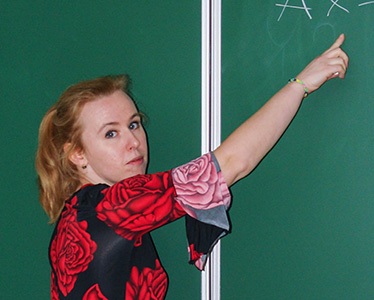
Matthew JuniperView profile
Professor
Professor Matthew Juniper holds a Chair in Thermofluid Dynamics at the University of Cambridge's Department of Engineering and serves as Principal Investigator for the UK Fluids Network. He is partially seconded to the Alan Turing Institute as lead on the 'Adjoint-accelerated Programmable Inference for large PDEs' project. His academic journey includes a PhD from École Centrale Paris (2001), consultancy at McKinsey & Co. (2002-2003), and progressive appointments at Cambridge culminating in full Professorship (2015). His research centers on flow instability with dual focus on hydrodynamic and thermoacoustic systems. Key methodologies include adjoint-based sensitivity analysis and Bayesian inference for integrating physics-based models with data. This approach addresses industrial challenges in gas turbine combustion (emissions reduction), cyclone separator noise control, and laminar flow retention for advanced materials fabrication. Strategic alignment spans Energy Systems, Manufacturing Innovation, and Intelligent Algorithms. Notable scientific awards include ERC Advanced Grant (2025), Alan Turing Institute Fellowship (2024), and American Physical Society Fellowship (2021). His group actively collaborates with industrial partners through software deployment and participates in international networks like the Marie Curie ANADE project. ERC Advanced Grant (2025) Fellow, Alan Turing Institute (2024) Best Paper Award, Symposium on Thermoacoustics (2023) Fellow, American Physical Society (2021) PI, UK Fluids Network (2016-present) Juniper leads the UK Fluids Network, fostering national collaboration in fluid dynamics research while directing multiple industrial projects. His group develops algorithms applicable to uncertainty quantification and complex system resilience, with current focus on merging machine learning with physics-based modeling to achieve data efficiency and interpretability. Future work emphasizes programmable inference for large-scale PDE systems through his Turing Institute project.