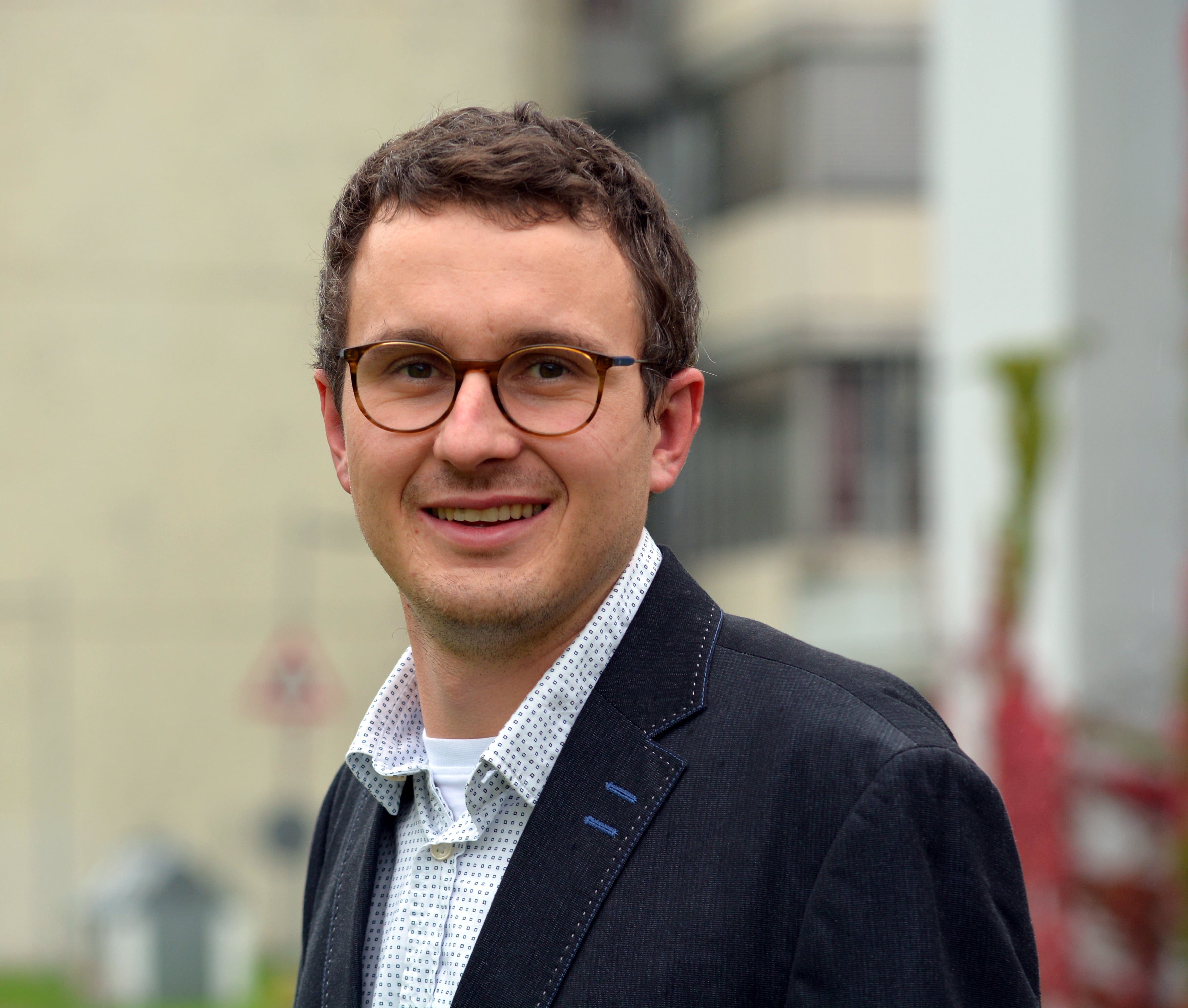
Mi Hu is a researcher at the Department of Mathematics, Faculty of Mathematics and Natural Sciences, University of Oslo, Norway, since August 2023. She collaborates with Prof. Tuyen Trung Truong and Prof. John Erik Fornæss on projects involving dynamical systems, several complex variables, and algebraic geometry, focusing on optimization solutions and improved Newton's methods for solving systems of equations. Education: PhD in Mathematics from the University of Parma, Italy (2024) Thesis: Complex Dynamics Inside Fatou Sets Advisor: Prof. John Erik Fornæss Research Interests: Complex Dynamics in one and higher dimensions Interior dynamics of Fatou sets Parabolic basins Geometric complexity of Julia sets Hybrid applications of Newton's methods Algebraic geometry in dynamical systems Recent Work Trends: Her publications emphasize theoretical advancements in Newton's methods (e.g., Backtracking New Q-Newton's Method), connections to Schröder's theorem, and computational techniques like stochastic root finding. Articles also explore geometric and topological properties of complex dynamical systems. Conference Participation: On geometric complexity of Julia sets V (2024, Bedlewo, Poland) KAUS and Nordan (2024, Östanskär, Sweden) UiO seminar (2024, Oslo) Topics in Complex Dynamics (2023 & 2021, Barcelona) Let's Face Complexity (2017, Como, Italy) Recent developments on d-bar equations (2023, Oslo)
Eliseo García García is a Professor at the University of Alcalá, affiliated with the Department of Automatic Control and Systems Engineering. He holds a Ph.D. from the University of Alcalá, awarded in 2005 for his thesis on computational electromagnetics. His primary research focuses on computational methods for electromagnetic analysis, including the development of efficient algorithms like the Characteristic Basis Function Method (CBFM) and hybrid techniques with the Multilevel Fast Multipole Algorithm (MLFMA). He is a core member of the GEC (Computational Electromagnetic Group), where he explores geophysical applications, antenna design, and high-frequency electromagnetic problems. His research interests bridge theoretical and applied electromagnetics, with particular emphasis on reducing computational costs in solving large-scale EM problems. Notable contributions include advancements in radar cross-section (RCS) computation, radome structure analysis, and geothermal exploration frameworks using hydrogeophysical methods. He has also published extensively on numerical techniques for antenna trajectory simulations and sparse matrix preconditioning. Eliseo’s work spans multiple disciplines, including aerospace engineering, environmental science, and software development, as evidenced by his contributions to Altair Feko 2023 updates. Despite no listed awards, his prolific publication record (over 70 articles from 2013–2024) underscores his active role in advancing computational electromagnetics and its interdisciplinary applications. His advising and grants section remains unreported, but his involvement in collaborative projects is implied through frequent co-authorships and institutional affiliations. He leads the GEC lab, focusing on cutting-edge computational tools and their practical deployment in real-world engineering challenges.
Lukas Kühne is an Assistant Professor (Juniorprofessor) at Bielefeld University's Faculty of Mathematics. His research focuses on the intersection of combinatorics, algebra, and geometry, with specializations in hyperplane arrangements, matroids, polytopes, and computational methods. He actively contributes to software development for combinatorial mathematics, including the Oscar module for matroids and the CountingChambers.jl package. Education: PhD from Hebrew University of Jerusalem (2017-2020), Master's from University of Bonn (2014-2017), and Bachelor's from TU Kaiserslautern (2011-2014). His work has been supported by grants such as DFG SPP 2458 and SFB-TRR 358. Research interests include experimental methods in combinatorics, geometric realizability of matroids, and applications of discrete mathematics in algebraic geometry. Recent work explores simpliciality in arrangements, cosmological polytopes, and algorithmic approaches to hyperplane arrangement properties. Teaching responsibilities include courses on Linear Algebra, Discrete Mathematics, and Finite Reflection Groups. He organizes conferences such as the 'Dive into Research: Simpliciality in Arrangements and Matroids' and has participated in international workshops on combinatorial algebraic geometry.
Prof. Andrea Benigni is a Professor and Director at the Research Center Jülich GmbH, leading the Energy System Technology (ICE-1) department within the Institute of Climate and Energy Systems (ICE). His work focuses on advanced simulation tools for multi-energy systems, power grid optimization, and real-time control solutions. Key research areas include: Multi-energy system integration (power, gas, thermal) High-performance simulation frameworks (e.g., GasNetSim, HeatNetSim) Quantum computing applications for grid partitioning Hydrogen blending in gas networks Hardware-in-the-loop testing for control architectures PMU-based fault detection and grid resilience Benigni has pioneered open-source tools like HeatNetSim and contributed to FIWARE-based ICT platforms for building/district-level energy systems. His recent work emphasizes digital twin applications for pseudo-measurement generation and parallel simulation techniques leveraging GPUs and FPGAs. Notable achievements include: Development of MGRIT-based parallel-in-time electromagnetic simulations Optimization methods for battery sizing in multi-vector systems Quantitative analysis of high PV penetration impacts in African grids Current projects involve: Hydrogen integration strategies for Southern Italy gas networks DC microgrid communication protocols via low-frequency injection Cloud-based multi-agent systems for grid flexibility management
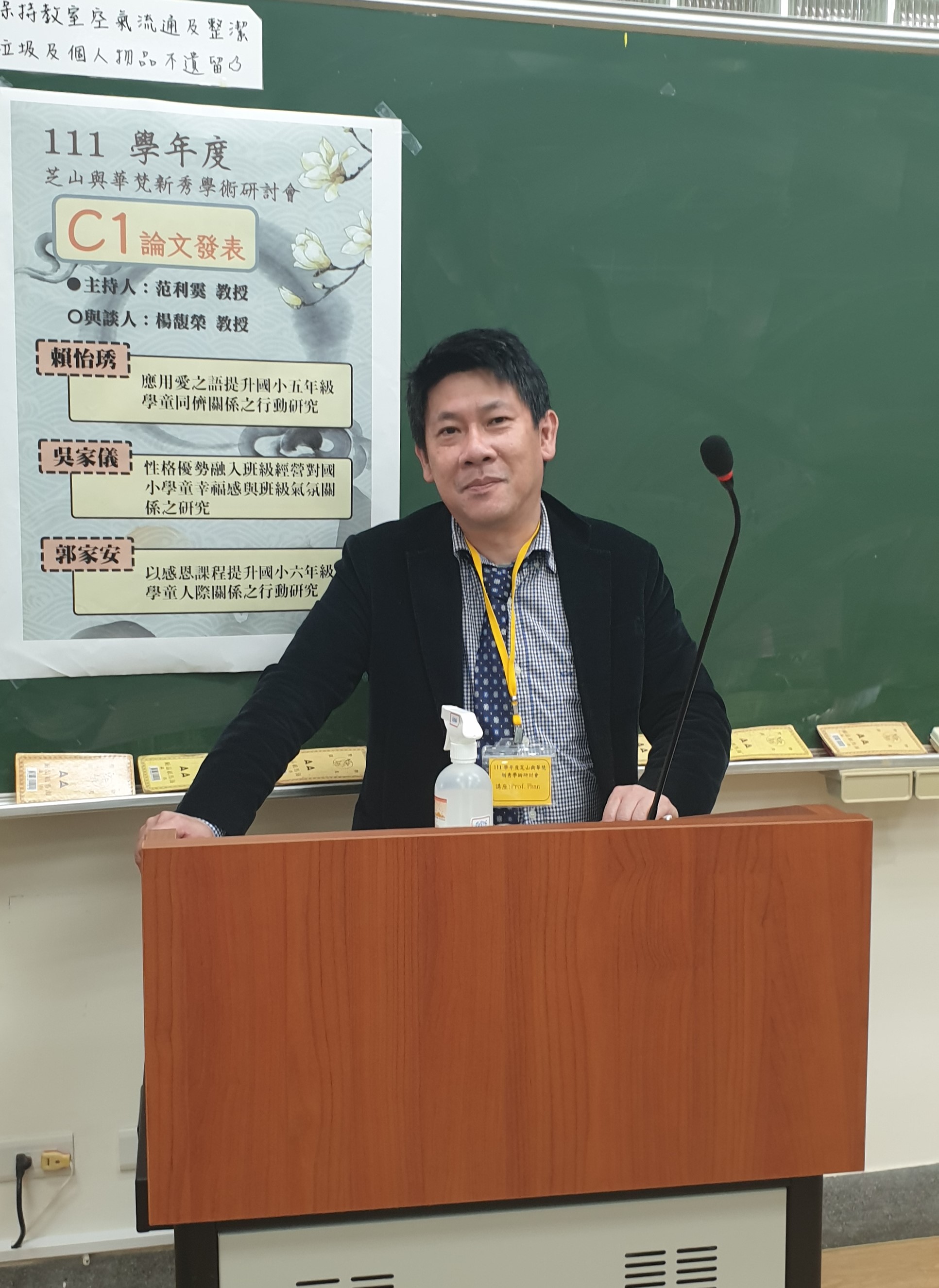
Huy P. Phan is a full Professor in the School of Education at the University of New England (UNE), Faculty of Humanities, Arts, Social Sciences and Education. His academic expertise spans educational psychology, positive and holistic psychology, life and death education, cognitive load theory, and trans-mystical psychology. He completed his Ph.D. in Educational Psychology at the University of Sydney and has since become a leading international scholar in his fields. B.Ed (Mathematics) (Hons, Class 1), University of Sydney, Australia Ph.D. in Educational Psychology, University of Sydney, Australia Professor Phan's research is deeply interdisciplinary, integrating cognitive, motivational, philosophical, and sociocultural perspectives. His primary interests include cognitive load theory , optimal best practice , holistic and positive psychology , life and death education , mindfulness and meditation , and trans-mystical experiences . He has developed several original theoretical frameworks, such as the Framework of Achievement Bests , the Life + Death Education Framework , and the Multifaceted Model of Mindfulness , which have advanced understanding in education and psychology. His recent publications reflect a strong trend toward integrating existential, philosophical, and humanistic dimensions into educational psychology. He emphasizes methodological rigor, employing longitudinal, quasi-experimental, and philosophical designs, often using advanced statistical techniques like latent growth modeling and structural equation modeling. His work bridges theory and practice, aiming to improve teaching, learning, and well-being across diverse educational and cultural contexts. Professor Phan has been recognized as being among the top 3.5% of researchers worldwide by citation impact and was nominated for the ARC College of Experts in 2019. His contributions helped elevate UNE’s Excellence in Research for Australia (ERA) rating in Educational Psychology to 4, indicating international competitiveness. He actively mentors early-career researchers and students from diverse backgrounds and has led significant academic initiatives, including the development of new degree programs such as the Bachelor of Education (K–12). He serves on editorial boards of major journals including Frontiers in Psychology , PLOS One , and Teaching in Higher Education . His consultancy work extends to institutions in Taiwan, Indonesia, and Malaysia, focusing on instructional design, motivation, and holistic education. Professor Phan leads an active research program with ongoing projects on teacher well-being , cognitive load and instructional design , and life and death education . He is currently developing a unifying model of human agency that integrates life, death, and transcendence, reflecting his broader vision of advancing interdisciplinary and cross-cultural understanding of the human condition.
Viktor Levandovskyy is a Visiting Professor at the Institute of Mathematics, Faculty of Mathematics and Natural Sciences, University of Kassel, Germany. He previously held the position of Assistant Professor at RWTH Aachen University and has been a postdoctoral researcher at the Research Institute for Symbolic Computation in Linz, Austria. His research focuses on Algebra, Computer Algebra, and Non-commutative Gröbner Bases , with significant applications in differential equations, symbolic computation, and control theory. His work bridges theoretical mathematics with practical algorithm development and software implementation. His recent publications demonstrate a strong trend in non-commutative algebraic computations , particularly in developing and applying Gröbner basis techniques for free algebras and Ore localizations, often implemented within the Singular computer algebra system. His work spans pure algebra (e.g., the Dixmier Conjecture) to applied symbolic methods (e.g., structural optimization). Co-editor, Journal of Symbolic Computation, Special Issue on Symbolic Computation and its Applications (2012) Co-editor, Journal of Symbolic Computation, Special Issue on Non-commutative Gröbner Bases and Applications (2007) Levandovskyy has led significant software development projects, most notably the Plural and Letterplace subsystems of Singular. He has advised students and led research teams, contributing to a network of over 5,700 reads and 769 citations. His work involves extensive collaboration with researchers in algebra and computer science. He is actively involved in the computer algebra community, presenting at major conferences like ISSAC and MTNS, and his research continues to advance algorithmic methods in non-commutative algebra.
Anne C. Elster is a Professor in the Department of Computer Science at the Norwegian University of Science and Technology (NTNU), within the Faculty of Information Technology and Electrical Engineering. She is the founder and director of the HPC-Lab, a leading research group in heterogeneous and parallel computing. She also maintains a long-standing affiliation with the Oden Institute at the University of Texas at Austin as a Senior Visiting Scientist until Summer 2025. Research Interests: Her work spans high-performance computing (HPC), GPU computing, parallel algorithms, auto-tuning, performance optimization, and machine learning applications in scientific computing. She leads research in heterogeneous architectures and has contributed significantly to compiler and runtime systems for GPUs and accelerators. Publications Trends: Her recent publications (2021–2024) focus on GPU acceleration, auto-tuning frameworks (e.g., BAT, LS-CAT), performance modeling (Roofline), machine learning integration in HPC, and applications in geophysical and scientific computing. There is a strong emphasis on empirical evaluation, benchmarking, and practical optimization techniques. Scientific Awards and Recognition: IEEE Senior Member (2000) IEEE Computer Society Distinguished Contributor Charter member, NTNU's Board (2021) Distinguished Speaker, IEEE Computer Society (2019–2022) Advising and Grants: She has advised over 100 master’s students and several PhD students. She has led major funded projects including the RCN SFI Centre for Geophysical Forecasting, EU H2020 CloudLightning and TICOH, and NFR FRINATEK on Computational Microscopy. She has served on numerous international program committees and evaluation boards. Labs and Teams: She leads the HPC-Lab at NTNU, which includes postdocs, PhDs, and master’s students, and collaborates with international researchers. The lab is a hub for innovation in GPU computing, auto-tuning, and HPC applications.
Louis-Noël Pouchet is an Associate Professor in the Department of Computer Science at Colorado State University, with a joint appointment in the Electrical and Computer Engineering department. He leads research in high-performance computing, focusing on polyhedral compilation, performance portability, and hardware-software co-design. His research interests include polyhedral compilation, iterative and adaptive compilation, machine learning for compilers, performance-oriented domain-specific languages, energy-aware program optimization, and high-level synthesis. He develops compiler technologies to optimize and parallelize code for heterogeneous platforms, with applications in scientific computing and embedded systems. The 15 most recent publications highlight a strong focus on compiler optimization for high-performance systems, particularly using the polyhedral model. Key themes include data locality, parallelization, vectorization, memory access optimization, and performance modeling. His work spans both theoretical advances in program transformation and practical implementations in tools like PoCC and PolyOpt. Member, Center for Domain-Specific Computing (NSF) Member, DSL Technology for Exascale Computing (DoE) Lead, Polyhedral Compilation Research (NSF and Intel ISRA) Former member, Platform-Aware Compilation Environment (DARPA) He teaches courses on polyhedral compilation and has developed widely used software tools such as PoCC, PolyBench/C, and PolyOpt/C. His research is supported by major funding agencies including NSF, DoE, and Intel.
Farid Alizadeh is a Professor in the Department of Management Science and Information Systems at Rutgers School of Business, Rutgers University, and is affiliated with the Rutgers Center for Operations Research (RUTCOR). He pioneered semidefinite programming (SDP) in 1990, establishing its foundations and applications to combinatorial optimization. Education: PhD in Computer Science and Engineering, University of Minnesota (1991), Advisor: Ben Rosen Postdoctoral Associate, International Computer Science Institute (ICSI), Berkeley (1991-1993), working with Richard Karp His research spans optimization theory, including SDP, second-order cone programming (SOCP), and their applications in statistical learning (shape-constrained regression, density estimation), combinatorial optimization, and algebraic foundations. Current work focuses on extending simplex-like algorithms to SDP/SOCP for branch-and-bound methods and rule-augmented learning problems where examples incorporate feature-space regions. Scientific Awards: NSF CAREER Award (1995) INFORMS Optimization Society Farkas Prize (2014) Funded by the NSF CAREER award, he mentors graduate students in operations research at Rutgers. His teaching includes Linear Programming, Semidefinite Programming, and Statistical Methods of Business across PhD and Master's programs. As a core RUTCOR member, he collaborates on interdisciplinary optimization projects spanning theoretical computer science, control theory, and statistical applications, maintaining active research labs in both Piscataway (Livingston Campus) and Newark.
Yin Tat Lee is an Associate Professor at the Paul G. Allen School of Computer Science and Engineering at the University of Washington, where he has been faculty since 2017 (initially as Assistant Professor until 2022). He also holds a position as Senior Principal Researcher at Microsoft AI since 2024, having previously served as Principal Researcher (2022-2024) and Visiting Researcher (2018-2022) at Microsoft Research. His academic career spans prestigious institutions including MIT, where he completed his PhD in Mathematics. 2024-Now: Member of Technical staff / Senior Principal Researcher in Microsoft AI 2022-2024: Principal Researcher in Microsoft Research 2022-Now: Associate Professor in University of Washington 2017-2022: Assistant Professor in University of Washington 2018-2022: Visiting Researcher in Microsoft Research 2016-2017: Postdoc in Microsoft Research Dr. Lee received his PhD in Mathematics from MIT (2012-2016) and his undergraduate degree in Mathematics from the Chinese University of Hong Kong (2008-2012). His exceptional academic journey was recognized with the MIT Presidential Fellowship and the Charles W. and Jennifer C. Johnson Prize. Lee's research fundamentally advances algorithms across multiple domains, particularly in convex optimization, convex geometry, spectral graph theory, and online algorithms. His work bridges continuous and discrete mathematics to develop state-of-the-art algorithms for fundamental problems in computer science and optimization. Notably, he has developed breakthrough approaches for linear programming, maximum flow problems, and optimization in high-dimensional spaces. His research has evolved from foundational theoretical work to more applied areas including differential privacy and connections to machine learning. Analysis of his recent publications reveals a strong trajectory toward practical applications of theoretical optimization, with significant contributions to differentially private machine learning, efficient sampling methods, and connections between optimization theory and deep learning. His work consistently demonstrates how deep theoretical insights can yield practical algorithmic improvements across computer science. Lee's exceptional contributions have been recognized with numerous prestigious awards including the Packard Fellowship, Sloan Research Fellowship, Microsoft Research Faculty Fellowship, A.W. Tucker Prize, and multiple Best Paper Awards at top theoretical computer science conferences (FOCS, SODA, NeurIPS). He has also received the NSF CAREER Award and MIT's Sprowls Award for his doctoral thesis. Packard Fellowship (2020) Sloan Research Fellowship (2020) Microsoft Research Faculty Fellowship (2019) Best Paper Awards at FOCS, SODA, and NeurIPS A.W. Tucker Prize NSF CAREER Award As an advisor, Lee has mentored PhD students including Haotian Jiang, whose work earned a Best Student Paper award at SODA. His research has been supported by significant grants from NSF and Microsoft Research. Lee actively contributes to the academic community through service on program committees for FOCS, SODA, and other major conferences, as well as organizing workshops on continuous approaches to discrete optimization. He has also taught graduate courses including Theory of Optimization and Continuous Algorithms and undergraduate courses on algorithms. Lee's work bridges theoretical computer science and practical applications, with his recent research expanding into differential privacy for machine learning and connections between optimization theory and deep learning. His collaborative work spans institutions including MIT, Microsoft Research, and the University of Washington, reflecting his position at the intersection of theoretical and applied computer science.
Nai-Hui Chia is an Assistant Professor in the Department of Computer Science at Rice University. His academic journey includes postdoctoral fellowships at the University of Maryland's Joint Center for Quantum Information and Computer Science (QuICS) and UT Austin, following a Ph.D. in Computer Science and Engineering at Penn State University under Dr. Sean Hallgren and undergraduate studies at National Taiwan University. Ph.D.: Computer Science and Engineering, Penn State University, 2018 Bachelor's: National Taiwan University Chia's research focuses on quantum algorithms, quantum complexity theory, and quantum cryptography. He investigates quantum computing's capabilities, limits, and its transformative potential for computer science, particularly in computational tasks with quantum advantages, quantum depth verification, and circuit complexity. His work bridges theoretical exploration with practical applications in quantum machine learning and cryptographic security. Recent publications highlight advancements in adversarially robust quantum state learning (FOCS 2025), quantum depth verification (COLT 2025, TQC 2024), and quantum-inspired classical algorithms for low-rank matrix problems. His research also addresses fundamental questions in quantum complexity theory, including black-box simulation barriers and impossibility results for quantum zero-knowledge protocols. Honors include the NSF CAREER Award (2024), DOE Quantum Testbed Pathfinder (2023), Google Research Scholar (2023), and an NSF grant (2022). He serves on program committees for TQC 2024, CCC'23, and Crypto 2022, and organizes quantum computing sessions at IOS 2024 and QuantIPS 2023. Chia advises students like Yu-Ching Shen and Chia-Ying Lin, and has mentored postdocs including Jianqiang Li and Daniel Liang. His teaching includes courses on cryptography and quantum computing at Rice and Indiana University, and guest lectures at UT Austin. Outside academia, he enjoys sports and history.
Eliana Duarte is an Assistant Professor in Probability and Statistics at Universidade do Porto, where she conducts interdisciplinary research at the intersection of statistics, algebraic geometry, commutative algebra, and combinatorics. Her work focuses on algebraic and geometric methods in statistical modeling, particularly in discrete models, graphical models, and tensor product surfaces. Her research interests include Algebraic Statistics , Graphical Models , Discrete Statistical Models , Toric Varieties , Implicitization , and Polynomial Systems . She applies algebraic techniques to understand the structure of statistical models and their maximum likelihood estimators, with recent work on decomposable models, polytree learning, and rational linear precision in higher-dimensional polytopes. The trend in her recent publications (2016–2024) reflects a consistent focus on the algebraic foundations of statistical models, combining symbolic computation with geometric insight. Her work spans pure mathematical theory and applications in causal inference, microbiome modeling, and geometric design. Key themes include the use of syzygies, toric fiber products, and virtual resolutions in modeling and implicitization. Scientific Awards: No awards listed in the provided text. Advising and Grants: Dr. Duarte advises graduate students in statistics and algebraic methods, although specific advisee names are not listed. She is involved in multiple research projects related to algebraic statistics and probabilistic modeling. While no specific grants are mentioned, her sustained publication record suggests active research funding. Labs and Teams: No specific laboratory or research team name is provided in the text. However, her collaborative publications indicate active participation in interdisciplinary research networks, particularly in algebraic statistics and computational geometry.
Eijiro Sumii is a Professor at the Graduate School of Information Sciences, Tohoku University, where he has been employed since May 2014. Previously, he served as an Associate Professor at the same institution from May 2005 to March 2014, and as an Assistant Professor in the Department of Computer Science at the University of Tokyo from April 2001 to March 2003. He has also held research positions at the University of Pennsylvania under Professor Benjamin C. Pierce. Dr. Sumii's research focuses on the theoretical foundations and practical applications of programming languages and type systems. His work spans multiple domains including process calculi, partial evaluation, security foundations, and functional programming. He has made significant contributions to the field through his development of MinCaml, an educational compiler, and his Japanese translation of the seminal work "Types and Programming Languages" by Benjamin Pierce. His recent publications demonstrate a consistent focus on programming language theory, with particular emphasis on type systems for security applications, partial evaluation techniques, and functional programming paradigms. The publications reveal a trajectory moving from foundational theoretical work toward more applied security and distributed systems research. Dr. Sumii is highly active in the academic community, having served on program committees for major conferences including ICFP, POPL, PLAS, and ESOP. He has organized numerous workshops and conferences, including serving as program chair for ICFP 2016 and FLOPS 2014. He is the organizer of the PEPT (Partial Evaluation and Program Transformation) mailing list, which serves as an important forum for researchers in this specialized area. His leadership extends to membership in the Global Young Academy since May 2015 and the Young Academy of Japan since November 2010, where he served as Secretary from February 2015.
Stefano Scialò is an Associate Professor at the Department of Mathematical Sciences (DISMA) at the Polytechnic University of Turin. He is also a member of the Interdepartmental Center Ec-L - Energy Center Lab and serves as Academic Advisor for Mathematics for Engineering. His academic journey at Politecnico di Torino began with a Master's degree in Aerospace Engineering (2007), followed by a PhD in Mathematics for Engineering (2014), after which he progressed from postdoctoral fellow to Assistant Professor and ultimately to his current position as Associate Professor. Scialò's research focuses on advanced numerical methods with particular emphasis on Virtual Element Methods (VEM), development of discretization strategies for non-conforming meshes, and numerical approaches for coupled problems with high dimensionality gaps (3D-1D). His work addresses flow simulation in complex geometries, PDE-constrained optimization, and uncertainty quantification techniques. He has made significant contributions to the development of domain decomposition strategies based on optimization approaches, which have applications in porous media flow, fracture modeling, and biomedical simulations. Analysis of his recent publications reveals a consistent focus on extending and refining the Virtual Element Method framework, particularly for challenging applications involving complex geometries, fractures, and multi-dimensional coupling. His work demonstrates a strong integration of theoretical development with practical implementation, often targeting high-performance computing environments. The research spans multiple application domains including geoscience, biomedical engineering, and computational fluid dynamics, showcasing the versatility of his numerical approaches. Scialò actively supervises graduate students, with Matteo Trombini currently pursuing a PhD under his guidance in the Mathematical Sciences program. He contributes to multiple research projects, most notably as Scientific Director of the FREYA project (2023-2026) focused on fault reactivation modeling. His teaching portfolio is extensive, covering advanced numerical methods, scientific computing, and mathematical foundations across various engineering disciplines at both undergraduate and graduate levels. He participates in multiple research networks including the INdAM-GNCS Project (2018-2019) and aligns his work with Sustainable Development Goals related to quality education, industry innovation, and sustainable cities. His research group within DISMA focuses on Numerical Analysis and Scientific Computing, with particular expertise in 3D-1D coupled problems.
Prof. Janusz Frączek is a faculty member at Warsaw University of Technology, holding the academic rank of Professor. His research focuses on computational mechanics, kinematics and dynamics of multibody systems, robotics, and biomechanics. University: Warsaw University of Technology Academic Rank: Professor Contact: janusz.fraczek@pw.edu.pl | New Aviation Building, room 322 Research Interests: Computer methods in mechanics Kinematics and dynamics of multibody systems Robotics Biomechanics Teaching Activities: Dynamics of Multibody Systems Surveying and experimental techniques Theory of Machines and Mechanisms I Article Trends: The 15 most recent publications emphasize computational mechanics, robotics, Hamiltonian frameworks, and optimization. Topics include redundant constraints, parallel computing, nonholonomic systems, and augmented Lagrangian methods.