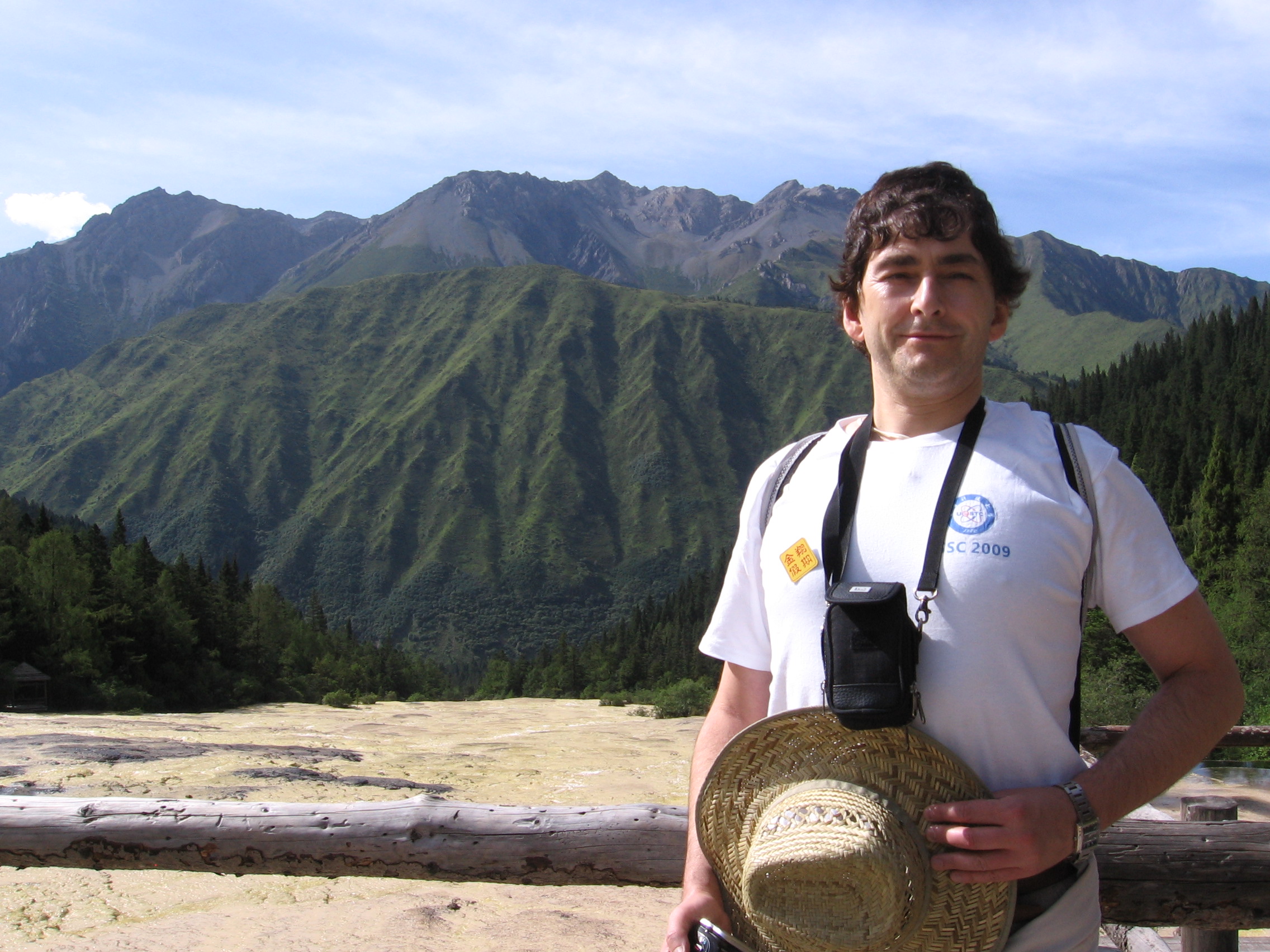
JunKyu Lee is Research Fellow at University of Essex's Institute for Analytics and Data Science, specializing in energy-efficient machine learning systems. He holds a PhD from University of Tennessee and has conducted postdoctoral research at UT-ORNL, University of Sydney, and Queen's University Belfast. His work focuses on optimizing computational efficiency in machine learning through linear algebra innovations and hardware-aware algorithms. Current projects develop security-aware ML systems with reduced energy footprints. Dr. Lee received the Marie Curie Fellowship (2018) for his contributions to energy-efficient computing. His research bridges theoretical algorithms with practical implementations across FPGA and embedded systems.
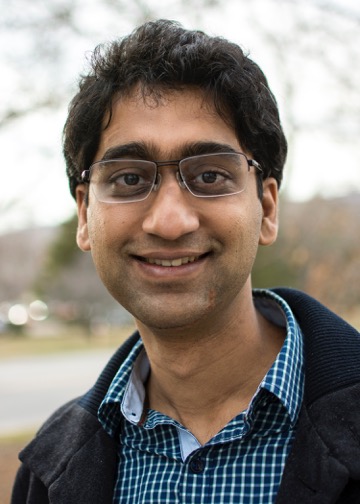
Aditya Bhaskara is an Associate Professor in the School of Computing at the University of Utah, where he is part of the Theory Group and the Utah Center for Data Science. His office is located in MEB 3470. Education: Ph.D. in Computer Science, Princeton University (2012) B. Tech in Computer Science and Engineering, IIT Bombay, India Post-doctoral researcher, Google NYC (2013-2015) Post-doctoral researcher, EPFL (2012-2013) Dr. Bhaskara's research spans theoretical computer science and machine learning. He has a strong focus on algorithm design, particularly approximation and online algorithms. On the machine learning side, he investigates robustness of learning models and domain shifts from a theoretical perspective. His work often blends theory and ML, exploring how to leverage ML-based predictions in classical algorithm design and other beyond worst-case models. His research has significant applications in data streaming, dimensionality reduction, and graph analysis. His recent publications demonstrate a clear trend toward bridging theoretical computer science with practical machine learning applications. Many papers focus on spectral algorithms, robustness in network models, and optimization techniques for large-scale data. There is also significant work in wireless communications and spectrum management, showing how his theoretical work translates to real-world problems in telecommunications and data science. Scientific Awards: NSF CAREER award AF Small grant Grants from NRDZ and FMiTF programs Google Faculty Research Award Dr. Bhaskara actively advises students with strong mathematical backgrounds interested in theoretical computer science and machine learning. He has received significant research funding from the National Science Foundation and Google. He is co-organizing the Data Science Lecture Series at the University of Utah and has served on prestigious program committees including SODA 2024, STOC 2023, ICALP 2023, and ITCS 2022. His teaching portfolio includes advanced courses on algorithms, machine learning theory, and probability. As part of the Theory Group and the Utah Center for Data Science, Dr. Bhaskara collaborates with researchers across disciplines to advance theoretical foundations of computing and their practical applications in data science. His work contributes to both the theoretical understanding of algorithms and their real-world implementation in various domains including wireless networks, data analysis, and machine learning systems.
Hongyang Sun is an Assistant Professor in Electrical Engineering and Computer Science at University of Kansas, researching high-performance computing, cloud/edge systems, and computational data science. Focuses on performance, reliability, and energy efficiency in large-scale systems. Research combines algorithmic design, optimization techniques, and applied machine learning. Previously held positions at Vanderbilt University and French research institutes. Leads projects on resilient scheduling, machine learning acceleration, and edge computing resource management.
Dr. Flavio Vella is an Associate Professor at the Department of Information Engineering and Computer Science (DISI) at the University of Trento. He holds roles on the management board of the national HPC laboratory at CINI and the Steering Committee of ICSC’s spoke4. His research focuses on parallel algorithms for emerging computing systems, machine learning systems, and quantum computing, with an emphasis on irregular computation and large-scale graph analysis. He has industrial experience at NVIDIA and Dividiti, and has contributed to EU projects like ARCHYTAS (AI acceleration) and NET4EXA (exascale networking infrastructure). Dr. Vella earned his Ph.D. from Sapienza University of Rome in 2017. His academic journey includes roles at the Free University of Bozen, CNR Italy, and ETH Zurich. He actively serves HPC communities as Artifact co-chair for PPoPP and Computing Frontiers, and as PC member for IPDPS, SC, and EuroPAR. His work has produced over 40 peer-reviewed publications, including Best Paper Awards at SC22/24 and Best PhD Paper at IPDPS17. His research themes include GPU performance optimization, quantum device reliability, and HPC/AI interconnects. Recent work explores tensor networks, physics-constrained neural networks, and exascale system engineering. Projects like ARCHYTAS (EUDF-2023) and NET4EXA (Horizon) highlight his leadership in European HPC initiatives.
Mark Anthony Riley is a Professor and Chair of the Department of Physics at Florida State University, holding the Raymond K. Sheline Professorship in Physics. He has led the Nuclear Physics Group (Experiment) since joining FSU in 1990 and currently serves as Department Chair. Education Bachelor of Science: University of Liverpool, UK (1981) Doctor of Philosophy: University of Liverpool, UK (1985) Research Interests Professor Riley specializes in experimental nuclear physics , investigating exotic nuclear phenomena through advanced gamma-ray detection. His work focuses on nuclear superfluid behavior , unusual nuclear shapes and shape co-existence , limits of nuclear stability , and nuclear structure under ultra-rapid rotation . He utilizes state-of-the-art systems including Gammasphere and the FSU Gamma-ray Array, while contributing to next-generation projects like GRETINA-GRETA for nuclear science research. Professional History After postdoctoral positions at the Niels Bohr Institute (1985-86) and Oak Ridge National Laboratory/University of Tennessee (1987-88), Riley returned to the University of Liverpool as an Advanced Fellow (1989-90). He joined Florida State University as Assistant Professor in 1990, advancing to Associate Professor (1994), Professor (1996), and Raymond K. Sheline Professor (2001). He served as Associate Chairman (2003-2007) before becoming Department Chair in 2007. Laboratories and Collaborations Riley conducts experiments using FSU's Superconducting Linear Accelerator Facility and Gamma-ray Array, while maintaining active collaborations with national laboratories including Lawrence Berkeley National Laboratory's Gammasphere project. As former Chair of the Gammasphere Users Executive Committee (2006), he organized major scientific initiatives and contributes to national committees developing next-generation gamma-ray facilities in the United States.
Jinjun Xiong is the SUNY Empire Innovation Professor and Professor of Computer Science and Engineering at the University at Buffalo. He directs the Institute for Artificial Intelligence and Data Science and leads the X-Lab@UB, focusing on accelerating AI systems and solutions. His research spans cognitive computing, big data analytics, and deep learning applications in energy and industrial systems. Education: PhD in Electrical Engineering (University of California, Los Angeles, 2006). Research interests emphasize AI-driven solutions for healthcare, edge computing, and interdisciplinary challenges. His work addresses ethical AI, multimodal systems, and hardware-software co-design for efficient AI deployment. Awards: See full list here (external link provided). Grants and Advising: Advises students in AI, edge computing, and medical applications. Active in securing research funding for interdisciplinary projects. Labs: X-Lab@UB focuses on AI systems, edge computing, and real-world AI solutions. Collaborates with industry partners on deployable AI frameworks.
Steve Peggs serves as an Adjunct Professor in the Department of Physics and Astronomy at Stony Brook University, concurrently holding the position of senior accelerator physicist at Brookhaven National Laboratory (BNL). His primary research focuses on accelerator design and performance optimization, with specialized expertise in linear and nonlinear beam dynamics. Professor Peggs played instrumental roles in designing, building, and commissioning the Relativistic Heavy Ion Collider (RHIC) at BNL. His research extends to multiple international accelerator projects including CESR at Cornell, CERN's SPS collider, Fermilab's Tevatron and Main Injector, and the European Spallation Source. Professor Peggs co-authored the graduate-level textbook Introduction to Accelerator Dynamics published by Cambridge University Press. His scientific contributions were recognized through his election as Fellow of the American Physical Society.
Vladimir Litvinenko is a Professor in the Department of Physics and Astronomy at Stony Brook University. His research focuses on advanced accelerator technologies, plasma-based acceleration, and high-energy physics applications. He leads projects on next-generation linear colliders, coherent electron cooling systems, and laser wakefield acceleration (LWFA). Key initiatives include the Linear Collider Facility (LCF) at CERN and development of superconducting radiofrequency (SRF) photoinjectors for polarized electron beams. His work integrates experimental and theoretical studies of plasma dynamics, beam diagnostics, and novel laser systems. Notable contributions include breakthroughs in CO2-laser-driven LWFA, plasma-cascade instabilities, and electron beam polarization control. He collaborates internationally on projects like the EuPRAXIA compact particle source and Circular Collider using Energy-Recovery Linacs (CERC). Current research emphasizes coherent electron cooling experiments at RHIC, development of high-brightness electron beams, and applications of energy-recovery linacs (ERLs) for future colliders. His group employs solenoid-based beam diagnostics and plasma cascade amplification techniques to address challenges in beam stability and luminosity enhancement. Dr. Litvinenko's innovations span superconducting RF technology, beam dynamics modeling, and multi-color laser systems for advanced acceleration regimes. His work bridges fundamental plasma physics with practical applications in particle colliders and radiation sources, shaping future directions in accelerator science.
Dr. Sigal Gottlieb is Chancellor Professor of Mathematics at UMass Dartmouth and founding director of the Center for Scientific Computing and Data Science Research. A Harvard Business School PLDA graduate and computational mathematics expert, her research develops high-order numerical methods for simulating hyperbolic PDEs with applications in gravitational wave physics. Research Focus: Specializes in strong stability preserving (SSP) time discretizations, WENO/spectral methods for discontinuous problems, and GPU-accelerated algorithms for computational relativity. Current NSF-funded projects include developing efficient black hole spectroscopy techniques. Leadership: Established UMass Dartmouth's computational science research hub and developed new academic programs including the Data Science BS/MS degrees. Recognized as SIAM and AWM Fellow for contributions to computational mathematics.
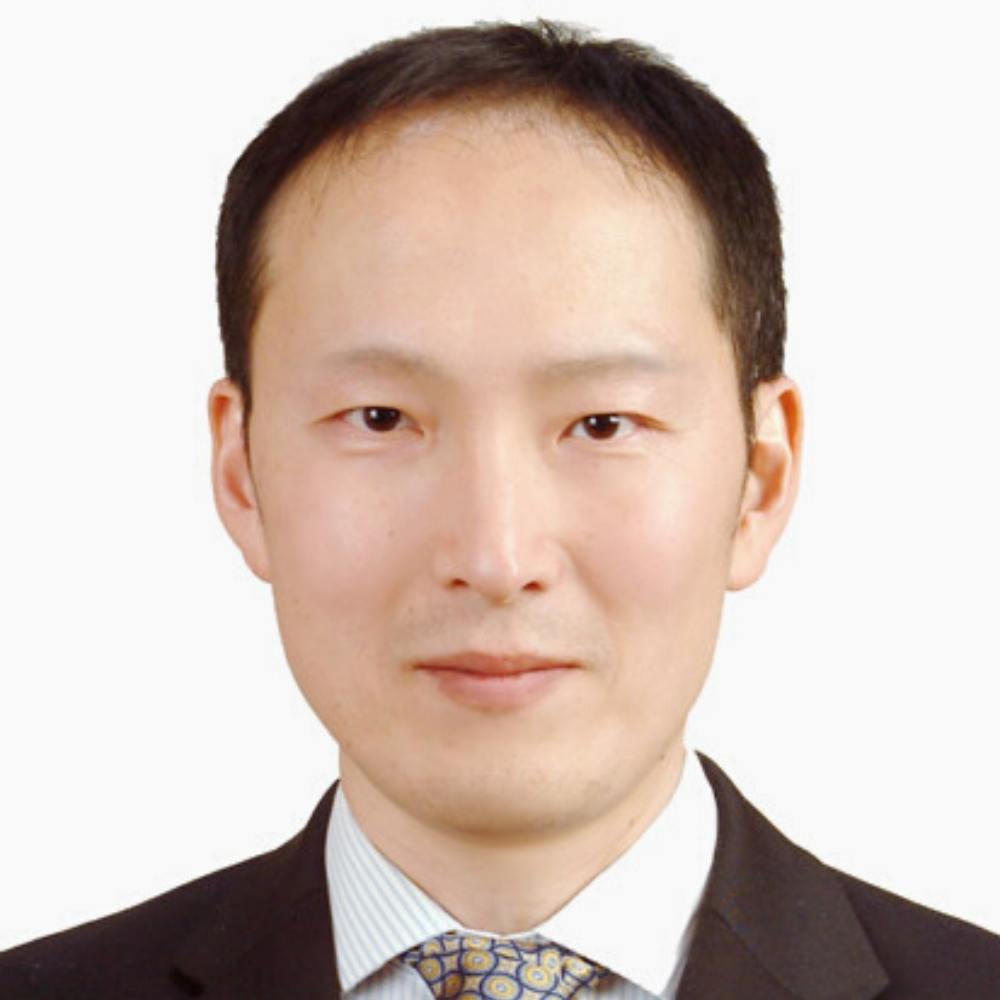
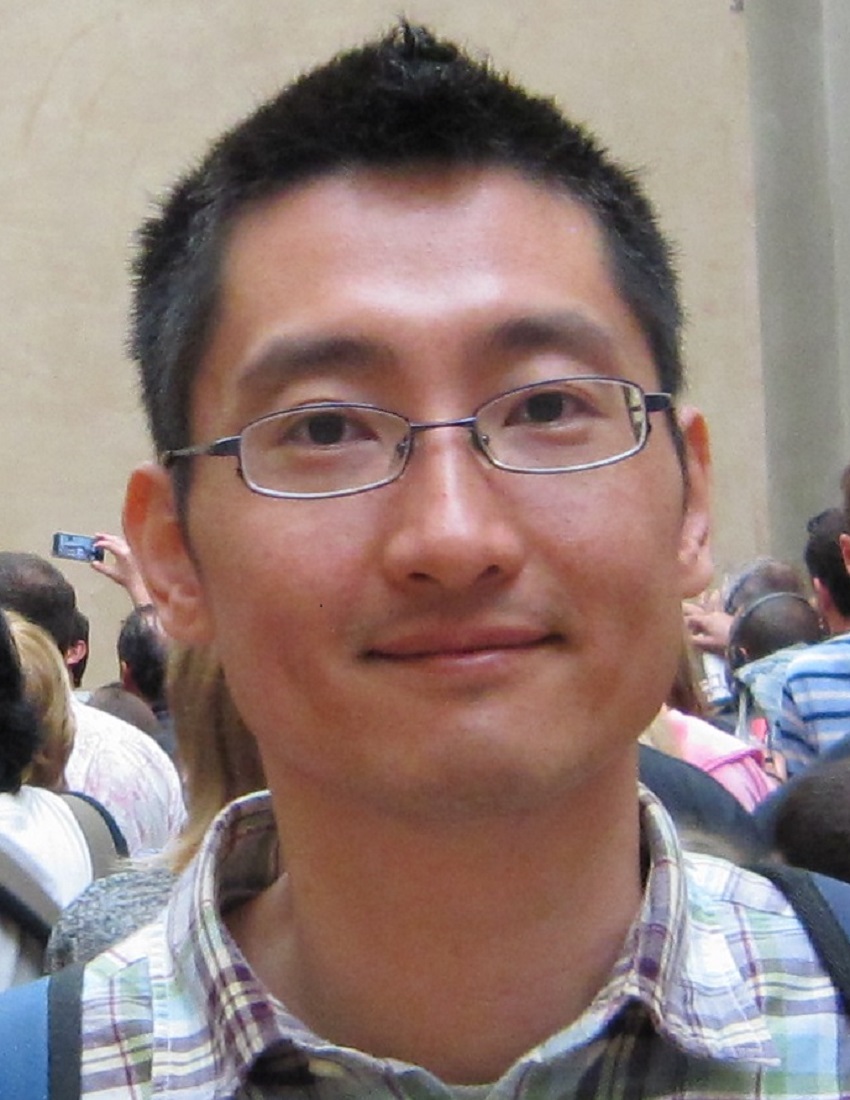
Yanlai Chen is a Professor in the Department of Mathematics at the University of Massachusetts Dartmouth and serves as Chief Research Officer. He holds a PhD (2007) and MS (2007) from the University of Minnesota Twin Cities, and a BS (2002) from the University of Science and Technology of China. His research integrates numerical analysis, scientific computing, and machine learning. Research interests focus on numerical PDEs, model reduction, machine learning applications in scientific computing, uncertainty quantification, and high-performance computing algorithms. His work bridges theoretical mathematics with practical computational challenges. His publications demonstrate consistent focus on physics-informed neural networks (2021-2024), model reduction techniques (2019-2024), and computational methods for differential equations. Recent work shows increased emphasis on machine learning integration with traditional numerical methods. He has supervised 6 doctoral dissertations and leads the NSF-funded ACCOMPLISH program supporting STEM education through contextualized computing curricula.
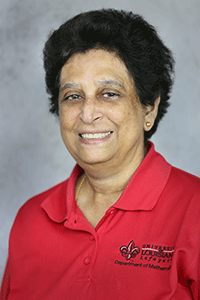
Aghalaya S. Vatsala is the Pennzoil Endowed Professor in the Department of Applied Mathematics at the University of Louisiana at Lafayette. His research focuses on differential equations, fractional calculus, numerical analysis, and stability theory. He holds a Ph.D. from the Indian Institute of Technology, Madras (1973), and degrees from Bangalore University (M.S. 1968, B.S. 1966). His work emphasizes impulsive differential equations, reaction-diffusion systems, and numerical methods for fractional equations. Recent research trends include the analysis of sequential Caputo fractional differential equations, stability in large-scale systems, and applications in transport phenomena and predator-prey models. Over 50 publications since 2010 highlight his contributions to fractional calculus and iterative techniques. Key areas of exploration include the convergence of numerical methods, quasilinearization for nonlinear problems, and fractional boundary value problems. His work bridges theoretical developments with applied contexts, such as catalytic converters and ecological modeling.
Georgios Goumas is an Associate Professor in the Division of Computer Science at the School of Electrical and Computer Engineering, National Technical University of Athens. His research focuses on high-performance computing, parallel systems, and efficient resource management for modern computing platforms. Research domains: Serverless computing scalability and memory management Quantum algorithm design for classification Virtual memory optimization Hardware acceleration for sparse computations NUMA-aware concurrent data structures Recent innovations include DaeMon for disaggregated systems, eBPF-based Linux memory management, and multi-GPU matrix multiplication optimizations. Publications demonstrate consistent advancement in low-level system efficiency across quantum, serverless, and heterogeneous computing domains. Dr. Goumas teaches undergraduate and graduate courses on Operating Systems, Parallel Processing, and Code Optimization Techniques. His lab develops open-source tools like Paralia runtime for auto-tuning linear algebra and FPGA-based accelerators for scientific computing.
Professor Dionisios Pnevmatikatos holds the position of Professor at the School of Electrical and Computer Engineering, National Technical University of Athens (NTUA), where he leads research in Computer Architecture and Reconfigurable Computing. He previously served as a Professor at the Technical University of Crete (TUC) from 2000 to 2019, directing the Microprocessor and Hardware Laboratory (MHL) and chairing the department. His academic journey includes a B.Sc. from the University of Crete (1989), M.Sc. and Ph.D. from the University of Wisconsin-Madison (1991 and 1995). Research Interests: Focuses on Computer Architecture, Reconfigurable Computing, Application Acceleration, Custom Architectures, and Hardware Acceleration of Bioinformatics Algorithms. His work spans FPGA-based systems, parallel computing, and energy-efficient designs. Key Projects: Coordinator of FASTER (EU FP7), Principal Investigator in DeSyRe, AXIOM, dRedBox, and EDRAH2020 projects. Active in EU initiatives like H2020 OPTIMA and Vitamin-V for RISC-V ecosystems. Leadership roles in conferences include SAMOS 2018 and FPL 2011 program chairs. Teaching: Courses include Computer Architecture, Digital Systems Design, and Parallel Processing Systems at NTUA. Former roles include teaching at University of Crete and TUC. Labs: Affiliated with Computing Systems Laboratory (CSLab) at NTUA and FORTH-ICS since 1997. Involved in prototyping manycore architectures and network processors.
Dr. Victor Y. Pan is a Distinguished Professor of Mathematics and Computer Science at Lehman College, The City University of New York (CUNY). He has been affiliated with Lehman College since 1988 and holds one of the highest academic ranks reserved for influential scholars. His research focuses on numerical and algebraic algorithms, with a particular emphasis on polynomial computations, matrix structures, and root-finding methods. Dr. Pan's work bridges numerical and symbolic computing, aiming to optimize computational efficiency while ensuring accuracy. Educational Background: Ph.D. in Mathematics from Moscow University Research experience at the Soviet Academy of Science Research Interests: His key areas include polynomial root-finding, matrix eigenproblems, structured matrices (e.g., Toeplitz, Hankel, and Cauchy), and low-rank approximation. He has pioneered methods combining numerical and algebraic techniques to enhance computational speed and precision. Recent work emphasizes algorithms for sparse polynomials, superfast root-finders, and efficient matrix computations. Publications & Impact: With over 200 peer-reviewed papers and three books, Dr. Pan’s research has influenced global computational mathematics. His articles address topics like fast root-finding, matrix eigenvalue problems, and low-rank approximation at sub-linear cost. His work is widely cited in computer science and applied mathematics. Awards & Recognition: Appointment as Distinguished Professor (CUNY, 2000) Global recognition as a leader in theoretical computer science and numerical analysis Advising & Grants: Recipient of continuous NSF funding for over 20 years. He has mentored 17 Ph.D. students through his seminar program, focusing on algebraic and numerical computing. His seminar fosters collaborative research in topics like polynomial equations, coding theory, and eigen-solving techniques. Labs & Teams: Leads the Algebraic Numerical Computing Seminar at CUNY’s Graduate Center, integrating Computer Science and Mathematics students. The seminar explores cutting-edge topics such as displacement-structured matrices, polynomial root-finding, and eigen-solving algorithms.
Marc Moreno Maza is a Professor in the Computer Science and Applied Mathematics Departments at the University of Western Ontario, and a Principal Scientist at the Ontario Research Centre for Computer Algebra (ORCCA). His research focuses on applying computer science to mathematics, particularly polynomial system solving and algorithm design. Key areas include parallel computing, high-performance algebraic algorithms, and GPU acceleration. He leads projects funded by NSERC and industry partnerships, such as 'Hardware Acceleration Technologies for Polynomial Systems' and collaborative work with IBM and CAS Research. His research spans four directions: theoretical foundations of polynomial equations, efficient algorithm development, software implementation (e.g., RegularChains library in Maple), and applications to real-world challenges. He has delivered over 100 talks worldwide on topics like cylindrical algebraic decomposition, GPU-based polynomial arithmetic, and parametric system solving. His work emphasizes optimizing algorithms for modern architectures and leveraging parallelism. Notable contributions include the BPAS and CUMODP libraries for polynomial arithmetic, and the RegularChains library for semi-algebraic set computations. He collaborates internationally, with grants supporting both theoretical and applied research. His team addresses challenges in computational algebra, from theoretical breakthroughs to practical software tools.



/prod01/production-cdn-pxl/media/umassdartmouth/profiles/arts-and-sciences/mathematics/Sigal-Gottlieb2.jpg)
/prod01/production-cdn-pxl/media/umassdartmouth/profiles/arts-and-sciences/mathematics/250221-UMD-SMAST-VIP-TOUR-01_Yanlai-Chen.jpg)