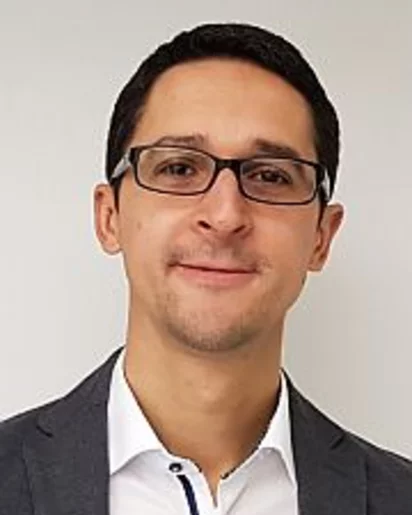
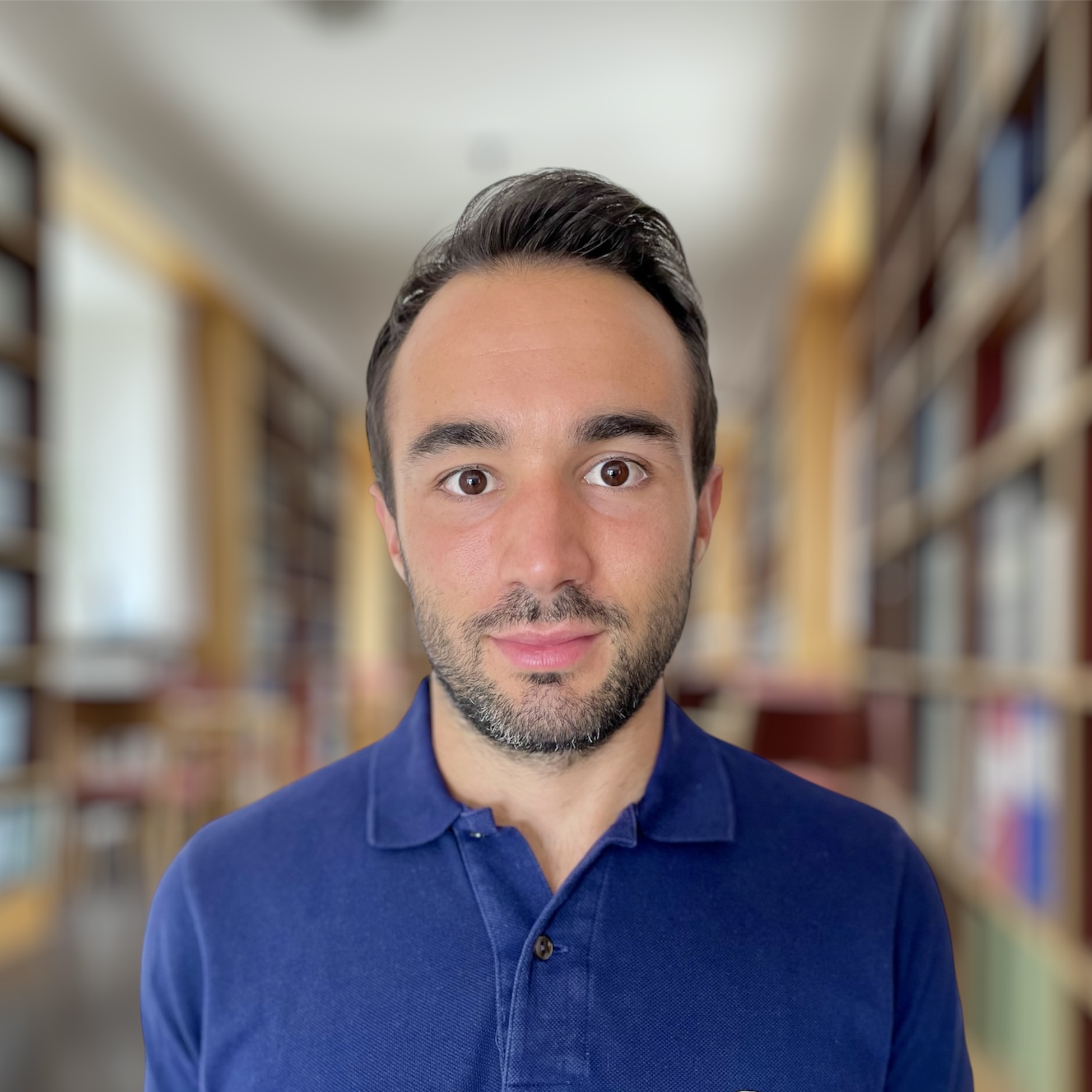
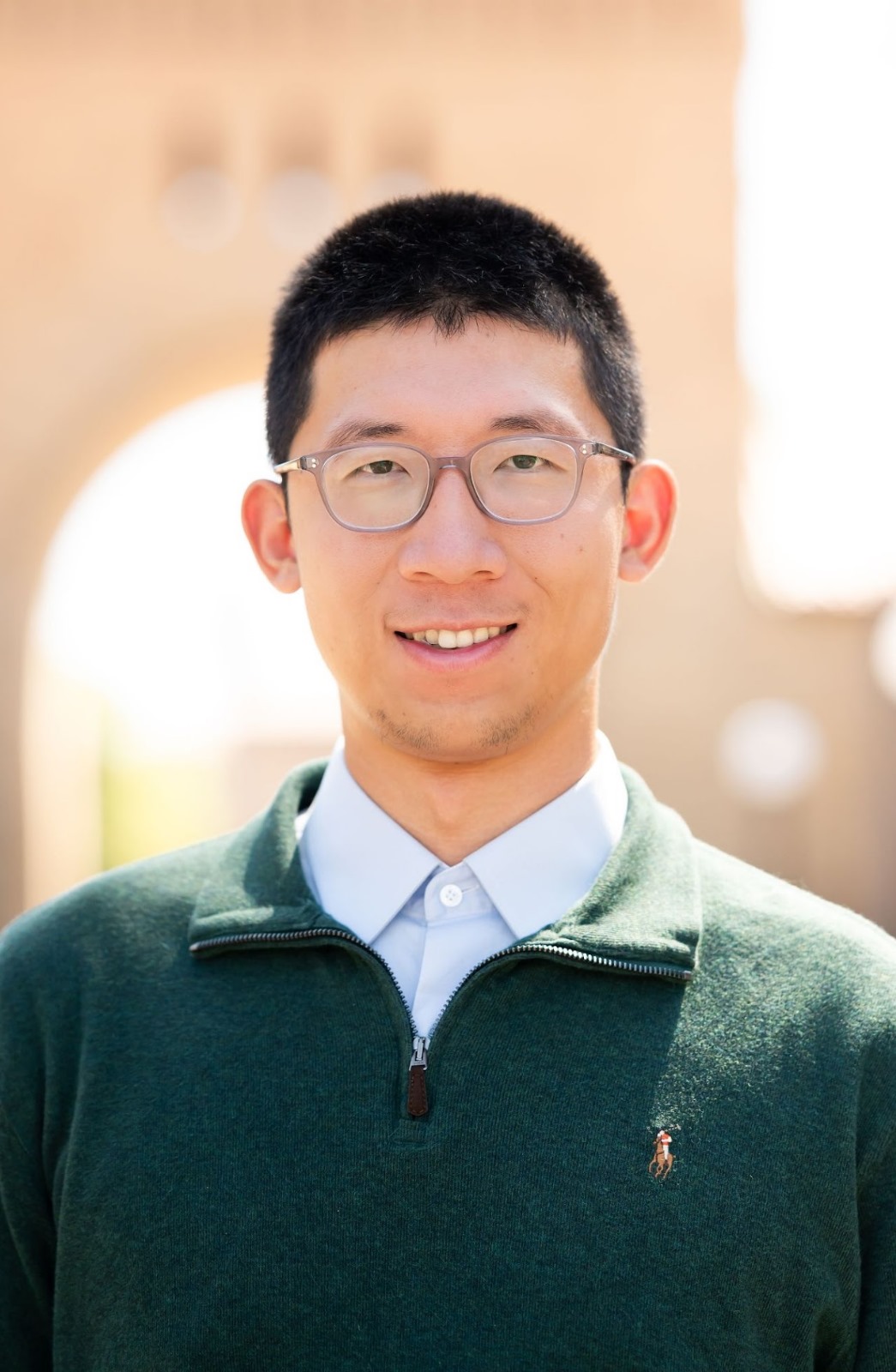
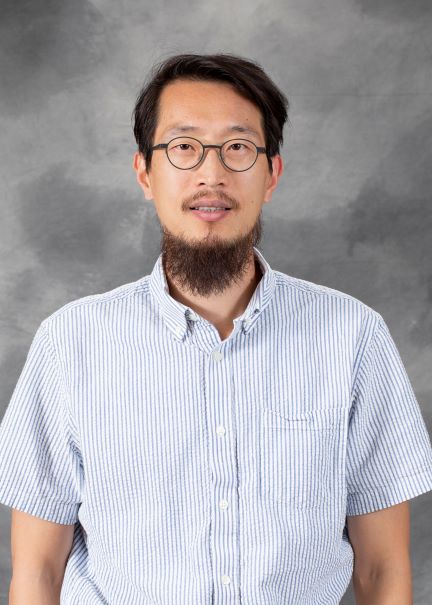
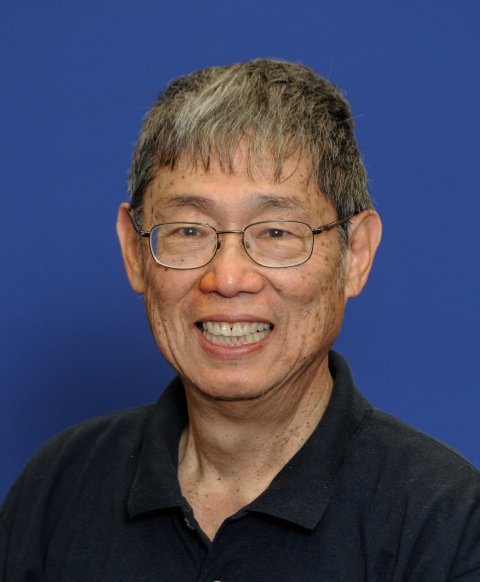
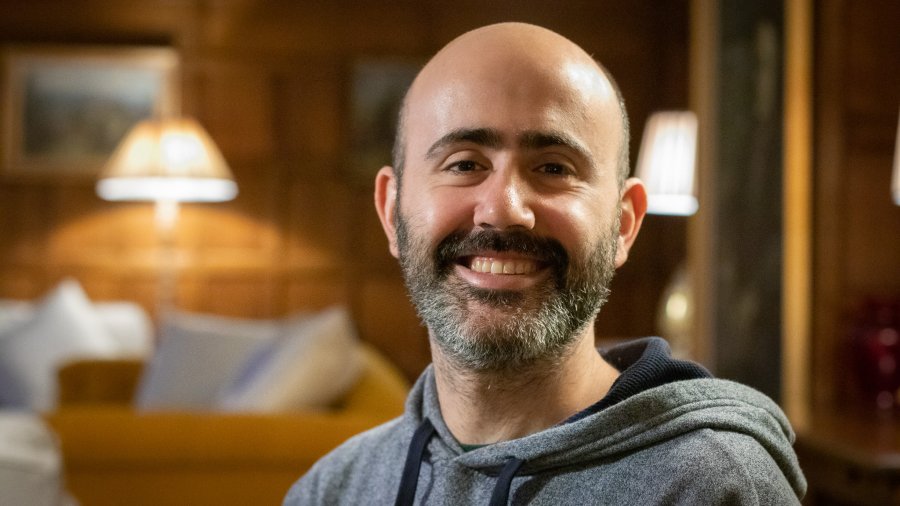
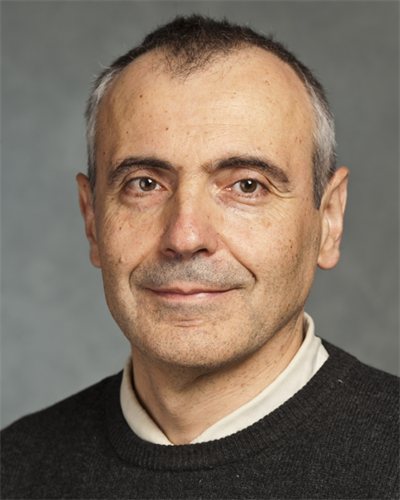
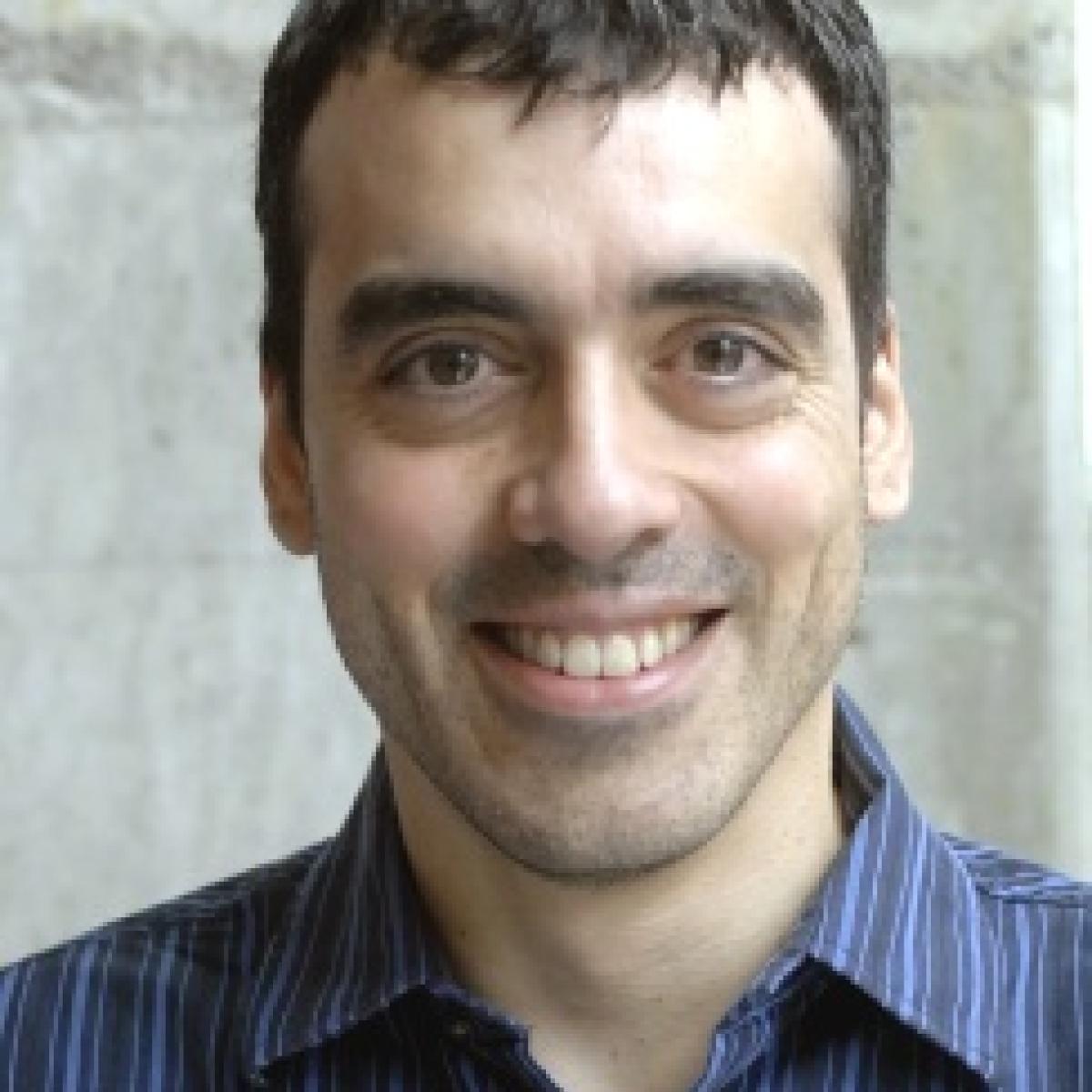
Alexandre Trisorio is the head of the Swiss Free Electron Laser (SwissFEL) gun laser group at the Paul Scherrer Institut (PSI) since July 2019. He holds an MSc in Optics and Photonics from University Paris Sud (2005) and a PhD in Physics (2008), both under Prof. Gérard Mourou (Nobel Prize laureate). His research focuses on advanced laser technologies and electron beam manipulation for FEL applications. He co-leads the SwissFEL seeding project to generate attosecond coherent X-ray pulses and manages the Gun Laser Group, comprising 3 engineers and a technician. Key research areas include novel laser source development using diode-pumped Ytterbium systems and improving FEL performance through laser-based techniques. His work addresses challenges like microbunching instability and dual-photocathode laser schemes for exotic FEL modes. Certified as a Project Manager Professional (PMP) in 2021, he bridges R&D innovation with operational excellence in high-intensity laser systems. Scientific achievements include pioneering spatial/temporal laser pulse shaping and contributions to two-color X-ray FEL generation. His lab, part of PSI’s Laboratory for Non-linear Optics, advances both academic and industrial laser applications.
Sebastian Pokutta is a Professor at Technische Universität Berlin, Vice President at Zuse Institute Berlin (ZIB), and Chair of the Cluster of Excellence MATH+ and MODAL. His research focuses on artificial intelligence, optimization, and machine learning, with emphasis on algorithmic development, decision-making systems, and real-world applications in areas like satellite data analysis, quantum computing, and combinatorial mathematics. He leads a research group exploring AI-driven methodologies and their interdisciplinary applications. He holds academic positions including leadership roles in major institutions and has contributed to numerous high-impact publications in optimization, machine learning, and quantum computing. His work has been recognized with awards such as the Science Prize of the Association for Pediatric Orthopedics (VKO). Pokutta actively engages in academic outreach, delivering talks on optimization and AI, and contributes to open-source projects like the FrankWolfe.jl library. His research bridges theoretical foundations with practical implementations, addressing challenges in computational efficiency, mathematical modeling, and AI ethics.
Aaron Sidford is an Associate Professor in the Department of Management Science and Engineering and the Department of Computer Science at Stanford University. He holds a PhD in Electrical Engineering and Computer Science from MIT, advised by Jonathan Kelner. His research focuses on optimization theory, algorithm design, and computational complexity, with significant contributions to convex optimization, graph algorithms, numerical linear algebra, and machine learning theory. He has taught courses such as Introduction to Optimization Theory (MS&E213/CS269O) and Discrete Mathematics and Algorithms (CME305/MS&E316), emphasizing theoretical foundations and large-scale problem-solving. His work bridges continuous and discrete optimization, often leading to efficient algorithms with proven convergence guarantees. Award highlights include the Best Paper Award at FOCS 2022 and COLT 2022, along with notable recognitions for contributions to dynamic graph algorithms and convex optimization. He advises PhD students focusing on optimization theory and its applications, and his research has been supported by grants from NSF, ONR, and industry partnerships. His current research explores cutting-edge techniques in optimization, including faster max-flow algorithms, memory-efficient convex optimization, and adaptive gradient methods. He collaborates widely, contributing to both theoretical advancements and practical algorithmic implementations.
Daniele Massaro is a Postdoctoral Fellow in Fluid Mechanics at the Department of Mechanical Engineering, Massachusetts Institute of Technology (MIT), under Prof. Wim van Rees. His research focuses on vortex dynamics in wall-bounded flows and transitional/turbulent shear flows using space-adaptive direct numerical simulations. He holds a PhD from KTH Royal Institute of Technology (Sweden), where he studied wall turbulence with Prof. Philipp Schlatter and Lect. Saleh Rezaeiravesh, and a MSc/BSc from Politecnico di Milano. His expertise spans computational fluid dynamics, adaptive mesh refinement, and turbulence modeling. Education: Bachelor and Master of Science in Aerospace Engineering, Politecnico di Milano PhD in Computational Fluid Dynamics, KTH Royal Institute of Technology Research Interests: Fluid mechanics, vortex dynamics, turbulence, numerical methods (spectral elements, adaptive meshing), and applications to wind turbines, biological flows, and adjoint-based optimization. He employs techniques like Proper Orthogonal Decomposition and transfer entropy to analyze flow dynamics. Teaching: Taught Classical Mechanics, Fluid Mechanics, and Engineering Fluid Mechanics at KTH (2020–2024), supervising a Master's thesis. His work integrates computational tools like Nek5000 and modern Fortran for high-performance simulations. Labs/Teams: Active in MIT's Mechanical Engineering research groups, focusing on turbulence and vortex dynamics. Collaborates on projects involving adaptive mesh refinement and GPU-accelerated simulations.
Zhaonan Qu is a Research Fellow at Columbia University's Data Science Institute, working on econometrics, optimization, and machine learning. His research develops methods for causal inference, network analysis, and efficient statistical estimation. Key contributions include optimal preconditioning techniques, robust instrumental variables estimation, and scalable algorithms for large-scale choice modeling. Recent work connects matrix balancing with discrete choice theory and develops network inference methods using iterative proportional fitting. Qu holds a PhD in Economics from Stanford University, where he was advised by Guido Imbens and Yinyu Ye. Current projects address distributionally robust optimization and computational challenges in high-dimensional econometrics.
Xiangxiong Zhang is an Associate Professor in the Department of Mathematics at Purdue University, specializing in numerical analysis, scientific computing, and applied mathematics. His research focuses on numerical methods for partial differential equations, optimization algorithms, and computational fluid dynamics. He holds a PhD and has been actively involved in teaching graduate and undergraduate courses, including numerical PDEs, optimization, and linear algebra. His work emphasizes high-order numerical methods such as discontinuous Galerkin schemes, finite element methods, and spectral element methods, with applications in fluid dynamics, plasma physics, and compressible flow simulations. Notable contributions include positivity-preserving limiters, bound-preserving schemes, and Riemannian optimization techniques for matrix constraints. Zhang collaborates with researchers in computational mathematics and has published extensively in top journals like Journal of Computational Physics and SIAM Journal on Scientific Computing . His research also addresses challenges in GPU-accelerated computing for large-scale scientific simulations.
Dongruo Zhou is an Assistant Professor in the Department of Computer Science at Indiana University Bloomington. His research focuses on foundational aspects of machine learning, particularly sequential decision-making (bandits, reinforcement learning), optimization algorithms for deep learning, and statistical complexity analysis. He holds a Ph.D. from UCLA (2023), an M.Sc. from Tsinghua University (2017), and previously studied at the University of Virginia (2017-2018). Research interests span reinforcement learning theory (sample complexity, horizon-free algorithms), optimization in deep learning (stochastic gradient methods, saddle-point escape), and neural contextual bandits . Notable contributions include establishing nearly optimal bounds for RL with function approximation and analyzing adversarial corruption robustness in contextual bandits. Recent work emphasizes decision-making algorithms for complex structures like large language models and hierarchical RL. His publications appear in top venues like ICML, NeurIPS, and COLT, with over 50 peer-reviewed papers. He advises three Ph.D. students at IU Bloomington. His research has received recognition through prestigious awards including the NeurIPS 2022 Spotlight presentation and NeurIPS 2021 oral presentation. Key contributions include foundational work on reward-free exploration frameworks and variance-dependent regret bounds.
Gene Hou is a Professor in the Department of Mechanical & Aerospace Engineering at Old Dominion University (ODU), Batten College of Engineering and Technology. He joined ODU in 1983 and was promoted to full Professor in 1996. His research focuses on computational mechanics, multibody dynamics, and design under uncertainty, with applications in structural optimization, aeroelasticity, and CFD. He has led numerous grants totaling over $5.5 million in funding, including scholarships for marine engineering students and studies on fluid-structure interaction. Education: Ph.D. (Mechanical Engineering, University of Iowa, 1982), M.S. (Mechanical Engineering, National Taiwan University, 1976), B.S. (Mechanical Engineering, National Cheng Kung University, 1974). Research Highlights: Dr. Hou’s work spans design optimization, sensitivity analysis, and multidisciplinary applications. Recent projects include robust design of MEMS resonators, dynamic environment simulation laboratories, and AHP-based decision methodologies. Key technologies include discontinuous Galerkin methods, partitioned FSI algorithms, and reliability-based design frameworks. Articles Overview: Recent works emphasize fluid-structure interaction (FSI), reliability analysis, and educational innovations. Notable trends include partitioned computational approaches, stochastic modeling for structural systems, and pedagogical methods for technical disciplines. Awards: Includes the 1995 Ralph R. Teetor Educational Award, 1987 ASME Outstanding Faculty Award, and 1986 NSF Presidential Young Investigator Award. Grants & Labs: Over 50 grants funded projects on topics like friction stir welding, naval craft dynamics, and orthotic systems. Active involvement in capstone design projects for autonomous surface vehicles and marine engineering education.
Dr. Dave C.J. Krop is a full-time Assistant Professor in the Electromechanics and Power Electronics department at Eindhoven University of Technology (TU/e). His expertise includes linear motors, contactless energy transfer, and advanced actuator design with a focus on superconducting and high-dynamic applications. Prior to his full-time position since 2018, he held a part-time role and worked in industry roles at Punch Powertrain and Vostermans Ventilation. Krop holds a B.E. in Electrical Engineering (2004), M.Sc. in Electrical Engineering (2007), and Ph.D. in Electromechanics and Electromagnetics (2013), all from TU/e. His research emphasizes electromagnetic device modeling, finite element analysis, and the integration of energy transfer systems with actuators. Notable contributions include a patented linear motor with contactless energy transfer (2013) and pioneering work on high-dynamic superconducting linear motors. He has authored/co-authored 15 conference papers, 3 journal articles, and a book. Research Highlights: Developed HTS linear motor designs for high-dynamic applications using electromagnetic-thermal analysis Advanced MIMO magnetic levitation actuator control using neural networks Optimized PM-based planar actuators through semi-analytical modeling Awards: Best Paper Award (2018), Invited Paper Award (2013) Grants & Collaborations: Participated in STW-funded projects (2015–2024) focused on superconducting motors, automotive powertrains, and cooling systems. Collaborated with industry partners and academic teams on modular electric drives and energy-efficient systems. Labs/Teams: Involved with the Electromechanics Lab and High Tech Systems Center at TU/e, contributing to interdisciplinary projects in sustainable energy and precision engineering.
Yair Litman is a DFG-supported Junior Research Fellow at Wolfson College and a theoretical chemist in the Yusuf Hamied Department of Chemistry , University of Cambridge. His work bridges quantum dynamics, advanced spectroscopy and machine learning to unravel how nuclei move at the atomic scale in aqueous, metallic and hybrid organic/inorganic systems. Education Diploma, University of Buenos Aires (2014) PhD, Fritz Haber Institute of the Max Planck Society, Berlin (2016–2020) Research Interests Litman’s research orbits around quantum mechanical descriptions of molecular motion . He develops adiabatic and non-adiabatic rate theories to treat hydrogen transfer and other light-atom reactions, where tunneling and zero-point energy dominate. He couples these theories with non-linear optical spectroscopies —sum-frequency generation, tip-enhanced Raman, 2D-IR—to obtain direct experimental fingerprints of elusive quantum effects at aqueous interfaces and on catalytic surfaces. Machine-learning-accelerated electronic-structure calculations provide the speed and accuracy required to simulate these complex many-body systems. Publications Trend Across 2022-2025, his publications reveal a concerted push toward first-principles spectroscopy : combining rigorous quantum-rate formulations with machine-learned potentials to predict and interpret spectra of interfacial water, defects in 2D materials and charge-transfer systems. The work is equally split between methodological advances (instanton theory, i-PI extensions, friction tensors) and high-impact applications (air-water interface fields, MX2 monolayers, dye-sensitized interfaces). Honours & Funding Deutsche Forschungsgemeinschaft (DFG) Fellowship Wolfson College Junior Research Fellowship Research Groups & Collaborations Litman is embedded in the Althorpe Group at Cambridge, continues collaborations with the Rossi Group at Max Planck Institute for Structure and Dynamics of Matter (Hamburg), and the Bonn Group at Max Planck Institute for Polymer Research (Mainz). He also contributes to the open-source i-PI and FHI-aims software ecosystems, fostering worldwide community development.
Russ Tedrake is the Toyota Professor of Electrical Engineering and Computer Science, Aeronautics and Astronautics, and Mechanical Engineering at MIT. He directs the Center for Robotics at CSAIL and leads MIT's DARPA Robotics Challenge team. Additionally, he serves as Senior Vice President of Robotics Research at Toyota Research Institute (TRI). His work focuses on control solutions for complex dynamical systems, integrating mechanics, optimization, and machine learning for robotic manipulation. Education: B.S.E. in Computer Engineering, University of Michigan (1999) Ph.D. in Electrical Engineering and Computer Science, MIT (2004) Postdoctoral Associate, MIT Brain and Cognitive Sciences Department Research Interests: Tedrake’s research emphasizes elegant control strategies for underactuated and stochastic systems. Key areas include robust control design using non-smooth mechanics, merging systems theory with machine learning, and developing tools like the Drake software framework for simulation and analysis. His team explores topics such as contact-rich manipulation, trajectory optimization, and real-time motion planning. Notable Contributions: Tedrake’s group develops algorithms for dexterous robotics, including tactile sensing with GelSight sensors and high-speed manipulation strategies. The Drake toolbox is widely used for robotics simulation and control. Awards: 2024 MIT School of Engineering Distinguished Educator Award NSF CAREER Award Multiple teaching awards, including the 2021 Jamieson Teaching Award Labs & Projects: Leads the Robot Locomotion Group at CSAIL, which studies agile robotics. Active in TRI’s research on autonomous vehicles and industrial robotics.
Neil Kelson is a Professor at Queensland University of Technology (QUT), specializing in computational science and engineering. He holds a PhD in Engineering Mathematics from QUT (2000). His primary affiliations are within the Faculty of Science and Engineering, School of Mathematical Sciences. Research Interests: Dr. Kelson's work focuses on computational fluid dynamics (CFD), numerical simulation, and hardware-accelerated computing using FPGAs. He has pioneered methods for solving linear systems on heterogeneous architectures and has contributed to biomedical engineering through CFD applications in aneurysm analysis and heart pump design. His recent work emphasizes parallel computing and FPGA-based algorithms for real-time systems. Key Contributions: Over 78 publications span topics like tridiagonal linear solvers (2019), MHD flow modeling (2018), and FPGA hardware implementations (2012–2016). His CFD research addresses agricultural fumigation (2016) and biomedical devices like biventricular assist devices (2006–2009). He has also developed educational frameworks for computational science curricula (2013). Grants and Collaborations: Collaborations include projects on FPGA-based UAV path planning (2012), ECG signal processing (2014), and turbulence modeling (1990s–2000s). No explicit grants are listed in the provided texts. Labs/Teams: While specific labs aren't mentioned, his work aligns with QUT's computational engineering and mathematical sciences research groups. He has advised on FPGA and CFD-related projects across academia and industry.
Aleksandar Stankovic is a Research Professor in the Department of Electrical and Computer Engineering at Tufts University. His research focuses on modeling, control, and estimation in electric energy processing, power electronics, power systems, and electric drives. He holds a Ph.D. from MIT (1992) and M.S./B.S. degrees from the University of Belgrade. His work emphasizes analytical and experimental approaches to dynamic power quality monitoring, control system design, and resilient power grid operations. Research contributions include dynamic phasor analysis, distributed state estimation, and hybrid modeling techniques for large-scale systems. Recent studies address inverter-dominated grids, transient stability, and data-driven predictive control methods. Key technical areas include: Power system resilience quantification Dynamic phasor-based modeling Multi-agent power flow analysis Model reduction for complex networks Nonlinear control strategies Publications highlight advancements in: Real-time power quality metrics Grid topology adaptation Adaptive compensation algorithms Secure distributed estimation No awards or grants explicitly listed in available materials.
Pontus Giselsson is an Associate Professor in the Department of Automatic Control at Lund University's Faculty of Engineering (LTH). His work bridges theoretical optimization and its practical applications in machine learning and control systems. His research interests include optimization, convex and large-scale optimization, operator splitting methods, and numerical algorithms. These areas are central to modern control theory and machine learning, where efficient and scalable solutions are critical. He has made significant contributions to the understanding of convergence properties in first-order methods, particularly through Lyapunov analysis and performance estimation frameworks. The recent publications highlight a strong focus on advancing the theoretical foundations of optimization algorithms, including the Chambolle-Pock method, forward-backward splitting, and generalized alternating projections. These works explore convergence conditions, momentum corrections, and deviations in algorithmic behavior, often in non-standard or nonlinear settings. The keywords across these articles reflect a deep engagement with mathematical programming, control theory, and computational mathematics. Pontus Giselsson teaches a master's level course titled Optimization for Learning , offered annually, and previously taught a PhD-level course on Large-Scale Convex Optimization . He actively supervises research and collaborates with scholars such as M. Fält, S. Banert, and A.B. Taylor. Email: pontusg@control.lth.se Phone: 046-222 28 784
Pablo A. Parrilo is the Joseph F. and Nancy P. Keithley Professor of Electrical Engineering and Computer Science at the Massachusetts Institute of Technology (MIT). He serves as Associate Director of the Laboratory for Information and Decision Systems (LIDS) and maintains affiliations with the Operations Research Center (ORC), as well as connections to multiple research centers including the Simons Institute programs in Geometry of Polynomials and Bridging Continuous and Discrete Optimization. His extensive academic journey includes previous positions as Assistant Professor at ETH Zurich's Automatic Control Laboratory and Visiting Associate Professor at Caltech, with research visits to UC Santa Barbara, Lund Institute of Technology, and UC Berkeley. Parrilo received his Electronics Engineering undergraduate degree from the University of Buenos Aires and earned his PhD in Control and Dynamical Systems from the California Institute of Technology. His foundational education in engineering and dynamical systems established the basis for his subsequent research contributions in optimization and control theory. Professor Parrilo's research spans optimization methods for engineering applications, control and identification of uncertain complex systems, robustness analysis and synthesis, and the development of computational tools based on convex optimization and algorithmic algebra. His work bridges theoretical mathematics with practical engineering problems, particularly through sum of squares (SOS) optimization techniques. He has pioneered applications in semidefinite programming, algebraic geometry, and polynomial optimization, creating powerful frameworks for solving challenging non-convex problems. His influential SOSTOOLS MATLAB toolbox has become a standard resource for researchers working in sum of squares optimization. Analysis of his recent publications reveals a consistent focus on advancing convex optimization techniques, with particular emphasis on sum of squares methods, graph-based optimization, and applications to robotics and control systems. His work increasingly integrates algebraic geometry with optimization theory, developing novel approaches for polynomial optimization problems and exploring connections between continuous and discrete optimization paradigms. Recent publications demonstrate growing interest in robotics applications, particularly in motion planning and manipulation through convex relaxations. Among his notable distinctions are the Finmeccanica Career Development Chair, the Donald P. Eckman Award from the American Automatic Control Council, the SIAM Activity Group on Control and Systems Theory Prize, the IEEE Antonio Ruberti Young Researcher Prize, the Farkas Prize from the INFORMS Optimization Society, and recognition as an IEEE Fellow. These awards reflect his significant contributions to optimization theory, control systems, and their applications across multiple disciplines. Professor Parrilo has advised numerous PhD students and postdoctoral researchers who have gone on to prominent positions in academia and industry. His research has been supported by multiple National Science Foundation grants, including the AF "Algebraic Proof Systems, Convexity, and Algorithms" project and the FRG "Semidefinite Optimization and Convex Algebraic Geometry" project. He has organized influential workshops and programs that have shaped research directions in optimization and control theory. Within MIT, Parrilo leads a vibrant research group focused on optimization theory and applications, working closely with the Laboratory for Information and Decision Systems. His group develops both theoretical foundations and practical computational tools, maintaining strong connections with researchers across mathematics, computer science, and engineering disciplines. The group's work on SOSTOOLS and other software packages has created valuable resources for the broader optimization community.