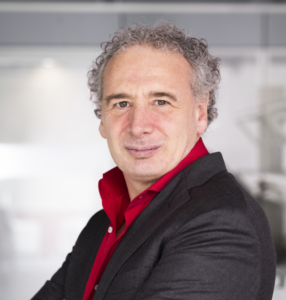
Arrvindh Shriraman is an Associate Professor and Program Director of Software Systems at Simon Fraser University's School of Computing Science in Surrey. His research focuses on energy-efficient software, multicore memory systems, and optimizing hardware/software interfaces for parallel programming. He holds a Ph.D. (2010) and M.S. (2006) in Computer Science from the University of Rochester, and a B.Eng. (2004) from the University of Madras. He teaches courses on parallel programming and energy-conscious software design. His research interests include synchronization mechanisms for domain-specific architectures, cache optimization, and FPGA-based acceleration. He has contributed to frameworks like Mu-grind for HLS-generated RTL instrumentation and TAPAS for parallel accelerator generation. Notable projects include RANGE-BLOCKS for synchronization in domain-specific systems and TapeFlow for gradient computation in neural networks. His work emphasizes real-time verification of autonomous systems and safety-critical trajectory planning for underwater vehicles. Shriraman collaborates closely with the Tangent Lab, exploring cutting-edge solutions in hardware-software co-design and embedded systems. His teaching and research bridge theoretical computer science with applied engineering challenges, addressing scalability, efficiency, and safety in modern computing systems.
Alasdair Reid is a Lecturer at Edinburgh Napier University within the School of Computing, Engineering and the Built Environment. He specializes in sustainable urban development and Smart Cities research, with a particular focus on planning and development. His academic background includes a BSc (Hons) in Real Estate Management (RICS accredited), an MSc in City Planning and Regeneration (RTPI accredited), and a PG Cert in Learning, Teaching and Assessment Practice in Higher Education. His research interests span across: Sustainable urban development Smart Cities Urban Studies Planning and Development Real Estate Management Reid's scholarly work demonstrates a strong focus on the intersection of urban development, digital technologies, and sustainability. His recent publications analyze the evolution of smart city research, identify methodological approaches to overcome research divisions in the field, and explore strategic principles for smart city development based on European best practices. He has made significant contributions to understanding smart specialization strategies and their implementation in regional policy contexts, with particular attention to the transition from Triple to Quadruple Helix innovation models. His notable scientific achievements include: Chartered Planning and Development Surveyor (MRICS) - 2020 Fellow of the Higher Education Academy (FHEA) - 2017 Reid has been actively involved in several significant research projects including SURegen, CLUE, EXPGOV, Smart Accelerator, and Online S3. His current work includes the "Phase 2: Digital Transformation Of The Building Standards System" project running from 2023-2025, which supports the Scottish Government's commitments to digital transformation in building standards. He also contributes to the Institute for Sustainable Construction, focusing on sustainable urban development within the Culture and Communities research theme.
Sharan Vaswani is an Assistant Professor in the School of Computing Science at Simon Fraser University (SFU), Canada. His research focuses on designing algorithms for sequential decision-making under uncertainty, stochastic optimization, and their application to modern machine learning, particularly reinforcement learning and generalization analysis. Education & Career: PhD in Computer Science (2015-2018), University of British Columbia (UBC), supervised by Laks Lakshmanan and Mark Schmidt. Postdoc (2019-2021) at Mila - Quebec AI Institute with Simon Lacoste-Julien, and University of Alberta with Csaba Szepesvári. MSc in Computer Science (2015), UBC, focusing on influence maximization in social networks. BS from Birla Institute of Technology and Science, Pilani (2012), followed by research engineering at Siemens Corporate Research. Research Interests: Algorithmic development for decision-making in uncertain environments (bandits, reinforcement learning). Stochastic optimization methods with provable guarantees. Generalization and theoretical foundations of machine learning models. Recent Trends in Publications: Focus on optimization algorithms (e.g., stochastic gradient methods, line search, momentum techniques) with theoretical analysis. Contributions to reinforcement learning, including policy gradient methods and constrained MDPs. Exploration of adaptive algorithms for continual learning and over-parameterized models. Awards: Best Paper Honorable Mention (AISTATS 2022). Best Paper Award (2nd IEEE International Conference on Parallel Distributed and Grid Computing 2012). Research Group: Leads a team at SFU focused on machine learning optimization and decision-making systems. Active in organizing workshops at NeurIPS and ICML on optimization and reinforcement learning theory.
Dr Emily Hewson is a Cancer Institute NSW Early Career Fellow and member of the Sydney School of Health Sciences at the University of Sydney's Faculty of Medicine and Health. Her research focuses on advancing real-time radiation therapy techniques, particularly in managing intrafraction motion for prostate and other cancers. She leads projects involving multileaf collimator (MLC) tracking, dose optimization, and deep learning integration in radiation oncology. Research interests include adaptive radiotherapy systems, kilovoltage intrafraction monitoring (KIM), and clinical trial implementation (e.g., TROG 15.01 SPARK trial). Her work emphasizes improving treatment accuracy through real-time dose-guided approaches and multitarget tracking for tumors with complex motion patterns. Developed experimental validations for MRI-linac integration and MLC tracking systems Authored a textbook chapter on Adaptive Radiation Therapy (ART) Recipient of Cancer Institute NSW Early Career Fellowship (2023) Recent grants include an AI platform for targeted radiotherapy (2024) and national critical infrastructure funding for lung cancer applications (2023). Her lab collaborates on real-time dose calculation algorithms and clinical trial implementation across multiple institutions.
Assoc Prof Wu Hongjun is an Associate Professor at the Division of Mathematical Sciences, School of Physical & Mathematical Sciences, Nanyang Technological University (NTU). His research focuses on cryptography and information security, with notable contributions to lightweight authenticated encryption algorithms like TinyJAMBU and ACORN, as well as cryptanalysis of stream ciphers (e.g., ZUC, HC-128) and hash functions (e.g., JH, SHA-3 candidates). His academic career includes over 15 years of contributions to cryptographic standards, IoT security frameworks, and secure cloud data management. Key areas of expertise encompass symmetric-key cryptography, algorithm design for resource-constrained devices, and vulnerability analysis of cryptographic primitives. Prof Wu has authored influential papers on authenticated encryption modes (AEGIS, MORUS), lightweight cipher optimizations (ACORN), and cryptanalysis techniques applied to Feistel networks and stream ciphers. His work bridges theoretical cryptography with practical implementations across telecommunications, IoT, and cloud computing domains.
Elina Rönnberg is a Professor and Deputy Head of Department at the Department of Mathematics, Linköping University, where she leads research in discrete optimisation and intelligent decision-making. Her work bridges theoretical method development and real-world applications in sectors such as healthcare, aviation, mining, and transportation. She is actively involved in the Wallenberg AI, Autonomous Systems and Software Program (WASP) and has collaborated with industry leaders like Saab and Scania. Her research focuses on advanced optimisation techniques including Dantzig-Wolfe decomposition, Lagrangian relaxation, column generation, branch-and-price, and logic-based Benders decomposition. She also explores hybrid methods combining mathematical programming with constraint programming and machine learning. Applications span nurse rostering, electric vehicle routing, aircraft arrival scheduling, and underground mine planning. Recent publications highlight a strong trend toward integrating AI and machine learning—particularly graph neural networks—with classical optimisation frameworks to accelerate solution methods. Her work emphasizes practical impact, robustness, and scalability in solving complex scheduling and resource allocation problems. Nurse Rostering with Strategic Planning of Skills for Sick-Leave Robustness (2024) Pricing for the EVRPTW with Piecewise Linear Charging (2024) Speeding Up Logic-Based Benders Decomposition with Graph Neural Networks (2024) Elina supervises several PhD students and has co-supervised doctoral research at international institutions including Makarere University (Uganda) and the University of Exeter (UK). She has contributed to applied projects through student theses in collaboration with Scania and Saab, focusing on electric vehicle routing and search-and-rescue optimisation. She previously served as a Specialist in Optimisation at Saab Aeronautics (2014–2020) and co-founded Schemagi, a scheduling tool aimed at improving quality in healthcare. She teaches courses such as Introduction to Optimization (TAOP07) and Project - Applied Mathematics (TATA62). Her research group, 'Mathematics and algorithms for intelligent decision-making,' operates within the Division of Applied Mathematics (TIMA) at the Department of Mathematics. The team develops decision support tools that enhance efficiency and sustainability in complex systems, particularly under the growing demands of electrification and digitalisation in transport and logistics.
Sebastian Pokutta is a Professor at Technische Universität Berlin, Vice President at the Zuse Institute Berlin (ZIB), and Chair of the Cluster of Excellence MATH+ and MODAL. His research lies at the intersection of Artificial Intelligence, Optimization, and Machine Learning, with applications in sustainability, quantum computing, and mathematical discovery. Research Interests: Development of novel optimization algorithms, particularly Frank-Wolfe and Conditional Gradient methods. Integration of machine learning with decision-making and combinatorial optimization. AI for Science (AI4Science), including applications in quantum mechanics and ecology. AI and creativity, human-AI co-creativity, and social science modeling using multi-agent LLMs. His recent publications (2025) demonstrate a strong focus on scalable optimization, interpretability, and algorithmic foundations. The work spans theoretical advances in convergence analysis, practical implementations in Julia (FrankWolfe.jl), and real-world deployments in biomass estimation and quantum certification. Scientific Awards: Gödel Prize (2023) STOC Test of Time Award (2022) Science Prize of the Association for Pediatric Orthopedics (2025) Google Research Awards (2021, 2020) NSF CAREER Award (2015) He advises a vibrant research group, with former students and postdocs securing faculty positions at institutions like Inria, Carlos III University, and James Madison University. His group has received funding from Google, DFG, and Math+, and he leads major collaborative efforts such as the Thematic Einstein Semester on Mathematical Optimization for Machine Learning. Labs and Teams: Interactive Optimization and Learning Lab at TU Berlin and ZIB. Leadership in MODAL and MATH+ research clusters, fostering interdisciplinary collaboration in mathematical optimization and AI.
Dr. Danial Chitnis is a Chancellor's Fellow and Lecturer in Electronics at the School of Engineering, University of Edinburgh. He holds a DPhil in Engineering Science from the University of Oxford (2013) and has expertise in microelectronics, biomedical engineering, and quantum imaging. His research focuses on SPAD arrays, time-of-flight sensors, and wearable optical systems for biomedical applications. Education: BSc in Electronics Engineering, Chamran University of Ahvaz (2002–2007) MSc in Advanced Microelectronics Systems Engineering, University of Bristol (2007–2008) DPhil in Engineering Science, University of Oxford (2009–2013) Research Interests: Single-Photon Avalanche Diode (SPAD) arrays for optical communications and biomedical imaging Quantum-enhanced imaging via QuantIC Hub Wearable sensors for near-infrared spectroscopy (NIRS) AI-driven automation in test and measurement systems Articles Trends: Recent work emphasizes AI integration in electronics design, photon-counting receivers for 6G networks, and portable biomedical devices. Notable contributions include SYCL-based acceleration of circuit simulations and FPGA-driven time-to-digital converters. Grants & Collaborations: Principal Investigator of multiple grants, including EPSRC-funded projects on AI-enhanced human-machine interfaces and quantum technology applications. Collaborates with UCL, QuantIC, and industry partners like Keysight Technologies. Labs/Teams: Co-investigator at QuantIC, the UK Quantum Technology Hub in Quantum Enhanced Imaging. Leads interdisciplinary research on detector arrays and systems for quantum physics and consumer cameras.
Leonardus Cornelis Nicolaas de Vreede is a Professor at Delft University of Technology in the Faculty of Electrical Engineering, Mathematics and Computer Science. With over 237 research publications and extensive conference activities, he is a leading researcher in RF and microwave engineering with specialization in power amplifiers, digital transmitters, and mm-wave circuits for wireless communications applications. Dr. de Vreede's research focuses on the intersection of circuit design and signal processing for next-generation wireless systems: Advanced Power Amplifier Architectures including Doherty and Out-phasing techniques Energy-Efficient Digital Transmitters with high linearity and power efficiency mm-Wave Circuit Design for 5G/6G applications Machine Learning Applications for Digital Predistortion CMOS RF Integrated Circuit Implementation Wideband Signal Processing Techniques His recent publications demonstrate a clear research trajectory toward integrating machine learning with traditional RF circuit design to solve the efficiency-linearity tradeoff in wireless transmitters. This work is particularly relevant for current and future wireless infrastructure requiring high spectral efficiency across wide bandwidths while maintaining energy efficiency. Dr. de Vreede has received significant recognition for his contributions to the field: EuMC Microwave Prize (2024) for groundbreaking work on wideband Doherty amplifiers Recognition for innovative characterization techniques for high-power RF transistors (2015) As an active researcher and educator, Dr. de Vreede has supervised 16 students and regularly participates in major international conferences including serving on program committees for the IEEE MTT-S International Microwave Symposium. His work bridges theoretical advances with practical implementations for wireless infrastructure applications, with numerous patents and industry collaborations evident from his research portfolio.
Nicola Nicolici is a Professor in the Department of Electrical and Computer Engineering at McMaster University. His research focuses on methods and algorithms for the design of digital integrated circuits and systems, with significant contributions in manufacturing test, post-silicon validation and debug. His work has expanded to include embedded systems, low-energy computing, and custom hardware-accelerated computing systems. Professor Nicolici's research interests span multiple areas of digital system design and validation. His early work focused on manufacturing test methodologies and power-aware testing strategies for integrated circuits. More recently, he has made significant contributions to post-silicon validation techniques, including constrained-random stimuli generation, trace signal selection, and bit-flip detection. His research has evolved to address emerging challenges in embedded computing systems, low-energy design, and specialized hardware acceleration for various applications including deep neural networks and signal processing. His recent publications reveal a strong trend toward hardware acceleration for specialized computing tasks. The research spans matrix multiplication algorithms (Strassen and Karatsuba), memory system optimization (DDR5 calibration), FPGA-based radar processing, and neural network acceleration. His work consistently bridges theoretical algorithm development with practical hardware implementation considerations, particularly focusing on precision analysis, fault tolerance, and energy efficiency. The research demonstrates a clear progression from traditional digital circuit testing to more complex system-level validation and acceleration techniques. Professor Nicolici has been actively involved in teaching courses related to system-on-chip design and test, digital systems, and embedded systems. His teaching portfolio includes advanced courses such as System-on-Chip (SOC) Design and Test and Digital Systems Design , reflecting his expertise in the field. While specific grant information isn't detailed in the provided text, his extensive publication record suggests ongoing research funding support. His research has contributed significantly to the fields of digital circuit testing, post-silicon validation, and hardware acceleration. The work has practical applications in semiconductor manufacturing, embedded systems design, and specialized computing architectures. His recent focus on neural network acceleration and memory system optimization reflects the evolving landscape of computer architecture research.
Gauthier Gidel is an Associate Professor at the Department of Computer Science and Operations Research (DIRO) within the Faculty of Arts and Science at Université de Montréal, where he also holds the prestigious Canada CIFAR AI Chair position. He is a core faculty member of Mila, Quebec's AI research institute, and maintains active research collaborations with leading institutions. His academic journey includes a PhD in Computer Science under the supervision of Simon Lacoste-Julien, with internships at Sierra, ElementAI, and DeepMind during his doctoral studies. Dr. Gidel's research spans multiple critical areas in machine learning, with particular emphasis on generative modeling , adversarial machine learning , and variational inequalities for machine learning. His work explores the intersection of optimization theory and practical AI systems, focusing on challenges like LLM safety alignment, multi-agent cooperation, and robustness against adversarial attacks. He is particularly known for his contributions to understanding the theoretical foundations of generative adversarial networks through variational inequality frameworks. His recent publications reveal a strong trend toward addressing critical challenges in large language model safety and alignment, with numerous 2024-2025 papers focusing on adversarial robustness, safety evaluation methodologies, and alignment techniques for LLMs. Simultaneously, his foundational work continues in optimization theory, particularly in variational inequalities and performative prediction, demonstrating his dual focus on practical AI safety concerns and theoretical machine learning foundations. Canada CIFAR AI Chair Core member of Mila Organizer of popular NeurIPS workshops on smooth games Co-founder of the ICLR blog post track Dr. Gidel actively supervises an extensive research group with approximately 10 current graduate students and numerous alumni who have secured positions at leading institutions including Inria Lyon, Oxford, and industry research labs. His research is supported by multiple substantial grants from CRSNG, MITACS, and IVADO, including the prestigious CRSNG Discovery Grant program and MITACS Acceleration Québec projects focused on fraud detection in music streaming and conditional generation. His laboratory maintains strong connections with both academic and industry partners, fostering a collaborative environment focused on advancing AI safety and theoretical understanding.
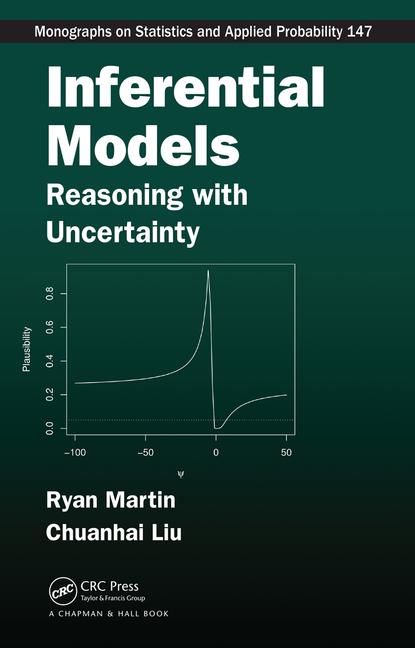
Chuanhai Liu is an Associate Head and Professor of Statistics at Purdue University’s Department of Statistics. He specializes in computational methods for statistical inference, Bayesian analysis, and big data computing systems. His research emphasizes robust algorithms, inferential models, and probabilistic methods. Education: M.S., Wuhan University, Probability and Statistics (1987) M.A., Harvard University, Statistics (1990) Ph.D., Harvard University, Statistics (1994) Research Interests: Computational methods (EM algorithms, MCMC), statistical software systems for big data, theoretical foundations of inference, and prior-free probabilistic modeling. His work bridges computational efficiency and statistical validity, with applications in network analysis, environmental data, and machine learning. Awards: Fellow of the American Statistical Association (2007) Elected Member of the International Statistical Institute (2006) Frank Wilcoxon Prize (2000) Advising & Grants: Supervised 9 Ph.D. students, including interdisciplinary collaborations. His grants focus on distributed statistical computing and inferential frameworks. Active in software development for large-scale data analysis. Labs/Teams: Leads statistical computing initiatives at Purdue, contributing to scalable algorithms and probabilistic inference systems.
Luca Varani is a Professor and Group Leader of the Structural Biology group at the Institute for Research in Biomedicine (IRB), affiliated with the Università della Svizzera italiana in Bellinzona, Switzerland. His research focuses on understanding the molecular mechanisms of antibody-pathogen interactions and engineering novel therapeutic antibodies. Education: Chemistry degree from University of Milan, PhD from MRC-Laboratory of Molecular Biology (University of Cambridge) Former postdoc at Stanford with EMBO fellowship Founder of CLBiotech (2022), a nanobody discovery and engineering startup Varani's research spans structural biology, immunology, and biophysics with emphasis on viral pathogenesis and antibody engineering. His work combines experimental and computational approaches to study antibody-antigen interactions, particularly against emerging pathogens like SARS-CoV-2, Zika, and Dengue viruses. His group has pioneered structure-guided antibody engineering techniques that have led to multiple high-impact publications in journals like Nature, Cell, and Science. Analysis of Varani's recent publications reveals a strong focus on SARS-CoV-2 antibody responses, with significant contributions to understanding neutralizing mechanisms, viral escape, and therapeutic antibody development. His work also extends to prion diseases, cancer immunology, and flaviviruses, demonstrating a multidisciplinary approach that bridges structural biology with translational medicine. As a reviewer for high-impact journals and international granting agencies, Varani contributes significantly to the scientific community. He also serves as an evaluator for European startup accelerator programs and consults for antibody biotechnology companies, translating academic research into practical applications. Varani leads a highly multidisciplinary research team that employs techniques ranging from NMR spectroscopy and X-ray crystallography to cellular assays and computational modeling. His laboratory has been instrumental in developing bispecific antibodies against SARS-CoV-2 and other pathogens, with several candidates advancing toward clinical trials.
Matthias Schlottbom is an Associate Professor specializing in Mathematics of Computational Science, with a focus on numerical methods and their applications in physics, biology, and engineering. His research integrates advanced computational techniques with interdisciplinary problems, including radiative transfer, photonic crystals, and chemotaxis modeling. Research Interests: Schlottbom’s work spans numerical analysis, finite element methods, and machine learning. He develops high-order discretization schemes, iterative solvers for anisotropic transport, and mathematical frameworks for biological network formation. Publications: Recent articles highlight his contributions to accelerating radiative transfer simulations, extending component mode synthesis for Helmholtz equations, and analyzing diffusion limits in kinetic models. His work often bridges computational mathematics with practical applications in photonics and multiscale systems. Collaborations: He actively collaborates on datasets for optical simulations, radiative transfer algorithms, and photonic crystal modeling, contributing to open-access repositories like 4TU.Centre and Zenodo. Activities: Schlottbom has organized workshops such as the Kinetic Theory Workshop in the Netherlands and delivered keynotes on residual minimization and data-driven methods for transport equations. Scientific Awards: No specific awards or fellowships are mentioned in the provided materials. Advising & Grants: Details about students, advising roles, or grant funding are not included in the available data.
Pierre Marion is a Researcher at INRIA Paris, working within the Sierra research team since September 2025. His work focuses on the theoretical foundations of deep learning and he is beginning to explore applications of AI in mathematics. Marion has established collaborations across multiple institutions including EPFL, Sorbonne Université, and Google DeepMind. His educational background includes: Engineering degree from École polytechnique (2015-2018) with specialization in Applied Mathematics Master's degree from Sorbonne Université (2019-2020) PhD from Sorbonne Université (2020-2023) under the supervision of Gérard Biau and Jean-Philippe Vert Postdoctoral research at EPFL (2024) supervised by Lénaïc Chizat Marion's research interests primarily focus on the theory of deep learning, where he investigates the optimization and statistical properties of various neural network architectures. His work spans from shallow networks to complex generative models, with a particular emphasis on understanding the mathematical foundations that govern deep learning performance. Recently, he has begun exploring applications of AI in mathematical research, aiming to bridge the gap between theoretical machine learning and mathematical discovery. His research often combines rigorous theoretical analysis with practical implications for training deep neural networks. Analysis of Marion's recent publications reveals several key trends in his research. He has made significant contributions to understanding the role of large learning rates in optimization dynamics, demonstrating how they can accelerate convergence in logistic regression and prevent memorization in score-based generative models. His work on attention mechanisms has provided theoretical guarantees for their effectiveness in specific tasks like single-location regression and clustering. Additionally, Marion has extensively studied the connections between residual networks and neural ordinary differential equations , establishing generalization bounds and exploring scaling properties in the large-depth regime. His earlier work included contributions to natural language processing and quasi-Monte Carlo methods, reflecting a broad mathematical foundation that informs his current deep learning research. Marion has received several notable scientific awards: Runner-up PhD Award of AFIA (French Association for Artificial Intelligence) in 2024 Google PhD Fellowship in 2022 Ecole polytechnique Grand Prize of Research Internships in 2018 As an advisor, Marion currently supervises PhD student Yu-Han Wu (since 2024), with whom he has co-authored multiple publications on large learning rates and denoising score matching. Previously, he co-supervised several Master's students including Seorim Park, Yerkin Yesbay, and Nathan Doumèche. Marion has been actively involved in the machine learning community through conference organization (NeurIPS@Paris meetups), session chairing (ICSDS 2022), and extensive reviewing activities. He has served as a reviewer for top journals including JASA and Annals of Statistics, and conferences including NeurIPS and ICLR, where he was recognized as a top reviewer at NeurIPS 2023. Marion is a member of the Sierra research team at INRIA Paris, which focuses on machine learning theory and applications. He has also collaborated with researchers at CREST (Center for Research in Economics and Statistics), as evidenced by his participation in seminars organized by Anna Korba and Karim Lounici. His work often bridges theoretical computer science, statistics, and applied mathematics, reflecting the interdisciplinary nature of modern machine learning research.