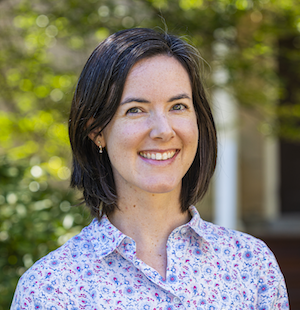
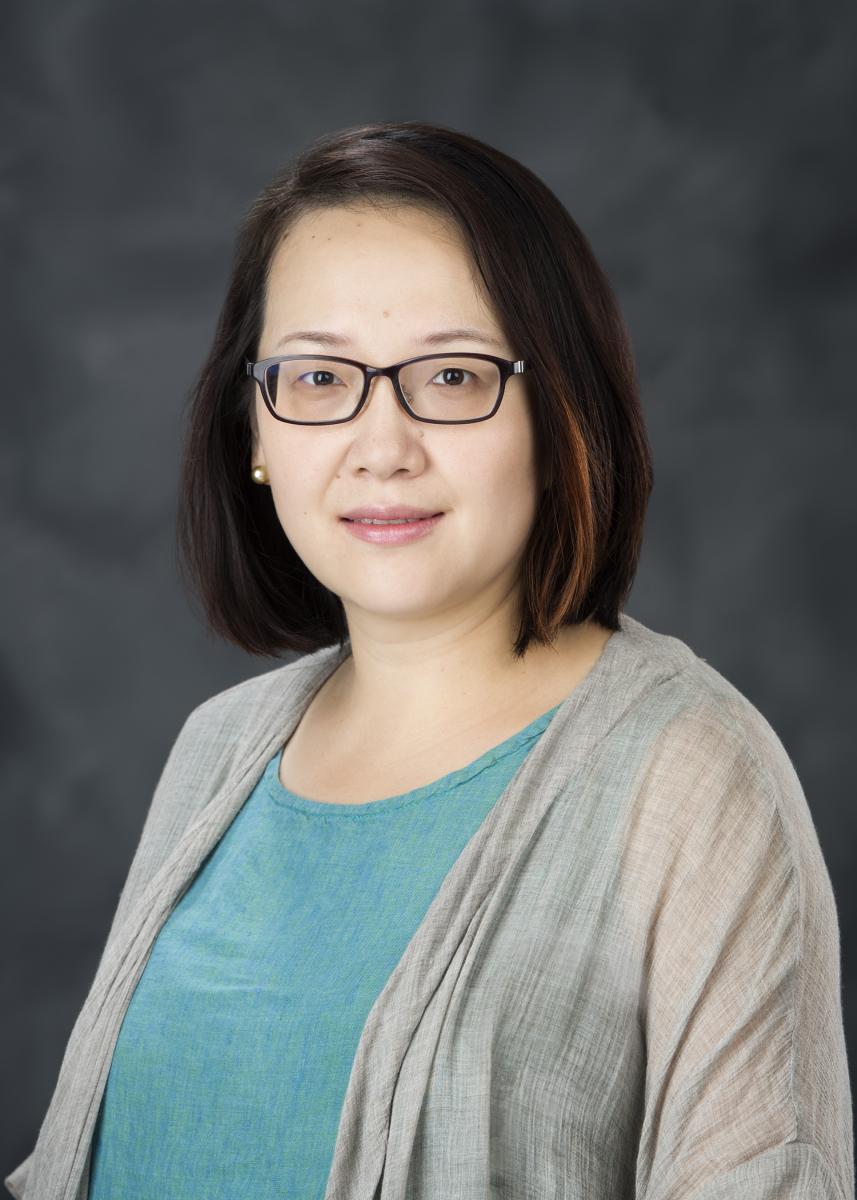
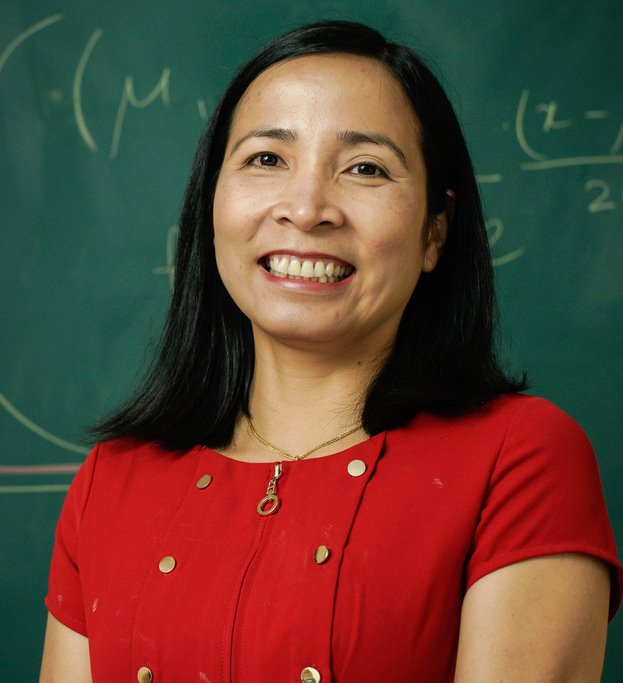
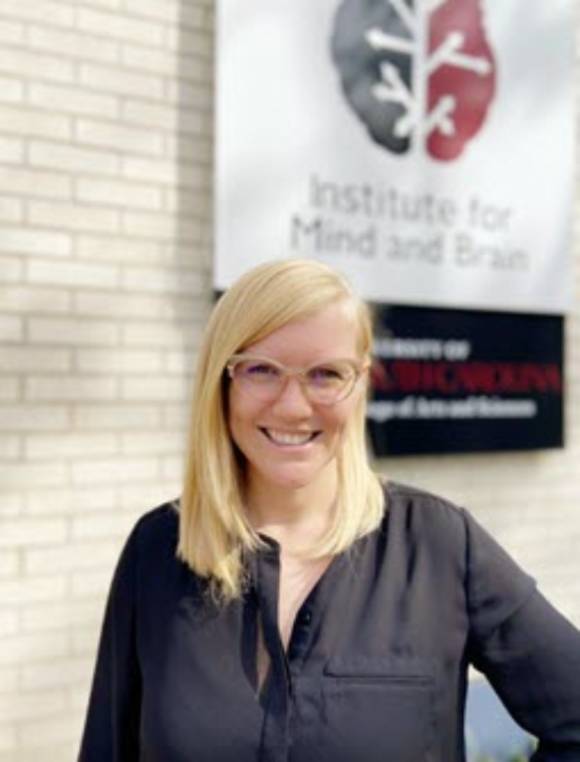
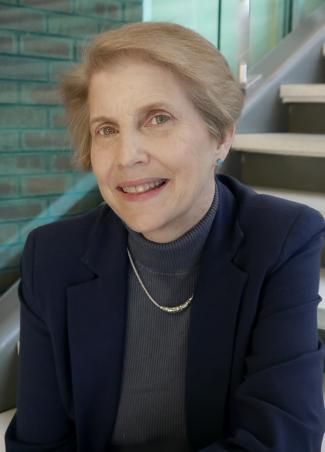
Sara Mathieson is an Associate Professor in the Computer Science Department at Haverford College. She holds a PhD in Computer Science from UC Berkeley (2015), advised by Yun S. Song, with a Designated Emphasis in Computational and Genomic Biology. Her research focuses on computational and population genetics, particularly demographic inference using statistical and machine learning methods. She has held prior positions at Swarthmore College (2017–2019) and Smith College (2015–2017). Education: PhD in Computer Science, UC Berkeley (2015) Bachelor's in Mathematics with Computer Science, MIT (2010) Harvey Mudd College (2006–2007) Research Interests: Developing statistical methods for genomic data Demographic inference in population genetics Applications of machine learning (GANs, CNNs) in evolutionary biology Analysis of endogamous populations and admixing dynamics Grants & Funding: NIH R15 Grant (2020–2027): 'Adaptive evolutionary inference frameworks using GANs' Lab & Collaborators: Current lab members: Kai Britt, Jadyn Elliott, Sarah Keim, etc. Notable alumni: Darshan Mehta (CRA Award), Sam Tan (CRA finalist)
Carlos Rodríguez is an Associate Professor in the Department of Mathematics and Statistics at the State University of New York at Albany (SUNY Albany). He has maintained an academic server since 1993, hosting research papers, teaching materials, and software tools. His research focuses on statistical inference, mathematical physics, and online mathematics, with notable contributions to Bayesian nonparametrics, density estimation, and maximum entropy methods. He teaches courses such as calculus, linear algebra, and machine learning, and has developed software like Mapleman the Math Bot. His research interests emphasize geometric interpretations of statistical concepts, including entropic priors, Bayesian networks, and model selection criteria like CIC. He has explored applications in neutron depth profiling and probabilistic graphical models. Rodríguez's work bridges theoretical foundations with computational methods, as seen in his papers on MCMC algorithms and cross-validated Bayesianism. His server archives over two decades of publications, including seminal works on optimal recovery, ignorance theory, and likelihood principle critiques. While not explicitly listed, his contributions to statistical education and software development highlight his commitment to advancing both research and pedagogy in mathematics and statistics.
Yu-Bo Wang is an Associate Professor in the Department of Mathematical and Statistical Sciences at Clemson University. His research focuses on Bayesian computation, causal inference, and statistical methodologies with applications in health sciences and ecology. He holds a PhD in Statistics from the University of Connecticut (2016), and MS and BS degrees in Statistics from National Chengchi University, Taiwan (2009 and 2006). Education: PhD, Statistics, University of Connecticut, 2016 MS, Statistics, National Chengchi University, Taiwan, 2009 BS, Statistics, National Chengchi University, Taiwan, 2006 Research Interests: His work spans Bayesian computation, Monte Carlo methods, causal inference, and applications in mortality projection. Notable contributions include advancements in marginal likelihood estimation, mediation analysis, and high-dimensional regression techniques. Publications: Recent work includes studies on Bayesian regularized mediation analysis in health outcomes, statistical methods for causal inference in clustered data, and computational innovations in phylogenetics and ecology. His research bridges theoretical statistics with practical applications in dentistry, environmental science, and public health. Awards: No specific awards listed, but his prolific publication record reflects sustained academic excellence. Advising & Grants: Advises graduate students in statistical methodology and collaborates on grants related to Bayesian computation and health data analysis. No specific grant details provided in the text. Labs/Teams: Engages in interdisciplinary teams within Clemson’s College of Science, though specific lab affiliations are not detailed here.
Yuyuan Ouyang is an Associate Professor in the Department of Mathematical and Statistical Sciences at Clemson University. He holds a Ph.D. in Mathematics from the University of Florida (2013). His research focuses on nonlinear optimization, stochastic approximation, and algorithm design for big data analytics. His work bridges theoretical foundations with practical applications in machine learning, network flow programming, and convex optimization. Dr. Ouyang teaches advanced courses including Machine Learning I/II, Network Flow Programming, and Nonlinear Programming. His recent publications emphasize gradient sliding methods, decentralized optimization, and saddle-point problem analysis. He has contributed to SIAM Journal on Optimization, Mathematical Programming, and Operations Research Letters. His research trends show a strong emphasis on algorithmic innovation for large-scale systems, with notable work on complexity bounds, convex reformulations, and statistical estimation techniques. He has collaborated widely on topics ranging from variational inequalities to MRI image reconstruction.
Jean-Francois Lamarche is an Associate Professor of Economics and Graduate Program Director at Brock University's Faculty of Social Sciences, specializing in econometric methods and applied economic analysis. Education: PhD in Economics, Queen's University (2002) MA in Economics, University of Victoria (1995) BSc in Economics, Université de Montréal (1992) His research focuses on developing econometric methodologies for structural change detection and applying statistical approaches to poverty and inequality measurement. Recent work includes innovative techniques for multidimensional poverty assessment and analysis of political influences on municipal budget cycles. Publications demonstrate consistent application of advanced econometric techniques to social policy questions, with emphasis on measurement theory and decomposition methods. Dr. Lamarche teaches econometrics, time series analysis, and mathematical economics. As Graduate Program Director, he oversees economics graduate studies and mentors students in research methods.
Jan Vrbik is a Professor of Mathematics at Brock University, affiliated with the Department of Mathematics and Statistics. His research spans Celestial Mechanics, Probability and Statistics, and Monte Carlo techniques. He holds a PhD and MSc from the University of Calgary, and completed his BSc and MSc at Charles University in Prague. Vrbik's work focuses on perturbed Kepler problems, statistical inference for autoregressive models, and numerical solutions to integral equations. His contributions include advancements in celestial mechanics via quaternionic methods and Monte Carlo simulations for quantum chemistry. He has published extensively in journals such as *Celestial Mechanics and Dynamical Astronomy*, *Communications in Statistics*, and *Journal of Chemical Physics*. He teaches courses including Probability, Mathematical Statistics, and Numerical Analysis. His research interests also encompass statistical distributions, confidence interval construction, and applications of numerical methods in engineering and physics.
Dr. Qian (Michelle) Zhou is an Associate Professor of Statistics in the Department of Mathematics and Statistics at Mississippi State University (office Allen 454, phone 662-325-7160). Her research develops advanced statistical methods addressing fundamental questions about model misspecification in clinical and genetic studies. Research interests include: Model diagnosis and selection Risk prediction and biomarker evaluation Survival and longitudinal data analysis Developing robust statistical procedures Her work creates methods for survival analysis, longitudinal data, risk prediction, and model diagnostics that accommodate complications in clinical/genetic studies. Recent publications focus on copula models, survival analysis methods, and agricultural statistics applications. She maintains active research profiles on Google Scholar and MathSciNet. Before joining MSU, Dr. Zhou was an Assistant Professor at Simon Fraser University (2012-2015) and Postdoctoral Fellow at Harvard T.H. Chan School of Public Health (2009-2012). She earned her Ph.D. from University of Waterloo in 2009.
Dr. Brenda Vo is Senior Lecturer in Statistics at UNE's School of Science and Technology, specializing in Bayesian statistical methods for biological and health applications. Her research develops agent-based models for infectious disease dynamics and analyzes agricultural decision-making patterns. Completed PhD at QUT in Computational Bayesian Statistics, developing methods to quantify cell population dynamics. Current projects include ABM approaches for Chlamydia infection modeling, GP distribution simulation in NSW, Q fever epidemiology, and multicultural health interventions. Supervises PhD students in statistics applications to sensor arrays, weed ecology, and migration studies. Collaborates internationally on Vietnam-Australia research initiatives.
David Spade is an Associate Professor in the Department of Mathematical Sciences at the University of Wisconsin-Milwaukee, with office location in the Engineering and Mathematical Sciences building (room E459). He holds active roles as an Undergraduate Advisor and member of the Statistics Research Group. His research centers on theoretical and computational statistics, specializing in Markov chain Monte Carlo methods, Bayesian inference, and phylogenetic analysis. Key interests include convergence diagnostics for Gibbs and Metropolis-Hastings samplers, statistical modeling of biological systems (notably Daphnia motion), and applications in genomics and cancer research. His work bridges rigorous statistical theory with interdisciplinary biological problems. Analysis of his 2016-2025 publications reveals dominant trends in MCMC convergence theory (mixing time, geometric ergodicity, drift-minorization), phylogenetic inference, and biological modeling. His research demonstrates consistent focus on computational statistics with expanding applications in ecology, evolutionary biology, and medical research, particularly through collaborations with biologists. No scientific awards were documented in the provided materials. As an Undergraduate Advisor, he mentors statistics students within the department's academic framework. Dr. Spade actively contributes to the Statistics Research Group, fostering collaborative projects in statistical methodology development and interdisciplinary applications.
Serkan Hosten is a Professor in the Department of Mathematics at San Francisco State University's College of Science and Engineering. His research focuses on Commutative Algebra, Combinatorics, and Algebraic Statistics. He serves as an adviser for the Applied Math BS program and maintains active seminar engagements at UC Berkeley. His research explores the intersection of algebraic geometry with statistical optimization, leveraging combinatorial structures to solve problems in information theory and machine learning. Recent publications demonstrate consistent work in toric geometry, matroid theory, and computational algebra. Publications over the past decade show a strong emphasis on: (1) geometric methods in statistical inference, (2) combinatorial optimization frameworks, (3) algebraic approaches to machine learning, and (4) computational aspects of commutative algebra. This interdisciplinary work bridges pure mathematics with data science applications.
Jessica Bradshaw is an Associate Professor in the Department of Psychology at the University of South Carolina's McCausland College of Arts and Sciences. Her research examines early identification and intervention for autism spectrum disorder (ASD), mapping neurodevelopmental pathways through behavioral, eye-tracking, and physiological methods. Research quantifies the emergence of social behavior, visual attention, and motor skills in infants at risk for ASD, with particular focus on birth to 5 months. Investigations identify pivotal developmental transitions and aberrant pathways leading to ASD, translating findings to early detection protocols and naturalistic developmental interventions. Publications establish neonatal autonomic regulation as a predictor of ASD symptoms, characterize early skill profiles across genetic likelihoods, and develop home-based eye-tracking methodologies. Her work advances understanding of how context and social content shape infant attention during critical developmental windows. Laboratory investigations at the Early Social Development Lab employ multi-method approaches to measure social communication development. Current projects examine motor development correlates of social communication and contextual influences on sustained attention.
Rui Fan is an Assistant Professor in the Department of Economics at Rensselaer Polytechnic Institute, with additional affiliations to the Lally School of Management. His research centers on nonstationary time series analysis applied to economics and finance, including systemic risk assessment, financial forecasting, and causal inference methodologies. He holds a Ph.D. in Economics from the University of Illinois at Urbana-Champaign (2018), an M.S. in Statistics (2015), an M.A. in Economics from Xiamen University (2011), and a B.A. in Economics from Sichuan University (2008). Research Focus: Fan's work spans four key areas: (1) developing systemic risk indicators for financial markets; (2) analyzing the impact of economic shocks (e.g., Fed policy changes, COVID-19) on market stability; (3) advancing instrumental variable estimation techniques; and (4) creating statistical methods for nonlinear nonstationary data common in finance.
Dr. Dawn G. Gregg is a Full Professor and Discipline Director for Information Systems at the CU Denver Business School. She also serves as Director of Assurance of Learning and previously held roles including Associate Dean of Programs and Administrative Director of the Bard Center for Entrepreneurship. She founded Developing Minds Software and holds a PhD in Information Systems from Arizona State University, alongside an MBA and MS in Information Systems. Education : PhD Information Systems, Arizona State University MS Information Systems, Arizona State University MBA, Arizona State University West BS Mechanical Engineering, University of California at Irvine Research Focus : Dr. Gregg explores human-technology interaction, technology adoption, decision support systems, and sustainability in IS. Her work integrates psychology and decision science to study user engagement with digital platforms, including geospatial reasoning and review systems. Current research emphasizes sustainability frameworks in IS research. Article Trends : Her recent work addresses online review dynamics, geospatial decision-making, and digital trust. Key themes include user perception of digital information quality, the impact of demographics on technology use, and the design of effective decision-support tools. Awards : Outstanding Service Award (2018) Excellence in Faculty Mentoring (2018) CU Denver Outstanding Educational Program Award (2010) Dean's Scholar Award (2008) Outstanding Tenure-Track Teacher (2005) Advising & Grants : Dr. Gregg has advised students like Michael Erskine (2007 award winner) and led projects funded through competitions like the Bard Center Business Plan Competition (2008). No specific grants are listed, but her work reflects interdisciplinary collaboration with industry and academia. Labs & Teams : Her research often involves cross-functional teams studying digital platforms, decision-making tools, and educational gaming (e.g., Emerge2Maturity simulation).
Buddika Peiris is an Associate Professor of Teaching in the Department of Mathematical Sciences at Worcester Polytechnic Institute (WPI), where he also serves as the Coordinator of the Applied Statistics Master's Program and the Statistics Consulting Lab. His academic career at WPI has progressed from Postdoctoral Fellow (2014-2016) to Assistant Teaching Professor (2016-2021) and now to Associate Professor of Teaching (2021-present). BS in Mathematics from University of Sri Jayewardenepura (2005) MS in Mathematical Statistics from Southern Illinois University, Carbondale (2010) PhD in Mathematical Statistics from Southern Illinois University, Carbondale (2014) Dr. Peiris's research focuses on developing new statistical methodologies with applications across various fields. His primary research areas include Order Restricted Inference, Meta-Analysis, Bayesian Statistics, and Actuarial Science. His work addresses complex problems in public health, weather forecasting, Food Science, and various industries where traditional 'ad hoc' methods are reaching their limits. His teaching philosophy emphasizes clear communication of statistical concepts, exposing students to statistical analysis structures, and teaching effective communication of statistical results to diverse audiences. His publication record demonstrates consistent contributions to statistical methodology, particularly in constrained regression models, meta-analysis techniques, and Bayesian approaches. His work spans theoretical developments with practical applications in biomedical research, environmental studies, and industrial settings. The publications show a progression from foundational work on order restricted inference to more complex applications involving circular-linear regression and meta-analysis of cylindrical time series data. As an educator, Dr. Peiris has supervised numerous graduate students through WPI's Master's program, with projects spanning healthcare analytics, financial applications, environmental modeling, and industrial statistics. His teaching portfolio includes both undergraduate and graduate courses in probability, mathematical statistics, regression analysis, experimental design, and specialized topics in statistical methodology. Through his role as Coordinator of the Statistics Consulting Lab, he facilitates connections between statistical expertise and real-world problems across disciplines. His current research continues to develop constrained prediction intervals, diagnostic tests in regression, and applications of statistical methodology to forensic analysis and plant science.
Dr. Abdul A. Hussein is a Professor in the Department of Mathematics and Statistics at the University of Windsor's Faculty of Science. He holds a Ph.D. from the University of Alberta. His research focuses on sequential analysis, survival analysis, finite mixtures, statistical process control, and health outcomes research. He has supervised multiple master’s students and is actively seeking Ph.D. candidates with expertise in probability theory and stochastic processes. His work spans theoretical and applied statistics, including contributions to nonparametric methods, robust estimation, and clinical trial design. Notable collaborations include studies on pediatric safety interventions and medical device reliability. He has secured research grants supporting projects in sequential analysis and health outcomes. His publications emphasize methodological advancements in statistical testing and applications to biomedicine. Dr. Hussein teaches advanced courses and mentors students in statistical theory and computational methods.