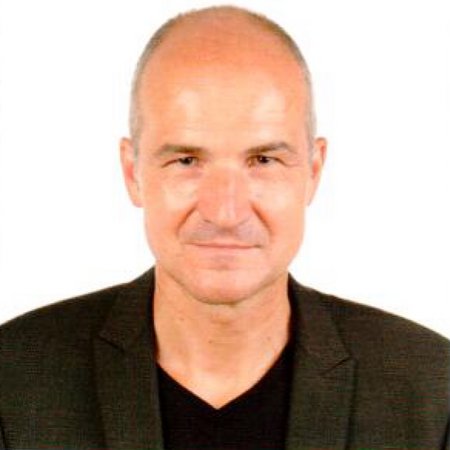
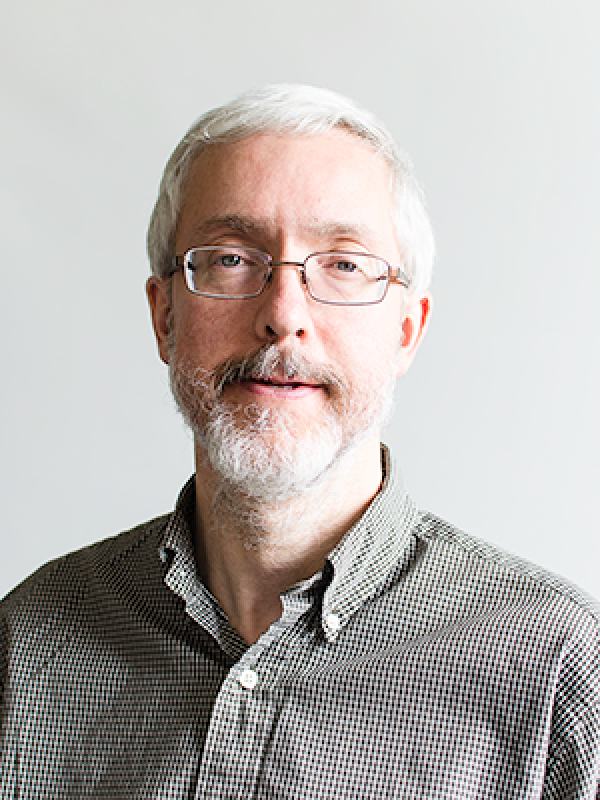
Rasmus Søndergaard Pedersen is Associate Professor at the Department of Economics, University of Copenhagen , Faculty of Social Sciences. His research focuses on financial and time-series econometrics, with special emphasis on heavy-tailed distributions, time-varying volatility and GARCH-type models. Education: Ph.D. in Economics, University of Copenhagen (2012–2015) M.Sc. in Economics (cand.polit.), University of Copenhagen (2010–2012) Exchange student, University of California, San Diego (2010–2011) B.Sc. in Economics, University of Copenhagen (2006–2010) Research Interests: His work spans time-series econometrics, theoretical econometrics, financial econometrics, multidimensional time-series models, GARCH and BEKK specifications, heavy-tailed processes, bootstrap inference on parameter boundaries, high-dimensional VARs and robust inference in financial markets. Scientific Awards: Winner, Econometric Game 2012 Selected Young Economist, 5th Lindau Meeting on Economic Sciences Research Visits & Collaboration: Visiting researcher, Imperial College London (Jan–Jun 2014) Active participant in Econometric Society World Congress, Lindau Meetings, EC² conferences and numerous workshops on time-series econometrics Teaching & Guidance: He teaches Econometrics C and Financial Econometrics A at the University of Copenhagen and serves on assessment committees and research networks.
Professor Rüdiger Kiesel serves as Chairholder of "Energy Trading and Financial Services" at the University Duisburg-Essen, Faculty of Business and Economics, and is a member of the board of the "House of Energy, Climate and Finance." Previously, he directed the Institute for Mathematical Finance at the University of Ulm and held academic positions at Birkbeck College, University of London, London School of Economics (both full-time and visiting), and University of Oslo. Professor Kiesel's research focuses on Climate Finance and Risk Management in the face of climate change. His work addresses the uniquely global, long-term, irreversible, and uncertain nature of climate risks. He develops approaches to improve climate risk analysis within traditional risk categories (credit, market, etc.) and investigates measures to increase organizational resilience. His research examines climate change as a systemic risk for financial institutions, with special attention to the climate insurance protection gap and the need for appropriate insurance policies, alternative risk transfer mechanisms, and public-private partnerships. Analysis of Professor Kiesel's recent publications reveals a strong focus on energy markets, particularly intraday electricity trading, and the intersection of climate change with financial risk management. His work demonstrates increasing attention to climate risk modeling, carbon finance, and the application of advanced statistical methods like Hawkes processes to understand market microstructure. The research trajectory shows a clear progression toward addressing the financial implications of climate transition and physical climate risks through sophisticated quantitative approaches. Professor Kiesel actively consults for financial institutions, utilities, and regulators on (carbon, credit, and energy) risk management, derivative pricing models, and asset allocation strategies. He has co-authored influential monographs including "Carbon Finance" and "Risk-Neutral Valuation" and has organized numerous international conferences, summer schools, and practitioner seminars. Within the "House of Energy, Climate and Finance" framework, Professor Kiesel leads research on developing methodologies to analyze climate risks within traditional financial risk categories. His team investigates measures to increase resilience against climate-related financial disruptions and designs new financial products to facilitate the decarbonization path, with particular focus on market microstructure analysis in electricity markets and climate risk integration in credit models.
Simone Kelly is an Associate Professor at Bond Business School , Bond University, and serves as Associate Dean for Student Affairs & Service Quality. Her research focuses on finance, accounting, and commodity pricing, with emphasis on real options, corporate governance, and market dynamics in sectors like gold mining and carbon emissions trading. She is affiliated with the Centre for Data Analytics and actively mentors PhD students. PhD in Finance from the University of Queensland (2004) Key research areas: Real Options, Commodity Pricing, Corporate Governance Recipient of the KPMG Teaching Prize (1998) Member of the Accounting & Finance Association of Australia and New Zealand, Australian Society of CPAs, and Women in Finance Her recent work explores term structure models for carbon prices, oil, and copper commodities, utilizing state space and Monte Carlo simulation techniques. She has developed open-source software (LSMRealOptions, NFCP) to advance quantitative finance research. Awards include the 1998 KPMG Teaching Prize, and her research has been cited 326 times (Scopus h-index of 4).
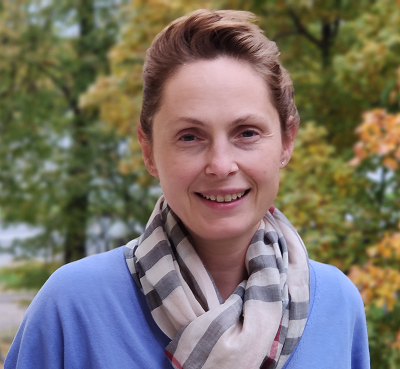
Prof. Dr. Christiane Fuchs is a full professor at the Faculty of Economics of Bielefeld University and heads the Data Science Group . She is also leading the Biostatistics Research Group and Core Facility Statistical Consulting at Helmholtz Munich . Her academic affiliations include the Bielefeld Graduate School of Economics and Management and the Bielefeld Center for Data Science (BiCDaS) . Education : MSc in Computational Modeling, Brunel University West London (2003) Diploma in Mathematics with Computer Science, University of Hanover (2005) PhD in Statistics, Ludwig Maximilian University of Munich (2010) Research interests span stochastic modeling , Bayesian inference , uncertainty quantification , and statistical applications in economics, medicine, and epidemiology. She specializes in diffusion processes , high-dimensional data analysis , and integrated statistical methods for cross-domain data (genomics, clinical, environmental). Recent publications focus on AI-driven clinical decision support systems , spatial epidemiology , fractional diffusion modeling , and statistical serology validation . Her work bridges methodological innovation in Bayesian statistics with real-world applications in infectious disease dynamics and hematological malignancies . Principal investigator in third-party funded projects from DFG , BMBF , NIH , and Helmholtz Association , including the UQ Consortium (2019-2024) and KoCo19 prospective COVID-19 cohort (2020-2024). She has developed statistical software packages like stochprofML and adaSC3 , and contributed to network-regularized regression methods. As Vice Rector for Research and Networking at Bielefeld University since 2023, she drives institutional research strategy while maintaining active roles in scientific societies including the International Society for Bayesian Analysis and Deutsche Statistische Gesellschaft .
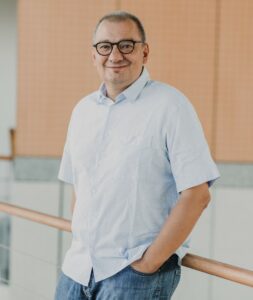
Prof. Wouter M. Koolen serves as Professor of Mathematical Machine Learning in the Statistics group at the University of Twente and as Senior Researcher in the Machine Learning group at Centrum Wiskunde & Informatica (CWI). He maintains active research affiliations with INRIA-CWI associate teams 6PAC (with Inria Lille) and 4TUNE (with Inria Paris and Grenoble), and holds the distinction of ELLIS Scholar. Dr. Koolen earned both his MSc and PhD cum laude from the Institute of Logic, Language and Computation at the University of Amsterdam, completing his doctoral work titled 'Combining Strategies Efficiently: High-quality Decisions from Conflicting Advice' in January 2011. His academic journey includes being designated a Master of Logic. Prof. Koolen's research spans theoretical machine learning with deep connections to game theory, information theory, statistics, and optimization. His current work focuses on pure exploration in multi-armed bandit models, game tree search algorithms, and provably accelerated learning methods in statistical and individual-sequence settings, which he characterizes as 'learning faster from easy data.' His theoretical contributions consistently demonstrate practical relevance in sequential decision making and statistical inference. Analysis of his recent publications reveals three dominant research threads: martingale-based methods for anytime-valid statistical inference using e-values, adaptive optimization algorithms with provable guarantees, and theoretical foundations of multi-armed bandit problems. His work increasingly bridges theoretical computer science with modern statistical methodology, particularly in sequential analysis and adaptive experimentation. His notable achievements include: NWO VENI grant for innovative research QUT Vice-Chancellor's postdoctoral research fellowship Designation as ELLIS Scholar recognizing European research excellence cum laude distinctions for both master's and doctoral degrees Prof. Koolen actively mentors the next generation of researchers, having supervised multiple PhD students to completion including Hongwei Wen, Clément Lezane, and Tyron Lardy with defenses scheduled for 2025. His research program is supported by competitive grants focusing on theoretical machine learning and statistical methodology. He maintains an active presence in the international research community through conference presentations, workshop organization, and collaborations across European institutions. Within the Machine Learning group at CWI and Statistics group at the University of Twente, Prof. Koolen contributes to a dynamic research environment focused on theoretical foundations with practical applications. His work often intersects with colleagues investigating sequential decision processes, game-theoretic approaches to learning, and robust statistical inference methods.
Jiang Xuejun is an Associate Professor in the Department of Statistics and Data Science at Southern University of Science and Technology (SUSTech). He has been with SUSTech since 2013, initially as a Tenure-Track Assistant Professor and promoted to Associate Professor in 2019. Prior to joining SUSTech, he served at Zhongnan University of Economics and Law. His educational background includes: Ph.D. in Statistics from The Chinese University of Hong Kong (2009) M.Sc. from Yunnan University B.Sc. from National University of Defense Technology Jiang Xuejun's research focuses on advanced statistical methodologies with applications in various domains. His work spans statistical theory development and practical applications in finance, economics, and risk assessment. He has made significant contributions to quantile regression, variable selection, survival analysis, and nonparametric regression methods. His research publications demonstrate a strong trend toward developing innovative statistical methods for high-dimensional data analysis, Bayesian modeling approaches, and applications in financial econometrics and disaster risk assessment. Many of his recent papers focus on quantile regression techniques, dimension reduction methods, and robust statistical testing procedures. Jiang Xuejun has received several prestigious awards: Shenzhen Outstanding Teacher (2018) Southern University of Science and Technology "Outstanding Teaching Award" (2018) "Excellent Mentor Award" from Southern University of Science and Technology (2016) Selected for Shenzhen's "Peacock Plan" for overseas high-level talents He has successfully secured multiple research grants as Principal Investigator, including projects funded by the National Natural Science Foundation of China (both General and Youth programs), Guangdong Provincial Natural Science Foundation, and Shenzhen Science and Technology Innovation Commission. His research portfolio includes work on likelihood inference for high-dimensional models, statistical methods for epidemic disease control, and quantitative trading systems using machine learning. Jiang maintains an active research group focusing on statistical methodology development and applications, with particular emphasis on financial statistics and econometrics. His team collaborates with researchers across multiple disciplines to address complex data analysis challenges in economics, finance, and public health.
Yuhan Jiang is a Morrey Visiting Assistant Professor in the Department of Mathematics at the University of California, Berkeley, appointed in 2025. His research focuses on algebraic combinatorics and related fields within pure mathematics. Education: PhD in Mathematics from Harvard University, advised by Professor Lauren K. Williams Current postdoctoral position at UC Berkeley under Professor Sylvie Corteel Dr. Jiang's research spans multiple interconnected areas of algebraic combinatorics. His work centers on the combinatorics of integrable systems, Ehrhart theory, matroid theory, and diagonal coinvariants. He has made significant contributions to understanding the structure of positroid polytopes, alcoved polytopes, and the connections between rowmotion and echelonmotion in posets. His research often bridges combinatorial structures with algebraic and geometric methods, particularly in the context of symmetric functions, lattice polytopes, and algebraic statistics. His publication record shows a strong progression in combinatorial algebra with increasing focus on geometric interpretations. Recent work explores the Ehrhart theory of various polytopes, the combinatorics of exclusion processes, and algebraic properties of coinvariant rings. The research demonstrates a consistent theme of connecting discrete structures with continuous geometric and algebraic frameworks, particularly through the lens of representation theory and symmetric functions. Dr. Jiang teaches Complex Analysis (Math 185) at UC Berkeley. His academic lineage includes prominent researchers in algebraic combinatorics, reflecting his deep engagement with cutting-edge developments in the field. His work with Professor Corteel at Berkeley continues his trajectory of exploring fundamental connections between combinatorial structures and algebraic geometry.
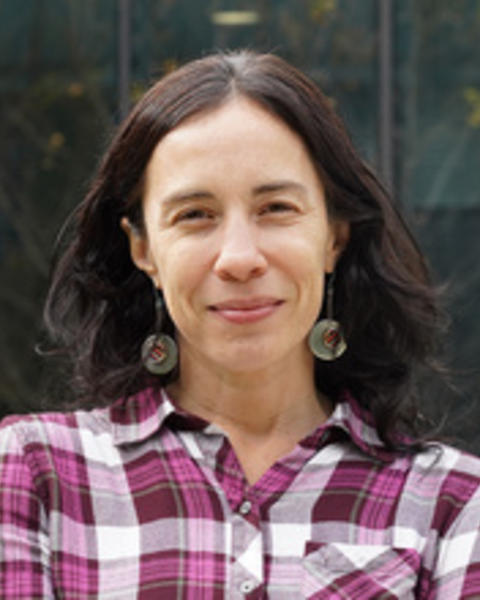
Olga Klopp is a Professor of Statistics at ESSEC Business School and a permanent member of the CREST research center. Her work focuses on nonparametric estimation, high-dimensional inference, network models, and matrix completion. Research spans theoretical and applied statistics Specializes in sparse/high-dimensional data and network analysis Develops algorithms for matrix completion and graphon estimation Recent research includes tensor decomposition for economic networks, detection of change-points in dynamic networks, and handling missing data in epidemic modeling. She has received ERC and ANR grants for innovative projects. PhD Students: Solenne Gaucher, Mokhtar Alaya, Guillermo Martin Key methodological contributions in low-rank modeling and robust estimation
Valentin Patilea is a Full Professor of Statistics at the National School of Statistics and Information Analysis (ENSAI) in France and serves as Head of the PhD program. He is a Permanent Member of CREST (Center for Research in Economics and Statistics), a prominent research center in economics and statistics. His academic career spans institutions across Europe, with significant contributions to statistical methodology and applications. Professor Patilea's educational background includes a Habilitation à diriger des recherches in Mathematics from the University of Rennes 1 (2006), a PhD in Statistics from Université catholique de Louvain (1997), an MSc in Mathematical Economics and Econometrics from Université Toulouse I (1993), and an MSc in Mathematics from the University of Bucharest (1989). His research focuses on advanced statistical methodologies, particularly in semi and nonparametric statistics, survival analysis, time series analysis, econometrics, and functional data analysis. Patilea's work bridges theoretical statistics with practical applications across various domains, developing innovative methods for complex data structures and dependencies. His research has significantly advanced methodologies for functional data, cure models, and weakly dependent time series. Analysis of Patilea's recent publications reveals a strong emphasis on functional data analysis, with particular attention to adaptive estimation methods, irregular data structures, and computational efficiency. His work spans theoretical developments in statistical methodology while maintaining connections to practical applications in economics and other fields. The publications demonstrate increasing sophistication in handling complex data structures, particularly multivariate functional data and dependent observations. Professor Patilea actively contributes to the academic community through editorial service, currently serving as Associate Editor for Bernoulli Journal (since 2022) and Statistical Methods and Applications (since 2025). Previously, he served on the editorial boards of the Journal of the Royal Statistical Society: Series B and the Journal of the American Statistical Association. He has supervised numerous PhD students, including current candidates Omar Kassi, Hassan Maissoro, and Daphne Aurouet, and has previously guided successful dissertations by Sunny Wang, Guillaume Flament, Edouard Genetay, and others. His supervision spans theoretical statistics, functional data analysis, and econometric applications. Professor Patilea leads the FunStatMath research initiative focused on Functional Data Analysis, which addresses mathematical challenges posed by data that naturally occur as curves or surfaces rather than vectors. This network connects researchers working on theoretical developments and applications across neuroscience, environmental sciences, and biology.
Vladislav Tadic serves as a Senior Lecturer in Statistics at the University of Bristol's School of Mathematics Statistics, where he advances theoretical frameworks in statistical science with emphasis on stochastic modeling and inference. His academic foundation includes: B.Eng M.Sc. Ph.D. from the University of Belgrade Dr. Tadic's research spans Probability Theory , Bayesian Statistics , and Stochastic Processes , with significant contributions to hidden Markov models , state-space systems , and recursive estimation algorithms . His work integrates rigorous mathematical analysis with applications in machine learning, focusing on stability properties, entropy rates, and asymptotic behavior of statistical estimators in nonlinear dynamic environments. Analysis of his publication record reveals a cohesive research trajectory centered on theoretical challenges in statistical inference for complex systems. Key themes include the analyticity of entropy rates, stability of optimal filters, and asymptotic properties of maximum likelihood estimation in non-linear state-space models, demonstrating deep connections between probability theory, information theory, and computational statistics. No scientific awards or fellowships are documented in his current profile. Dr. Tadic has supervised 3 research students, reflecting his commitment to academic mentorship, though specific grant funding details remain undisclosed in available records.
Professor Dennis McNevin is a leading academic in forensic genetics at the University of Technology Sydney (UTS), where he has held the position since 2018. He previously served at the Australian National University and the University of Canberra, progressing through roles from Lecturer to Associate Professor. His expertise spans forensic DNA analysis, biogeographical ancestry prediction, and the application of cutting-edge technologies like nanopore sequencing and machine learning in forensic science. McNevin's research addresses challenges in human remains identification, missing persons investigations, and DNA phenotyping. He is affiliated with UTS's Centre for Forensic Science and contributes to national initiatives like Australia's National DNA Program for Unidentified and Missing Persons. His work integrates interdisciplinary approaches, combining genetics, proteomics, and forensic anthropology to advance investigative capabilities. McNevin has received grants from agencies like the Australian Research Council and collaborates internationally on forensic training programs for law enforcement agencies in countries like Indonesia and Thailand. His teaching focuses on forensic genetics and criminalistics, and he has supervised numerous postgraduate students now employed in forensic laboratories across Australia. Key research themes include optimizing DNA recovery from challenging samples, developing forensic tools for ancestry and phenotype prediction, and enhancing DNA database interoperability for familial searching. Education: PhD (Chemical Engineering, University of Sydney, 1998), Graduate Diploma in Education (University of Western Sydney, 1991), Bachelor of Engineering (Chemical Engineering, University of NSW, 1989) Affiliations: Faculty of Science at UTS, Centre for Forensic Science Research Focus: Forensic genetics, DNA sequencing technologies, biogeographical ancestry, kinship inference, and forensic intelligence McNevin's funded research includes projects on ultrasensitive microRNA detection, forensic DNA phenotyping frameworks, and the operationalization of advanced DNA kits for missing persons investigations. He is a member of professional societies such as the Australian Academy of Forensic Sciences and the International Society for Forensic Genetics. His contributions to forensic science have led to advancements in disaster victim identification, DNA preservation techniques, and the ethical use of genetic data in law enforcement. Recent articles highlight his work on identity-informative markers, kinship inference using SNP panels, and proteomic approaches for body fluid identification. These studies underscore his commitment to bridging technological innovation with practical forensic applications to resolve cold cases and humanitarian identification challenges.
Matias Quiroz is a Senior Lecturer at the University of Technology Sydney (UTS) in the School of Mathematical and Physical Sciences. He joined UTS in July 2023 after previously serving as a Lecturer (2019–2022) and Senior Lecturer (2022–2023) at Stockholm University. His expertise lies in computational statistics, Bayesian methods, and machine learning. He holds a Ph.D. from Stockholm University (2015) and an M.Sc. in Engineering Mathematics from Lund University (2009). Research focuses on developing efficient MCMC algorithms for large datasets and variational approximations for high-dimensional models. He has contributed to areas like subsampling MCMC, spectral analysis of time series, and Bayesian inference for complex models. Quiroz is also an Associate Editor for Computational Statistics and Data Analysis and Econometrics and Statistics . Teaching responsibilities include courses such as Machine Learning: Mathematical Theory and Applications and Programming for Data Analysis. He has supervised students at various academic levels and has held editorial and leadership roles, including serving as the Young Stats representative for the NSW Branch of the Statistical Association of Australia since 2025. His work bridges Bayesian statistics with machine learning, emphasizing scalable computational methods. Notable research themes include high-dimensional state space models, dynamic linear regression, and algorithmic innovations for big data problems.
Cora Dvorkin is a Professor of Physics at Harvard University, affiliated with the Department of Physics. She is a theoretical cosmologist specializing in dark matter, light relics, and the early universe, with expertise in CMB, large-scale structure, and gravitational lensing analyses. Her research includes developing methods to detect dark matter substructure using lensing, advancing CMB-S4 experiment science cases, and applying machine learning to cosmological data. Education: Earned a Diploma in Physics from the University of Buenos Aires, a Ph.D. in Physics from the University of Chicago (2011), and completed postdoctoral research at the Institute for Advanced Study (2011-2014) and Harvard's Institute for Theory and Computation (2014-2015). She is a recipient of the DOE Early Career Award (2019), Harvard Foundation Scientist of the Year (2018), and multiple fellowships including the Radcliffe Institute Fellowship. Research Interests: Focus on probing dark matter interactions via CMB and LSS, light relic constraints, early universe inflationary models, and innovative data analysis techniques (e.g., wavelet transforms, machine learning). Her group pioneered the 'Generalized Slow Roll' formalism for inflationary potential reconstruction and demonstrated line-of-sight halo contributions in lensing systems. Collaborations: Member of CMB-S4, Vera Rubin Observatory’s DESC, and the PIXIE mission. She co-leads CMB-S4’s inflation analysis and chairs the IAIFI Board. Her work influences next-generation experiments, including guiding the Dark Energy Survey’s BSM analysis. Teaching and Outreach: Recognized as 'Favorite Professor' by Harvard seniors (2022), emphasizing STEM education. Active in mentoring and public engagement, balancing research leadership with academic service.
Professor Philip Donoghue holds the title of Professor of Palaeobiology at the University of Bristol's School of Earth Sciences. He is a Fellow of the Royal Society (FRS), recognizing his significant contributions to evolutionary biology and palaeontology. His research integrates fossil records with genomic data to explore the timing and mechanisms of major evolutionary events, such as the emergence of flowering plants, early animal development, and the diversification of arthropods and vertebrates. Education: B.Sc. (Leicester), M.Sc. (Sheffield), Ph.D. (Leicester). Research interests include developmental biology of ancient fossils, phylogenetic modeling methodologies, and the impact of environmental changes (e.g., oxygen levels) on organismal evolution. His work often employs synchrotron tomography and computational fluid dynamics to reconstruct fossil anatomy and function. Recent studies highlight debates over the origins of key groups like tracheophytes, conodonts, and vertebrate skulls, alongside methodological advancements in divergence time estimation. Advising and grants: Professor Donoghue has advised over 30 PhD students and postdoctoral researchers, many of whom have transitioned to roles in academia, industry, and government. His lab receives funding from NERC, BBSRC, and EPSRC, supporting projects on fossil preservation, evolutionary timelines, and functional morphology. Past grants include Royal Society fellowships and international collaborations through schemes like the Marie Skłodowska-Curie Fellowship. Labs/teams: He leads the Donoghue Lab, a multidisciplinary group focusing on palaeobiology and geobiology. Current members include Research Associates and PhD students working on topics ranging from Devonian jawless fishes to Cretaceous insect diversity. Alumni have secured positions at institutions like the University of Cambridge, Natural History Museum, and UK Research and Innovation (UKRI).
Steve MacEachern is the Distinguished Arts & Sciences Professor of Statistics at The Ohio State University's Department of Statistics, housed within the College of Arts and Sciences. He holds a courtesy appointment in Psychology. With a PhD in Statistics from the University of Minnesota (1988) and a BA in Mathematics from Carleton College (1982), he has been a faculty member at Ohio State since 1988, serving as Department Chair from 2015–2023. His research focuses on statistical model development, Bayesian methodologies (including nonparametric approaches impactful in machine learning), robustness analysis, computational methods like MCMC algorithms, penalized likelihood techniques, and ranked set sampling. He addresses gaps between real-world phenomena and statistical models, emphasizing inferential robustness. Awards: Fellow of ASA, ISBA, and IMS; ISBA President (2016). Advising: Supervised PhD students (names not listed). His work bridges theoretical advancements and practical computational challenges, influencing both statistical theory and applied machine learning domains.