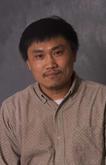
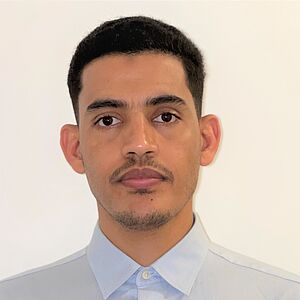
Chong Gu is a Professor of Statistics at Purdue University within the College of Science . His research focuses on Asymptotics , Computational Statistics , Image Analysis , Model Selection , Nonparametric Regression , Spatial Statistics , and Survival Analysis . Education : B.En. in Computer Science (1982) from Shanghai Jiaotong University M.S. in Statistics (1984) from Academia Sinica Ph.D. in Statistics (1989) from University of Wisconsin B.S. in Mathematics (2004) from University of Science and Technology of China His research spans smoothing spline ANOVA models , nonparametric regression , and hazard estimation , with a strong emphasis on computational efficiency and theoretical rigor. Articles from 2012-2022 highlight trends in high-dimensional density estimation , soft classification , and penalized likelihood methods across statistics and machine learning. Previous Ph.D. advisees include Pang Du, Nels Grevstad, Chun Han, Young-Ju Kim, Ping Ma, Chunfu Qiu (joint with Professor James O. Berger), and Jingyuan Wang.
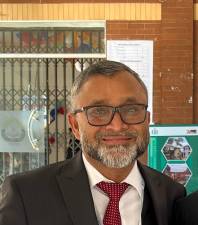
Zahirul Hoque is a Senior Lecturer in Statistics at the School of Mathematics, Physics and Computing, University of Southern Queensland . He holds a PhD from the University of Southern Queensland (2004) and MSc/BSc(Hons) from Chittagong University (1996/1994). BSc(Hons), Chittagong University, 1994 MSc, Chittagong University, 1996 PhD, University of Southern Queensland, 2004 His research spans applied statistics, biostatistics, and statistical theory, with a focus on public health, medical data analysis, and regression modeling. Recent work includes meta-analyses of bariatric surgery outcomes, longitudinal studies on adolescent health, and statistical methods for environmental and infectious disease data. His publications highlight expertise in gastroesophageal reflux disease , statistical imputation , regression with asymmetric loss , and public health policy . He has served as Associate Editor for the Journal of Applied Probability and Statistics and JP Journal of Applied Statistics , and actively supervises doctoral and master’s students in projects related to health data, carbon management, and graduate employability.
Prof. Wouter M. Koolen serves as Professor of Mathematical Machine Learning in the Statistics group at the University of Twente and as Senior Researcher in the Machine Learning group at Centrum Wiskunde & Informatica (CWI). He maintains active research affiliations with INRIA-CWI associate teams 6PAC (with Inria Lille) and 4TUNE (with Inria Paris and Grenoble), and holds the distinction of ELLIS Scholar. Dr. Koolen earned both his MSc and PhD cum laude from the Institute of Logic, Language and Computation at the University of Amsterdam, completing his doctoral work titled 'Combining Strategies Efficiently: High-quality Decisions from Conflicting Advice' in January 2011. His academic journey includes being designated a Master of Logic. Prof. Koolen's research spans theoretical machine learning with deep connections to game theory, information theory, statistics, and optimization. His current work focuses on pure exploration in multi-armed bandit models, game tree search algorithms, and provably accelerated learning methods in statistical and individual-sequence settings, which he characterizes as 'learning faster from easy data.' His theoretical contributions consistently demonstrate practical relevance in sequential decision making and statistical inference. Analysis of his recent publications reveals three dominant research threads: martingale-based methods for anytime-valid statistical inference using e-values, adaptive optimization algorithms with provable guarantees, and theoretical foundations of multi-armed bandit problems. His work increasingly bridges theoretical computer science with modern statistical methodology, particularly in sequential analysis and adaptive experimentation. His notable achievements include: NWO VENI grant for innovative research QUT Vice-Chancellor's postdoctoral research fellowship Designation as ELLIS Scholar recognizing European research excellence cum laude distinctions for both master's and doctoral degrees Prof. Koolen actively mentors the next generation of researchers, having supervised multiple PhD students to completion including Hongwei Wen, Clément Lezane, and Tyron Lardy with defenses scheduled for 2025. His research program is supported by competitive grants focusing on theoretical machine learning and statistical methodology. He maintains an active presence in the international research community through conference presentations, workshop organization, and collaborations across European institutions. Within the Machine Learning group at CWI and Statistics group at the University of Twente, Prof. Koolen contributes to a dynamic research environment focused on theoretical foundations with practical applications. His work often intersects with colleagues investigating sequential decision processes, game-theoretic approaches to learning, and robust statistical inference methods.
Jiang Xuejun is an Associate Professor in the Department of Statistics and Data Science at Southern University of Science and Technology (SUSTech). He has been with SUSTech since 2013, initially as a Tenure-Track Assistant Professor and promoted to Associate Professor in 2019. Prior to joining SUSTech, he served at Zhongnan University of Economics and Law. His educational background includes: Ph.D. in Statistics from The Chinese University of Hong Kong (2009) M.Sc. from Yunnan University B.Sc. from National University of Defense Technology Jiang Xuejun's research focuses on advanced statistical methodologies with applications in various domains. His work spans statistical theory development and practical applications in finance, economics, and risk assessment. He has made significant contributions to quantile regression, variable selection, survival analysis, and nonparametric regression methods. His research publications demonstrate a strong trend toward developing innovative statistical methods for high-dimensional data analysis, Bayesian modeling approaches, and applications in financial econometrics and disaster risk assessment. Many of his recent papers focus on quantile regression techniques, dimension reduction methods, and robust statistical testing procedures. Jiang Xuejun has received several prestigious awards: Shenzhen Outstanding Teacher (2018) Southern University of Science and Technology "Outstanding Teaching Award" (2018) "Excellent Mentor Award" from Southern University of Science and Technology (2016) Selected for Shenzhen's "Peacock Plan" for overseas high-level talents He has successfully secured multiple research grants as Principal Investigator, including projects funded by the National Natural Science Foundation of China (both General and Youth programs), Guangdong Provincial Natural Science Foundation, and Shenzhen Science and Technology Innovation Commission. His research portfolio includes work on likelihood inference for high-dimensional models, statistical methods for epidemic disease control, and quantitative trading systems using machine learning. Jiang maintains an active research group focusing on statistical methodology development and applications, with particular emphasis on financial statistics and econometrics. His team collaborates with researchers across multiple disciplines to address complex data analysis challenges in economics, finance, and public health.
Yuhan Jiang is a Morrey Visiting Assistant Professor in the Department of Mathematics at the University of California, Berkeley, appointed in 2025. His research focuses on algebraic combinatorics and related fields within pure mathematics. Education: PhD in Mathematics from Harvard University, advised by Professor Lauren K. Williams Current postdoctoral position at UC Berkeley under Professor Sylvie Corteel Dr. Jiang's research spans multiple interconnected areas of algebraic combinatorics. His work centers on the combinatorics of integrable systems, Ehrhart theory, matroid theory, and diagonal coinvariants. He has made significant contributions to understanding the structure of positroid polytopes, alcoved polytopes, and the connections between rowmotion and echelonmotion in posets. His research often bridges combinatorial structures with algebraic and geometric methods, particularly in the context of symmetric functions, lattice polytopes, and algebraic statistics. His publication record shows a strong progression in combinatorial algebra with increasing focus on geometric interpretations. Recent work explores the Ehrhart theory of various polytopes, the combinatorics of exclusion processes, and algebraic properties of coinvariant rings. The research demonstrates a consistent theme of connecting discrete structures with continuous geometric and algebraic frameworks, particularly through the lens of representation theory and symmetric functions. Dr. Jiang teaches Complex Analysis (Math 185) at UC Berkeley. His academic lineage includes prominent researchers in algebraic combinatorics, reflecting his deep engagement with cutting-edge developments in the field. His work with Professor Corteel at Berkeley continues his trajectory of exploring fundamental connections between combinatorial structures and algebraic geometry.
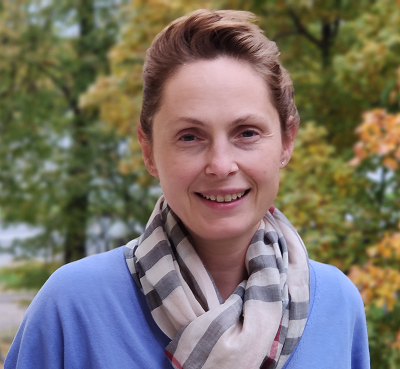
Olga Klopp is a Professor of Statistics at ESSEC Business School and a permanent member of the CREST research center. Her work focuses on nonparametric estimation, high-dimensional inference, network models, and matrix completion. Research spans theoretical and applied statistics Specializes in sparse/high-dimensional data and network analysis Develops algorithms for matrix completion and graphon estimation Recent research includes tensor decomposition for economic networks, detection of change-points in dynamic networks, and handling missing data in epidemic modeling. She has received ERC and ANR grants for innovative projects. PhD Students: Solenne Gaucher, Mokhtar Alaya, Guillermo Martin Key methodological contributions in low-rank modeling and robust estimation
Valentin Patilea is a Full Professor of Statistics at the National School of Statistics and Information Analysis (ENSAI) in France and serves as Head of the PhD program. He is a Permanent Member of CREST (Center for Research in Economics and Statistics), a prominent research center in economics and statistics. His academic career spans institutions across Europe, with significant contributions to statistical methodology and applications. Professor Patilea's educational background includes a Habilitation à diriger des recherches in Mathematics from the University of Rennes 1 (2006), a PhD in Statistics from Université catholique de Louvain (1997), an MSc in Mathematical Economics and Econometrics from Université Toulouse I (1993), and an MSc in Mathematics from the University of Bucharest (1989). His research focuses on advanced statistical methodologies, particularly in semi and nonparametric statistics, survival analysis, time series analysis, econometrics, and functional data analysis. Patilea's work bridges theoretical statistics with practical applications across various domains, developing innovative methods for complex data structures and dependencies. His research has significantly advanced methodologies for functional data, cure models, and weakly dependent time series. Analysis of Patilea's recent publications reveals a strong emphasis on functional data analysis, with particular attention to adaptive estimation methods, irregular data structures, and computational efficiency. His work spans theoretical developments in statistical methodology while maintaining connections to practical applications in economics and other fields. The publications demonstrate increasing sophistication in handling complex data structures, particularly multivariate functional data and dependent observations. Professor Patilea actively contributes to the academic community through editorial service, currently serving as Associate Editor for Bernoulli Journal (since 2022) and Statistical Methods and Applications (since 2025). Previously, he served on the editorial boards of the Journal of the Royal Statistical Society: Series B and the Journal of the American Statistical Association. He has supervised numerous PhD students, including current candidates Omar Kassi, Hassan Maissoro, and Daphne Aurouet, and has previously guided successful dissertations by Sunny Wang, Guillaume Flament, Edouard Genetay, and others. His supervision spans theoretical statistics, functional data analysis, and econometric applications. Professor Patilea leads the FunStatMath research initiative focused on Functional Data Analysis, which addresses mathematical challenges posed by data that naturally occur as curves or surfaces rather than vectors. This network connects researchers working on theoretical developments and applications across neuroscience, environmental sciences, and biology.
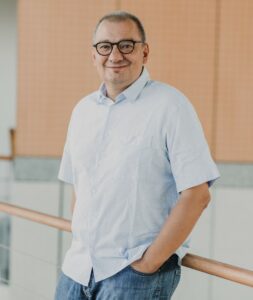
Vladislav Tadic serves as a Senior Lecturer in Statistics at the University of Bristol's School of Mathematics Statistics, where he advances theoretical frameworks in statistical science with emphasis on stochastic modeling and inference. His academic foundation includes: B.Eng M.Sc. Ph.D. from the University of Belgrade Dr. Tadic's research spans Probability Theory , Bayesian Statistics , and Stochastic Processes , with significant contributions to hidden Markov models , state-space systems , and recursive estimation algorithms . His work integrates rigorous mathematical analysis with applications in machine learning, focusing on stability properties, entropy rates, and asymptotic behavior of statistical estimators in nonlinear dynamic environments. Analysis of his publication record reveals a cohesive research trajectory centered on theoretical challenges in statistical inference for complex systems. Key themes include the analyticity of entropy rates, stability of optimal filters, and asymptotic properties of maximum likelihood estimation in non-linear state-space models, demonstrating deep connections between probability theory, information theory, and computational statistics. No scientific awards or fellowships are documented in his current profile. Dr. Tadic has supervised 3 research students, reflecting his commitment to academic mentorship, though specific grant funding details remain undisclosed in available records.
Maria Vlasiou is a Full Professor of Mathematics of Operations Research at the University of Twente, an Associate Professor at Eindhoven University of Technology, and a Research Fellow of EURANDOM. Her work focuses on stochastic processing networks, particularly layered architectures arising in energy systems, high-tech manufacturing supply chains, and bandwidth-sharing networks. Education & Qualifications UTQ (University Teaching Qualification) diploma obtained in 2010; continuous professional-education training thereafter. Research Interests Vlasiou’s research spans the performance analysis of stochastic networks, with special emphasis on: Electric-vehicle charging networks and congestion control. Extreme-value theory for fork-join queues inspired by ASML/Philips/Boeing supply chains. Lévy-driven queues, heavy-tailed risk models, and large-deviations asymptotics. Resource-allocation problems involving non-convex optimisation and heavy-traffic limits. She combines rigorous probabilistic methods (fluid & diffusion approximations, perturbation analysis) with practical applications in energy, logistics and manufacturing. Scientific Awards & Recognition AMSI-ANZIAM Lecturer 2017 Marcel Neuts Student Paper Award (MAM8) 3rd Prize, 8th Conference in Actuarial Science & Finance 2014 Best Paper Award, ICORES 2013 Excellent Course Prize, University of Twente 2021 Grants & Projects She has attracted over €4.5 million in external funding from NWO, Australian Research Council, 4TU.CEE, and industry, including current NWO LTP ROBUST programme on “AI for Energy Grids” (2023-2032). Teaching & Supervision Vlasiou teaches Probability, Stochastic Processes, Performance Modelling and Infectious-Disease Epidemiology. She has supervised nine PhD dissertations and numerous BSc/MSc theses, internships and PDEng projects, and leads educational-innovation grants on mini-lectures and student engagement. Editorial & Leadership Roles Associate editor for OR Spectrum, IISE Transactions, Math. Methods of OR, and INFOR. She represents the Netherlands at the IMU Committee for Women in Mathematics and serves on advisory boards for national women-in-math organisations in Cyprus and Greece.
Mohamed-Salem AHMED is a confirmed researcher within the ULR 2694-METRICS team (Public Health: epidemiology and quality of care) at the University of Lille. He also serves as a part-time lecturer at the UFR MIME (Mathematics, Computer Science, Management, Economics) and the Polytech Lille school, while working as a data scientist at the Alicante company. His research focuses on developing advanced statistical methodologies with applications in public health and epidemiological studies. His primary research interests include: Functional data analysis Spatial statistics Epidemiology Dr. AHMED's extensive publication record demonstrates a deep expertise in spatial scan statistics and functional data analysis. His work has evolved from foundational statistical methods to specialized applications in epidemiological cluster detection, with recent focus on multivariate functional data analysis and Bayesian modeling approaches. His development of the R Package HDSpatialScan shows commitment to making advanced statistical methods accessible to researchers. His dual affiliation with academia and industry allows him to bridge theoretical advances with practical implementations in public health surveillance and disease monitoring systems. The consistent output of high-quality research publications since 2014 demonstrates sustained scholarly productivity in his field.
Noemi Anau Montel is a postdoctoral research fellow at the Max Planck Institute for Astrophysics in Garching, Germany. Her work spans astrophysics, cosmology, and particle physics, focusing on developing probabilistic machine learning techniques for analyzing astrophysical datasets. Research interests include: Simulation-based inference for dark matter studies Generative modeling in cosmological simulations Statistical analysis of high-energy astrophysical data Neural ratio estimation techniques Applications to gravitational lensing and dark Universe problems She has published extensively on machine learning applications in astrophysics, with recent works focusing on dark matter mass constraints, cosmological initial condition reconstruction, and model validation techniques.
Dr. Scott F Grey is an Assistant Professor in the Department of Surgery at the Uniformed Services University of the Health Sciences (USUHS) School of Medicine. He currently serves as Associate Director of Biostatistics for the Surgical Critical Care Initiative (SC2i), where he manages the Bioinformatics Core Services (BiCS) group. His work focuses on developing machine learning algorithms and computerized decision support tools for critically injured patients, with particular expertise in statistical methods for causal inference. Dr. Grey earned his BS in Physical Education from Kent State University, followed by MS and PhD degrees in Epidemiology and Biostatistics from Case Western Reserve University. His doctoral dissertation examined how different definitions of compliance impacted estimates of treatment efficacy in complier average causal effects (CACE) analysis. Dr. Grey's research centers on the development of computerized decision support tools to improve clinical decision-making, with a focus on statistical methods for causal inference. His work spans military medicine, trauma care, and critical care, applying advanced biostatistical techniques to complex clinical problems. He has particular expertise in machine learning applications for risk stratification and prediction modeling in vascular surgery, trauma, and critical care settings. Analysis of Dr. Grey's recent publications reveals a strong focus on military medicine and combat casualty care, with particular emphasis on trauma outcomes, wound healing, and infection prediction. His work frequently employs advanced statistical methods, machine learning, and genomic analysis to address complex clinical problems in critical care settings. A significant portion of his research involves developing clinical decision support tools to improve diagnostic accuracy and treatment decisions in emergency and trauma situations. Dr. Grey has served as lead statistician for multiple NIH clinical trial networks and large prospective observational studies. His expertise includes developing and running individual and cluster randomized trials, and statistical methods for causal inference such as propensity scores, statistical mediation, complier average causal effects, and targeted maximum likelihood estimation. As Associate Director of Biostatistics for SC2i, Dr. Grey leads a team of biostatisticians, bioinformaticians, and programmers developing machine learning algorithms that utilize complex clinical and biomarker data. His Bioinformatics Core Services group provides analytic support to various research projects at SC2i, including the development of productive algorithms for computer decision support tools, clinical trials to evaluate CDSTs, and various observational studies of critical care.
Rasmus Henrik Amund Henriksen is a Guest Researcher at the Globe Institute, Section for Geogenetics, University of Copenhagen. His research focuses on ancient DNA analysis, population genomics, and computational biology methodologies. He maintains an active research profile with publications spanning multiple high-impact journals including Nature and Molecular Ecology Resources. His research interests include Ancient DNA analysis, Population Genomics, Bioinformatics, Computational Genomics, Molecular Evolution, Conservation Genetics, and Circular DNA Research. Dr. Henriksen's work bridges computational methods with biological applications, developing tools like NGSNGS for next-generation sequencing data simulation while applying these techniques to evolutionary questions. His publication record shows a strong focus on ancient DNA methodologies and population history, with recent work examining post-glacial western Eurasia, Neolithic Denmark population turnovers, and Cuban hutias species diversity. His research demonstrates expertise in both computational tool development and biological applications of genomic technologies. Dr. Henriksen has contributed to several high-impact publications in Nature with significant media attention, including work that was picked up by 278 news outlets and referenced in 24 Wikipedia pages. His research has generated substantial academic interest with numerous citations and Mendeley readers. His work demonstrates strong collaborative networks across international research teams, with co-authorship on major studies involving dozens of researchers from multiple institutions worldwide. This collaborative approach has enabled large-scale genomic studies requiring diverse expertise.
Thorfinn Sand Korneliussen serves as an Associate Professor at the Section for Geogenetics within the Globe Institute at the University of Copenhagen. His academic profile demonstrates significant contributions to the field of ancient DNA analysis and population genetics through numerous high-impact publications. Dr. Korneliussen's research spans several critical areas in genomic science: Development of computational methods for ancient DNA damage analysis Population history reconstruction through genomic evidence Evolutionary genetics of human populations Interdisciplinary approaches linking genomics with archaeology and linguistics Statistical modeling of genomic data Tool development for genomic analysis pipelines His recent publication record shows a strong emphasis on methodological innovation in ancient DNA analysis while applying these techniques to major questions in human history. The research demonstrates interdisciplinary collaboration across genetics, archaeology, anthropology, and linguistics, with particular focus on European and Native American population histories. Dr. Korneliussen's work has received substantial attention in academic and public spheres, with multiple publications featured in high-impact journals like Nature and Cell, and widely disseminated through news outlets and social media platforms.
Dr.-Ing. Jan Melchior is a Researcher at the Institute for Neural Computation within the Faculty of Computer Science at Ruhr-University Bochum, Germany. He has held the position of Doctoral Researcher since 2012 in Prof. Dr. Laurenz Wiskott's group. Melchior completed his education at Ruhr-University Bochum, earning a Master of Computer Science (2012, thesis on Gaussian-Binary Restricted Boltzmann Machines) and a Bachelor of Computer Science (2009). His research focuses on unsupervised machine learning , emphasizing probabilistic models like Boltzmann machines and deep learning. Key interests include developmental-online learning, growing systems, and semi-supervised techniques, which he considers vital for generalization and knowledge integration. His work bridges machine learning with neuroscience, particularly in sequence memory, image statistics, and neural modeling. Melchior has supervised multiple students, including bachelor/master theses and study projects. He taught as an assistant for Machine Learning: Unsupervised Methods (2017) and led lab courses for Scientific Computing with Python (2015–2017). He developed PyDeep , a Python library for unsupervised learning (e.g., PCA, RBM, autoencoders).