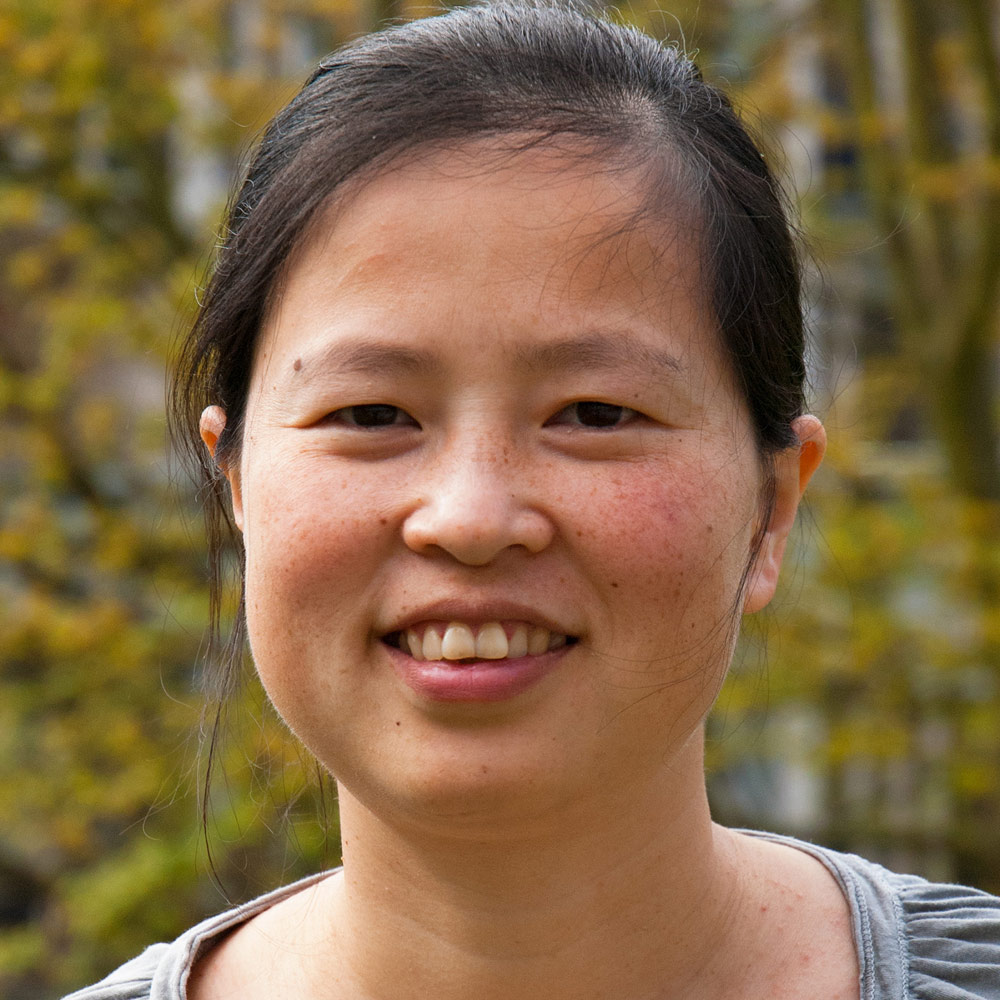
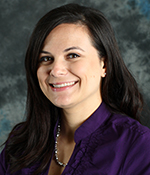
Dr. Yanchun Bao is a Senior Lecturer in Statistics and Data Science at the School of Mathematics, Statistics and Actuarial Science (SMSAS), University of Essex. She holds a PhD in Statistics from the University of Manchester (2007), an MSc from Peking University (2002), and a BSc from Yunnan University (1999). Prior roles include postdoctoral research positions at the University of Manchester, Brunel University, and University College London, followed by research roles at the Institute for Social and Economic Research (ISER) from 2014 to 2019. Her research focuses on statistical methodology in health, biology, and social sciences, encompassing longitudinal/survival analysis, causal inference (e.g., Mendelian Randomization), bioinformatics (omic data analysis: SNPs, DNAm, proteomics), and covariance modeling. She actively supervises PhD students in these areas, emphasizing interdisciplinary applications. Key contributions include studies on epigenetic markers in shift work, socioeconomic health gradients, and genomic analyses of risk tolerance. Her work leverages large datasets such as Understanding Society and UK Biobank. Collaborations span institutions like ISER, Brunel University, and University College London. Grants and funding details are listed but not elaborated here.
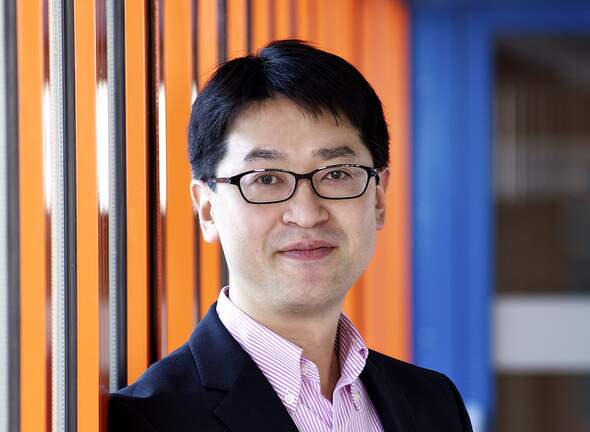
Susumu Shikano is Professor of Political Methodology at the University of Konstanz’s Department of Politics and Public Administration. He directs the interdisciplinary Master’s program in Social and Economic Data Science (SEDS) and leads research projects on electoral systems and behavioral decision-making. His research integrates Bayesian statistics , experimental methods, and formal modeling to analyze political behavior, administrative delegation, and electoral dynamics. Key themes include voter perceptions of party competition, behavioral consequences of public service motivation, and methodological innovations in multilevel analysis. Recent experimental work explores visual influences in voting, risk aversion in bureaucracy, and misinformation during health crises. Publications emphasize quantitative rigor, with applications to European and German political contexts. Shikano teaches graduate courses in Bayesian models, survey design, and causal inference. He currently investigates inequities in online information-seeking via an NDTP-funded project.
Min Tsao is a Professor in the Department of Mathematics and Statistics at the University of Victoria (UVic). He holds a PhD from Simon Fraser University. His primary research interests focus on empirical likelihood methodologies, model/variable selection techniques, and group effects in regression models with strongly correlated predictors. He has contributed to advancements in constrained minimum criterion (CMC) for model selection and group least squares regression to address multicollinearity issues. Education: PhD in Statistics, Simon Fraser University Research Interests: Development of extended empirical likelihood frameworks for improved statistical inference Model selection criteria using log-likelihood ratios (e.g., CMC as an alternative to AIC/BIC) Handling multicollinearity through group effects and group least squares regression Applications of saddlepoint approximation in statistical methods Notable Achievements: Recipient of the Canadian Journal of Statistics Award Teaching: Fall 2024: STAT 350 (Mathematical Statistics I) and STAT 353 (Applied Regression Analysis) Spring 2025: Courses to be announced Prof. Tsao’s work bridges theoretical statistics with practical applications, emphasizing robust methodologies for complex regression scenarios.
Juan Restrepo is a Joint Faculty Professor at the University of Tennessee, Knoxville, with a primary appointment in the Department of Mathematics within the College of Arts and Sciences. He also holds adjunct positions at Duke University and Oregon State University. As Section Head of Mathematics in Computation at Oak Ridge National Laboratory (ORNL), he leads research in data-driven methodologies, scientific computing, and uncertainty quantification. His expertise spans non-equilibrium statistical dynamics, data assimilation, and probabilistic methods in climate science and oceanography. Education: Restrepo earned a PhD in Physics (1992) and MS in Engineering Acoustics (1987) from Pennsylvania State University, an Electrical Engineering degree (1985) from Columbia University, and a BS in Music (1983) from New York University. Research Interests: He focuses on integrating data and physical models using AI, machine learning, and Bayesian techniques. Applications include climate dynamics, ocean transport, epidemics, and coastal resilience. His work bridges deterministic and stochastic systems, with contributions to high-performance computing and ensemble methods. Grants & Awards: Notable grants include DOE funding for high-performance ensemble computing and interdisciplinary projects on climate resilience. Awards include APS and SIAM Fellowships, the SIAM Geosciences Career Prize, and a DOE Young Investigator Award. Advising & Service: Restrepo has mentored numerous PhD and master’s students in applied mathematics, climate science, and computational methods. He actively promotes diversity in STEM, serving on committees for professional societies and leading initiatives at Oregon State University. His leadership roles include co-directing the Dynamics and Data Science Institute (D2SI).
National and Kapodistrian University of AthensGreece
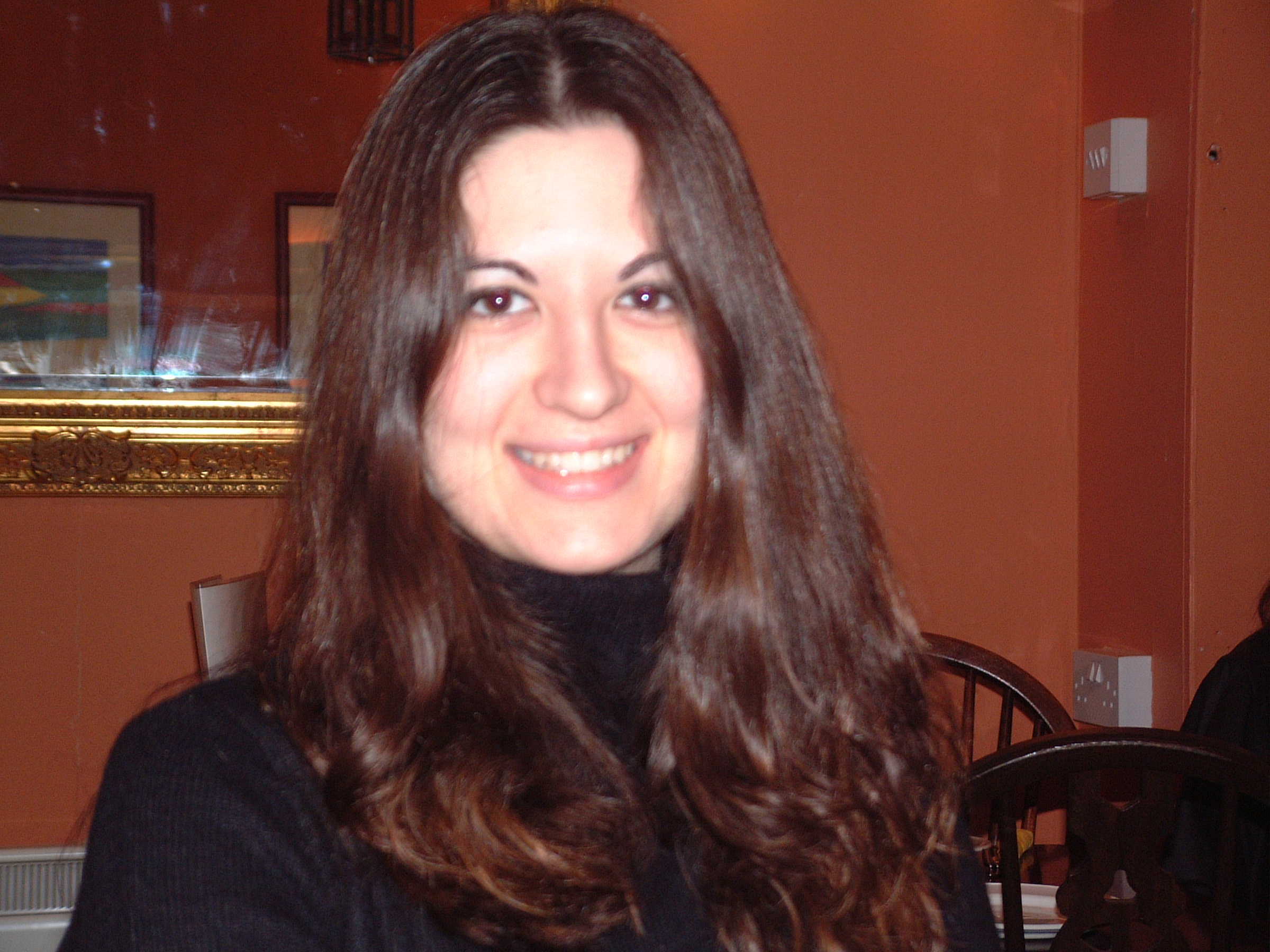
Loukia Meligkotsidou is an Associate Professor of Statistics at the Department of Mathematics of the National and Kapodistrian University of Athens. She holds a BSc in Statistics from Athens University of Economics and Business (2002) and a PhD in Statistics from Lancaster University (2005), focusing on filtering methods for population genetics, phylogenetics, and mixture models. Her research interests span Bayesian inference, computational statistics, hidden Markov models, biostatistics, and econometrics. She teaches undergraduate courses on Bayesian Inference and postgraduate courses on Time Series analysis. Her work emphasizes methodological advancements in statistical modeling, particularly in longitudinal data analysis, competing risks, and model uncertainty. Recent publications address issues like shared parameter models for longitudinal data, Bayesian unit root testing, and quantile regression approaches in financial forecasting. She is a Fellow of the Royal Statistical Society and active in professional societies like ISBA and IMS. Her research integrates theoretical contributions with applied problems in economics, finance, and biology. Notable contributions include frameworks for handling informative dropout mechanisms and developing efficient Bayesian computational methods for complex models. Her work bridges statistical methodology and real-world applications, particularly in econometrics and biostatistics.
Trambak Banerjee is an Assistant Professor in the Analytics, Information, and Operations academic area at the University of Kansas School of Business. His research focuses on developing rigorous statistical methods for analyzing modern high-dimensional data where issues such as unobserved heterogeneity and noise accumulation impede inferences using standard methods. Education: Ph.D. in Business Administration (Statistics), Marshall School of Business, University of Southern California, 2020 M.S. in Mathematical Finance, University of Oxford, 2015 M.S. in Statistics, Indian Statistical Institute, Kolkata, 2006 B.S. in Statistics, St. Xavier's College, University of Calcutta, 2004 Dr. Banerjee's research interests span multiple domains including Shrinkage Estimation, Empirical Bayes Prediction, High Dimensional Penalized Likelihood Methods, and statistical applications in Virology, Consumer Behavior, and Marketing. His industry experience in financial services has significantly influenced his research approach, often connecting methodological development to concrete applied problems. His work bridges theoretical statistics with practical applications in health, marketing, and finance. His publication record demonstrates expertise in developing novel statistical frameworks for complex data problems, with a particular focus on nonparametric methods, empirical Bayes estimation, and testing procedures for heterogeneous data. His recent work includes significant contributions to statistical methods for single-cell virology, shrinkage prediction under complex covariance structures, and joint modeling approaches for user behavior in digital platforms. Dr. Banerjee has developed several software packages to implement his methodological contributions, including truh for nonparametric two-sample testing under heterogeneity, cezij for constrained zero-inflated joint modeling, and several R packages for adaptive shrinkage and clustering procedures. His work combines theoretical rigor with practical implementation, making his methods accessible to researchers across multiple disciplines.
Sarah Depaoli is a Professor of Quantitative Methods, Measurement, and Statistics, and Department Chair of Psychological Sciences at the University of California, Merced. She holds a Ph.D. in Quantitative Methods from the University of Wisconsin, Madison (2010). Her research focuses on Bayesian statistics, structural equation modeling (SEM), and mixture models, with a particular emphasis on improving model robustness and addressing methodological challenges in latent variable analysis. Dr. Depaoli’s work includes advancing Bayesian approaches for SEM, latent growth curve models, and finite mixture models. She has authored the book *Bayesian Structural Equation Modeling* (Guilford Press, 2021), which serves as a key resource for researchers and students. She currently serves as an Associate Editor for *Multivariate Behavioral Research*, *Psychological Methods*, and the *Journal of the Royal Statistical Society, Series A*. Her research interests span prior specification in Bayesian models, class enumeration in mixture models, and the application of non-parametric methods. She teaches undergraduate statistics and graduate courses in quantitative methods at UC Merced. Her contributions to statistical methodology have been recognized through editorial roles and her influential publications on Bayesian techniques.
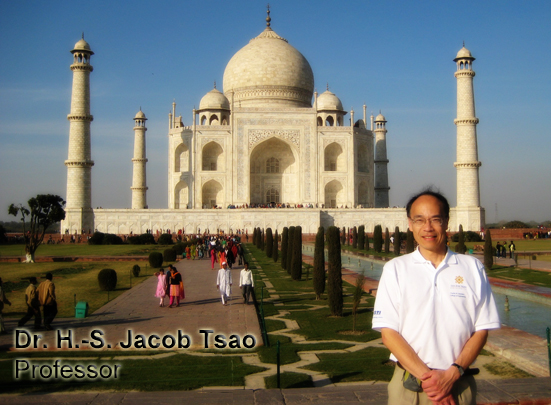
Jacob Tsao is a Professor in the Department of Industrial and Systems Engineering at San Jose State University's Charles W. Davidson College of Engineering, where he has served since 2001. He currently holds the position of Professor and Graduate Advisor, and previously served as Associate Dean for Extended Studies (2018-2020) and Acting Chair of the Civil and Environmental Engineering Department (2022). He also maintains an adjunct professorship at SP Jain Institute of Management and Research in Mumbai, India since 2009. Dr. Tsao earned his Ph.D. in Operations Research from the University of California, Berkeley, an M.S. in Mathematical Statistics from the University of Texas, Dallas, and a B.S. in Applied Mathematics from National Chiao-Tung University in Taiwan. His educational background established the foundation for his distinguished career spanning academic research, industry applications, and leadership positions. Tsao's research spans several interconnected domains with primary focus on experimental design methodologies, statistical quality control, and transportation systems engineering. His work in factorial experiment design has produced innovative approaches to minimizing test conditions while maintaining statistical validity. In transportation, he has made significant contributions to intelligent transportation systems, particularly in bus rapid transit optimization, automated highway systems, and large vehicle operations. His research bridges theoretical statistical methods with practical engineering applications, often addressing real-world transportation challenges through mathematical modeling and optimization techniques. His publication record demonstrates consistent scholarly output with recent work focusing on political districting models, advanced experimental design patterns, and efficient transit system configurations. The research shows a clear trajectory from foundational work in entropy optimization and mathematical programming toward increasingly applied transportation and supply chain problems, while maintaining strong methodological rigor in statistical and operations research approaches. The Newnan Brothers Award for Faculty Excellence (2017) Charles W. Davidson College of Engineering Faculty Award for Excellence in Scholarship (2016) Teacher-Scholar designation (2011-2012) The Applied Materials Award for Excellence in Teaching (2011) Donald Newnan Teaching Excellence Award (2010) The McCoy Family Faculty Award for Excellence in Service (2005) Dr. Tsao has secured over $1.9 million in externally funded research as PI or co-PI, including significant grants from the National Science Foundation, NASA, and the California Department of Transportation. His major projects include the Silicon Valley Innovation and Entrepreneurship Scholarships program ($599,642), NASA's Integrated Approaches for Surface Traffic Optimization ($1M), and multiple Caltrans-funded research initiatives on bus rapid transit systems. He has served as Area Editor for Statistics, Quality and Reliability for Computers and Industrial Engineering journal (2010-2015) and held leadership roles in professional conferences including Program Co-Chair for the International Conference on Computer and Industrial Engineering.
Song Cai is an Associate Professor at the School of Mathematics and Statistics, Carleton University. His research focuses on advanced statistical methodologies, including Empirical Likelihood, Asymptotic Theory, and Spatio-temporal Modeling. He is affiliated with the Ottawa-Carleton Institute for Mathematics and Statistics (OCIMS). Education details are not explicitly provided, but his professional role suggests advanced training in statistics or related fields. His research interests emphasize non-parametric and semi-parametric inference, alongside computational statistics. No specific awards or grants are mentioned in the text. He does not have listed advisees or students. His office is located at 5215 HP, and he can be reached via email: scai@math.carleton.ca .
Klaas Slooten is a Professor of Mathematics for Forensic Genetics at Vrije Universiteit Amsterdam (VU) and works at the Netherlands Forensic Institute (NFI). He holds a dual affiliation combining academic and applied forensic expertise. His research focuses on statistical methods in forensic genetics, particularly DNA mixture analysis, likelihood ratio modeling, and familial searching strategies. Education: PhD in Mathematics from the University of Amsterdam (2003), specializing in algebraic structures related to Hecke algebras. Earlier academic work included studies on representation theory and combinatorial generalizations of Springer correspondence. Research interests include probabilistic evaluation of DNA evidence, computational tools for forensic analysis (e.g., MixKin software), and Bayesian network applications in victim identification (e.g., Bonaparte software). He teaches advanced courses on forensic probability and statistical evidence evaluation at VU and collaborates internationally on forensic genetics projects. Notable contributions include methodologies for interpreting complex DNA mixtures and improving familial database search strategies. Key achievements include developing the MixKin software for DNA mixture analysis and presenting at major conferences like the ISFG World Congress. His work bridges theoretical mathematics with practical forensic applications, emphasizing rigorous statistical frameworks for legal evidence interpretation.
Runze Li is the Eberly Family Chair Professor of Statistics and Chair of Graduate Studies at Penn State University, with joint appointments in Food Science and Technology and Nutrition. He obtained his PhD from the University of North Carolina at Chapel Hill in 2000. Research Focus: Li specializes in high-dimensional data analysis, developing methodologies for variable selection, feature screening, and nonparametric modeling. His work has applications in bioinformatics, environmental science (e.g., carbon exchange modeling), and finance. Notable contributions include the distance correlation learning method for feature screening and one-step sparse estimation in nonconcave penalized likelihood models. Honors: Recipient of the UN World Meteorological Organization Gerbier-Mumm Award (2012), ICSA Distinguished Achievement Award (2017), and NSF Career Award (2004). He is a fellow of IMS, ASA, and AAAS, and has been a Highly Cited Researcher since 2014. Teaching: Instructs graduate and undergraduate courses including Multivariate Analysis (Stat 565) and Statistical Foundations of Data Science (Stat 597). Professional Service: Served as Editor of Annals of Statistics (2013-2015) and associate editor for Journal of the American Statistical Association.
Edoardo M. Airoldi is the Millard E. Gladfelter Professor of Statistics and Data Science and Professor of Finance (by courtesy) in the Fox School of Business and Management at Temple University , where he also serves as Director of the Data Science Center . Previously, he was on the faculty of the Department of Statistics at Harvard University (until 2018) and held visiting appointments at MIT, Yale, and Microsoft Research New England. Education Ph.D. in Computer Science, Carnegie Mellon University M.S. in Statistics, Carnegie Mellon University M.S. in Statistical and Computational Learning, Carnegie Mellon University B.S. in Mathematical Statistics and Economics, Bocconi University, Italy Research Interests Professor Airoldi’s research lies at the intersection of statistical methodology, theory, and large-scale data applications. He is best known for developing rigorous statistical approaches to the design and analysis of experiments on networks, addressing both treatment effects and interference. His work also advances scalable approximate inference techniques suitable for massive datasets and tackles modeling challenges in high-throughput biology, including proteomics and gene regulation. These methodological contributions are regularly applied to problems in computer science, social science, and healthcare, often in collaboration with leading technology firms such as Google, Microsoft, Facebook, LinkedIn, and DE Shaw. Across more than 170 peer-reviewed publications, Airoldi’s recent work (2020-2021) demonstrates strong methodological innovation in causal inference under network interference, stochastic optimization, ensemble learning for link prediction, and principled handling of nonignorable missing data. These articles appear in top venues spanning statistics, machine learning, and general science, underscoring the broad impact of his research. Honors & Awards Outstanding Statistical Application Award, American Statistical Association Sloan Research Fellowship Shutlzman Fellowship, Radcliffe Institute for Advanced Study NSF CAREER Award ONR Young Investigator Program Award IMS Medallion Lecture, Joint Statistical Meetings 2017 Fellow, Institute of Mathematical Statistics (2019) Fellow, American Statistical Association (2020) Advising, Grants & Collaborations While individual student names are not listed in the text, Professor Airoldi’s extensive publication record and leadership of the Harvard Laboratory for Applied Statistics & Data Science (prior to 2018) and now the Temple Data Science Center indicate robust PhD and post-doctoral advising activities. He has been PI or co-PI on major grants from NSF, ONR, and private foundations, and maintains active collaborations with industry partners that provide both funding and real-world data challenges. Labs & Teams At Temple, he directs the Data Science Center within the Fox School, fostering interdisciplinary research across business, engineering, health, and social sciences. Previously, he founded and directed the Harvard Laboratory for Applied Statistics & Data Science , which served as a hub for methodological development and applied projects in technology and finance.
Jimin Ding is an Associate Professor of Statistics & Data Science and Biostatistics at Washington University in the School of Medicine, and Director of Undergraduate Studies in SDS. She holds a PhD from the University of California at Davis, Division of Biostatistics. Her research focuses on advanced statistical methodologies, including Survival Analysis, Longitudinal Data Analysis, Joint Modeling of Longitudinal and Survival Data, Functional Data Analysis, Nonparametric Smoothing Methods, and Systems of Differential Equations. Her work integrates dynamical systems theory with statistical inference, emphasizing Profile Likelihood and Asymptotic Theories. Recent work includes a publication on joint modeling of amplitude and phase variations in functional data, reflecting her expertise in functional data analysis and statistical modeling. Her research is funded by the NIH and other institutions. Dr. Ding has held visiting roles at the University of Washington, Seattle and SAMSI (Statistical and Applied Mathematical Sciences Institute). No scientific awards are explicitly mentioned in the provided text. Her advising and grant activities include NIH-funded projects. She has no listed advisees in the text. No lab or team affiliations are specified.
Abigail Jager is a Senior Lecturer in the Department of Statistics and Data Science at Washington University in St. Louis. She joined the university in Fall 2020, transitioning from the Department of Mathematics and Statistics to the newly founded Statistics and Data Science department in 2023. Her research focuses on causal inference, instrumental variables, likelihood methods, and improving accessibility of statistics education for non-STEM disciplines. Education: Ph.D. in Statistics from the University of Chicago; BS in Mathematics & Chemistry from Calvin College. Dr. Jager teaches a broad range of courses, including introductory and advanced undergraduate statistics, and leads initiatives such as the SDS Teaching Seminar. She collaborates with the Humanities Digital Workshop to integrate data science education across disciplines. She holds no listed scientific awards but is actively involved in pedagogical innovation. Her work emphasizes making statistical methods accessible, reflected in her teaching and curriculum development roles. She has no listed grants or advising activities, though her leadership in teaching seminars underscores her commitment to educational outreach.
Aaron Childs is an Associate Professor in the Department of Mathematics & Statistics at McMaster University. His primary research focuses on probability theory, statistical inference, and the application of order statistics to outlier accommodation and classical inference problems. His work includes developing methods for hypothesis testing using order statistics and inverse sampling, as well as creating Maple-based computational tools for statistical analysis. Childs has contributed to waiting time problem solutions using uniform random variables and generating functions. He has also engaged in consulting projects, such as analyzing virus-respiratory disease data through time series analysis. His academic roles include teaching courses like Calculus for Science, Engineering Mathematics, and Statistical Methods for Science. His scholarly output includes over 50 publications in journals such as Statistics , Computational Statistics and Data Analysis , and Methodology and Computing in Applied Probability . Key themes in his work include censored data analysis, robust statistical methods, and algorithmic approaches to statistical problems.