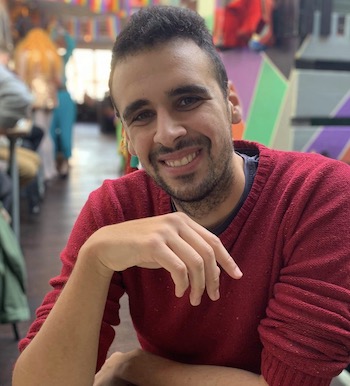
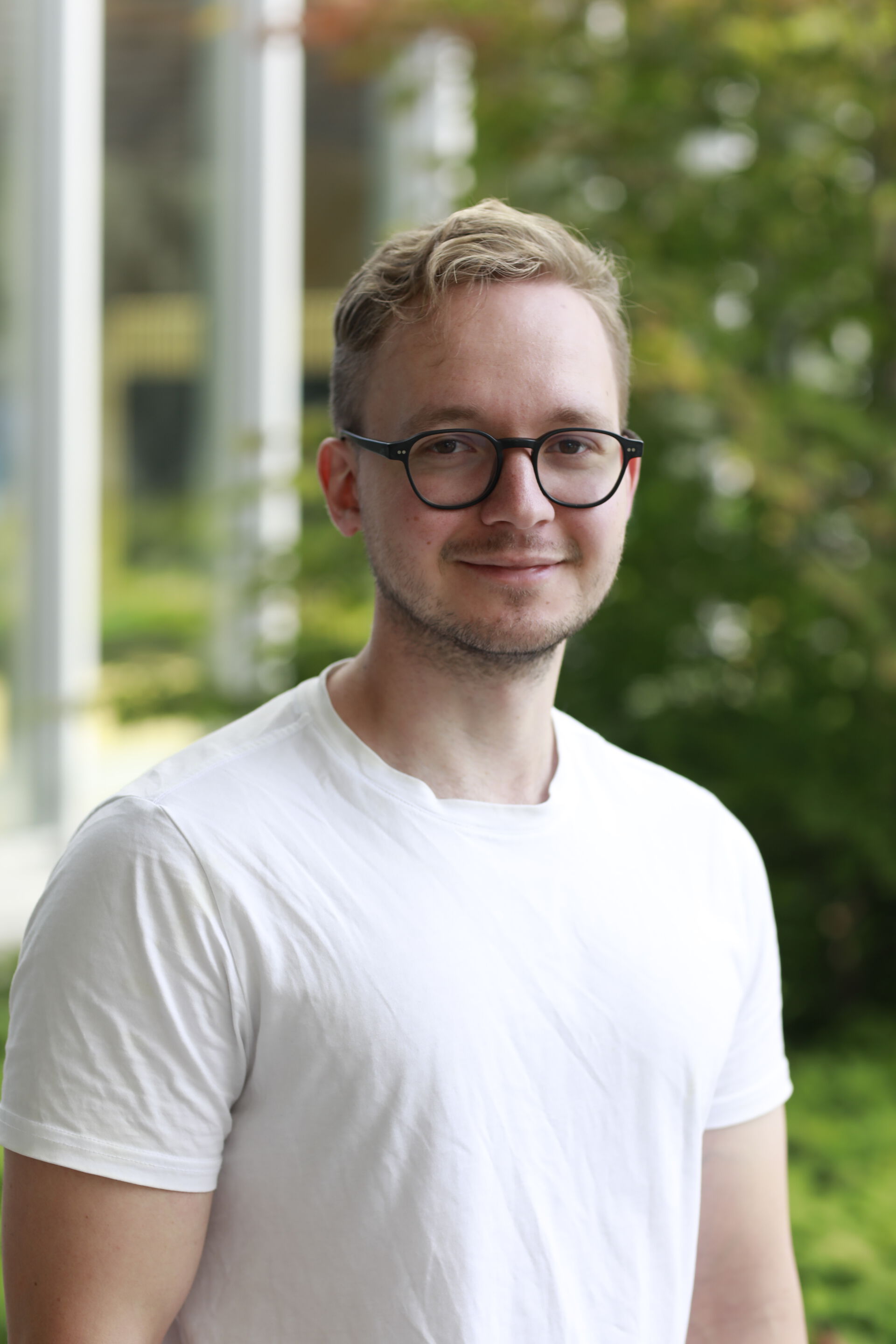
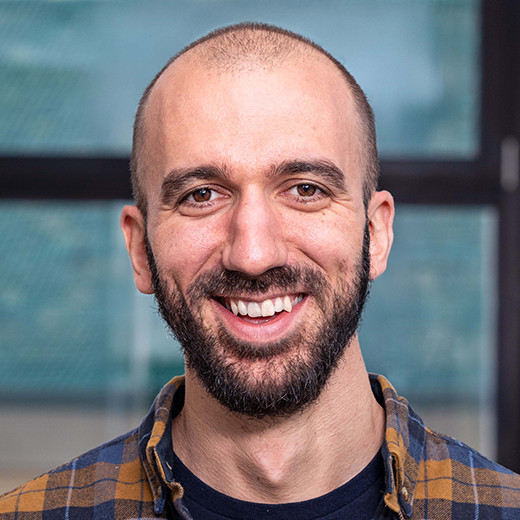
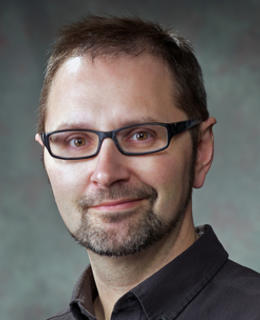
Mitchell O’Sullivan is a PhD student at Queensland University of Technology (QUT), affiliated with the School of Mathematical Sciences. His research focuses on novel sequential Monte Carlo methods for approximate Bayesian computation (ABC) and dimensionality reduction techniques. Prior to this, he worked as an analyst modeling payments data to detect financial crime before returning to QUT in 2019 to complete his honours in Mathematics. Education: Bachelor of Mathematics (Honours) – Queensland University of Technology (2019) Research interests include Bayesian statistics, likelihood-free inference, machine learning, and high-performance computing. He is particularly enthusiastic about advancing computational methods for complex implicit models and leveraging modern computer hardware. Advising and Grants: No advising or grants listed. Labs/Teams: Affiliated with the QUT Centre for Data Science.
Termeh Shafie is a Professor of Computational Social Science and Data Science at the University of Konstanz, Department of Politics and Public Administration. She specializes in statistical network analysis, multigraph modeling, and interdisciplinary applications across social sciences and digital humanities. Her research includes network entropy, data privacy, and archaeological network reconstruction.
Professor Martin Haehnelt is affiliated with the University of Cambridge, where he serves as Professor of Cosmology and Astrophysics at the Institute of Astronomy. His research spans galaxy formation, supermassive black holes, reionization, and the intergalactic medium. Current roles: Professor of Cosmology and Astrophysics Affiliation: Institute of Astronomy, Faculty of Physics & Chemistry, University of Cambridge College: St John's College Research interests include: Galaxy formation and evolution Supermassive black hole dynamics Reionization processes Intergalactic medium (IGM) studies 21-cm cosmology and Lyman-alpha forest High-resolution spectrograph instrumentation (e.g., CODEX, ELT/ANDES) Recent publications focus on reionization timing, Lyman-alpha forest constraints, cosmic ray feedback, and simulations like Sherwood–Relics and SPHINX-MHD. Key keywords include cosmology, astrophysics, quantum mechanics, and data-driven models. Scientific awards include leading the ERC Advanced Grant 'The Emergence of Structure during the Epoch of Reionization.'
Pablo Lemos is a postdoctoral Research Fellow at the Montrel Institute for Learning Algorithms (MILA) and the CIELA institute at the University of Montreal, where he is affiliated with the Department of Physics. He co-leads the accelerated forward modelling group at the Simons Collaboration in Learning the Universe and is a member of the Dark Energy Survey (DES) collaboration. Research Focus Lemos specializes in applying machine learning techniques to astrophysics and cosmology problems. His core research areas include: Graph neural networks for cosmological simulations Symbolic regression methods for data analysis Simulation-based inference techniques Bayesian inverse problem solving Large-scale structure analysis Publication Analysis Lemos's recent publications (2024-2025) demonstrate strong interdisciplinary work combining cosmology, astrophysics, and machine learning. Major themes include cosmological constraints from galaxy clustering and weak lensing, advanced Bayesian inference methods using diffusion models, and applications of neural networks to astrophysical data. Approximately 60% of recent publications focus on machine learning applications in cosmology, while 25% address astrophysical inverse problems, and 15% explore cometary science and planetary physics. Collaborations and Groups Co-leader of accelerated forward modelling group at Simons Collaboration in Learning the Universe Active member of Dark Energy Survey (DES) collaboration
Per August Jarval Moen is a Doctoral Research Fellow in the Faculty of Mathematics and Natural Sciences at the University of Oslo, affiliated with the Statistics and Data Science group. His research focuses on changepoint and anomaly detection in high-dimensional data streams, with additional expertise in minimax theory, computational statistics, and high-dimensional statistics. Education: Master of Advanced Study in Mathematical Statistics, King's College, University of Cambridge (2020-2021) Bachelor's degrees in Mathematics with Informatics and Mathematics & Economics, University of Oslo (2016-2019) Research Interests: His work addresses challenging problems in real-time anomaly detection and theoretical bounds for statistical methods. He develops algorithms for sparsity-adaptive changepoint estimation and contributes to likelihood-free computational frameworks for binary data analysis. Publications Trends: Recent research spans theoretical advancements in minimax rates, practical methodologies for high-dimensional changepoint detection, and open-source software implementations (e.g., R integration with C). Scientific Awards: Aker Scholarship (2020) Krafthack 2022 Winner (with Martin Tveten) Teaching & Supervision: He serves as a teaching assistant for STK4900 and STK3100/STK4100, and co-supervises Han Yu's master's project on hydropower sensor data modeling.
Paulus Bekker is a Professor in the Department of Economics, Econometrics and Finance at the University of Groningen's Faculty of Economics and Business. His research specializes in advanced econometric methodologies and financial modeling techniques. Research focuses on developing statistical methods for economic and financial applications. Primary interests include econometric theory, instrumental variable techniques, dynamic financial modeling, and arbitrage-free pricing frameworks. Recent work examines concentrated instrument methodologies and generalized yield curve modeling. Publications demonstrate consistent methodological innovation in econometrics. Recent articles feature applications in panel data modeling, dynamic mean-variance analysis, and robust estimation techniques. Research frequently addresses challenges in financial model specification and statistical inference.
Bodhisattva Sen is a Professor of Statistics at Columbia University, New York. His research focuses on nonparametric statistics, large sample theory, optimal transportation, and statistical applications in astronomy. He completed his Ph.D. in Statistics at the University of Michigan (2008) and holds degrees from the Indian Statistical Institute, Kolkata (B.Stat., M.Stat.). His work spans shape-constrained estimation, bootstrap inference, and interdisciplinary projects in astronomy. Sen’s research emphasizes distribution-free testing, high-dimensional models, and computational methods. Education: Ph.D. in Statistics, University of Michigan, Ann Arbor (2008) M.Stat., Indian Statistical Institute, Kolkata B.Stat., Indian Statistical Institute, Kolkata Research Interests: Nonparametric function estimation Optimal transport applications in statistics Empirical Bayes and multiple testing High-dimensional statistical inference Statistical methods in astronomy Key Contributions: Developed multivariate distribution-free tests using optimal transport Advanced convex regression methods in multidimensions Contributed to nonparametric maximum likelihood estimation in mixture models Explored statistical applications in stellar abundance clustering His work bridges theoretical statistics with practical applications, emphasizing robust and computationally efficient methods. Sen has also contributed to methodological advancements in astronomy through statistical modeling of stellar data.
Lianghao Cao is a Research Fellow in the Department of Computing and Mathematical Sciences at the California Institute of Technology. His research bridges machine learning, uncertainty quantification, and computational materials science, with specialized focus on block copolymer self-assembly and Bayesian inverse problems. Dr. Cao develops cutting-edge methodologies including neural operator acceleration, measure transport techniques, and likelihood-free inference for high-dimensional scientific challenges. His materials science work integrates physics-based models with machine learning surrogates to predict copolymer behavior, while his epidemiological research demonstrates cross-disciplinary application of continuum modeling. Key contributions span constitutive law learning, microphase separation theory, and scalable Bayesian inversion frameworks. Analysis of his 2020-2025 publications reveals a clear trajectory toward efficient computational paradigms for infinite-dimensional inverse problems. His work increasingly emphasizes structure-exploiting algorithms like LazyDINO and derivative-informed MCMC, demonstrating how machine learning can overcome computational bottlenecks in materials modeling. The consistent application of Bayesian frameworks across domains highlights his unified approach to uncertainty quantification in complex systems.
Paulus Alphonsus Bekker is a Professor at the Faculty of Economics and Business, University of Groningen (RUG), with a career spanning theoretical and applied econometrics, quantitative finance, and statistical methodology. His research emphasizes instrumental variable estimation, identification in structural models, and arbitrage-free yield curve modeling. Education: M.A. in Psychometrics (1982, Leiden University), Ph.D. in Econometrics (1986, Tilburg University) Positions: Assistant Professor (1986-1988), Associate Professor (1993-1997), Full Professor (1997-present) at RUG Management Roles: Chairman of the Department of Econometrics (2000-2005) and Education Committee (2000-present) Bekker’s research bridges econometric theory and real-world applications, focusing on robust standard errors with many instruments, symmetry-based inference, and mean-variance portfolio optimization in discrete/continuous time. His work has been published in top journals like Econometrica , Journal of Econometrics , and Statistica Neerlandica . He has served as a referee for journals including Econometrica , Journal of Econometrics , and Journal of Empirical Finance . His methodological contributions include innovations in instrumental variable estimation, handling heteroskedasticity, and matrix inequality applications in econometrics.
Alessandro Casa is an Associate Professor of Statistics at the Faculty of Economics and Management, Free University of Bozen-Bolzano (Italy). His research focuses on developing statistical methodologies for high-dimensional and complex data, including latent variable models, density-based clustering, and applications in spectroscopy. He holds a PhD in Statistics from the University of Padova (2016-2020), preceded by master's and bachelor's degrees in Statistical Sciences and Statistics, Economics, and Finance, both from the University of Padova. Education: PhD in Statistics, University of Padova (2016-2020) Master Degree in Statistical Sciences, University of Padova (2014-2016) Bachelor Degree in Statistics, Economics, and Finance, University of Padova (2011-2014) Research Interests: Mixture models, modal clustering, graphical models, variable selection, latent variable modeling, high-dimensional data inference, computational statistics, and chemometrics. His work often addresses challenges in spectroscopic data analysis and applications in agriculture and physics. Teaching: Statistical Methods for Business Analysis (MSc programs) Research Methods and Experimental Design (Tourism Management) Statistics for Tourism, Sport, and Event Management (BSc) Professional Experience: Associate Professor (2024–Present), Free University of Bozen-Bolzano Senior Assistant Professor (2024), University of Bergamo Postdoctoral Research Fellow (2019–2021), University College Dublin Labs/Teams: Collaborations with Vistamilk SFI Research Centre and Insight SFI Research Center during his postdoctoral tenure. Active in model-based clustering research communities, contributing to conferences and workshops globally.
Teo Deveney is a Researcher in the Department of Computer Science at the University of Bath, actively contributing to mathematical and computational research since completing his PhD in 2022. His work bridges theoretical mathematics with practical applications across medical imaging and climate science domains. His doctoral research focused on accelerating Bayesian inference using deep learning for physics-governed likelihoods, supervised by T. Shardlow and E. Mueller. Educational background centers on computational mathematics with strong foundations in differential equations and probabilistic modeling. Research interests prioritize mathematical frameworks for complex systems: Partial Differential Equations (100% fingerprint match), Bayesian Statistics (85%), and Stochastic Differential Equations (75%). Secondary emphases include Neural Networks (60%), Climate Modeling, and Medical Imaging applications. His methodology consistently integrates uncertainty quantification with deep learning architectures. Recent publications (2024-2025) reveal converging trends: applying score-based diffusion models to ODE-SDE gaps via Fokker-Planck equations, developing graph-adaptive finite element methods, and creating machine-learned climate parameterizations. Medical imaging work focuses on Bayesian MRI reconstruction with structured uncertainty distributions using autoencoders. No scientific awards documented in current records Collaborative networks include C. Budd, C. B. Schönlieb, and L. Kreusser across Bath's computational mathematics groups. Current projects involve physics-informed neural networks for atmospheric modeling and uncertainty-aware medical image reconstruction, leveraging the university's high-performance computing infrastructure.
Anestis Touloumis is a Principal Lecturer in the School of Architecture, Technology and Engineering at the University of Brighton, affiliated with the Computing and Mathematical Sciences Research Excellence Group. He holds a PhD in Statistics from the University of Florida and has held postdoctoral positions at the European Bioinformatics Institute and the University of Cambridge before joining Brighton in 2015. Education: PhD in Statistics, University of Florida (2006–2011) MSc in Applied Statistics, University of Piraeus (2003–2006) BSc in Mathematics, Aristotle University of Thessaloniki (1998–2003) His research centers on biostatistics, high-dimensional statistics, and statistical genetics, with a focus on developing methods for correlated responses, covariance matrix estimation, and hypothesis testing in high-dimensional settings. His work is applied in omics, health studies, and social sciences, and he actively disseminates methods through R packages on CRAN and Bioconductor. He teaches a range of statistical modules using R and SAS, emphasizing conceptual understanding and critical thinking. The recent research articles reflect strong trends in biostatistical methodology, particularly in high-dimensional inference, longitudinal and correlated data analysis, and statistical computing. There is a consistent emphasis on developing robust, open-source tools for real-world applications in healthcare and data science. Scientific Awards and Professional Service: Treasurer, British and Irish Region of the International Biometric Society (2020–present) Committee Member, British and Irish Region of the International Biometric Society (2019–present) External Examiner, MSc in Applied Statistics, Birkbeck University of London (2020–present) Member, International Biometric Society He has been active in research supervision and mentoring, with a stated interest in supervising postgraduate students in machine learning, categorical data, and high-dimensional statistics, often involving software development. He has contributed to research grants, notably as a Co-Investigator on the ERDF-funded Digital Research & Innovation Value Accelerator (DRIVA) project (2018–2021). He is involved in multiple research collaborations and has delivered invited talks and peer reviews for leading journals. His work bridges theoretical statistics and practical applications across disciplines.
Rob Deardon is a Professor jointly appointed in the Faculty of Veterinary Medicine and the Department of Mathematics and Statistics at the University of Calgary. His research spans Bayesian statistics, infectious disease epidemiology, and spatial modeling, with applications in human and animal health. PhD in Applied Statistics, University of Reading (2001) MSc in Medical Statistics, University of Southampton (1997) BSc in Pure Mathematics & Mathematical Statistics, University of Exeter (1996) Rob Deardon's work focuses on computational statistics, infectious disease modeling (including foot-and-mouth disease and influenza), and spatio-temporal analysis. His methodological interests include Monte Carlo methods, approximate Bayesian computation, and statistical learning. Recent publications emphasize spatial epidemic models, behavioral change analysis, and computational methods for disease surveillance. He leads a research group of 10 graduate students. He teaches graduate courses in infectious disease modeling and maintains collaborations across biostatistics, veterinary medicine, and public health.
Daniel John Lawson is a Professor of Data Science at the School of Mathematics, University of Bristol , affiliated with the Bristol Population Health Science Institute and the MRC Integrative Epidemiology Unit . His research bridges mathematical techniques with applications in genetics, epidemiology, and network analysis. Education: MSc (Bristol), PhD (London) Research Interests include Bayesian modelling, statistical genetics, big data analysis, and dynamical systems. He focuses on population structure inference, local ancestry, and their implications in health and history. Recent Publications highlight geographic polarization in digital landscapes, ancient DNA analysis for population history, and statistical frameworks for network embeddings. These works reflect his interdisciplinary approach. Projects like OCSEAN (2020–2023) explore oceanic migration patterns. His datasets on ancestry anomalies and genetic variants are widely accessible.
Prof. Wouter M. Koolen serves as Professor of Mathematical Machine Learning in the Statistics group at the University of Twente and as Senior Researcher in the Machine Learning group at Centrum Wiskunde & Informatica (CWI). He maintains active research affiliations with INRIA-CWI associate teams 6PAC (with Inria Lille) and 4TUNE (with Inria Paris and Grenoble), and holds the distinction of ELLIS Scholar. Dr. Koolen earned both his MSc and PhD cum laude from the Institute of Logic, Language and Computation at the University of Amsterdam, completing his doctoral work titled 'Combining Strategies Efficiently: High-quality Decisions from Conflicting Advice' in January 2011. His academic journey includes being designated a Master of Logic. Prof. Koolen's research spans theoretical machine learning with deep connections to game theory, information theory, statistics, and optimization. His current work focuses on pure exploration in multi-armed bandit models, game tree search algorithms, and provably accelerated learning methods in statistical and individual-sequence settings, which he characterizes as 'learning faster from easy data.' His theoretical contributions consistently demonstrate practical relevance in sequential decision making and statistical inference. Analysis of his recent publications reveals three dominant research threads: martingale-based methods for anytime-valid statistical inference using e-values, adaptive optimization algorithms with provable guarantees, and theoretical foundations of multi-armed bandit problems. His work increasingly bridges theoretical computer science with modern statistical methodology, particularly in sequential analysis and adaptive experimentation. His notable achievements include: NWO VENI grant for innovative research QUT Vice-Chancellor's postdoctoral research fellowship Designation as ELLIS Scholar recognizing European research excellence cum laude distinctions for both master's and doctoral degrees Prof. Koolen actively mentors the next generation of researchers, having supervised multiple PhD students to completion including Hongwei Wen, Clément Lezane, and Tyron Lardy with defenses scheduled for 2025. His research program is supported by competitive grants focusing on theoretical machine learning and statistical methodology. He maintains an active presence in the international research community through conference presentations, workshop organization, and collaborations across European institutions. Within the Machine Learning group at CWI and Statistics group at the University of Twente, Prof. Koolen contributes to a dynamic research environment focused on theoretical foundations with practical applications. His work often intersects with colleagues investigating sequential decision processes, game-theoretic approaches to learning, and robust statistical inference methods.