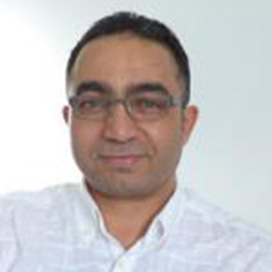
Zouhaier JENDLI is a Professor at ESTACA , affiliated with the ESTACA'Lab research department. His work bridges academia and applied research in composite materials and structural mechanics. Research Focus : Composite materials, thermoplastic matrices, vibration behavior, damage mechanics, and acoustic emission techniques. Teaching Responsibilities : Courses on materials science, composites, structural mechanics, finite element methods, and mechanical design at both undergraduate and graduate levels. Key Publications : Focus on bio-based composites, dynamic stress responses, and non-destructive damage analysis, presented at major international conferences like ECCM and ICCS.
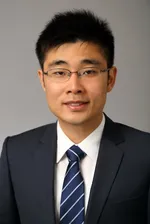
Giorgio De Pasquale is an Associate Professor at the Department of Mechanical and Aerospace Engineering (DIMEAS) of Politecnico di Torino, where he heads the Smart Structures and Systems (S3) Laboratory. He serves on the Interdepartmental Center J-Tech@PoliTO and holds a national habilitation for Full Professorship (2018). His research spans additive manufacturing, smart structures, energy harvesting, and wearable systems. Additive Manufacturing: Design for AM, multi-material joints, lattice structures Smart Systems: Native sensors in metals, structural monitoring Human-Machine Interface: Wearable bio-mechanical sensors, GoldFinger glove MEMS: Dynamic response, fatigue modeling Recent projects include MIMOSA (multimaterial aircraft components) and STARDUST (wearable rehabilitation devices). He has received awards from ASME, MESAP, and Accademia del Premio Sapio. Teaching roles include PhD courses on lattice structure modeling and MSc/BSc lectures on structural mechanics. Over 60 students have been supervised in his lab.
Maximilian Amm serves as a Researcher at the Chair of Product Development and Lightweight Design, Technical University of Munich (TUM), under Prof. Markus Zimmermann's leadership. He actively contributes to the Robot Systems research group and delivers instruction as an assistant lecturer for core courses including Cost Management in Product Development and Think.Make.Start., demonstrating integration of academic research with pedagogical practice. His research program centers on Robotics, Systems Engineering, Lightweight Structures, and Product Development, with specific focus on computational methodologies for affordable robotic systems and model-based approaches to dynamic behavior in robot-like systems. This work bridges theoretical frameworks with industrial applicability through rigorous engineering design principles. Analysis of his 2023 publications reveals a strategic emphasis on democratizing robotics through cost-effective lightweight solutions while advancing systems engineering practices for time-dependent behaviors. His research trajectory indicates strong alignment with industry needs for adaptable, efficient robot design processes. Regarding academic mentorship, Amm currently has no listed graduate advisees. Project involvement includes key initiatives like KREATIVE, BUENA, and TuWAs within the Robot Systems group, which develops cutting-edge methodologies for robotic system design and implementation.
Klemens Hohnbaum is a Lecturer at the Laboratory for Product Development and Lightweight Design at the Technical University of Munich. He contributes to interdisciplinary teaching projects like Think.Make.Start. , focusing on product development, systems engineering, and startup methodologies. His research involves Methods & Processes in product development, with emphasis on agile approaches, design thinking, and prototyping. He actively participates in collaborative projects such as KREATIVE , BUENA , and PrintYourLab , bridging technical and business perspectives. As a teaching assistant, he supports courses including Product Development - Concepts and Design and Machine Learning for Product Development (ML4PD) , working closely with teams like Robot Systems and Solution Space Engineering .
M.Sc. Sergi Pages i Diaz is a Researcher at the Chair of Product Development and Lightweight Construction, Technical University of Munich. He belongs to the Solution Space Engineering research group, focusing on methodologies for product development and lightweight design. His office is located in room 5506.02.628 at the university's Garching campus. His research interests center around Solution Space Engineering, Product Development processes, and Lightweight Construction principles. These align with his department's focus on optimizing design methodologies and structural efficiency in engineering systems.
Mahadevan Ravichandran is a Researcher at the Technical University of Munich (TUM) within the Laboratory for Product Development and Lightweight Design, chaired by Prof. Markus Zimmermann. He actively contributes to the Methods & Processes research group and supports teaching initiatives in product development and aerospace engineering. His research centers on solving extreme thermo-mechanical challenges in medical and aerospace applications, particularly X-ray target design for radiation therapy systems. Key interests include thermal management under ultra-high heat flux, finite element analysis for structural integrity, and material selection methodologies. His work bridges mechanical engineering with medical physics, focusing on validation strategies for components subjected to unprecedented operational stresses in compact radiation sources. Recent publications reveal a strong interdisciplinary trajectory toward medical device innovation, with consistent contributions to thermal validation frameworks and microbeam radiation therapy systems. His articles demonstrate evolving expertise from conceptual material studies (2022) to integrated design-validation approaches (2024-2025), emphasizing practical engineering solutions for clinical translation challenges. Within the laboratory, Ravichandran collaborates on projects involving lightweight structures and product development methodologies. His teaching role includes assisting in core courses such as Methods of Product Development (Winter 2024/25) and Laboratory Course FEM in aerospace structures (Summer 2025), where he guides students through industry-standard software applications for structural analysis.
Dr. Yilun Sun is a Senior Research Fellow at the Chair of Microtechnology and Medical Device Technology (MiMed) within the School of Engineering and Design at the Technical University of Munich (TUM). He has been with MiMed since December 2021 and contributes to both research and teaching activities at the institution. Dr. Sun teaches the 'Mathematical Tools (MTT)' and 'Measurement Technology and Medical Assistance Systems (MMA)' lecture courses. His educational background includes: Dr.-Ing. (summa cum laude) from Technical University of Munich M.Sc. in Mechanical Engineering from Technical University of Munich B.Sc. in Mechanical Engineering & Automation from Shanghai Jiao Tong University Dr. Sun's research focuses on the intersection of robotics, biomechanics, and medical device technology. His primary areas of investigation include automatic design of compliant medical instruments using bionic structural optimization methods, design optimization of continuum robots, development of compliant (soft) robotic grippers, creation of 3D-printable bistable and origami mechanisms, and design of bio-inspired quadruped robots. His work bridges theoretical mechanical engineering with practical medical applications, particularly in surgical robotics and assistive devices. Analysis of Dr. Sun's publication record reveals a strong emphasis on bio-inspired robotics with medical applications. His research consistently applies topology optimization techniques to create compliant mechanisms for medical use. A clear progression can be observed from fundamental mechanical design principles toward increasingly sophisticated bio-inspired robotic systems. The publications demonstrate growing complexity in robotic locomotion (from simple grippers to quadruped and amphibious robots) while maintaining a focus on medical applications. His work increasingly incorporates 3D printing and additive manufacturing techniques to realize complex bio-inspired structures. Dr. Sun is actively involved in the MiMed research group under Professor Tim C. Lueth, contributing to multiple research projects including Rescue Robotics, Robotics and Mechanisms, Medical Devices, BioRobotics, and Additive Design and Manufacturing. His work demonstrates strong collaboration with both academic researchers and medical professionals to develop practical solutions for surgical and medical challenges.
Karl-Ludwig Krämer serves as a Researcher at the Chair of Product Development and Lightweight Design, Technical University of Munich (TUM), actively contributing to the Laboratory for Product Development and Lightweight Design under Prof. Dr. Markus Zimmermann. Based at Boltzmannstr. 15, Garching, he holds room 5506.EG.660 and manages critical laboratory operations. His research focuses on Product Development, Lightweight Structures, and Composite Materials manufacturing, directly supporting the department's key initiatives in Solution Space Engineering and Robot Systems. Krämer's work integrates with major ongoing projects including KREATIVE, BUENA, TuWAs, and SOLID, emphasizing advanced methodologies in structural design and production processes. As Safety Officer for composite materials and autoclave fabrication, he ensures compliance in high-risk laboratory environments. His teaching responsibilities include co-instructing the Laboratory Course Composite Materials and Laboratory Course Lightweight Structures for both Winter Semester 2024/25 and Summer Semester 2025, providing students with hands-on expertise in material processing and structural testing. Krämer's operational role bridges research execution and educational training within TUM's engineering framework.
Dr. Jialuo Ding is a Principal Research Fellow in Additive Manufacturing at Cranfield University, where she leads the research development of digital aspects of wire-based Direct Energy Deposition Additive Manufacturing (w-DED AM) processes. She earned her PhD from Cranfield University in 2013 and has since established herself as a leading expert in this field. As the Research Programme Lead of the WAAMMat Programme, she is responsible for delivering research and industrial projects focused on providing practical solutions based on Wire Arc Additive Manufacturing processes. Her research focuses on process modeling and simulation, process monitoring and control, and the applications of large-scale DED AM component building. Dr. Ding's current projects include leading the process modeling research area for the NEWAM project (EPSRC), serving as project lead for HPWAAM (Innovate UK), acting as co-investigator for MultiFun (EU), and managing over 10 WAAMMat industrial projects annually. Dr. Ding's recent publications (2023-2025) demonstrate her active research program in advancing additive manufacturing technologies, particularly in applications for large-scale component building. Her work spans diverse areas including plasma arc deposition, digital twin development, process monitoring frameworks, and material property optimization. Her research addresses critical challenges in additive manufacturing such as residual stress management, microstructure control, and process quality assurance. Dr. Ding collaborates extensively with industry partners including Airbus, BAE Systems, Boeing UK, Bombardier Aerospace, GE Avio, Lockheed Martin UK, Safran, Thales, and numerous other aerospace and manufacturing organizations. Her work bridges the gap between academic research and industrial applications, focusing on practical solutions for real-world manufacturing challenges.
Dr. Michael Kelzenberg is a Senior Research Scientist at the California Institute of Technology (Caltech), working in the Atwater research group. His work focuses on advanced space propulsion and energy technologies, particularly for space solar power systems and interstellar exploration applications requiring ultralight and radiation-hardened solutions. His research spans cutting-edge domains including nanowire-based photovoltaics for space environments, lightsail propulsion leveraging radiation pressure, and integrated solar-driven systems for CO2 reduction. Key interests involve developing ultralight photovoltaic tiles, self-stabilizing lightsail membranes, and radiation-tolerant solar cells using novel architectures like silicon nanowires. His work bridges materials science, optics, and aerospace engineering to enable deep space missions and sustainable energy solutions. Recent publications (2023-2025) reveal a concentrated effort on experimental validation of lightsail technologies and space-based solar power systems. Dominant themes include radiation pressure measurement techniques, ultralight material development for spacecraft, in-orbit testing of photovoltaics (Alba Mission), and integrated solar-to-fuel devices. These works demonstrate increasing interdisciplinary convergence between propulsion physics, space engineering, and renewable energy conversion. Dr. Kelzenberg has received significant recognition for his contributions: Popular Mechanics Breakthrough Award (2010) for pioneering silicon microwire-array solar cell technology While specific advising roles aren't documented in available sources, his collaborative work with Professor Harry Atwater and the Caltech Space Solar Power Project indicates extensive mentorship within research teams. Current grant activities focus on NASA-funded initiatives for space solar power and interstellar propulsion technologies. He operates within Caltech's Atwater research group, which maintains advanced laboratories for nanomaterial synthesis, optoelectronic device fabrication, and space environment simulation. The group's facilities support rapid prototyping of ultralight spacecraft components and high-precision optical characterization essential for lightsail and space solar power development.
Maria Stefania Festila is a Postdoctoral Researcher at the Department of Culture and Language, University of Southern Denmark, specializing in socio-technical dimensions of digital transformation within public sector and critical infrastructure contexts. Her work bridges humanities and social sciences through techno-anthropological frameworks to examine digital artifacts' impact on social practices and organizational dynamics. Education PhD in Information Systems Management, Aarhus Business School (awarded July 12, 2022) Research Focus Festila employs ethnographic methods to investigate digital work transformation, public sector digitalization, and complex legacy system transitions. Her research integrates practice theory, actor-network theory, and organizational cognition frameworks to analyze: Digital transformation in critical infrastructure (e.g., district heating, water systems) Data-driven decision-making in complex work environments Knowledge coordination during technology-mediated handoffs Socio-technical implications of digital transitions in public services Publication Trends Her 13 research outputs (2016-2025) reveal an evolving trajectory from healthcare IT affordances (2016-2018) toward infrastructure digitalization (2022-2025). Recent work emphasizes organizational cognition in digital transitions, employing case studies from Denmark with methodologies including ethnography, socio-technical network analysis, and actor-network theory. Key thematic clusters include infrastructure resilience, data-driven intuition, and knowledge coordination in critical systems. Projects and Collaborations Festila contributed to the DRONe project (Determinants of Resilience in Organizational Networks, 2022-2025) as core team member alongside Rasmus Gahrn-Andersen and Davide Secchi. She has presented research at 6 activities including HICSS 2025 and workshops on organizational cognition, demonstrating strong interdisciplinary collaboration patterns within organizational studies and information systems research communities.
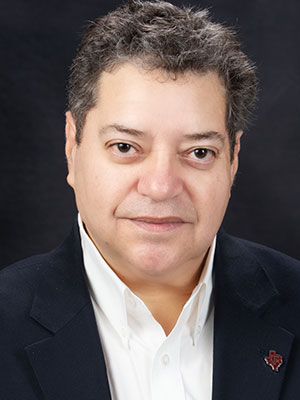
Mario Medina is a Professor in Multidisciplinary Engineering at Texas A&M University and serves as Director of Architectural Engineering. His work focuses on thermal performance and energy efficiency in building systems. He has extensive research on phase change materials (PCMs) for thermal management in building envelopes. Research Interests His research spans Phase Change Materials (PCM) integration in building systems Thermal performance optimization of building envelopes Passive cooling and energy conservation strategies Heat transfer modeling and experimental validation Research Trends Recent publications emphasize PCM applications in diverse building types, climate-specific performance analysis, and numerical/experimental validation of thermal models. Key themes include energy load reduction, thermal regulation, and material characterization. Contact Email: mmedina@tamu.edu
apl. Prof. Dr.-Ing. Benno Hoffmeister is Associate Professor at the Chair for Steel and Lightweight Metal Construction , Institute of Steel Construction, RWTH Aachen University, Germany. His work integrates experimental and numerical approaches to develop safe, economical and repairable steel, composite and hybrid structures under extreme loads. Research Interests Hoffmeister’s core interest is seismic-resistant steel and composite construction . He investigates dissipative connections (replaceable shear links, laser-cut joints), performance of moment-resisting frames, hybrid coupled wall systems, and the seismic behaviour of industrial rack-supported warehouses and bridges. Additional topics encompass fatigue of thin-walled steel details, sandwich-panel cladding interaction, timber-steel hybrid systems, and life-cycle asset management of steel bridges. Across 50+ publications since 2020 he consistently couples large-scale laboratory testing with advanced nonlinear simulations, targeting practical design guidance for moderate-seismicity regions and retrofit of existing facilities. Scientific Awards No specific awards are listed in the supplied sources. Advising & Research Funding While individual student names are not provided, Hoffmeister leads experimental campaigns within publicly funded projects such as HYCAD, LASTEICON, STEEL-EARTH, ROBUSTIMPACT and SeDIF, involving numerous doctoral and master researchers. His laboratory hosts full-scale frame tests, component studies and long-term bridge monitoring programmes. Labs & Teams He operates within the Institute of Steel Construction’s testing hall at RWTH Aachen, equipped with 6 MN strong-floor reaction wall, servo-hydraulic actuators and environmental chambers, enabling cyclic, dynamic and fatigue testing of large steel, composite and hybrid specimens.
Federica Valenza is a Ph.D. candidate in Management and Production Engineering at Politecnico di Torino (Polito), with a focus on multi-material additive manufacturing. She serves as a Research Fellow and External Collaborator at the Department of Management and Production Engineering (DIGEP), and contributes to teaching as an External Lecturer/Teaching Collaborator in Mechanical Engineering programs. Education: Bachelor's and Master's in Mechanical Engineering at Polito (completed April 2022 with Additive Manufacturing specialization). Her research interests revolve around Additive Manufacturing (Laser Powder Bed Fusion, Directed Energy Deposition), Reverse Engineering , and Advanced Manufacturing Systems . Recent work includes studying machinability of Ti6Al4V components and multi-material joining strategies for lightweight high-performance parts. Publications focus on interlocking structures, freeform surfaces, and process-structure-property relationships in additive manufacturing. She collaborates with the Integrated Additive Manufacturing (IAM) Center and the Department of Applied Science and Technology (DISAT), applying skills in MATLAB, experimental design, and materials characterization. Current involvement in PRIN projects aims to develop innovative dissimilar material joints.
Professor Mahendran Mahen is a distinguished academic in Structural Engineering at Queensland University of Technology's School of Civil Engineering. With over two decades of research excellence, his work has significantly advanced the understanding of cold-formed steel structures under extreme conditions, particularly fire and bushfire scenarios. His leadership in the field is evidenced by his extensive publication record and supervision of numerous doctoral students. Professor Mahen's research interests center on structural performance under fire conditions, with particular emphasis on light steel framing systems, bushfire-resistant construction, and numerical modeling of structural behavior. His work bridges theoretical analysis with practical applications, focusing on developing safer building systems that comply with stringent safety standards while maintaining structural integrity during extreme events. His research has directly influenced building codes and safety standards for steel construction in fire-prone regions. The publication portfolio reveals a clear research trajectory focused on fire resistance of light steel frame systems, with recent work expanding into bushfire protection for residential structures. His articles demonstrate sophisticated integration of experimental testing with advanced numerical modeling techniques, providing comprehensive insights into structural behavior under thermal stress. The consistent high citation counts across his publications indicate significant impact within the structural engineering community. Professor Mahen has received recognition through substantial research funding and collaborative projects with industry partners, though specific awards aren't detailed in the publication record. His work has formed the foundation for several building code provisions related to steel construction in fire conditions. As a dedicated educator and mentor, Professor Mahen has supervised numerous PhD and Master's students, many of whom have become prominent researchers in their own right. His laboratory facilities support cutting-edge research in structural fire engineering, with specialized equipment for full-scale fire testing of building components. Current research directions include developing innovative safe room designs for bushfire protection and enhancing the fire resistance of steel structural systems through novel material applications.