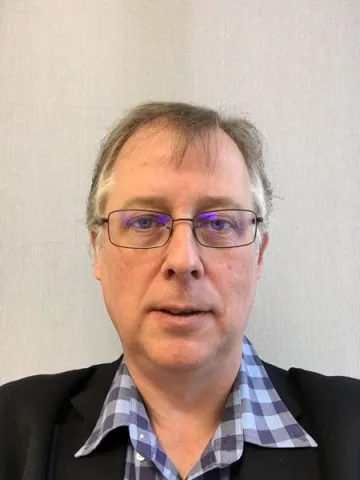
Professor Ole Thybo Thomsen is affiliated with the University of Southampton's School of Electronics and Computer Science, working within the Engineering Materials and Surface Engineering Group. He leads or contributes to research projects such as SPARCARB (H2020 MSCA ITN), focusing on advanced materials and plasma technologies. His work bridges electrical engineering, nanotechnology, and materials science, addressing challenges in wind energy systems, composite materials, and high-voltage engineering. His research interests include nanodielectrics, graphene-based nanocomposites, plasma discharges, and epoxy resin systems. Collaborative efforts involve institutions like the Electrical Power Engineering Research Group, with projects exploring lightning protection for wind turbines and solvent-based processing techniques for polymers. Key publications highlight advancements in material performance characterization and application-driven solutions for energy systems. While no specific awards or grants are mentioned, his involvement in EU-funded initiatives underscores his contributions to interdisciplinary research. Prof. Thomsen collaborates closely with experts such as Prof. Paul Lewin and Dr. Igor Golosnoy, focusing on practical applications of materials science in electrical and aerospace engineering contexts.
Prof. Viktor Milardić is a Full Professor at the Department of Energy and Power Systems within the College of Engineering at the University of Zagreb. He serves as Head of the accredited high-voltage laboratory and research laboratory for atmospheric discharges. His work focuses on lightning protection, electromagnetic transients, and overvoltage analysis in power systems. Research areas include high-voltage engineering, lightning current measurement systems, wind turbine protection, and electromagnetic field impacts from power infrastructure. Projects involve lightning location system implementation in Croatia, optimization of surge arrester installations, and analysis of railway traction power consumption. He has contributed to studies on transformer saturation modeling, electromagnetic compatibility in gas-insulated substations, and voltage stress on low-voltage devices.
Prof. Volker Hinrichsen is a Full Professor at Technische Universität Darmstadt, leading the High-Voltage Laboratories in the Department of Electrical Engineering and Information Technologies. He has held this role since 2001, focusing on advancing high-voltage technologies and their applications. Prior to his academic position, he spent 12 years at Siemens AG in R&D roles, including Director of Surge Arrester Development and high-voltage testing engineer. His research emphasizes lightning and overvoltage protection, novel insulation materials, high-voltage circuit breaker performance, and condition monitoring systems. Key areas include MO varistor energy handling, superconducting system switching, and sensor development for arc rotation and field emission measurements. He also specializes in high-current testing methodologies involving power semiconductors. Prof. Hinrichsen’s career spans over 30 years in high-voltage engineering, bridging industry and academia. His leadership in TU Darmstadt’s High-Voltage Laboratories ensures cutting-edge contributions to electrical power system reliability and safety.
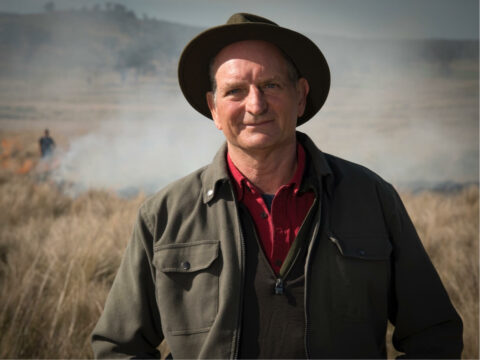
Professor David Bowman is a leading academic in pyrogeography and fire science at the University of Tasmania, where he holds a research chair in the School of Natural Sciences. His work bridges human, physical, and biological dimensions of fire across scales, with a focus on transdisciplinary approaches. He earned a PhD (1984) and DSc (2001) from the University of Tasmania, and has held fellowships at institutions like Harvard and Oxford. Bowman directs the Fire Centre, a research hub addressing wildfire impacts and management. His research spans field ecology, molecular techniques, and social analysis, emphasizing adaptation to climate-driven fire regimes. Notable contributions include studies on fire regimes, peatland recovery, and community resilience. He has secured over $36M in funding, leading projects on fire behavior, health impacts of smoke, and Indigenous fire practices. Bowman advises governments and media, and his publications span high-impact journals like Science and Nature. His work aims to improve fire management policies globally.
Ondrej Franek is an Associate Professor at the Department of Electronic Systems within the Technical Faculty of IT and Design at Aalborg University. His work focuses on antennas, wireless propagation, millimeter-wave systems, and reconfigurable intelligent surfaces for next-generation communication networks. He is actively involved in projects like RISE-6G and VIRTUOSO, advancing 6G wireless technologies and communication system optimization. Research interests include antenna design, electromagnetic modeling, wind turbine blade technology, and signal processing for 5G/6G networks. His recent work emphasizes reconfigurable intelligent surfaces (RIS) and their application in improving channel models and network efficiency. Franek has contributed to over 100 publications and holds patents in lightning protection systems and wind turbine monitoring. He has supervised 2 PhD students and collaborated on projects funded by industry and academic partnerships. Notable contributions include electromagnetic modeling for RIS and condition monitoring systems for renewable energy infrastructure. Media highlights include coverage of his team's experiments with the Lumi supercomputer in 2021.
Prof. İbrahim Özkol, a distinguished faculty member at Istanbul Technical University, serves in the Department of Aeronautical Engineering. With over 115 research outputs and a Scopus h-index of 23, his work spans aerospace propulsion systems, fractional calculus modeling, and advanced control algorithms. Research Interests: Fractional-order modeling of aerospace systems Green monopropellant thruster optimization Flight control systems and stability analysis Lightning-induced structural damage modeling Reinforcement learning for flight envelope protection Scientific Achievements: Recipient of the 2015 Boeing Career Award PI for 20+ research projects (2013-2025) 115+ peer-reviewed publications His recent work focuses on stealth maneuver generation for non-stealth aircraft, entropy generation in rotating flows, and fractional dynamics in mechanical systems. Collaborations extend across academia and industry, particularly with TTO (Turkish Aerospace Industries) and TUSAŞ.
Dr. Sanjay Nimbalkar is an Associate Professor at the University of Technology Sydney's School of Civil and Environmental Engineering, with over two decades of experience in geotechnical engineering, railway infrastructure, and sustainable pavement design. As a Chartered Professional Civil Engineer (CPEng) and Fellow of Engineers Australia (FIEAust), he bridges theoretical research with practical applications in transport geotechnics. Developed pseudo-dynamic methods for earth-retaining structures Specializes in 3D finite element modeling, constitutive framework development, and field monitoring of infrastructure Recipient of multiple awards: Thomas Telford Premium (2014), Second Sussman Best Paper Prize (2019), and Editor's Choice Award (2020) His research examines nanomaterials for coastal infrastructure (Nano-MgO/SiO2), vibration isolation systems, and recycled materials for sustainable pavements. With over 225 research outputs and top 5% ranking in geotechnical engineering, his work addresses critical challenges in railway track stability, seawater corrosion resistance, and climate change mitigation. Supervising HDR candidates and serving as Adjunct Faculty at IIT Madras and Visiting Associate Professor at IIT Bombay, Nimbalkar leads contract research projects across Australia-India partnerships. His editorial roles span Frontiers in Built Environment, Canadian Geotechnical Journal, and Sustainability, while mentoring through Publons Academy and Engineers Without Borders Australia.
Tsunayoshi Ishii serves as a Researcher (Assistant Professor) at the Advanced Collaborative Research Organization for SmartSociety under the Affiliation Research Council. His work focuses on next-generation energy systems with emphasis on distributed control architectures and grid integration challenges. Research interests span Smart Grids , Distributed Energy Systems , and Power System Protection . His foundational work established hierarchical decentralized control frameworks for super-distributed energy systems, evolving into current research on renewable integration, electric transportation, and advanced energy management systems. Key contributions include lightning surge analysis for residential solar systems and optimization methods for electric bus charging infrastructure. His publication portfolio demonstrates consistent focus on practical grid applications, with recent work addressing battery storage placement, multi-objective EMS design, and congestion mitigation in distribution networks. The 15 most recent publications reveal strong trends toward decarbonization technologies and real-time control solutions for high renewable penetration scenarios. 2010 Excellent Paper Presentation Award at Electrical Society Power and Energy Division Conference 2004 Academic Promotion Prize Paper Award (Electrical Society) 2004 Kodaira Memorial Hitachi Educational Foundation Award 2002 Excellent Paper Presentation Award at Electrical Society Power and Energy Division Research Meeting Ishii maintains active professional engagement through committee memberships including CIGRE SC C6 (2023-present), IEC TC57 domestic committee (2018-2020), and multiple lightning protection research committees. His research bridges theoretical control frameworks with practical grid implementation challenges, particularly in distribution system resilience and DER integration.
Jeremiah Davis is a Professor and Director of the National Poultry Technology Center at Auburn University , specializing in Biosystems Engineering . His work focuses on poultry and livestock housing and equipment, with statewide responsibilities in Alabama. Contact details include Office: (334) 734-2644 and Email: jdavis@auburn.edu . Research Interests : Poultry housing optimization, environmental control systems, sustainable livestock practices, and biomechanical engineering for agricultural settings. Scientific Trends : His recent publications emphasize improving lighting and ventilation in broiler houses, analyzing feed and water efficiency, and addressing environmental challenges in poultry production through innovative technologies. Infrastructure Leadership : As Director of the National Poultry Technology Center, he oversees advancements in poultry industry infrastructure and equipment.
Prof. Axel Barwich is a full-time Professor of Technical Event Design at the Technical University of Central Hesse (THM), Department of Management & Communication, since April 2016. He holds multiple leadership roles, including Chairman of Examination Boards for Event Management (B.Sc.) and Strategic Live Communication (M.Sc.), and serves as a Deputy Senate Member. Education & Certifications: Diploma in Event and Production Technology (DHBW Karlsruhe) Certified under §20 Explosives Act (stage/grand fireworks) VDE-certified specialist for event lightning protection Research Focus: His expertise spans technical event production, media technologies, visual staging methodologies, and strategic communication frameworks for live events. Key areas include: Integration of pyrotechnics and safety protocols in events Media technology applications for audience engagement Design principles for large-scale visual environments Administrative Leadership: Head of Event Management B.Sc. program (2021–2023) Vice Dean of the Department (2021–2024)
Dr. Marek Olesz is a Professor at the Department of Electrical Power Engineering, Faculty of Electrical and Automation Engineering, Gdańsk University of Technology. His research encompasses high-voltage engineering, insulation diagnostics, partial discharges, and electromagnetic compatibility. He holds leadership roles in organizations including the Polish Society of Theoretical and Applied Electrical Engineering (Chairman) and the Polish Committee for Lightning Protection (Vice-Chairman). Research interests include: Quality of electricity and electromagnetic compatibility in power systems Degradation mechanisms in polyethylene insulation Partial discharge measurement techniques for cable and transformer diagnostics Innovations in surge arrester testing and high-voltage line design His recent publications (2023-2025) focus on AI-driven transformer lifetime prediction, CNN-based corrosion classification in cables, and safety enhancements for photovoltaic systems. Notable projects include: Pylon 2 : Developing innovative structures for high-voltage lines with integrated communication systems. Stratus : Creating high-power electromagnetic pulse systems for UAV countermeasures. Dr. Olesz is an active member of the High Voltage Team , which researches short-circuit dynamics, insulation degradation, and power quality. He has supervised 200+ teaching activities but no specific advisees are listed.
Jean Mahseredjian is a Full Professor in the Department of Electrical Engineering at Polytechnique Montréal. He holds the NSERC/Hydro-Québec/RTE/EDF/OPAL-RT Industrial Research Chair in Multiscale Time Simulation of Transients in Large-Scale Electrical Networks and is a member of the Institute for Data Valorization (IVADO). His research bridges electrical engineering, numerical methods, and renewable energy integration. Research interests include: Advanced numerical simulation of power system transients Modeling and validation of wind farms and HVDC systems Electromagnetic compatibility and circuit theory Real-time simulation and parallel computing for large-scale grids His recent publications (2025-2026) demonstrate strong emphases on: EMTP simulation advancements for circuit breakers, cables, and converters Renewable integration challenges (wind/PV parks and battery systems) High-performance computing methods for power system analysis Awards and honors: IEEE Fellow (2013) for contributions to power system transients simulation Supervision and collaboration: Mentored 68 graduate students (31 PhD, 37 Master's) Leads industry-funded research with Hydro-Québec, RTE, EDF, and OPAL-RT Develops open-source simulation tools (e.g., Julia-based platforms)
Prof. Dr. Robert Honke serves as Research Group Leader for System Simulation at the Institute for Hydrogen and Energy Technology (iwe) and sits on the Advisory Board of the Institute for Circular Economy of Bio:Polymers (ibp) at Hof University of Applied Sciences. His office is located in Building C, Room C117, with Wednesday office hours from 13:00-14:00. With over two decades of academic service since 2003, he bridges theoretical physics and practical engineering applications. Education: Physics studies at University of Regensburg Doctorate in Theoretical Physics (University of Regensburg) focusing on ab initio calculations of nonlinear vibrations on semiconductor surfaces Research Interests: Prof. Honke's work spans sustainable materials engineering and advanced simulation techniques. His primary focus areas include construction materials derived from biogenic residues, efficient thermal storage systems, control mechanisms for building energy management, and lightning strike damage simulation on composite structures. His research integrates computational physics with practical engineering challenges, particularly in aerospace and sustainable energy systems. The consistent thread through his career—from semiconductor surface physics to modern composite materials—demonstrates deep expertise in applying simulation methodologies to real-world structural and energy problems. Publication Trends: His recent publications (2015-2022) emphasize lightning protection for composite aerospace materials, thermal energy storage solutions, and biomass conversion technologies. Earlier works (1996-2002) established foundational contributions to surface physics, semiconductor vibrations, and satellite mirror design. Collectively, his research shows a strategic evolution from fundamental surface physics toward applied sustainable engineering, with computational modeling as the unifying methodology across all periods. Scientific Awards: No scientific awards were documented in the provided materials. Advising and Grants: Prof. Honke teaches core subjects in Master's programs for Composite Materials (structural mechanics) and Mechanical Engineering (CFD/FEM/Mathematics), maintaining strong industry connections from his prior Daimler Group experience. While specific student names and grant details aren't listed, his research group leadership indicates active supervision of graduate projects in simulation-based engineering. Labs and Teams: He directs the System Simulation research group at iwe, focusing on hydrogen technology applications, while contributing strategic guidance to ibp's circular economy initiatives for bio-polymers. These dual roles position him at the intersection of sustainable energy systems and advanced materials research within the university's engineering ecosystem.