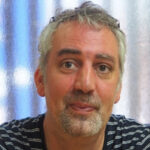
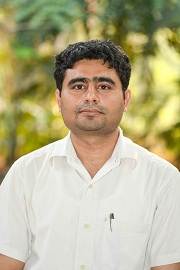
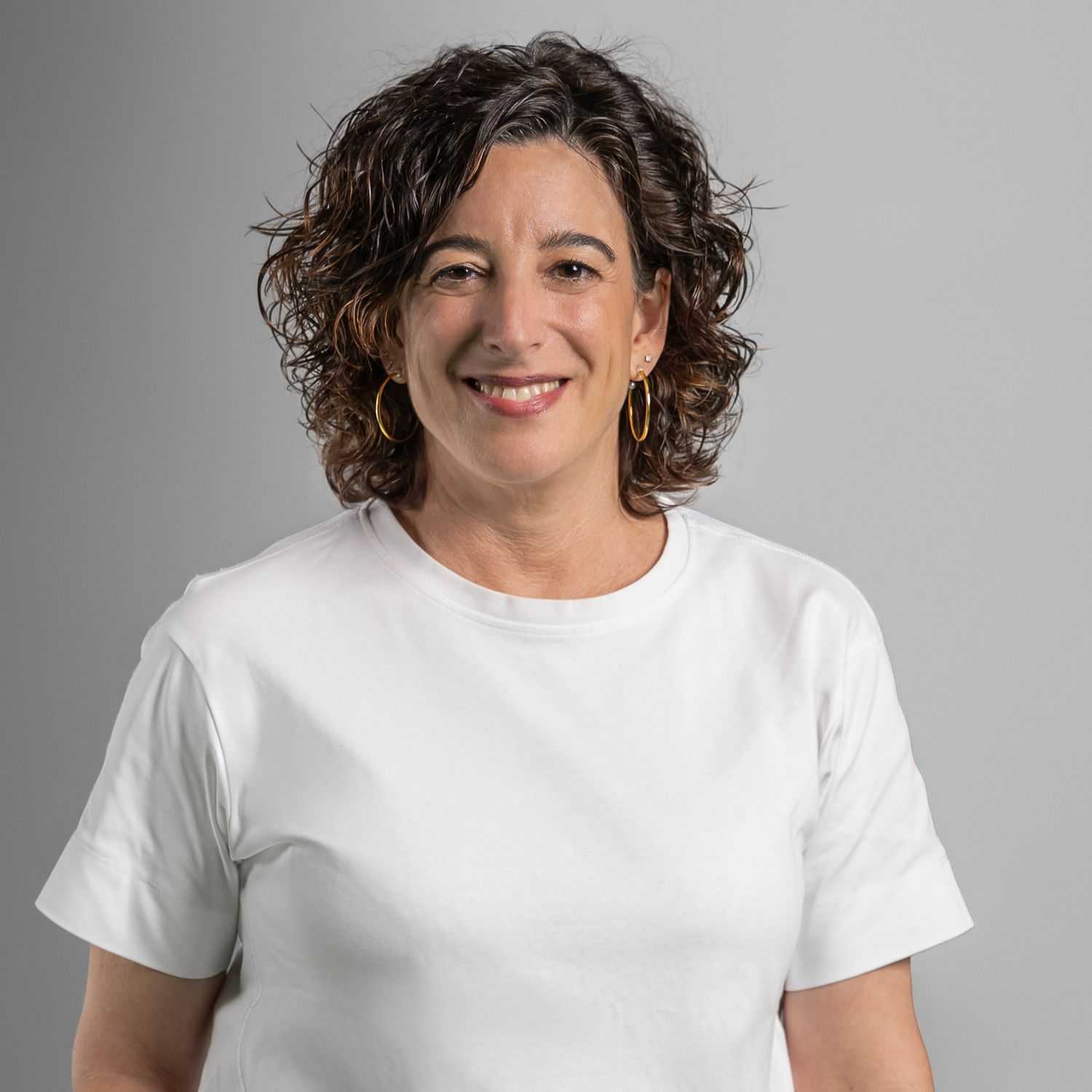
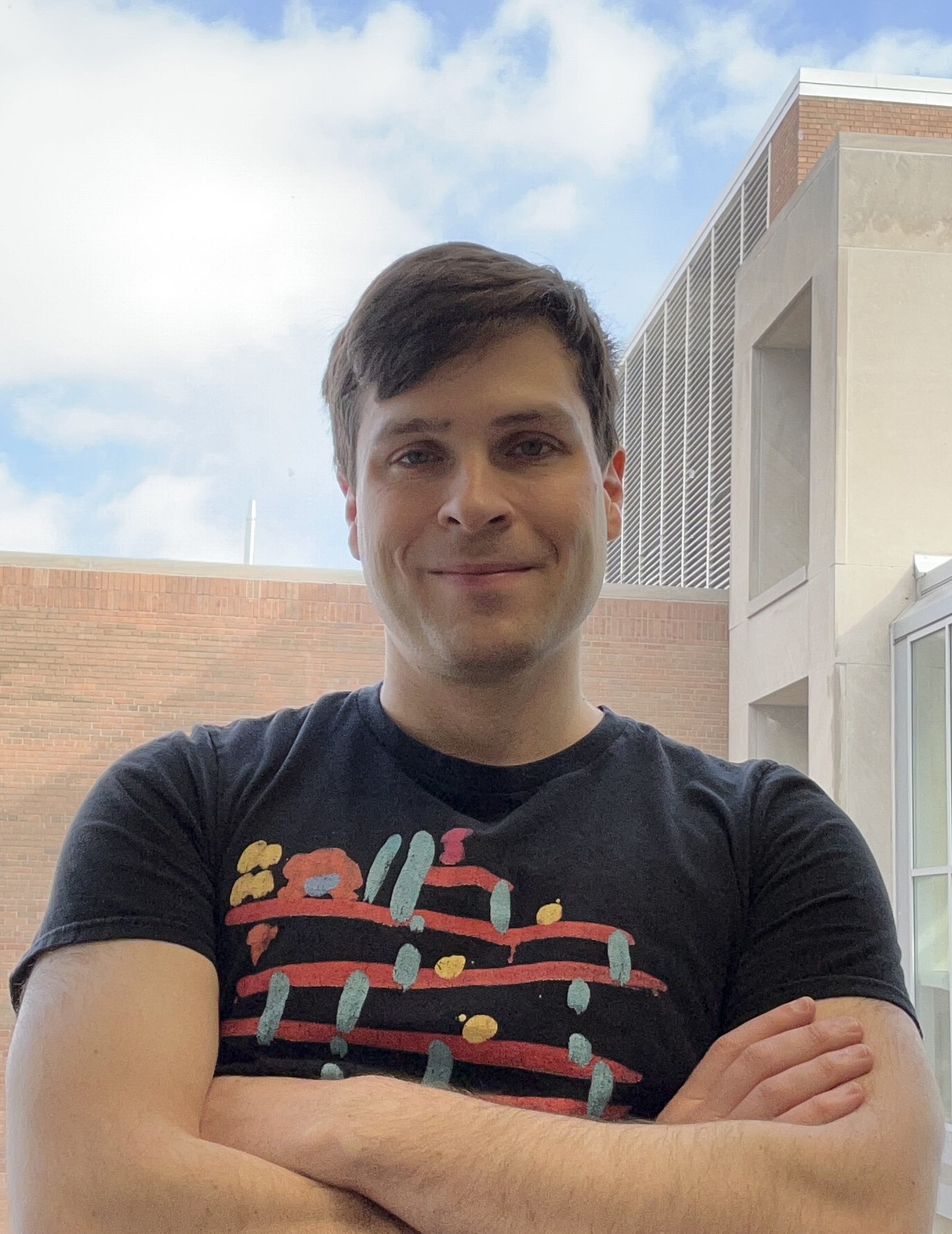
You Zhou is an Associate Professor at the Niels Bohr Institute , University of Copenhagen, leading the Experimental Subatomic Physics group. With a focus on Quark-Gluon Plasma (QGP) studies via the ALICE collaboration at CERN since 2010, his work leverages anisotropic particle expansion to probe QGP properties, including shear viscosity and thermalization. Principal Investigator of Villum Young Investigator project (2019–2024) on creating the "smallest droplet of early universe" Over 450 publications in experimental nuclear/particle physics Organized major international conferences including Initial Stages 2023 and Quark Matter workshops His research bridges high-energy nuclear physics , particle correlations , and collective flow , supported by grants from the Carlsberg Foundation , DFF-Sapere Aude , and Villum Foundation . He supervises students from bachelor projects to PhDs, including award-winning theses from Katarina Gajdosova and Vojtech Pacik . Key awards include the Villum Young Investigator (2019) and Carlsberg Postdoctoral Fellowship (2016). Recent lectures span the Nordic Winter School and Peking University . His work on femtoscopy, hypernuclei, and photon production has advanced understanding of early universe conditions and matter formation.
Anthony D'ALEO is a Senior Researcher at the Institut de Physique et Chimie des Matériaux de Strasbourg (IPCMS), University of Strasbourg, specializing in organic photonic materials. He completed his PhD at the University of Amsterdam under Prof. Luisa De Cola, followed by postdoctoral work at ENS Lyon and UC Berkeley with Prof. Kenneth N. Raymond. His career includes CNRS positions at CINaM (2009-2016), leading roles in the CNRS-Ewha International Research Center (2016-2017) and UMI 2B FUEL (2017-2019), and a leave period at startup KOALA Tech Inc. His research focuses on designing fluorescent π-conjugated organic molecules for applications in organic electronics, lasers, and bioimaging. Research Interests: Near-infrared (NIR) organic emitters Thermally activated delayed fluorescence (TADF) Hyperbolic metamaterials Photophysical characterization Organic laser dyes Epsilon-near-zero (ENZ) materials Publications demonstrate expertise in boron complexes, lanthanide sensitization, and molecular design for optoelectronic devices, with recent work on donor-acceptor architectures and nonlinear optical responses. Collaborations span institutions including UC Berkeley, CNRS-Ewha, and Ewha Womans University. Education: PhD in Chemistry, University of Amsterdam (2006) MSc in Chemistry, University of Bordeaux I
Upendra Harbola is a Professor at the Department of Inorganic and Physical Chemistry, Indian Institute of Science. His research focuses on quantum transport phenomena , non-equilibrium thermodynamics , and statistical physics applied to nanoscale systems. Department: Inorganic and Physical Chemistry University: Indian Institute of Science, Bangalore His work investigates many-body quantum systems using advanced theoretical frameworks like the Quantum Master Equation (QME) and Non-equilibrium Green's Function methods. Key research areas include: Electron/photon current fluctuations in quantum junctions Inelastic electron tunneling spectroscopy via STM Current-induced fluorescence mechanisms Entropic production in non-equilibrium systems Publications highlight applications in nanoelectronics , quantum dot technology , and molecular junctions , with a strong emphasis on fundamental thermodynamic principles like the Fluctuation Theorem.
Martin Magnusson is a Professor at the Department of Natural Sciences and Technology, Örebro University, leading the Center for Applied Autonomous Sensor Systems (AASS) and the Robot Navigation and Perception Lab . His research focuses on robotics and artificial intelligence , particularly 3D mapping, localization, radar-based navigation, and human-robot interaction . Email: martin.magnusson@oru.se Phone: +46 19 303870 Location: Room T1222 His work addresses fundamental challenges in achieving robust autonomy through innovations like the 3D Normal Distributions Transform (3D-NDT) and methods for scan registration in dynamic environments. Recent research extends to radar-based navigation and heterogeneous map data integration , with ethical implications regarding military applications of autonomous systems. Key research themes include: Autonomous Perception: Radar and lidar sensor fusion for localization Dynamic Mapping: Flow-aware and quality-assessed environmental models Human-Aware Robotics: Predictive modeling for safe shared-space navigation Professor Magnusson teaches Computer Graphics , connecting academic principles (e.g., ray tracing, light scattering) to applied research in radar simulation models and neural rendering . His research projects span DARKO (agile production robots), NiCE (changing environment navigation), and Radarize (underground autonomous vehicles).
Andrea Cappelli is a Full Professor at the Department of Biotechnology, Chemistry and Pharmacy within the University of Siena . He teaches courses in Technology, Socio-economics, and Pharmaceutical Law as part of the 4-year Pharmaceutical Chemistry and Technology program. His research focuses on pharmaceutical chemistry , medicinal chemistry , and biochemistry , with a particular emphasis on organic synthesis , photochemistry , and drug delivery systems . Recent publications highlight his work in synthesis of dual enzyme inhibitors , lysine-targeted covalent ligands , and light-responsive molecular switches . His studies often involve photophysical analysis , macrocyclic compound development , and biomimetic material design . Andrea Cappelli is actively engaged in molecular modeling and structure-activity relationship investigations for therapeutic applications.
Prof. Aldo Romani is a Professor leading the Materials for Artworks' Conservation research group within an academic department offering degrees in Chemistry, Biological Sciences, and Biotechnology. His work focuses on applying chemical and physical methodologies to cultural heritage conservation, with emphasis on non-destructive analysis and development of portable instrumentation for in-situ studies without artwork sampling or movement. Research interests center on chemical and physical behavior of materials in artworks, including structure/composition analysis for conservation diagnosis, degradation mechanisms of heterogeneous materials, and protection of porous heritage objects. The group utilizes synchrotron radiation, micro-FT-IR, micro-Raman, XRF, XRD, UV-VIS-NIR spectroscopy, GC-MS, and other advanced techniques. Key specialties include micro-spectroscopy for cross-sectional material distribution, contemporary art materials analysis, and emergency conservation protocols. Recent publications reveal strong focus on pigment analysis, varnish degradation, and non-invasive imaging of paintings/manuscripts using hyperspectral techniques. The research demonstrates integration of art historical context with materials science, particularly in Modernist paintings, medieval manuscripts, and street art preservation. The group actively contributes to European heritage science initiatives through the SMAArt Center of Excellence. Prof. Romani's laboratory develops portable instrumentation within MOLAB programs and participates in major European infrastructures including IPERION-HS and E-RIHS. Theoretical modeling complements experimental work for spectral assignments, while collaborations span conservation science and particle physics applications for detector development relevant to cultural heritage analysis.
Lena Maria Hansen is a Researcher affiliated with the Faculty of Physics, specializing in quantum technologies, quantum optics, and quantum information science. Her work focuses on solid-state quantum systems, including quantum dots, low-noise light sources, and multi-photon interference. Current affiliation: Faculty of Physics Key collaborations: University of Paris IV - Paris-Sorbonne (2025) Research Interests: Hansen’s research explores foundational aspects of quantum systems, including: Quantum coherence control in solid-state emitters Entangled photon source development for quantum networks Integrated photonic circuits for programmable quantum processing Non-classical excitation techniques for quantum dots Publications: 4 peer-reviewed articles in 2024, including high-impact studies in npj Quantum Information , Physical Review Letters , and Science Advances , addressing quantum cryptography, entanglement, and interference. Activities: Active in academic presentations (3 poster presentations in 2024-2025) and international research exchanges, such as a 2025 visiting researcher role at Université Paris IV - Paris-Sorbonne.
Professor Martin Veidt is a distinguished academic at the University of Queensland, serving as a Professor in the School of Mechanical and Mining Engineering. He is also an Affiliate of the Centre for Advanced Materials Processing and Manufacturing (AMPAM). With an extensive career in applied mechanics, Professor Veidt has established himself as a leading expert in composite materials and non-destructive evaluation techniques. Professor Veidt received his educational qualifications from the Swiss Federal Institute of Technology (ETH) in Zurich, earning his Dipl Masch Ing ETH in 1986 and his Dr sc techn in 1991. His academic journey has led him to become a prominent researcher in materials science and engineering, with a focus on the mechanical behavior of composite structures. Professor Veidt's research interests span a wide range of topics within applied mechanics. His work primarily focuses on through-life support of materials and structures, with special emphasis on composites including fibre-reinforced laminates, sandwich structures, and hybrid metal fibre laminates. His expertise encompasses quality assurance and quantitative non-destructive evaluation using conventional, guided wave and non-linear ultrasonics; stress analysis and damage mechanics; and experimental determination of mechanical characteristics of materials and interfaces. More recently, his research has expanded into areas such as non-linear ultrasonics, ultrasonic manipulation of microbubbles for drug delivery, functional composites, hybrid composite laminates, and light weighting technologies. Analysis of Professor Veidt's recent publications (2021-2025) reveals a strong focus on advanced materials characterization and structural health monitoring. His work spans multiple disciplines including biomechanics (gait analysis, foot plantar pressure), geomechanics (rock crack stress thresholds), tribology (wear behavior of polymer composites), and biomedical engineering (ultrasound-mediated drug delivery). A notable trend is the integration of computational methods with experimental approaches, particularly in the application of finite element simulation to composite materials and the use of artificial neural networks for analyzing complex biomechanical data. His research demonstrates a consistent commitment to solving practical engineering problems through innovative application of ultrasonic and non-destructive evaluation techniques. Professor Veidt maintains an active research program with numerous collaborations across disciplines. His work bridges fundamental mechanics with practical applications in aerospace, biomedical, marine, and civil engineering contexts. Based at the University of Queensland, Professor Veidt is affiliated with the Centre for Advanced Materials Processing and Manufacturing (AMPAM), which provides state-of-the-art facilities for materials research and development. His work likely involves collaboration with researchers across multiple disciplines within the School of Mechanical and Mining Engineering and beyond, contributing to the university's strong reputation in materials science and engineering.
Andrew A. Houck is the Anthony H.P. Lee '79 P11 P14 Professor of Electrical and Computer Engineering at Princeton University's School of Engineering and Applied Science. He serves as Dean of the School and inaugural Co-director of the Princeton Quantum Initiative. Ph.D., Harvard University (2005) B.S.E., Electrical Engineering, Princeton University (2000) His research focuses on superconducting quantum computing and quantum simulation via circuit quantum electrodynamics (cQED). Key areas include photonic bandgap engineering , nonlinear quantum optics , and machine learning optimization for quantum systems. His lab investigates robust qubit architectures, decoherence mitigation, and many-body quantum physics in photonic crystals. Recent publications demonstrate expertise in superconducting circuit design, quantum control instrumentation (QICK platform), and photonic material engineering. Collaborative work spans quantum computing hardware, error correction protocols, and nonlinear microwave photonics. Honors : Presidential Early Career Award (2010), NSF Early Career Award (2010), Packard Fellow (2009), TR35 (2009), Sloan Research Fellow (2009), Blavatnik Award Finalist (2008) Houck advises numerous graduate students, including Matthew Bland , Jeronimo Martinez , and Paal Prestegaard . His lab partners with the Co-design Center for Quantum Advantage and Princeton's Interdisciplinary Quantum Science Network .
Dongyi Wang is an Assistant Professor in the Department of Biological and Agricultural Engineering at the University of Arkansas, where he directs the Smart Agriculture and Food Engineering (SAFE) Lab. His work bridges advanced technologies like artificial intelligence, robotics, and machine vision with agrifood manufacturing to enhance product quality, safety, and worker welfare. Ph.D. in Bioengineering from the University of Maryland, College Park B.S. in Electrical and Computer Engineering from Fudan University Visiting experience at The Chinese University of Hong Kong Research interests span smart agrifood manufacturing , robotics , machine vision , and artificial intelligence , with applications in crop monitoring, food safety, and healthcare. His lab develops solutions like automated defect detection, pathogen sensing, and sustainable processing systems. Article analysis reveals a focus on AI-driven agricultural automation , hyperspectral imaging , robotic manipulation of bio-products , and food safety innovations . Recent works include YOLO-based tomato defect segmentation, E. coli biosensing, and UAV-based blackberry monitoring. Awards & Memberships College of Engineering Dean’s Award of Excellence Rising Star Research Award (UARK) Outstanding Mentor Award (UARK) Professional memberships in ASABE and IEEE As an educator, he teaches instrumentation and artificial intelligence in agrifood manufacturing . The SAFE Lab, funded by USDA NIFA, NSF, and federal/local agencies (> $7M), prioritizes workforce development in AI/robotics for agrifood industries.
Paula López Martínez is a Full Professor at the University of Santiago de Compostela (USC) and Deputy Director of the Singular Research Centre on Intelligent Technologies (CiTIUS) . Since June 2024, she has held the Televés Microelectronics Chair at USC. Her work bridges Computer Vision and Electronic Design of Intelligent Devices , with a focus on CMOS Image Sensors and Biomedical Applications . Her research spans Energy Harvesting , Device Modeling , and Low-Power Embedded Systems . Key projects include SEMIoTICS (low-power AI at the edge), MISEL (multispectral vision), and NANOEATERS (nanotechnology transfer). She has authored over 100 peer-reviewed papers and served in IEEE leadership roles, including Secretary of the Sensory Systems Technical Committee and Treasury of IEEE Women in Engineering Spain (2006–2008). Recent publications highlight Analog Computing-In-Memory , HDR CMOS Sensors , and Energy-Efficient DC-DC Converters . Her work integrates Photovoltaic Energy Harvesting with Biomedical Device Design , emphasizing Self-Powered Systems and Dynamic Vision Sensors . She employs Verilog-AMS and ATLAS Simulations for CMOS Photodiode Modeling , addressing Crosstalk and Shot Noise in pixel arrays. Notable collaborations include Victor M. Brea, Diego Cabello, and Miguel Heredia Conde. She contributes to IEEE Transactions and Q1-Ranked Journals , with a focus on Hardware Acceleration via FPGA and Custom IC Design . Her expertise spans Thermoelectric Generators , Smart Energy Systems , and Radiation-Hard Transistors .
Federica Cappelluti is an Associate Professor in the Department of Electronics and Telecommunications (DET) at Politecnico di Torino (Polytechnic University of Turin) . She serves as the Director of the Open Science Study Center , a Member of the Coordinating Committee of the Polito for Social Affairs , and a Scientific Advisor for the European Open Science Cloud (EOSC) Association . Her academic roles include leadership in Non-commercial collaborative agreements (Italian Computing and Data Infrastructure, Italian Association for Open Science) Research projects funded by EU and national grants (FEDRA, CLAIRE, Skills4EOSC, MIRACLE, TFQD) Research Interests: Federica specializes in Nanophotonics , Optoelectronics , Photovoltaics , and Semiconductor Device Modeling . Her work focuses on Radiative cooling for solar cells Perovskite/silicon tandem solar cells High-speed semiconductor devices Applied photonics for energy efficiency Article Trends: Recent publications highlight her innovations in Photovoltaic radiative cooling using cement-based materials 3-terminal tandem solar cell architectures Quantum dot and intermediate band solar cell engineering Thermal management of multi-junction cells Modeling and simulation of photonic devices Cost-effective photovoltaic materials Scientific Awards: She holds an International Patent for Cement composites for radiative cooling (co-inventor with Matteo Cagnoni) Advising and Grants: Federica supervises PhD students in Artificial Intelligence (Giacomo Fantino) Electrical, Electronics, and Communications Engineering (Antonio Fronteddu, Pietro Testa) Completed PhD research (Gemma Giliberti: 3-Terminal Perovskite/Silicon Tandems) She leads competitive projects including FEDRA : FAIR data lake for research assessment CLAIRE : Perovskite/silicon solar cells MIRACLE : Photonic Metaconcrete for energy savings Labs and Teams: She collaborates with the Microwave and Optoelectronics Group (MOG) at DET and contributes to the PhotoNext Interdepartmental Center for applied photonics. Her work intersects with Nexa Center for Internet & Society in open science initiatives.
Christopher Lee Baldwin is an Assistant Professor in the Department of Physics & Astronomy at Michigan State University, where he leads a research group focused on theoretical condensed matter physics. He joined MSU in August 2023 after holding postdoctoral positions at the University of Maryland and the National Institute of Standards and Technology (NIST). Education: Ph.D. in Physics, University of Washington (2018) B.Sc. in Physics, Carnegie Mellon University (2013) Research Focus: Baldwin's work centers on non-equilibrium quantum systems, with particular emphasis on disorder effects in quantum dynamics. Primary research domains include quantum annealing for optimization problems, Lieb-Robinson bounds for information propagation in disordered systems, quantum spin glasses, and connections between quantum chaos and many-body localization. His group explores fundamental mechanisms in quantum computing and statistical physics. Scientific Recognition: National Research Council Postdoctoral Fellowship (2018-2021) Academic Advising: Currently mentors graduate students Ian Neuhart and Shahriyar Dadgar, and undergraduate researcher An Le. Teaches undergraduate optics (PHY 431) and graduate statistical mechanics (PHY 831).
Megan E Donahue is a University Distinguished Professor in the Department of Physics & Astronomy at Michigan State University. Her research focuses on galaxy clusters, intergalactic gas physics, and cosmology, with a particular emphasis on AGN feedback mechanisms and star formation regulation. Education: Ph.D., University of Colorado (1990) Her work explores how supermassive black holes influence their host galaxies' circumgalactic medium, the properties of galaxy clusters as cosmological probes, and the thermodynamics of intergalactic gas. She employs multiwavelength observations (infrared to X-ray) to study these phenomena. Recent publications highlight advancements in understanding galaxy cluster evolution via projects like CHEX-MATE and SPT-Chandra surveys, with key contributions to AGN feedback models, intracluster light dynamics, and high-redshift galaxy studies using JWST and HST. Scientific Awards: Fellow of the American Physical Society (2016) President of the American Astronomical Society (2017) Professor Donahue is also deeply involved in public service, education reform in astronomy, and outreach activities including textbook authorship and public talks.
Dr. Chengbo Ai is an Associate Professor at the Department of Civil and Environmental Engineering , University of Massachusetts Amherst , specializing in transportation infrastructure and safety research. He holds a Ph.D. in Transportation Systems Engineering from Georgia Tech and a B.S. in Electrical Engineering from Peking University. Research Interests: Transportation Asset Management, Mobile LiDAR Applications, Roadway Safety Analytics, and Spatial Infrastructure Analysis Current Projects: Developing automated guardrail/sidewalk inventory systems, improving pedestrian infrastructure accessibility, and optimizing rail inspection methods Publications focus on integrating computer vision, machine learning, and geospatial technologies for infrastructure condition assessment. Recent work includes automated guardrail evaluation, rail gage inspection using consumer-grade devices, and pedestrian network analysis. Awards: Dwight David Eisenhower Transportation Fellowship recipients (2020-2022) Acorn Innovation Grant (2019) Best Poster Award at MassDOT Conference (2019) Students: Mentors Ph.D. researchers in pavement preservation, LiDAR processing, and transportation equity, with alumni working at FHWA, AECOM, and leading engineering firms Lab Facilities include advanced LiDAR systems (Theodore 1-3), dual-GPU workstations (Sullivan, Wazowski), and field vehicles like "Cynthia" for mobile mapping.