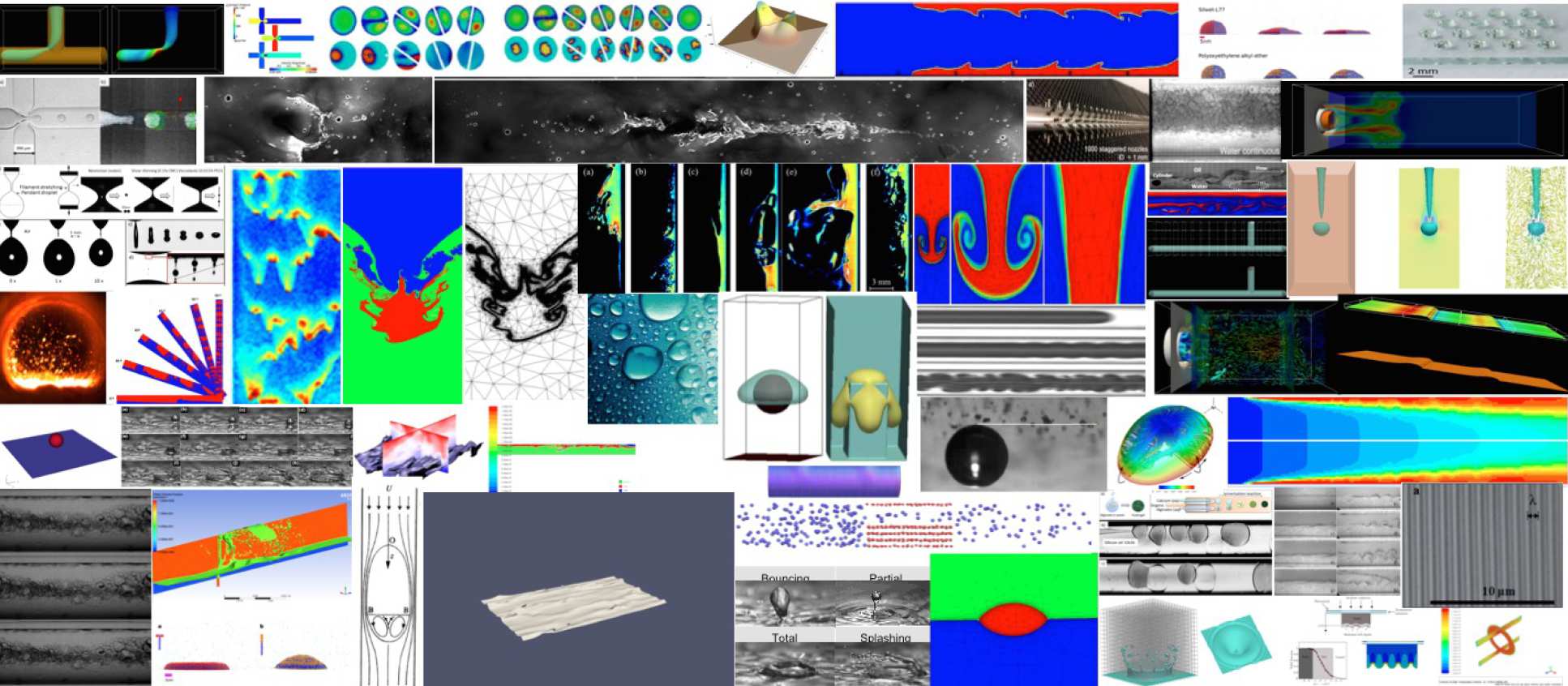
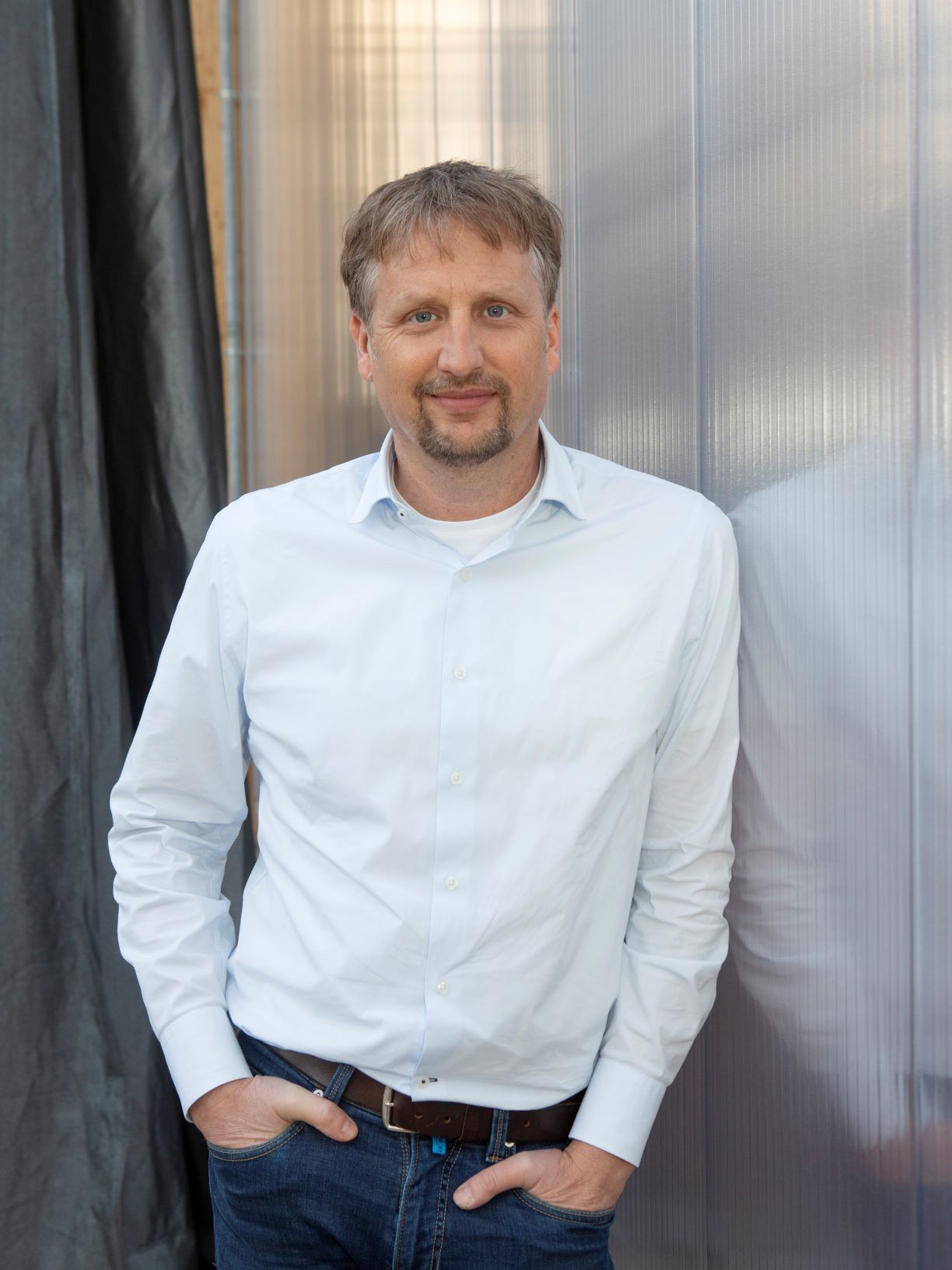
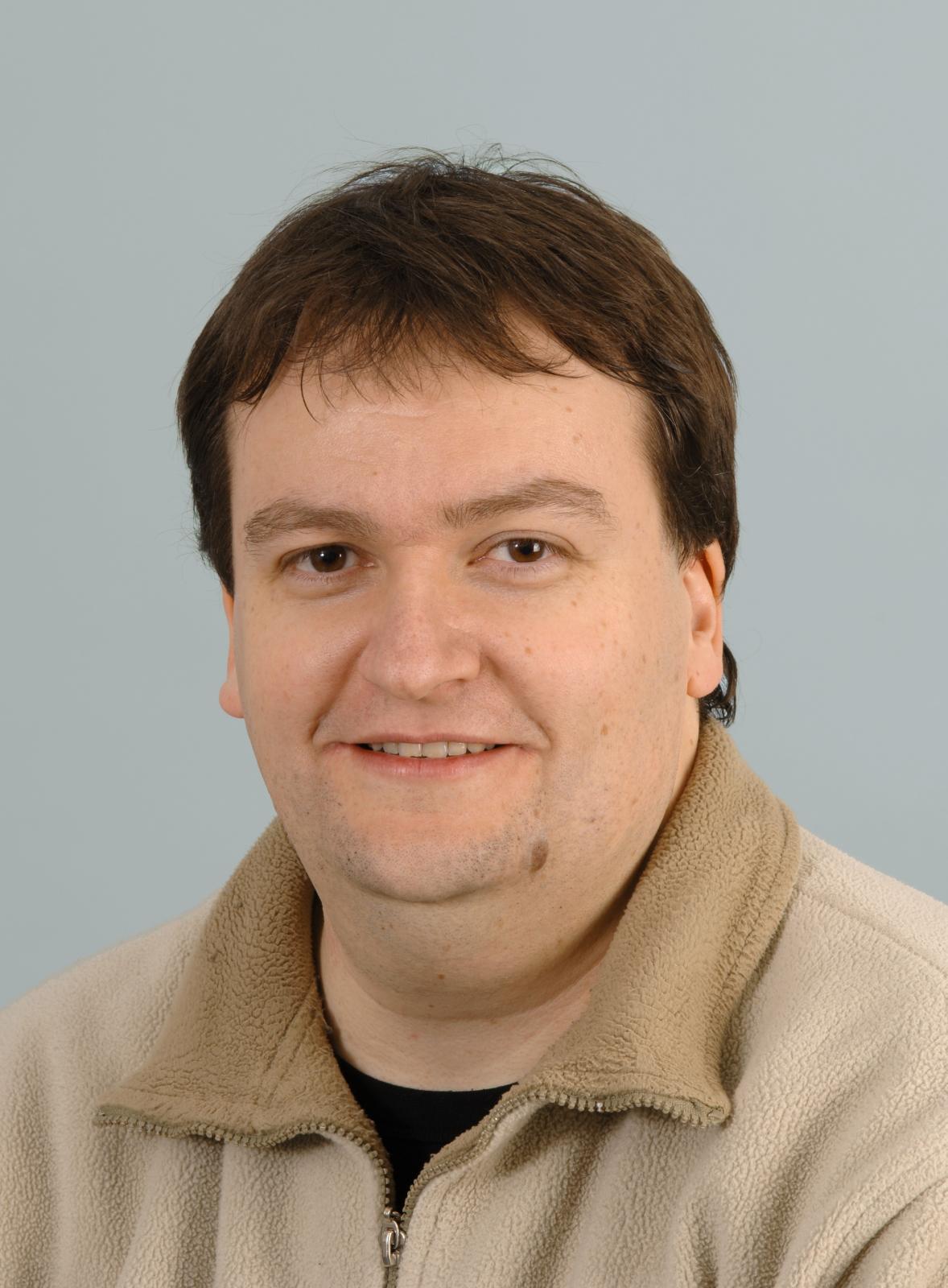
Professor Omar Matar is a Professor of Fluid Mechanics and RAEng/PETRONAS Research Chair in Multiphase Fluid Dynamics at the Department of Chemical Engineering, Imperial College London. He leads the Matar Fluids Group, focusing on interfacial fluid mechanics, multiphase flows, computational fluid dynamics (CFD), and applications in energy, manufacturing, and nanotechnology. His roles include Head of Department of Chemical Engineering, Director of the PETRONAS Centre for Engineering of Multiphase Systems (PETCEMS), and Editor-in-Chief of the Journal of Engineering Mathematics. Education: PhD in Chemical Engineering, Princeton University (1993) MEng Chemical Engineering, Imperial College London (1989) Research Interests: Interfacial fluid mechanics, multiphase flows, CFD, and machine learning 2D materials exfoliation and scale-up, immersive technologies (AR/VR) Applications in energy systems, nanotechnology, and personalized education Awards: Fellow of the Royal Academy of Engineering (2020) Recipient of the Imperial College President’s Medal (2020) EPSRC Programme Grant Principal Investigator (MEMPHIS, PREMIERE) Grants & Projects: MEMPHIS: £5M EPSRC-funded Programme Grant (2012–2017) PREMIERE: EPSRC Programme Grant (2019–present) PETCEMS: PETRONAS-funded Centre for Multiphase Systems Engineering Labs & Collaborations: Leads the Matar Fluids Group, collaborating with institutions like UCL, University of Edinburgh, and industry partners such as BP and First Light Fusion. Active in developing high-performance CFD codes (e.g., BLUE) and machine learning-driven models for multiphase systems.
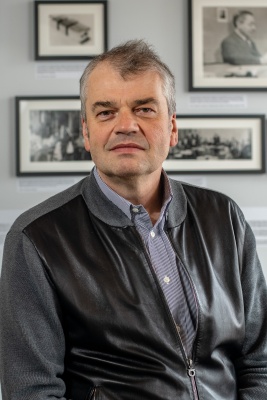
Dr. Yogambha Ramaswamy is a Senior Lecturer in the School of Biomedical Engineering at The University of Sydney and a member of the Sydney Nano Institute. She holds a Master’s in Biotechnology from the University of Queensland and a PhD in Biomedical Engineering from the University of Sydney (2009). Her postdoctoral career began as a Vice-Chancellor’s Postdoctoral Research Fellow at the University of New South Wales, followed by a Peter Doherty Early Career Fellowship in 2013 before joining the University of Sydney in 2015. Dr. Ramaswamy’s research focuses on biomaterials, tissue engineering, and mechanobiology, with a particular emphasis on developing calcium silicate-based ceramics and biopolymers for orthopedic and regenerative applications. Her recent work explores the role of physical cues in modulating stem and cancer cell behavior. She teaches courses such as AMME1961 (Introduction to Biomedical Engineering B) and AMME5962 (Introduction to Mechanobiology). Her research has been supported by grants including the NHMRC Early Career Fellowship and collaborations with institutions like the CSIR-Indian Institute of Chemical Technology and the University of Otago. Her publications span biomaterials, nanotechnology, and mechanobiology, with recent work addressing atherosclerosis, hydrogel design, and nanomedicine. She currently supervises PhD students Frank (biomaterials) and Alexander (atherosclerosis research).
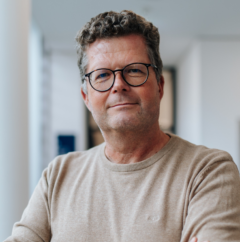
Dmitri N. Basov is the Higgins Professor of Physics at Columbia University, with a joint appointment as Professor of Physics at the University of California, San Diego. His research focuses on quantum materials, utilizing nano-optical techniques to investigate electronic phenomena and polaritonic systems. He leads the Basov Group at Columbia and has pioneered methods for imaging quantum materials at nanoscale resolutions. PhD in Physics, Lebedev Physics Institute (1991) Professor, Columbia University (2016–present) Professor, UC San Diego (2001–present) Postdoctoral Research, McMaster University (1992–1996) His work spans plasmonics , terahertz spectroscopy , and van der Waals heterostructures , with recent emphasis on polariton dynamics, superconductivity modulation, and moiré-driven electronic states. He employs cutting-edge tools like quantum scanning near-field optical microscopy (q-SNOM) and resonant inelastic X-ray scattering. Besides leading major grants such as the Gordon and Betty Moore Investigator award and Vannevar Bush Fellowship, Basov has received accolades like the National Academy of Sciences membership (2020), Ken Button Prize (2019), and Frank Isakson Prize (2012). His team explores novel quantum phases in 2D and topological materials.
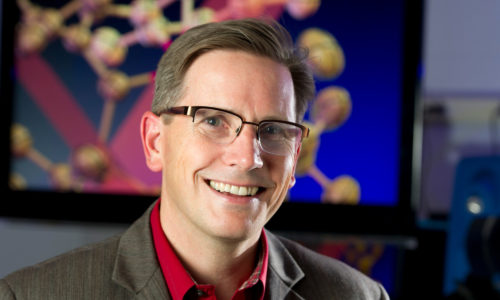
Thomas Faulkner is an Associate Professor in the Department of Physics at the University of Illinois at Urbana-Champaign, where he has been a faculty member since 2014. His research bridges condensed matter physics, high energy physics, and quantum information science through the framework of holographic duality (AdS/CFT correspondence), exploring connections between quantum field theories and gravitational theories. Dr. Faulkner received his BSc in Physics from the University of Melbourne in 2003 and his PhD from MIT in 2009 under Hong Liu and Krishna Rajagopal. He held postdoctoral positions at the Kavli Institute for Theoretical Physics (2009-2012) and the Institute for Advanced Study in Princeton (2012-2013) before joining the Illinois faculty. His primary research focuses on three interconnected areas: entanglement entropy as a tool to study quantum phases and gravity; string-inspired models of strongly correlated phenomena including non-Fermi liquids and quantum criticality; and holographic approaches to QCD under extreme conditions. His work leverages theoretical tools from both condensed matter and string theory communities to address fundamental questions in quantum gravity and many-body physics. Dr. Faulkner's publication record shows an evolving research trajectory from early work on strange metal transport and QCD applications toward increasingly sophisticated investigations of entanglement structure, quantum information aspects of holography, and fundamental constraints on quantum field theories. His recent work demonstrates deep connections between quantum information theory, gravitational physics, and condensed matter phenomena. DOE Early Career Award (2018) DARPA Young Faculty Award (2015) Dr. Faulkner has taught a comprehensive range of physics courses from undergraduate College Physics to advanced graduate-level field theory courses. His research program receives significant external funding, supporting his investigations into the quantum structure of spacetime and its connections to condensed matter phenomena. He participates in a vibrant research ecosystem exploring the quantum information foundations of spacetime geometry, contributing to collaborative efforts that are reshaping our understanding of the relationship between quantum mechanics and gravity.
Professor Jasper van Wezel is a distinguished academic in the field of Condensed Matter Theory at the University of Amsterdam's Faculty of Science, where he serves as Professor in the Institute for Theoretical Physics (ITFA) within the Institute of Physics. With a career spanning over two decades, he has progressed from Assistant Professor (2014-2016) to Associate Professor (2016-2024) and currently holds the position of Professor since 2024. His academic journey began with a PhD in theoretical condensed matter physics from Leiden University in 2007, followed by prestigious fellowships at Argonne National Laboratory and Homerton College, Cambridge. PhD in theoretical condensed matter physics (cum laude), Leiden University, 2007 Master's diploma in theoretical condensed matter physics (cum laude), Leiden University, 2003 Dutch VWO Diploma (cum laude), Dalton Scholengemeenschap, Den Haag, 1997 US High School Diploma (cum laude), Sanford High School, Maine, USA, 1998 Professor van Wezel's research focuses on several interconnected areas within Condensed Matter Theory. His work explores competing instabilities in Charge Density Wave materials, including Superconductivity and Charge Order, Combined Charge and Orbital Order, and Transition-metal dichalcogenides. He has made significant contributions to Topology in Condensed Matter, particularly examining the Role of crystal symmetries and Topology in non-Hermitian systems. A major theme in his research involves investigating the Connections between Quantum and Classical behaviour, with special emphasis on Spontaneous Symmetry Breaking both in equilibrium (The role of the Thin Spectrum) and dynamically (Spontaneous loss of Unitarity). Analysis of Professor van Wezel's recent publications reveals a strong focus on quantum phenomena in condensed matter systems, with particular attention to topological aspects, symmetry breaking, and connections to fundamental physics concepts like black hole thermodynamics. His work often bridges theoretical concepts with potential experimental realizations, as evidenced by studies on electron patterns in materials like TaS2 and theoretical frameworks for understanding quantum phase transitions. Bristol Physics Teaching Award (2014) Students' Award for Outstanding Teaching (2014) Fellow of the Higher Education Academy (2014) Aneesur Rahman Fellowship at Argonne National Laboratory (2010-2012) Junior Research Fellowship at Homerton College, Cambridge (2007-2010) Physics 'Discovery of the year' by Leiden University Physics department (2005) 'Onderwijsprijs Natuurkunde' teaching award (2004/2005) Professor van Wezel has secured numerous research grants including an ENW-M grant (2023), an ENW-Groot project with Leiden University (2021), and a prestigious VIDI personal grant from NWO (2014). He has supervised over 50 students at various levels, including PhD candidates, MSc students, and BSc students, fostering the next generation of physicists. His leadership extends to organizing conferences, serving on PhD committees, and holding administrative roles such as chair of the educational committee for the Dutch Research School in Theoretical Physics. His research group at the University of Amsterdam's Institute for Theoretical Physics maintains active collaborations with institutions worldwide, including Leiden University, University of Cambridge, University of Bristol, and research centers in France, Germany, and Poland. The group's work combines analytical theoretical approaches with computational methods to tackle fundamental questions in quantum condensed matter physics.
Prof. Dr. André Bardow is a Full Professor in Energy and Process Systems Engineering at ETH Zurich , leading research at the intersection of thermodynamics, machine learning, and sustainable energy systems. Previously, he held professorships at RWTH Aachen University (2010-2020) and TU Delft (2007-2010). He also served as part-time director at Forschungszentrum Jülich (2017-2022) and visiting professor at UC Santa Barbara (2015/16). His work focuses on energy systems optimization , computer-aided molecular design , and CO2 capture & utilization . PhD from RWTH Aachen University Current ETH Zurich affiliation Former roles at RWTH Aachen, TU Delft, Jülich Research Center His research integrates machine learning with thermodynamic modeling to optimize processes like crystallization and electrochemical cooling . Recent publications demonstrate advancements in solvent design, CO2 transport LCA, and ORC working fluid optimization. He chairs the VDI Technical Committee for Thermodynamics (2016-2024) and has received multiple awards including the Covestro Science Award and Arnold-Eucken-Award . Current projects address carbon circular economies , electrified chemical production , and AI-driven process optimization . His lab at ETH Zurich develops cutting-edge technologies like ML-CAMPD frameworks for sustainable separation processes and photoacid-based CO2 capture systems. Funding from the H2020 Systemic Expansion of Circular Ecosystems (grant 101036854) supports these initiatives. 2024 Clarivate Highly Cited Researcher 2022 Inaugural Lecture: "To sustainability and beyond: A computer-animated story on energy & chemicals" Recipient of multiple teaching and research excellence awards
Ron Fedkiw is the Canon Professor of Computer Science at Stanford University's School of Engineering. He holds a PhD in Applied Mathematics from UCLA. His research focuses on computational algorithms for applications in computational fluid dynamics, computer graphics, biomechanics, and machine learning. Fedkiw has pioneered techniques for simulating natural phenomena in film and video games, earning two Academy Awards for his contributions to visual effects. He leads the PhysBAM lab and collaborates with industry through consulting roles at Epic Games and former work with Industrial Light & Magic. Education: PhD in Applied Mathematics, UCLA (1996). Notable awards include the National Academy of Science Award, Packard Fellowship, and multiple teaching honors. His lab has graduated 40 PhD students, many of whom have made significant impacts in academia and industry. Research interests span fluid dynamics, cloth simulation, facial animation, and integrating machine learning with physical models. Key contributions include algorithms for two-way fluid-solid coupling, muscle-based facial modeling, and neural network approaches for cloth and deformable bodies. Current projects explore physics-informed machine learning and real-time interactive simulations. Scientific Awards include two Oscars, PECASE, and Okawa Foundation grants. His work bridges computational physics and visual effects, with over 140 research papers and a textbook on level set methods. Advising and grants: Supervised 40 PhD students, securing funding through NSF, ONR, and industrial partnerships. Lab collaborations include SAIL (Stanford AI Lab) and Epic Games. Future work focuses on AI-driven physical simulations and biomedical applications.
Michael J. Black is a Professor and Honorarprofessor at the University of Tübingen's Faculty of Science, Department of Computer Science, and a founding Director of the Max Planck Institute for Intelligent Systems, leading the Perceiving Systems department. He holds a B.Sc. from the University of British Columbia (1985), M.S. from Stanford (1989), and Ph.D. in Computer Science from Yale (1992). His research focuses on computer vision, 3D human modeling, motion capture, and AI-driven digital humans. Key contributions include the SMPL body model, optical flow algorithms, and datasets like Middlebury Flow and Sintel. He has received major awards such as the PAMI Distinguished Researcher Award, multiple Koenderink and Longuet-Higgins Prizes, and is a member of the German National Academy of Sciences Leopoldina and Royal Swedish Academy of Sciences. His commercial ventures include co-founding Body Labs (acquired by Amazon) and Meshcapade, advancing 3D human generation and interaction technologies. Recent work includes markerless motion capture systems (e.g., MAMMA, PICO), 3D hair and garment synthesis, and AI tools like ChatHuman for 3D human interaction analysis. His research bridges vision, graphics, and robotics, with applications in animation, healthcare, and robotics.
Jonathan Levine is a Professor of Urban and Regional Planning at the University of Michigan's Taubman College of Architecture and Urban Planning, where he has been faculty since 1991. His work focuses on transportation planning, housing and equitable development, and land use and environmental planning, with a particular emphasis on shifting from mobility-based to accessibility-based planning paradigms. Levine's educational background includes: Ph.D. in City and Regional Planning from the University of California, Berkeley M.C.P. in City and Regional Planning from the University of California, Berkeley M.S. in Engineering (Civil Engineering-Transportation focus) from the University of California, Berkeley B.S. in Political Economy of Natural Resources from the University of California, Berkeley His research centers on the potential and rationales for policy reform in transportation and land use. Levine argues that a shift in the transportation and land-use planning paradigm from a mobility to an accessibility basis is compelled by transportation theory and would be transformative to planning practices. His current work includes sponsored projects and the book "From Mobility to Accessibility: Transforming Urban Transportation and Land-Use Planning" (Cornell University Press, 2019), co-authored with Joe Grengs and Louis Merlin. He previously authored "Zoned Out: Regulation, Markets, and Choices in Transportation and Metropolitan Land Use" (Resources for the Future, 2006), which argued for policy reform based on expanding households' effective range of choices. Levine's recent publications demonstrate a clear trend toward accessibility-based evaluation of transportation systems and land-use planning. His articles explore topics such as comparing bus rapid transit and light rail, project-level accessibility analysis, overcoming the last-mile problem, and the effects of automated transit systems. His work consistently challenges traditional transportation planning paradigms and advocates for approaches that prioritize access to destinations rather than mere mobility. Levine's contributions to the field have been recognized with several prestigious awards: 2010 Chester Rapkin Award for best paper in the Journal of Planning Education and Research 2011 Residential Fellowship at the Rockefeller Foundation Center in Bellagio, Italy 2001 Excellence in Urban Policy Scholarship Award from the Association of Collegiate Schools of Planning and U.S. Department of Housing and Urban Development 1996 Best of Association of Collegiate Schools of Planning Award Levine has led significant research projects including Implementation of Accessibility-Based Evaluation for Transportation and Land-Use Planning funded by NEXTRANS, Sustainable Transportation for a 3rd Century addressing the last mile problem, and Accessibility Evaluation from Laboratory to Practice. His teaching portfolio includes Transportation and Land-Use Planning, Public Economics for Urban Planning, Research Design, and the MUP Capstone studio, where he guides students through real-world planning challenges. As a thought leader in urban planning, Levine regularly contributes to public discourse on zoning policies, housing diversity, and transportation planning. He has been featured in numerous media outlets discussing how land use policies impact sustainability, affordability, and racial justice, emphasizing that "zoning is behind all of it, and is not only the cause, but exacerbates it." His insights on the historical role of single-family zoning in perpetuating racial segregation have been particularly influential in contemporary housing policy debates.
Prof. Marc Stamminger is a Professor of Visual Computing at FAU since 2002, leading the Chair of Computer Science 9 (Computer Graphics). His work focuses on algorithms for synthesizing and analyzing images through 3D modeling, LiDAR/Radar capture, and light simulation. He co-leads FAU Solar, applying 3D modeling for environmental lighting analysis under varying conditions. Stamminger has published over 250 papers, winning prestigious awards like the Siggraph Test-of-Time Award. He holds executive roles in Eurographics and is Vice Dean of FAU's Technical Faculty. Research interests span neural rendering , 3D reconstruction , radar imaging , and medical visualization . Recent work emphasizes radiance field rendering (e.g., VR-Splatting, INPC) and radar-based human motion tracking. His lab's FAU Solar project integrates large-scale 3D models with environmental lighting simulations. Publications trends highlight neural rendering optimizations , radar-MIMO systems , and agricultural digital twins . Key collaborations involve medical imaging (e.g., vocal fold reconstruction) and autonomous driving data generation. Awards: Siggraph Test-of-Time (2023?), 2× Siggraph Best-Of-Show Grants/Teams: FAU Solar Lab, Eurographics leadership, FAU Vice Dean Labs: Chair of Computer Science 9, FAU Solar Initiative
William F. Schneider is the Keating-Crawford Professor of Chemical Engineering and Chair of the Department of Chemical and Biomolecular Engineering at the University of Notre Dame's College of Engineering. He also holds a concurrent professorship in the Department of Chemistry and Biochemistry. Dr. Schneider leads the Computational Environmental Catalysis research group focused on applying density functional theory (DFT) simulations to solve problems in energy and the environment. Dr. Schneider's educational background includes a Ph.D. in Chemistry from Ohio State University (1991) and a B.S. in Chemistry from the University of Michigan-Dearborn (1986). Before joining Notre Dame in 2004 as an Associate Professor, he worked at the Ford Motor Company Research Laboratory where he developed expertise in catalytic chemistry related to automobile emissions control. Dr. Schneider's research focuses on molecular-scale understanding of heterogeneous catalysis, with particular emphasis on energy-related applications. His group uses computationally intensive molecular simulations to understand and predict chemical properties and reactivity from first principles. Key research areas include: Zeolites for NOx reduction Catalysis at metal surfaces Catalysis for shale gas conversion Energy-directed catalysis Carbon capture and conversion Sustainable bio/fossil fuels His recent publications demonstrate a strong focus on computational approaches to understanding catalytic mechanisms, particularly in zeolite systems for environmental applications and energy conversion processes. The research often combines density functional theory with microkinetic modeling to provide molecular-level insights into catalytic processes. Dr. Schneider has received numerous honors including: Dorini Family Chair of Energy Studies Keating-Crawford Professor of Chemical Engineering Fellow of the American Association for the Advancement of Science James A. Burns, C.S.C., Award for outstanding mentorship of doctoral students Executive Editor of the Journal of Physical Chemistry C As an advisor, Dr. Schneider mentors numerous graduate students and postdocs in the Computational Molecular Sciences and Engineering Laboratory (CoMSEL). His research group collaborates closely with experimentalists to validate computational findings and accelerate their application. Current projects include investigations into plasma-catalytic processes, copper-zeolite systems for methane oxidation, and computational screening of catalysts for various energy applications. Dr. Schneider's research is supported by various grants focusing on energy conversion, environmental catalysis, and computational materials design. He leads the Computational Environmental Catalysis group which is part of the broader CoMSEL research community at Notre Dame.
Prof. Alexander Holleitner leads the Chair of Nanotechnology and Nanomaterials at the Department of Physics, Technical University of Munich , under the Walter Schottky Institute. His research focuses on ultrafast optoelectronics, quantum optoelectronics, and excitonic systems in nanoscale circuits. Research Directions : Ultrafast optoelectronics, quantum optoelectronics, excitonic systems, THz time-domain spectroscopy, and nanofabrication of mixed organic/inorganic systems. Publications : Recent work spans hyperbolic polaritons, interlayer excitons, graphene nano-gap dynamics, and defect engineering in 2D materials. Collaborations include interdisciplinary projects with groups studying semiconductor heterostructures and quantum technologies. His lab welcomes students and researchers interested in experimental physics, quantum electronics, and nanofabrication.
Prof. Dr. André Rubbia is a Full Professor of Experimental Physics at ETH Zurich's Department of Physics, holding this position since December 2003 after serving as Associate Professor from 1998. His research spans neutrino physics, astro-particle physics, and dark matter detection through major international collaborations including CERN, Gran Sasso National Laboratory, and Fermilab. He currently serves as Co-Spokesperson for the billion-dollar DUNE neutrino project at Fermilab, managing over 900 scientists. His educational background includes: Diploma in Physics from the University of Geneva (1990), with thesis work on the L3 experiment at CERN's LEP accelerator Ph.D. in Physics from MIT (1993) under Nobel Laureate S.C.C. Ting, focusing on high-energy electron-positron collisions Rubbia's research centers on fundamental particle interactions, particularly neutrino oscillations and physics beyond the Standard Model. He pioneered liquid Argon Time Projection Chamber (LAr TPC) technology and dual-phase detection systems, enabling breakthroughs in neutrino mass measurements and dark matter searches. His work spans underground laboratories (Gran Sasso, Canfranc), the LHC's CMS detector, and neutrino beam experiments like T2K. Recent explorations include antimatter gravity tests, electron-positron bound states, and dark hidden sector searches. His 2025 publications reveal intense focus on neutrino oscillation parameter precision (T2K, Hyper-Kamiokande), FASER's LHC neutrino program, and DarkSide-20k dark matter detector development. Key themes include cross-section measurements, advanced detector technologies (SiPMs, emulsion tracking), and statistical methods for oscillation analysis, reflecting integration of theoretical modeling with cutting-edge instrumentation. Scientific recognition includes: Breakthrough Prize for Fundamental Physics (2016) awarded to the international team for discovering matter-anti-matter asymmetry in neutrino oscillations APS Viewpoint selection for editing the paper announcing first electron neutrino appearance at accelerators Rubbia has supervised over fifty PhD and Master's theses while securing substantial research funding as Principal Investigator for 20+ Swiss National Science Foundation projects and Coordinator of two EU FP7 Design Studies. His DUNE leadership involves complex international grant management across 30+ countries. He leads ETH Zurich's experimental particle physics group across multiple facilities: the ICARUS neutrino detector at Gran Sasso, CMS at CERN, DUNE at Fermilab, and DarkSide-20k for direct dark matter detection. His team developed the first underground ton-scale liquid argon detector and maintains collaborations with Japanese (Super-Kamiokande) and American (Fermilab) institutions.
Anna Delin is a Full Professor at KTH Royal Institute of Technology since 2011, leading research on magnetic and quantum phenomena in materials. She heads the WISE research school (wise-materials.org) and served as Deputy Head of the School of Engineering Sciences (SCI) from 2018–2022. Her expertise spans condensed matter physics, with a focus on nanomagnetism, skyrmions, spin-lattice couplings, and topological materials. Education: PhD in Condensed Matter Physics from Uppsala University (1998). Key awards include Naturvetarpriset (1998), Royal Swedish Academy of Sciences Research Fellowship (2007), Thuréus Prize (2018), and Edlundska Prize (2024). She has held visiting roles at ICTP, Los Alamos National Lab, and the Fritz Haber Institute. Research interests include magnetic skyrmions, magnonics, spintronics, and ultrafast demagnetization. Recent publications focus on spin-lattice dynamics, topological materials, and quantum analogs of classical magnetic models. Her work bridges theory and experiment, with contributions to tools like SpinView for computational magnetism analysis. Teaching includes roles as examiner for the Degree Project in Applied Physics and teacher for Sustainable Development in Engineering Physics. She actively participates in materials design initiatives and semantic data processing for big research data. Lab affiliations include her own research group at KTH and collaborations through WISE. Current projects explore skyrmion stabilization, magnon entanglement, and quantum spin systems, with implications for next-generation spintronic devices.
Ilker Yildirim is an Assistant Professor of Psychology at Yale University, where he leads the Cognitive and Neural Computation Lab (CNCL). He received his Ph.D. from the University of Rochester in 2014. His research focuses on understanding how perception transforms raw sensory signals into meaningful representations of objects and scenes through computational modeling approaches. His research interests include: Computational modeling of visual perception and cognition Intuitive physics and physical reasoning Bayesian inference and probabilistic models in cognition Integration of graphics and physics engines in cognitive modeling Neural mechanisms of object representation Attention and resource allocation in dynamic scenes Yildirim's lab develops computational frameworks that bridge cognitive processes with neural mechanisms, using tools including probabilistic models, simulation engines, and deep learning. His work often involves testing these models through behavioral and neural experiments to create unified accounts of perception and cognition. His recent publications reveal a strong focus on how humans perceive physical properties of objects, particularly soft materials and liquids, and how attention dynamically allocates resources during scene perception. Among his notable achievements is receiving an NSF CAREER award for his project "CAREER: CompCog: Reverse-engineering neural mechanisms of object cognition with multilevel computational modeling," which will run from 2025 to 2030. His Nature Human Behaviour paper by Qi Lin was featured on CBS News, Germany's NZZ, and Wired Italy. Yildirim mentors a diverse group of graduate students and postdocs working on various aspects of perception, cognition, and computational modeling. His students have received prestigious awards including the Jane Olejarczyk Award and the Leonard J. Savage Prize.