Joshua Faber is a Professor and School Head of the School of Mathematics and Statistics at Rochester Institute of Technology (RIT), within the College of Science. He holds a Ph.D. in Physics from MIT and has been a faculty member at RIT since 2007. His research focuses on numerical relativity, neutron star dynamics, and computational astrophysics, with contributions to the Einstein Toolkit and the Event Horizon Telescope collaborations. Faber directs RIT's NSF-funded Multimessenger Astrophysics REU program and serves on the Mathematical Modeling Ph.D. program faculty. Education: B.S. in Physics/Astronomy from SUNY Stony Brook; Ph.D. in Physics from MIT (advisor: Frederic Rasio). Postdoctoral work at Northwestern University and University of Illinois Urbana-Champaign. Recognized as a PI Millionaire by RIT’s Office of Research in 2021. Active in public outreach through the Rochester Science Café. Research interests include relativistic magnetohydrodynamics, gravitational wave astrophysics, and computational methods for simulating compact object mergers. Recent work emphasizes post-merger dynamics of binary neutron stars and improving numerical relativity techniques. Key contributions include developing methods for vector potential generation and accurate light trajectory calculations around black holes.
Pawel Hawrylak is a Full Professor and University Research Chair in Quantum Theory of Materials, Nanostructures and Devices at the University of Ottawa. He leads the Quantum Theory Group, focusing on computational design of materials at the nanoscale, including graphene, 2D crystals, topological insulators, and quantum devices. His work integrates quantum theory, nanoelectronics, spintronics, and photonics to advance quantum computing and nanotechnology. Education: Ph.D., Condensed Matter Theory, University of Kentucky (1984) M.Sc. (with Honours), Wroclaw University of Technology (1979) Research Interests: Theoretical condensed matter physics, quantum information, quantum dots, graphene, topological quantum matter, and nanoscale device design. His group develops tools like QNANO for atomistic simulations of nanostructures. Awards & Grants: Brockhouse Medal (2002), Humboldt Research Prize (2023, 1999) NSERC Strategic Grant (2018-2021), NRC IoT Challenge Program (2022-2025) Editorial roles at Physica Status Solidi , Solid State Communications Lab & Collaborations: The Quantum Theory Group operates a local Linux cluster (Zeus/Hercules) and collaborates with institutions globally. Key projects include quantum circuits in 2D materials, spin-based qubits, and quantum simulators.
Cláudia Monteiro is an Assistant Professor at Universidade Lusófona's Centro Universitário do Porto, specializing in Urban Morphology, Urban Planning, and Architecture. She holds a PhD in Spatial Planning (2020) and a degree in Architecture (1999) from the University of Porto. As an integrated member of CIAUD, her work bridges research and practice in sustainable urban development. Education: PhD in Spatial Planning (2020), Architecture (1999) Current Role: Assistant Professor in Master/PhD programs Research Focus: Urban Form, Sustainable Development, Research-Practice Integration Her research explores urban morphology through historical analysis, comparative studies, and practical applications, emphasizing sustainable development and interdisciplinary collaboration. She leads methodological innovations in planning and architectural practice, particularly in morphological regionalization and prescriptive frameworks. Cláudia's publications focus on urban form analysis (2013-2024), methodological translation across cultures (2022), and pedagogical reforms (2023). Key themes include morphological theory, conservation strategies, and practice-based learning. Her professional expertise spans two decades in architecture and planning, with involvement in national/international projects addressing urban sustainability, research-practice integration, and morphological theory application. She has contributed to manuals, reports, and critical zoning analyses for municipalities.
Tomasz Lerch serves as a Lecturer in the Department of Power Electronics and Automation of Energy Conversion Systems at AGH University of Science and Technology's Faculty of Electrical Engineering, Automatics, Computer Science and Biomedical Engineering in Kraków. He actively participates in the Discipline Council for Automation, Electronics, Electrical Engineering and Space Technologies. His research spans power electronics, renewable energy integration, and electrical machine design with emphasis on grid stability and power quality. Key interests include grid-tied converter systems, islanding detection methods for distributed generation, permanent magnet motor optimization (particularly transverse flux and cogging machines), and power quality analysis in modern LED lighting and photovoltaic installations. His methodological approach frequently combines electromagnetic modeling with experimental validation. Analysis of his 2021-2025 publications reveals consistent focus on renewable energy grid integration challenges. Dominant themes include rapid voltage fluctuation compensation using hardware-in-the-loop techniques, hybrid islanding detection combining phasor measurement units with artificial intelligence, and thermal/power density optimization in novel motor designs. His work demonstrates strong industry relevance through experimental validation of control algorithms for grid-connected systems.
Alice M. Carter is an Assistant Professor at the Department of Mathematics and Statistics, Utah State University. As an ecosystem statistician and river biogeochemist, she combines empirical field research with advanced statistical modeling to study carbon cycling in aquatic systems. Research Focus Bayesian inference for watershed-scale analysis Process-guided machine learning in river energetics Time series modeling of biogeochemical fluxes Continental-scale aquatic ecosystem dynamics Key Contributions Her work addresses how local ecological controls interact with watershed-scale geomorphic constraints, particularly focusing on carbon cycling responses to environmental changes. Publications highlight innovations in process-guided deep learning approaches and hypoxia dynamics in river systems. Academic Engagement Actively mentors ecology graduate students in statistical methods and contributes to open-source research code through her GitHub repositories.
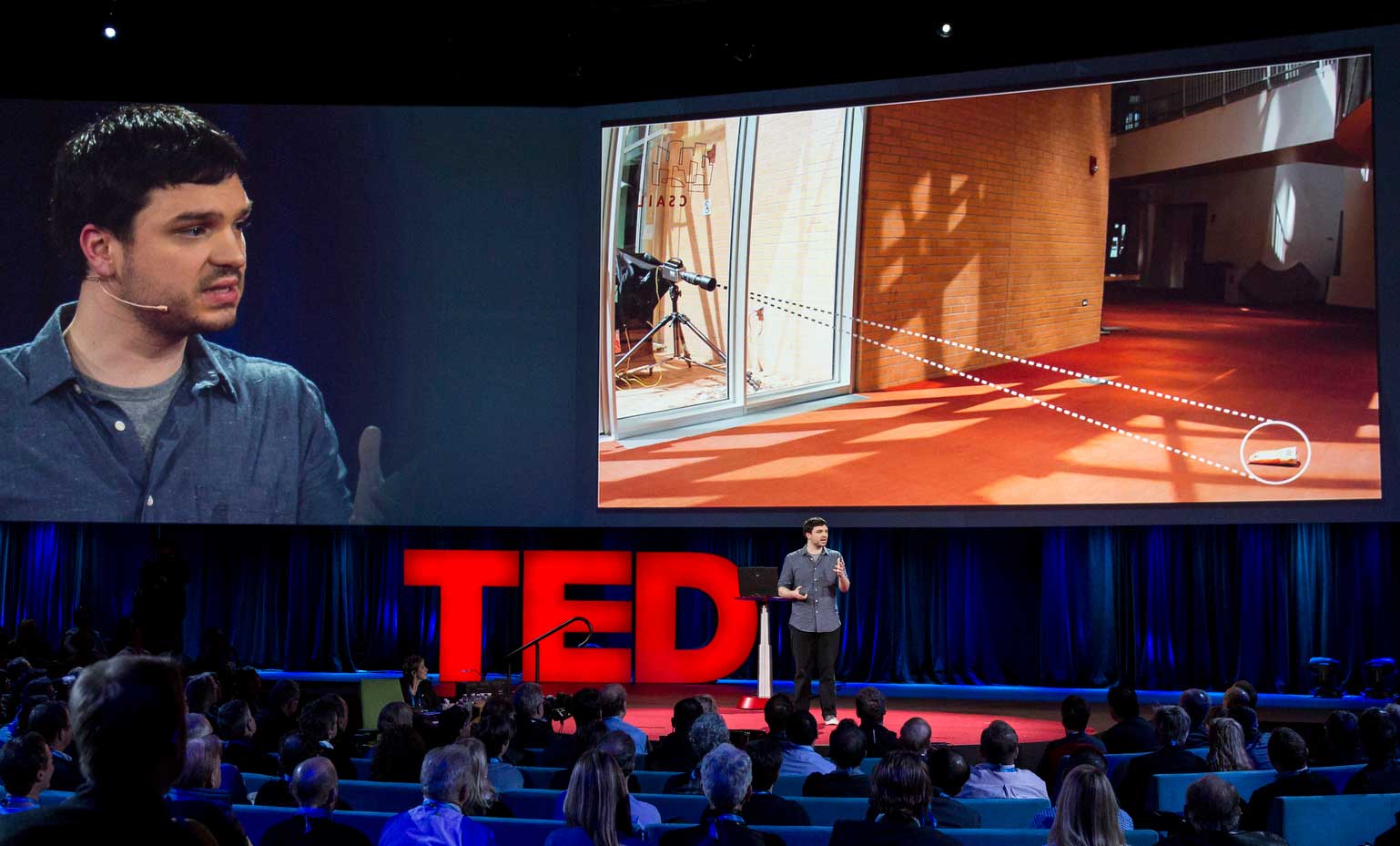
Abe Davis is an Assistant Professor of Computer Science at Cornell University in Ithaca, NY, with a research focus at the intersection of Computer Graphics , Computer Vision , and Human-Computer Interaction (HCI) . He leads a research group that develops innovative computational methods for video analysis, augmented reality (AR), and visual editing. Davis previously held postdoctoral positions at Stanford University and Cornell Tech , following his Ph.D. in Electrical Engineering and Computer Science from MIT (2016) and undergraduate degree in Computer Science at Stanford. Education Ph.D. in Electrical Engineering and Computer Science, MIT M.A. in Electrical Engineering and Computer Science, MIT B.S. in Computer Science, Stanford University Davis' research addresses novel problems in computational video editing, AR applications, and structural health monitoring. His group has made significant contributions to visual vibration analysis , light field reconstruction , and video-based sound recovery . Recent work includes Noise-Coded Illumination for fake video detection and MeCapture for mobile AR body change visualization. His publications span top-tier conferences like SIGGRAPH, CVPR, and CHI. Scientific recognition includes being named to Forbes 30 Under 30 (Science, 2015), 5 TED 2015 Technologists , and recognition as one of The 8 most innovative scientists in tech and engineering (2015). His TED 2015 talk on visual vibration analysis gained international attention. The group's work has been featured in Ars Technica , Engadget , and Cornell Chronicle .
Laura Waller is a Professor in the Department of Electrical Engineering and Computer Science at the University of California, Berkeley, where she leads the Computational Imaging Lab. Her research focuses on integrating hardware and software for optical imaging systems, with applications in microscopy, biomedical imaging, and industrial inspection. She is affiliated with the Berkeley Artificial Intelligence Research Laboratory (BAIR) and the Berkeley Institute of Data Science (BIDS). 2010 Ph.D. in Electrical Engineering and Computer Science from MIT 2005 M.Eng. in Electrical Engineering and Computer Science from MIT 2004 B.S. in Electrical Engineering and Computer Science from MIT Her research spans computational imaging , optics , and machine learning , particularly physics-based approaches for designing imaging systems. Key areas include phase imaging , light-field microscopy , and imaging through scattering . She has pioneered DiffuserCam , a lensless imaging system, and developed space-time reconstruction algorithms for dynamic samples. Her work intersects signal processing , biomedical imaging , and inverse problems . Her recent publications emphasize single-shot 3D imaging , hyperspectral capture , and machine learning-optimized optical design . Notable collaborations include projects with the Lawrence Berkeley National Lab on X-ray and EUV imaging . 2024 : Max Planck-Humboldt Medals 2021 : AIMBE Fellow, OSA Adolf Lomb Medal 2018 : SPIE Early Career Achievement Award 2016 : Carol D. Soc Mentoring Award 2014 : NSF CAREER Award, Moore Investigator in Data Driven Discovery, Packard Fellow, Bakar Fellows Spark Award She mentors graduate students across EECS , Bioengineering , and the Applied Sciences & Technology (AS&T) programs. Her lab has produced alumni who now hold faculty positions at institutions like UT Austin and UCSD.
Brygg Ullmer is a Professor at Clemson University's School of Computing and Chair of the Human-Centered Computing Division. He leads the Tangible Visualization group, focusing on Tangible User Interfaces (TUIs) Computational Genomics Interactive Computational STEAM Rapid Physical/Electronic Prototyping Computationally-Mediated Art and Design His work bridges physical and digital domains, with applications in K-12 education, high-performance computing, and culturally-rooted design. Research trends from his 15 most recent articles show a focus on Generative AI for cyberphysical systems Shape-changing interfaces Token+Constraint interaction models Genomics data visualization Hybrid tangible-gestural interfaces Multi-display collaboration These span both theoretical and applied work in computer science, biology, and design. Ullmer has held significant roles including Postdoctoral work at Zuse Institute Berlin Associate Professor at Louisiana State University (CCT & Computer Science) Visiting Lecturer at Hong Kong Polytechnic University Contributions to IBM Systems Journal and special editions of Springer's Personal and Ubiquitous Computing He has also co-edited journal special issues and served on conference committees. His scientific contributions include co-invented U.S. patents (6164541, 6263507, 6259441) related to Invisible hyperlinking Audiovisual data browsing Digital video time-shifting These patents reflect early innovations in tangible interface technology that have influenced modern interactive systems.
Manuel Guizar Sicairos is an Associate Professor of Physics at École Polytechnique Fédérale de Lausanne (EPFL) in the School of Basic Sciences (SB), Institute of Physics (IPHYS), and leads the Computational X-ray Imaging group at the Paul Scherrer Institut (PSI). He has held these joint positions since January 2023, following a progression from Postdoctoral Fellow (2010) to Senior Scientist (2021) at PSI. B.Sc. in Physics Engineering, Tecnológico de Monterrey, Mexico (2002) M.Sc. in Electronic Systems, Tecnológico de Monterrey, Mexico (2005) M.Sc. in Optics, University of Rochester, USA (2008) Ph.D. in Optics, University of Rochester, USA (2010) His research centers on computational imaging, particularly for synchrotron X-ray sources, with a focus on phase retrieval, ptychography, coherent diffractive imaging, holography, tomography, and scanning small-angle X-ray scattering (sSAXS). He has co-developed key techniques such as 3D nanoscale ptychography, magnetization vector nanotomography, and small-angle scattering tensor tomography (SASTT). His work emphasizes experimental design, novel imaging configurations, and algorithm development for hyperspectral and dynamic nanotomography. The recent articles highlight a consistent trend in high-resolution 3D imaging of complex materials using correlative X-ray techniques. His publications span topics from integrated circuits and magnetic materials to hierarchical composites, demonstrating expertise in both algorithmic innovation and experimental application. The integration of ptychography with sSAXS and vector tomography enables multiscale, multimodal investigations across materials science and biology. Innovation Award on Synchrotron Radiation (2014, 2021) ICO Prize (2019) Fellow of The Optical Society (2021) Fellow of SPIE SPIE Community Champion (2019) Multiple Optics & Photonics Education Scholarships (2004–2009) He advises PhD students including Fang Wenxuan and Karabay Aknur at EPFL. He has secured institutional support for advancing imaging research at both PSI and EPFL. His group develops open-source algorithms such as those for subpixel registration, Hankel transforms, and tomographic reconstruction (e.g., GridrecMS). He is a confidential advisor for the Respect@PSI campaign, promoting diversity and inclusion in scientific research. His leadership supports large-scale facility research at PSI and academic training at EPFL. He leads the Computational X-ray Imaging group at PSI, which collaborates closely with the cSAXS beamline and focuses on advancing computational methods for synchrotron-based imaging. The team integrates algorithm development with experimental validation, fostering interdisciplinary research across physics, materials science, and bioimaging.
Dr. Tomislav Jurkić is an Associate Professor at the Department of Theoretical Physics and Astrophysics, Faculty of Physics, University of Rijeka, Croatia. He has been with the university since 2007, progressing through academic ranks from assistant to his current position as docent (Associate Professor) since July 2023. His academic journey began with a Diplomirani inženjer fizike degree from the University of Zagreb in 2005, followed by a Doctorate in Natural Sciences specializing in astronomy and astrophysics in 2012. His educational background includes: 2012: Doctor of Natural Sciences, field of physics, specialization in astronomy and astrophysics, Postgraduate Doctoral Study of Physics, University of Zagreb, Faculty of Science 2005: Diplomirani inženjer fizike (Diploma Engineer of Physics), University of Zagreb, Faculty of Science Dr. Jurkić's research focuses on astrophysics, particularly on circumstellar dust in symbiotic binary systems, variable stars, and time-domain astronomy. His work has significant implications for understanding stellar evolution, binary star interactions, and dust formation processes. He has made substantial contributions to the field through his modeling of circumstellar environments and analysis of observational data from various astronomical surveys. Analysis of his publications reveals a strong focus on symbiotic stars, particularly Mira variables with circumstellar dust. His research demonstrates expertise in applying sophisticated modeling techniques to observational data, with particular emphasis on infrared astronomy and light curve analysis. He has recently transitioned to large-scale survey astronomy through his involvement with the Vera C. Rubin Observatory's Legacy Survey of Space and Time (LSST) project, where he leads efforts to utilize Croatia's supercomputer 'Bura' for processing astronomical data. Dr. Jurkić has received multiple teaching excellence awards from the University of Rijeka (2020, 2022) and a presentation award at the 8th Scientific Meeting of the Croatian Physical Society (2013). His research contributions have been recognized through his membership in prestigious international organizations including the International Astronomical Union and the LSST Corporation. He has mentored numerous students through their undergraduate and graduate theses, guiding research on topics ranging from interferometry in astronomy to exoplanets and cosmic dust. His administrative contributions include serving on the Faculty Council and chairing the University of Rijeka's Online Learning Committee. Dr. Jurkić is also actively involved in science popularization, regularly giving public lectures and participating in educational outreach programs.
Dr Felicity Wilcox is a Senior Lecturer in Music and Sound Design at the University of Technology Sydney's School of Communications, where she chairs the Non-Traditional Research and Professional Creative Practice Advisory Panel. As an acclaimed composer described by Limelight (2023) as 'one of Australia’s most versatile and prolific composers,' she merges creative practice with scholarly inquiry. PhD in Composition from Sydney Conservatorium of Music Recipient of ARC Discovery Early Career Researcher Award (2023-2026) Chair of Women in Music Mentorship Program advisory committee Her research focuses on gender equity in music industries, particularly through the Emergence Project (PRO22-14336), which combines creative practice with scholarly analysis of structural inequities in contemporary opera. She explores audiovisual gesture theory, spectromorphology, and Indigenous collaborations while maintaining deep engagement with multimedia composition. Wilcox's creative works span over 60 film/TV soundtracks (under alias Felicity Fox) and acclaimed chamber compositions like Threading the Light (Move 2022) and Uncovered Ground (Move 2021). Her research outputs include the groundbreaking book Women's Music for the Screen: Diverse Narratives in Sound (Routledge 2022) and the 2023 Women and Minority Genders in Music report. Scientific recognition includes multiple APRA AMC Art Music Awards, AACTA and ARIA nominations, and the 2021 Pythia Prize . She supervises Masters/PhD candidates and champions cross-disciplinary collaborations with ensembles such as Ensemble Offspring, Sydney Art Quartet, and Ironwood. Her practice integrates creative technology with social justice themes, demonstrated through projects like the Invalid Data W.E.S.T. audiovisual experiment and Immerse interactive installations. Wilcox's work spans iconic venues including Sydney Opera House and international festivals in Berlin, Helsinki, and Paris.
Refik Mansuroglu is a researcher affiliated with the University of Vienna. His work spans quantum computing, quantum information, and computational physics, with a focus on quantum simulation and algorithm development. University: University of Vienna Research Areas: Quantum Physics, Quantum Computing, Quantum Information Research Interests: Refik Mansuroglu specializes in quantum algorithms, Hamiltonian simulation, and quantum state optimization. His research explores classical-quantum hybrid methods, noise reduction in quantum systems, and applications of variational techniques to translational invariant and periodically driven systems. Additionally, he has contributed to foundational studies in loop quantum gravity, particularly in spin matter fields and discrete spacetime models. Article Trends: His recent work emphasizes variational algorithms for quantum simulation, error mitigation in near-term quantum devices, and classical optimization strategies for quantum circuits. Earlier publications delve into quantum gravity and photonic simulations, reflecting a multidisciplinary approach across quantum mechanics and computational physics. Advising & Collaborations: No specific students or advising roles are mentioned in the provided data.
Prof. Ana V. Stankovic is a Professor in the Department of Electrical Engineering at Cleveland State University. Her research focuses on power electronics, electric machines, and renewable energy systems. She specializes in advanced converter designs, grid integration challenges, and energy efficiency solutions. Notable contributions include work on resonant converters, unbalanced grid operations, and LED lighting systems. She has authored over 30 technical publications and pioneered laboratory setups for power electronics education. Her expertise spans both theoretical and applied aspects of electrical engineering, with a particular emphasis on sustainable energy technologies. Education details are not explicitly provided in the text, but her academic work indicates a strong background in electrical engineering and power systems. Her research interests are reflected in her publications on topics such as wind turbine inverters, fault ride-through methods, and energy-efficient lighting systems. She has developed novel control strategies for grid-side inverters and power factor correction circuits, addressing real-world challenges in unbalanced grid conditions. Her laboratory work emphasizes modern tools and systems for teaching power electronics and electric machines. Prof. Stankovic’s contributions to the field include advancements in both academic research and practical applications. Her work bridges the gap between theoretical models and industrial implementations, particularly in improving the efficiency and reliability of power conversion systems. Despite no explicit mention of awards or grants, her extensive publication record highlights her leadership in power electronics research.
Claire Gmachl is the Eugene Higgins Professor of Electrical Engineering at Princeton University, serving as the Associate Chair of the Department of Electrical and Computer Engineering and Head of Whitman College. She is affiliated with the High Meadows Environmental Institute (HMEI) as an Associated Faculty member and contributes to the Grand Challenges Program. Her roles emphasize leadership in both academic administration and cutting-edge research. Her research interests focus on quantum cascade lasers, optics, semiconductor engineering, and their applications in optical sensors for environmental and health monitoring. Notably, she explores hyperuniform semiconductor metamaterials, wireless power systems for lasers, and machine learning-driven approaches to optimize laser design. Recent work highlights advancements in mid-infrared spectroscopy for non-invasive glucose sensing and novel cavity geometries for laser stability and efficiency. Her research outputs demonstrate a strong emphasis on interdisciplinary innovation, particularly at the intersection of machine learning and optoelectronics. Articles from 2022-2025 reveal trends in developing robust quantum cascade laser systems and exploring their use in precision applications like medical diagnostics and environmental sensing. While no scientific awards are listed, her contributions to the field are evident through collaborations with HMEI and Whitman College. Her advising and grant activities are not explicitly detailed in the text. She leads research in labs focused on metamaterials, semiconductor lasers, and sensor technologies, contributing to both the School of Engineering and the broader university community through her administrative roles.
Prof. Dr. Hendrik Weimer is a Group Leader at the Institute of Theoretical Physics within the Faculty of Mathematics and Physics at Leibniz University Hannover. His research focuses on quantum simulation, entanglement, and topological quantum phenomena. Position: Professor Institution: Leibniz University Hannover Department: Institute of Theoretical Physics His work explores quantum phase transitions , multipartite entanglement , and topological order in driven-dissipative systems. Recent studies emphasize error correction for quantum simulations and dissipative state preparation using Rydberg atoms. Key trends in his publications include quantum computing , topological materials , and non-equilibrium quantum dynamics . His research often bridges quantum information theory with condensed matter physics .