Andre Filiatrault is an Adjunct Professor at the Department of Civil Engineering within McMaster University . His research spans seismic engineering, structural dynamics, and performance-based design, focusing on nonstructural components, damping systems, and wood/steel structures. Key contributions include seismic isolation, passive energy dissipation, and experimental validation of building systems. Research Interests: Earthquake Engineering, Structural Dynamics, Performance-Based Seismic Design, Nonstructural Components, Steel and Wood Structures, Seismic Retrofit Recent Trends: Advanced studies on viscous dampers, seismic loss estimation for acceleration-sensitive elements, and integration of building information modeling with seismic analysis.
Robert Shapley is the Natalie Clews Spencer Professor of the Sciences and Professor of Neural Science, Psychology, and Biology at New York University’s Center for Neural Science. He holds a PhD from The Rockefeller University (1970) under Nobel laureate H.K. Hartline. His research focuses on visual physiology, perception, and cortical processing, particularly in primary visual cortex (V1). Shapley has explored color perception mechanisms, cortical double-opponent cells, and computational models of V1 dynamics. He developed influential models with colleagues at NYU’s Courant Institute, including a recent framework analyzing V1’s nonlinear dynamics and inhibitory/excitatory balance. His work on sound localization and gamma rhythms in visual cortex bridges sensory systems and network neuroscience. Shapley received a MacArthur Fellowship in 1986 and has collaborated extensively across NYU’s interdisciplinary environment. Education: PhD in Neurophysiology & Biophysics, The Rockefeller University (1970) Helen Hay Whitney Postdoctoral Fellow at Northwestern University and Cambridge University Research Themes: Cortical mechanisms of color perception and double-opponent cells Large-scale modeling of V1 dynamics and network architecture Role of gamma rhythms and synchronization in visual processing Integration of luminance and chromatic information in early visual cortex Awards: MacArthur Fellowship (1986) Collaborative Work: Models with Professors David McLaughlin, Michael Shelley, and Lai-Sang Young (Courant Institute) Experimental studies with colleagues Mike Hawken, Dario Ringach, and Jim Gordon Labs/Teams: NYU Center for Neural Science, NYU Courant Institute collaborations.
Hyuk-Jae Lee is a prominent researcher in computer architecture and hardware acceleration for deep learning systems, with an extensive publication record spanning over two decades. His work primarily focuses on hardware implementations for video processing, memory systems, and neural network acceleration. Through numerous collaborations with researchers at Korean institutions (particularly with Hyun Kim, Chae-Eun Rhee, and Xuan Truong Nguyen), Lee has established himself as a leading figure in circuit design for AI applications. Lee's research interests center around computer architecture, hardware acceleration, deep learning systems, video coding and compression, memory systems, and image processing. His work demonstrates a consistent focus on bridging the gap between theoretical algorithms and practical hardware implementations, with particular emphasis on optimizing performance and efficiency for real-world applications. His recent work shows a strong shift toward accelerating large language models and transformer-based architectures, reflecting current trends in AI hardware. Analysis of Lee's recent publications (2023-2025) reveals a clear research trajectory toward solving memory bandwidth and computational efficiency challenges in modern AI systems. His work spans the spectrum from low-level circuit design to high-level system architecture, with particular strength in memory systems optimization and hardware acceleration for neural networks. The consistent publication record in top-tier IEEE journals demonstrates sustained research productivity and impact in the field. Throughout his career, Lee has collaborated extensively with a core group of researchers, suggesting stable research teams and laboratories focused on hardware acceleration. His publications in IEEE Transactions on Circuits and Systems, IEEE Transactions on Computers, and IEEE Transactions on Video Technology indicate recognition by multiple relevant academic communities.
Lajos Hanzo is a distinguished Professor at the University of Southampton's School of Electronics and Computer Science (ECS), where he has established himself as a leading authority in wireless communications and signal processing. His academic profile showcases extensive contributions to the field with over 1400 publications and significant recognition through multiple prestigious fellowships. Dr. Hanzo received his degree in electronics in 1976 and his doctorate in 1983, followed by an honorary doctorate in 2009. His educational background laid the foundation for a career that has continually evolved with communication technologies from early wireless systems through to contemporary 6G research and quantum communications. Hanzo's research spans wireless communications, optical wireless systems, MIMO technologies, and increasingly intersects with artificial intelligence applications for next-generation networks. His work demonstrates remarkable synergy between theoretical foundations and practical implementations, addressing challenges in spectral efficiency, channel capacity, and reliable transmission across diverse communication scenarios. He has made seminal contributions to space-time coding, non-orthogonal multiple access (NOMA), and index modulation techniques that have influenced multiple generations of wireless standards. Analysis of his recent publications reveals a clear progression toward more complex communication paradigms, with increasing focus on 6G technologies, integration of deep learning with traditional communication theory, and exploration of quantum-inspired communication approaches. His work consistently addresses the tension between theoretical capacity limits and practical implementation constraints, with recent papers demonstrating particular interest in millimeter-wave communications, visible light communication, and massive connectivity solutions for IoT applications. FREng (Fellow of the Royal Academy of Engineering) FIEEE (Fellow of the IEEE) FIET (Fellow of the Institution of Engineering and Technology) Fellow of EURASIP (European Association for Signal Processing) DSc (Doctor of Science) While specific details of his advising activities aren't prominently featured in the provided materials, Hanzo's extensive publication record spanning multiple decades suggests significant mentorship of graduate students and postdoctoral researchers. His research has clearly attracted substantial funding to support investigations across wireless communications, with particular emphasis on coding theory, MIMO systems, and next-generation network architectures. The collaborative nature of his recent work indicates ongoing engagement with international research consortia addressing 5G evolution and 6G standardization.
Lukas Radl is a University Assistant and PhD Student at the Institute of Visual Computing, Graz University of Technology, where he works on 3D Scene Representations for View Synthesis under the supervision of Markus Steinberger. His research focuses on advancing real-time rendering techniques, particularly in Neural Radiance Fields (NeRF) and Gaussian Splatting, to bridge digital and physical world representation. Education: Master of Science in Computer Science (with distinction), Graz University of Technology, 2018-2023 Bachelor of Science in Software Engineering, Graz University of Technology, 2018-2023 Research Focus: Radl's work intersects Computer Graphics, Computer Vision, Machine Learning, and Parallel Processing. He pioneers practical implementations of Radiance Field Representations, addressing critical challenges in view consistency, anti-aliasing, and real-time performance for interactive applications. His innovations enable robust rendering in virtual reality and complex lighting scenarios through novel geometric and neural approaches. Publication Impact: Recent publications (2024-2025) demonstrate a cohesive trajectory toward production-ready radiance field systems. Key advances include sorting algorithms for view consistency (StopThePop), anti-aliasing frameworks for Gaussian Splatting (AAA-Gaussians), and VR-optimized pipelines (VRSplat). These contributions establish new standards for real-time performance while maintaining visual fidelity across diverse hardware platforms. Scientific Recognition: Dean's List (top 5% of students) at Graz University of Technology (2019, 2020) Mentorship & Service: Radl actively shapes academic discourse as a reviewer for premier venues (CGF, ICCV, TVCG) and mentors students through open projects in real-time rendering. His teaching portfolio spans exercise coordination for core visual computing courses since 2020, with current leadership in Real-Time Graphics and Computer Graphics instruction. He fosters talent through student projects advancing Gaussian Splatting implementations. Research Ecosystem: Embedded in Graz University of Technology's Institute of Visual Computing, Radl collaborates within a specialized team focused on radiance field optimization. The group maintains active pipelines for NeRF and Gaussian Splatting research, with strong industry connections evidenced by his upcoming Meta Reality Labs internship. Current projects target foveated rendering, geometric consistency, and editing capabilities for next-generation AR/VR systems.
Qianru Guo serves as an Adjunct Professor in the Department of Civil and Urban Engineering at NYU's Tandon School of Engineering, while maintaining her primary role as Senior Consulting Engineer at Simpson Gumpertz & Heger Inc. (SGH) with over 10 years of specialized experience in performance-based fire protection design and structural fire engineering. Her academic credentials include: Ph.D. in Structural Engineering from University of Michigan, Ann Arbor M.S. in Civil Engineering and Mechanical Engineering from University of Michigan, Ann Arbor B.S. in Civil Engineering from Tongji University, Shanghai, China Dr. Guo's research pioneers the integration of probabilistic methodologies with structural fire engineering, focusing on reliability analysis of fire-exposed structures through advanced computational techniques. Her work develops inverse modeling for heat release rate determination, stochastic finite element methods for fire resistance evaluation, and performance-based design frameworks that redefine safety standards. She addresses critical gaps in predicting structural behavior under fire by quantifying uncertainties in material properties, fire scenarios, and structural responses. Analysis of her publication trajectory reveals consistent methodological evolution from fundamental reliability theory (2011-2013) toward practical performance-based design applications (2014-2018). Her research consistently bridges computational mechanics with fire safety engineering, emphasizing probabilistic safety assessment and code-compliant reliability calibration across residential and commercial structures. Based at 6 MetroTech Center, 4th Floor, Brooklyn, NY 11201, her professional activities integrate academic research with real-world engineering practice to advance fire-resilient infrastructure design.
Maria G. Martini is a Professor at Kingston University London, UK, with an extensive research portfolio spanning over two decades in multimedia quality assessment, video compression, and medical imaging. Her work demonstrates strong international collaboration, particularly with European researchers including Péter A. Kara (31 publications) and Nabajeet Barman (30 publications). Her primary research interests focus on Video Quality Assessment , Medical Imaging , Light Field Displays , Neuromorphic Vision Sensors , and Quality of Experience modeling. Recent work has centered on medical image quality assessment, neuromorphic vision sensor data compression, and gaming video streaming applications, reflecting her ability to adapt to emerging technologies while maintaining core expertise in quality metrics. Analysis of her recent publications (2022-2025) reveals a strong trend toward specialized quality assessment methodologies for emerging visual technologies, including neuromorphic sensors, light field displays, and medical imaging applications. Her work bridges theoretical quality metrics with practical implementation challenges, often addressing standardization needs and dataset documentation to improve research reproducibility. Martini has contributed significantly to quality metric standardization efforts, particularly regarding the Bjøntegaard Delta metric and SSIM-PSNR relationships for compressed content. Her recent publications in IEEE Transactions and other high-impact journals demonstrate continued research leadership in the field. Her research methodology consistently combines objective quality metrics with subjective evaluation frameworks, addressing both technical implementation challenges and human perception aspects. This dual approach has positioned her work as influential in both academic and standardization contexts.
Peter Schelkens is a Professor at the Department of Electronics and Informatics (ETRO), Vrije Universiteit Brussel (VUB). He holds additional roles including Department Chair and Head of Research Group, focusing on technology transfer and innovation in electronics and informatics. His research spans fundamental signal processing, holography, medical imaging, and standardized multimedia coding frameworks like JPEG Pleno. Education and Academic Background: Postdoctoral Fellowship (2002–2011) funded by the Research Foundation – Flanders (FWO). His work bridges theoretical advancements with applied domains such as eHealth, bio-informatics, and cultural heritage preservation. Research Interests: Holography and digital signal processing dominate his focus, including holographic compression, Fourier-based techniques, and light field imaging. Strategic projects involve error-resilient coding, computer architectures (e.g., GPU/GPGPU), and quality assessment metrics. His applied research addresses medical imaging, 3D media broadcasting, and immersive technologies. Article Trends: Recent work emphasizes holographic video codecs (e.g., INTERFERE), high-throughput hologram generation, and JPEG Pleno standardization. He explores computational methods for 3D metrology and deep learning applications in hologram optimization. Scientific Awards: Gauss Award (2000), ERC Consolidator Grant (2014), Best Associate Editor Award (2014), and multiple industry accolades. Grants/Projects: Leads major initiatives like the SRP-Onderzoekszwaartepunt LSDS (2022–2027) and GEAR (2021–2025), focusing on health tech and learning-based systems. Labs/Teams: Active in ETRO, the interdisciplinary research group at VUB, collaborating globally on holography, multimedia standards, and biomedical imaging systems.
Professor Christopher Tyler is a visual neuroscientist specializing in visual and oculomotor function and disorders at City St George's, University of London. He joined the institution in 2013 after working at several universities in the United States and maintaining a long-standing affiliation with the Smith-Kettlewell Eye Research Institute in San Francisco, where he established its Brain Imaging Center. His research spans multiple disciplines including neuroscience, psychology, and vision science, with active international collaborations across France, Germany, United States, Taiwan, Israel and Australia. Professor Tyler received his training in Experimental Psychology at the Universities of Leicester, Aston and Keele before taking postdoctoral fellowships at Northeastern University, Boston, University of Bristol and Bell Laboratories. His educational background provides a strong foundation for his interdisciplinary research that bridges visual neuroscience, psychophysics, and computational modeling. His research interests focus on the neural processing of visual information, with particular emphasis on form, symmetry, flicker, motion, color, and stereoscopic depth perception. Professor Tyler has developed effective psychophysical and electrophysiological tests for diagnosing retinal, optic nerve, visual cortical and oculomotor disorders. His current work investigates the effects of traumatic brain damage on eye movements and their brainstem control mechanisms, with significant implications for understanding and treating traumatic brain injury. Professor Tyler's extensive publication record demonstrates consistent contributions to understanding visual perception across multiple dimensions. His recent work shows a strong focus on traumatic brain injury effects on vision, advanced computational modeling of visual processes, symmetry processing, and the intersection of visual science with art history. His research bridges fundamental neuroscience with clinical applications, particularly in understanding how brain trauma affects visual function. Smith-Kettlewell Eye Research Institute (1996) Kettlewell Chair Smith-Kettlewell Eye Research Institute (1985) Kettlewell Chair American Academy of Optometry (1982) Garland-Clay Award Professor Tyler has taught courses at numerous prestigious institutions including Northeastern, UCLA, UC Santa Barbara, UC Berkeley and the University of Paris. His research has been supported by significant grants from CDMRP (US) for studying human oculomotor functions in traumatic brain injury, AFOSR (US) for encoding 3D structure in visual scenes, and NSF (US) for investigating neural dynamics of conceptual learning. He maintains an active research laboratory focused on visual neuroscience and has collaborated with numerous researchers worldwide. His research center is focused on Optometry and Visual Neuroscience, where he leads investigations into visual perception mechanisms and their applications to clinical problems. Professor Tyler's work bridges fundamental neuroscience with practical applications in vision science and clinical optometry.
Magnus Karlsson is a Professor of Photonics at Chalmers University of Technology and serves as Deputy Dean of the Department of Microtechnology and Nanoscience (MC2), responsible for research and graduate education. He co-leads the fiber optics research group with Prof. Peter Andrekson and co-founded the Chalmers Center for Optical Communication (FORCE) in 2010 alongside Prof. Erik Agrell. Karlsson teaches courses in Wireless and Photonics System Engineering and Photonics and Lasers, and holds editorial leadership as Editor-in-Chief of the IEEE/Optica Journal of Lightwave Technology. His research centers on optical fiber communication systems with expertise in light propagation, polarization dynamics, and nonlinear optical effects. Current investigations focus on capacity-enhancing techniques including Voronoi constellation geometric shaping, silicon nitride integrated photonics for microwave applications, and machine learning-driven polarization sensing. His work bridges theoretical modeling of phase-noise channels with experimental validation of novel receiver architectures for deep-space communication through atmospheric turbulence. Recent publications reveal strong trends in overcoming nonlinear transmission limits through multidimensional modulation and MIMO processing for coupled-core fibers. His group pioneers integrated photonic solutions for high-frequency signal generation while advancing real-time network monitoring capabilities in operational fiber infrastructure. Key themes include power-efficient signaling, distributed sensing, and computational methods for channel compensation. Karlsson's leadership in the fiber optics group and FORCE drives collaborative research in next-generation optical networks. His editorial role and ECOC program committee membership position him as a key influencer in shaping global optical communication standards and disseminating cutting-edge research advancements.
Thomas Ferrara is a Lecturer in the Department of Studio Art at Dartmouth College. Born in Brooklyn, NY, he studied art and architecture at the University of Maryland and Montgomery College. Ferrara worked as a studio assistant to Willem deKooning from 1979–1987 and has exhibited nationally since 1980, with works in international public and private collections. Education: University of Maryland, Montgomery College Role: Lecturer in Studio Art Contact: Thomas.F.Ferrara@dartmouth.edu Ferrara’s research interests span visual arts, focusing on abstract painting, contemporary art, and acrylic techniques. His recent works (2025–2022) explore themes like algorithmic structures, transitory states, and invasion symbolism, blending abstract composition with conceptual narratives. His artworks reflect a dynamic interplay between broad disciplines such as visual arts and digital art, alongside sub-fields including abstract painting, symbolic representation, and interdisciplinary experimentation. No scientific awards are explicitly mentioned in the provided text.
Dr. Simon Watt is a Senior Lecturer in the Department of Psychology at Bangor University's School of Psychology and Sport Science, where he has worked since 2004. He directs the Cognitive Neuroscience Institute and integrates fundamental science with practical applications through his research in Pasteur's Quadrant framework. PhD in Psychology (2001) - University of Surrey MSc in Research Methods in Psychology (1996) - University of Surrey BSc in Psychology (1994) - Cardiff University His research explores sensorimotor control and 3D vision, focusing on tool use, multisensory integration, and visual-haptic interactions. Key applications include prosthetic hand development and VR display optimization . Article analysis shows consistent themes in 3D perception , haptic integration , and robotic control frameworks across 2000-2024. Notable collaborative work includes international projects with institutions like UC Berkeley. 2023 Queen's Anniversary Prize REF 2021 Top 30 UK for Societal Impact As module organizer for Masters Research Rotation (PRP-4013) and Undergraduate Dissertation modules, he supervises Molly Hewitt on next-gen prosthetics research with Ambionics.
Professor Maria Martini is Course Director for MSc Network and Data Communications and MSc Mobile Networks and Media Streaming at Kingston University's Department of Networks and Digital Media. She leads the Wireless Multimedia Networking Research Group and holds a Laurea in Electronic Engineering (University of Perugia) and a PhD in Electronics and Computer Science (University of Bologna). Research interests include wireless multimedia networks, video quality assessment, machine learning, and medical applications. Recent articles focus on light-field visualization, medical imaging quality, and neuromorphic sensor data compression. Awards include recognition as a top 2% global scientist by Stanford University. Stanford University Top 2% World Scientist Extensive editorial experience includes IEEE Signal Processing Magazine and IEEE Transactions on Multimedia. Serves on boards for NetWorld2020 ETP and Video Quality Expert Group (VQEG).
Faris Sweidan is a Researcher at the Department of Nuclear Science & Engineering, KTH Royal Institute of Technology. His work focuses on advanced nuclear materials, fuel performance, and reactor safety. Key research areas include fission product behavior, thermal conductivity of nuclear fuels, microstructural evolution under irradiation, and plasma-facing materials for fusion applications. He employs computational modeling (e.g., finite element analysis, kinetic Monte Carlo) and experimental techniques (e.g., spark plasma sintering) to study material behavior under extreme conditions. Research interests extend to functionally graded materials, composite fuel design (e.g., UN-UO2), and safety analysis of next-generation reactors such as micro lead-cooled fast reactors. His studies address challenges like fuel fragmentation during loss-of-coolant accidents (LOCA) and erosion-resistant coatings for zirconium alloys. Sweidan collaborates on projects involving uncertainty quantification in fuel performance codes (FRAPCON, FRAPTRAN) and material property characterization under irradiation. Publications highlight innovations in spark plasma sintering for ceramic fabrication, thermal conductivity modeling of novel fuels, and sensitivity analyses for dispersion fuel systems. Despite no listed awards, his contributions advance nuclear energy through interdisciplinary materials research and reactor safety methodologies.
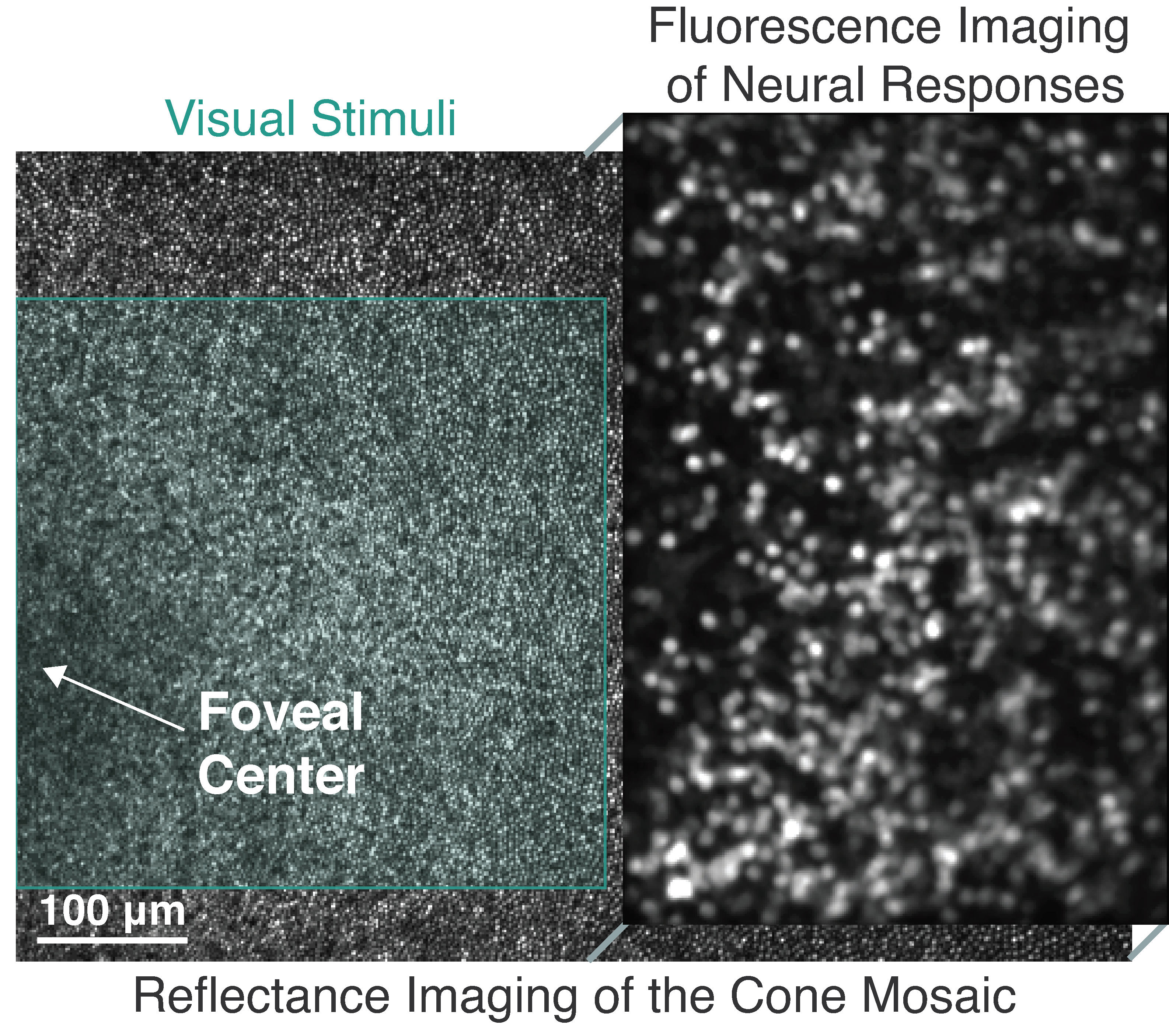
Sara S. Patterson, Ph.D., is an Assistant Professor in the Department of Ophthalmology and a Joint Assistant Professor in the Department of Neuroscience at the University of Rochester School of Medicine and Dentistry (SMD). Her research focuses on understanding retinal ganglion cell diversity and their roles in visual processing. She leads the Patterson Lab at the Flaum Eye Institute and Del Monte Institute for Neuroscience, specializing in adaptive optics imaging, connectomics, and retinal circuit analysis. Her work explores how neural circuits mediate visual perception and degeneration, with implications for retinal prosthetics and disease treatment. Dr. Patterson earned her Ph.D. in Neuroscience from the University of Washington (2020) and a BS in Neuroscience from Dickinson College (2014). She completed a postdoctoral fellowship at the University of Rochester with Dr. David Williams (2020–2024). She has been recognized with awards including the Young Investigator Award (2022) and the Steadman Family Postdoctoral Prize (2021). Her research investigates the structure and function of rare retinal ganglion cells, degeneration mechanisms in cortical blindness, and the role of retinal inputs in visual perception. Techniques include adaptive optics for in vivo imaging, serial block-face SEM for connectomics, and computational modeling. The lab collaborates with the Advanced Retinal Imaging Alliance (ARIA) and focuses on translating findings to human health. Lab Affiliations: Flaum Eye Institute, Del Monte Institute for Neuroscience Key Projects: Foveal ganglion cell physiology, retinal degeneration modeling, and non-invasive imaging tools Dr. Patterson’s lab is actively hiring graduate students, postdoctoral fellows, and undergraduates interested in neuroscience, engineering, or computational methods. Her work bridges basic science and clinical applications, aiming to improve therapies for vision disorders.