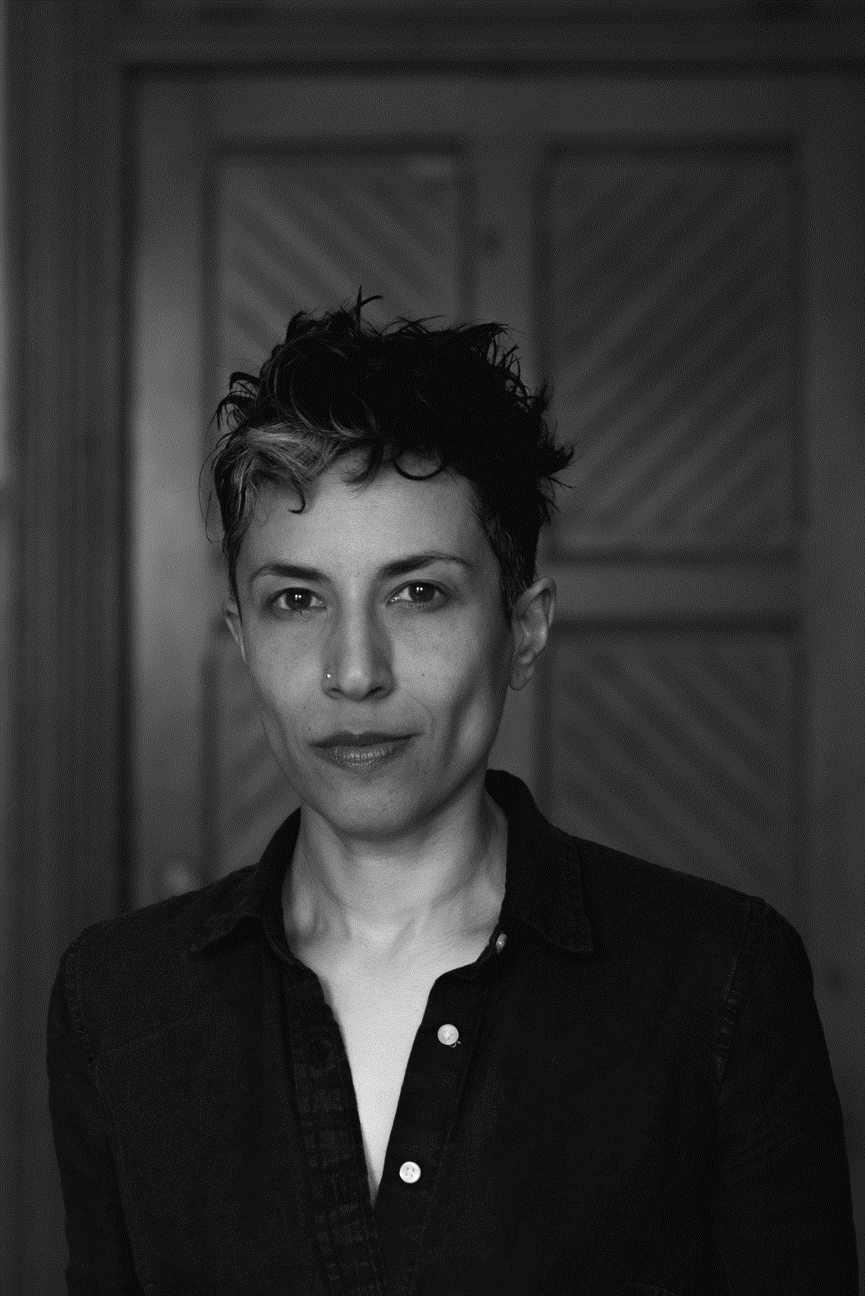
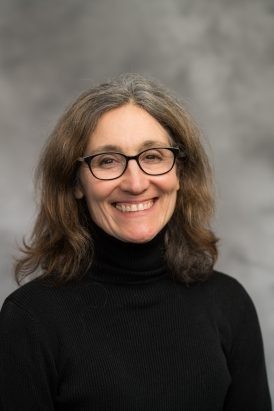
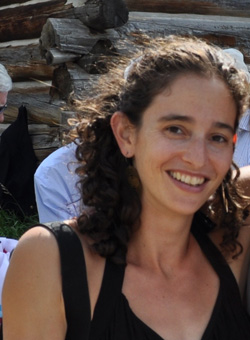
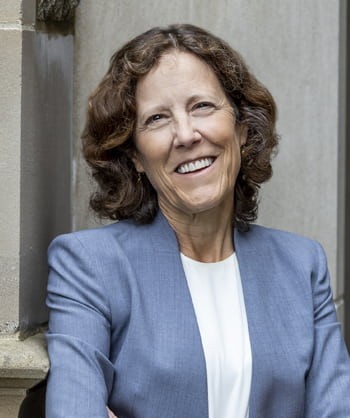
Professor Helen Finch (University of Leeds) is a leading scholar in German Literature , with a focus on Holocaust Studies , Queer Memory , and German-Jewish Cultural Production . Affiliated with the School of Languages, Cultures and Societies and the Centre for Jewish Studies , she co-leads the LCS Queer Area Studies Network and contributes to equality initiatives through the LGBT+ staff network . Research: Holocaust representation in German works, queer identity in postwar literature, transnational memory studies, curriculum design in German studies Awards: Fellow of the Higher Education Academy (2014) Academic Output : Her 15 most recent publications span Holocaust poetics , queer life writing , translation ethics , and Sebaldian intertextuality , with a particular focus on intersections between trauma , identity , and intergenerational testimony . Supervision : Currently guides PhD research on topics including transnational transphobia , queer art practices , and LGBTQ+ cross-cultural representation . Her students explore areas from German exile photography to postcolonial queer narratives .
Eric Y. Drogin is an Adjunct Professor and Honorary Professor with dual expertise in clinical psychology and law. He is affiliated with Harvard Medical School, serving on the staff of the Forensic Psychiatry Service at Beth Israel Deaconess Medical Center, and is involved in the Harvard Longwood Psychiatry Residency Training Program. He also teaches at the University of New Hampshire School of Law and lectures internationally at Prifysgol Aberystwyth (formerly University of Wales) in both Psychology and Law. His work integrates mental health and legal systems through research, education, and practice. Education: Doctor of Philosophy (Ph.D.) in Clinical Psychology – Hahnemann University Juris Doctor (J.D.) – Villanova University School of Law Dr. Drogin's research interests center on the intersection of psychology, psychiatry, and law, particularly in forensic assessment, expert testimony, ethics, and mental disability law. His work emphasizes multidisciplinary approaches to legal and clinical challenges, supporting both mental health professionals and attorneys. He regularly presents continuing education seminars across North America, Europe, Asia, and Australia. His scholarly publications span criminal and civil law applications of psychological evidence, guardianship evaluation, forensic assessment standards, and the role of mental health professionals in court. These works reflect a consistent focus on improving legal processes through scientific rigor and ethical practice. Scientific Honors and Professional Recognition: Fellow of the American Psychological Association Fellow of the American Academy of Forensic Psychology Diplomate, American Board of Forensic Psychology Diplomate, American Board of Professional Psychology Life Fellow, American Bar Foundation Dr. Drogin has held leadership roles in major professional organizations, including President of the American Board of Forensic Psychology, Chair of APA committees on Legal Issues and Professional Practice, and Co-Chair of the ABA’s Behavioral & Neuroscience Law Committee. He serves as Editor-in-Chief of The Journal of Psychiatry & Law and has co-authored over 250 publications. While formal student advising is not detailed, his instructional roles in residency programs and trial workshops indicate active mentorship. He is a key figure in advancing forensic psychology through education, policy, and interdisciplinary collaboration.
Dr Stella Bolaki is Reader in American Literature and Medical Humanities at the School of English, University of Kent, and Co-Director of the Centre for Health and Medical Humanities. She has been a faculty member since 2011, after holding positions at the University of Glasgow and the University of Edinburgh, where she also held a postdoctoral fellowship at the Institute for Advanced Studies in the Humanities (IASH). Her educational background includes a BA from Athens and an MSc and PhD from the University of Edinburgh. BA, Athens MSc, University of Edinburgh PhD, University of Edinburgh Stella’s research spans interdisciplinary fields including contemporary American literature, medical humanities, disability studies, and Black feminist theory. Her work critically examines narratives of illness, chronic conditions, self-care, and the intersection of art and health. She has pioneered research on artists’ books as tools for wellbeing, testimony, and community engagement, particularly in contexts of trauma and social injustice. Her recent publications and projects reveal a consistent focus on expanding narrative forms in medical humanities—moving beyond traditional literary modes to include photography, performance, film, and digital storytelling. Themes of inequality, mental health, climate anxiety, and embodiment recur across her work, especially in her ongoing monograph on self-care. Fellow of the Higher Education Academy Wellcome Trust funding recipient British Academy funding recipient Research England grant awardee Kent’s AHRC Impact Acceleration Account funding Stella supervises doctoral research across a wide range of interdisciplinary topics and has co-supervised a CHASE-funded project on health zines. She contributes to teaching in American literature and medical humanities at the Kent and Medway Medical School. Her professional service includes editorial roles for Contemporary Cultural Studies in Illness, Health and Medicine and the Journal of Literary & Cultural Disability Studies , and leadership in the Eastern Arc Medical and Health Humanities Network and the Kent Medical Humanities Network. She leads public-facing research through creative workshops, exhibitions, and events such as ‘Artists’ Books and the Medical Humanities’ and ‘Mending the Psyche: Art as Reparation’, often in collaboration with NHS partners and community organizations.
Rev. Dr. hab. Waldemar Żurek, Professor at the John Paul II Catholic University of Lublin, serves at the Center of Ecclesiastical Archives, Libraries and Museums (ABMK) within the Faculty of Theology. His academic career spans decades of dedicated research and publication in church history, particularly focusing on Eastern European Catholicism and the Salesian Order. As an active scholar, he continues to contribute significantly to ecclesiastical documentation and historical research. Professor Żurek's research interests center on ecclesiastical archives, parish documentation, and the history of religious orders, with particular emphasis on the Salesian Order's activities in Poland and Eastern Europe. His work explores the intersection of religious life with historical events, particularly during challenging periods like the communist era in Poland. He has developed expertise in analyzing parish inventories, visitation records, and chronicles to reconstruct religious life and administration across different historical periods. His extensive publication record demonstrates a consistent focus on documenting church history through meticulous examination of primary sources. The most recent works reveal trends toward comprehensive chronicles of religious institutions, detailed parish records analysis, and biographical studies of clergy members. His research spans multiple disciplines including religious studies, historical documentation, and Eastern European studies, with particular attention to regions like Pinsk, Lutsk, and Volhynia that have complex religious histories across changing political borders. Scientific Awards: Gold Medal for Long Service Professor Żurek has supervised numerous diploma theses including master's work on topics such as 'Social activities of Bishop Adolf Piotr Szelążek.' His editorial work includes significant publications like 'Kult Matki Bożej Ostrobramskiej w historii narodu polskiego' (The Cult of Our Lady of the Gate of Dawn in the History of the Polish Nation) and 'Ojciec Profesor Henryk Damian Wojtyska 1933-2009. Pasjonista, historyk Kościoła i dydaktyk' (Father Professor Henryk Damian Wojtyska 1933-2009. Passionist, Church Historian and Educator). He serves on the Scientific Council of the biannual journal 'Archives, Libraries and Church Museums' and is a member of the Theological Society of Józef Bilczewski in Ukraine. His work with the Center of Ecclesiastical Archives, Libraries and Museums represents a significant contribution to preserving and analyzing religious heritage. Through his leadership and scholarship, Professor Żurek has helped establish important methodologies for working with ecclesiastical documentation and has fostered international collaboration in church historical studies, particularly between Polish and Ukrainian scholars.
Ana Paulina Lee is an Assistant Professor of Writing and Digital Humanities in the Comparative Literature, English, and Creative Writing Department at the American University of Paris. She joined AUP in 2025 after teaching Latin American literature and culture at Columbia University for eight years and serving as a Mellon Postdoctoral Fellow at Tulane University. Her interdisciplinary scholarship bridges literature, history, law, and urban studies with particular focus on marginalized narratives in the Americas. Ph.D. from University of Southern California M.A. from New York University B.A. from Binghamton University Professor Lee's research examines how stories—archival, fictional, oral—shape legal imagination, social life, and urban experience in the Americas. She specializes in the intersections of magic, law, and literature in Latin America, with particular focus on Asian and African diasporas in Brazil. Her work traces how narrative functions as both historical record and catalyst for social transformation, exploring themes of slavery, emancipation, colonial legacies, and urban memory. She approaches these topics through interdisciplinary lenses combining literary analysis with histories of labor, migration, and performance. Lee's recent publications reveal a consistent focus on marginalized narratives and their impact on social structures. Her scholarship connects legal history with cultural production, showing how magical thinking and narrative practices shape urban spaces and social relations. Works like 'Urban Sorcery, Segregation, and Spectacle in Twentieth-Century Rio de Janeiro' and 'Black Magic City' demonstrate her innovative approach to understanding the relationship between occult logics and legal frameworks in Brazilian contexts. Her research on diasporic communities, particularly Chinese and Japanese experiences in Latin America, contributes significantly to transnational and comparative race studies. David B. Larson Fellowship in Health and Spirituality, Kluge Center, United States Library of Congress (2025-2026) National Endowment for the Humanities Fellowship (2025) Social Sciences Research Council, Inaugural Recipient of Interdisciplinary Projects in the Social Sciences (2020-2023) Institute for Ideas and Imagination Fellowship, Columbia University in Paris, France (2021-2022) Provost's Tsunoda Senior Fellowship, Visiting Scholar, Waseda University, Tokyo, Japan (2019) Heyman Center Fellow, The Heyman Center for the Humanities, Columbia University (2017-2018) Fulbright, Lisbon, Portugal (2013-2014) Professor Lee's scholarly activities have been generously supported by major research grants from the National Endowment for the Humanities, the Social Sciences Research Council, and the Library of Congress. Her work demonstrates a commitment to interdisciplinary approaches that bridge humanities and social sciences, particularly through projects examining intersections of race, migration, and cultural production in the Americas. Her publication 'Socially Engaged Oral History Pedagogy Amid the COVID-19 Pandemic' indicates a strong commitment to innovative teaching methods and community-based research. While specific details about current advisees aren't provided, her research program suggests engagement with graduate students interested in diaspora studies, urban history, and literary-cultural analysis. Though not explicitly mentioned in the available information, Professor Lee's research on urban spaces, magic, and law in Brazil likely involves collaborative work with scholars across disciplines. Her participation in centers like the Institute for Ideas and Imagination at Columbia University suggests engagement with interdisciplinary research communities focused on global cultural production and social transformation. Her work contributes to ongoing conversations about how narrative practices shape legal frameworks and social structures in the Americas, particularly regarding racial formation and diasporic experiences.
Natalia Villanueva-Nieves is an Assistant Professor in the Department of Chicana and Chicano Studies at Sonoma State University. Her interdisciplinary scholarship bridges literary studies, affect theory, and digital humanities, with a focus on Latinx, Chicanx, Central American, and Caribbean expressive cultures. Her academic background includes a doctoral degree in Chicana and Chicano Studies from the University of California, Santa Barbara, and a master’s in Comparative Literary Studies from Utrecht University. Dr. Villanueva-Nieves' research explores Latinx emotional geographies, transnational feminisms, hemispheric race studies, and digital storytelling. She investigates how affect, space, and racialization intersect in Latina narratives, particularly through relational and hemispheric frameworks. Her work emphasizes collective archives of care and hope in Latinx testimonial writing. Her recent publications reflect a strong trend toward interdisciplinary and public-facing scholarship, combining literary analysis with digital tools and social justice engagement. The articles span themes such as affective spaces, digital archives, transnational feminisms, and geocritical approaches to Latinx literature. Her scholarly work has appeared in Chiricú Journal , Ex-Centric Narratives Journal , Zócalo Public Square , American National Biography , Aztlán: A Journal of Chicano Studies , and edited volumes from UNAM and the University of Alcalá de Henares. Dr. Villanueva-Nieves is currently developing a digital monograph that uses interactive maps and digital storytelling to present Latinx testimonial writing as living archives. She is also completing her book The True Colors of Feeling Brown: Affect and Space in Latina Narratives , under contract with Palgrave in the Geocriticism and Spatial Literary Studies series.
Naisargi N. Dave is a Professor in the Department of Anthropology at the University of Toronto. Her work spans sociocultural anthropology, queer theory, and animal studies, with a regional focus on India. She is affiliated with the Centre for South Asian Studies and the Bonham Centre for Sexual Diversity Studies. PhD, University of Michigan (2006) Research interests include interspecies ethics, affect theory, and the politics of imagination in South Asia. Her ethnographic work explores how activists navigate legal systems, emotional exhaustion, and intersectional inequalities. She has published extensively on queer communities and animal rights in India, arguing for ethics of indifference and creative relationality. Key awards: 2024 Gregory Bateson Prize for Indifference , 2013 Ruth Benedict Prize for Queer Activism in India , and an honorable mention for the Ruth Benedict Prize for her latest book. Advises graduate students in queer anthropology and animal activism Teaches courses on animality, literary anthropology, and affect Current projects include a book titled Murder: The Social Life of Violent Death in Queer India , examining violence against queer communities.
Lisa Lowe is the Samuel Knight Professor of American Studies at Yale University, with affiliate appointments in the Programs in Ethnicity, Race, and Migration and Women's, Gender, and Sexuality Studies. She has previously taught at the University of California, San Diego, and Tufts University, establishing a distinguished interdisciplinary career in American Studies, Comparative Literature, and critical race theory. Education: Stanford University – European Intellectual History University of California, Santa Cruz – French Literature and Critical Theory Lowe's research focuses on the intersections of colonialism, race, immigration, and globalization. Her work critically examines how liberal modernity is built upon racial capitalism, settler colonialism, and transnational displacement. She is a leading voice in transnational feminism and Asian American studies, analyzing how immigrant subjects are constructed as 'perpetual foreigners' within national cultures. Her scholarship bridges literary analysis, historical critique, and political theory to interrogate the legacies of empire. Her recent publications show a sustained engagement with the entanglements of liberalism, empire, and intimacy across continents. Themes include racial capitalism, the transpacific, feminist resistance, and the cultural politics of globalization. Her work consistently challenges disciplinary boundaries and calls for a rethinking of American Studies through a global and decolonial lens. Scientific Awards and Honors: Guggenheim Fellow American Council of Learned Societies Fellow Rockefeller Foundation Fellow Mellon Foundation Fellow UC Humanities Research Institute Fellow University of California President's Faculty Research Fellow (2011–12) Visiting Fellow, School of Advanced Study, University of London F. Ross Johnson-Connaught Distinguished Visitor, Munk School of Global Affairs, University of Toronto (2012) Carl Bode - Norman Holmes Pearson Award (2018) Richard A. Yarborough Prize (2018) Finalist, John Hope Franklin Award (2016) Nicolás Guillén Outstanding Book Award (2018) 1997 Book Award in Cultural Studies, Association for Asian American Studies Lowe has been a mentor to numerous scholars, particularly from underrepresented backgrounds, recognized by the Richard A. Yarborough Prize. She has received multiple grants and fellowships supporting her research, including from the Mellon, Rockefeller, and Guggenheim Foundations. She co-convened the Mellon Sawyer Seminar 'Comparative Global Humanities' at Tufts and has been an Affiliate Scholar at the Boston Psychoanalytic Society and Institute (2022–2023). She has also served as a visiting fellow and speaker at numerous international institutions, indicating sustained collaborative and advisory engagement. Lowe co-edits the influential book series Perverse Modernities with Jack Halberstam at Duke University Press, shaping contemporary critical theory. She has also co-edited special issues and volumes that have advanced the field of Asian American Studies. Her scholarly network includes leading institutions across the U.S. and globally, and she continues to be a central figure in interdisciplinary humanities.
Prof. Dr. Ulrich Mücke is Professor of Latin American and Iberian Peninsula History at the University of Hamburg , Faculty of Humanities, Department of Global History. His research focuses on Latin America's political culture, self-testimony, and colonial/postcolonial memory. Education: Studied history, political science, and philosophy at University of Hamburg (1988-1994) Doctorate at University of Hamburg (1997) Research interests span Latin America's political systems, autobiographical writing in colonial contexts, and transnational migration. His 2025 work examines Peruvian memory politics post-civil conflict, while 2024 collaborative research investigates Cuban contract workers in GDR. Earlier articles analyze voting patterns, conservative thought, and indigenous representation. Key trends in his 15 most recent publications include: 19th-century political culture in Peru, colonial self-representation, conservative ideologies in Iberian Atlantic, German-Peruvian migration, and critical analysis of historical textbooks. Notable keywords: Political History , Autobiography , Migration Studies , Colonialism . Awards: Kurt-Hartwig-Siemers-Prize (1997) from Hamburg Scientific Foundation Current work includes editorial leadership of the Yearbook for Latin American History and a 2025 lecture series on international cooperation.
Christi Merrill is a Professor of South Asian Literature and Postcolonial Theory, and Chair of the Department of Comparative Literature at the University of Michigan. She holds a joint appointment in Asian Languages and Cultures. Her research focuses on translation studies, South Asian literature, and postcolonial theory, with notable work on Dalit narratives and human rights through literary translation. She earned a Ph.D. in Comparative Literature from the University of Iowa, alongside M.F.A. degrees in Translation and Nonfiction Writing. Affiliations: Center for South Asian Studies, Program in International and Comparative Studies (PICS) Key Awards: A.K. Ramanujan Award for Translation (2012), NEH Senior Fellowship (2013-14) Her research bridges theory and practice, emphasizing the role of translation in mediating cultural and political discourses. Recent projects include analyzing first-person narratives of injustice across languages and translating Kausalya Baisantry’s Dohara Abhishap , a Dalit woman’s life story. Teaching specialties include world literature, South Asian cultural studies, and courses integrating digital tools for intercultural education. She developed the Translating Human Rights course, which uses student-created online journals to explore literary representations of rights issues.
Pilar Riaño-Alcalá is a Professor at the Social Justice Institute (SJI) within the Faculty of Arts at the University of British Columbia (UBC). She is also a Faculty Associate in the Department of Anthropology at UBC and a Senior Fellow at the Maria Sibylla Merian Center for Advanced Latin American Studies (CALAS). As co-lead of the Transformative Memory International Network, she directs major SSHRC-funded research on memory, violence, and social repair. Her academic and public intellectual work is deeply collaborative with Black and Indigenous communities in Colombia and transnational peace initiatives. Fields of Research: Witnessing and lived experiences of political violence, war, and genocide Landscapes and practices of memory and social repair Ecologies of absence and presence in memory work Epistemic justice and relational methodologies Sound memory, oral history, and social practice art Forced migration and transnational diaspora organizing Her recent publications reveal a consistent focus on transformative memory, especially through the voices of marginalized communities such as the Wayuu and the cantadoras of the Atrato River. Her work bridges academic research with public art, most notably through her two-decade collaboration with artist Suzanne Lacy on The Skin of Memory . The thematic trends in her articles show a deep commitment to decolonial methodologies, community-based knowledge production, and the integration of artistic practices in memory and justice work. Scientific Awards: Senior Fellow, CALAS, 2021 Academic Writing Fellow, Bellagio Center, Rockefeller Foundation, 2019 Faculty Fellow in Residence, Liu Institute for Global Issues, UBC, 2009–2015 Advising and Grants: Riaño-Alcalá has supervised numerous PhD and MA students at UBC, focusing on themes of decolonial solidarity, environmental justice, and memory. She currently leads three major research projects: Transformative Memory: An International Network (SSHRC Partnership Grant), Exhumations and Burial in Colombia , and Sacred Responsibilities to Water: Indigenous Knowledge Exchanges, Canada-Colombia . Her advising reflects a strong commitment to interdisciplinary, community-engaged scholarship, particularly with Indigenous and diasporic communities. Labs and Networks: She co-directs the Transformative Memory International Network, a transnational research collective that fosters collaborative memory practices across Latin America, Canada, and Europe. Her work is deeply embedded in community-university partnerships and public scholarship, including multimedia exhibitions and collaborative publications.
Marta Caminero-Santangelo is a Professor in the Department of English at the University of Kansas. Her work bridges literary criticism with social justice activism, focusing on U.S. Latinx literature, trauma narratives, and the role of storytelling in immigrant rights movements. Research: Literature’s role in social change, especially for marginalized communities Teaching: Courses on Latinx literature, social justice, and 20th-century American literature Service: Community engagement with immigrant rights organizations Her scholarship analyzes how narratives by undocumented immigrants, DREAMers, and Afro-Cubans challenge power structures and foster solidarity. She has published extensively on topics including testimonio, border-crossing trauma, and panethnic identity construction. Recent publications examine life-writing by undocumented youth, the evolution of the Sanctuary Movement, and intersections of religion with migration activism. Her work combines literary theory with empirical engagement, emphasizing the relevance of cultural analysis to real-world social struggles.
Adrienne Cohen is an Associate Professor in the Department of Anthropology and Geography at Colorado State University, affiliated with the College of Liberal Arts. Her research focuses on the intersections of aesthetics, politics, and urban life in Africa, particularly through ethnographic studies of dance and performance in Guinea. She currently explores rock climbing as a lens for understanding environmental knowledges and kinesthetic practices, supported by the Wenner-Gren Foundation. Education: Ph.D. (2016), M.Phil (2013) in Sociocultural Anthropology from Yale University; M.S.Ed. (2005) in TESOL from Long Island University; B.A. (2001) in International Studies from Pitzer College. Research Interests: Aesthetics and politics, African studies, urban theory, embodiment, environmental knowledges, qualitative methods. Notable works include Infinite Repertoire (2021), analyzing dance in postsocialist Guinea, and recent articles on rock climbing ethnography and feminist testimony. Teaching: Courses span cultural anthropology foundations, African urban studies, ethnographic writing, and contemporary theory. She advises graduate students in cultural anthropology focusing on embodiment, performance, environmental studies, and the Anthropocene. Advising & Grants: Actively mentoring MA/PhD students; her current project on rock climbers has received Wenner-Gren Foundation support. She emphasizes collaborative, fieldwork-driven research. Labs/Teams: Engages in transnational ethnographic collaborations, particularly in Guinea and climbing communities. Her work bridges urban African studies with emerging environmental anthropology frameworks.
Zoe Norridge is a Reader in African and Comparative Literature and Visual Studies at King's College London's Department of English Language & Literature. She serves as Department Impact Lead (2022-present) and previously held the position of Pro-Vice Dean for Impact in Arts & Humanities (2020-21). Her work focuses on contemporary arts and cultural responses to the 1994 genocide against the Tutsi in Rwanda, involving extensive collaboration with artists and genocide survivors. Her educational background includes a Doctor of Literature from SOAS University of London (2007), Master of Philosophy from the University of Cambridge (2001), and Bachelor of Arts from the University of Cambridge (2000). Before her academic career, she worked in health promotion with NGOs in the UK and Papua New Guinea. Norridge's research centers on African literature and photography, pain, memory, trauma, testimony, empathy, cultures of human rights, comparative approaches to genocide, and collaboration, community and love. She has developed significant expertise in Rwandan testimonial literature and visual culture, with fifteen years of research culminating in her forthcoming monograph Inside/Out Rwanda: Literature, Photography, Genocide and the Testimony of Place . Her publications demonstrate consistent engagement with Rwandan genocide testimony, human rights cultures, and cross-continental connections, particularly between East Africa and Latin America. The recent publications show increasing focus on practical applications of her research through educational resources, trauma-informed guidelines, and community co-production. BBC AHRC New Generation Thinker (2011-12) Award-winning radio documentaries: Living with Memory in Rwanda (BBC Radio 3, 2014) and Rwanda's Returnees (BBC Radio 4, 2019) Longlisted for the Women's Prize Discoveries Prize for emerging creative writers (2022) Associate Editor at Wasafiri magazine (2014-present) Member of Holocaust Memorial Day Trust expert advisory group (2017-present) Norridge has secured significant funding for collaborative work in Rwanda, including AHRC grants for 'Stories from Rwanda' and 'Rights for Time.' These projects have supported co-production of teaching resources, school guidelines, trauma-informed survivor speaker guidelines, policy briefings, and creative workshops. She teaches undergraduate courses on contemporary African love stories and testimony in the context of the Holocaust and Rwanda, as well as an MA module on human rights cultures, with a Certificate in Group Facilitation from the Gestalt Centre (2024) enhancing her approach to teaching emotionally demanding topics. Her collaborative work extends to professional and participatory photography workshops in Kigali, Gisenyi and Musanze (2013, 2015, 2019, 2022), co-curating exhibitions, and programming events for the Kigali Photo Fest (2019). These initiatives form a cohesive team approach to engaging with Rwandan memory culture through multiple artistic and academic channels.
Amy Boesky is a Professor in the Department of English at Boston College, where she also directs the Minor in Medical Humanities, Health and Culture. Her academic work bridges literary studies and biomedical discourse, with a focus on personal narratives of illness, genetics, and identity. Education: A.B., Harvard College M.Phil. in Renaissance English, University of Oxford Ph.D., Harvard University Amy Boesky’s research centers on Medical Humanities and creative nonfiction , particularly memoirs related to hereditary cancer and genetic identity. She explores how individuals narrate experiences of illness, selfhood, and biomedical knowledge from the early modern period to the present. Her work connects historical literary traditions with contemporary personal writing, especially in the context of breast cancer and BRCA narratives . She is deeply engaged in narrative medicine and the role of testimony in healing and understanding. Her publications reflect a strong interdisciplinary trend, combining literature, ethics, and medicine. The themes across her recent works include witnessing, repair through writing, genetic identity, and the evolution of self-representation in medical contexts. These articles and books span journals in literature, women’s studies, and medical humanities. Scientific Awards: No awards listed in the provided text. Amy Boesky advises students through her role as director of the Medical Humanities minor and through her creative writing mentorship. While specific advisees are not listed, her editorial and authorial work suggests active engagement in guiding emerging narratives in medicine and literature. There is no mention of external grants in the provided material, but her publications and leadership in a growing interdisciplinary program indicate scholarly impact. She is affiliated with Boston College’s English Department and contributes to the development of the Medical Humanities curriculum. Her work fosters connections between literary analysis and personal health narratives, positioning her as a key figure in integrating humanities into medical discourse.