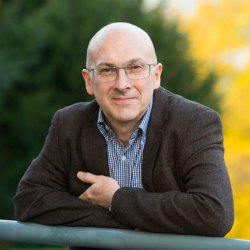
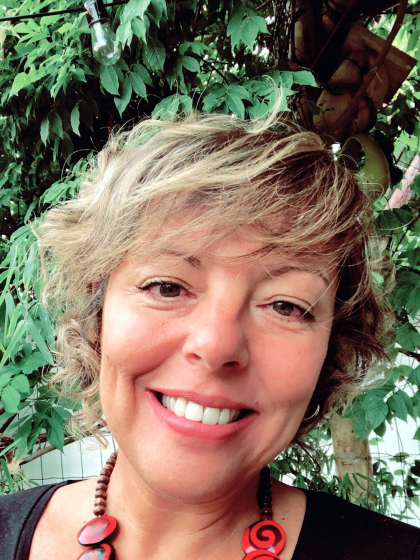
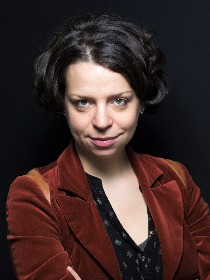
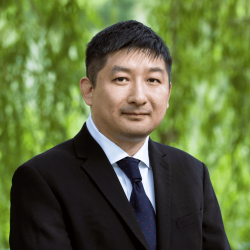
Associate Professor Peng Zhang is affiliated with the School of Life and Environmental Sciences and the Plant Breeding Institute at the University of Sydney. She holds memberships in the China Studies Centre and Sydney Institute of Agriculture. Her educational background includes a BSc from Wageningen Agricultural University (Netherlands), MSc in Biotechnology (Wageningen), and PhD in Genetics from Kansas State University (USA). Her research focuses on molecular cytogenetics of wheat, introgression of rust resistance genes from wild relatives, and developing durable resistant germplasm. Key research interests include cereal crop improvement, rust pathogen resistance mechanisms, and genomic tools for plant breeding. Notable awards include the 2023 Sydney Research Accelerator (SOAR) Prize. Recent grants involve rust resistance mechanisms and hybrid wheat breeding programs in collaboration with international partners. Publications highlight work on resistance gene characterization, molecular mapping, and disease management strategies. Collaborative research with institutions like Kansas State University and international bodies underscores her global impact in agricultural science.
Andrea Rocco is an Associate Professor in Physics and Mathematical Biology and Head of the Quantum Sciences Research Group at the University of Surrey. He holds affiliations with the School of Mathematics and Physics and the Centre for Mathematical and Computational Biology. Rocco earned his PhD in Physics from the University of North Texas (1998) and held postdoctoral positions at the University of Barcelona, University of Rome La Sapienza, CWI (Netherlands), and the University of Oxford. His research bridges theoretical physics (quantum mechanics, open systems, decoherence) and biological physics (stochastic dynamics in living systems, gene networks). Educations: BSc in Physics, University of Pisa (1994) PhD in Physics, University of North Texas (1998) Research Interests: His work explores quantum-classical transitions, quantum thermodynamics, and noise-induced phenomena in biological systems. Recent grants include a US$3M award for studying time and life. He is a Fellow of the Royal Society of Biology and the Higher Education Academy. Awards: Member of the Institute of Physics (MInstP) Fellow of the Higher Education Academy (FHEA) Fellow of the Royal Society of Biology (FRSB) Advising & Grants: Rocco leads the Quantum Sciences Group and has supervised postdoctoral researchers like Thomas Guff. His grants include major funding for interdisciplinary quantum-biological research. Labs/Teams: Head of the Quantum Sciences Research Group at Surrey, integrating theoretical physics and computational biology.
Joana Falcao Salles is a Professor in the Faculty of Science and Engineering at the University of Groningen, leading the Salles Lab focused on Microbial Community Ecology. Her research integrates ecological and evolutionary theories to understand microbial community formation and their environmental impacts. She holds a PhD from Leiden University (2005) and has held academic positions since 2008. She serves as Treasurer on the Executive Board of the International Society for Microbial Ecology (ISME). Her expertise spans microbial ecology in soils, plants, and animals, with a focus on microbial diversity, invasion dynamics, and symbiotic relationships. Key projects include studying salt marsh microbiomes, plant-microbe interactions in agriculture, and the role of microbiomes in host immunity. She has secured grants for initiatives like PotatoMETAbiome and INSECTFEED, advancing sustainable agriculture and circular economy solutions. Salles has published over 150 peer-reviewed articles, with recent work on microbial solutions to climate change, antibiotic resistance, and gut-brain axis interactions. Her lab collaborates globally, addressing challenges in environmental sustainability and public health.
Nathalie Katsonis is a Professor of Chemistry at the University of Groningen, affiliated with the Faculty of Science and Engineering and the Molecular Active Systems department within the Stratingh Institute of Chemistry. Her research focuses on understanding and designing active molecular systems inspired by biological mechanisms, emphasizing the transmission of movement across molecular to macroscopic scales, particularly in liquid crystals, supramolecular chemistry, and molecular machines. She holds a Ph.D. in Chemistry from Sorbonne Université (2004), followed by postdoctoral research at the University of Groningen (2004–2007) and a Veni Fellowship (2009–2011). Prior to her current position, she held academic roles at the University of Twente, including Professor, Associate Professor, and Assistant Professor from 2011–2020. Her research explores molecular motion mechanisms, chirality control, and the creation of functional materials like light-responsive polymers and self-actuating systems. Key contributions include studies on rotaxane-based liquid crystal switches and macroscopic motion driven by molecular dynamics. She leads an international research group and chairs committees such as the Binding Study Advice Commission (FSE) and the Van't Hoff Foundation. Notable awards include the Professor-Werdelmann Award (2022), Koninklijke Hollandsche Maatschappij der Wetenschappen membership (2021), and an ERC Consolidator Grant (2017). Her work bridges fundamental science and applications in soft robotics, smart materials, and origins-of-life research.
Professor Jin Xuan is the Associate Dean (Research and Innovation) at the University of Surrey's Faculty of Engineering and Physical Sciences, and holds a Chair in Sustainable Processes. He is also a Turing Fellow at the Alan Turing Institute. Previously, he led the Department of Chemical Engineering at Loughborough University. His research focuses on net-zero energy, circular economy, and sustainable development through AI and engineering innovations. He has pioneered Energy and AI as an interdisciplinary field, leading advancements in multiscale predictive models for energy systems and low-carbon solutions. Roles: Associate Dean, Professor of Sustainable Processes, Turing Fellow Affiliations: University of Surrey, Alan Turing Institute Prior Position: Head of Chemical Engineering, Loughborough University His research interests span AI-driven energy systems, CO2 capture/utilization, and renewable energy devices like fuel cells and electrolysers. He has developed novel models for complex systems and co-founded journals such as Energy and AI. He leads the UKRI CircularChem Centre, recognized with the IChemE Global Sustainability Award (2023). Awards: Philip Leverhulme Prize (2022), Beilby Medal (2020) Professor Xuan’s work bridges academia and industry, emphasizing ethical and policy frameworks in energy systems. He advises on grants and collaborates globally, fostering innovation in digital twins and sustainable technologies.
Professor Linda Newnes is a faculty member in the Department of Mechanical Engineering at the University of Bath, leading the Made Smarter Innovation: Centre for People-Led Digitalisation (£5M) and the TRansdisciplinary ENgineering Design (TREND) research group (£1.8M). Her work focuses on transdisciplinary engineering, whole life value analysis, and sustainable manufacturing. She directs The Foundry: Centre for Digital, Manufacturing & Design, emphasizing people-centric digitalization and cross-sector collaboration. Her research integrates natural/social sciences and industry stakeholders to address challenges in aerospace, defense, and energy sectors. Notable projects include models for whole life value (cradle-to-cradle) and tools for transdisciplinary working. She actively promotes Equality, Diversity & Inclusion (ED&I), leading the University’s Aurora programme and Athena SWAN submissions. Recent publications explore digital skill premiums, transdisciplinary frameworks, and AR deployment challenges. She advocates Industry 5.0 principles, emphasizing human-centric innovation and resilience in socio-technical systems. Current grants focus on net-zero transitions and cellular agriculture manufacturing. Her advising spans doctoral students in transdisciplinary engineering, Industry 5.0, and future manufacturing. She collaborates with industry partners like Airbus and Innovate UK to advance cost estimation, decision support tools, and lifecycle analysis.
Christian Jacob is a Professor in the Department of Computer Science within the Faculty of Science at the University of Calgary . He holds a B.S. in Computer Science and a Doctor of Engineering Science from Erlangen University . His research focuses on nature-inspired algorithms, biocomputing, and agent-based simulations applied to biological systems and education. Key initiatives include the LINDSAY Virtual Human Project , which uses immersive virtual reality to explore human anatomy and physiology. He contributes to the university's strategic priorities in Digital Worlds and Health and Life initiatives. His work integrates evolutionary algorithms, cellular automata, and swarm intelligence into creative and medical applications. Notable achievements include the ASTech Award (2015) from Alberta Science and Technology. His projects emphasize interactive education through tools like LeukemiaSIM , Eukaryo , and the Giant Walkthrough Gut . Jacob also explores visualization techniques, such as evoVision3D and LifeBrush , to enhance scientific understanding. His research bridges computational methods with real-world applications in healthcare, architecture, and game design. Collaborative efforts include developing agent-based models for immune systems, nervous responses, and crowd behavior. Jacob's work spans interdisciplinary fields, blending computer science with biology, engineering, and the arts.
Daniel Beat Müller serves as Professor at the Industrial Ecology Programme within the Department of Energy and Process Engineering at the Norwegian University of Science and Technology (NTNU), Trondheim. His office is located at Realfagbygget Gløshaugen (E4-120) with contact details daniel.mueller@ntnu.no and +4791897755. His research centers on analyzing human needs in relation to material/energy flows and environmental impacts, with two primary focus areas: (i) urban evolution and associated material flows for managing building/infrastructure stocks, and (ii) national/global metal cycles to identify supply constraint reduction strategies. His methodology integrates design, modeling, and decision-making through transdisciplinary stakeholder engagement. Müller teaches Material Flow Analysis and Systems Analysis of the Built Environment for Industrial Ecology and Civil Engineering Master's students. His research outputs demonstrate strong trends in circular cities, critical mineral management, and urban metabolism, with recent publications emphasizing building information modeling, electric vehicle battery systems, and phosphorus cycling. His work consistently addresses resource criticality within energy transition contexts. As (ad interim) chair of the International Society of Industrial Ecology’s MFA-ConAccount section, he contributes to methodological standardization. He previously served on the U.S. National Research Council’s Committee on Defense Stockpiles and remains active in Switzerland's National Research Programme 65 "New Urban Quality". Müller supervises numerous Master's and doctoral students, with thesis topics spanning lithium-ion battery recycling, building stock dynamics, and urban resource flows. His projects frequently involve industry collaboration for practical implementation of material stewardship strategies.
Prof. Francesca Biagini is a Full Professor of Applied Mathematics at the University of Munich (LMU), leading the Department of Mathematics within the Faculty of Mathematics, Computer Science, and Statistics. She holds additional roles as Vice President for International Affairs and Diversity at LMU since 2019, and served as President of the Bachelier Finance Society (2022–2023). Her academic career includes professorships at LMU (since 2009) and prior roles at the University of Bologna and Leibniz University Hannover. She specializes in financial and insurance mathematics, focusing on asset pricing, systemic risk, and model uncertainty. Education: PhD in Mathematical Finance (Scuola Normale Superiore, 2001), Laurea in Mathematics (University of Pisa, 1997). She has advised over 14 PhD students and 180+ master/bachelor students, collaborating with institutions like Allianz, MunichRe, and SwissRe. Research: Biagini’s work bridges financial and actuarial mathematics, including stochastic processes, systemic risk modeling, and insurance frameworks. Notable contributions include modeling asset bubbles, xVA calculations, and liquidity-based frameworks. She has published extensively in journals like *Finance and Stochastics* and *Mathematical Finance*. Awards and Activities: Recipient of the Prinzessin Therese von Bayern Preis (2019) and Zonta Clubpreis (2015). She organizes international conferences, serves on editorial boards (e.g., *Mathematical Finance*), and chairs the Munich Risk and Insurance Center. Her research is funded by grants from BayernLB and LMU Excellence programs.
Konstadinos (Kostas) Goulias is a Professor of Transportation in the Department of Geography at the University of California, Santa Barbara (UCSB), where he has served since 2004. Previously, he held academic positions at Penn State University from 1991 to 2004, including roles as Associate and Full Professor of Transportation Engineering. His research focuses on transportation systems planning, travel behavior dynamics, activity-based modeling, GIScience, and spatial analysis of transportation data. **Education**: Ph.D. in Civil Engineering (Transportation), University of California, Davis, 1991 M.S. in Civil Engineering, University of Michigan, Ann Arbor, 1987 Laurea Magistrale in Engineering, University of Calabria, Italy, 1986 **Research Interests**: Transportation demand modeling and microsimulation Activity-travel behavior analysis Spatiotemporal analysis of mobility using big data GIScience applications in transportation Policy implications of emerging technologies (e.g., autonomous vehicles) **Key Contributions**: Co-founder and Editor-in-Chief of Transportation Letters Principal Investigator of $6.5M in research projects Authored/edited three books and over 350 peer-reviewed publications Led the development of the SimAGENT microsimulation framework Directed the GeoTrans Laboratory at UCSB since 2007 **Awards**: Pyke Johnson Award (2021, 2016) Best Paper Award (2021) Chair of TRB committees on traveler behavior and activity-based approaches **Grants/Students**: Supervised multiple graduate students in transportation and geography Managed projects with sponsors including USDOT, state agencies, and international organizations **Labs/Teams**: GeoTrans Laboratory: Focused on smart city planning and transportation innovation Collaborations with institutions globally, including Australia, Europe, and Qatar
Professor Mary Blair-Loy is a leading sociologist at the University of California San Diego, holding a Professorship in the Department of Sociology within the Division of Social Sciences. Her research focuses on gender, social inequalities, work-family dynamics, and diversity in STEM and corporate environments. She critiques cultural schemas like the 'work devotion schema' and 'schema of scientific excellence' that perpetuate inequalities. Notable works include Opting Back In and articles on faculty hiring bias, pandemic impacts on academia, and global work-hour disparities. Her research has been featured in Science , PNAS , and Trends in Microbiology . Education and professional background: No explicit details provided in text but inferred as top-tier academic credentials given her position. Research interests emphasize dismantling systemic barriers for women in academia and professions through evidence-based interventions. Publications span over two decades, addressing topics such as corporate leadership gender gaps, pandemic faculty challenges, and the moralization of merit in science. Her work bridges sociological theory with actionable policy recommendations for equity.
Victoria J. Gallagher is a Distinguished University Professor of Communication at North Carolina State University (NC State), affiliated with the Department of Communication within the College of Humanities and Social Sciences. She has been a faculty member since 1990 and previously served as Associate Dean of Graduate Studies and Academic Affairs (2008–2015). Her research focuses on rhetorical theory and criticism, communication ethics, civil rights discourse, and digital humanities. Notably, she leads the Virtual Martin Luther King Project, a major digital humanities initiative supported by the National Endowment for the Humanities. She has also contributed to projects on gender and communication in engineering teams and authored/co-edited works such as Communicative Cities in the 21st Century . Education: Ph.D. and M.A. in Communication Studies from Northwestern University (1990 and 1989), B.A. in Communication from Michigan State University (1983). Her research interests emphasize the intersection of rhetoric, materiality, and public spaces, particularly museums, memorials, and urban parks. She explores how these sites mediate public memory and civic engagement, blending rhetorical analysis with technology and community collaboration. Her work on public art and urban communication aims to enhance public life through communicative spaces and ethical discourse. Dr. Gallagher’s funded research exceeds $450,000, including grants from the NEH and Engineering Information Foundation. Her recent articles highlight themes like virtual reality in education, sonic rhetoric in digital projects, and the role of visual imagery in social movements. She is a sought-after speaker, delivering lectures at institutions like DePaul University and the University of Wisconsin, Milwaukee, and has been featured in media outlets such as the Washington Post and WUNC/NPR’s The State of Things . Awards: Alexander Quarles Holladay Medal of Excellence (NC State’s highest honor), Robert M. Entman award, Graduate Mentorship Award, and others. As a mentor, she has advised over 70 graduate students and received multiple teaching accolades. Her leadership roles include serving as president of the Southern States Communication Association (2017–2018) and on the Rhetoric Society of America’s Career Development Taskforce. She actively engages with community organizations, including the North Carolina Freedom Park Advisory Board and the former Exploris Children’s Museum. Her projects integrate digital technologies to recover historical narratives and foster civic engagement, such as the Virtual MLK Project and analyses of urban parks as communicative spaces. She also advocates for ethical communication practices in academia and urban development.
Dr. David Eggleston is an Alumni Distinguished Undergraduate Professor and Director of the Center for Marine Sciences and Technology (CMAST) at NC State University. He leads the Marine Ecology and Conservation program, focusing on fisheries ecology, habitat restoration, and deep-sea biology. His research integrates field observations, modeling, and molecular tools to address ecological theory and sustainable resource management. Eggleston holds affiliations with the Department of Marine, Earth & Atmospheric Sciences and serves on national/international advisory boards. His academic roles include teaching courses like Introduction to Oceanography and Marine Benthic Ecology . Eggleston’s research spans tropical to temperate marine systems, emphasizing interdisciplinary approaches linking biology, physics, and economics. Awards include NSF’s Early Career Award and recognition in teaching/outreach. Current students focus on topics like oyster reef acoustics, coral reef soundscapes, and blue crab habitat dynamics. Eggleston’s lab emphasizes graduate mentorship, fostering future leaders in academia and resource management. Outreach initiatives include Ecological Synergism and educational tools like The Blue Crab in NC . Collaborative projects involve NOAA, The Nature Conservancy, and international marine organizations.
Brynhildur Davíðsdóttir is a Professor in Environment and Natural Resources at the University of Iceland, jointly affiliated with the Department of Economics and the Department of Life- and Environmental Sciences within the School of Engineering and Natural Sciences. Her academic work bridges economics and environmental science, focusing on sustainability and resource policy. Education: Ph.D. in Energy and Environmental Studies, Boston University, 2002 M.A. in Resource and Environmental Management, Boston University, 1995 M.A. in International Relations, Boston University, 1995 Her research interests center on ecological economics and sustainable development, with strong emphasis on energy systems, environmental policy, and natural resource governance. She explores the economic dimensions of sustainability, including tools like ecological footprint analysis and the transition to renewable energy. Her interdisciplinary approach integrates environmental science with economic modeling and policy analysis. The available information does not include recent publications, but her teaching portfolio suggests a consistent focus on sustainability metrics, energy economics, and environmental policy frameworks. There are no listed scientific awards in the provided text. Brynhildur Davíðsdóttir is actively involved in academic mentoring and education, teaching both undergraduate and doctoral courses, including doctoral dissertation supervision. She contributes to academic training in sustainability and environmental economics. There is no mention of specific grants or funding projects in the provided text. There is no information about specific labs, research teams, or centers she leads or participates in.
Prof. Akshat Tanksale is a Professor in Chemical & Biological Engineering at Monash University, leading the Catalysis for Green Chemicals group. He specializes in heterogeneous catalysis for CO2 and biomass conversion into sustainable fuels/chemicals. His roles include Deputy Director of the ARC Research Hub for Carbon Utilisation and Recycling, and Carbon Theme Leader of the Woodside Monash Energy Partnership. Education: PhD (2008, University of Queensland) in nanomaterials/chemical reaction engineering, followed by postdoctoral research at UQ on biomass-to-fuels and hydrogen storage. Joined Monash in 2011. Research Focus: Innovating low/negative carbon emission technologies via catalyst design and CCU processes. Key areas include CO2 valorisation, biomass depolymerisation, and nanomaterials for energy storage (e.g., Zn-air batteries). His work aligns with UN SDGs addressing climate action and sustainable energy. Projects: Active in 11 projects (2021–2029), including leadership in carbon recycling via direct air capture and syngas conversion to acetic acid. Collaborates internationally on catalyst development and CO2 conversion. Awards: Multiple recognitions including Dean’s Award for Innovation (2020), Caltex Award (2018), and Australia-India Science & Tech Award (2010). Active in professional service, chairing IChemE Research Working Groups. Teaching: Offers courses CHE2162 (Mass/Energy Balances) and CHE3165 (Separation Processes).