Hakan Basarir is a Professor in the Department of Mining Engineering at the Norwegian University of Science and Technology (NTNU), Trondheim, Norway. His research and teaching focus on mining rock mechanics, rock mass characterization, underground support systems, and the application of soft computing methods in mining engineering. PhD in Mining Engineering (2002) 20+ years of research and teaching experience 60+ publications in journals and conferences Research Interests include rock mass property prediction using measurement while drilling (MWD) techniques, numerical modeling of mining structures, optimization of mine support systems, and sustainable material development. His work integrates machine learning and computational methods to address challenges in mining geomechanics and backfill design. Recent Publications highlight advancements in AI-driven lithology prediction, eco-concrete formulation, and backfill mixture optimization. He has also contributed to tunnel stability analysis and seismic rock slope modeling. Teaching includes advanced courses in mining engineering, mineral production modeling, and specialization projects in geotechnology.
Laura E. Martin, PhD, is a Professor in the Department of Population Health at the University of Kansas Medical Center (KUMC) and serves as the Executive Associate Director at Hoglund Biomedical Imaging Center. Her academic journey began with undergraduate training in psychology and dance at the University of Kansas, followed by a Ph.D. in psychology with an emphasis in cognitive neuroscience from Rice University, and a postdoctoral fellowship at KUMC. Dr. Martin is a cognitive neuroscientist whose research focuses on applying neuroimaging methods to understand health behaviors, particularly addictive behaviors such as smoking and eating. Her work examines self-regulation, impulsivity, reward processing, and decision making through functional neuroimaging techniques. As Executive Associate Director at Hoglund Biomedical Imaging Center, she provides technical expertise to investigators and trainees interested in incorporating neuroimaging into their research programs. Her collaborations span diverse areas including aging, depression, obesity, gambling, social neuroscience, decision-making, resting state fMRI, and neuroeconomics. Her research is currently funded by the National Institutes of Health, with a recent focus on using guided episodic future thinking to increase physical activity adherence and promote healthy brain aging among mid-life adults. Dr. Martin is passionate about mentoring students at all levels and sharing her enthusiasm for research methodology, critical evaluation of research, and appropriate method selection for specific research questions. Current research emphasizes health neuroscience examining how health behaviors change the brain and how the brain can be changed to change health behaviors Leads and contributes to team science approaches addressing complex research questions Helps conceptualize research projects and brings specialized data collection and analytic tools to interdisciplinary teams Dr. Martin has published extensively in high-impact journals, with recent work focusing on dementia prevention, neuroimaging methodology, eating disorders, addiction research, and physical activity interventions. Her approach combines cognitive neuroscience with practical applications for improving health behaviors across the lifespan. As an educator and mentor, Dr. Martin works with trainees from high school to faculty level, emphasizing the integration of neuroimaging research with broader research questions and training students in research methodology and critical thinking.
Dr. phil. habil. Alexandra Manske serves as an Acting Professor of Sociology at the University of Duisburg-Essen within the Faculty of Social Sciences, where she leads research and teaching activities at the Institute of Sociology. Her academic profile centers on work sociology, gender studies, and social inequalities, with particular expertise in cultural and creative industries. Her research interests include: Work sociology and transformations in labor relations Gender studies and inequalities in workplace structures Social inequalities and precarious work conditions Cultural and creative industries Contemporary work cultures and organizational practices Digital transformation's impact on labor Professor Manske's scholarly output reveals a consistent analytical focus on the paradoxes of creative labor, where glamour and precarity coexist. Her work examines how emotional labor functions as organizational currency in design agencies, power dynamics in theater production, and gendered impacts of pandemic conditions on cultural workers. She investigates tensions between traditional work structures and digital transformation, particularly how hybrid work models affect creative professionals. Her research demonstrates how seemingly progressive creative industries often perpetuate traditional gender hierarchies despite apparent flexibility. Her significant research projects include the DFG Network 'Artistic-Creative Employment' (2017-2023), the current 'Self-employment and Retirement Provision' study (2024-2026), and the 2023 analysis of 'Funding architecture for the independent performing arts in Hamburg.' Professor Manske has received invitations to speak at major academic and cultural events including the Sociology Congress 2025, Westphalian Cultural Conference, and Digital Arts Zurich. Her scholarly contributions extend beyond academia through media engagement, including an interview featured in the July 2025 Soziopolis newsletter discussing changing work cultures, creative labor paradoxes, and industrial society revival. Her ability to bridge theoretical sociology with contemporary social challenges demonstrates her commitment to relevant academic work.
Chris Hammond serves as the Frost Professor of Ophthalmology at King's College London's Faculty of Life Sciences & Medicine, School of Life Course & Population Sciences, and has been Head of Section for Ophthalmology Research since 2011. He is also a Consultant Ophthalmologist specializing in pediatric ophthalmology and squint surgery at St Thomas' Hospital, demonstrating a strong clinical-academic integration in his career. Professor Hammond's research primarily focuses on the genetic basis of common eye diseases including glaucoma, myopia, dry eye disease, and age-related cataract. His work integrates twin research methodologies with advanced genomic approaches to understand the heritability and genetic factors underlying these conditions. He has established himself as one of the leading scientists in ophthalmic genetics through groundbreaking research showing that many age-related eye diseases have significant genetic components. His publication record reveals a strong emphasis on large-scale genetic studies, particularly utilizing the UK Biobank resource. His research spans from basic genetic discovery to clinical applications, with particular focus on dry eye disease mechanisms, myopia development pathways, and glaucoma genetics. The work consistently involves international collaborations across multiple institutions. Professor Hammond actively leads research teams focused on ophthalmic genetics, with his laboratory work centering on understanding the genetic architecture of eye diseases through twin studies and genome-wide association studies. His research has important implications for developing better prevention strategies and personalized treatment approaches for common eye conditions.
Ben Wilkowski is a Full Professor in the Department of Psychology at the University of Wyoming. His research focuses on the intersection of goals, emotions, and social behavior, particularly through the ASPIRE Lab, which explores self-regulation, goal-content structure, and the role of emotions in binding social relationships. He holds a Ph.D. (2008) and M.S. (2005) from North Dakota State University and a B.A. (2002) from Ohio University. Research Interests: The ASPIRE Lab investigates how goals and emotions coordinate social behavior. Key projects include examining higher-order goal-content structure (PINT taxonomy), dynamics of self-regulation in daily life, role models for disadvantaged groups, and identity narratives in political party changes. Publications span topics in political psychology, behavioral regulation, and lexical analysis of goals. His recent work uses experience-sampling protocols to study habit formation and self-control. Teaching: He teaches courses on Social Psychology, Personality Science, Research Methods, and Advanced Theories of Social Psychology. Labs & Teams: He directs the University of Wyoming Cognitive/Developmental, Legal, & Social Psychology graduate programs and co-edits the Personality and Social Psychology Bulletin .
Tomika Greer, Ph.D., serves as Associate Professor in the Department of Human Development and Consumer Sciences at the University of Houston's College of Technology, where she coordinates both the graduate and undergraduate Human Resource Development (HRD) programs. Her extensive teaching portfolio spans 19 courses delivered online and face-to-face, covering quantitative methods, organizational learning, talent management, and e-learning design. Her academic credentials include: Ph.D. in Human Resource Development, Texas A&M University M.Ed. in Instructional Technology, Texas Tech University B.S. in Chemical Engineering, North Carolina State University Dr. Greer's research program critically examines career development pathways for women, veterans, and underrepresented populations through lenses of gender diversity, work-life integration, and remote work dynamics. Her scholarship bridges STEM education equity and organizational behavior, with particular focus on first-generation college students and military-to-civilian transitions. Analysis of her 15 most recent publications (2016-2023) reveals three dominant trajectories: 1) Feminist HRD evolution toward gender diversity beyond binary frameworks, 2) Pandemic-era telework adaptation strategies and their impact on career trajectories, and 3) Systematic investigations of structural barriers facing marginalized professionals. Her work consistently employs mixed-methods approaches across journals like Frontiers in Psychology and International Journal of HRD. Major recognitions include: Double AHRD Book of the Year Award (2023) for edited volumes on critical HRD Scholarly Publication Award from UH Women of Color Coalition (2023) Inclusion in Cell Press's 1,000 Inspiring Black Scientists list (2020) Dissertation of the Year Award from American Society of Training and Development (2011) Texas A&M Diversity Fellowship ($63,000) during doctoral studies As Faculty Advisor for the Student Society of HRD, she has secured Student Organization of the Year awards (2018, 2021) while mentoring students through the Graduate Enhancement for Minority Studies (GEMS) program. Her grant work focuses on minority recruitment in STEM through case studies at Hispanic-Serving Institutions. Dr. Greer actively shapes the field through her re-elected service on the Academy of HRD's International Board of Directors (2018-2024) and leadership in curriculum development for HRD undergraduate education, emphasizing research-based pedagogical approaches.
Dr. David Abrego is a Senior Lecturer at the National Marine Science Centre within the Faculty of Science and Engineering at Southern Cross University. His marine ecology research focuses on coral responses to climate change, contributing directly to UN Sustainable Development Goals for ocean conservation and climate action across the Indo-Pacific region. His academic credentials include: PhD in Marine Science from James Cook University Master of Applied Science from James Cook University Bachelor of Science from University of California, Santa Barbara Abrego's research program investigates coral resilience through three interconnected pillars: early life history processes (recruitment, settlement, symbiosis establishment), environmental stress tolerance mechanisms (thermal adaptation, bleaching resistance), and restoration applications (symbiont engineering, marginal environment characterization). His multidisciplinary approach integrates field ecology with molecular techniques including genetics, photo-physiology, and selective breeding to develop practical conservation strategies for warming oceans. Current projects specifically examine how coral-microalgal symbioses can be harnessed to accelerate reef recovery and identify thermally tolerant corals in extreme environments. Analysis of his 15 most recent publications reveals a dominant research trajectory toward assisted evolution and symbiosis-based restoration , with 60% of articles focusing on thermal tolerance mechanisms and symbiont manipulation. Geographic scope spans Australia's Great Barrier Reef, Japanese Okinawa reefs, and Persian Gulf ecosystems, highlighting comparative adaptation studies in naturally extreme environments. Methodologically, his work increasingly incorporates advanced technologies like drone-based monitoring and deep learning for reef assessment alongside traditional laboratory husbandry techniques. Abrego actively mentors higher degree research students through Southern Cross University's marine science programs and maintains international collaborations across Australia, Japan, and the UAE. His teaching portfolio includes coordinating the Bachelor of Marine Science and Management program and delivering specialized courses in coral biology, ecology, and global environmental systems. Based at the National Marine Science Centre in Coffs Harbour, Abrego leads a research group focused on translating laboratory findings into field applications for reef restoration. Current initiatives include developing symbiont-inoculation protocols for coral nurseries and establishing long-term monitoring sites in marginal reef environments to track climate adaptation in real time.
Colin M. Ramsay is a Professor in the Department of Finance at the Edwin J. Faulkner College of Business, University of Nebraska-Lincoln. His expertise lies in actuarial science, focusing on risk theory, pensions, health and disability insurance, and micro-insurance applications. B.Sc., City University, London M.Math. and Ph.D., University of Waterloo Ramsay’s research integrates economic principles into actuarial science, addressing challenges like the annuity puzzle, moral hazard, and adverse selection in insurance markets. He also explores peer-to-peer insurance and food security in developing regions. Recent publications highlight innovative annuity designs, LTC funding strategies, and stochastic modeling of insurance risks. His work spans theoretical advancements in ruin probability calculations and practical applications in funeral insurance and agricultural sustainability in the Caribbean. Ramsay teaches graduate and undergraduate courses in life contingencies and pension mathematics, emphasizing probabilistic models and actuarial assumptions.
Dr. Maneka Malalgoda is an Assistant Professor in the Department of Food and Human Nutritional Sciences at the University of Manitoba's Faculty of Agricultural and Food Sciences. Her research focuses on grain chemistry, processing quality, and the development of healthy grain-based food systems. PhD in Cereal Science, North Dakota State University MSc in Cereal Science, North Dakota State University BSc in Medical & Pharmaceutical Biotechnology, University of Applied Sciences, Austria Dr. Malalgoda's research investigates the physicochemical properties of grain proteins and starches, their functionality in food processing, and the biological activity of grain biomacromolecules. She explores how these components contribute to nutritional value, safety, and structural integrity in bakery applications. Her recent publications highlight advancements in protein-enriched wholegrain bread, ancient grain processing optimization, oat protein health benefits, and pesticide residue impacts on cereal chemistry. Key trends include the use of analytical techniques (HPLC, LC-MS) and the intersection of traditional grains with modern nutritional needs. Dr. Malalgoda teaches courses in food science, including FOOD 4100: Current Issues in Food and Human Nutrition , FOOD 3220: Grains for Food and Beverage , and FOOD 3200: Bakery Science and Technology . She supervises graduate research at the University of Manitoba's Ellis Building facility.
Elizabeth Brainerd is the Robert P. Brown Professor of Biology and Professor of Medical Science in the Department of Ecology and Evolutionary Biology at Brown University. She has been a leading figure in vertebrate biomechanics and evolutionary morphology since joining Brown in 2005, where she directs the Keck XROMM Core Facility. Previously, she served as Assistant Professor (1994-1999) and Associate Professor (2000-2005) at the University of Massachusetts Amherst. Her research focuses on biomechanics and evolutionary morphology, combining anatomical studies with engineering principles to understand animal movement. Brainerd is a pioneer of X-ray Reconstruction of Moving Morphology (XROMM) technology, which enables 3D visualization of skeletal movement in living animals. Her work spans diverse vertebrate groups including fish, amphibians, reptiles, birds, and mammals, with applications to feeding, breathing, and locomotion mechanics. Brainerd's research has been consistently supported by major NSF grants, including the development of microXROMM for high-resolution imaging of small animals. Her publications reveal a trajectory from foundational work on breathing mechanics to innovative applications of XROMM technology across multiple vertebrate systems, particularly in suction feeding mechanics and skeletal kinematics. Her scientific recognition includes: Fellow of the American Association for the Advancement of Science (2004) Distinguished Research Achievement Award from Brown University (2019) Fellow of the American Association for Anatomy (2020) Joseph S. Nelson Lifetime Achievement Award in Ichthyology (2021) Bidder Prize Lecture from the Society for Experimental Biology (2023) Brainerd has mentored 7 doctoral students and 5 MS students to completion, plus over 50 undergraduate researchers. She has served as President of both the International Society of Vertebrate Morphology (2016-2019) and the Society for Integrative and Comparative Biology (2019-2021). Her teaching includes undergraduate courses in Comparative Anatomy, Comparative Physiology, and Human Physiology, graduate courses in Muscle Architecture and Biomechanics, and medical education in Human Anatomy.
Lindsay R. Mehrkam, Ph.D., BCBA-D is an Associate Professor in the Department of Psychology at Monmouth University. She directs the Human-Animal Wellness Collaboratory (HAWC) and Aquatic Animal Learning Lab, serves as Program Coordinator for the MU-Six Flags Affiliation, and holds Vice-Chair position on the Institutional Animal Care & Use Committee (IACUC). Her work bridges applied animal behavior, welfare science, and behavior analysis across diverse settings including zoos, shelters, and sanctuaries. Education: Ph.D., University of Florida M.S., University of Florida B.A., Franklin & Marshall College Research Focus: Dr. Mehrkam investigates environmental influences on play, aggression, and stereotypic behaviors in companion and exotic animals, develops evidence-based enrichment and training protocols for captive welfare, and evaluates human-animal interactions in therapeutic contexts. Her approach integrates behavior analysis with ethology to create practical solutions for animal care facilities, emphasizing measurable welfare outcomes through rigorous experimental design. Publication Trends: Analysis of her 15 most recent publications reveals consistent focus on applied behavior analysis in animal contexts (2014-2020), with 60% targeting canine behavior, 20% marine/exotic species, and 20% cross-species welfare assessment. Key methodological themes include functional analysis of problem behaviors (33% of papers), enrichment efficacy testing (27%), and preference assessment protocols (20%). Her work increasingly incorporates physiological biomarkers alongside behavioral metrics since 2017. Awards & Recognition: Creativity Grant (2020) Maddie's Fund Grant: Do Playgroups Increase Behavioral and Physiological Welfare in Shelter Dogs? (2017, $131,395 as PI) Doctoral-Level Board-Certified Behavior Analyst (BACB, Certificate #1-15-17919) Featured in Scientific American, Gizmodo, and Phys.org for feline/dolphin welfare research Professional Leadership: As Departmental Advising Coordinator, she guides students through field experiences at Six Flags and animal shelters. She serves as Vice President of ABAI's Applied Animal Behavior SIG and advisor for Big Oak Wolf Sanctuary. Her FEMA-invited webinar on Animal Emergency Preparedness demonstrates real-world impact of her research, while Swiss Veterinary Congress presentations establish international influence in clinical animal behavior. Laboratory Operations: The HAWC lab conducts collaborative research with animal shelters and sanctuaries on behavioral assessment protocols, while the Aquatic Animal Learning Lab partners with Six Flags to study marine mammal cognition. Both labs emphasize student involvement through the PY 411 Field Experience course, producing peer-reviewed publications with undergraduate co-authors and developing evidence-based welfare protocols adopted by multiple zoological institutions.
Laura Ishiguro is an Associate Professor in the Department of History within the Faculty of Arts at the University of British Columbia (UBC). She serves as Director of Asian Canadian and Asian Migration Studies and holds additional affiliations as Faculty Associate at the UBC Institute for Gender, Race, Sexuality, and Social Justice and Wilson Associate of the Wilson Institute for Canadian History at McMaster University. PhD, University College London, 2011 MA, Simon Fraser University, 2008 BA Honours, University of Victoria, 2006 Her research specializes in British Columbia, Canada, and British imperialism across the 19th-20th centuries, with particular focus on settler colonialism, Nikkei history, and intersections of gender, family, and everyday life. Methodologically innovative, her work explores historical approaches that contribute to building better futures while examining colonial systems through frameworks like networks, affect, and resistance. She has developed significant projects on British Columbia's colonial history and gold rush eras. Her scholarly output shows consistent engagement with repositioning colonial narratives, particularly through the 2014 BC Studies special issue she co-edited and her Gold Rush initiatives. These projects demonstrate her dual commitment to rigorous historical scholarship and creating accessible research resources, often through digital platforms that engage students in primary source work. Killam Teaching Prize (2018) Dr. Ishiguro supervises Honours and graduate students in Canadian history and comparative colonialism. Her teaching philosophy emphasizes clear, transparent, flexible instruction rooted in genuine care, with courses designed to equip students with meaningful take-away knowledge applicable beyond the classroom. She has developed notable courses including ACAM 300: Dis/Orienting Asian Canada and HIST 305: History of British Columbia. She directs the Gold Rush Program, which functions as both research laboratory and training ground where undergraduate students work with archival materials related to British Columbia's mid-19th century gold rushes. This initiative provides mentorship in historical research while creating valuable new resources for future scholars through digitization and transcription of primary sources.
Professor Domitilla Del Vecchio is the Grover M. Hermann Professor in Health Sciences and Technology at the Massachusetts Institute of Technology (MIT), affiliated with the Department of Mechanical Engineering and the Synthetic Biology Center. She conducts pioneering research at the intersection of engineering, mathematics, and biology, focusing on designing robust synthetic genetic circuits for cellular control and regenerative medicine. Ph.D. in Control and Dynamical Systems, California Institute of Technology (2005) Laurea in Electrical Engineering, University of Rome Tor Vergata (1999) Her work addresses the unpredictability of biological circuits by developing context-aware design frameworks and feedback control mechanisms to ensure modular and scalable synthetic biology applications. Current projects include bio-sensing in bacteria, chromatin state control, and analog memory engineering in mammalian cells. She has received numerous accolades, including: IEEE and IFAC Fellowships NSF CAREER and Understanding the Rules of Life Awards Bose Research Award Donald P. Eckman Award Del Vecchio teaches courses such as 2.004 (Dynamics and Control), 2.151 (Advanced Dynamical System Analysis), and 2.18/6.057 (Design of Synthetic Biological Systems). Her collaborations span multiple disciplines, including aerospace, electrical engineering, and industry partnerships.
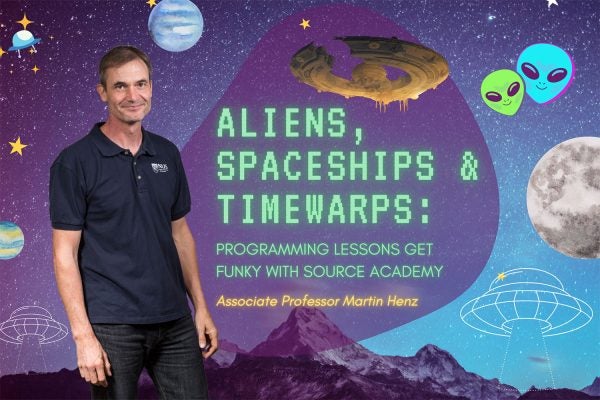
Martin Henz is an Associate Professor at the National University of Singapore , affiliated with the School of Computing and its Department of Computer Science . His academic journey includes an M.Sc. in Computer Science from Stony Brook University (1993) and a Dr.rer.nat. in Computer Science from Saarland University (1997). He has also worked as a Research Scientist at the German Research Centre for Artificial Intelligence. Research Focus : Scalable Experiential Learning, Systems for Teaching/Learning, AI in Education, Programming Languages, Algorithms, and Constraint Programming. Key Projects : Source Academy (immersive programming environment), Deep Teaching (LMS enhancements), and NUS Seafarers (maritime experiential learning). Publications span education technology, programming languages, and sustainable engineering, with recent works focusing on JavaScript-based pedagogy, automated question generation, and electric vehicle conversions. He supervised Rahul Singhal 's PhD, leading to the educational startup Cerebry, and co-founded Workforce Optimizer Pte Ltd with Alan Sevugan. Awards : NUS Annual Digital Education Award (2021) NUS Annual Teaching Excellence Award (2016/17) Fulbright Scholarship (1990) Startup @ Singapore Champion (2001)
Prof. Iwan de Esch is a Full Professor in the Department of Chemistry and Pharmaceutical Sciences at VU University Amsterdam, leading the Drug Design & Synthesis division and serving as Head of Department. He holds dual appointments in the Faculty of Science and AIMMS (Amsterdam Institute for Molecular and Life Sciences). His research focuses on understanding molecular interactions for drug discovery, employing CADD and FBDD approaches. He co-founded three biotech companies (De Novo Pharmaceuticals, IOTA Pharmaceuticals, Griffin Discoveries) and coordinates the EU-funded FRAGNET network. PhD from VU University (1998) Postdoc at University of Cambridge (Drug Design Group) Recipient of the 2011 Galenus Research Prize Received grants from EU-FP7, IMI, and Dutch STW Research interests span fragment-based drug design, receptor-ligand interactions, and pre-clinical drug candidate development. His work impacts GPCRs, PDEs, kinases, and protein-protein interactions. He teaches courses on drug discovery methodologies and computational tools. Over 200 peer-reviewed publications and 8 datasets/software contributions highlight his impactful career.