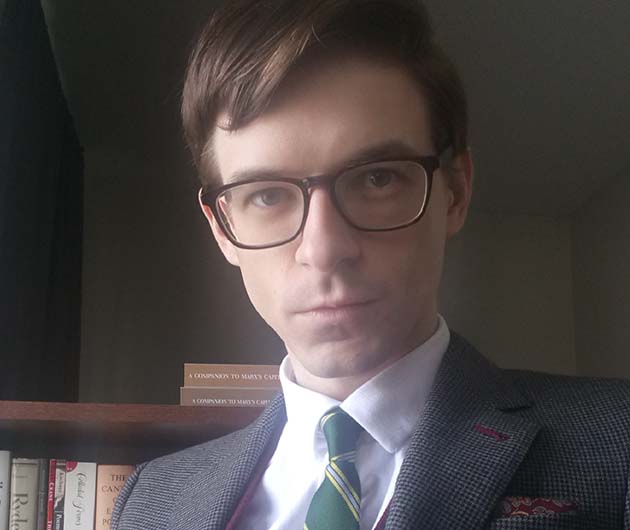
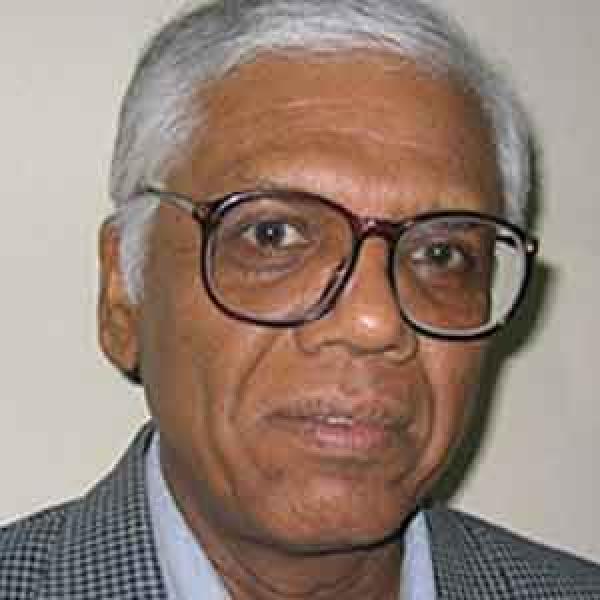
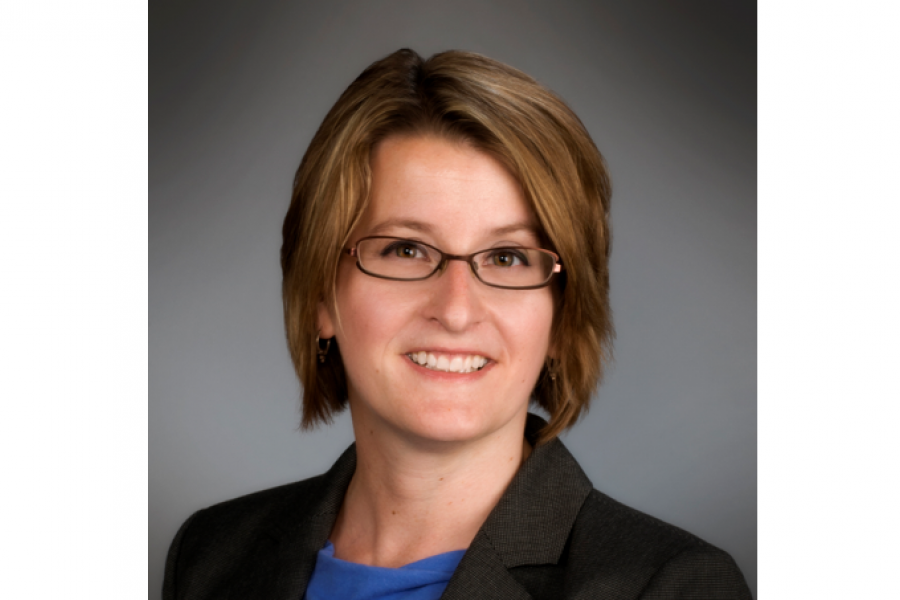
Dr. Tim Clarke is an Assistant Professor and Associate Director of Student Support in the Foundation Year Program at the University of King's College. He holds a PhD in English from the University of Ottawa (2018), focusing on Spinoza’s philosophical influence on 19th- and 20th-century American literature. His research bridges literature and philosophy, particularly modernist vitalism, decadence, and affect theory. Education: BA in English and Historical Studies, Memorial University of Newfoundland (2011) MA in English, Queen’s University (2012) PhD in English, University of Ottawa (2018) Research Focus: Dr. Clarke explores intersections of literary modernism with continental philosophy, emphasizing decadence, vitalist thought, and death’s role in literature. His current project, Morbid Vitalism , examines how modernism synthesizes life-affirming and death-oriented ideas through the decadent tradition. He has published on Djuna Barnes’s Nightwood and co-translated works by Brazilian geographer Milton Santos. Teaching & Engagement: He teaches courses like After the End: The Idea of Decadence and Reflections on Death , blending critical theory with contemporary aesthetics. His translations and co-edited volumes on Milton Santos highlight global Southern perspectives in geography and sociology.
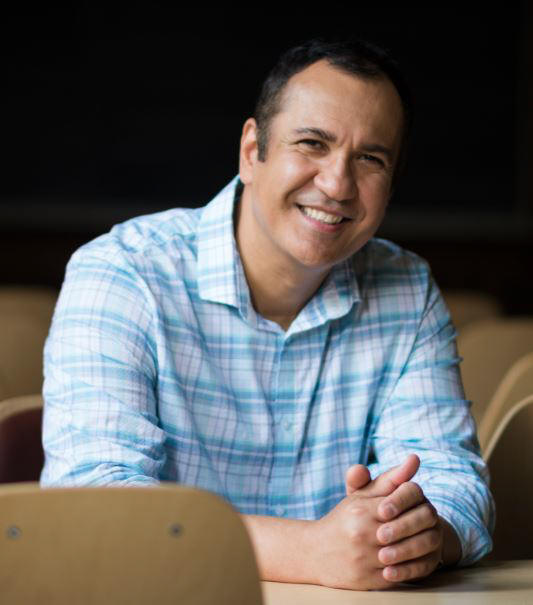
Romin W. Tafarodi is an Associate Professor in the Department of Psychology at the University of Toronto, where he researches cultured subjectivity and identity formation. He holds a B.A. from the University of Waterloo and a Ph.D. from the University of Texas at Austin. His work examines how societal symbols and institutional relations shape human individuality and interpersonal understanding, with secondary interests in metapsychology and philosophy of science. Research interests focus on: Self-consciousness as culturally-mediated subjectivity Contingencies of identity in social relations Cross-cultural perspectives on selfhood and personhood Philosophical foundations of psychological science His publications demonstrate consistent focus on cross-cultural identity, self-esteem mechanisms, and social perception, with frequent comparative studies between Eastern and Western societies. Recent works explore multicultural adjustment, implicit bias awareness, and narrative identity in diverse cultural contexts. Current and former graduate students include: Siobhan Flanagan (current) Tara Marshall Greg Bonn Jeff Yen Courses taught in 2024-2025: PSY197: The Extended Mind PSY428: Critical Psychology PSY425: Self and Identity
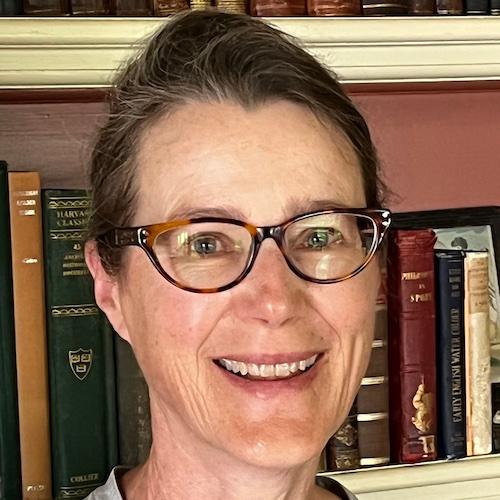
Carla Edgley is a Professor of Accounting and Finance at Cardiff Business School, Cardiff University. She serves as Co-Director of the Cardiff Interdisciplinary Tax Research Group (CITRG) and is an Associate Editor of Critical Perspectives on Accounting Journal. Her professional affiliations include being a Fellow of the Institute of Chartered Accountants in England and Wales (ICAEW), a member of the Chartered Institute of Taxation Welsh Technical Sub-Committee, and former co-opted ICAEW Council member representing UK academia. Her research focuses on interdisciplinary social studies of accounting, with particular emphasis on diversity/gender studies, taxation, and the materiality concept. Drawing on critical theoretical frameworks including Foucauldian analysis, she examines power dynamics in accounting practices, professional identity formation, and the sociology of materiality as a reporting concept. Her work often bridges accounting with sociology, critical theory, and gender studies. Professor Edgley's recent publications demonstrate a clear trajectory toward critical perspectives on taxation and diversity in the accounting profession. Her work explores how diversity initiatives reshape professional identity and merit concepts within accounting firms, while her tax research investigates knowledge gaps and power dynamics in tax disclosures. The interdisciplinary nature of her scholarship is evident in her collaborations across multiple institutions and disciplines. Her scholarly contributions have been recognized through nominations for teaching excellence awards, including the 2024 Enriching Student Life Award nomination and Cardiff Business School's Teaching Excellence Award in 2013. As an educator, Professor Edgley teaches undergraduate courses in Taxation and Auditing, serving as module co-ordinator for multiple levels. She actively supervises PhD students in areas related to critical tax studies, diversity, inclusion, and professional identity in accounting. Her professional experience includes significant industry roles at PricewaterhouseCoopers and other organizations before transitioning to academia. Her research projects include 'Diversity and career progression in the accounting profession,' 'Ethical leaders of tomorrow' (funded by CPA Ontario), and 'Exploring public feeling in tax reform' (a Civic Mission research project funded by Cardiff University).
Anna Grimshaw is a Professor of Visual Anthropology at Emory University's Department of Anthropology. Her career spans academic and public scholarship, including collaborations with C.L.R. James and experimental ethnographic filmmaking. She holds a PhD in Social Anthropology from the University of Cambridge (1984) and trained as a documentary filmmaker at the National Film and Television School (1991-92). Her research focuses on ethnographic cinema, experimental ethnography, and the intersection of art and anthropology. Notable works include films like Mr Coperthwaite (2013) and At Low Tide (2016), exploring themes of handmade life and cultural practices. She co-authored Observational Cinema (2009) and edited volumes on C.L.R. James and visual anthropology. Grimshaw’s teaching includes courses on visual culture, ethnographic filmmaking, and experimental methods. She has held previous positions at the Graduate Institute of the Liberal Arts (Emory) and the University of Manchester. Her work emphasizes critical perspectives on anthropological conventions and innovative visual practices.
Arjan F. Kirkels is an Assistant Professor and University Lecturer in the Department of Technology, Innovation & Society within the School of Industrial Engineering and Innovation Sciences at Eindhoven University of Technology (TU/e). His work focuses on sustainability assessments, decision-making in transitions, and interdisciplinary education for sustainable innovation. His research interests include Life Cycle Assessment (LCA), Multi-Criteria Assessment (MCA), sustainability transitions, industrial ecology, and systems engineering. He applies these to emerging technologies such as batteries, hydrogen systems, and heat pumps, with a strong emphasis on integrating stakeholder values and addressing deep uncertainties in sustainability decisions. The recent articles highlight a consistent focus on assessing emerging technologies, particularly in renewable energy and circular economy applications. Trends include prospective LCA, experience curves in solar technology, socio-technical impact assessment, and educational innovations in sustainability. His work bridges technical analysis with social and governance dimensions of sustainability transitions. Best Teacher Award, 1st year Bachelor Sustainable Innovation, for course 0SV20 'Industrial Ecology' (2013) Best Teacher Award, 1st year Bachelor Sustainable Innovation, for course 0SV20 'Industrial Ecology' (2018) Best Teacher Award, 1st year Bachelor Sustainable Innovation, for course 0SV20 'Industrial Ecology' (2020) Educational award nomination, bachelor Sustainable Innovation, course 0SK30 Inter-University Sustainability Challenge (2023) Education Award 2024 - master Innovation Sciences (2025) Arjan F. Kirkels has supervised over 100 thesis students and more than 100 interdisciplinary student groups. He has developed and taught over 20 courses and co-authored 4 textbooks and 7 publications on educational innovation. He is currently supervising four researchers: Huiying Liu, Prapti Maharjan, Rishi Bhatnagar, and Seyed Mousavi. His research is supported by projects such as the EU-funded cVPP (Community-based Virtual Power Plant) and studies on Dutch sustainability transitions. He is actively involved in educational initiatives, including MOOC development and challenge-based learning, and contributes to public discourse through media appearances and workshops on sustainability education and systems thinking.
Dr. Zara Ersozlu is a Senior Lecturer in Mathematics Education within the School of Education at the University of Newcastle, Australia. With a distinguished international career spanning multiple continents, she has held academic positions at prestigious institutions including North Carolina State University (USA), Gazi and Gaziosmanpasa Universities (Turkey), National Taiwan Normal University (Taiwan), The University of Western Australia, Murdoch University, and Deakin University. Her academic journey includes tenured positions as an Associate Professor and leadership roles as Department Head and Chair in teacher education disciplines. Currently, she teaches undergraduate and postgraduate courses in mathematics education, including Effective Pedagogies in Primary Mathematics, K-6 Mathematics, K-6 Numeracy, and Digitally Supported Learning. Dr. Ersozlu earned her Doctor of Philosophy from Firat University in Turkey and her Master of Art from Sakarya University. Her extensive academic preparation is complemented by five years of practical teaching experience in public schools prior to entering academia. This blend of theoretical knowledge and practical classroom experience informs her approach to teacher education and educational research. At the broadest level, Dr. Ersozlu's research investigates solutions to real-life problems impacting people's well-being, success, and capacity to achieve. Her scholarly work spans primary and secondary mathematics education, the psychology of mathematics (including metacognition, self-regulation, and anxiety), cross-cultural educational studies, teacher education, virtual simulated learning environments, and educational assessment. She has increasingly focused on the transformative potential of AI and machine learning in education, exploring how these technologies alter teaching, learning, and research processes. Her methodological expertise encompasses both quantitative and qualitative approaches, allowing her to effectively analyze both small and large educational datasets. Analysis of Dr. Ersozlu's recent publications reveals a strong emphasis on mathematics anxiety, teacher education, and the integration of technology in learning environments. Her work demonstrates a consistent focus on practical applications of educational research to address real-world challenges in mathematics education. The interdisciplinary nature of her research connects educational psychology, technology integration, and cross-cultural perspectives, with particular attention to how these elements intersect in teacher preparation and student learning outcomes. 2023 ATEA Research Recognition Award from the Australian Teacher Education Association 2021 Fellow of the Higher Education Academy (Advance HE, UK) 2010 Fellowship Program for Postdoctoral Researchers from the Council of Higher Education of Turkey Dr. Ersozlu is deeply committed to mentoring the next generation of scholars, currently supervising four PhD students and having successfully guided ten students to completion. Her grant portfolio includes significant funding for projects such as Best Practice Guidelines for RPL in Initial Teacher Education Programs ($60,000), Exploring the Reciprocal Relationship Between Mathematics Anxiety and Mathematical Resilience ($2,599), and multiple conference travel awards. She serves as an Associate Editor for several prominent journals including the International Electronic Journal of Mathematics Education and as Editor for Interdisciplinary STEM Education. Her editorial work reflects her standing as a respected voice in mathematics education research. Dr. Ersozlu's academic leadership extends to her role in developing innovative teaching approaches that integrate virtual simulation technology and learning analytics. Her work with TeachLivE™, a mixed-reality classroom simulation platform, demonstrates her commitment to creating authentic learning experiences for teacher education students. Through these initiatives, she bridges the gap between educational theory and classroom practice, preparing future educators to effectively implement evidence-based teaching strategies in diverse learning environments.
Sarah Harper is the Clore Professor of Gerontology at the University of Oxford and Director of the Oxford Institute of Population Ageing. She was appointed a CBE in 2018 for services to Demography and serves as Chair of HelpAge International. Professor Harper has held numerous influential positions including serving on the Prime Minister's Council for Science and Technology and as Director of the Royal Institution of Great Britain. Her educational background includes an MA from Cambridge and a DPhil from Oxford. Prior to her academic career, she trained with the BBC as a News and Current Affairs Reporter and Producer. She subsequently held academic positions at the University of London and the University of Chicago before returning to Oxford to found the Oxford Institute of Population Ageing. Professor Harper's research focuses on demographic change, particularly the implications of falling fertility and increasing life expectancy. Her work examines life course factors in healthy ageing, social and economic drivers of health and well-being, with emphasis on life transitions. She has conducted significant research on eldercare in China, fertility patterns in sub-Saharan Africa (revealing that ideal family size remains high despite girls' education), and demographic changes in Vietnam and Myanmar affecting agricultural production and food security. Her publication record demonstrates consistent focus on global demographic trends, with recent work increasingly addressing the intersection of population change with environmental challenges. She has authored influential books including 'How Population Change Will Transform Our World' (Oxford University Press, 2016) and is working on a new book for Cambridge University Press on Population and Environmental Change. Scientific Awards and Honors CBE (Commander of the Order of the British Empire) in 2018 for services to Demography Royal Society for Public Health: Arts and Health Research Award (2011) Fellow of the Academy of Medical Sciences Fellow of the Royal Anthropology Institute Professor Harper has supervised numerous PhD students across diverse topics from biodiversity conservation in Southeast Asia to intergenerational solidarity in Turkey. Her advisory work extends globally, having served on the Scientific Advisory Board of Natural England, the Royal Society's Working Group on Population and Environment, and as an advisor to governments including the UK, Malaysia, Singapore, and the European Commission. She has received research funding from organizations including the US National Institutes of Health, which supported the founding of the Oxford Institute of Population Ageing. As Director of the Oxford Institute of Population Ageing, Professor Harper leads a multidisciplinary team examining demographic trends and their societal implications. The Institute serves as a hub for international collaboration on ageing research, working with organizations including Population Europe and the International Association of Research Universities. She also serves as founding editor of the Journal of Population Ageing and editor of the Handbook of Ageing and Public Policy.
Dinah Ribard is a Director of Studies at the École des Hautes Études en Sciences Sociales (EHESS), working within the Centre de Recherches Historiques (CRH). She serves as Center Director for the GRIHL (Groupe de recherche interdisciplinaire sur l'histoire du libéralisme) research group. Her academic career has been dedicated to the historical study of work, intellectual practices, and cultural production from the early modern period through the 19th century. Ribard completed her thesis in December 2000 at the University of Paris III - Sorbonne Nouvelle under the direction of Alain Viala, entitled "Live Tell Think. Research on the literary status of the philosopher: the Lives of philosophers in France 1650-1766." She was formerly a student at the École Normale Supérieure (Ulm) and holds a degree in Modern Literature. Prior to her position at EHESS, she served as an ATER (Attaché Temporaire d'Enseignement et de Recherche) at Paris III University from 1999 to 2001 and taught at Lycée Jacques-Feyder in Epinay sur Seine from 2001 to 2003. Ribard's research focuses on the history of work from multiple perspectives - examining both intellectual work (1600-1900) and material labor. She investigates how work has been conceptualized, narrated, and institutionalized throughout history. Her work explores the relationship between knowledge production and labor, analyzing how different professions and social statuses have shaped intellectual and cultural practices. She examines the historical construction of disciplines, professions, and social classifications, with particular attention to how writing practices intersect with work identities. Her recent publications reveal a consistent focus on the relationship between writing, work, and social identity across the early modern and modern periods. Ribard's scholarship demonstrates how textual practices were embedded in specific work contexts, from artisanal workshops to academic institutions. Her work shows how literary forms were used to construct professional identities and how writing practices served as forms of political action. She has made significant contributions to understanding the historical relationship between intellectual labor and material production. Ribard has published extensively, including the notable 2023 book "Le Menuisier de Nevers. Poésie ouvrière, fait littéraire et classes sociales (XVIIe-XIXe siècle)" which examines how working-class poetry was historically constructed and marginalized. Her scholarship challenges traditional literary classifications and reveals how social categories have been historically produced through cultural practices. As Director of Studies at EHESS, Ribard supervises doctoral students and contributes to the academic training of historians. She co-responsible for the Grihl seminar and teaches courses at EHESS on topics including "Writings of the Past. Literature and History: Methods, Theories, Fields" and "History and stories of work." Her teaching reflects her research interests in the intersection of literary practices, historical methodology, and social analysis. Within the CRH, Ribard is affiliated with the GRIHL research group, which focuses on the interdisciplinary history of liberalism. Her work bridges historical, literary, and sociological approaches to understanding the development of social and intellectual categories. Through her research, teaching, and institutional leadership, Ribard has made significant contributions to the historical understanding of work, knowledge production, and cultural classification.
Tomiko Yoneda is an Assistant Professor in the Department of Psychology at the University of California, Davis. Her research focuses on understanding how personality traits, social relationships, and lifestyle factors influence health and cognitive outcomes in older adults. She employs interdisciplinary methods, including longitudinal studies and coordinated data analyses, to explore topics like personality-cognition links, social determinants of health, and aging disparities. Dr. Yoneda is also committed to fostering inclusive academic environments and mentoring students from diverse backgrounds. Her work spans multiple domains: (1) Personality dynamics in aging, examining traits like neuroticism and conscientiousness as predictors of health and longevity; (2) Social relationships' impact on physiological health (e.g., cortisol regulation in couples); and (3) Cross-cultural studies of aging in Japan and North America. Notable contributions include systematic reviews on personality-allostatic load relationships and meta-analyses linking personality to mortality risks. Received EDITOR'S CHOICE recognition in Psychoneuroendocrinology (2024) and Journal of Personality and Social Psychology (2022) Principal investigator of the Yoneda Lab at UC Davis Dr. Yoneda emphasizes translational research that bridges psychological and biomedical perspectives. She collaborates internationally on projects analyzing cognitive healthspan, dementia risk factors, and interventions to promote healthy aging. Her teaching focuses on lifespan development and research methodologies.
Stephen M. Hart is a Professor of Latin American Film, Literature and Culture at University College London (UCL), affiliated with the School of European Languages, Culture and Society (SELCS) and the Department of Spanish, Portuguese and Latin American Studies. He is a General Editor at Tamesis Publishers and founder-director of the Centre of César Vallejo Studies at UCL. Education: BA (1980), MA (1984), PhD (1985) from University of Cambridge Academic Career: Lecturer at Westfield College (1984-1990), Associate/Full Professor at University of Kentucky (1991-1998), Senior Lecturer/Reader at UCL (1998-present) Specializing in Latin American literature, film, and culture, Hart has published extensively on César Vallejo and Santa Rosa de Lima, including critical editions of their works. His research spans literary theory, art history, and East-West relations, with a focus on documentary film-making and magical realism as a framework for understanding post-truth narratives. Recent publications address colonial sainthood processes, poetic modernism, and China-Latin America connections. He has directed documentary projects in Cuba since 2006 and received honors including the Order of Merit from the Peruvian Government and Honorary Doctorates from Peruvian institutions. Key Awards: Order of Merit for Distinguished Services (Peruvian Government, 2004), Honorary Doctorate (San Marcos University, 2004), Corresponding Member of Academia Peruana de la Lengua (2014) Leadership Roles: Director of UCL's ESRC DTC (2014), Director of Documentary Film-Making Summer School (Cuba, 2006-present) Teaching: Undergraduate courses on Latin American supernaturalism and cultural dilemmas; MA documentary film-making courses
Eunsil Oh serves as an Assistant Professor in the Department of Sociology at the University of Wisconsin-Madison's College of Letters & Science, where she teaches courses including Gender, Work, and Family in East Asia; Introduction to Sociology of Gender; and Social Change in Contemporary Korea. Education: PhD in Sociology, Harvard University (2018) Her research employs qualitative methodologies to investigate how gender norms, social class, and institutional frameworks influence women's employment and fertility decisions in East Asia, with particular focus on South Korea's highly educated female population. She examines cultural constructions of work devotion, childcare expectations, and family policy impacts through narrative analysis of personal experiences. Analysis of her 2018-2025 publications reveals consistent scholarly engagement with maternal employment patterns, parental leave systems, and gender norm evolution across East Asian contexts. Her work increasingly incorporates comparative frameworks examining South Korea alongside the United States, Spain, and Singapore, highlighting how overwork cultures and class dynamics reshape traditional gender roles. No scientific awards were documented in available sources. Faculty profile materials provided no details regarding graduate student advising responsibilities or externally funded research grants.
Muzaffar Alam is the George V. Bobrinsky Professor at the University of Chicago's South Asian Languages and Civilizations (SALC) , within the Division of the Arts & Humanities. He has taught at UChicago since 2001, following a three-decade tenure at Jawaharlal Nehru University (JNU). His expertise spans Mughal political history, Indo-Islamic culture, and pre-colonial South Asian religious and literary traditions. He is fluent in Persian, Arabic, Urdu, and Hindi, and actively supervises students in medieval South Asian studies. Education: Ph.D. in History, Jawaharlal Nehru University (1976) Studies at Jamia Millia Islamia and Aligarh Muslim University Research focuses on Mughal governance, Indo-Persian cultural exchange, and textual studies. He has held visiting positions at the Collège de France, Leiden University, and the EHESS (Paris). Courses taught include Mughal India, South Asian Islam, and advanced Urdu/Persian seminars. Publications include seminal works like The Mughal State 1526-1750 and Indo-Persian Travels in the Age of Discovery . His scholarship bridges history, philology, and comparative Islamic studies from an Indian perspective. Labs/Teams: Actively involved with SALC's research initiatives and textual analysis projects. Supervises advanced language studies and historical manuscript work.
Denis Kozlov is an Associate Professor in the Department of History at Dalhousie University, specializing in modern Russian and Soviet history. His academic journey includes a BA from Herzen Russian State Pedagogical University, an MA from the University of Massachusetts Amherst, and a PhD from the University of Toronto. He holds appointments within Dalhousie's Faculty of Arts and Social Sciences and maintains an active research profile focused on cultural and intellectual transformations in the Soviet Union. His educational background reflects deep engagement with Russian studies: BA: Herzen Russian State Pedagogical University MA: University of Massachusetts Amherst PhD: University of Toronto Kozlov's research centers on Soviet cultural and intellectual history during the post-Stalin era (1953-1991), with particular emphasis on memory practices, reading audiences, and migration. His work examines how Soviet citizens processed historical trauma through literature and media, especially during the Thaw period, and explores transnational migrations from the USSR in the 1970s-1980s. He investigates intersections between literature, society, and historical consciousness, revealing how cultural production shaped Soviet identity and social change. Analysis of his 15 most recent publications shows consistent focus on Soviet cultural history, with dominant themes including reading practices during de-Stalinization, migration as political expression, and memory politics. His methodology combines archival research with cultural analysis, increasingly incorporating transnational perspectives in recent works on Soviet Jewish migration and Eastern European identity. His scholarly recognition includes significant awards: SSHRC Insight Grant (2019-2024) Andrew W. Mellon Fellowship at Institute for Advanced Study, Princeton (2010-2011) Harvard University Postdoctoral Fellowships (2008-09) Faculty of Arts and Social Sciences Teaching Award (2014-2015) Kozlov actively supervises graduate research in Soviet history while securing major grants including SSHRC and NEH funding. His teaching spans introductory surveys to advanced seminars on Soviet Russia and comparative cultural history, with recent courses including HIST 2021F (Soviet Russia) and HIST 3088F (History & Memory Russia and West) for 2024-2025. While no dedicated research labs are mentioned, his collaborative projects like the NEH-funded conference "The Thaw: Soviet Society and Culture during the 1950s and 1960s" demonstrate his role in building scholarly networks. Current work focuses on Soviet migration patterns and their ideological implications.
Camilla Kronqvist is a Senior Lecturer in the Department of Culture, History and Philosophy at the Faculty of Humanities and Social Sciences, Åbo Akademi University. She received her doctorate in philosophy from Åbo Akademi in 2008 with the thesis What We Talk About when We Talk About Love , which examined philosophical questions about emotions, identity, morality, and meaning through different ways of discussing love. Since her doctorate, she has worked as both a researcher and teacher in philosophy, and to some extent in university pedagogy, at Åbo Akademi University. Dr. Kronqvist's research focuses on the philosophy of love, Wittgenstein studies, ethics of sexual relationships, moral psychology, philosophy of emotions, and ordinary language philosophy. Her work explores how conversations about emotions help us understand their meaning and roles in our lives, with particular attention to moral certainty in intimate relationships. She has led significant research projects including Ethical Explorations: Rethinking Our Sexual Relations (2023-2026), Speaking of Love, Thinking with Wittgenstein (2019-), and Explorative Inquiries: Analytical Tools for Reflecting on Oneself, Others and the World in Kindergarten (2017-). Analysis of her 64 publications reveals a consistent trajectory connecting Wittgensteinian philosophy with contemporary ethical concerns, particularly regarding love, moral certainty, and intimate relationships. Her most recent works demonstrate increasing engagement with feminist philosophy and gender studies while maintaining her foundational focus on language and moral psychology. The publications show strong connections between emotional language, moral reasoning, and existential concerns in everyday life. Dr. Kronqvist serves as supervisor for multiple students including a master's thesis in philosophy, a master's thesis within the master's program Social exclusion, and doctoral theses for Salla Aldrin Salskov, Evelina Salo, and Christoffer Steffansson. During the academic year 2021-2022, she taught four courses in the minor subject Ethics in a Globalized World , as well as Social exclusion in a philosophical perspective , and examined Philosophical Aspects on Social Exclusion within the master's program Social exclusion.
Professor Laura Funk is a Professor in the Department of Sociology and Criminology at the University of Manitoba, located within the Faculty of Arts. Her work focuses on social and critical gerontology, examining care work, family caregiving, and palliative care policy. She has led multiple SSHRC-funded research teams and participated in Tri-Council grants addressing aging, home care, and family care work. Funk’s research explores how care practices engage broader societal discourses on age, responsibility, and care in contexts of eroding formal supports. Education: PhD in Sociology, University of Victoria (2008) MA in Sociology, University of Victoria (2002) Post-Baccalaureate Diploma in Gerontology, Simon Fraser University (2000) BA (Honours) in Sociology, University of British Columbia (1997) Research Interests: Care work, family/friend caregiving, palliative care policy, service-integrated housing for older adults, and aging in the context of systemic and policy changes. Her work bridges academic inquiry with public advocacy, including op-eds and consultations with Manitoba’s Seniors and Healthy Aging Secretariat. Key Contributions: Funk’s research addresses structural barriers for older adults, including housing access, navigation of formal supports, and the emotional labor of care workers. She has published widely on topics like aggression in care settings, dying at home preferences, and feminist care activism. Recent projects include SSHRC-funded studies on care mobilization and a community-based inquiry into low-income housing supports for older adults. Awards: 2019 Canadian Association of Gerontology Recognition Award 2015 Rh Institute Outstanding Contributions Award 2010 Anselm Strauss Award Teaching & Outreach: Funk teaches courses on aging, qualitative research, and end-of-life care. She is known for mentorship and received a 2023 teaching award from the Arts Student Body Council. Her outreach includes collaborations with Manitoba’s Public Interest Law Centre and community-based projects like Lions Place and Indigenous Seniors Research initiatives.