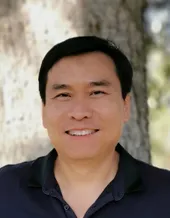
Zhenchang Xing is a Research Professor at CSIRO's Data61 and holds a Hans Fischer Senior Fellowship at TUM-IAS. With a Ph.D. in Computer Science from the University of Alberta (2008), he previously served as Associate Professor at Australian National University and Assistant Professor at Nanyang Technological University. His research focuses on software engineering for AI systems and human-centered computing. Current projects include: Automated Software-Hardware Co-Design for AI Systems Software Supply Chain Security frameworks Data Bill of Materials (DataBOM) for verifiable data ecosystems Software Testing Knowledge Graph development Professor Xing has received 10 Distinguished Paper Awards from ACM and IEEE, including the 2005 Most Influential Paper Award for UMLDiff. His work combines software engineering with responsible AI development.
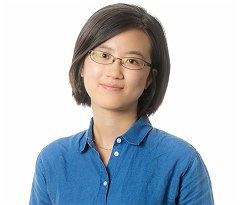
Prof. Dr. Chunyang Chen is a Full Professor at the Department of Computer Science, Technical University of Munich (TUM), Heilbronn, Germany. He holds the Chair of Software Engineering & AI, serves as a core member of the Munich Data Science Institute, board member of the Heilbronn Data Science Center, and Fellow at Fortiss. He also maintains an Adjunct Professor role at Monash University, Australia. Research Focus: His work bridges Software Engineering, Deep Learning, and Human-Computer Interaction (HCI), specializing in AI/ML, NLP, and program analysis for mobile app development, testing, and security. Key areas include LLM-assisted app development, robustness of deep learning models, and accessibility testing. Scientific Awards: Best Paper Honorable Mention in CHI 2024 Discovery Early Career Researcher Award (DECRA), Australian Research Council ACM SIGSOFT Early Career Researcher Award Facebook Research Award in Probability and Programming Dean's Award for Research Impact at Monash University Academic Leadership: He actively mentors PhD students, supervises postdocs, and leads research teams focusing on software security, automated testing, and LLM applications. His recent work explores the intersection of software security and large language models, with a special issue call for EMSE journal.
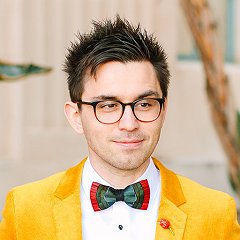
Dominik Huber is a Ph.D. candidate and researcher at the Technical University of Munich , affiliated with the Chair of Computer Architecture & Parallel Systems . His work focuses on Dynamic Resource Management in High-Performance Computing (HPC) , with expertise in Parallel & Distributed Programming Models and Hardware-aware programming . He has actively contributed to teaching courses like Parallel Programming Systems and Advanced Computer Architecture . His research emphasizes adaptive resource allocation in hybrid HPC clusters, leveraging technologies such as MPI Sessions , PMIx , and frameworks like LAIK and XBraid . Recent projects include the DynRes software suite for dynamic resource management and collaborations on quantum-HPC integration. Huber has advised students on topics ranging from Dynamic Resource Management in Charm++ to CI Systems for HPC Software , and his publications address challenges in malleability, scheduling, and power-constrained environments. Current affiliations include participation in the SEANERGYS (EuroHPC) and PlasmaPEPS projects.
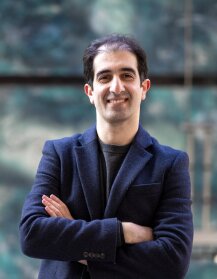
Jinqiu Yang is an Associate Professor in the Department of Computer Science and Software Engineering at Concordia University in Montreal, Canada. Her research focuses on improving software reliability and quality assurance, particularly in the context of machine learning systems and autonomous vehicles. She leads active research projects in software testing, automated program repair, and mining software repositories, with strong connections to both academic and industrial applications. Her research interests span software reliability, quality assurance of machine learning systems including autonomous vehicles, software testing, automated program repair, text analytics of software artifacts, and mining software repositories. She has developed novel approaches for testing deep learning libraries, evaluating robustness in autonomous driving systems, and tracking the evolution of static code warnings. Her work bridges traditional software engineering with emerging challenges in AI systems, addressing critical issues of reliability and safety in complex software environments. Yang's recent publications (2021-2025) demonstrate a clear trajectory toward AI/ML system reliability, with increasing focus on autonomous vehicles, concept drift detection, and security aspects of large language models. Her work spans both theoretical foundations and practical applications, often involving empirical studies of real-world systems and development of practical tools to address identified challenges. ACM SIGSOFT Distinguished Paper Award Dr. Yang actively mentors graduate students and is currently recruiting Master's and PhD candidates. She has secured significant research funding including NSERC Discovery Grants (2019-2025), Gina Cody Research and Innovation Fellowship (2024-2026), and participation in the NSERC CREATE Program SE4AI (2021-2026). Her research is supported by multiple grants including NOVA – FRQNT-NSERC PROGRAM (2024-2027) and Volt-Age Seed Grant (2024-2026). She leads research in the O-RISA Lab at Concordia University, focusing on reliability and security aspects of intelligent software systems. Her team collaborates with industry partners including IBM, where she previously worked at IBM Watson Research Lab and IBM CAS, bringing practical experience to her academic research.
Dr. José Pablo Maksimczuk serves as a postdoctoral researcher and project leader at the Centre for the Study of Manuscript Cultures (CSMC) at the University of Hamburg. He acts as spokesperson for the 'Keeping Note(book)s' research group and is a member of the Greek Studies team within the Cluster of Excellence 'Understanding Written Artefacts' (UWA) project (2019-2025). His educational background includes: Graduation from Universidad Católica Argentina (2010) PhD in Classics from KU Leuven (2018) with dissertation on the Byzantine anthology Florilegium Coislinianum (8th-9th centuries) Dr. Maksimczuk's research focuses on the intersection of Greek philological traditions and material manuscript culture. His work examines how textual transmission occurred in Byzantine contexts, particularly regarding Aristotelian philosophy. He investigates the physical characteristics of manuscripts alongside their intellectual content, exploring how material choices influenced knowledge transmission. His scholarship bridges philological analysis with material studies, examining both the textual content and physical properties of historical documents. His publication record reveals a strong emphasis on multilayered manuscript analysis, with recent work examining palimpsests, note-taking practices, and the material dimensions of philosophical transmission. His research demonstrates increasing interdisciplinary collaboration, particularly between philological analysis and material science approaches to manuscript studies. As head of Research Field G ('Keeping Note(book)s') within the UWA project, Dr. Maksimczuk leads investigations into how note-taking practices shaped knowledge organization in historical contexts. His current project 'Multilayered Manuscripts in the Transmission of Aristotle's Organon' examines complex textual layers in philosophical manuscripts. He actively participates in international scholarly networks, organizing and presenting at workshops on lexicographical traditions, manuscript materiality, and philosophical transmission. His collaborative work extends across multiple institutions, reflecting the interdisciplinary nature of contemporary manuscript studies.
Dr. Tomasz Rozmyslowicz is a researcher specializing in translation studies, focusing on human differentiation within multilingual communication contexts. His work examines the intersection of translation practices, politics, and social categorizations like 'Migrant,' particularly in state-managed language mediation systems in Germany. Researches state-led translation management in institutions (e.g., authorities, schools) Investigates shifts in translation practices under frameworks of diversity and inclusion Explores historical translation dynamics during the Third Reich and academic exile His publications highlight the role of machine translation in redefining human-machine boundaries and the historical evolution of translation theory. He actively contributes to methodological advances in translation history through archival digitization and open-access resources.
Prof. Dr. Delia González de Reufels is a tenured Professor at the Department of History, University of Bremen, specializing in Latin American history with transnational and global perspectives. She holds the chair for Latin American History and serves on the International Advisory Board of Mexican Studies/Estudios Mexicanos since 2015. Her research focuses on social policy development, migration patterns, and visual culture's role in historical representation. B.A., M.A. in Iberian and Latin American History, Romance studies/Spanish and English (University of Cologne, Goldsmiths' College London, Universidad de Salamanca) Ph.D. in History (University of Cologne, 2002) Her scholarly work examines population policy, military-state relations, and public health developments in Chile and Argentina through transnational events like medical congresses. She has edited multiple volumes on film as a historical research method and science fiction cinema's representation of societal challenges. Awards include the 2004 Offermann-Hergarten Foundation Prize and the 2008 Library of Congress residency. Recent publications address policy diffusion mechanisms, media representation of historical trauma, and demographic cartography. She has held visiting positions at the Sorbonne (2012) and Harvard's Department of the History of Science (2019). As founder of the 'Latin American History in Global Perspective' working group, she contributed significantly to academic networks until 2021.
Prof. Dr. Karen E. Fisher is a Visiting Professor of Information Science at the University of Siegen, Germany, with additional roles as Professor at the University of Washington, USA, and Adjunct Professor at Abo Akademi University, Finland. Her research focuses on information behavior in crisis contexts, particularly the Syrian War, and involves collaborations with UNHCR, MENA experts, and tech companies like Facebook and Amazon. She leads fieldwork in Jordan and Lebanon, addressing socio-technical challenges in health, education, and entrepreneurship among refugees. Notable contributions include a co-designed cookbook preserving Syrian cultural heritage and frameworks for humanitarian research ethics. Awards include the 2018 Facebook Award for crisis informatics work. Dr. Fisher holds a PhD in Information Science from the University of Western Ontario and has conducted postdoctoral research at the University of Michigan. Education: Bachelor's in English and Russian, Memorial University of Newfoundland MLIS, PhD in Information Science, University of Western Ontario Postdoc Fellowship, University of Michigan Research Interests: Dr. Fisher examines innovation, resilience, and information systems in displacement contexts. Her work integrates ethnography, design methods, and quantitative analysis to understand how marginalized communities adapt to crises. Key areas include refugee information ecosystems, digital privacy in conflict zones, and leveraging technology for humanitarian aid. She emphasizes participatory approaches, collaborating with refugees as co-researchers and co-designers. Grants & Projects: Funded by IMLS to study PTSD among US library staff and trauma-informed care strategies UNHCR missions focus on technological innovations for Syrian refugees' health, education, and livelihoods Partnerships with the LEGO Foundation and Gates Foundation on refugee education and digital tools Awards: 2018 Facebook Award for Crisis Informatics Research Labs & Collaborations: Embedded in UNHCR Jordan since 2015, she co-leads the Za'atari Camp library network and collaborates with multidisciplinary teams in computer science, public health, and political science. Active in global HCI communities, presenting at CHI and ECSCW conferences.
Deian Stefan is an Associate Professor in the Computer Science and Engineering (CSE) Department at University of California, San Diego (UCSD) . His research focuses on secure systems , spanning security , programming languages , and systems . Notably, he works on WebAssembly , JavaScript JITs , and language-based security (e.g., constant-time programming, memory safety, information flow control). Education : PhD in Computer Science from Stanford University (2015), M.Eng and B.Eng in Electrical Engineering from Cooper Union (2011) His research trend emphasizes secure compilation , transient execution attacks , and hardware-software co-design for security . Key themes include SFI (Software Fault Isolation) , constant-time cryptography , and WebAssembly hardening . Scientific Awards Distinguished paper awards at POPL 2023, IEEE MICRO Top Picks 2024 IEEE Cybersecurity Award for Practice 2022 CSA W first place (2020), DJB Prize (2010) He teaches graduate courses like CSE 227: Graduate Computer Security and CSE 291: Building Secure Systems , covering topics from supply chain attacks to hardware defenses . He co-founded web-security startup Intrinsic (acquired by VMWare).
Dr. Jana Otto is a researcher at the Department of African History , Leibniz University Hannover. She serves as a coordinator for the Master's program Atlantic Studies in History, Culture and Society and contributes to projects at the Center for Atlantic and Global Studies . Academic Focus: Interconnections between Africa and Europe, migration history, development policy, German colonial history, Cold War international relations, German-German history, and decolonization. Research Highlights: Her work explores private postcolonial remembrance through family archives, combining postcolonial studies with memory cultures. Current projects include The Postcolonial Family Archive (2024-2025) and analyzing colonial geographical knowledge in school libraries. Publications include a 2023 monograph on Ghana-German vocational training exchanges and articles on missionary film portrayals, development aid, and colonial media narratives. Scientific Contributions: De Gruyter monograph (2023): Cold War vocational training between Ghana and German states Deutschland Archiv article (2018): Technical skill transfer in East/West Germany Gender analysis in missionary films (2009-2014) Awards: Boehringer Ingelheim printing grant (2022) Friedrich Ebert Foundation doctoral support (2013-2018) University of Hamburg graduation scholarship (2018) Project Leadership: Managed the Colonial Traces in Hanover website redesign (2020-2022) and curated the #HannoverKolonial exhibition (2023), examining local colonial memory through monuments and societal engagement.
Dr. Christian Speer is a Researcher at the Institute of History, Martin Luther University of Halle-Wittenberg, where he serves as Scientific Coordinator and Deputy Project Manager of the DFG long-term project 'Index Librorum Civitatum. Index of City Books of the Middle Ages and the Early Modern Period, an Instrument for Basic Historical Research.' He also holds the position of Equal Opportunities Officer for the Faculty of Philosophy. His academic career has been dedicated to medieval and early modern urban history, with particular focus on the documentation systems of German cities. Speer completed his Master of Arts at the Technical University of Dresden and the Università Degli Studi in Rome, specializing in Medieval History, Ancient History, and Art History. He earned his doctorate from the University of Regensburg in 2009 with the thesis 'Piety and Politics. Urban Elites in Görlitz between 1300 and 1550,' which was published as part of the Hallische Beiträge zur Geschichte des Mittelalters und der Frühen Neuzeit series. Prior to his current position, he held research appointments at the Max Planck Institute for History Göttingen, the Herzog-August-Bibliothek Wolfenbüttel, and the Thuringian University and State Library Jena. His research interests center on urban documentary practices during the late Middle Ages and Early Modern Period, with particular expertise in city books (Stadtbücher), legal records, and administrative documentation. Speer has made significant contributions to the study of urban elites, religious practices, and the interplay between local governance and religious institutions in Central European cities, particularly Görlitz and other cities in Silesia and Upper Lusatia. His work often bridges the gap between textual scholarship and social history, examining how documentary practices reflected and shaped urban society. Analysis of Speer's publications reveals a consistent focus on source criticism and historical editing, with particular attention to the Liber vetustissimus Gorlicensis (the oldest Görlitz city book) and related documentary traditions. His scholarship demonstrates methodological sophistication in handling medieval and early modern sources, with increasing attention to comparative urban history and the transregional connections between Central European cities. Recent work shows expansion into legal history and criminal justice systems of pre-modern urban communities. Chairman of the Association for the History of Silesia (www.vfgs.eu) Member of the Board of the Silesian Cultural Foundation (www.kulturwerk-schlesien.de) Member of the Historical Commission for Silesia (www.hiko-schlesien.de) Treasurer of the Carl Heinrich von Heineken Society Speer has collaborated on multiple exhibitions including 'Life and Work of Ludwig Eduard Nollau (1810-1869)' and '...so that nothing perishes. The manuscript collection of Georg Rörer (1492-1557) as a treasure of the Reformation.' His research has been supported by the German Research Foundation (DFG) through multiple long-term projects focused on historical source materials. He has also contributed to the third Saxon State Exhibition 'Via Regia' in Görlitz, responsible for church history, Reformation, and science history content. As Scientific Coordinator of the 'Index Librorum Civitatum' project, Speer oversees a major international effort to catalog and analyze city books from across Europe, creating a fundamental research tool for historians of urban development. His work connects with broader scholarly initiatives in digital humanities through the online cataloging of historical manuscripts.
Alexandra Jaik holds a Master of Arts in Sociocultural Studies from Europa-Universität Viadrina (2010-2014) and a Bachelor of Arts in European Studies from Katholische Universität Eichstätt-Ingolstadt (2007-2010). She also studied International Migration and Ethnic Relations at Malmö University in 2009/2010. Currently, she is a Research Associate at Hochschule Bochum since 2015 and conducts research in the Integrative Institute for Sustainable Development LaNE within the Faculty of Electrical Engineering and Computer Science. Her work focuses on sustainable social practices, collaborative economy models, and urban sustainability. Her research explores common goods systems, degrowth theories, and social innovation in urban contexts. Key projects include analyzing the emergence and stabilization of neighborhood-based sharing initiatives like library-of-things models. She has presented at high-profile conferences such as the International Degrowth Conference (Malmö 2018) and the International Conference on Sustainability Transitions (Göteborg 2017). Her current funded dissertation project, supported by the NRW Ministry of Innovation, investigates sustainable consumption practices in urban districts. This interdisciplinary work combines qualitative methods with institutional analysis to understand how collaborative consumption systems develop and spread within communities.
Dr. Keyvan Allahyari is a Junior Professor for Anglophone Literatures in a Global Environment at Friedrich Schiller University Jena since 2024. He earned his PhD in English at the University of Melbourne (2019), and has held international research fellowships including a Marie Curie European Fellowship (University of Oslo), and Alexander von Humboldt Fellowships (University of Tübingen and University of Potsdam). He has also served as a Visiting Scholar at James Cook University (2025), a Fryer Library Fellow (University of Queensland, 2022), and an Emerging Critic Fellow at the Sydney Review of Books (2020). Research Interests : Critical Border Studies, New Materialisms, Future Studies, Oceanic Humanities, Cultural Sociology Key Themes : Intersections of borders with ecological degradation and AI; material ecologies in refugee narratives; global Anglophone literatures beyond Anglophone canons Recent Publications include monographs on Peter Carey and Abdulrazak Gurnah, alongside peer-reviewed articles in Research in African Literatures , ARIEL , and Journal of Postcolonial Writing . His teaching focuses on global Anglophone literatures from Asia-Pacific, Caribbean, and African contexts, with seminars like Shakespeare: The Bard at the Border and Pacific Literatures in Context . Collaborative Projects include co-authored works on migration, proximities, and the global refugee with scholars like Bani Gill and AbdouMaliq Simone. His longform essays and reviews appear in platforms such as the Sydney Review of Books and The Conversation , addressing topics from Middle Eastern literature to refugee authorship ethics.
Michael Hofreiter is a Professor for Evolutionary Adaptive Genomics at the Institute for Biochemistry and Biology , part of the Department of Mathematics and Natural Sciences at the University of Potsdam . His research focuses on the genetic basis of animal adaptations and the impact of environmental changes on genetic diversity, particularly in Holarctic species like brown bears, mammoths, and spotted hyenas. He pioneers methods for analyzing degraded DNA from fossils and museum specimens, contributing to phylogenetics, population genetics, and ancient DNA studies. Education : Ph.D., University of Leipzig (2002) Diploma, Ludwig-Maximilians-University Munich (1999) Research Interests : Hofreiter’s work spans evolutionary genetics, paleogenomics, and molecular ecology. His group performs phylogenetic analyses to resolve unknown relationships in extinct and extant species, investigates gene flow patterns, and studies adaptation mechanisms using full genomes. He also develops technologies for DNA extraction from ancient samples, advancing fields like museomics and population dynamics. Publications highlight trends in paleogenomic methodologies, evolutionary history of megafauna, and the role of ancient DNA in understanding adaptation, hybridization, and species conservation. His teaching includes courses in Molecular Ecology , Population Genetics , and Evolutionary Genetics across institutions in Leipzig, York, and Potsdam.
Jan Vitek is a Professor of Computer Science at Northeastern University's Khoury College of Computer Sciences. He also holds an appointment at Charles University in Prague supported by an ERC.CZ grant. With a background rooted in Czechoslovakia (birth) and Switzerland (education), Prof. Vitek has established himself as a leading researcher in programming languages and systems. Prof. Vitek's research spans programming language design, implementation, and application across multiple domains. His work has significantly impacted real-time embedded systems, concurrent and distributed systems, and more recently, scalable data analytics. He has published extensively in top venues including Programming Languages, Virtual Machines, Compilers, Software Engineering, Real-time Computing, and Bioinformatics. His publication record shows a clear evolution from foundational work on programming language theory to practical implementations and modern data science applications. Early work focused on ownership types and real-time Java systems, while recent publications center on dynamic languages (particularly R and Julia), compiler optimizations, and large-scale code analysis. His research demonstrates consistent innovation in bridging theoretical foundations with practical implementations. Selected Awards: Dahl-Nygaard Senior Prize (2020) ACM SIGPLAN Distinguished Service Award (2019) ECOOP Test of Time Award (2018) ISSTA Distinguished Artifact Award (2018) OOPSLA Distinguished Artifact Award (2017) As an advisor, Prof. Vitek has mentored numerous PhD students through successful thesis defenses on topics ranging from type stability in Julia to analyzing large code repositories. He has also been deeply involved in the research community through conference organization, having chaired major events including SPLASH, PLDI, ECOOP, ISMM and LCTES. Currently serving as Editor in Chief of TOPLAS, he continues to shape the field while actively conducting research with his team at the PRL lab. His research group, the PRL (Programming Research Laboratory) and PRL-PRG, focuses on creating beautiful code that solves real-world problems, with particular emphasis on making software development more efficient, reliable, and accessible.