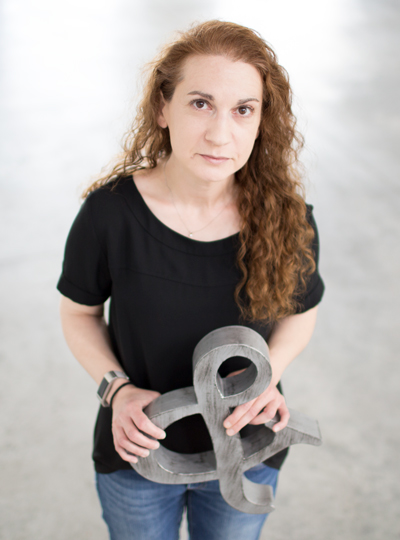
Monica Berlin was the Richard & Sophie D. Henke Distinguished Professor of English at Knox College, serving from 1998 until her passing in 2022. She held leadership roles as Chair of the Department of English and Associate Director of the Program in Creative Writing. Her academic background includes a B.A. in English Writing (1995, Knox College), M.A. in Literature and Composition (1998, Western Illinois University), and M.F.A. in Poetry (2002, Vermont College). Her research focuses on creative writing (poetry, nonfiction, fiction) and modern/contemporary American literature. She has published extensively in literary journals and anthologies, earning major awards like the Crab Orchard Poetry Series Open (2018) and New Measure Poetry Prize (2013). Her collaborative work with Beth Marzoni has been widely recognized in literary circles. Beyond academia, Berlin directed The Space (a literary center) and spearheaded digital archives like A Map of Voices: The Knox Writers' House . She contributed to campus governance as a member of the Faculty Personnel Committee and engaged with the community through roles at the Galesburg Public Library and literary festivals. Students praise her ability to guide them in refining their craft, emphasizing the 'elusive mechanics of writing.' Her legacy includes fostering literary innovation and accessibility in education and public spaces.
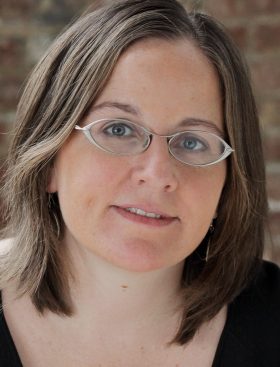
Dr. Amber West is a Lecturer in the Writing Programs at UCLA, part of the Humanities Division within UCLA College. She holds a B.A. in Literature & Creative Writing from UC Santa Cruz, an M.F.A. in Creative Writing from NYU, and a Ph.D. in English from the University of Connecticut. Her research interests span poetry and poetics, puppet theater, race and gender studies, performance studies, intersectionality, and service learning. West's scholarly work appears in journals like Journal of Research on Women & Gender and Puppetry International , alongside contributions to edited volumes such as Episodes from a History of Undoing and The Routledge Companion to Puppetry & Material Performance . Her creative works include poetry collections published by Finishing Line Press and The Word Works. She co-founded Alphabet Arts, a bi-coastal artist collective, and created/directed the Puppets & Poets festival in NYC (2011-2015). With nearly two decades of experience, she has taught writing, trained educators, and fundraised for programs in underserved communities, including roles with AmeriCorps VISTA, Brooklyn Public Library, and Girls Write Now.
Professor Kathy Bowrey is a leading academic in Intellectual Property Law at UNSW Sydney's Faculty of Law. Her work explores laws shaping knowledge creation, technology, and culture, with expertise in IP, Indigenous rights, and open research advocacy. She holds a Doctor of Juridical Studies from the University of Sydney and a BA LLB from Macquarie University. Her research focuses on historical and contemporary IP frameworks, including their impact on creators, Indigenous communities, and global innovation systems. Notable projects include the ARC-funded 'Producing, Managing and Owning Knowledge in the 21st Century University' (2019–2022), which shaped Australia's open research policies. Awards include the 2022 ANZLHS Book Prize for *Copyright, Creativity, Big Media & Cultural Value* and fellowships at the State Library of NSW and Museum of Applied Arts and Sciences. She co-authored *Adventures in Childhood* (2023), examining IP in toy and media industries, and *David Unaipon* (2023), exploring Indigenous innovation. Professor Bowrey co-leads the International Society for the History and Theory of Intellectual Property (ISHTIP) and advises on national research policies. Her grants include ARC Discovery Projects on Australian copyright history and IP commercialization.
Jan Jokisch is a Researcher and PhD student at the Max Planck Institute for Empirical Aesthetics in Frankfurt am Main, Germany, affiliated with the Heisenberg research group. His academic background includes a Master's in Comparative Literature from Johannes Gutenberg University Mainz and the University of Massachusetts Amherst, and a Bachelor's in Comparative Literature and Philosophy from Mainz. He has lectured in German language and literature at Argentine universities and served as a translator for the DEFA Film Library. His research focuses on drama history, quantitative and digital literary studies, and methodologies in the humanities, with current collaboration on the DFG-funded 'Forager Folklore Database (FFDB)' project. Education highlights include a thesis on 'Epistemological Horror in Literature' (2021) and a BA thesis reinterpreting Shklovsky's literary theory through Heidegger's phenomenology (2018). Jokisch has been recognized with DAAD scholarships (2019, 2021) and the Gutenberg Lehrkolleg Award (2018). He has authored and edited conference proceedings, including works on distant reading methodologies and interdisciplinary language studies. His academic work bridges computational analysis with traditional humanities, emphasizing the role of technology in literary research. Collaborations and editorial roles reflect his commitment to fostering international student scholarship and innovative research practices.
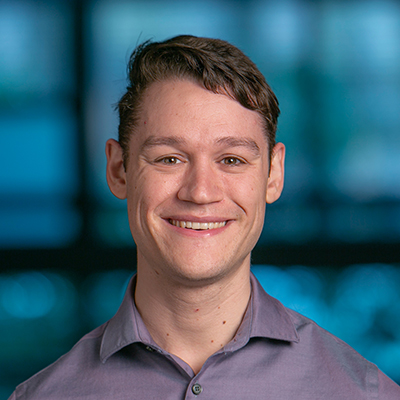
Andrew Head is an Assistant Professor at the University of Pennsylvania in the Computer and Information Science department. His research focuses on human-computer interaction, programming, and reading, particularly in developing technology for interactive reading and reasoning. He advises PhD students Alyssa Hwang, Hita Kambhamettu, Litao Yan, Jeffrey Tao, and Jessica Shi, and co-leads the Penn Human-Computer Interaction (Penn HCI) group with Danaé Metaxa. His work is published in top venues like ACM CHI, UIST, and ICSE. Research Interests: Andrew's work bridges interactive systems with programming environments, aiming to enhance how scientists and programmers interact with their tools. Key areas include AI-assisted code understanding, math notation accessibility, and medical note interpretation through interactivity. He employs user studies to identify needs and builds interactive systems to address them. Recent Article Trends: His publications emphasize systems-centric HCI approaches, integrating AI into code and document interfaces. Topics span code explanation (e.g., Ivie), property-based testing (e.g., Tyche), math notation augmentation (e.g., FreeForm), and medical informatics (e.g., Explainable Notes). Recent work also explores notebook environments (e.g., Bolt-on, Tyche) and literate programming (e.g., Colaroid). Scientific Awards: Distinguished Paper Award, ICSE 2024 Best Paper Awards at CHI (2024, 2023, 2022, 2019), UIST (2023, 2018), and others. Nominated for Best Paper at CHI 2023 and VL/HCC 2015. Advising & Grants: Andrew advises multiple PhD students and has secured significant grants, including a $1M NSF award for 'Property-based Testing for the People' (2024). His group collaborates with Penn’s MindCORE center and teams like PLClub and PennNLP. Labs & Teams: He co-leads the Penn HCI group, which works closely with other Penn research teams and labs. The group focuses on creating interactive tools that enhance scientific and programming workflows, supported by grants and cross-institutional partnerships.
Dr Sean Fear is a Lecturer in International History at the School of History, University of Leeds , specializing in Vietnamese history, the Cold War, and U.S. foreign relations. He advises the Independence Palace Museum in Ho Chi Minh City on a landmark exhibition about South Vietnam's political and cultural history (1967–1975), a project funded by Leeds' Faculty of Arts and supported by design firm Thincdesign. Fear’s research focuses on domestic politics and foreign diplomacy during the Vietnam War, drawing on Vietnamese-language archives and oral histories. Education: PhD (Cornell University), BA (University of Toronto) Visiting Roles: Visiting Professor at Fulbright University (2022–23) Fellowships: Dartmouth College, NYU Cold War Center, McGill University His forthcoming book (Harvard UP) analyzes the collapse of South Vietnam’s legitimacy, leveraging underutilized Vietnamese sources. Fear collaborates internationally with institutions like the British Library and the Social Sciences and Humanities Research Council of Canada. He supervises MA/PhD students on topics including decolonization, Cold War geopolitics, and post-war memory. Key Projects: Independence Palace Museum exhibit (since 2019) Research on Vietnamese state-building and U.S. influence Contributions to Cambridge History of the Vietnam War (AAP-award winning) Awards: His work earned two Association of American Publishers awards for the Cambridge History collaboration. Grants include Leeds' Research Innovation Service funding to finalize the museum exhibit’s physical design.
Michaela Bürger-Koftis serves as Associate Professor in the Department of Modern Languages and Cultures at the University of Genoa's School of Humanities. Her teaching portfolio includes advanced courses such as German Literature and Culture III , German Linguistics (LM) , and Cultures of German-speaking Countries across undergraduate and master's programs focused on teaching, publishing, and intercultural communication. Her research investigates polyphonic structures in multilingual literature, with emphasis on German-Russian linguistic intersections and autobiographical narratives. Key projects explore lyrical diary forms and creative writing through the lens of polyphony, examining how multilingual expression shapes narrative identity and literary innovation in contemporary works. Recent publications demonstrate consistent focus on the Polyphony research initiative, revealing evolving methodologies in multilingual creativity and writing. This work establishes frameworks for analyzing cross-linguistic literary production while documenting the project's development from 2018-2023. No scientific awards are documented in available sources. While specific student advisees remain unlisted, Bürger-Koftis contributes to academic governance as a member of the School of Humanities Library Board. Her collaborative research with institutions like Catania University demonstrates institutional partnership development within multilingual literary studies. The Polyphony project functions as an interdisciplinary research hub with dedicated web infrastructure, facilitating scholarly exchange on multilingual writing practices and serving as a model for digital humanities collaboration in literary studies.
Takuya Tsunoda serves as Assistant Professor of Japanese Film and Media in the Department of East Asian Languages & Cultures at Columbia University, with prior teaching appointments at Colgate University and the University of Chicago. Currently on leave for spring 2022, he maintains his office in 416 Kent Hall (contact: (212) 854-5040, tt2101@columbia.edu). His academic credentials include: BA: Waseda University (2002), Columbia University (2005) MA: Columbia University (2008) PhD: Yale University (2015) Dr. Tsunoda's research centers on institutional-media interplay through historical and theoretical lenses, examining how technologies shape socio-cultural practices and knowledge formations. His seminal work investigates Iwanami Productions' evolution from educational/science film provider to New Cinema pioneer, arguing that Japan's 1960s cinematic revolution originated in institutionalized audio-visual pedagogy rather than political radicalism. Current explorations extend to media reflexivity, alpine photography, insect ecology, children's media engagement, and diegesis in contemporary visual culture. Teaching : Courses include East Asian Cinema, Japanese Contemporary Media Culture, Japanese New Wave Modernism, Documentary Film Studies, and Critical Approaches to East Asian Theory. His publication trajectory (2018-2022) reveals consistent focus on postwar Japanese media archaeology, connecting educational film, industrial cinema, and New Wave movements through archival analysis. Key themes include cross-medial academicism, mediascape transformations, and the socio-political dimensions of visual pedagogy in reconstructing cinematic modernism. Active research trajectories include transnational New Wave parameters, television documentary studies, and ecological media representations, with ongoing book project examining Iwanami Productions' institutional legacy.
Donald R. Davis, Jr. is Professor and Chair of the Department of Asian Studies at the University of Texas at Austin's College of Liberal Arts. With a PhD from the same institution, he has established himself as a leading scholar in Hindu law and Dharmaśāstra studies. His work bridges religious studies, legal history, and South Asian studies, making significant contributions to our understanding of law and religion in medieval India. Davis earned his PhD from the University of Texas at Austin, where he has built his academic career. His scholarly journey has been deeply rooted in the study of Sanskrit legal traditions and their intersection with religious practice. Professor Davis's primary research concerns the interaction of law and religion in medieval India. He examines both historical evidence for law and legal practice through inscriptions and regional language documents, as well as the Dharmaśāstra tradition as a system of religious law and jurisprudence. His work situates Sanskrit normative texts within historical contexts while exploring their conceptual frameworks. He maintains the Resource Library for Dharmaśāstra Studies and has published extensively on Hindu law, including books such as The Spirit of Hindu Law (2010) and The Dharma of Business (2017). Davis's recent publications demonstrate a continued focus on the intersection of law, religion, and ethics in Hindu tradition. His work explores caste, conservatism, marital ethics, and the historical development of legal thought in India. He frequently draws comparative connections between Hindu legal traditions and other religious legal systems, contributing to broader conversations in legal anthropology and comparative religious law. Professor Davis actively supervises graduate students interested in Dharmaśāstra traditions and their relevance to law, religion, history, politics, and economics in India. He encourages students with broader interests in comparative religious law (Jewish law, Islamic law, Roman law, etc.) and works with those studying various aspects of Hinduism and classical religions in India, particularly in normative and "mainstream" areas such as Vedānta, Pūrva-Mīmāṃsā, Epics, and Purāṇas.
Susan Schreibman serves as Full Professor and Key Domain Chair of Digital Arts and Culture within the Faculty of Arts and Social Sciences at Maastricht University. She concurrently holds board positions at the National Library of Ireland and Research School Media Studies, and serves as Academic Editor for the University of Illinois Press. Her research centers on computationally-driven analysis of digital archives, cultural innovation, and participatory engagement design, with core specializations in Digital Humanities, Media Studies, Literary Modernism, and Irish Cultural Studies. She pioneers methodologies for remediating analog publication modalities into born-digital paradigms while critically examining their societal impact. Analysis of her 2022-2025 publications reveals dominant trends in 3D digital scholarship (particularly multimodal historical narratives like the Battle of Mount Street Bridge project), feminist approaches to digital humanities infrastructure, and social justice applications in archival systems. Her work consistently bridges technical innovation with cultural critique across heritage, education, and gender studies contexts. No scientific awards were documented in the source materials. Professor Schreibman leads significant research initiatives including PURE3D Contested Memories and #dariahTeach, indicating active grant-funded collaborations though specific funding sources remain unmentioned. Her editorial role for University of Illinois Press and co-edited volumes like Feminist Digital Humanities: Intersections in Practice (2025) demonstrate scholarly leadership. She directs the PURE3D project developing 3D reconstructions of historical events, contributes to the #dariahTeach digital humanities education platform, and participates in the IGNITE initiative advancing digital scholarly practices. These efforts operate within Maastricht University's Faculty of Arts and Social Sciences infrastructure with external partnerships at cultural institutions like the National Library of Ireland.
Arthur Weststeijn is an Assistant Professor in Political History at Utrecht University, specializing in the history of the Dutch Republic and its colonial empire, the history and contemporary politics of Italy, and the history of Spain and Latin America. He is affiliated with the Department of History and Art History within the Humanities faculty and is part of the Research Institute for History and Art History, focusing on International and Political History. Dr. Weststeijn's educational background includes: PhD in History, European University Institute, Florence (2010) RMA in History, European University Institute, Florence (2006) MA in Philosophy, University of Amsterdam (2005) MA in History, University of Amsterdam (2004) Erasmus Exchange, Universidad de Sevilla (2000-2001) His research focuses on the intellectual history of power, particularly examining ideas that express and contest political authority through two main themes: colonialism (how ideas have shaped European colonialism and resistance against it) and republicanism (how resistance to autocratic rule has given rise to ideas of liberty, citizenship, and democracy). His work spans early-modern Dutch colonialism, anticolonial thought, the history of democracy, and connections between ancient and modern forms of settler colonialism. He has published extensively on early modern republicanism, the political uses of classical heritage, and the making of modern Italy. Weststeijn's scholarly output demonstrates a consistent focus on the intersections between political thought, colonial history, and republican theory. His work often examines how historical ideas continue to shape contemporary political discourse, particularly regarding democracy, citizenship, and colonial legacies. He frequently engages with both European and transatlantic intellectual traditions, showing particular expertise in Dutch and Italian political thought. His notable awards and fellowships include: Fellow, Huntington Library, San Marino, California (Summer 2022) Fellow, John Carter Brown Library, Providence, Rhode Island (Spring 2019) Director of Historical Studies, Royal Netherlands Institute in Rome (2011-2017) Dr. Weststeijn has served as a visiting researcher at prestigious institutions including the Cambridge Centre for Political Thought, University of Southern California, University of Wisconsin at Madison, and University of Padua. He frequently appears as an expert commentator on Italian culture and politics in Dutch media and maintains an active public intellectual presence. He is involved in multiple research initiatives including the IOS research themes on Contesting Governance, Futures of Democracy, and Longtermism and Institutional Change. His work often involves interdisciplinary collaboration with archaeologists, classicists, and scholars from various humanities disciplines.
Maria Adank is a Postdoctoral Fellow in History at the University of Chicago and a Marie Skłodowska-Curie Global Fellow. She holds dual affiliations with the University of Verona (Department of Cultures and Civilizations) and previously served as a postdoctoral researcher at the University of Udine (2022-23). Her research focuses on gender history, material culture, and political agency in early modern European republics, particularly Venice and Genoa. Her current project, OSpaMa (2024-26), examines female political agency in Venetian and Genoese republics through objects, spaces, and material culture. This interdisciplinary work challenges traditional historiography by analyzing artworks, written texts, and domestic furnishings to trace women’s influence in republican governance. Recent publications explore Venetian patrician families, early modern libraries, and sartorial politics. Adank completed her Ph.D. in History at the University of Pisa (2021) with a dissertation on the Grimani di San Luca family’s material culture. An upcoming monograph, I Grimani di San Luca: Cultura materiale, genere e potere nella Venezia del Cinque e Seicento , will be published by Viella. Her work bridges art history, gender studies, and political history, emphasizing the interplay between material objects and social identity.
Ian Horrocks is a Professor of Computer Science at the University of Oxford and a Fellow of Oriel College. His research focuses on knowledge representation, description logics, automated reasoning, and semantic web technologies. He has held academic positions at the University of Manchester (2003–2007) and served as Chief Scientist at Cerebra Inc. (2001–2006). Horrocks earned his BSc (1st class), MSc, and PhD in Computer Science from the University of Manchester (1981–1997). His work includes foundational contributions to ontology languages (e.g., OWL) and reasoning systems such as HermiT and ELK. He has supervised over twenty doctoral students and postdoctoral researchers. His honors include Fellowships from the Royal Society (2011), ECCAI (2009), and the British Computer Society (2005). He serves as Editor-in-Chief of the Transactions on Graph Data and Knowledge and leads initiatives in semantic web standards and knowledge graph applications. Key Roles: Editor-in-Chief (Journal of Web Semantics), Co-Chair (W3C OWL Working Group) Grants: EPSRC Senior Research Fellowship (2005), numerous international collaborations Labs: Oxford Semantic Technologies, involvement in projects like RDFox and PAGOdA
David Bawden is a Professor in the Department of Library and Information Science (CityLIS) at City, University of London. With a publication record spanning over two decades, he has established himself as a leading scholar in information science, particularly known for his work on the philosophical foundations of information, knowledge organization, and information behavior. His research frequently intersects with Luciano Floridi's Philosophy of Information, which he has applied to library and information science theory and practice. Bawden's research interests focus on the theoretical underpinnings of information science, including information behavior, information literacy, knowledge organization, and the philosophical dimensions of information. His work often explores the conceptual frameworks that shape how we understand information in both physical and digital environments. He has made significant contributions to understanding information privacy through a philosophical lens and has examined temporal aspects of information in contemporary society. His recent publications demonstrate a continued focus on theoretical developments in information science, with particular attention to the implications of Floridi's work for library and information practice. Bawden's scholarship shows a consistent trajectory from examining historical aspects of information to contemporary challenges in the digital age, maintaining a strong theoretical orientation throughout. As a frequent collaborator with Lyn Robinson (also at City, University of London), Bawden has co-authored numerous papers exploring transitions between concepts of information across different domains, information overload, and the philosophical foundations of information science. His work has appeared in leading journals including the Journal of Documentation, Journal of the Association for Information Science and Technology, and Information Research. Bawden has been actively involved in the CityLIS program, contributing to innovative approaches to information science education including the development of curricula addressing data librarianship and the 'onlife' nature of contemporary information experience. His scholarship reflects a deep commitment to advancing the theoretical foundations of the field while maintaining relevance to practical information challenges.
Dr Theodor Dunkelgrün is a Senior Postdoctoral Researcher at Trinity College, University of Cambridge , and Academic Co-Ordinator of the Andrew W. Mellon Foundation-funded project Religious Diversity and the Secular University (2017–2022) at CRASSH. He was previously a postdoctoral fellow at St John’s College (2013–2018) and has taught across History, Divinity, and Classics at Cambridge, Bryn Mawr, UPenn, and the University of Antwerp. Education : Christelijk Gymnasium Sorghvliet (The Hague), Leiden University, University of Chicago (PhD, 2012). Visiting graduate work at Princeton (2005–06) and Oxford (2008). Research Focus : Intersections of biblical scholarship, history of the book, and interfaith intellectual exchange (1450–1900), particularly in the Low Countries and Mediterranean World. Examines how Jewish, Christian, and Muslim scholars engaged with the Hebrew Bible through technological shifts (print to photography) and institutional contexts. Publications include edited volumes like The Jewish Bookshop of the World (2020) and Bastards and Believers (2020), alongside articles on topics ranging from the Antwerp Polyglot Bible to Jewish converts in early modern Europe. Collaborations span institutions in Taiwan, Oxford, and Leiden, with ongoing work on global philological practices and the Hebrew Bible’s material history. Professional Engagement : Co-founded the Cambridge Seminar in Early Modern Scholarship and Religion (2017), and actively promotes academic freedom through refugee scholar initiatives. Affiliated with the Cambridge Forum for Jewish Studies, Centre for Material Texts, and international networks like EMoDiR and Ideas in Motion.