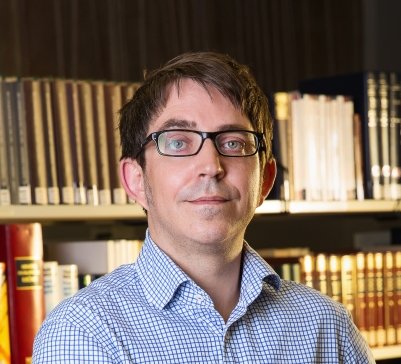
Andrew J. Parkes is an Assistant Professor (Lecturer) in Operational Research and Computer Science at the University of Nottingham , affiliated with the School of Computer Science and the COL research group (formerly ASAP). He has been a member of the LANCS Initiative's executive committee and co-organized multiple streams at international conferences like OR61, EURO 2019, and OR60. His research spans optimization techniques, heuristic methods, and applications in timetabling and financial modeling.
Dr. Eamon C Armstrong serves as Clinical Associate Professor and Clerkship Director in the Department of Family and Community Medicine at the University of Arizona College of Medicine. Based at the BUMG Alvernon Family Medicine Clinic and Residency Program, he provides patient care while supervising residents and medical students in Tucson. His career spans institutions across the United States and South Africa, with board certification in Family Medicine through the American Board of Family Medicine. His educational foundation includes: MD from University of Witwatersrand, Johannesburg (1987) MS in International Primary Health Care from University of London (2012) Family Medicine Residency at Highland Hospitals/University of Rochester (1997) Faculty Development Fellowship at University of Wisconsin (1998) Dr. Armstrong's research centers on patient-centered evidence-based medicine (EBM) at the point of care, emphasizing just-in-time clinical decision support using electronic health records. He integrates the biopsychosocial model into resident training to enhance patient-centered clinical methods. His work explores EBM curriculum interventions' impact on physician performance and patient outcomes, with strong focus on organizational change and guideline implementation in primary care settings. Scholarly output reveals consistent EBM innovation since 1998, with publications addressing clinical question formulation, database selection, and practical implementation strategies. His work bridges theoretical evidence with frontline practice, particularly in fracture prevention, cardiovascular care, and vaccine policy. His teaching excellence is recognized through: Graduating Resident Class Faculty Award for Excellence in Teaching (2024) Multiple Faculty Awards for Excellence in Teaching (2024, 2022-2020) Teacher of the Year Award in Family Medicine (2004, 2001) Vice-Chancellor’s team teaching award (2013) Headley White Clinical Teacher of the Year (2002) As Clerkship Director, Dr. Armstrong mentors students through Family Medicine Clerkships (FCM 813C) and Topics courses (FCM 896U), emphasizing real-patient EBM application. His Pool Trust Grant for the EPOC Project demonstrates successful grant acquisition for point-of-care evidence systems. He cultivates resident-as-teacher skills through interactive workshops while maintaining active clinical practice. Dr. Armstrong contributes to the University of Arizona Family Medicine Residency Program's educational framework at Alvernon Clinic, focusing on biopsychosocial integration and evidence-based decision making in diverse clinical scenarios.
Herbjørn Andresen is a Professor at the Faculty of Social Sciences , Oslo Metropolitan University , specializing in Archivistics, Library and Information Science . His research spans digital archives, public law, and the intersection of technology and governance. Research Interests : Digital archiving paradigms, algorithmic records, data protection, e-government, and the sociocultural role of libraries/archives. Key Publications : Focus on digital transformation of archival systems, legislative harmonization, and ethical challenges in data management. Research Groups : Active member of Information in Use (INFUSE) , contributing to records management discourse. Books : Arkivlova. Lovkommentar (2024) on Norwegian archival law.
Annisa Puspa Kirana is a Ph.D. candidate and researcher at the Department of Geo-information Processing (ITC-GIP), Faculty of Geo-Information Science and Earth Observation (ITC), University of Twente. She is a Lecturer in the Department of Information Technology at State Polytechnic of Malang, currently on study leave to focus on her Ph.D. research. Her work integrates Artificial Intelligence , Computer Vision , and Geospatial Analytics to analyze satellite/aerial imagery for Climate Change Mitigation , Disaster Monitoring , and Resource Management . PhD in Geo-Information Science @ University of Twente (Netherlands) Master of Computer Science @ IPB University (Indonesia) Her research emphasizes Deep Learning applications in Earth Observation, including Vision-Language Models and Agentic AI for multimodal data analysis. She collaborates with interdisciplinary teams , government agencies , and industry partners . Selected Publications Trends: Focus on AI agents , LLMs , VLMs , and Vision Transformers for geospatial and environmental applications Technical tutorials on Streamlit , TalkToEBM , and LangChain integration Conceptual breakdowns of agentic vs. agent-based systems , interpretability in AI , and prompt engineering Scientific Awards: LPDP Awardee (Indonesian Endowment Fund for Education) Microsoft Certified Educator She actively mentors students in AI/geospatial fields and advocates for open-source science and ethical AI practices in environmental decision-making. Her work bridges academic research and practical policy tools .
Dr. Neda Nikolić is an Associate Professor at the Department of Industrial Management within the Faculty of Technical Sciences at the University of Kragujevac, Serbia. With over 15 years of academic service since joining in 2006, she has established herself as a prominent researcher in industrial management, environmental protection, and disaster risk management. Her academic journey began with a degree from the Faculty of Management in Belgrade in 2000, followed by master's studies at the Technical Faculty in Čačak (completed in 2009), and culminating in a doctoral dissertation defended in 2016 at the Faculty of Organizational Sciences in Belgrade. Dr. Nikolić's research interests focus on the intersection of industrial management and environmental sustainability, particularly examining waste management systems, recycling processes, human resources in local government, and disaster risk reduction. Her work demonstrates a consistent thread connecting management principles with environmental protection and sustainable development practices. She has made significant contributions to understanding how local governments can optimize their environmental performance through strategic decision-making and human resource development. Analysis of her 15 most recent publications reveals a clear evolution from traditional industrial management topics toward more complex interdisciplinary research at the intersection of environmental science, public administration, and risk management. Her work increasingly addresses contemporary challenges including pandemic response, nuclear risk perception, and digital transformation in environmental management. The geographic focus remains primarily on Serbia and the broader Central and Southeast European region, with practical applications for local government implementation. Best paper award at ECOS2011 among 330 submissions from 47 countries Member of editorial board for International Journal of Disaster Risk Management President of scientific sector of Serbian Association for Recycling, Decontamination, and Demolition Member of Scientific-Professional Society for Risk Management in Emergency Situations Dr. Nikolić actively contributes to academic governance as a member of the Teaching-Scientific Council at the Faculty of Technical Sciences, Čačak. Her previous service includes roles as secretary of the Department of Industrial Management and membership on both the Self-Evaluation Commission and Library Commission. Her research has practical applications in local government operations, particularly in environmental management and disaster preparedness, with several publications focusing on capacity development for Serbian municipalities.
Hans Bauer is a researcher at the Institute for East and Southeast European Studies (Regensburg), specializing in digital humanities , historical cartography , and library science . He has worked on projects like GeoPortOst and OstDok , focusing on open access, georeferencing, and digital collection management. His career spans roles in corporate history, education, and library sectors since the early 2000s. MA in Slavic studies and history of Eastern/Southeastern Europe (LMU Munich, 2003) Current role: Research associate at IOS, managing digital collections and Polonica library Pioneering work on map metadata, open science, and spatial information retrieval Bauer’s research bridges library innovation and historical scholarship , particularly through georeferenced maps and open access initiatives. His work transforms archival materials into accessible digital resources, emphasizing interdisciplinary collaboration and metadata-driven discovery. Recent publications and lectures address trends in digital humanities , cartographic digitization , and research data management . He co-edits the open-access journal e-Perimetron , focusing on cartography and digital technologies. Projects like GeoPortOst highlight his expertise in linking historical maps with modern spatial analysis tools. Bauer actively contributes to library education through workshops on Zotero, KI-tools, and open science practices. He advocates for libraries as dynamic hubs for research support, emphasizing transparency, digital preservation, and user-centric services.
Amery Wu serves as Associate Professor and ECPS Graduate Advisor for Admissions and Scholarship at the University of British Columbia's Faculty of Education, specifically within the Department of Educational and Counselling Psychology, and Special Education. Based in Scarfe Library Block 287, Dr. Wu specializes in advanced quantitative methods for educational and psychological measurement. Dr. Wu's research focuses on applied statistical modeling in educational contexts, with particular expertise in test item performance analysis , globalization of testing through internet platforms , and longitudinal assessment methodologies . Their scholarly work bridges psychometrics with practical educational applications, examining how test design impacts diverse learner populations across international contexts. Key methodological contributions include innovations in mixed-effects modeling, differential item functioning analysis, and validation frameworks for complex assessment systems. Recent publications demonstrate a clear trajectory toward integrating response process data with performance outcomes , particularly through Bayesian modeling and advanced visualization techniques for online assessments. The research consistently addresses measurement challenges in high-stakes contexts including immigration language testing (CELPIP), health literacy instruments, and inclusive classroom models. Dr. Wu's work emphasizes the ecological validity of assessments within their sociocultural contexts. Teaching responsibilities include core methodology courses: EPSE 423 (Assessment of Classroom Learning), EPSE 481 (Introduction to Research in Education), EPSE 482 (Statistics for Educational Research), EPSE 483 (Reading Educational Research), and advanced graduate courses EPSE 592 (Experimental Designs) and EPSE 596 (Correlational Analysis). As Graduate Advisor for Admissions and Scholarship, Dr. Wu shapes the quantitative training of future educational researchers.
Krzysztof Walczak is a Professor at the Department of Information Technology, University of Economics in Poznan. His work bridges Information and Communication Technology (75%) with Management and Quality Studies (25%). 2020–Present: Professor 2010–2020: Assistant Professor 2001: Doctorate Research focuses on Virtual & Augmented Reality applications in education, industry, and cultural heritage. Key themes include semantic modeling for adaptive XR interfaces, 3D content creation for marketing, and AI integration in immersive environments. Recent work explores: Generative AI ethics in education Industry 4.0 VR training systems Financial data visualization in AR Green digital transition policies As a scientific leader, he has published 70+ works and supervised 110+ research activities. His Hirsch index (approx. 25) reflects significant impact in semantic XR systems and 3D web technologies.
Corinne Grenier is a Professor at KEDGE Business School specializing in strategy, sustainable development, and entrepreneurship. She holds a PhD and HDR in management science from Paris Dauphine University and serves as the scientific director of the research and experimentation chair Territoires API (inclusive and enabling), which focuses on creating more inclusive living territories for people with disabilities. She also leads the START research project funded by ANCREAI and CNSA on communities of practice in disability. Her research interests include innovation, experimentation and evaluation, governance, leadership, networks of practices, knowledge management, inclusive society, and empowerment. Her work bridges theoretical organizational studies with practical applications in disability inclusion, social innovation, and healthcare transformation, with particular attention to the role of boundary-spanning actors in facilitating change and creating spaces for innovation. Analysis of her recent publications reveals a strong focus on organizational innovation in healthcare and social services, with consistent themes around inclusive practices, knowledge management, and the challenges of implementing social innovation in complex systems. Her work spans theoretical contributions to management science while maintaining practical relevance for policymakers and practitioners. Dr. Grenier has secured significant research funding, including a three-year grant for the Territoires API chair from ARS PACA, FIRAH, and IReSP. She collaborates internationally with researchers from HEC Montréal and Canadian universities. Since 2008, she has organized French-language academic conferences on health in Marseille and directs the 'Health and Innovation' collection at ISTE/Wiley. She actively participates in professional and institutional communities, supporting research dissemination and contributing to national and regional transformations of the French health system through her membership in various think tanks and advisory roles.
Professor Christoph Henzel serves as Professor of Historical Musicology and Head of the Musicology/Musician Medicine department at the University of Music Würzburg since 2007. His academic career spans multiple prestigious German institutions including the University of Rostock, FU Berlin, and the Berlin State Library. His educational background includes studies in Musicology, Music Education, Philosophy and Catholic Theology (1990-1995), followed by a PhD in 1993 on Vincenzo Righini's operas and a Habilitation in 2001 on Graun's musical tradition in the 18th century. Henzel's research focuses on historical musicology with particular emphasis on regional music culture in Würzburg, film music during the Third Reich, and interdisciplinary studies connecting music with childhood development and societal contexts. His publications reveal a consistent interest in German music history across different eras and contexts. His recent publications (2010-2023) demonstrate expertise spanning institutional history, cultural analysis during crisis periods, and regional musical traditions, with a notable focus on Würzburg's musical heritage and cinema music under Nazi rule. As an academic leader, Henzel serves as editor of the 'Berliner Klassik' publication series and has been a juror for the international 'Gebrüder Graun-Wettbewerb.' From 2003 to 2018, he was a member of the Advisory Board for 'Kieler Beiträge zur Filmmusikforschung.'
Dana Sawchuk is a Professor and Chair at the Department of Sociology, Wilfrid Laurier University . Her research focuses on Critical Gerontology, Aging and the Print Media, Job Loss, and Activism , with a particular interest in the Scholarship of Teaching and Learning . Research Interests : Aging Studies, Media Representation, Economic Precarity, and Contemplative Pedagogy Contact : dsawchuk@wlu.ca , DAWB 5-135 Her recent work examines aging through media narratives, including late-career job loss and family caregiving , while her teaching innovations integrate active learning and contemplative practices . Publications span from 2025 to 2013, covering topics like autism representation , religious coping , and media agency . No scientific awards are specified in the available information.
Marilena VECCO is a Full Professor and Arts and Cultural Management Research Axis Coordinator at Burgundy School of Business (BSB), specializing in Humanities and Arts Management within the School of Media, Culture & Communication. With an extensive publication record spanning cultural economics, heritage management, and arts entrepreneurship, she has established herself as a leading scholar in European cultural management. Her research interests focus on cultural entrepreneurship, museum studies, heritage management, cultural economics, gender studies in creative sectors, and GLAM (Galleries, Libraries, Archives, Museums) institutions. She has developed expertise in analyzing gender gaps in art markets, cultural policy impacts, and collaborative practices in cultural institutions. Her work often bridges theoretical frameworks with practical applications in cultural management. Professor VECCO has been actively involved in significant European research projects, most notably the Horizon Europe GLAMMONS Project, which examines commons-oriented approaches to cultural institutions. Her recent publications demonstrate a strong focus on co-curation practices, dark heritage research, and the relationship between cultural heritage and well-being. She frequently presents at international conferences including AIMAC, IECER, and EWACE, and has chaired tracks on cultural entrepreneurship. She has served as a research contributor for European Commission initiatives, including work on gender gaps in cultural and creative sectors. Her international collaborations extend to institutions in China, where she has delivered lectures to PhD students at Peking University on European arts management approaches. Professor VECCO's academic work demonstrates a commitment to advancing understanding of cultural management through rigorous empirical research while maintaining strong connections to practical applications in the field. Her leadership in coordinating research axes and contributing to major European projects positions her at the forefront of contemporary cultural management scholarship.
Haoqi Zhang is an Associate Professor at Northwestern University in Computer Science and Design, with offices at 2133 Sheridan Rd., Evanston, IL. He directs the Design, Technology, and Research (DTR) program and co-directs the Delta Lab with interdisciplinary collaborators. His work bridges Social Computing , Human-Computer Interaction , Artificial Intelligence , and Learning Science to create socio-technical systems advancing human values. Education: PhD in Computer Science from Harvard University (2012) BA in Computer Science and Economics from Harvard University (2007) Research interests focus on Computational Ecosystems that interweave community processes, social structures, and intelligent systems to promote values like self-direction , metacognition , and belonging . His projects include agile research studios for training researchers, opportunistic collective experiences for remote collaboration, and flexible coordination in crowdsourcing systems. Recent publications examine metacognitive learning in CS education, dialectical activities in HCI, and trust dynamics in crowdfunding. Supported by National Science Foundation grants in Cyber-Human Systems and Cyberlearning, plus Microsoft FUSE Labs and Northwestern institutional awards. Awards include Microsoft FUSE Labs Research Award Northwestern Office of the Provost Award for Digital Learning Notable Paper Award at HCOMP 2013 Best Paper Honorable Mention at CHI 2018 Mentors PhD students Kapil Garg and Gobi Dasu , while fostering over 100 students through DTR. Runs a Junior Faculty Support Group since 2022, providing emotional and professional support for early-career academics.
Prof. Dr. Mimoza Anastoska Jankulovska serves as a full Professor at the Faculty of Technical Sciences and Informatics, International Slavic University "G.R. Derzhavin", delivering courses across both Sveti Nikole and Bitola campuses in North Macedonia. Her academic career spans over 30 years with significant contributions to computer science education and educational technology integration. Her educational foundation includes: Doctor of Technical Sciences from Faculty of Information and Communication Technologies, University "Sv. Kliment Ohridski", Bitola Postgraduate studies at Pedagogical Faculty, University "Sv. Kliment Ohridski", Bitola Undergraduate degree in Electrical Engineering from Faculty of Electrical Engineering, University "Kiril and Metodij", Skopje Prof. Jankulovska's research centers on Educational Technology and ICT in Education, with specialized focus on Internet Technologies, Programming methodologies, and digital transformation in learning environments. Her work critically examines infrastructure challenges, teacher training needs, and pedagogical adaptations required for effective technology integration, particularly emphasizing crisis-responsive education models as demonstrated during pandemic lockdowns. Her 12 publications from 2005-2021 reveal an evolving research trajectory: early work established foundations in educational information systems and project management, while recent studies analyze pandemic-driven digital shifts, database utilization in Macedonian education, and social media's pedagogical implications. Collectively, these works demonstrate consistent engagement with technology's role in reshaping educational assessment, teacher responsibilities, and student engagement across diverse learning contexts. With extensive project leadership experience at IMOR (2000-2020) combined with current teaching responsibilities in core computer science subjects, Prof. Jankulovska bridges theoretical research with practical implementation in North Macedonia's educational landscape.
Richard J. Ross is the David C. Baum Professor of Law and Professor of History at the University of Illinois at Urbana-Champaign, where he holds a joint appointment in the College of Law and History Department. He serves as co-director of the Illinois Program in Legal History and founder/director of the Symposium on Comparative Early Modern Legal History. His academic career spans multiple institutions, having previously held positions at the University of Wisconsin-Madison and visiting appointments at Harvard, NYU, University of Pennsylvania, Hebrew University, and Tel Aviv University. Dr. Ross earned his BA (1984), JD (1989), and PhD in History (1998) from Yale University, where he served as symposium editor and senior editor of the Yale Law Journal. His interdisciplinary training bridges legal and historical scholarship, providing a unique perspective on the development of law in historical context. Professor Ross's research focuses on three primary areas: the development of early American law in comparative context, the political and intellectual history of legal communications, and the intertwined influence of law and religion on governance. His comparative approach examines American law through the lenses of Spanish New World empire and British Ireland, revealing how America came to see itself as a law-centered society. He has made significant contributions to our understanding of legal pluralism, particularly in colonial contexts where settler law interacted with indigenous legal traditions. His work on legal communications explores how law was transmitted and understood across imperial boundaries, while his research on law and religion investigates how theological concepts shaped legal thought in early modern England and America. Professor Ross's scholarly output demonstrates consistent engagement with comparative legal history, particularly focusing on the early modern period (c. 1492-1815). His publications reveal a sophisticated understanding of how legal systems developed differently yet interconnectedly across the British and Spanish empires. A recurring theme in his work is the concept of legal intelligibility - how different legal cultures understood and negotiated with each other's legal principles. His recent work increasingly emphasizes the role of indigenous peoples in shaping colonial legal systems, challenging traditional narratives of imperial legal dominance. Honorable mention for the 1999 Sutherland Prize from the American Society for Legal History 2013 Carroll P. Hurd Award for Excellence in Faculty Scholarship from the University of Illinois College of Law As director of the Illinois Legal History Program and founder of the Symposium on Comparative Early Modern Legal History, Professor Ross has created important platforms for scholarly exchange. The biennial Symposium brings together law professors, historians, and social scientists to explore comparative legal history topics, traditionally meeting at the Newberry Library in Chicago. His leadership in these initiatives has fostered interdisciplinary collaboration and advanced the field of legal history. Professor Ross has also received research fellowships from Yale Law School, Yale's Institute for Social and Policy Studies, the American Historical Association, the Institute for Research in the Humanities at the University of Wisconsin, and the Spencer Foundation. Professor Ross directs the Illinois Legal History Program and the Symposium on Comparative Early Modern Legal History, creating collaborative spaces for scholars examining law in historical context. His work bridges multiple academic communities, connecting legal scholars with historians and bringing together specialists in British, Spanish, and indigenous legal traditions.