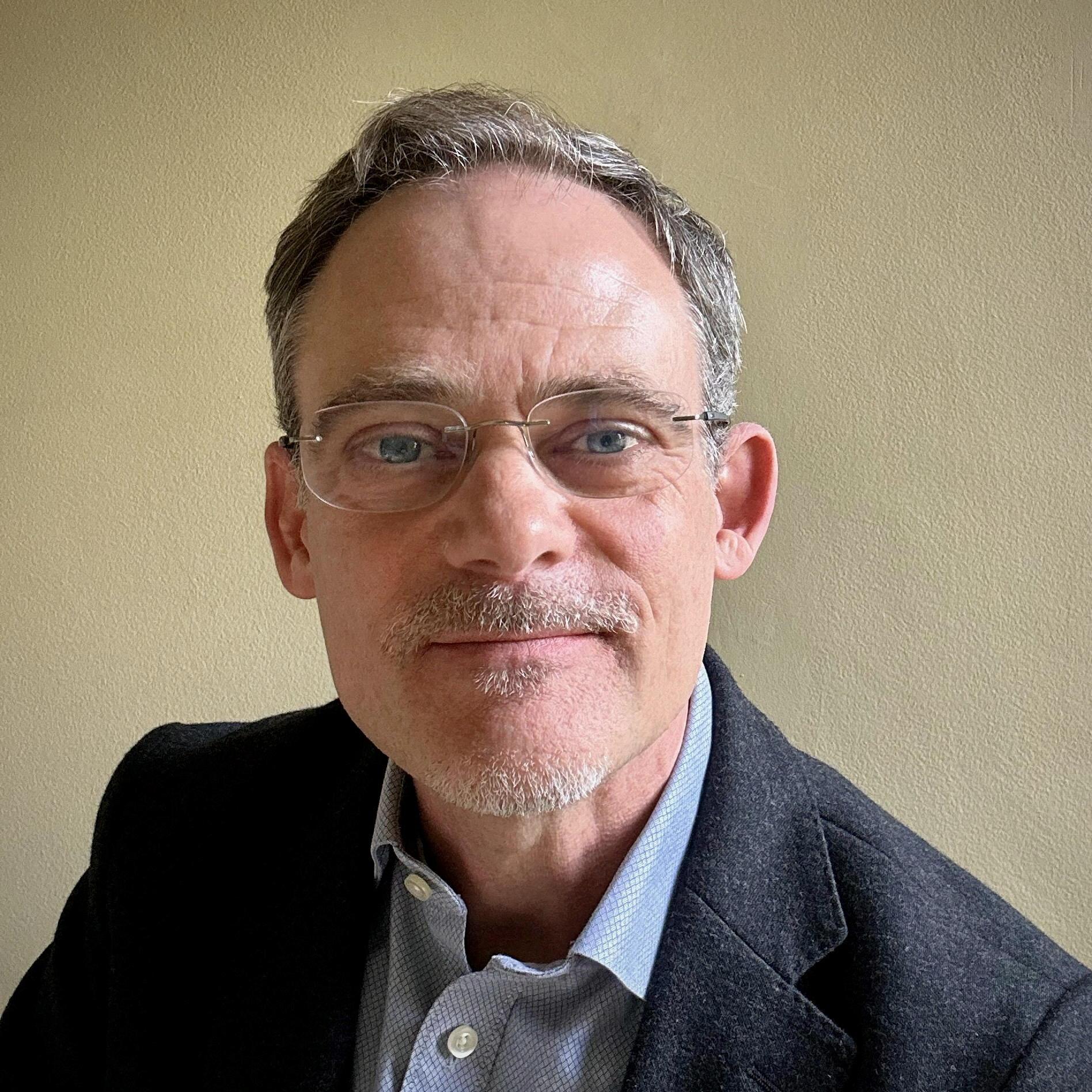
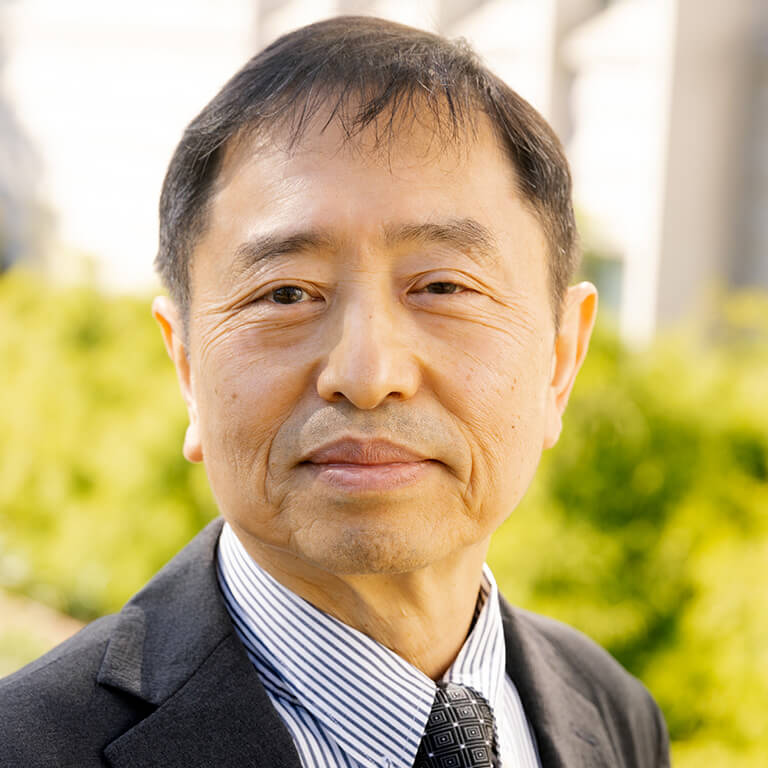
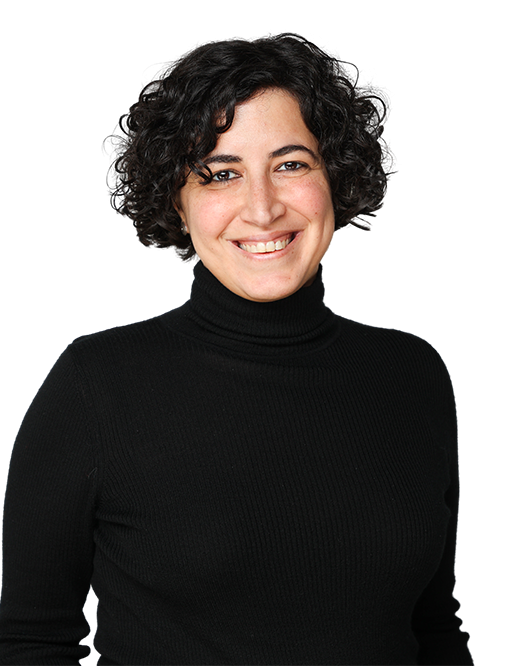
Dr. Ute Römer-Barron is a prominent researcher in corpus linguistics with over 20 years of contributions to language teaching, academic writing, and phraseological analysis. She serves as General Editor for the Studies in Corpus Linguistics book series and has co-edited multiple volumes on corpus-driven methodologies. Specializes in verb-argument constructions (VACs) and formulaic sequences Investigates second language acquisition through computational corpus analysis Develops pedagogical frameworks for corpus-based English teaching Her work spans academic writing in English as a lingua franca (2020), L2 development patterns (2019), and psycholinguistic studies of construction learning (2014). Recent research (2024) examines modal verb constructions in L2 learners.
Juan Muñoz López is an Associate Professor of Spanish Language at the School of Languages, Cultures and Societies, University of Leeds, where he has been a member of the Spanish, Portuguese and Latin American Studies (SPLAS) subject area since 2002. He plays a key role in language teaching, curriculum development, and the Year Abroad program, contributing significantly to the enhancement of Spanish language education within the School. Education: MA in Applied Linguistics: Teaching Spanish as a Foreign Language, Universidad Antonio de Nebrija (Madrid) PGCE in Modern Foreign Languages, Universidad de Alicante BA Hons in Spanish and English Studies, Universidad de Castilla-La Mancha Diploma in French Language, Escuela Oficial de Idiomas His research focuses on Spanish as a Foreign Language, Content and Language Integrated Learning (CLIL), and the development of intercultural and mediation skills during study abroad experiences. He emphasizes innovative pedagogy, digital learning, flipped classrooms, and authentic materials to enhance student engagement and employability. His work aligns with the Common European Framework of Reference for Languages (CEFR), promoting standardized and effective language instruction. The recent publications of Juan Muñoz López reflect a strong trend in language pedagogy, particularly in integrating content and language, developing digital tools for assessment, and fostering cultural awareness. His work spans from curriculum design to practical classroom applications, with a consistent focus on learner autonomy, intercultural competence, and innovative assessment methods. Topics such as nonverbal communication, flipped learning, and e-portfolios illustrate his commitment to modern, student-centered teaching approaches. Professional Memberships: UNILANG ELE UK Juan has led major teaching initiatives, including the development of the Period Abroad E-Portfolio and coordination of Spanish language modules across all levels. His contributions have been recognized by External Examiners for their methodological rigor and innovative design. He has also organized academic events such as the ELEUK Annual Conference and actively participates in teacher CPD and research networks, further demonstrating his leadership in language education. Research and Leadership: Spanish and Portuguese Year Abroad Tutor MODL9500 LCS Year Abroad Module Leader Organizer of ELEUK Annual Conference 2023 (University of Leeds) Active presenter at national and international language teaching conferences
Finn Årup Nielsen is an Associate Professor at the Technical University of Denmark (DTU), affiliated with the Cognitive Systems department under Applied Mathematics and Computer Science. His career spans neuroinformatics, text mining, and social media analysis, with a focus on integrating neuroscience and computer science. Education : Master in Engineering (1993-1996), Technical University of Denmark Research Interests : Neuroinformatics: Developing software and databases for brain imaging data and neuroscience text analysis Social Media Analysis: Mining Twitter and Wikipedia for citation patterns, sentiment, and topic trends Knowledge Graphs: Wikidata integration, lexeme alignment, and semantic representation Environmental Informatics: Applying AI to sustainable assessment through projects like DreamsKG Project Supervision : Supervised PhD projects on federated learning, neural network explainability, and big data analytics at DTU Contributed to foundational neuroimaging research in the Human Brain Project since 1994
Murathan Kurfalı is an active researcher at Uppsala University's Department of Linguistics and Philology within the Faculty of Languages, specializing in Natural Language Processing with a strong focus on Grammatical Error Correction (GEC), discourse analysis, and multilingual applications. His work bridges computational linguistics with practical language education tools, particularly for Swedish language processing. His research interests center on developing and evaluating NLP systems for language learning, with significant contributions to GEC evaluation methodologies using Large Language Models. He has pioneered reference-free evaluation metrics through LLM-based post-editing and created benchmark datasets like SweSAT-1.0 for assessing Swedish language models. His work extends to climate change applications through ClimateEval, a comprehensive NLP benchmark for climate-related tasks. Analysis of his publication trends shows consistent advancement in discourse analysis (particularly implicit relation classification and connective detection) alongside growing emphasis on climate informatics and Swedish language model evaluation. His methodological approach favors resource-efficient techniques like gradient boosting for connective detection while leveraging LLM capabilities for complex tasks. As a collaborative researcher, he frequently partners with Uppsala colleagues including Joakim Nivre and Mats Wirén, contributing to major workshops like BEA, ClimateNLP, and NLP4CALL. His work demonstrates strong translational impact from theoretical NLP to practical language education and climate science applications.
Dr. Heidi Jauhiainen is a Postdoctoral Researcher at the Department of Languages, University of Helsinki, and member of the Centre of Excellence in Ancient Near Eastern Empires (ANEE). With a PhD in Egyptology and BSc in Computer Science, her work bridges ancient text analysis with digital humanities. University of Helsinki Department of Languages Centre of Excellence in Ancient Near Eastern Empires Her research focuses on: Digital epigraphy for Egyptian and Mesopotamian scripts Machine-readable ancient text creation Language technology for dead languages Quantitative analysis of religious texts Statistical dating of cuneiform documents Lexical networks in Akkadian and Egyptian Recent publications demonstrate technical and philological contributions to: Hieroglyphic text alignment algorithms Geospatial analysis of Greek-Egyptian texts Neo-Assyrian religious quantification Akkadian emotion mapping fastText embeddings for ancient languages She leads the MaReTE project and contributes to ANEE's digital infrastructure development, with presentations at ICE XIII and Rencontre Assyriologique Internationale.
Taarna Aura Inari Valtonen serves as an Adjunct Professor in the Past Present Sustainability (PAES) program and a visiting scholar in the Ecosystems and Environment Research Programme at the University of Helsinki. Her research focuses on Saami languages , historical linguistics , onomastics , and environmental history , with particular attention to socioecological interactions in Arctic regions. Key Research Themes : Saami protohistory, oral tradition analysis, place name evolution, and language policy impacts. Methodological Approach : Integrates archival research with ecological data to reconstruct human-nature relationships. From 2021 to 2025, Valtonen has produced 20 research outputs, including 5 in 2024 alone. Her recent work examines 17th-century Saami poetics , colonial linguistic suppression , and Arctic environmental memory through interdisciplinary frameworks combining linguistics and ecological science.
David Skillicorn is a Professor at the School of Computing, Queen's University and an Adjunct Professor in the Mathematics and Computer Science department at the Royal Military College . His research focuses on adversarial knowledge discovery with applications in terrorism, cybersecurity, crime, fraud, and financial report analysis. He leads the Adversarial Analytics research group and contributes to social network analysis and human behavior modeling . Research Interests: Adversarial data analytics Cybersecurity and fraud detection Social network analysis with typed edges Deception detection in textual data Privacy-preserving systems design High-dimensional data modeling Recent Publications: Focus on security informatics, counterterrorism analytics, and adversarial prediction frameworks. Key themes include novel document ranking systems, robust clustering methods, and semantic sensor development for anomaly detection. Scientific Contributions: 2009 IEEE Technical Achievement Award for adversarial analytics Best Paper at IEEE WSE2011 for service-oriented web analysis Author of foundational texts on high-dimensional datasets and adversarial knowledge discovery Teaching Activities: Coordinates courses like CISC251 (Introduction to Analytics), CISC447/CISC866 (Cybersecurity), and specialized grad courses in cybersecurity and policing. Develops pedagogical resources for effective learning techniques and hypermedia-based education . Academic Genealogy: Ph.D. under Ralph Stanton (University of Manitoba, 1981), with lineage connections to Erdős (Erdős number 3), Gauss, and other mathematical luminaries.
Michael S. Worden is an Associate Professor at Brown University, affiliated with the Carney Institute for Brain Science and the Department of Cognitive and Psychological Sciences. His research focuses on cognitive neuroscience, attention, and visual perception using neuroimaging (fMRI, EEG) and behavioral techniques. Educational background: PhD (1998) from the University of Pittsburgh, MS (1991) from the University of Oregon, BA (1987) from Pomona College. Research interests center on neural mechanisms of selective attention, distractor suppression, and the impact of experience on attentional processes. His work explores spatial attention dynamics, conflict resolution, and brain oscillations in attentional networks. Key collaborative networks include the Cognitive Neuroscience Society and Organization for Human Brain Mapping, with co-authors like Sheila Blumstein and colleagues at Brown University. Scientific awards include the Cognitive Psychology Teaching Award and Service to Brain Science Award. His publications span topics in attentional dynamics, neuroimaging methods, and developmental differences in learning mechanisms.
Salvatore MENZA is an Associate Professor in the Department of Glottology and Linguistics at the University of Catania, where he is also qualified as a full professor in the GLOT-01/A research program since December 2023. He is an active researcher and teacher in theoretical and applied linguistics, with a focus on language contact, syntactic theory, and digital applications in linguistics. His research interests are centered on theoretical linguistics, particularly syntactic categories and the interface between syntax and phonology. He also specializes in interlinguistics, with a strong emphasis on microcontact phenomena in Gallo-Italic dialects of Sicily. His work extends into lexicography and language teaching, especially in digital environments and heritage language contexts. His recent publications reflect a consistent trajectory in language contact, dialectology, and theoretical syntax. He investigates how syntactic structures interact with phonological constraints, how auxiliary selection operates in Italian, and how Gallo-Italic enclaves maintain linguistic identity. His digital pedagogy work highlights innovative teaching methods using student-built resources and online platforms. Salvatore MENZA leads the PRIN 2022 PNRR project "Contact-induced change and sociolinguistics: an experimental study on the Gallo-Italic dialects of Sicily," demonstrating significant research leadership. He is a member of the Scientific Council of the Center for Sicilian Philological and Linguistic Studies, contributing to major lexicographic projects such as the Vocabolario siciliano and historical-etymological dictionaries of Sicilian and Gallicisms. He supervises several thesis students, with topics ranging from linguistic interference in bilingual conversation to enantiosemy and auxiliary selection. His office hours are held weekly via Microsoft Teams, and he encourages students to develop personalized study guides based on course materials.
Kokil Jaidka is an Assistant Professor in the Department of Communications and New Media at the National University of Singapore (NUS), Faculty of Arts and Social Sciences. She is the founding Principal Investigator of the SMOL (Social Media, Online behavior and Language) project, focusing on computer-mediated communication and online human behavior. Her research spans social media analytics, computational social science, digital well-being, and ethical AI. She has contributed to policy discussions on age verification and platform regulation in Singapore and has developed tools like Twilly and SMOLgram for longitudinal online experiments. Her recent scholarly work explores emotional expression in political discourse, emoji use in digital communication, affordances of social platforms, misinformation dynamics, and ethical frameworks for computational research. She advocates for responsible experimentation and has co-developed ethical guidelines for top-tier conferences. Key research trends in her recent publications include: Use of NLP and machine learning to analyze social media content Design and ethics of longitudinal online behavioral studies Impact of platform design on user behavior and well-being Political communication and disinformation in digital spaces Policy implications of social media governance Her scientific contributions emphasize interdisciplinary approaches at the intersection of communication, computer science, and psychology. As a PI and faculty member, she leads the SMOL research team, mentors students, and secures research grants for innovative projects in digital behavior. She actively engages with public discourse through blog posts and media collaborations, translating academic insights for broader audiences. She has developed and shared resources for online experimentation using platforms like Amazon Mechanical Turk, oTree, Empirica, and custom-built tools, supporting open and reproducible research practices.
Tom Bellomo is an Assistant Professor who has worked across institutions like Stetson University and CSUNIV. His career spans roles in teaching English for Academic Purposes (EAP), developmental reading instruction, and administrative leadership as a Quality Enhancement Plan (QEP) Director. He emphasizes applied linguistics to support international students’ English learning and holds formal affiliations with professional organizations such as the National TESOL Association, Sunshine State TESOL, and Florida Developmental Education Association (FDEA). B.A. in Applied Linguistics M.A. in English Language Arts – Reading Specialty Ed.D. in Educational Leadership Dr. Bellomo’s research interests focus on vocabulary acquisition strategies, particularly morphological awareness and phonetic recognition, and their application in language instruction. His work bridges linguistic theory with practical classroom techniques, addressing challenges in EAP and developmental reading. He has also explored schema theory’s role in vocabulary development and data-driven administrative practices through his QEP leadership. His publications and presentations highlight trends in morphological analysis for vocabulary, accent reduction, data management in education, and EAP pedagogy. These works often intersect applied linguistics with educational leadership, emphasizing actionable insights for instructors and administrators. Peer-reviewed contributions appear in journals like TESL-EJ and Reading Matrix, while conferences include Southwest Florida TESOL and academic symposiums. Dr. Bellomo actively engages with professional communities, including the National TESOL Association, Sunshine State TESOL, and FCRC. His presentations and membership reflect a commitment to advancing language education and developmental reading practices through collaborative research and resource sharing.
Hyo Sang Lee is an Associate Professor and Korean Language Program Coordinator at Indiana University , Bloomington, IN. His work bridges Korean linguistics , discourse-pragmatics , and Korean language education through a functionalist lens. PhD in Linguistics from UCLA (1991) Research focuses on grammaticalization , language universals , and web-based language pedagogy Developed Integrated Korean textbook series spanning beginner to advanced levels Research interests center on how human communication shapes grammar. He argues that grammatical structures emerge from "fossilized communicative habits" , particularly studying marker usage, modality, and temporal systems. His work combines discourse-pragmatic analysis with cognitive constraints on language use. Publication trends show a progression from foundational Korean grammar textbooks (1987-2005) to more specialized research on: Grammaticalization mechanisms (2002-2003) Modality and tense-aspect interactions (2015) Assessment methodologies (2014-2020) Technology-enhanced language learning (2017-2022) Teaching approach emphasizes contextualized instruction through dialogues rather than explicit grammar teaching. Developed web-based resources at https://korean.sitehost.iu.edu/index.shtml to enhance language exposure through multimedia technology.
Dr. Manuel de Buenaga Rodríguez is a Faculty Member in the School of Engineering at Universidad Europea de Madrid, where he leads research in the Department of Artificial Intelligence. His work bridges Natural Language Processing, Biomedical Informatics, and E-Health solutions. PhD in Computer Science from Universidad Complutense de Madrid (1996) Specializes in Text Categorization, Semantic Annotation, and Ontology-based Systems Research Highlights: Pioneered the POESIA open-source web filtering system and contributed to the NAVIga platform for elderly healthcare. His work integrates WordNet, UMLS, and Machine Learning in semantic disambiguation and user modeling. Key Publications Trends (2010-2013): Focus on Biomedical document annotation (BioAnnote) Virtual reality rehabilitation systems Lexical database integration for text classification Concept-based medical/tourism information access Spanish language processing challenges Collaborations: Works with José María Gómez Hidalgo, Simone Marchi, and European research networks like MAVIR. Projects span Madrid Region initiatives and translational medicine tools.
Aslı MADEN serves as an Associate Professor in the Department of Turkish and Social Sciences Education at Bayburt University's Faculty of Education. She holds key administrative roles including Azerbaijan and Caucasus Coordinator for the Turkish Teaching Application and Research Center Directorate, and membership in the Faculty Erasmus Commission and International Relations Commission. Her work bridges academic research with institutional leadership in Turkish language education. Her research focuses on critical dimensions of language pedagogy: Curriculum development and comparative analysis for Turkish/English language instruction Reading comprehension strategies across print/digital environments Vocabulary enrichment techniques for native and foreign language learners Digital literacy integration in classroom settings Cultural transfer in Turkish-as-a-foreign-language teaching Teacher training methodologies and self-efficacy development Media literacy applications in educational contexts Analysis of her 15 most recent publications (2022-2025) reveals concentrated empirical work on middle school Turkish classrooms, with strong emphasis on content analysis of graduate theses and curriculum materials. A dominant trend examines anxiety reduction in reading/writing, vocabulary acquisition through digital tools (e.g., electronic dictionaries), and cultural adaptation challenges for foreign learners of Turkish. Her methodology frequently employs comparative studies between traditional and digital learning environments.
Gabriella Lapesa is a Junior Professor for Responsible Data Science and Machine Learning at Heinrich-Heine University Düsseldorf and leads the Data Science Methods team in the Department of Computational Social Science at GESIS Cologne. She is also the leader of the BMBF-funded group E-DELIB at the University of Stuttgart (until December 2024). Her work bridges computational linguistics with social science applications, focusing on NLP methods in interdisciplinary contexts. Her research interests span computational linguistics and Natural Language Processing applications in social and political sciences. She specializes in supporting decision-making in forums with NLP and capturing the dynamics of political debates in newspaper reports. Additional research domains include applying NLP methods to cognitive modeling and linguistics, particularly prediction of speakers' behavior in psycholinguistic experiments and lexical semantics. Lapesa's recent publications demonstrate a strong focus on argumentation mining, political discourse analysis, and moderation in online discussions. Her work shows a trend toward integrating multiple information sources for argument analysis, addressing challenges in modeling subjective phenomena, and developing methods for low-resource NLP scenarios. She has made significant contributions to understanding socio-cultural differences in argumentation and developing NLP tools for political communication analysis. BMBF-funded group E-DELIB (Powering up E-DELIBeration: towards NLP-supported moderation) Lapesa leads the Data Science Methods team at GESIS, which contributes to the GESIS infrastructure for Computational Social Science research by developing novel methods. The team focuses on fostering interaction between NLP and Social Science, developing solutions that integrate multiple information sources and address recent challenges in NLP such as modeling subjective phenomena, low-resource scenarios, and identifying/mitigating bias. The team tackles research questions at the interface between computational argumentation and computational social science, targeting political communication from a broad perspective involving different types of actors and discourse contexts.