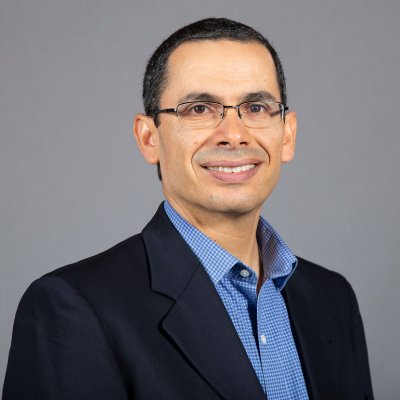
Antonio Toral is a leading researcher at the University of Groningen, focusing on Neural Machine Translation (NMT) , human evaluation , and parallel corpus curation . His work spans low-resource language modeling, lexical diversity enhancement, and multilingual figurative language detection. Affiliations: University of Groningen, MaCoCu Project, CREAMT Consortium Key projects: MaCoCu (Massive collection of under-resourced language data) CREAMT (Creativity in literary translation) Research interests include: Improving NMT naturalness and lexical richness Document-level evaluation of machine translations Character-level modeling and downsampling techniques Reproducibility challenges in human NLP evaluation Cross-lingual formality transfer without parallel data His recent articles (2021–2025) demonstrate expertise in: Reinforcement learning for naturalness preservation Statistical analysis of translationese effects Dependency-based reordering models Pivot translation for Catalan→Chinese Domain-specific corpus creation for EU Digital Service Infrastructures
Dr. Paula Buttery is a Professor at the University of Cambridge , affiliated with the Faculty of Modern and Medieval Languages and Linguistics and the Department of Theoretical and Applied Linguistics . She serves as the Director of the Automated Language Teaching and Assessment (ALTA) Institute , focusing on computational approaches to language learning and endangered language revitalization. Her research spans Natural Language Processing (NLP) , Computational Psycholinguistics , and Language Acquisition , with particular emphasis on non-canonical language forms (e.g., spoken learner language, aphasics) and low-resource language processing . She has lead projects funded by the Cambridge English Language Assessment , EPSRC , and the Wellcome Trust . Dr. Buttery’s recent publications explore topics such as disfluency detection , lexical diversity , subcategorization frames , and spoken learner language modeling . Her work bridges machine learning and cognitive science to develop tools for language education and endangered language preservation. Scientific Awards : Cambridge University Pilkington Prize for teaching (2015) She has contributed to interdisciplinary collaborations, including the Cambridge Cookie-Theft Corpus for speech analysis in brain-damaged patients and the UKPMC project for biomedical text mining. Her teaching centers on Computational Linguistics and Language Learning .
Xiaochen Zheng is a Cognitive Neuroscientist at Leiden University's Social and Behavioural Sciences faculty, specifically within the Cognitive Psychology Unit . She holds a Researcher title and investigates intersections between language and broader cognitive systems using advanced neuroimaging techniques. Bachelor: Psychology, Beijing Normal University PhD: Cognitive Neuroscience, Radboud University Her research spans cognitive control , working memory , and language processing , with a focus on how the brain manages information overload, facilitates multilingualism, and generalizes knowledge. Techniques include EEG , MEG , and fMRI across healthy and clinical populations. Recent publications highlight her work on frontoparietal networks , theta oscillations in bilingual control , and hippocampal cognitive mapping . These articles reveal a trend toward understanding domain-general mechanisms in cognition and their applications to language processing. Veni Grant (NWO) - The age of information overload: how do we control what we say? Scholarship for Academic Excellence (Tilburg University) As a co-promotor, she supervised PhD student Elena Mainetto and coordinated interdisciplinary teams across 10+ international institutes. Her work emphasizes team science and open science principles, with data sharing practices evident in multiple publications.
L. Robert Slevc is an Associate Professor and Associate Chair in the Department of Psychology at the University of Maryland, with affiliations in the Program in Neuroscience and Cognitive Science (NACS) and the Maryland Language Science Center. He holds joint roles as Director of Graduate Studies and leads the Language and Music Cognition Lab. His research bridges psycholinguistics, music cognition, and language production, with a focus on cognitive mechanisms in normal and brain-damaged populations. He completed his Ph.D. at UC San Diego and a postdoc at Rice University before joining UMD. Education : Ph.D. in Psychology, University of California, San Diego B.A. in Psychology, University of Colorado, Boulder Research Interests : Dr. Slevc explores how language and music processing share cognitive resources, including studies on bilingual code-switching, aphasia, second-language acquisition, and the interplay between musical ability and cognitive functions. His work employs behavioral and neuroimaging techniques to uncover neural correlates of language and music syntax, attentional mechanisms in bilingualism, and developmental milestones. Articles Trends : Recent work emphasizes bilingualism’s cognitive effects, the role of musical training in language learning, and cross-domain priming between music and speech. His research highlights shared neural substrates for syntactic processing in both domains and the impact of auditory temporal processing on language skills. Advising & Grants : Currently not recruiting PhD students for Fall 2025. His grants and mentorship focus on promoting equity in music cognition research and advancing interdisciplinary methods in cognitive science. Labs/Teams : Directs the Language and Music Cognition Lab , investigating how language and music interact with cognition, memory, and attention through experimental and computational approaches.
Céline Guillot-Barbance is a Senior Lecturer at the École Normale Supérieure de Lyon (ENS de Lyon) and a member of the UMR 8317 IHRIM laboratory. Her research focuses on the history of French, corpus linguistics, and the digital edition of medieval texts. She holds a HDR (Habilitation à Diriger des Recherches) and has been affiliated with ENS de Lyon since 2006, previously working at the departmental archives of Loire and the Regional Directorate of Cultural Affairs (DRAC). She became head of the Base de français médiéval in 1999 and earned her PhD in Language Sciences from ENS de Lyon in 2003. Her key academic roles include Junior Member of the Institut Universitaire de France (2010–2015) and Knight of the National Order of Merit (2014). She is also a tenured member of the CNU (Conseil National des Universités), 7th section, and serves as Vice-President of the International Society for the Diachrony of French. Her research interests span historical linguistics, the diachrony of French, referential semantics, anaphora, deixis, and digital philology. She has led projects on medieval French corpora, including the Base de français médiéval (BFM), and collaborated on digital editions of medieval texts such as Le Vilain de Bailluel and Le Prestre qui fu mis au lardier . Her work emphasizes interdisciplinary approaches, combining philological rigor with computational methods to analyze medieval texts. She has published extensively on demonstrative pronouns, dialogue in medieval narratives, and the transition from Latin to Old French syntax. Grants and collaborations include the CAHIER consortium for digital corpus development and the Cactus research group within IHRIM. She has supervised numerous digital editions and co-authored major works like Le démonstratif en français (2017) and contributions to the Manual of Deixis in Romance Languages (2015).
Georges Bohas is a Professor of Arabic literature at the École normale supérieure de Lyon (ENS Lyon) and a member of the Institut Universitaire de France. Specializing in Arabic textual editing and translation, he is a leading scholar of Timbuktu manuscripts and the Alexander Romance. His work bridges academic research with public engagement, including co-translating the 'Roman des Baïbars' series and publishing accessible works on Arab popular literature. A Senior Member of the IUF since 2007, he directed the ANR VECMAS project (2009–2012), focusing on Sub-Saharan Arabic manuscripts. His research spans Arabic linguistics, medieval grammatical traditions, and cultural history, with notable contributions to the study of morphological paradigms, phonosemantics, and lexical organization in Semitic languages. Collaborating with institutions like Actes-Sud and the Mamma Haïdara Library, his work preserves and disseminates marginalized texts, such as the Timbuktu manuscripts. His publications blend scholarly rigor with public accessibility, reflecting a commitment to bridging academic and lay audiences. Education: Agrégation diploma in Arabic (France’s highest teaching credential) His research interests focus on Arabic literary and linguistic traditions, including: classical Arabic grammar, manuscript preservation, phonological symbolism, and the intersection of literature and history. Recent work emphasizes submorphemic lexical organization and the interplay between sound and meaning in Semitic languages. Publications highlight his expertise in Arabic metrics, Qur'anic stylistics, and the analysis of medieval grammatical treatises. Key projects include the bilingual edition of Le Roman d’Alexandre à Tombouctou , which recovered a forgotten manuscript from Timbuktu’s legal texts. His work on Bar Hebraeus’ Syriac grammar and Ibn Ǧinnī’s theories underscores his comparative approach to Semitic languages. Awards: Senior IUF Membership (2007) Grants and leadership include managing the ANR VECMAS project, which validated and published critical editions of Sub-Saharan Arabic manuscripts. His collaborations with INSA Lyon advanced digital preservation techniques for fragile manuscripts. Current work continues exploring Timbuktu’s textual heritage and the theoretical foundations of Arabic linguistics. Labs/Teams: Member of the ICAR laboratory (Interdisciplinary Center for Arabic and Islamic Research), ENS Lyon.
Liwei Jiao is a Senior Lecturer in the Department of East Asian Studies at Brown University, specializing in Chinese linguistics. He holds a PhD from Nankai University (2003) and has taught Chinese at institutions including Renmin University of China, the University of Durham, and the University of Pennsylvania for over two decades before joining Brown in 2018. His research focuses on Chinese lexicography, phonetics, and the interplay between language and culture. Education: PhD in Chinese Linguistics, Nankai University (2003) MA in Chinese Linguistics, Nankai University (1998) BA in Chinese Language, Hebei Normal University (1995) Research Interests: Chinese lexicography and proverbs Phonetics and language pedagogy Cultural dimensions of language use Publications: His works include seminal texts like 500 Common Chinese Idioms , A Cultural Dictionary of the Chinese Language , and the edited Routledge Handbook of Chinese Language and Culture . His research bridges linguistic analysis with cultural interpretation, emphasizing language as a cultural artifact. Awards: University of Pennsylvania Language Teaching Innovation Award (2009) Open University of China Essay Competition Third Prize (2012) Penn SAS Teaching Relief Award (2018) Teaching and Service: Teaches advanced Chinese language courses at Brown, including Advanced Modern Chinese , Business Chinese , and Chinese Language and Culture . His pedagogical innovations are recognized through awards and publications.
Rohit Kate is Associate Professor in the Department of Computer Science at the University of Wisconsin-Milwaukee. He holds a PhD in Computer Science from the University of Texas at Austin. Dr. Kate's research applies machine learning and natural language processing techniques to medical applications, focusing on clinical text analysis, predictive analytics for healthcare, and biomedical informatics. His work includes clinical term normalization, SNOMED CT concept mapping, and predictive models for conditions including acute kidney injury and cancer survivability. Analysis of Dr. Kate's publications reveals consistent themes in clinical natural language processing, medical concept representation, time-series analysis for healthcare, and predictive modeling using electronic health records. His research bridges computational methods with practical clinical applications.
Lotfi Sayahi is a Professor of Spanish Linguistics in the Department of Languages, Literatures & Cultures at the University at Albany. He holds a PhD from Universidad Complutense de Madrid and has received dual teaching excellence awards: the SUNY Chancellor's Award and the University at Albany President's Award (both 2007). His educational background centers on advanced linguistic training at Universidad Complutense de Madrid. Research focuses on sociolinguistic dynamics in multilingual contexts, particularly examining contact phenomena between Spanish and Arabic in North Africa and diaspora communities. Core interests include structural variation in diglossic environments, bilingual identity formation, and grammatical adaptation in code-switching scenarios. Recent publications reveal concentrated analysis of North African sociolinguistic landscapes (Tunisia, Morocco, Ceuta), with methodological emphasis on quantitative variation studies and ethnographic approaches to language attitudes. Key trends include diachronic analysis of Spanish-Arabic contact, vernacular normalization processes, and identity politics in post-revolutionary contexts. Scientific recognition includes: SUNY Chancellor's Award for Excellence in Teaching (2007) University at Albany President's Award for Excellence in Teaching (2007) As editor of the Selected Proceedings of the Workshop on Spanish Sociolinguistics series (2003-2007) and special issue The Sociolinguistics of Tunisia (2011), he has shaped disciplinary discourse. His monograph Diglossia and Language Contact (Cambridge University Press, 2014/2019) establishes foundational frameworks for contact-induced change in Maghrebi contexts. Graduate instruction spans Sociolinguistics, Bilingualism, and Research Methods.
Jiang Song is an Associate Professor in the Department of East Asian Languages & Literatures at the University of Hawai‘i at Mānoa. She serves as Director of the Chinese Language Flagship Center and holds a PhD in Chinese Linguistics from the University of Hawai‘i at Mānoa, along with an MA in Theoretical Linguistics from Peking University and a BA in Chinese Language and Literature from Tianjin Normal University. Her research focuses on Chinese linguistics with emphases on lexical semantics, cognitive linguistics, and innovative pedagogical approaches in language teaching. She has pioneered work on classifier systems' cognitive implications, technology-enhanced language learning, and theme-based instructional methods. Specific areas include linguistic relativity, online course design for beginners, and intercultural web-based learning practices. Her publications span Routledge handbooks, peer-reviewed journal articles, and edited volumes addressing topics like Chinese for Specific Purposes, advanced language program evaluation, and digital pedagogical innovations. Recent work emphasizes applied linguistics intersections with cognitive science and educational technology. Jiang has developed impactful language programs using platforms like Blackboard Learn and led intercultural exchange initiatives. Her pedagogical research bridges theoretical insights from cognitive linguistics with practical classroom applications. Current projects explore advanced proficiency development and curriculum design for heritage learners.
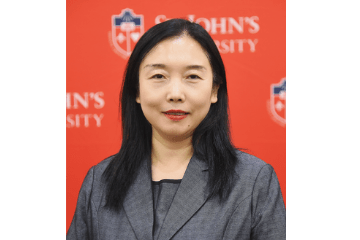
Yan Yu is a Professor in the Department of Communication Sciences and Disorders at St. John's University's College of Liberal Arts and Sciences. She holds a Ph.D. from the Graduate Center at City University of New York, an M.A. from St. John's University, and a B.A. from Hubei Normal University in China. Certified by the American Speech-Language-Hearing Association (ASHA), her work bridges communication sciences, psycholinguistics, and cognitive neuroscience. Education Ph.D., City University of New York M.A., St. John's University B.A., Hubei Normal University, China Her research focuses on brain plasticity for auditory and cognitive processing (language and music) in neurotypical and neurologically impaired populations. She investigates interactions between experience (language/music) and brain development, and the brain's malleability through neurointervention. Her work spans communication sciences and disorders , neurolinguistics , and speech perception , with applications to autism spectrum disorders and developmental language disorders . Recent publications highlight her expertise in neuroplasticity , bilingual speech processing , and neural responses to speech sounds . She has secured significant funding including a 2022-2026 NIH R16 Grant ($820,000), multiple Faculty Summer Research Grants, and infrastructure grants at St. John's University and William Paterson University. Scientific awards include Rees Dissertation Fellowship (2011-2012) Paula Menyuk Travel Award (2011) Science Fellow (2005-2007) Student Travel Grant (2008) She has presented extensively at international conferences like the Society for the Neurobiology of Language, Acoustical Society of America, and International Association for the Study of Child Language. Her teaching portfolio includes undergraduate and graduate courses in speech science, research methods, developmental language disorders, and bilingual studies.
Associate Professor Wei Liu is a full-time academic in the Department of Computer Science and Software Engineering at The University of Western Australia (UWA), leading the UWA Centre for Natural and Technical Language Processing. Her research focuses on knowledge discovery from natural language text, generative AI, semantic technologies, deep learning for knowledge graphs, and sequential data mining. She holds a PhD from the University of Newcastle (2003) and an MEng from Huazhong University of Science and Technology (China). Research Interests: Generative AI and Large Language Models (LLM) Multimodal Knowledge Graph Construction Human-AI Collaboration Systems Clinical Data Analysis (Ophthalmology) Technical Language Processing for Maintenance Data Neural-Symbolic Computation Recent Work Trends: Her publications emphasize multimodal systems integration, knowledge graph refinement, and adversarial AI applications. Notable 2025 work includes Docs2KG (human-LLM collaboration), Auto-Regressive Diffusion for 3D interactions, and spherical embeddings for logical queries. Scientific Awards: First Prize in IEEE ICDM/ICBK Knowledge Graph Contest (2020) Best Contribution to Science Award at DICTA 2020 2022 Students Choice Award for academic support Advising & Grants: Leads 25 active grants including ARC Training Centres in Critical Resources and Maintenance Data Science. Collaborates with industry partners like Aspire Digital Group and Minerals Research Institute of Western Australia. Labs/Teams: Directs UWA's Natural and Technical Language Processing Centre, focusing on projects like maintenance work order analysis, geological survey data fusion, and clinical data integration in ophthalmology.
Egoitz Laparra is a Researcher and Adjunct Instructor at the University of Arizona's College of Information Science since 2017. His work focuses on advancing natural language processing (NLP) methods for analyzing human language in medical and environmental domains. He specializes in machine/deep learning techniques for tasks like domain adaptation, information extraction, and semantic parsing. Research Interests: - Natural Language Processing (NLP) with emphasis on medical and environmental applications - Machine learning and deep learning methodologies - Domain adaptation and transfer learning in clinical and policy texts - Geographical ontology development and toponym resolution - Lexical resources like WordNet and predicate matrices Publications highlight innovations in NLP for environmental policy analysis, clinical text mining, and cross-lingual semantic interoperability. His recent work addresses challenges in metadata extraction from environmental impact statements and improving geolocation entity recognition through deep learning. Collaborations include the NewsReader project for cross-lingual news analysis. Laparra contributes to open-source projects like Eidos and INDRA, which transform free text into causal models. He maintains active involvement in international NLP competitions (e.g., SemEval tasks) and develops tools like Taxonomy Builder for knowledge organization.
Julien Cooper is an Egyptologist, Nubiologist, and archaeologist currently serving as an ARC Future Fellow in the School of Humanities at Macquarie University. His research focuses on the archaeology of the Eastern Desert (Atbai) and the history of its nomadic peoples. He directs the 'Atbai Survey Project,' a fieldwork program surveying the vast deserts between the Nile and the Red Sea, aiming to shed light on the region's heritage from neolithic rock art to ancient Egyptian trade routes and medieval goldmines. Cooper completed his PhD in Egyptology at Macquarie University in 2016, followed by postdoctoral fellowships at Oxford (as an ERC Fellow) and Yale universities, and an Assistant Professor position at United International College-Beijing Normal University from 2020-2022. His educational background includes a PhD in Egyptology from Macquarie University (2016) with a dissertation titled 'Toponymy on the Periphery: Placenames of the Eastern Desert, Red Sea, and South Sinai.' His academic journey reflects a deep commitment to understanding the complex cultural landscape of Northeast Africa. Cooper's research interests center on Egypt & Nubia and the networks of connections across Northeast Africa, with specific focus on nomads in the region, survey archaeology, rock art studies, heritage conservation, Nubian history, foreign connections of ancient Egyptian state, Egyptian epigraphy, language contact, and Middle Egyptian language. His work reveals how nomadic peoples significantly influenced the political, economic, and environmental landscape of ancient Northeast Africa, challenging traditional 'Nile Narrative' perspectives that often overlook desert cultures. His recent publications demonstrate a growing trend toward interdisciplinary approaches combining archaeology, linguistics, and historical geography to understand cultural boundaries and interactions in ancient Nubia. Cooper's work increasingly focuses on heritage conservation in Sudan amid ongoing conflicts, reflecting the urgent need to document and protect vulnerable archaeological sites. ARC Future Fellowship 'Rescuing Pharaoh's Gold Mines: Archaeological conservation in Eastern Sudan' (2024-2028) Sir Douglas Newbold Archival Project: The Archaeology and History of Eastern Sudan Nomades et nomadismes au Sahara oriental (Égypte, Soudan, est libyen) Cooper has advised numerous students and collaborated extensively with Sudanese academics and scientists. His projects provide training in GIS and archaeological mapping for local communities in Sudan's Red Sea Province. He has organized workshops with UNESCO and international partners to develop strategies for cultural heritage preservation in conflict zones. His fieldwork with the Atbai Survey Project has established a significant presence in Eastern Sudan, with ongoing efforts to document and conserve archaeological sites threatened by looting and environmental degradation. He leads the Atbai Survey Project team, which conducts extensive fieldwork in the Eastern Desert, documenting rock art, ancient trade routes, and settlement patterns. His work has gained international attention through media coverage of discoveries like 4,000-year-old rock art depicting boats and cattle, which supports the 'Green Sahara' theory. Cooper actively engages with local communities in Sudan, incorporating indigenous knowledge into archaeological interpretations and ensuring research benefits the people whose heritage is being studied.
Savaş Yıldırım is an Associate Professor in the Department of Computer Engineering at Istanbul Bilgi University, College of Engineering. He holds a PhD in Computer Engineering from Trakya University and completed his postdoctoral studies at Eberhard Karls Universität Tübingen, Germany. His academic work is centered on data science and computational linguistics, with a focus on Turkish language technologies. His research interests include Natural Language Processing, Deep Learning, Big Data Analytics, and Open Source software. He actively contributes to advancing Turkish language processing through text normalization, synonym detection, and meronym extraction. His work bridges theoretical NLP with practical applications in public policy and industry. The recent publications of Savaş Yıldırım are primarily in the domain of computational linguistics, with a strong emphasis on Turkish-specific challenges. The articles reflect a consistent trend in unsupervised and knowledge-poor methods for text analysis, focusing on morphological richness and resource scarcity in low-resource languages. Key themes include lexical semantics, text preprocessing, and pattern-based information extraction. Notable scientific contributions include projects funded by TÜBİTAK and EU programs such as: Ağlandırılmış Türk Kamu Alanının Haritalanması (TÜBİTAK 2219) Metin Madenciliği Yöntemlerinin Uygulanması (TÜBİTAK 1001) Akıllı Hazine Nakit Yönetimi (TÜBİTAK TEYDEB) İnsan Kaynakları Süreçlerinde Öngören Mekanizmalar (TÜBİTAK TEYDEB) Engelleri Kaldırarak Bir Araya Gelelim (EU Urban Net – TÜBİTAK 1001) Savaş Yıldırım has served as an academic coordinator and researcher in multiple nationally and internationally funded projects. He has also worked as a Data Science Trainer for The Banks Association of Turkey and as a trainer for IBM’s Academy of Technology. While no formal advisees are listed, his leadership in research projects indicates mentoring and collaborative supervision roles. He maintains an active research blog at openanalitik.wordpress.com . He is associated with research initiatives in data analytics and natural language processing, particularly through project-based labs and interdisciplinary teams focused on public sector data and intelligent systems. These teams often involve collaboration between academia and industry, especially in finance and human resources technology.